
She Proves That “Too Late” Is Just A myth I Ramona Stelzer

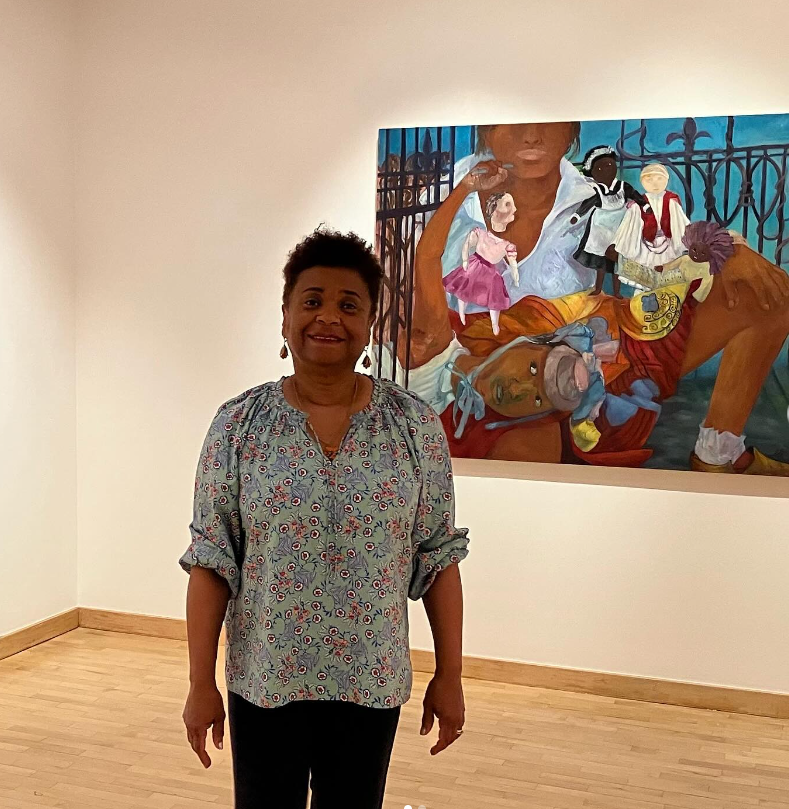
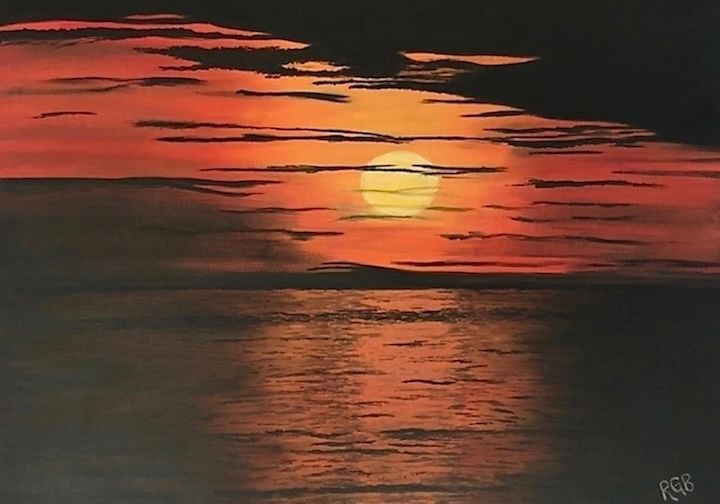
Radiant, dynamic, and deeply human, Ramona Stelzer’s paintings hum with colour, rhythm, and emotion each canvas carrying the essence of a life fully felt. Her work layers memory, resilience, and transformation; every brushstroke echoes her roots, the warmth of human connection, and the fearless reinvention that has shaped her years in California.
This week, in our Best of Art World series, we’re proud to share Ramona’s remarkable story one that begins in the lush Black Forest of Germany, where she grew up as the youngest of five sisters. There, structure and discipline were second nature, yet the nearness of Switzerland, Italy, and France awakened a fascination with beauty, culture, and craft that would later infuse her art with vibrancy and depth.

Her first creative chapter didn’t start in a studio, but in a salon. As a hairstylist, Ramona worked under a sculptor and alongside a painter, turning everyday work into something extraordinary. The salon was a living gallery a space where expression happened through touch, conversation, and transformation. Those early years taught her to see gesture as sculpture and colour as feeling, lessons that now pulse through her canvases in movement, texture, and form. Motherhood and migration added new layers to her story. Moving to California in her forties with her husband and two sons, Ramona built a new life from scratch learning a new language, opening a salon, and ultimately returning to painting after more than a decade away. Out of that renewal emerged her signature style: large, luminous works where figures, florals, and abstraction mingle to explore grief, joy, and growth.
Her paintings speak in colour what words often cannot charting the emotional landscape of a life shaped by courage, reinvention, and truth.
To truly understand her art, we need to hear her voice, so let’s get to know Ramona Stelzer through our conversation with her.
1. Could you tell us about your background & how chapters like growing up in Germany, your years as a hairstylist, motherhood, and the move to the San Francisco Bay Area shaped the artist you are today?
I grew up in the southwest of Germany, in the Black Forest area, the youngest of five girls. That taught me very German values—strict rules, working hard, being on time, and that good is never good enough. But living so close to Switzerland, Italy, and France also exposed me to different fashion, food, and lifestyles that I still carry with me today.
I started working as a hairstylist at an early age and loved it from day one. My mentor was a sculptor, and my senior boss was a painter. Their salon was like a gallery, hosting art shows on weekends, and they influenced me to see myself as an artist. Back then, I never thought that being exposed to all that art would make a difference in my life or become such an important part of my journey. And beyond the art, working so closely with people meant being part of their life stories. All those conversations and connections stayed with me, and today I see them like pastels layered into my paintings. Every cut, every color, every detail felt like sculpting—the same way I approach my work now.

Having my boys is one of the proudest things in my life. Being a mom changed me in a way that nothing else on this earth ever could. Fourteen years ago, in my 40s, my husband and I moved to California with our two teenage boys. I worked hard to improve my English, earned my cosmetology license, and built a salon business just six months before the pandemic forced it to close. That pause brought me back to painting after more than ten years away, and I realized this is what I was always meant to do.
Starting my life over from scratch with that move to California also showed me that I’m capable of achieving things I never thought possible. Living here, especially in Silicon Valley, is inspiring people are supportive, and no dream feels too big. Every chapter of my life from the Black Forest in Germany to hairstyling to motherhood to building a new life here has added layers to who I am as an artist today, shaping the way I create and experience art.
2. Your palette those magentas, blues and greens feels very intentional. How do you choose colour for a piece, and how much of that choice is emotional versus compositional?
Even if I plan a painting with a specific colour palette in mind, it almost never turns out that way. My heart, my emotions, and my feelings always take over, and the painting leads me in ways I never imagined. I love high contrast in my art, and colours like magentas, blues, and greens often appear naturally because they carry the energy and emotion I’m feeling in the moment. The balance between composition and colour is something I rather feel than see—I look at my work and know if something is off. The painting needs to convey its message, and I don’t stop until it does.
3. In 2009 you pursued formal training at Art School Quichi, yet you also describe yourself as largely self-taught. How do you balance disciplined study with self-directed exploration in your studio?
I really valued what I learned at Art School Quichi back in the days, but I had to unlearn everything I was taught because it blocked me from painting the way I wanted. Everything I do today, I taught myself. In my studio, techniques and composition are there when I need them, but my heart leads, and I let the painting surprise me.

4. What is your physical process in the studio, do you sketch, work directly on large canvases from the start, or build compositions through many layers and revisions?
I start by sketching directly on the canvas with charcoal, but the sketch is never meant to fence me in. Sometimes the painting moves in a completely different direction—the process evolves naturally. I build layers, adjusting and revising as it grows, following wherever the piece leads until it feels complete.

5. You maintain an active web and Instagram presence alongside gallery representation. How do you balance the intimacy of studio-to-collector connections online with the slower rhythms of exhibition work?
Lately, I approach my online presence differently. I feel the need for more privacy, so I don’t share my entire process anymore. Online connections are immediate and intimate, but exhibitions move at a slower rhythm, letting viewers experience the work fully. The way I paint reflects how I live: I follow my heart, and not everyone understands or agrees with my choices. I try to give glimpses of the energy and emotion behind my work while letting the paintings ultimately speak for themselves.
6. Series like “Oops I Bloom Again” suggest cycles of return and renewal. What sparked this series, and how do you keep a motif fresh across multiple large works?
“Oops I Bloom Again” grew out of a deeply personal time, right after I lost my sister to early-onset dementia. Like all my florals, the series is about resilience, renewal, and strength—finding beauty and growth even through difficult moments. To keep the motif fresh across multiple large works, I let each painting evolve organically—following the energy, texture, and movement wherever it leads. Even similar shapes or colors become new, keeping each piece alive and surprising.
7. Do your surroundings, studio location, light, seasons feed into the mood of your work? Can you give an example of a place or moment that changed a painting’s tone?
I’ve noticed that my surroundings and the seasons influence my palette and mood. The heat of summer draws me to lighter, toned-down colors, while the cooler months spark a craving for brighter, bolder tones. My new series for my solo show is highly influenced by ballroom dancing, which I started almost a year ago—it changes me from the inside out, and that energy flows into my work, shaping movement, rhythm, and flow on the canvas.

8. Looking back, what change in your work are you most proud of a technical risk you took, a theme you finally allowed yourself to pursue, or a moment when your voice became clearer?
The change I’m most proud of is giving myself true freedom in my work. I forbade myself to paint florals for a year to explore other paths and unlearn the rules I had learned—but I couldn’t help it; the florals came back, and that’s when my artistic voice became clear. One example of a technical risk is sketching directly on the canvas with charcoal—a step I was told not to take—which has become central to developing a painting, giving it energy, emotion, and vitality.
9. How do you engage with feedback from collectors, curators, or social media while protecting the private, exploratory side of your practice?
I value feedback, but I’ve learned to protect the vulnerable side of my process. I got quick attention on social media and used to share almost everything. Now, especially while preparing for my solo show, I keep more private—still showing enough to share the energy, but not the whole journey. This is where I’m at right now, though it may change, since I always follow my heart.
10. What one piece of practical and heartfelt advice would you offer to a young artist who wants to work with bold colour, large scale, and subject matter that feels both intimate and grand?
I would say: don’t be afraid. Paint big if that’s what your heart tells you, even if people say it’s harder to sell. Work with bold color, but let it come from your emotions, not from what you think others expect. Give yourself the freedom to try, to fail, to explore—because in that freedom you’ll find your own voice.

As our conversation with Ramona Stelzer comes to a close, it becomes clear that her work is more than painting it is a declaration of courage, authenticity, and emotional honesty. Her art reminds us that true artistry is not about perfection it is about embracing vulnerability, following the heart, and daring to explore the unknown. Through bold colours, sweeping gestures, and intimate motifs, she transforms loss, love, and the ordinary rhythms of life into paintings that resonate universally.
In every piece, we witness a story of risk, renewal, and freedom the invitation to step into her world, to feel the pulse of her emotion, and to recognize our own vulnerability reflected back in her canvases. Ramona’s work is a living testament to the power of experience, resilience, and fearless experimentation.

Follow Ramona Stelzer to see how decades of life, layered stories, and unwavering devotion to her craft continue to shape an artist who paints with conviction, heart, and a voice that is unmistakably her own.