

A Studio Visit and Interview with Artist Shray

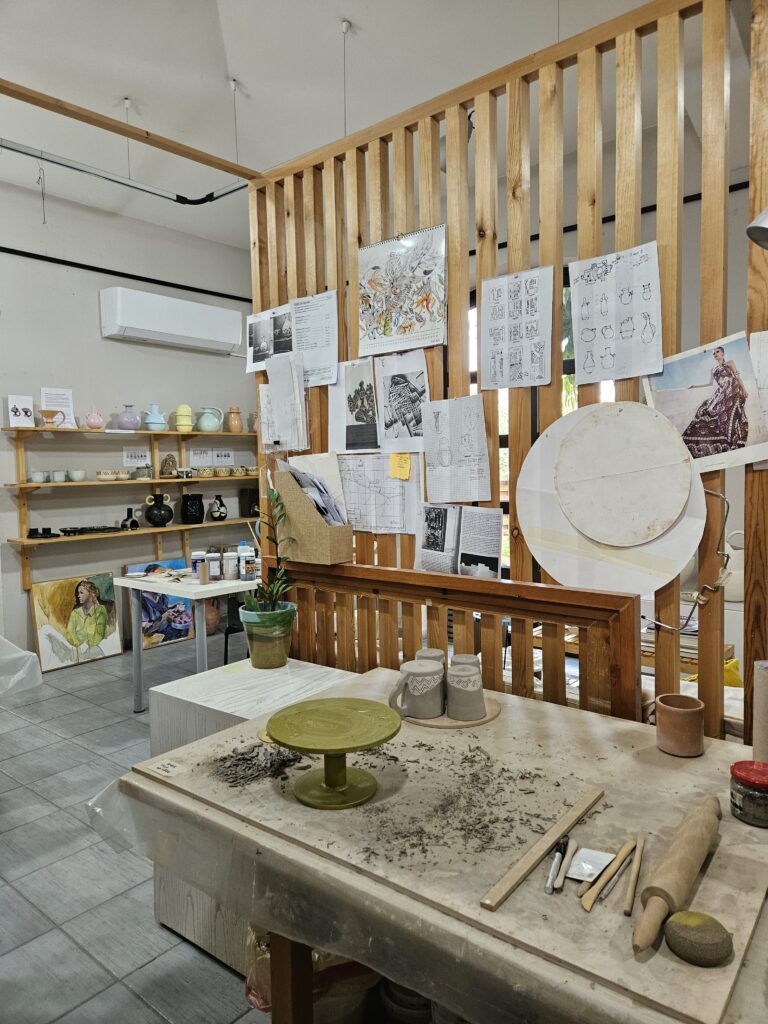
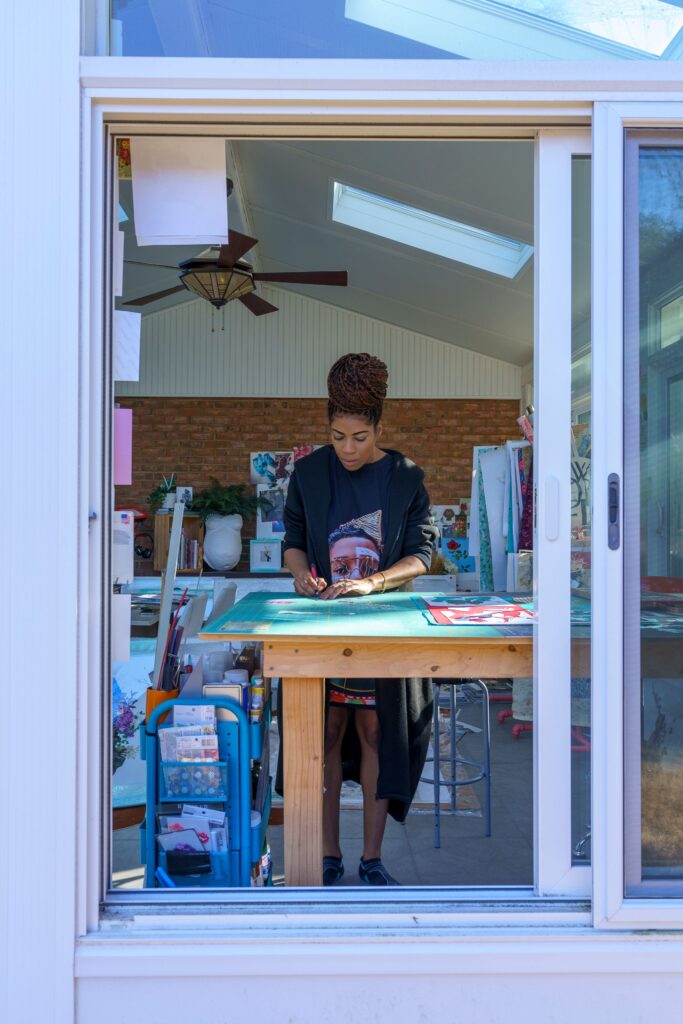
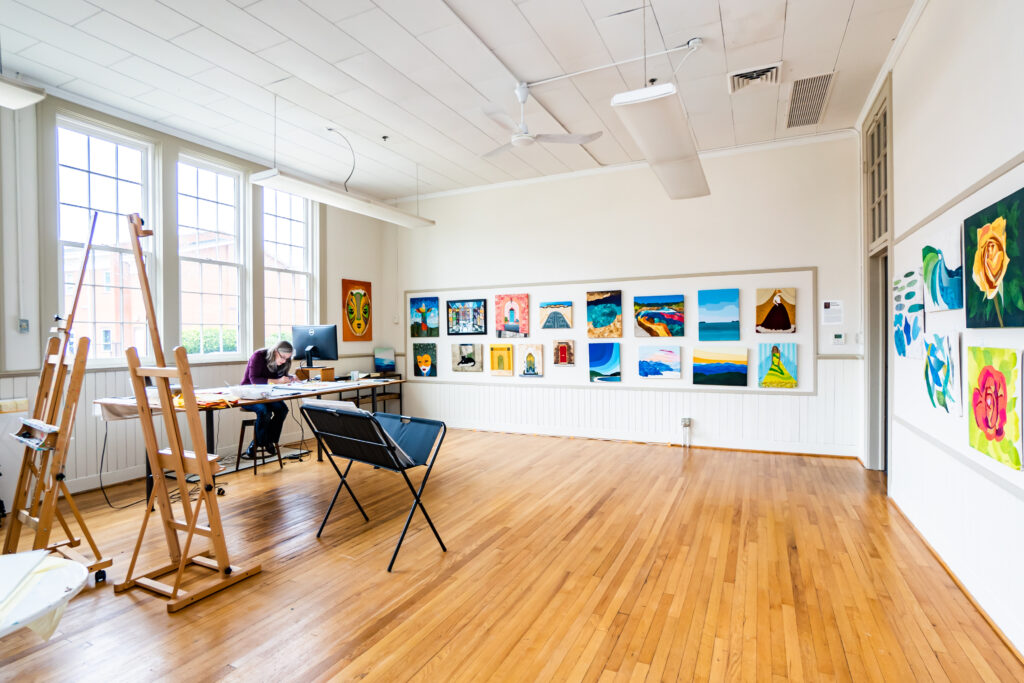
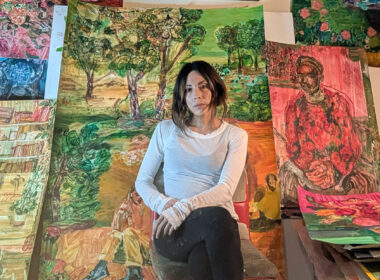
Walking into Shray’s studio feels like stepping into a quiet conversation between form and feeling. The space sits just beyond her French doors, where the scent of jasmine drifts in from outside and mingles with the faint, earthy smell of chalk pastels. Inside, the room is open and full of light, shaped like an L with glass doors on both ends that let the sun move gently across her work throughout the day.
In this interview, Shray talks about how her days begin in the calm of morning with coffee and quiet observation before she starts sculpting. She describes her creative process as one of subtraction—removing what doesn’t belong until the form feels true. She shares moments that stay with her, like watching light fall across her sculpture Soulmates, and how that small scene reminded her that patience brings clarity.
She also speaks about what inspires her now, from the movement of the human body to the way people search for balance through change. Alongside her apprentices, family, and pets, Shray fills her studio with the rhythm of making and discovery. She dreams of working someday in Sedona, surrounded by red rocks and silence, or in Florence, Venice, or the Rodin Gardens in Paris—places that connect her to the long history of sculpture.
During our visit, she spoke, too, about her latest project, a children’s storybook called The Free Range Chicks: Adventures Beyond the Barn, which she is both writing and illustrating. Through all of it—whether carving clay, painting, or storytelling—Shray stays guided by curiosity and care for the form as it reveals itself.

At fifteen, Shray stood before the Greek sculpture Winged Victory at the Louvre and knew she was meant to be a sculptor. She went on to receive a full scholarship to the Academy of Art in San Francisco and later continued her studies at the San Francisco Art Institute on a full grant. For eight years, she trained under Italy’s Piero Mussi, founder of the internationally renowned Artworks Foundry, and intensively studied Rodin’s work in Paris.
Shray’s sculpture has been described as existing “between Rodin on the more natural end, and Giacometti and Moore on the more abstract, more universal end.” Her simplicity of form recalls Brancusi, while her work remains deeply human and intuitive. Over the past 25 years, she has earned national and international recognition, including top honours from the Allied Artists of America for Balance Struck II and the 5 Rings Award from the Organising Committee of the 2008 Olympic Games in Beijing for her bronze Raising Tomorrow’s Olympic Champions, which toured China and beyond.
“I see geometrically while recognizing a sense of humanity pushing toward abstraction,” Shray says of her process. Her work balances the figurative and the abstract, achieving a rare harmony between structure and emotion.

1. Can you describe your typical studio day and creative process?
A typical day in my studio starts pretty simply. I like to come in early when it’s quiet, get a cup of coffee, and take a few minutes to look at whatever piece I’m working on. I don’t jump in right away—I spend some time just studying the form and thinking about what needs to happen next. My process is all about subtraction. Instead of adding clay, I carve away what doesn’t belong until the shape feels right. I really believe that what you leave out is just as important as what you keep.
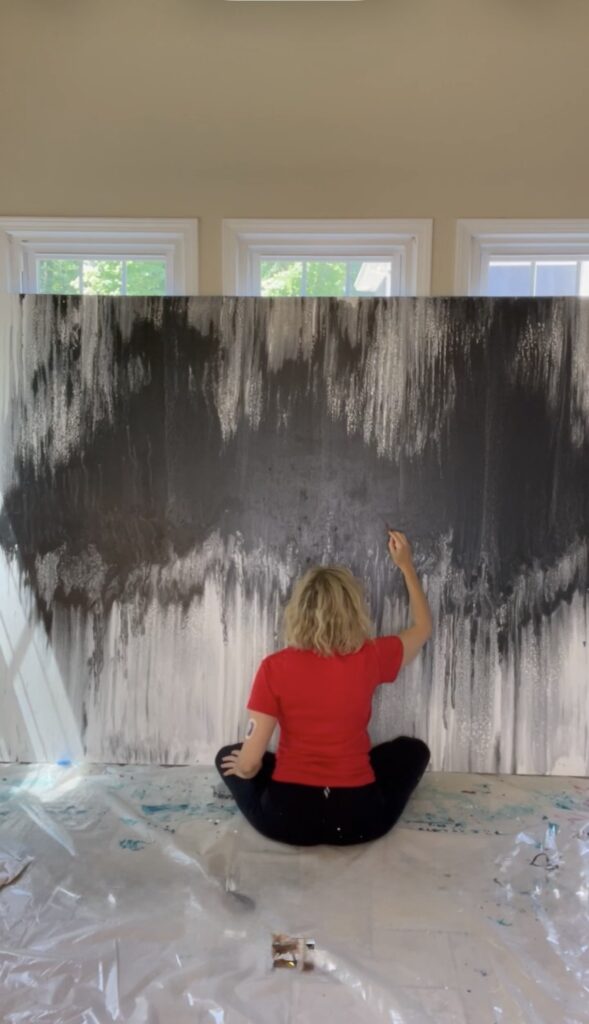
Once I get going, I can lose track of time completely. When I’m sculpting, I work directly in the clay as if I were carving stone—cutting and shaping until the figure begins to emerge. When I paint, it’s a similar process. I focus on light, shadow, and movement, trying to capture a feeling rather than just an image. I usually have some music playing, which helps me stay relaxed and in rhythm.
I step back a lot during the day to see how things are coming together. I look at the piece from different angles and make minor adjustments until it feels balanced and honest. My goal is always to bring out what’s already there, not to force it into something it’s not.
By the end of the day, the studio’s usually a mess—but it’s a good mess. It’s a sign that I’ve been in that creative flow where the work starts to take on a life of its own.

2. What is the primary inspiration behind your current body of work?
The main inspiration behind my current work comes from people—the way we move through life, handle change, and find balance in the middle of it all. I’ve always been interested in how emotions show up in the body, even in small gestures or quiet moments. Lately, I’ve been exploring that idea through both sculpture and painting, trying to capture a sense of movement within stillness, the balance struck between gravity and neutrality.
A lot of my pieces focus on the space between things—the tension between strength and vulnerability, presence and absence. I think that comes from watching how people deal with loss, growth, and connection. Those contrasts are what make us human, and they show up naturally in the shapes and lines of the human form.
Some of the inspiration also comes from my own life. The longer I’ve worked, the more I’ve realized that art uses imperfection to communicate with the viewer, inviting them to use their imagination and interpret the work from their own perspective—creating their own experience and emotion. This new series is really about letting go of control, simplifying, and trusting what comes through the process. Whether I’m carving clay or layering paint, I’m trying to show what it feels like to be human—imperfect, strong, and still searching for balance.
3. What is your favourite memory or incident from your studio?
One of my favorite moments in the studio happened just before sunset. The light was low, and a single beam came through the window, hitting my Soulmates sculpture at just the right angle. It created this incredible glow—rim lighting that traced the edges of the figures and made them come alive. I remember standing there, completely still, just watching the light move across the surface. In that moment, I understood that continually refining the edges wasn’t just about precision—it was about revealing the form that was always there. It was such a simple thing, but it confirmed what I believe about my work: that clarity comes through patience and attention. It’s a moment I’ll never forget.

4. Do you have any studio assistants, or do visitors, such as pets or children, often accompany you?
Yes, I have apprentices, family and pets.
5. How would you describe a dream studio for yourself?
My dream studio would be in Sedona, Arizona, in the desert. There’s something about that landscape—the red rocks, the silence, the way the light changes throughout the day—that feels completely alive. I imagine a vast, open space surrounded by nature, where the view itself becomes part of the creative process.
I’d have high ceilings and plenty of skylights to let in the natural light. The quality of light in Sedona is incredible—warm and clean, with soft shadows that shift as the sun moves. I’d want that light to spill across my work all day, especially in the late afternoon when everything takes on that golden tone.
The space would be functional and straightforward, with areas for both sculpting and painting, and wide doors that open to the outside so I could work large when I need to. Most of all, it would be quiet—just the sound of the wind and the tools. That kind of calm, open environment helps me focus and connect more deeply to the work. A studio like that would be more than a workspace; it would feel like an extension of the art itself.


6. What does your studio smell of right now?
It smells like the jasmine outside my French doors. There is always a hint of chalk pastel.
Right now, my studio smells like the jasmine that’s blooming just outside my French doors. When the breeze comes through, it fills the space with that sweet, calming scent—it’s one of those small things that instantly shifts the mood in the room. Mixed in with it is the faint, earthy smell of chalk pastels that always seems to linger, no matter how much I clean.
It’s a combination I’ve come to love—the natural, floral scent from outside and the familiar trace of materials that remind me of the work itself. The jasmine connects me to the world beyond the studio, while the pastels ground me in the creative process.
7. If you could set up your studio anywhere in the world, where would it be?
If I could set up my studio anywhere in the world, it would be in Florence, Venice, or the Rodin Gardens in Paris. Each of those places holds something deeply inspiring for me.
Florence is where the foundations of sculpture truly began—where you can feel the weight of history and craft in every stone. To work in the same city where Michelangelo shaped David would be like being surrounded by the roots of everything I love about form and expression.
Venice, on the other hand, has a unique sense of mystery and light. The reflections from the canals, the layers of texture and colour—it’s a place that feels alive with movement. I imagine painting there, surrounded by water and history, where every day brings a new way to see light and shadow.
And then, of course, the Rodin Gardens in Paris. To create in the same atmosphere where Rodin worked, with the gardens and sculptures around you—it’s almost sacred ground for anyone who sculpts the human form. The balance of nature and art is sublime.
Those three places represent the heart of what inspires me: mastery, atmosphere, and emotion—all tied together through art.


8. Can you discuss any ongoing projects or plans for your work?
At the moment, I’m working on a children’s storybook titled The Free Range Chicks: Adventures Beyond the Barn. It’s an entirely different creative process from sculpting or painting, but it comes from the same place—a love of storytelling through form and feeling.
The book follows a group of curious little chicks who decide to explore the world outside their familiar barn. It’s playful and lighthearted, but underneath it’s really about courage, friendship, and discovery—those first moments when you realise the world is bigger than you imagined. I’m writing and illustrating it myself, so it’s been a fun challenge to translate movement and expression into two-dimensional characters.
What I love most about this project is that it allows me to bring art and imagination to a younger audience. I want kids to feel inspired to be curious, to explore, and to see beauty in the unknown. Even though it’s a story for children, the themes are universal. It’s a reminder that stepping beyond what’s comfortable—whether in life or in art—is where growth and creativity truly begin.
9. How do you organise your space?
My workspace isn’t deliberately organised. When I’m in the creative zone, I become so immersed that organisational concerns fade into the background.


10. What is your favourite corner in the studio?
My studio is L-shaped, with French doors at each end. The corner where the two walls meet is absolutely fabulous—it’s the heart of the space. The room essentially forms two sides of a square, with French doors anchoring each end. Light flows in through the glass panels, meeting in the middle and creating balanced lighting that eliminates harsh shadows.
Shray’s studio feels calm and grounded, a place where time moves differently. The air carries the scent of jasmine from outside and a hint of clay and pastel from her work. Light slips through the French doors and moves gently across the room, softening everything it touches. It’s the kind of space that feels both peaceful and alive—the quiet hum of creativity always present, even when no one is speaking.
Visit our website to explore the virtual studio spaces of other artists. To be featured on our website, remember to apply for this month’s call for art.
Read more about Shray on her Website and Instagram.
Arts to Hearts Project is a global media, publishing, and education company for
Artists & Creatives, where an international audience will see your work of art, patrons, collectors, gallerists, and fellow artists. Access exclusive publishing opportunities and over 1,000 resources to grow your career and connect with like-minded creatives worldwide. Click here to learn about our open calls.