
Our Art Star Stephano Anselmi Will Make You See The World Through Water

👁 70 Views
At Arts to Hearts Project, we believe that art begins where words fall short where emotions, rhythms, and fragments of experience find form in colour, light, and movement. This month, we celebrate Stefano Anselmi as our Art Star of September, whose practice flows with the fluidity, depth, and reflection of water itself.
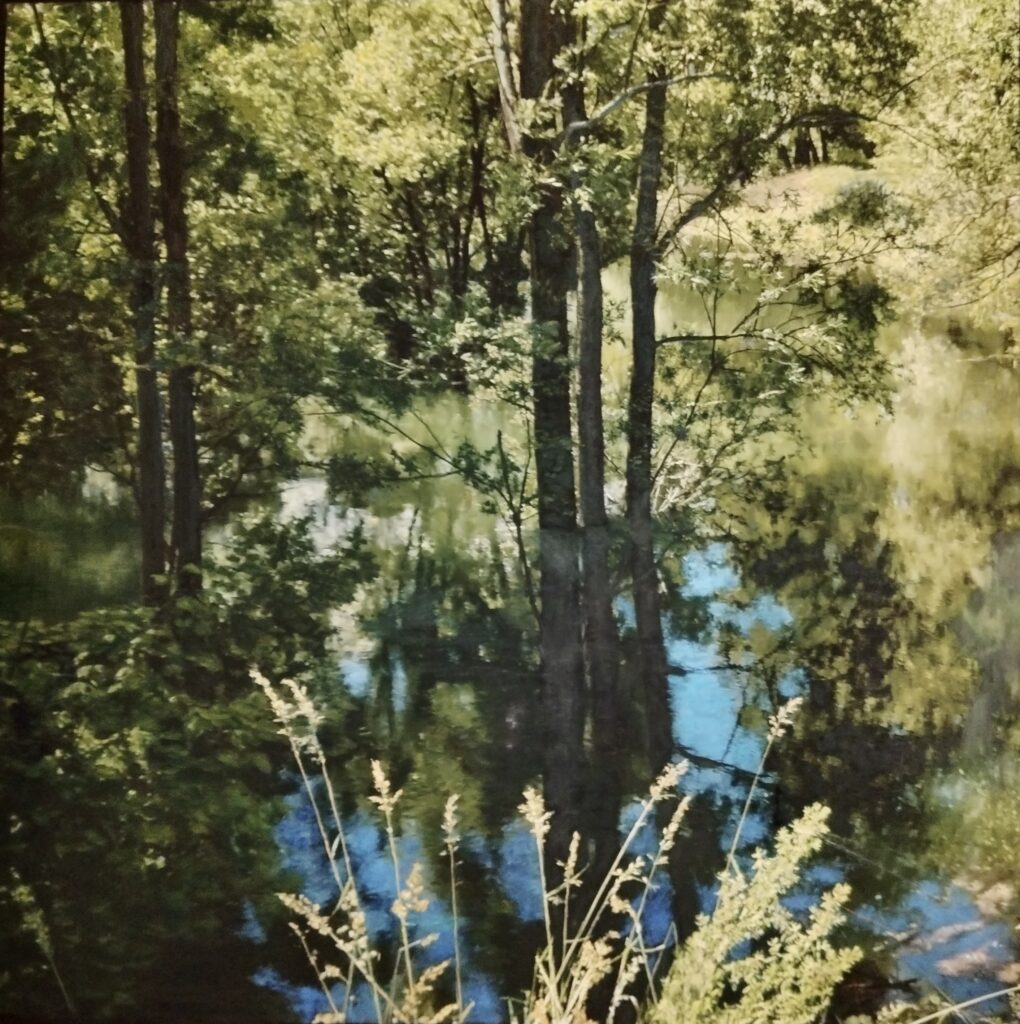
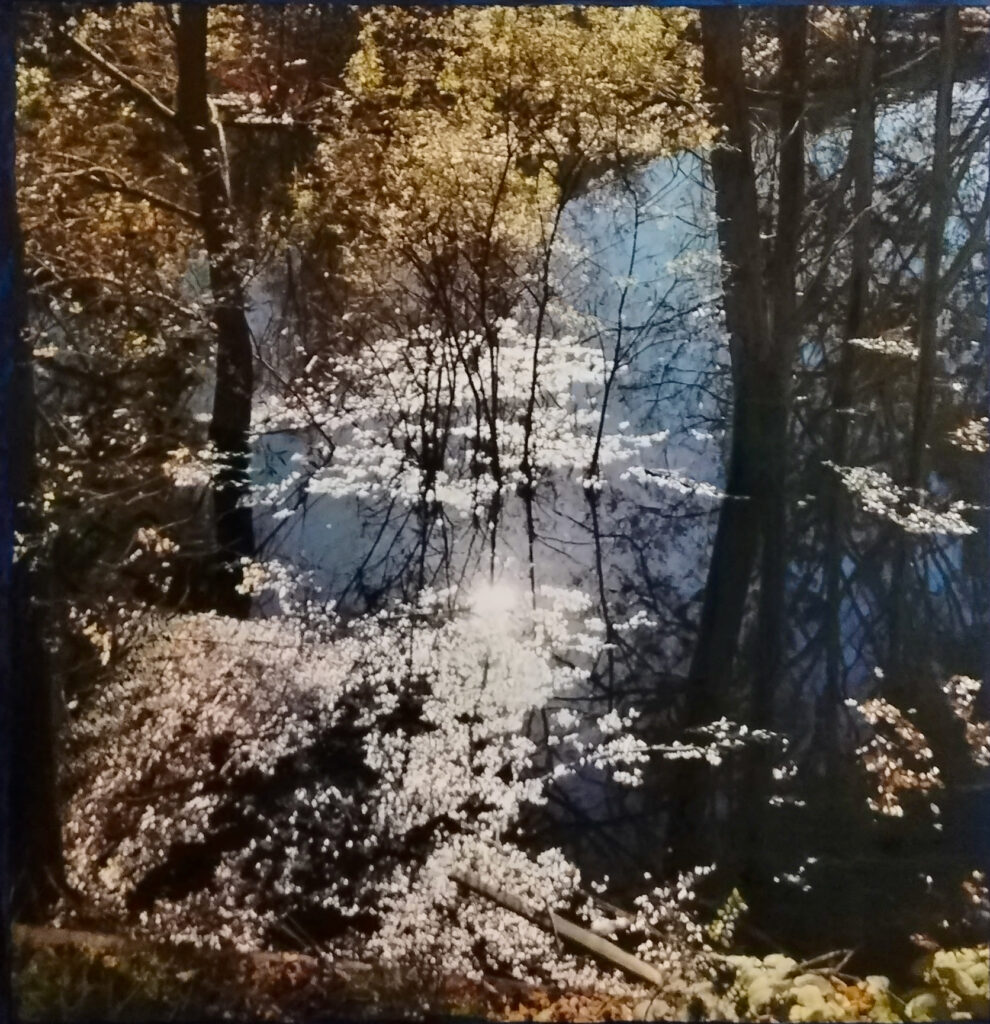
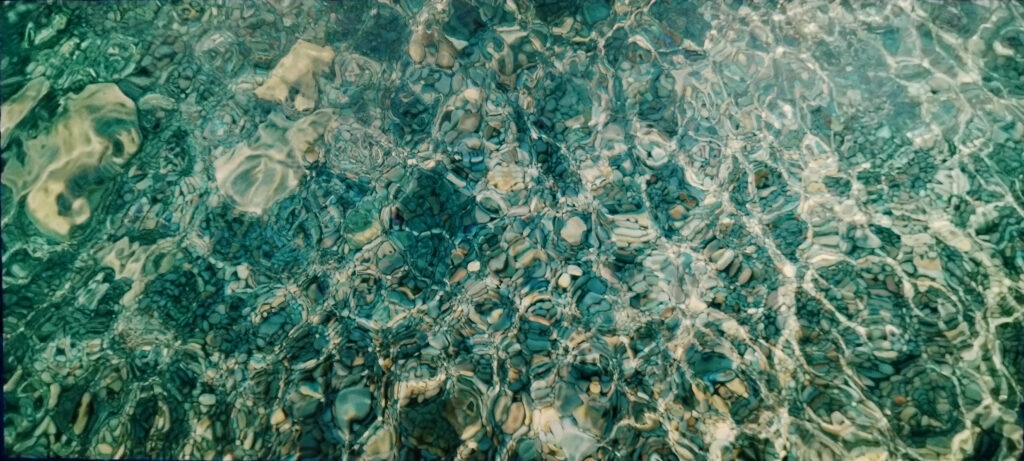
Drawing from years in opera and theatre, Stefano’s paintings carry echoes of performance and rhythm, each canvas a stage where intuition, emotion, and presence converge. His ‘H₂O’ series transforms water into both metaphor and material, reflecting the subtle currents of human experience while embracing abstraction, light, and movement.
For Stefano, painting is more than creation it is transformation. Intuition becomes form. Spontaneity becomes expression. Control becomes surrender. In every brushstroke, projection, and gesture, there is a story of listening, of letting the work guide him, and of finding poetry in the unexpected.
In this interview, Stefano opens up about trusting instincts, embracing risk, and allowing intuition to shape his art. His journey is a reminder that art doesn’t need to be understood to be felt, it simply needs to be honest.
Let’s get into his interview and explore his world, his art, and his creative journey.
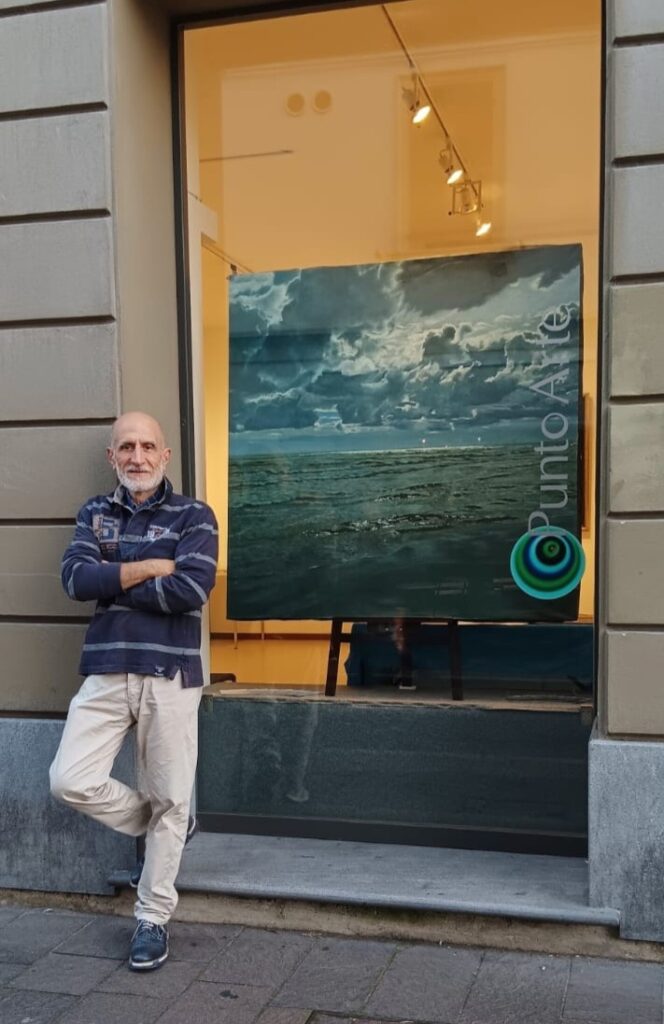
You were born and raised in Rome, a city layered with history, art, and culture. How did growing up in such an environment shape your earliest impressions of creativity and beauty?
Being born in Rome is certainly a stroke of luck for a young creative person. I attended art school here, growing up surrounded by the beauty of the arts and the powerful historical backdrop that this city has offer. Its classicism, inherited from the Greek world, has greatly influenced my approach to my work. Perhaps this is why my creative model does not go beyond certain boundaries and remains faithful to the principle of the “window”, the frame through which the painter tries to interpret the world.
Before dedicating yourself entirely to painting, you worked extensively in opera and theatre. In what ways did this period influence your sensibility as a visual artist? Do you find echoes of rhythm, performance, or staging in your paintings today?
Having worked in music, and in particular in opera lyrical, has certainly influenced my understanding of visual art. The theatre is a place where many art forms converge, and acting and singing in a scenographically constructed environment, to the expressive rhythm of music, has taught me to breathe emotions. A rapture that does not require conscious action, but motor automatisms and physical presence.
You have experience leading pictorial expression workshops in a therapeutic setting. What did this work teach you about art as a tool for healing, and did it affect your own creative process or outlook?
For ten years, I taught a course in pictorial expression at the “Maso San Pietro” in Pergine (Trento – ITALY). The significant thing is that after a few years of helping these people to express themselves, their fresh intentionality and expressive candour prompted me to return to painting, to working with images. Just as they found in me the permission to express themselves freely, I inherited from them the ability to act without the burden of the known.

Your recent works include the ‘H₂O’ series what draws you to water, and do you see it more as a metaphor or as a literal element in your art?
Water is the vital element par excellence, and celebrating its value. For this reason, I believe that the use I make of it in my work can be interpreted both metaphorically and literally. I would add that this element, with its ability to absorb and reflect light and the things of the world, allows me to process images even through states of abstraction.
How has the rise of digital art and online galleries influenced your role as a painter and the way you approach your work?
What I have found in the online universe as an artist is the possibility to amplify my own creative space. For example, being able to grow by observing the many dimensions that the art world produces today. I also blieve that it offers the possibility to measure oneself through those channels that offer visibility to the artist. This is a choice full of unknowns, but great potential.
What do you hope people feel or take away when they see your work, and are there aspects you think are sometimes overlooked?”
I don’t generally ask anything of those who look at my work or visit my exhibitions. I don’t consider it important whether they understand what they see or not, even though I am always open to any form of exchange and dialogue. I think my work is based mainly on factors related to perception, both purely visual and more submerged to the work, to its lively presentation. The rest is pure chance.
Q6.You’ve said that trying to ‘objectify’ certain experiences or figures can make them ‘run away’ how do you recognize this in your work, and how do you balance control with letting go in more expressive pieces?
I think visual art is a form of direct, unmediated communication that uses images to achieve states of physically and immediate emotional recognition. What I aspire to with my work is to let the observer operate with their own world, freely directing themselves towards what they feel and see. I believe that behind the mask of control, each of us is instead guided by intuition, like player who moves without knowing why, tries to win and sometimes succeeds.
Could you walk us through your creative process from the first spark or inspiration to the finished artwork, and how much you tend to revise along the way?
The creative process I implement is quite laborious. It begins with an image randomly captured from everyday life, a “singular integral” imbued with syncretic states to which I dedicate a photo shoot at that moment (thanks to the ubiquitous smartphone). The recorded images are then sifted through and the one chosen is corrected on the computer until the emotional dynamics that struck m imagination are archived. At this point, the game of projections begins, in which I understand what the most suitable geometric dimension could be to accommodate and enhance the expressive potential.
What advice would you give to young artists who are still discovering their own voice both in creating their art and in finding the courage to share it with the world?
To young artists, the creatives tomorrow, the only advice I could give is to follow your instincts, to accept the fact that the art world today is much larger and more complex than it was yesterday. And that, in such a jungle, devoid of direction and control, the collapse of barriers can lead to isolation and discouragement, but can also transform into something unexpected, unforeseen.
Congratulations on being featured as an Art Star by The Arts to Hearts Project! What does a recognition like this mean to you personally, and how do you feel it supports or impacts your growth as an artist?
Being named Ars Star by the “Arts to Hearts” project was a big surprise for me. I took part by chance, finding this call for artists online, and I certainly never imagined I would end up answering an interview with direct questions relevant to the work of an artist. This opportunity is a strong incentive for me to continue and respect the work I have been doing for several years with my H2O series, a production dedicated to nature, the element of water and its intrinsic link with life on this planet.
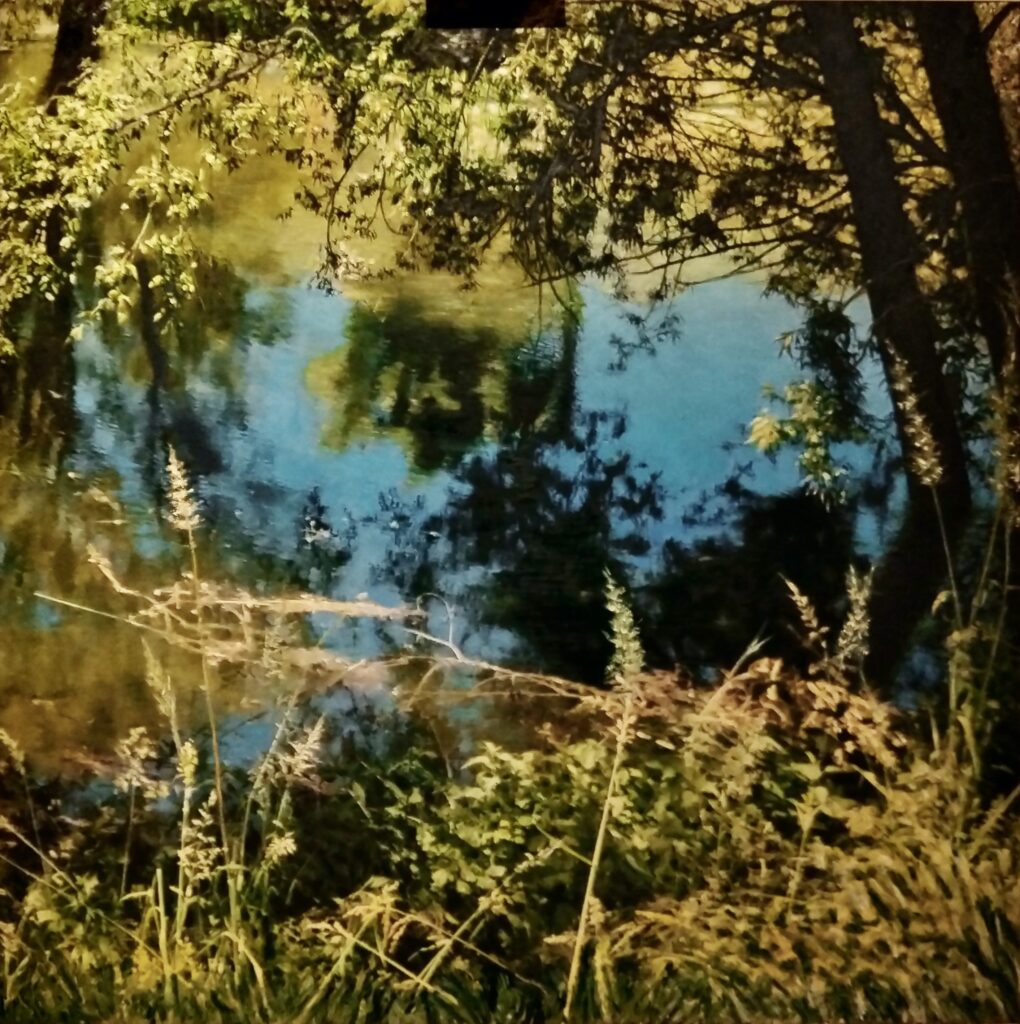
Stefano’s journey is a reminder that art doesn’t always begin with certainty; sometimes it begins with a spark of intuition, a fleeting image, or the courage to follow your instincts. His paintings are more than visual forms; they are reflections of his inner world, transforming fluidity, light, and rhythm into emotion and presence.
Through his work, Stefano invites us to pause, to sense, and to discover meaning in what might seem ordinary. Each piece carries a trace of a moment, a fragment of perception, and a reflection of the subconscious offering viewers not just something to see, but something to feel.
As he continues to explore abstraction, projection, and the interplay between control and surrender, Stefano shows us that art is a living process, evolving alongside the artist. His canvases are not merely finished works, but dialogues, experiences, and reminders that even in unpredictability, there is beauty to be found.
Follow Stefano’s journey and step into his world through the link below.