
What if your painting has its own life once you finish it? Max-Malte Posmyk
👁 314 Views
At Arts to Hearts Project, we genuinely love coming across artists who make you stop and actually look. Not because they’re doing something loud or trying to grab your attention but because something about the work just pulls you in and you don’t even know why until you’re already there.
That’s exactly what happened when we came across Max-Malte Posmyk’s work for our Arts to Hearts Magazine Issue 11.
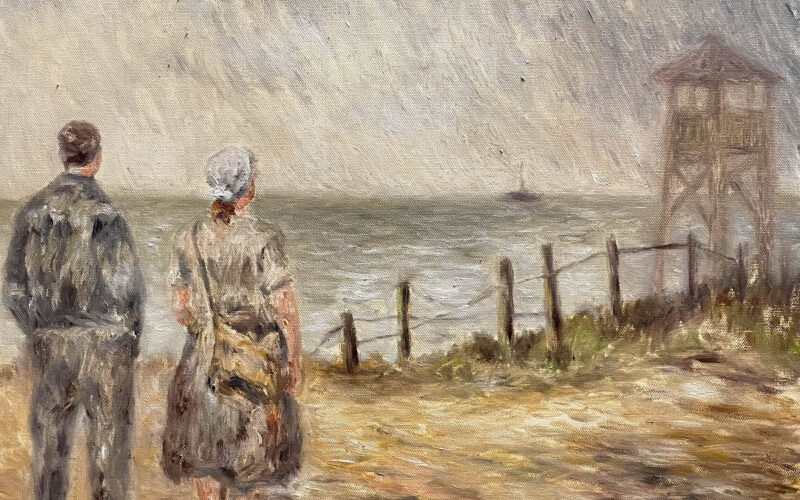
His paintings don’t show you a place or a person the way you’d expect. They show you something harder to name. The feeling of standing next to someone you love and still sensing a distance you can’t quite close. The feeling of looking at a horizon and realizing it’s not showing you what’s out there, it’s showing you the edge of what you’re able to feel in that moment. We kept coming back to his work trying to understand why it felt so personal when nothing about it is spelled out or obvious. And then it hit us. He’s not painting what things look like. He’s painting what it feels like to be in the presence of them.
We knew we wanted him in Arts to Hearts Magazine Issue 11. But we also wanted to understand who he actually is. So we started digging.
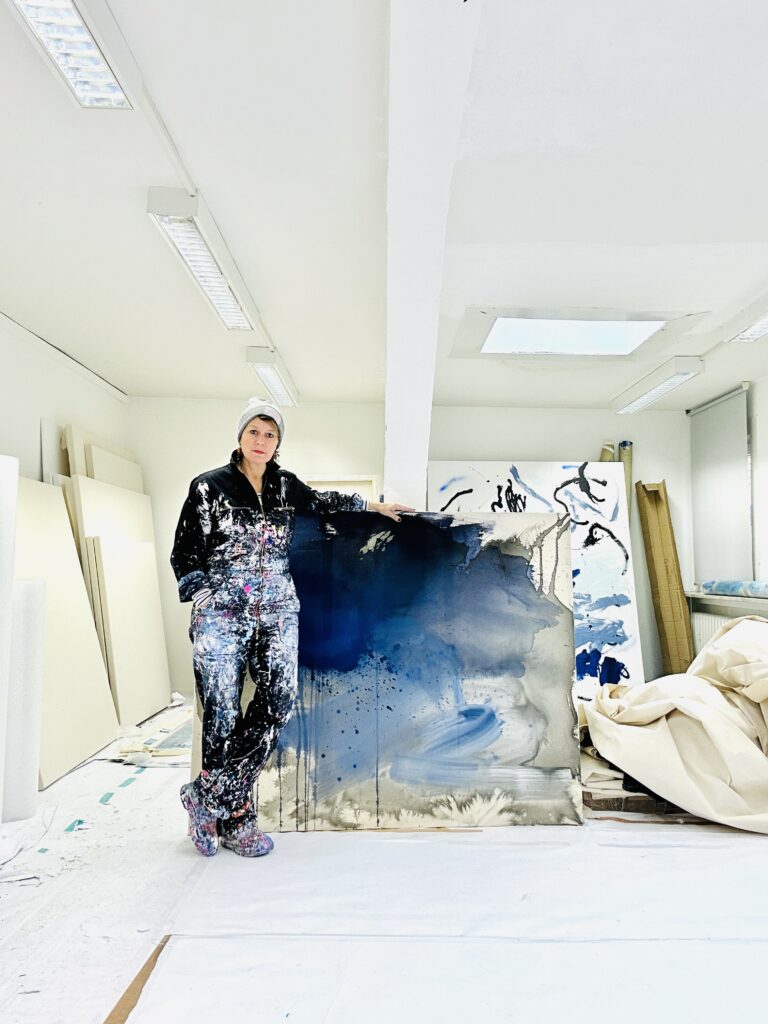
Max-Malte grew up in Potsdam in a home where painting was never a big deal or a special talent or something only certain people did. His grandmother painted. His mother painted. It was just part of daily life, the way some families always have food on the stove or music coming from somewhere in the house.
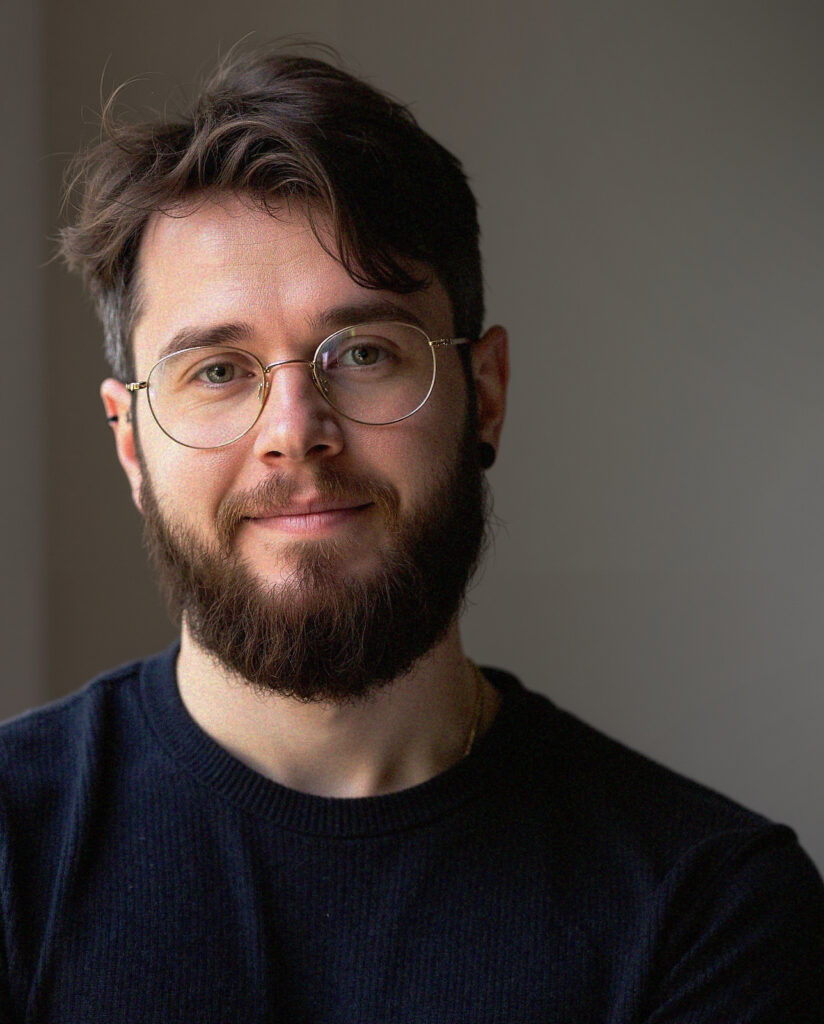
And that kind of beginning does something to a person that art school honestly can’t replicate. It means you never learned to perform. You never learned to make art for an audience first. You just grew up making it because the people around you did and it felt natural to continue.
That foundation got sharper when he began studying under painter Olaf Thiede. And what Thiede taught him wasn’t really about technique, it was about attention. How to actually slow down and look at something.
How to understand what happens at the edge of a form, where one thing ends and another begins, and why that boundary matters more than almost anything else in a painting. Something shifted for Max-Malte during that time. Painting stopped being a subject he was studying and became something he was genuinely accountable to.
What he’s made since then is honestly hard to put into one category. There are landscapes where the mood doesn’t come from the scenery, it comes from the structure holding it together.
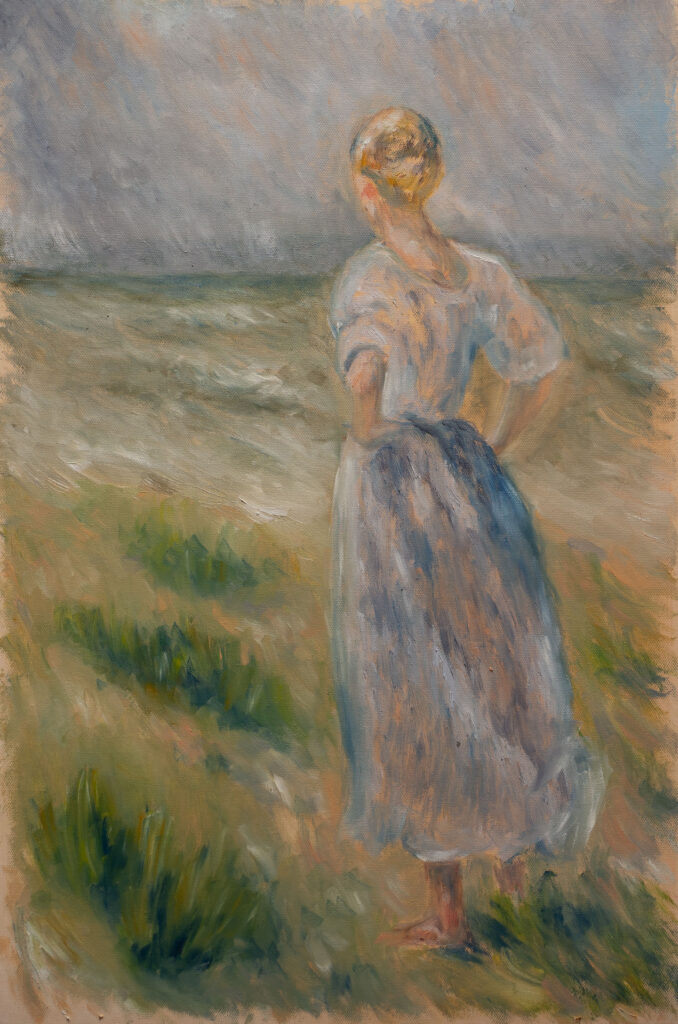
There are portraits where he’s not trying to show you what someone looks like but whether they feel present and real and entirely their own. There are family paintings of the people closest to him that somehow manage to feel deeply tender and quietly private at the same time, like you’re being allowed to look but not too closely. And there’s a Diversity Series that turns all of that inward attention outward toward the wider world.
We went into this conversation with a lot of questions. About what it actually takes to paint someone you love without turning it into something soft or sentimental. About how you use tradition as a tool without letting it make your decisions for you. About what it feels like to deliberately leave something unresolved and trust that the person looking will find their own way in. His answers were more honest than we expected, and we think you’ll feel that too.
Let’s get to know Max-Malte through our conversation with him.
Q1. Could you begin by sharing your background and early training, and the moment when painting became more than study and turned into a committed practice?
I was born in 1994 in Potsdam, and painting was part of my everyday life early on. My grandmother and my mother both painted, so for me it was never something distant or academic. It was a shared practice, something that existed within the family. The decisive moment came during my studies with painter Olaf Thiede. He taught me how to see, to slow down and to really observe, to understand structure, harmony and limits within an image. That was when I realized that painting wasn’t only about expression, but about taking a position. From that point on, it became a committed practice rather than a field of study.
Q2. Your work clearly engages with art history, particularly impressionism and classical painting. What do those traditions offer you that still feels necessary today?
What I take from these traditions is a disciplined way of looking. Impressionism taught me that perception is never neutral and that boundaries between forms, light and space are constantly shifting. This feels necessary today because it allows me to work precisely with limits rather than dissolving them. The craft gives me control over where things meet, where they separate and where they remain unresolved. I don’t use tradition to soften the image, but to structure it.
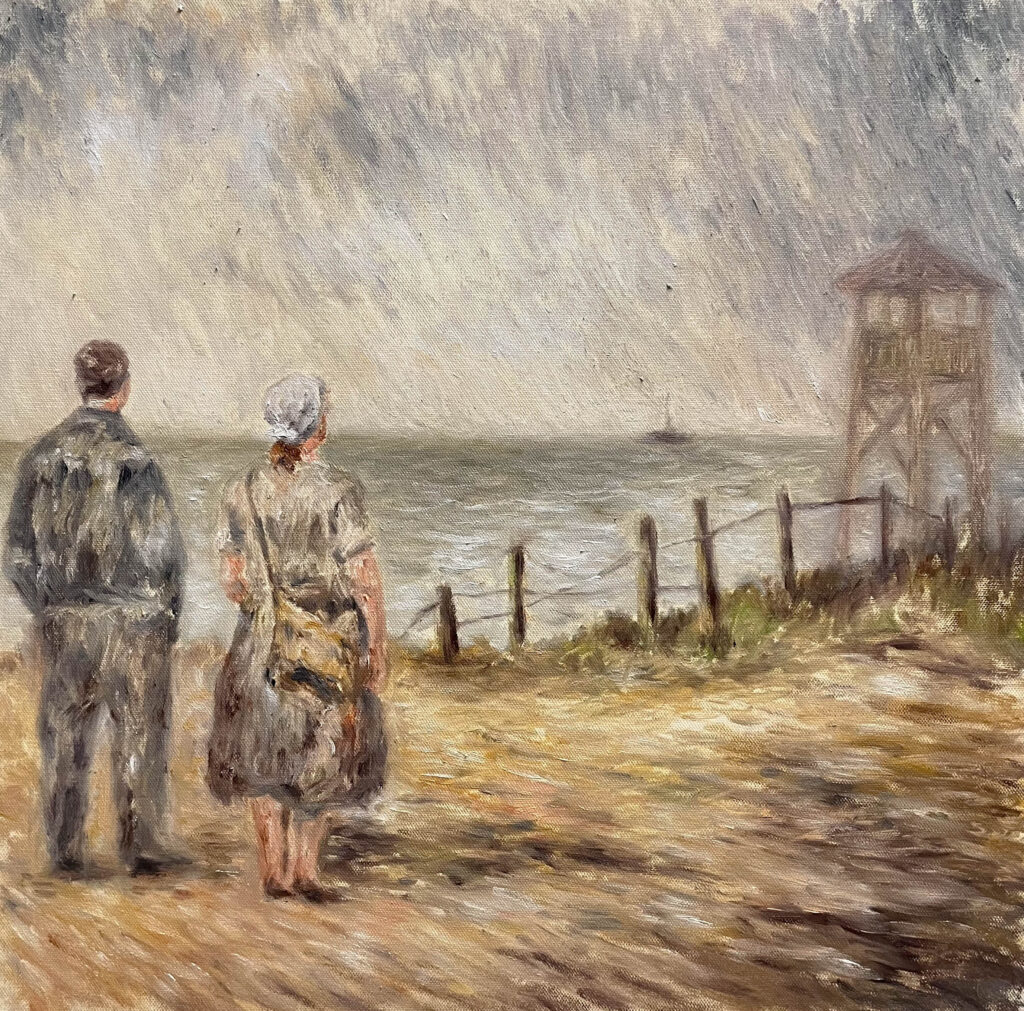
Q3. Many of your landscapes feel less about location and more about atmosphere. How do you translate mood or internal response into a painted place?
The landscape is rarely about the place itself. When I work in Ahrenshoop or on Hiddensee, the sketches I make are about orientation and distance rather than depiction. Back in the studio, I’m interested in what remains. The horizon often becomes a line that divides the image and defines space. Mood enters through that structure. Color and light don’t describe nature, they mark limits of perception and memory.
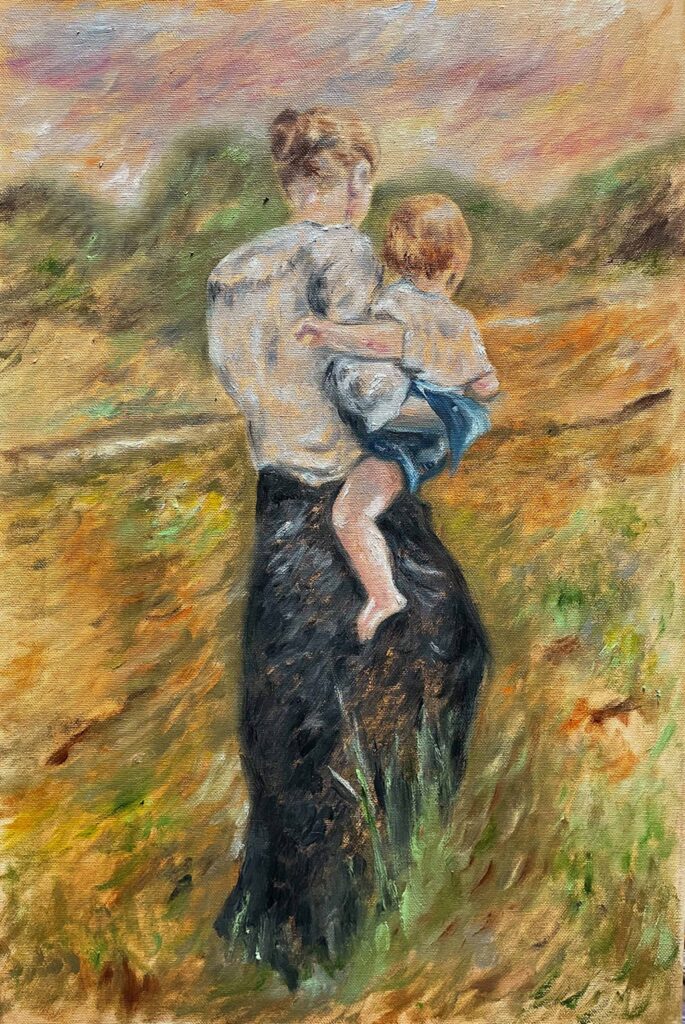
Q4. In works like Golden Motherhood, intimacy is present without becoming sentimental. How do you approach emotional closeness while maintaining restraint?
For me, intimacy always includes a boundary. When I paint my mother or grandmother, I’m not trying to create closeness for the viewer. I’m interested in the distance that exists even within care and protection. Restraint comes from acknowledging that closeness has limits. Emotion becomes stronger when it is not resolved or explained, but held in a controlled, precise form.
Q5. Your portrait and Diversity Series appear alongside landscapes and still life’s on your site. How do these different genres reflect varied parts of your artistic inquiry?
All genres address similar questions from different perspectives. Landscapes deal with spatial limits, portraits with relational limits, still lifes with temporal ones. The Diversity Series is more outward-looking and social, while the family works are rooted in personal experience. What connects them is an interest in how boundaries shape identity and perception.
Q6. Portraiture in your work leans toward presence rather than likeness. What do you look for when a portrait feels complete?
A portrait feels complete when the distance between viewer and figure is clearly defined. I’m not interested in resemblance, but in whether the figure holds its own space. Often that means leaving something unresolved. The portrait should not invite access too easily. Presence, for me, comes from maintaining that boundary.
Q7. Many of your works look back at older traditions while feeling distinctly of the present. How do you think about the relationship between craft and contemporary relevance in your work?
Craft allows me to work consciously with limitation. The better I understand the medium, the clearer I can decide where to draw a line and where not to. Contemporary relevance comes from how these decisions relate to the present moment. Tradition gives me tools, but the questions come from now.
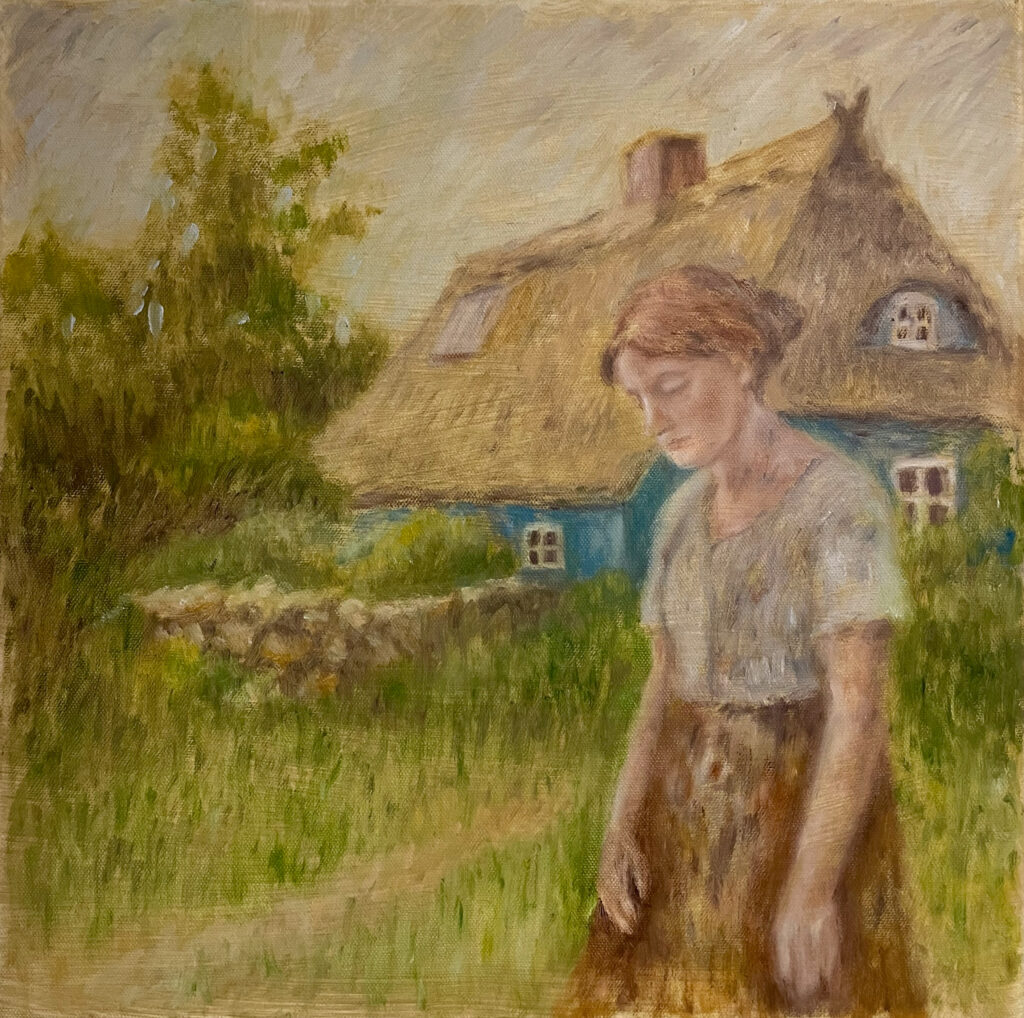
Q8. In your creative process, do you find yourself drawn to certain emotional states curiosity, tenderness, melancholy more than others? How do you channel those states into the work?
I am drawn to tenderness and a quiet form of melancholy. These emotional states are essential to my work, not as direct expression, but as a way of shaping atmosphere. Curiosity initiates the process, while precision allows these moods to unfold with restraint. I use rhythm, distance and the tension between forms to create spaces that the viewer can enter emotionally. The mood is meant to slow perception down and open a space in which boundaries, whether personal, spatial or historical, become perceptible rather than explained.
Q9. When you encounter unexpected responses from viewers interpretations you didn’t anticipate how does that conversation shape your view of the work?
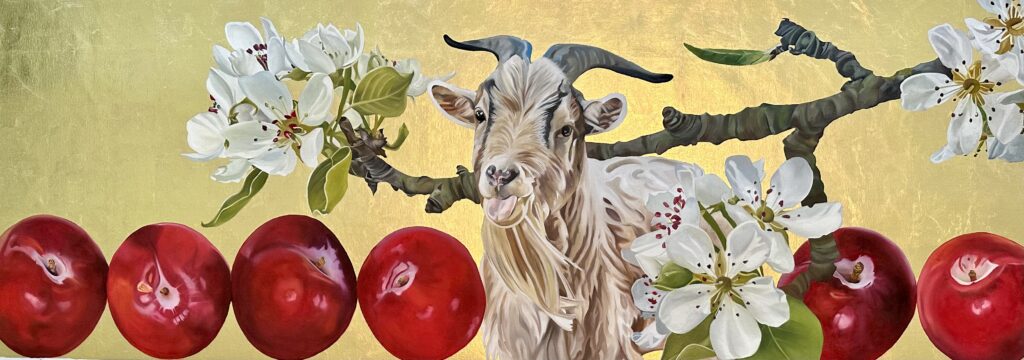
I see those responses as part of the work’s boundary. Once the painting is finished, it operates independently of me. Unexpected interpretations don’t change my position, but they confirm that the work remains open without becoming vague. That openness is intentional.
Q10. What advice would you give to artists who want to engage with tradition without becoming bound by it?
Learn the craft thoroughly so you can use it deliberately. Tradition becomes a problem when it replaces decision-making. Use it to sharpen your position, not to avoid taking one. Once tradition starts softening the edges of your work, it stops being productive.
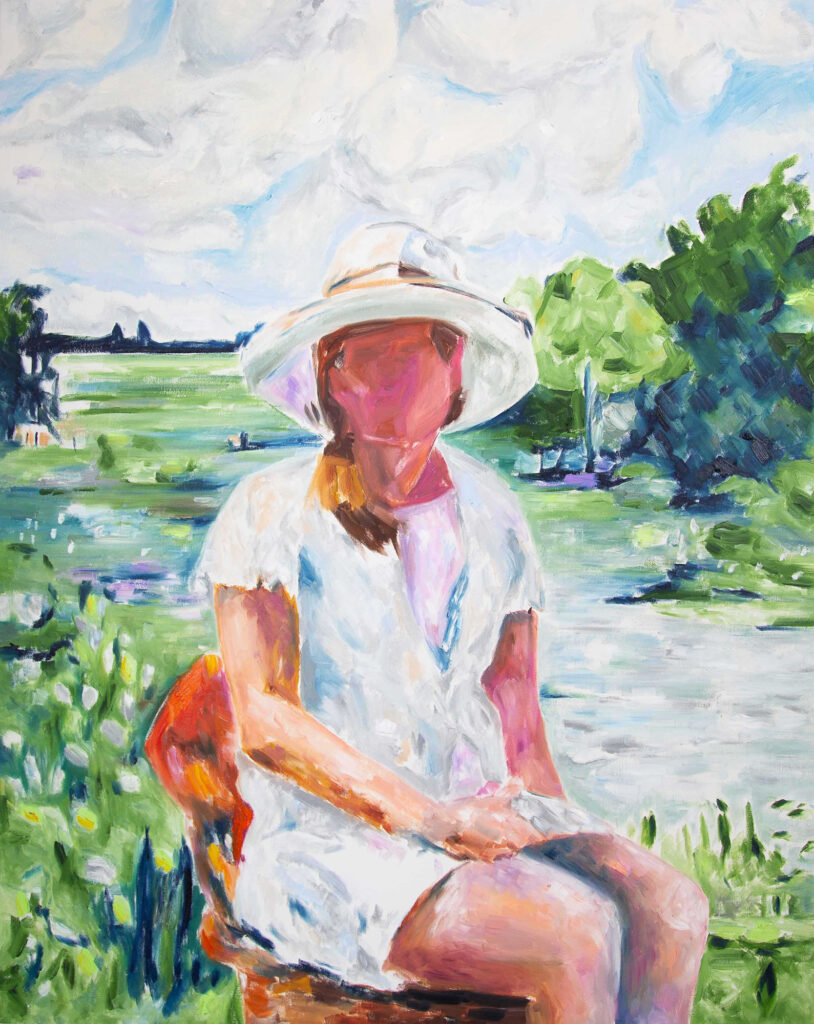
As our conversation with Max came to a close, I was genuinely moved by how quietly certain he is about everything he does.
There’s a kind of artist who needs the world to respond before they know how to feel about what they made. Who posts something and then quietly waits to see if they made the right call. And then there’s someone like Max-Malte, who finishes a painting, steps back, and lets it go. Not because he doesn’t care about how it lands. Because he cared so fully during the making that by the time it’s done the opinion of the world is honestly beside the point.
Most of us are nowhere near that. And sitting with his work after this conversation made me realize how much energy we spend seeking confirmation for things we already know deep down. How often we look outward for permission to feel good about something we made or said or decided. How rarely we just finish something, trust it, and move on.
Every edge he leaves unresolved, every portrait that keeps you at arm’s length, every landscape that hints at a feeling without spelling it out, none of that is him holding back. That’s him being precise. And knowing exactly where to stop, genuinely knowing, is one of the hardest things to learn whether you’re a painter or a writer or just someone trying to say something true without over explaining it.
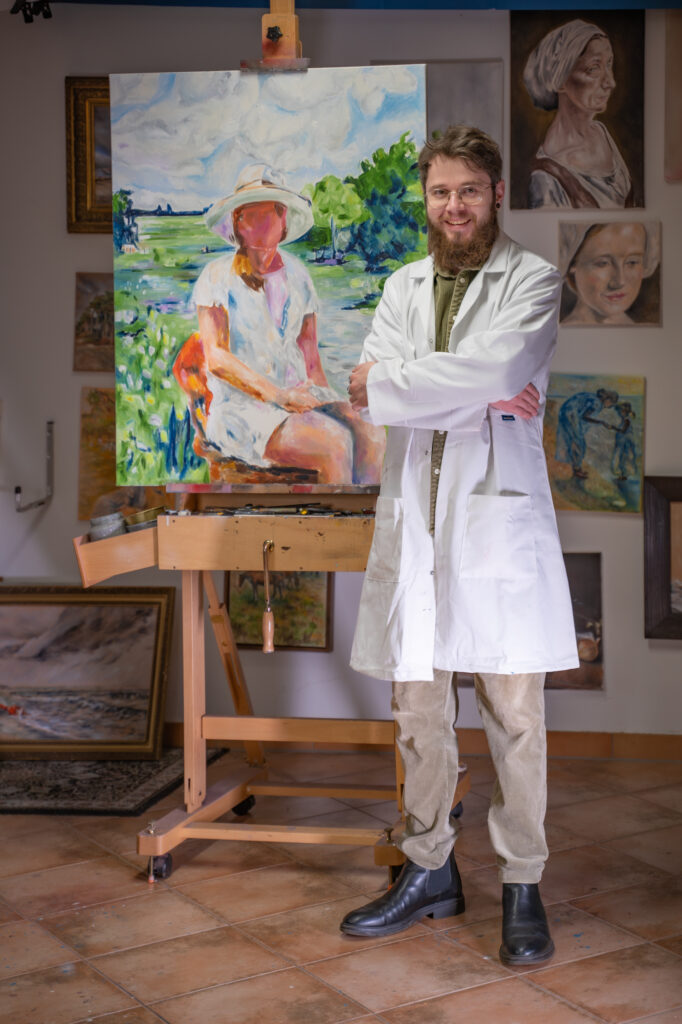
Because most of us keep going past the point where we should stop. We add more. More words. More detail. More justification. We don’t trust that what we’ve already given is enough. We’re so afraid of being misunderstood that we end up saying too much and somehow saying less. Max-Malte trusts what he puts down. He trusts the person on the other side to meet him halfway. And there’s something in that worth sitting with long after you’ve closed this page.
That’s the hidden thing about his work. It’s not just asking you to look more carefully at a painting. It’s asking you to think about how you show up in everything you make and share and offer to the world. Whether you’re leaving room for the other person. Whether you’re trusting yourself enough to stop before you over explain. Whether you believe that what you’ve already given is enough.
Most of us don’t believe that yet. Max-Malte already does. And you can feel it in every single canvas he touches.
He’s worth following closely. Not just for what he’s making now but for where someone with that kind of patience and clarity is headed.
Follow Max-Malte Posmyk through the links below and give his work some real time. Not a quick scroll. Actual unhurried time. It gives back exactly as much as you bring to it.