
The World’s Most Fascinating Private Art Collections

Some of the world’s most important artworks are not hanging in museums.
They are tucked away in private residences, carefully preserved in climate-controlled warehouses, displayed in purpose-built foundations, or quietly passed down through generations of collectors. While millions of visitors flock to major museums each year, countless masterpieces remain outside public view, accessible only to a select few. Yet these private collections often play an equally important role in shaping the art world.
Behind many of these collections are stories that are just as fascinating as the artworks themselves. Some were built by billionaires who spent decades acquiring masterpieces from across centuries of art history. Others were assembled by collectors driven not by wealth, but by curiosity, conviction, and a deep belief in the power of art. Together, they have influenced museum exhibitions, preserved cultural histories, supported emerging artists, and even transformed entire cities into cultural destinations.
From Dorothy and Herbert Vogel, who built a celebrated contemporary art collection on the salaries of a librarian and a postal worker, to families whose holdings include works by Vincent van Gogh, Pablo Picasso, and Claude Monet, these collections offer a rare glimpse into how art is gathered, preserved, and valued behind closed doors.
Whether focused on modern masterpieces, contemporary innovation, or cultural preservation, each collection tells a larger story, not only about art, but about the people who dedicated their lives to collecting it. These are eight of the world’s most fascinating private art collections and the remarkable stories behind them.
1. Dorothy and Herbert Vogel: The Collection Built on Passion, Not Wealth
Location: New York, United States
Collection Highlights: Roy Lichtenstein, Cindy Sherman, Lorna Simpson, Richard Tuttle, Carl Andre


When people imagine influential art collectors, they often picture wealthy patrons with vast fortunes and sprawling estates. Dorothy and Herbert Vogel offered a very different model. A librarian and a postal worker living in a modest New York apartment, they quietly assembled one of the most significant collections of contemporary art in the United States, proving that dedication and curiosity can matter just as much as financial resources.
The couple began collecting art in the early 1960s, immersing themselves in New York’s rapidly evolving contemporary art scene. Rather than purchasing established masterpieces, they gravitated toward emerging artists whose work they found intellectually and emotionally compelling. Because their budget was limited, they often focused on drawings, works on paper, and small-scale sculptures, pieces that were more affordable but no less innovative. This approach led them to acquire works by artists who would later become central figures in contemporary art, including Roy Lichtenstein, Cindy Sherman, Richard Tuttle, and Carl Andre. Over several decades, the Vogels amassed a collection of more than 4,000 artworks, an extraordinary achievement for collectors working within such modest means.
What distinguished the Vogels was not only what they collected, but how they collected. They built genuine relationships with artists, regularly visiting studios and engaging directly with creative communities. Their collection reflected personal conviction rather than market trends, offering a snapshot of contemporary art as it was being made rather than after it had gained institutional recognition.
The story of the Vogel Collection did not end with private ownership. In the 1990s, the couple began donating thousands of works to the National Gallery of Art in Washington, D.C., ensuring public access to the collection they had spent decades building. Their commitment to accessibility continued through the “Fifty Works for Fifty States” initiative, which distributed works from the Vogel Collection to museums across all fifty U.S. states.
Today, the Vogel Collection remains a powerful reminder that great collecting is not solely defined by wealth. It is shaped by vision, persistence, and a willingness to support artists long before the wider world recognizes their significance.
2. The Niarchos Family Collection: A Dynasty of Modern Masterpieces
Location: Athens, Greece
Collection Highlights: Vincent van Gogh, Paul Gauguin, Henri Matisse, Jean-Michel Basquiat, Andy Warhol

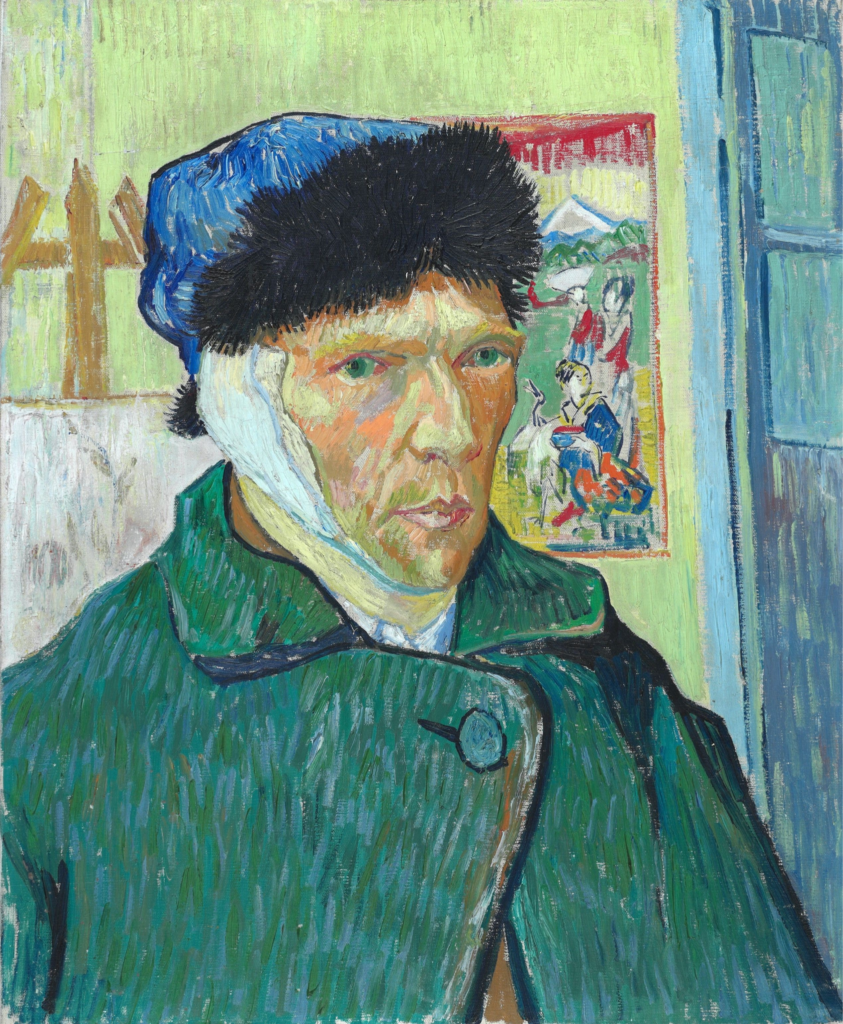
Few private art collections carry the same aura of prestige as the Niarchos Family Collection. Built over decades by the Greek shipping dynasty founded by Stavros Niarchos and later expanded by his son, Philippe Niarchos, the collection is widely regarded as one of the most important privately held assemblies of Impressionist, Modern, and postwar art in the world.
The collection’s strength lies not only in its scale but in the extraordinary quality of its holdings. Among its most celebrated works is Vincent van Gogh’s Self-Portrait with a Bandaged Ear (1889), one of the artist’s most recognizable paintings and a landmark of modern art. The collection has also included Pablo Picasso’s Yo, Picasso (1901), a work often cited as a defining statement of the young artist’s ambition and one of the standout self-portraits of the twentieth century. Alongside these masterpieces are works by Paul Gauguin, Henri Matisse, and other giants of modern art, reflecting generations of careful acquisition rather than fleeting trends.
Under Philippe Niarchos, the collection expanded into contemporary art, adding significant works by artists such as Andy Warhol and Jean-Michel Basquiat. One of the most notable examples is Warhol’s Shot Red Marilyn, one of the artist’s most famous interpretations of Marilyn Monroe and a cornerstone of postwar American art. Philippe Niarchos was also a longtime patron of Warhol, further strengthening the connection between the collector and the artist.
What makes the Niarchos Collection particularly fascinating is its evolution across generations. While many private collections are dispersed, sold, or diluted over time, the Niarchos family continued to refine and expand theirs, creating a collection that bridges Impressionism, Modernism, and contemporary art. It stands as a testament to how private collecting can shape cultural history, preserving some of the most influential artworks of the past two centuries within a single family legacy.
3. The Broad Collection: How Two Collectors Changed Los Angeles
Location: Los Angeles, United States
Collection Highlights: Andy Warhol, Jeff Koons, Robert Rauschenberg, Roy Lichtenstein, Jasper Johns, William Kentridge, Keith Haring, Barbara Kruger, Jean-Michel Basquiat


Private art collections often remain behind closed doors, accessible only to a select circle of curators, scholars, and invited guests. Eli and Edythe Broad took a different approach. Over several decades, the philanthropists assembled one of the most significant collections of postwar and contemporary art in the United States and ultimately transformed it into a public cultural resource that helped redefine Los Angeles as a global art destination.
The Broads began collecting seriously in the 1970s, focusing on artists who were shaping the direction of contemporary art. Their collection grew to include more than 2,000 works, with particularly strong holdings in postwar American art and contemporary practice. Among the artists represented are Jean-Michel Basquiat, Jasper Johns, Roy Lichtenstein, Jeff Koons, Barbara Kruger, Robert Rauschenberg, Cindy Sherman, and Andy Warhol. Rather than acquiring a single work by many artists, the Broads often collected in depth, building substantial groups of works that traced an artist’s development over time.
What distinguished the Broad Collection was its commitment to accessibility. In 1984, the couple established The Broad Art Foundation, which organized loans of artworks to museums around the world. This initiative allowed works that might otherwise have remained in private hands to be seen by millions of visitors across numerous institutions. Their efforts reflected a belief that collecting carried a responsibility to share art with the public rather than simply possess it.
That philosophy reached its most visible expression in 2015 with the opening of The Broad in Los Angeles. Designed to house and display a significant portion of the collection, the museum quickly became one of the city’s most visited cultural institutions. Today, the Broad Collection represents more than a remarkable assembly of contemporary art, it demonstrates how private collecting can evolve into a lasting public legacy, shaping the cultural identity of an entire city while expanding access to some of the most influential artworks of the last century.
4. Lee Kun-Hee’s Collection: The Art Legacy That Reshaped South Korea
Location: Seoul, South Korea
Collection Highlights: Claude Monet, Pablo Picasso, Marc Chagall, Salvador Dalí, Jeong Seon

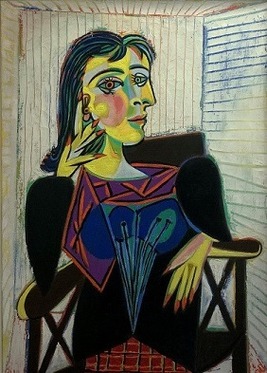
For decades, Lee Kun-Hee was best known as the chairman of Samsung and one of South Korea’s most influential business leaders. Yet beyond the world of technology and industry, he quietly assembled an art collection of remarkable scale and significance, one that would ultimately leave a lasting impact on the country’s cultural landscape.
Over the course of his life, Lee acquired thousands of artworks spanning both Korean and Western traditions. His collection included masterpieces by major international artists such as Claude Monet, Pablo Picasso, Marc Chagall, and Salvador Dalí, alongside some of the most important works in Korean art history. Rather than focusing exclusively on one movement or region, the collection reflected a broad vision of artistic achievement across cultures and centuries.
The collection attracted international attention following Lee’s death in 2020, when his family announced plans to donate more than 23,000 artworks and cultural objects to public institutions across South Korea. The donation, one of the largest in the country’s history, was distributed among several museums, including the National Museum of Korea and the National Museum of Modern and Contemporary Art. The gift dramatically expanded public access to works that had previously remained in private hands and strengthened the holdings of Korean cultural institutions for generations to come.
Among the donated works were nationally treasured Korean paintings, calligraphy, ceramics, and archaeological artifacts, as well as celebrated works by international masters. The breadth of the donation sparked widespread discussion about cultural stewardship, philanthropy, and the role private collectors can play in preserving artistic heritage.
Today, Lee Kun-Hee’s collection is remembered not simply for its size or value, but for the legacy it created. What began as a private passion evolved into a transformative public resource, helping museums tell a richer and more comprehensive story of both Korean and global art. Few collections have made such a profound transition from private ownership to national cultural treasure.
5. Sheikh Hassan bin Mohamed bin Ali Al Thani: Preserving the Story of Arab Modern Art
Location: Doha, Qatar
Collection Highlights: Ahmed Cherkaoui, Mohammed Melehi, Gebran Tarazi, Nejib Belkhodja


While many renowned collectors focus on acquiring globally recognized masterpieces, Sheikh Hassan bin Mohamed bin Ali Al Thani dedicated much of his collecting journey to a different mission: preserving the artistic history of the Arab world. Over several decades, he assembled one of the most comprehensive collections of modern and contemporary Arab art, helping bring greater international attention to artists who had often been overlooked by mainstream art institutions.
Sheikh Hassan began collecting in the 1980s, initially driven by a personal interest in the region’s cultural heritage. As his collection expanded, it evolved into an ambitious effort to document the development of modern Arab art across multiple generations and countries. Rather than concentrating on a single movement or nationality, he sought works that reflected the diversity of artistic practices emerging throughout the Middle East and North Africa.
The collection eventually became the foundation of the Mathaf: Arab Museum of Modern Art in Doha, Qatar, which opened to the public in 2010. Today, Mathaf houses one of the world’s most significant collections of modern and contemporary Arab art, featuring works by artists from across the Arab world. The museum has played an important role in supporting research, exhibitions, and scholarship dedicated to a field of art history that has often received less attention than its European and American counterparts.
What makes Sheikh Hassan’s collection particularly significant is its role in cultural preservation. Many of the artists represented in the collection worked during periods of political change, social transformation, and nation-building. Their artworks offer valuable insights into the histories, identities, and experiences of communities across the region.
By transforming a private collection into a public institution, Sheikh Hassan ensured that these stories would remain accessible to future generations. His collection stands as a powerful example of how collecting can serve not only personal passion but also cultural memory, preserving artistic legacies that might otherwise risk being forgotten.
6. The Paul Allen Collection: The Private Collection That Rewrote Auction History
Location: Seattle, United States
Collection Highlights: David Hockney, Georgia O’Keeffe, Edward Hopper, Georges Seurat, Paul Cézanne, Vincent van Gogh, Paul Gauguin, Gustav Klimt


Few private collections have captured the art world’s attention quite like that of Paul Allen. Best known as the co-founder of Microsoft, Allen spent more than two decades assembling a collection that reflected both an intellectual curiosity about art history and a deep appreciation for artistic innovation. By the time his collection came to auction in 2022, it was recognized as one of the most significant privately held art collections ever assembled.
Unlike collectors who focus on a single period or movement, Allen’s collection spanned more than five centuries of artistic achievement. Renaissance masters, Impressionist icons, modern pioneers, and contemporary artists all found a place within his holdings. Works by Vincent van Gogh, Paul Cézanne, Georges Seurat, Gustav Klimt, Claude Monet, David Hockney, Edward Hopper, and Georgia O’Keeffe demonstrated the extraordinary breadth of his vision. Rather than following a narrow collecting strategy, Allen pursued artworks that he believed represented important moments in the history of human creativity.
The collection reached global headlines when it was sold through Christie’s in New York in November 2022. The sale generated more than $1.6 billion, making it the highest-value single-owner auction in history. Several works achieved record-breaking prices, underscoring both the quality of the collection and the enduring demand for museum-caliber masterpieces. Yet the sale was notable for more than its financial results. In accordance with Allen’s wishes, the proceeds were directed toward philanthropic causes, extending the collection’s impact beyond the art market.
What makes the Paul Allen Collection particularly fascinating is the way it balanced scholarship, ambition, and public benefit. While the artworks were privately owned, many were regularly loaned to museums and exhibitions around the world, allowing audiences to engage with them long before the historic auction. Today, the collection is remembered not only for the masterpieces it contained, but for the extraordinary moment when a lifetime of collecting became a landmark event in art history.
7. The Wildenstein Family Collection: The Art World’s Most Mysterious Treasure Vault
Location: Paris, New York, and Tokyo
Collection Highlights: Claude Monet, Pierre-Auguste Renoir, Paul Gauguin, Paul Cézanne, Vincent van Gogh


For generations, the Wildenstein name has occupied a unique place in the art world. Part dealer, part collector, and part scholarly authority, the family’s influence extends far beyond the artworks they own. Yet despite their prominence, the true scale and contents of the Wildenstein Collection have remained remarkably elusive, earning it a reputation as one of the most mysterious private art collections ever assembled.
The Wildenstein family’s involvement in the art market dates back to the nineteenth century, when founder Nathan Wildenstein established what would become one of the world’s most influential art dealerships. Over the decades, the family acquired an extraordinary range of artworks spanning centuries of European art history. Their holdings have reportedly included works by Claude Monet, Pierre-Auguste Renoir, Paul Gauguin, Vincent van Gogh, Paul Cézanne, and other major figures whose paintings now define museum collections around the world.
What makes the collection particularly fascinating is how little is publicly known about it. Unlike many contemporary collectors who establish museums or frequently lend works to exhibitions, much of the Wildenstein Collection has remained outside public view. Over the years, reports of previously unknown masterpieces emerging from family holdings have only added to the collection’s mystique. Art historians and market observers have long speculated about the depth of its reserves, with stories of hidden storerooms and rarely seen treasures becoming part of art-world lore.
The family’s influence extends beyond collecting. Through the Wildenstein Institute in Paris, they have played an important role in art historical research, producing catalogues raisonnés for artists such as Monet and Gauguin. These scholarly publications remain important reference tools for museums, collectors, and researchers seeking to authenticate and study works by these artists.
More than a collection of masterpieces, the Wildenstein Collection represents a rare intersection of commerce, scholarship, and connoisseurship. Its enduring intrigue lies not only in the artworks it contains, but in the fact that much of it remains unseen. In an age when collections are increasingly shared through museums and digital platforms, the Wildenstein Collection continues to embody the allure of mystery, reminding us that some of the art world’s greatest treasures still exist beyond public view.
Private art collections occupy a unique space between personal passion and public history. While museums often shape how we understand art, many of the works that define artistic movements, influence scholarship, and inspire future generations have spent part of their lives in private hands. The collectors behind these holdings have preserved masterpieces, championed emerging artists, documented cultural histories, and, in some cases, transformed private pursuits into public legacies.
What makes these collections so compelling is not simply their monetary value or the fame of the artists they contain. It is the vision behind them. Whether assembled by a librarian and a postal worker in a small New York apartment or by some of the world’s most influential business leaders and philanthropists, each collection reflects a deeply personal way of seeing the world. Together, they remind us that collecting is about more than ownership, it is about stewardship, curiosity, and the desire to preserve something meaningful for the future.
As museums continue to expand access to art and collectors increasingly share their holdings with the public, the line between private passion and public benefit continues to blur. Yet part of the fascination remains the same: knowing that beyond gallery walls and museum corridors, extraordinary collections are still waiting to be discovered.
Which collection would you most love to see in person?
And if you’re in the mood for another art-filled journey, explore our feature on artworks inspired by the love of reading.