



10 Most Controversial Artworks of All Time
👁 6 Views
Few things capture public attention quite like a controversial artworks. Across history, artists have repeatedly tested the limits of what society is willing to see, accept, or even tolerate. From religious outrage to moral panic, the tension between art and its audience has long been a catalyst for debate.
What once shocked the public often later becomes canon. Works that were dismissed, rejected, or condemned, whether for their realism, subject matter, or defiance of convention, have gone on to redefine entire movements. As art evolved through modernism and into the contemporary era, provocation itself became a deliberate strategy, with artists increasingly embracing discomfort as a tool rather than a consequence.
Today, in a world shaped by media, markets, and instant visibility, controversy travels faster and further than ever before. A single artwork can spark global debate within hours, raising questions not only about aesthetics, but about value, ethics, and authorship.
The works in this list reflect that shifting landscape. Some challenge institutions, others confront cultural norms, and a few seem to question the very idea of art itself. Together, they reveal that controversy is not just a side effect of art, it is often where its most important conversations begin.
Maurizio Cattelan, Comedian (2019)
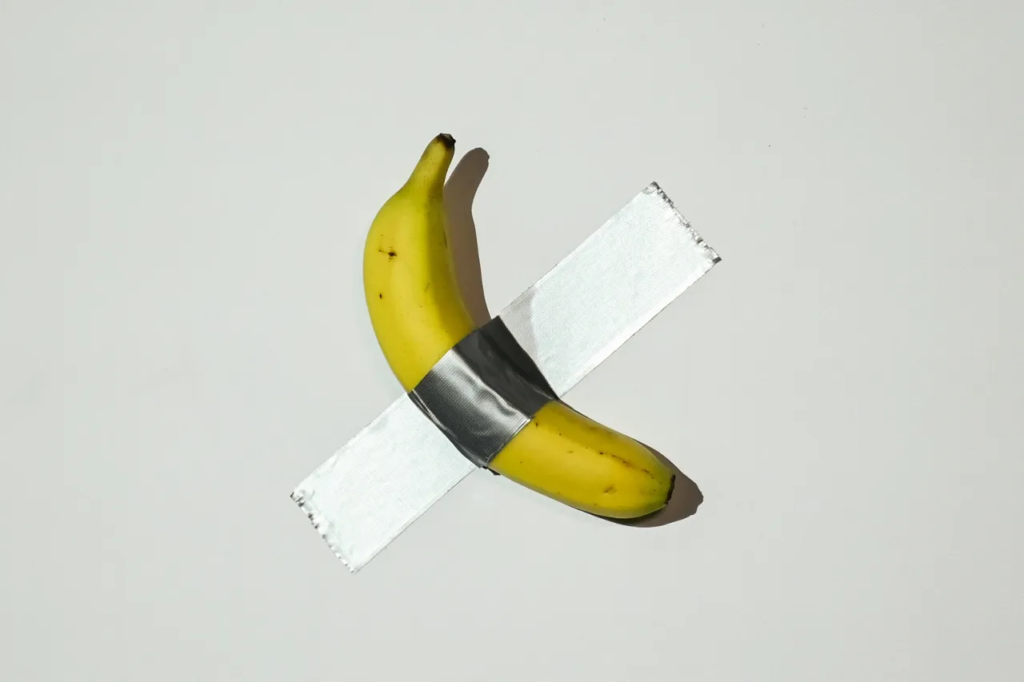
Maurizio Cattelan Comedian (2019)
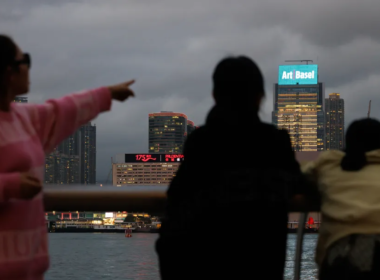
Few artworks in recent memory have captured global attention and confusion quite like Maurizio Cattelan’s Comedian. First unveiled at Art Basel Miami Beach in 2019, the work consisted simply of a banana duct-taped to a gallery wall. Absurd, humorous, and almost aggressively minimal, it instantly became a viral sensation, blurring the line between artwork and internet meme.
Cattelan, long known for his irreverent provocations, leaned fully into the spectacle. While the materials themselves were mundane (and perishable), the artwork was sold with a certificate of authenticity and instructions for display, making the concept, rather than the object, the true work of art. This distinction became central to both its market success and its controversy.
At the heart of Comedian lies a question that continues to divide audiences: what exactly are we valuing in contemporary art? Critics dismissed it as shallow, emblematic of an art market driven more by hype than substance. Supporters, however, argued that this was precisely Cattelan’s point, a sharp, self-aware critique of commodification, spectacle, and the often absurd economics of the art world.
The work’s notoriety only grew over time. During Sotheby’s November 2024 sales, Comedian fetched $6.24 million, reigniting debates about value, authorship, and artistic intent. By then, the banana had long transcended its physical form, existing instead as a cultural symbol, replicated, parodied, and endlessly circulated online.
In many ways, Comedian operates as a mirror. It reflects not just the art world’s excesses, but our own fascination with them, our willingness to assign value, to participate in the spectacle, and to question whether the joke is shallow, or intentionally so.
Beeple, Everydays: The First 5000 Days (2007–2021)

Blockchain entrepreneur Vignesh Sundaresan, also known by his pseudonym MetaKovan, showing Beeple’s Everydays: The First 5000 Days (2007–2021) at his home in Singapore, April 7, 2021
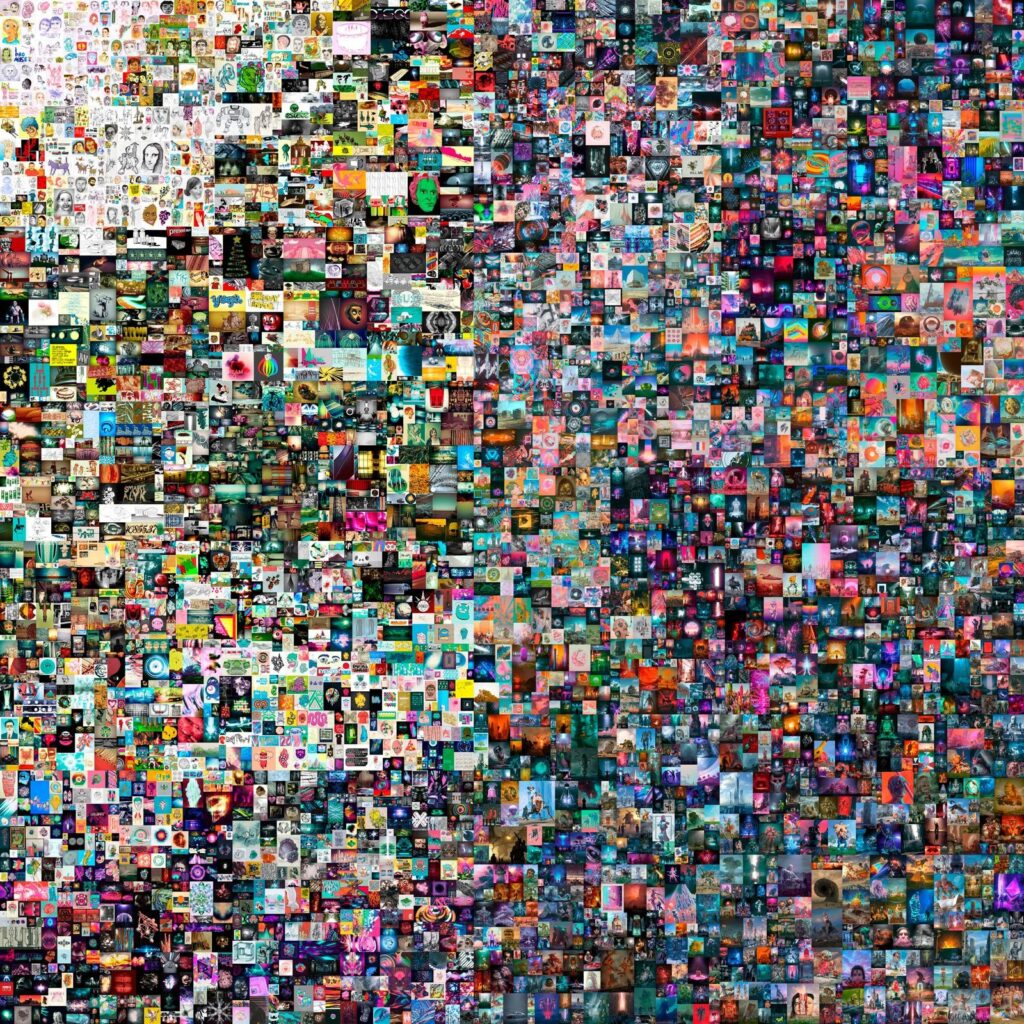
If Maurizio Cattelan’s banana made people question the value of physical art, Beeple’s Everydays: The First 5000 Days pushed that skepticism into entirely new territory. Sold at Christie’s on March 11, 2021, for over $69 million, the work became the third-most expensive piece ever sold by a living artist, ranking just behind Jeff Koons’s Rabbit and David Hockney’s Portrait of an Artist (Pool with Two Figures).
What made the sale so staggering wasn’t just the price, but the nature of the work itself. Created by digital artist Mike Winkelmann, known as Beeple, Everydays exists purely as a digital file, a vast mosaic of 5,000 individual images produced daily over more than thirteen years. Rather than a physical object, it was sold as an NFT (non-fungible token), a blockchain-based certificate that verifies ownership of a unique digital asset.
At the time of the sale, NFTs were still widely misunderstood. Even journalists struggled to clearly explain how something intangible, something that could be viewed, copied, and shared endlessly, could command such a high price. For many, the sale felt less like an artistic milestone and more like a speculative frenzy driven by cryptocurrency wealth.
The confusion wasn’t just technical, it was philosophical. What does it mean to “own” a digital image that anyone can access? And where does the value actually reside: in the artwork, the token, or the market hype surrounding it?
The buyers, led by blockchain entrepreneur Vignesh Sundaresan (known as MetaKovan), framed the purchase as an investment in a new cultural paradigm. The work itself, a dense, often chaotic compilation of internet-age imagery,reflects everything from political satire to surreal digital fantasies, capturing the tone and turbulence of online culture.
Bold predictions followed, with claims that Everydays could one day be worth billions. Whether that future materializes or not, the artwork has already secured its place as a defining symbol of a moment when art, technology, and speculation collided.
In the end, Everydays is as much about belief as it is about aesthetics, a test of how far the boundaries of art can stretch in an increasingly digital world.
Damien Hirst, For the Love of God (2007)
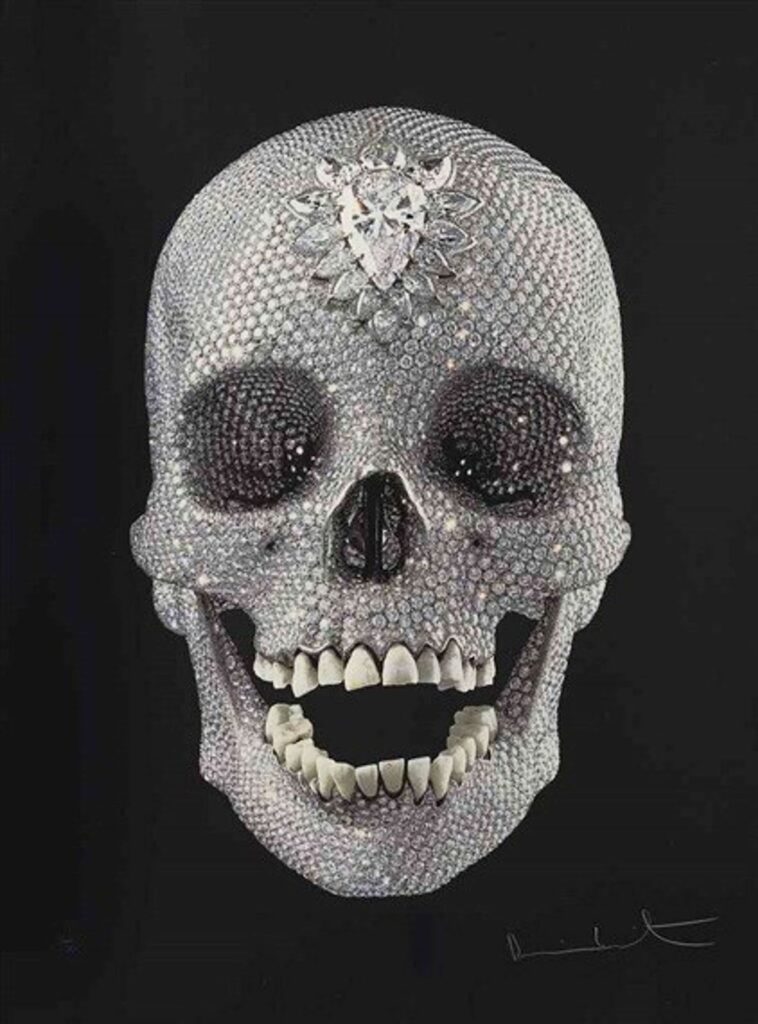
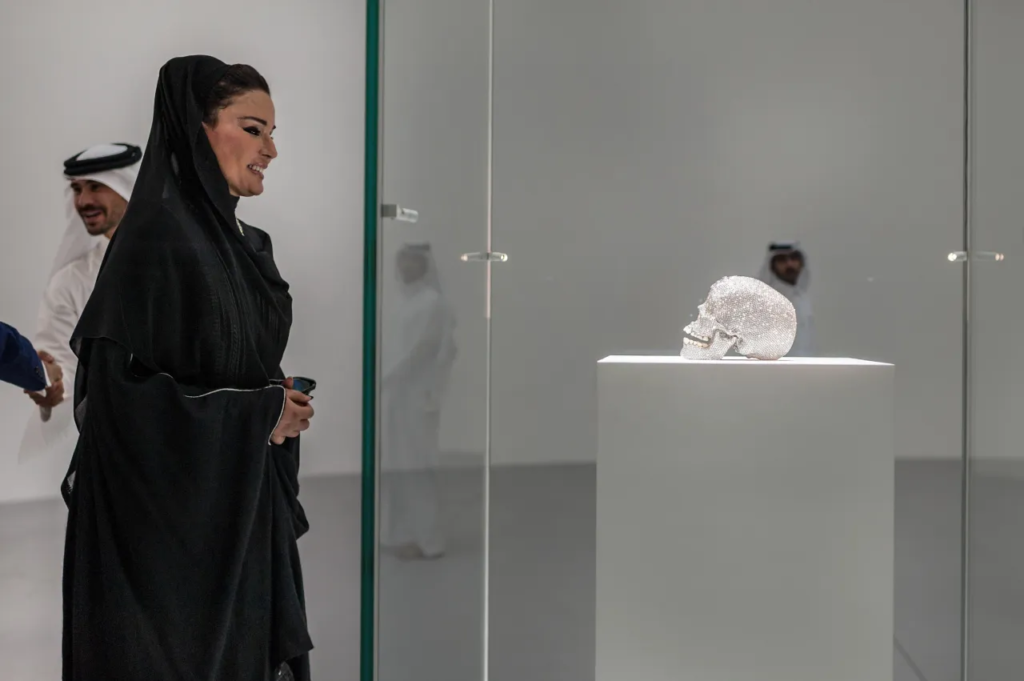
Damien Hirst’s For the Love of God (2007) in “Damien Hirst: Relics,” QM Gallery Al Riwaq Art Space, Doha, Qatar, October 9, 2013
Few artists have built a career on spectacle quite like Damien Hirst, a leading figure of the Young British Artists (YBAs) known for his provocative, high-production works, from animals suspended in formaldehyde to elaborate, museum-scale installations. Yet even within that legacy, For the Love of God stands apart.
Created in 2007, the work transforms an 18th-century human skull into an object of extreme opulence. Cast in platinum and encrusted with 8,601 diamonds, including a striking 52.4-carat pink diamond set in the forehead, the piece reads as a contemporary memento mori, reimagined for an age of excess and spectacle.
The work immediately ignited debate for its unapologetic fusion of death and luxury. Critics saw it as the ultimate symbol of art-world excess, a glittering monument not to mortality, but to wealth and status. Its reported $100 million sale only amplified that perception, positioning it among the most expensive artworks ever.
However, that narrative soon unraveled. Hirst later revealed that the sale had been overstated, with the work in fact remaining jointly owned by himself, his gallery White Cube, and a group of investors. This raised uncomfortable questions about market manipulation, perception, and the role of hype in constructing artistic value.
Adding another layer of controversy were claims by artist John LeKay, who alleged that Hirst had appropriated the concept. Hirst’s response, casual and disarming, only reinforced his reputation: “All my ideas are stolen, anyway.”
Despite the skepticism, For the Love of God exerts a powerful visual and conceptual pull. It seduces with brilliance while confronting viewers with the inevitability of death beneath its surface. The tension between these two forces, luxury and mortality, sits at the heart of the work.
In many ways, the piece encapsulates Hirst’s entire practice: bold, confrontational, and deeply entangled with the mechanisms of the art market. Whether interpreted as a profound reflection on death or an extravagant exercise in branding, it remains one of the most controversial and unforgettable artworks of contemporary art.
Paul McCarthy, Tree (2014)
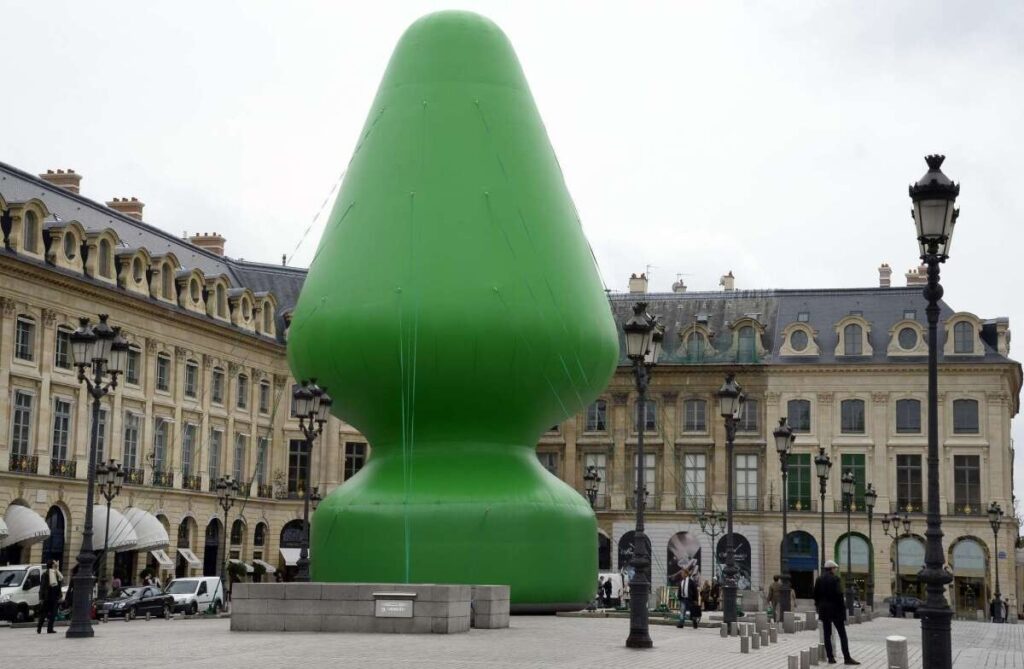
Paul McCarthy’s Tree (2014) installed at Place Vendome, Paris, October 16, 2014
Few public artworks have provoked as immediate and physical a backlash as Paul McCarthy’s Tree. Installed in 2014 at the prestigious Place Vendôme in Paris, the towering 80-foot inflatable sculpture was, according to the artist, a stylized Christmas tree. But for many viewers, the resemblance to a giant sex toy was unmistakable.
McCarthy, a Los Angeles–based artist known for pushing boundaries with provocative, often explicit imagery, was no stranger to controversy. Yet even by his standards, the reaction to Tree was intense and deeply personal.
The setting played a crucial role. Place Vendôme, synonymous with luxury, heritage, and refinement, became an unlikely stage for what many perceived as an obscene intrusion. Locals and critics alike rejected McCarthy’s explanation, interpreting the work as deliberately confrontational and disrespectful.
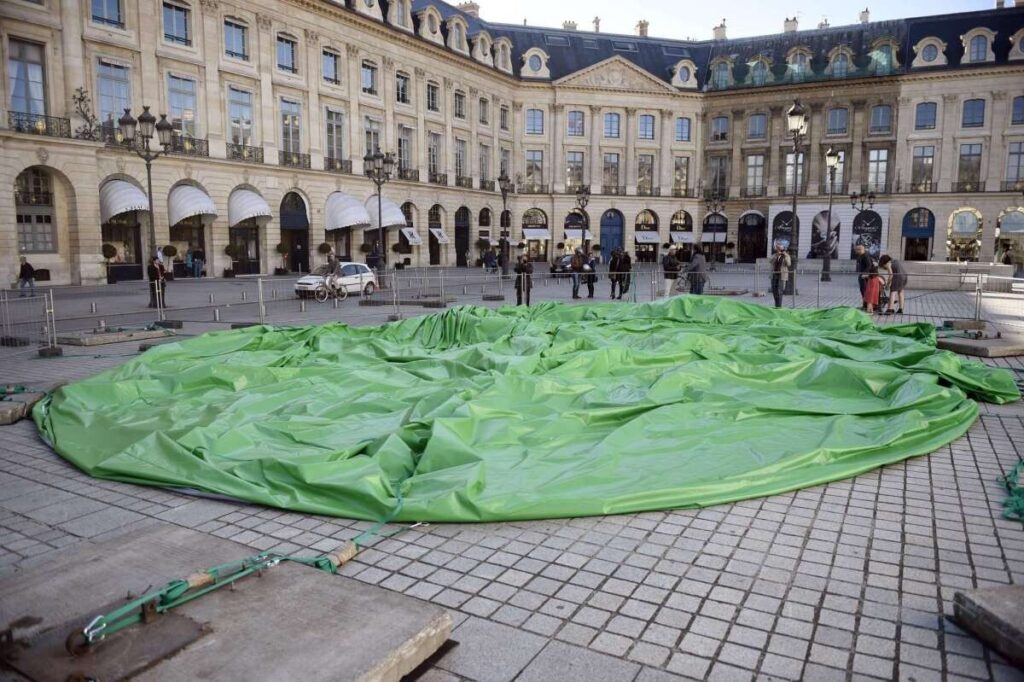
The backlash quickly escalated beyond criticism. The sculpture was vandalized, slashed and deflated and in a shocking incident, McCarthy himself was physically assaulted by a passerby who reportedly hurled insults at him. The outrage revealed not just discomfort with the artwork’s form, but a broader cultural clash over public space, taste, and artistic freedom.
What makes Tree particularly significant is how it exposes the fragile boundary between contemporary art and public tolerance. Unlike gallery works, public installations invite unsolicited audiences and with them, unpredictable reactions.
McCarthy, in turn, absorbed the controversy into his practice. The incident became material for further work, reframing him not just as provocateur but as participant in the very tensions his art provokes.
In the end, Tree was less about what it depicted and more about what people saw in it. It forced a confrontation between intention and perception, raising enduring questions about who gets to define meaning in art and how far that meaning can go before it sparks revolt.
Marcel Duchamp, Fountain (1917)
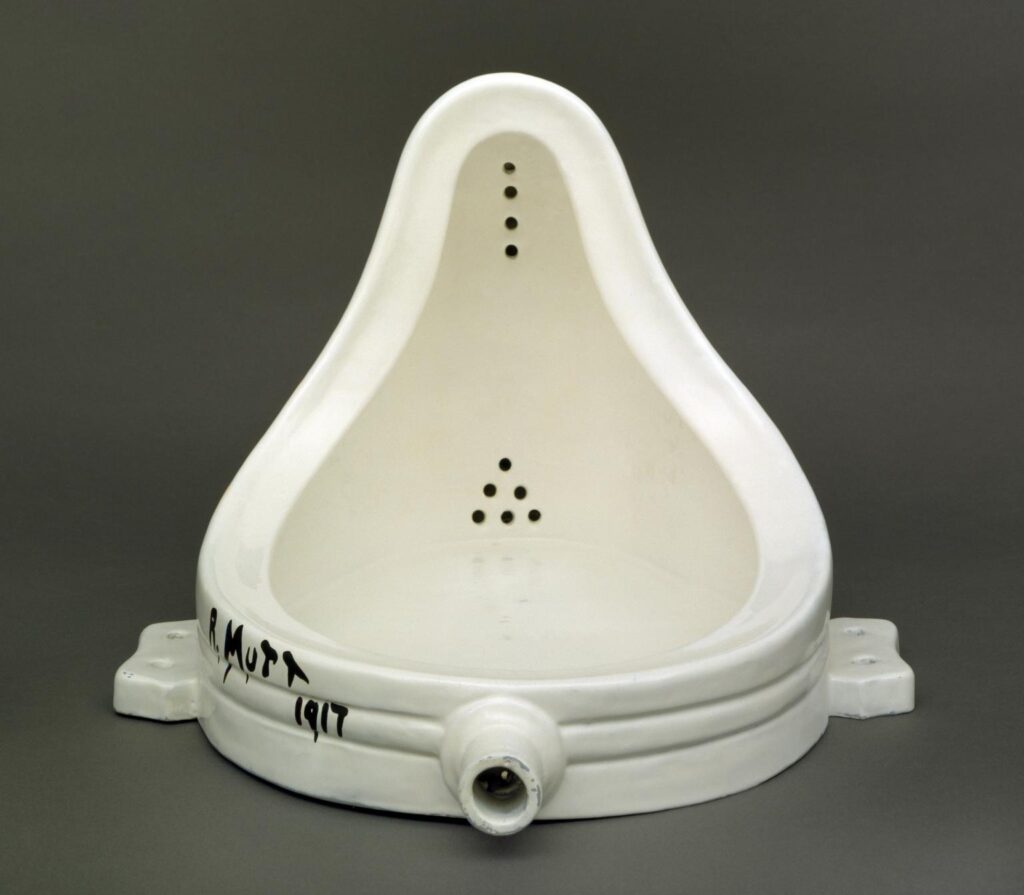
Marcel Duchamp Fountain (1917)
Often cited as the most controversial artwork in modern history, Marcel Duchamp’s Fountain remains a defining rupture in how we understand art. Created in 1917, the work consists of a standard porcelain urinal, rotated onto its back and signed with the pseudonym “R. Mutt.”
Submitted to the Society of Independent Artists, an exhibition that claimed to accept all works, Fountain was nevertheless rejected. The decision exposed the limits of that promise and revealed just how threatening Duchamp’s gesture truly was. In response, he resigned from the board, turning the rejection itself into part of the artwork’s legacy.
At its core, Fountain challenged a fundamental assumption: that art must be made, not chosen. By presenting an everyday manufactured object as art, Duchamp stripped away traditional markers of skill, authorship, and beauty.
The outrage wasn’t just about the object’s form, though a urinal certainly carried its own shock value but about what it implied. If an artist could designate anything as art, then what authority did institutions, critics, or audiences really hold?
Years later, Duchamp reflected on the work with characteristic ambiguity. In a 1964 interview, he described art itself as “a mirage” , something that appears meaningful, even beautiful, yet ultimately resists fixed definition. It was a statement that reframed Fountain not as a prank, but as a philosophical provocation.
More than a century on, the work continues to unsettle. It doesn’t offer answers so much as it destabilizes the question itself: what is art, and who gets to decide?
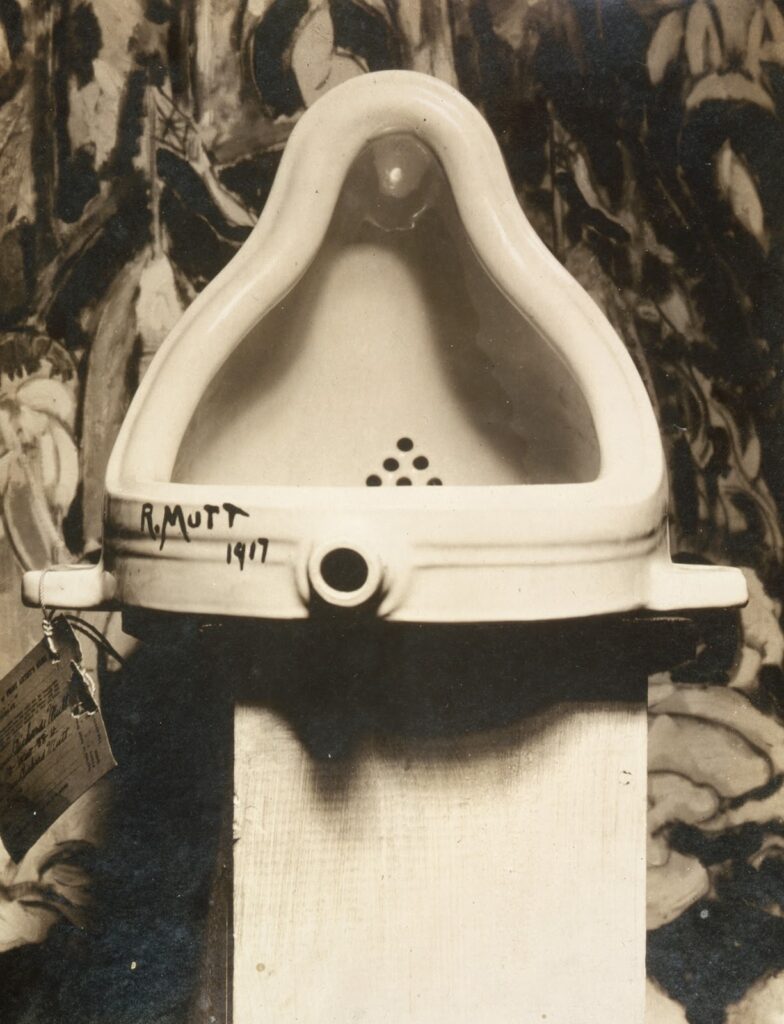
In that sense, Fountain doesn’t just belong on a list of controversial artworks, it is the reason such a list can exist at all.
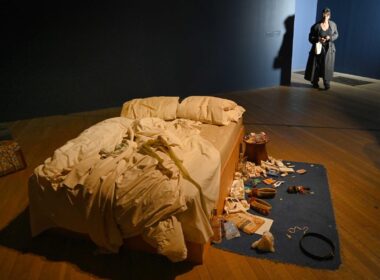
Tracey Emin, My Bed (1998)

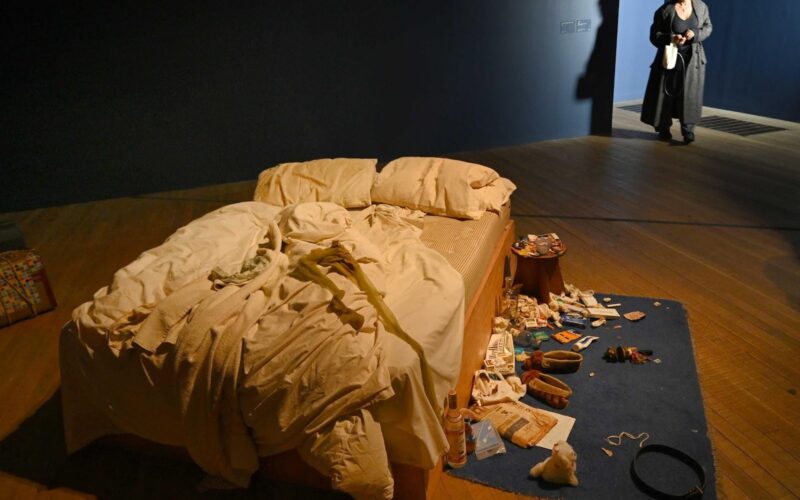
My Bed, Tracey Emin, 1998
Few artworks have exposed the boundary between private life and public display as starkly as Tracey Emin’s My Bed. Created in 1998, the work consists of the artist’s own unmade bed, surrounded by personal debris, dirty underwear, empty bottles, cigarette butts, used condoms, and everyday refuse.
What viewers encountered was not a representation, but a direct fragment of Emin’s life. Presented without alteration, the installation blurred the line between art and raw experience, turning intimacy into spectacle.
The reaction was immediate and deeply divided. Many dismissed the work as careless or indulgent, questioning how an unmade bed could be considered art at all. Others were unsettled by its explicitness, the unfiltered glimpse into a moment of emotional and physical vulnerability.
Critics often framed it as a symbol of decadence or attention-seeking, while supporters recognized it as a radical act of honesty. Emin laid bare aspects of her personal life that are typically hidden, forcing audiences to confront discomfort around mental health, sexuality, and self-exposure.
What makes My Bed enduring is not the shock of its contents, but the emotional weight it carries. The work emerged from a period of personal crisis, and its disarray becomes a portrait, one that replaces traditional representation with lived reality.
In doing so, Emin challenged long-standing ideas about what art should look like, and what it should reveal. Instead of distance or refinement, she offered immediacy and truth, however messy or unsettling that truth might be.
My Bed remains one of the most polarizing works of contemporary art, not because it hides meaning, but because it reveals too much.
Damien Hirst, The Physical Impossibility of Death in the Mind of Someone Living (1991)
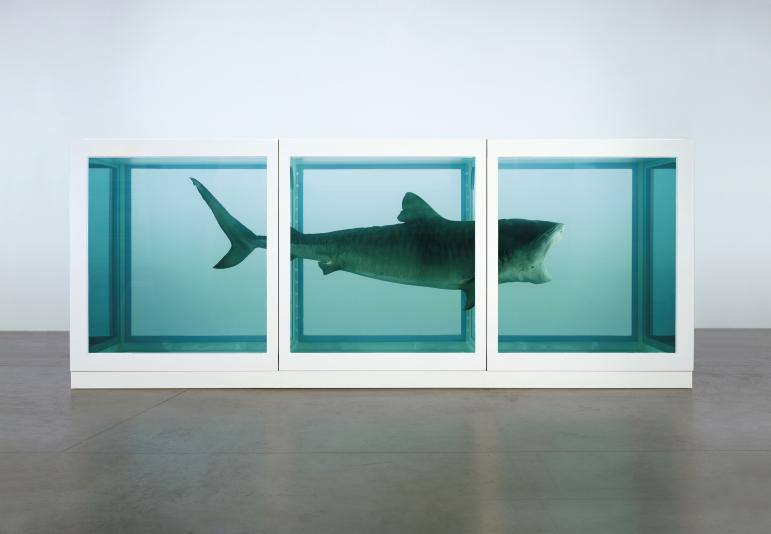
Damien Hirst’s The Physical Impossibility of Death in the Mind of Someone Living is one of the most iconic and unsettling artworks of the late 20th century. Created in 1991, the piece features a real tiger shark suspended in a glass tank filled with formaldehyde, confronting viewers with death in a way that feels both immediate and impossible to fully comprehend.
At first glance, the work appears almost cinematic: the shark, frozen mid-motion, seems as though it could come alive at any moment. This tension between life and death lies at the heart of the piece, forcing viewers into a direct encounter with something they instinctively fear yet cannot fully process.
Hirst, known for his provocative use of materials, pushed boundaries by incorporating an actual animal body into the artwork. While this gave the piece its visceral power, it also sparked intense criticism. Many viewed it as shocking for the sake of attention, questioning whether the use of a dead animal crossed an ethical line. Others saw it as a deeply unsettling but effective meditation on mortality.
The controversy extended beyond ethics into questions of authorship and permanence. Over time, the original shark deteriorated and had to be replaced, raising further debates about what constitutes the “authentic” artwork, the physical object or the idea behind it.
Despite the backlash, the work remains a defining example of Hirst’s practice and of the Young British Artists movement more broadly. It doesn’t offer comfort or resolution; instead, it traps viewers in a moment of confrontation, where death is visible, present, and yet fundamentally beyond understanding.
In doing so, the piece lives up to its title, capturing the paradox of trying to grasp death while still being alive and remains one of the most controversial and unforgettable artworks in contemporary art history.
Guerrilla Girls, Do Women Have to Be Naked to Get Into the Met. Museum? (1989)
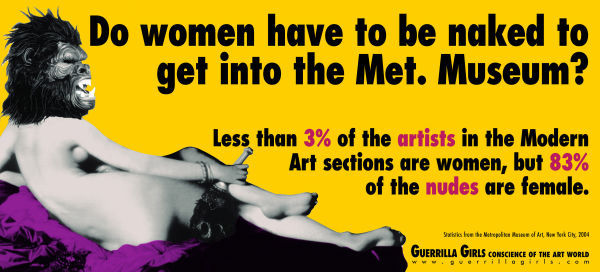
Guerrilla Girls, Do Women have to be Naked to Get into the Met. Museum? (1989). Courtesy of glasstire.com
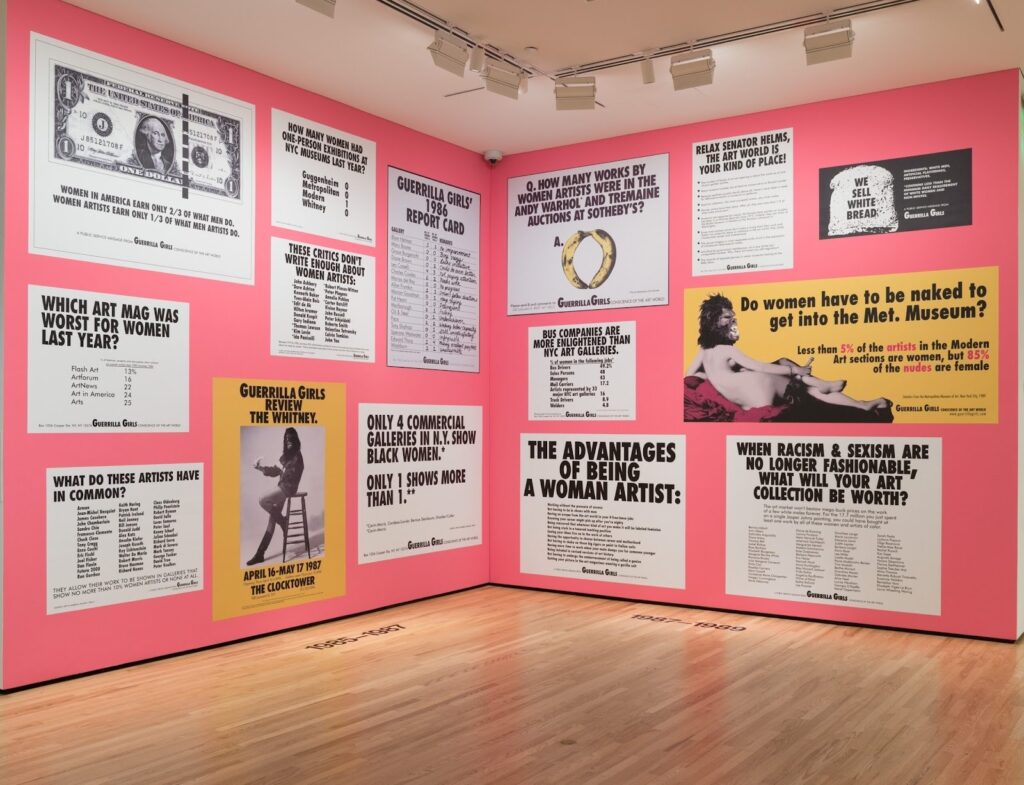
Sharp, confrontational, and impossible to ignore, the Guerrilla Girls’ 1989 poster Do Women Have to Be Naked to Get Into the Met. Museum? became one of the most iconic works of feminist art activism. Created by the anonymous collective of women artists known for their gorilla masks and data-driven critiques, the poster called out gender inequality in major art institutions with biting clarity.
Formed in response to a 1984 exhibition at New York’s Museum of Modern Art, where only 13 of 169 artists were women, the Guerrilla Girls set out to expose systemic bias in the art world. This poster, in particular, targeted the Metropolitan Museum of Art, pairing a reclining nude figure with statistics that revealed a stark imbalance: while female bodies were widely displayed, women artists were largely excluded.
The work’s power lay in its directness. By combining humor, graphic imagery, and hard data, the Guerrilla Girls forced institutions and audiences to confront uncomfortable truths about representation and sexism in the art world.
Its rejection by the Public Art Fund only underscored the very inequalities it critiqued. In response, the group took matters into their own hands, renting ad space on New York City buses and wheat-pasting posters across the city under cover of night.
The use of anonymity further challenged traditional notions of authorship and authority, shifting focus away from individual identity and toward collective action and message.
More than three decades later, the poster remains strikingly relevant. It reframed art not just as an object to be viewed, but as a tool for accountability and change.
The Guerrilla Girls didn’t just ask a provocative question, they backed it with evidence and action, transforming critique into visibility. In doing so, they redefined what it means for art to engage with the world: not passively, but urgently and unapologetically.
Their work continues to resonate as both a cultural landmark and an ongoing challenge, reminding us that representation in art is never neutral, and rarely equal.
Richard Serra, Tilted Arc (1981)
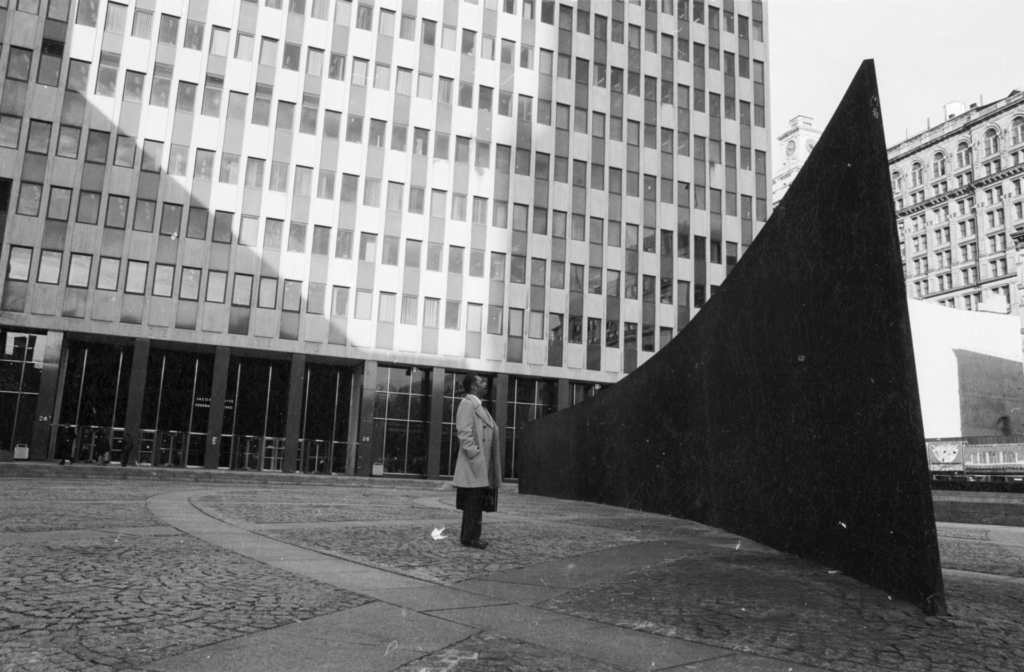
Richard Serra, Tilted Arc, (1981). Courtesy of Frank Martin/BIPs/Getty Images.
Richard Serra’s Tilted Arc may sound understated in description, a 120-foot-long, 12-foot-high curving wall of Cor-Ten steel but its impact on New York City’s Federal Plaza was anything but subtle. Installed in 1981, the massive sculpture cut directly across a busy public space, forcing pedestrians to alter their daily routes and confront its imposing presence.
What followed was one of the most heated public art controversies in modern history. Office workers and local residents quickly denounced the work, not for its material or concept alone, but for how it disrupted the flow of everyday life. It was seen as intrusive, inconvenient, even hostile, less an artwork and more an obstruction imposed upon the public without consent.
The backlash grew intense enough to lead to public hearings, where debates over the sculpture’s fate revealed a deeper conflict: who is public art really for? Despite Serra’s insistence that the piece was site-specific and inseparable from its location, the decision was made to remove it. In 1989, Tilted Arc was dismantled, effectively destroying the work as Serra had conceived it.
Serra remained unapologetic. “I don’t think it is the function of art to be pleasing,” he stated at the time. “Art is not democratic. It is not for the people.” His stance only intensified the debate, highlighting the tension between artistic intent and public reception.
In the end, Tilted Arc became more than a sculpture, it became a case study in the politics of public space, authorship, and authority. Its removal did not resolve the controversy; instead, it cemented the work’s legacy as one of the most significant and divisive moments in contemporary art history.
Andy Warhol, Campbell’s Soup Cans (1962)
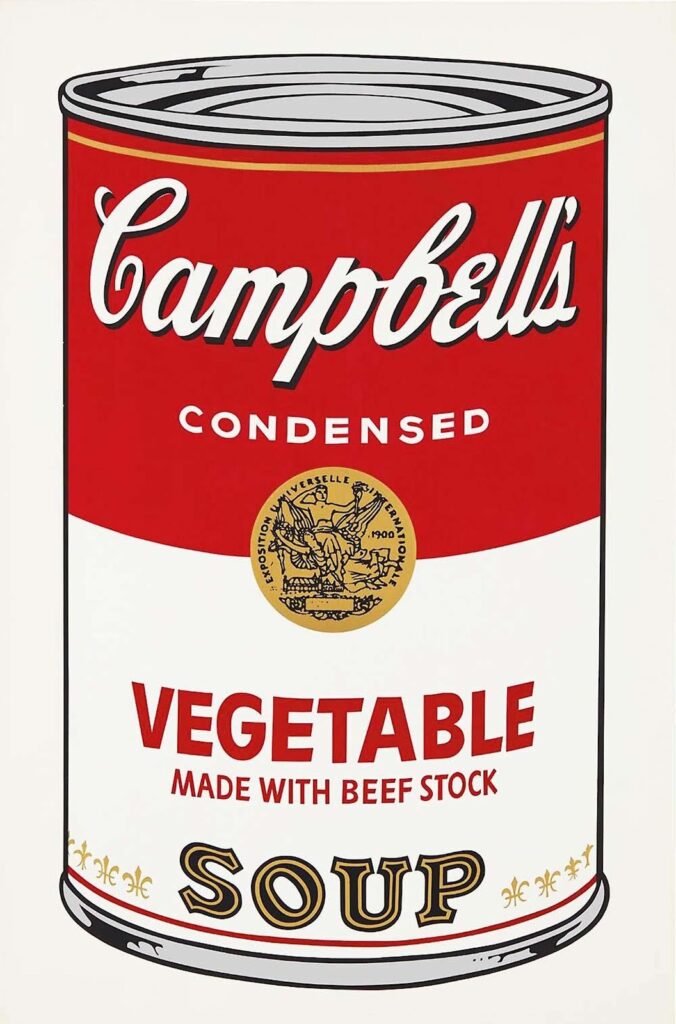
Campbell’s Soup I, Vegetable Made With Beef Stock (F. & S. II.48) © Andy Warhol 1968
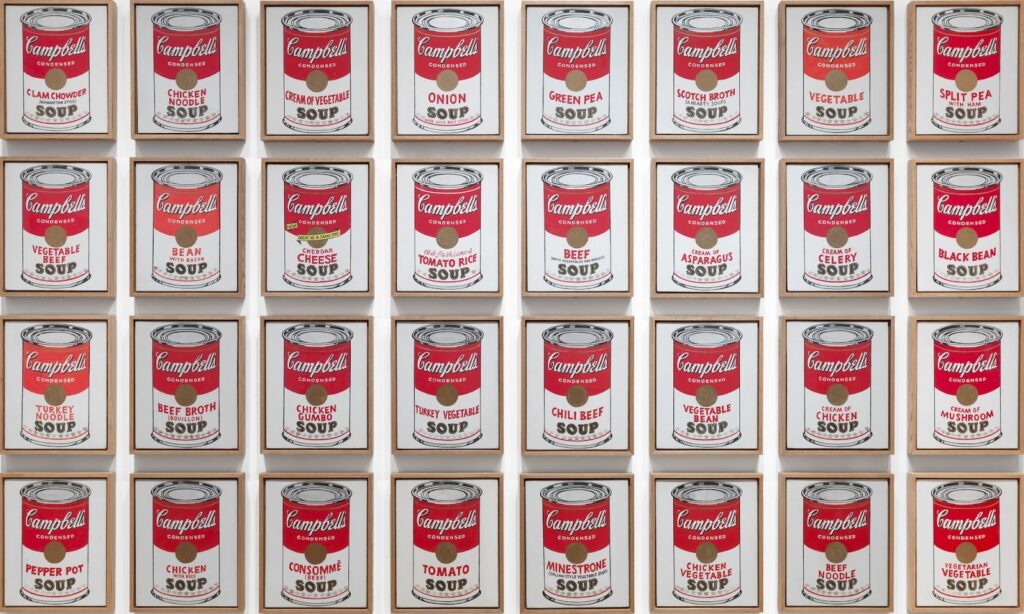
Andy Warhol, a leading figure of the Pop Art movement, transformed one of the most ordinary grocery items into one of the most recognizable images in modern art with his Campbell’s Soup Cans series. First exhibited in 1962, the work features repeated depictions of soup cans, rendered in a style that deliberately mimics commercial printing rather than traditional painting.
At a time when fine art was still closely associated with originality, emotion, and technical skill, Warhol’s approach felt radically impersonal. By borrowing directly from advertising and mass production, he challenged the idea that art had to be unique or handcrafted.
The series was initially met with skepticism and criticism. Many dismissed it as lacking artistic merit, questioning how something so commonplace, and seemingly mechanical, could be considered serious art. To critics, it appeared flat, repetitive, and devoid of creativity.
Yet that was precisely the point. Warhol blurred the boundary between high art and consumer culture, suggesting that everyday objects and the systems that produce them, were just as worthy of attention as traditional subjects. His work reflected a world increasingly shaped by media, branding, and mass consumption.
Over time, what once seemed trivial came to be understood as groundbreaking. The Campbell’s Soup Cans didn’t just depict consumer culture, they embodied it, redefining what art could be in the modern age and influencing generations of artists to come.
Controversy in art is rarely just about the work itself, it is about the moment it exists in, the audience that encounters it, and the systems that give it meaning. What shocks one generation may be absorbed by the next, transformed from scandal into significance.
Looking across these works, a pattern emerges: the most debated pieces are often the ones that refuse to stay within boundaries. They challenge not only aesthetic expectations, but also ideas of morality, value, authorship, and power. Some provoke outrage, others confusion, and a few even indifference, but all of them demand a reaction.
In today’s landscape, where attention is currency and visibility is immediate, controversy can feel amplified, even manufactured. Yet, there remains something essential about art that unsettles. It pushes us to confront what we believe, what we reject, and what we are willing to reconsider.
Perhaps that is the real function of controversial art, not to provide answers, but to keep the conversation alive.
So the question is:
What makes something truly feel like art to you?