


The Latest in the Art World: From Stolen Masterpieces to Record Auction Sales
👁 60 Views
Across continents and contexts, recent developments point to the latest in the art world as one shaped by both spectacle and structural shifts. From Maurizio Cattelan’s participatory hotline blurring performance and public confession to record-breaking auction results redefining market benchmarks, the week’s headlines move between provocation and power. At the same time, questions of cultural ownership, historical memory, and institutional responsibility resurface, whether in debates around Picasso’s Guernica or the theft of major works from an Italian museum. Together, these moments reflect an art world navigating visibility, value, and vulnerability all at once.
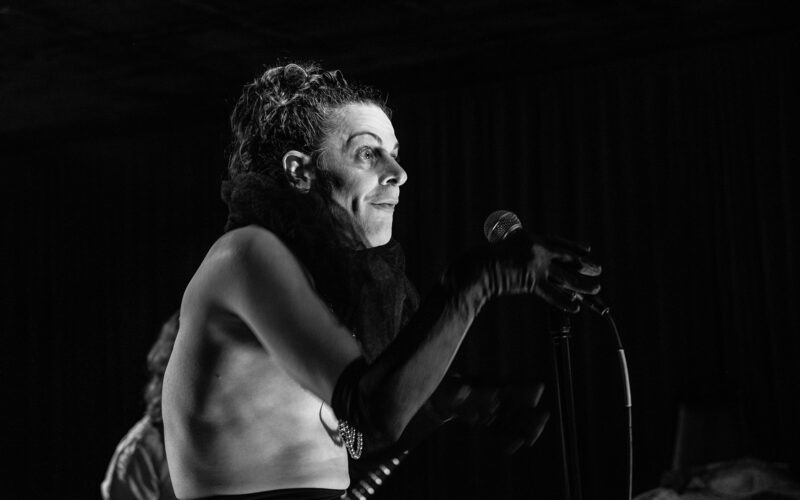
Maurizio Cattelan Launches Confessional Hotline as New Performance Work
Italian artist Maurizio Cattelan has launched a participatory performance inviting the public to confess their sins via telephone, extending his long-standing engagement with provocation, humor, and institutional critique. Titled The Confessional, the project allows callers across the United States to share anonymous admissions through a dedicated hotline, open through April 22.
Selected confessions will be livestreamed on April 23, when Cattelan will assume the role of a priest-like figure to deliver absolution, transforming a private act into a public, performative spectacle. The work draws on themes of guilt, ritual, and belief, continuing the artist’s exploration of Catholic imagery and its psychological resonance.
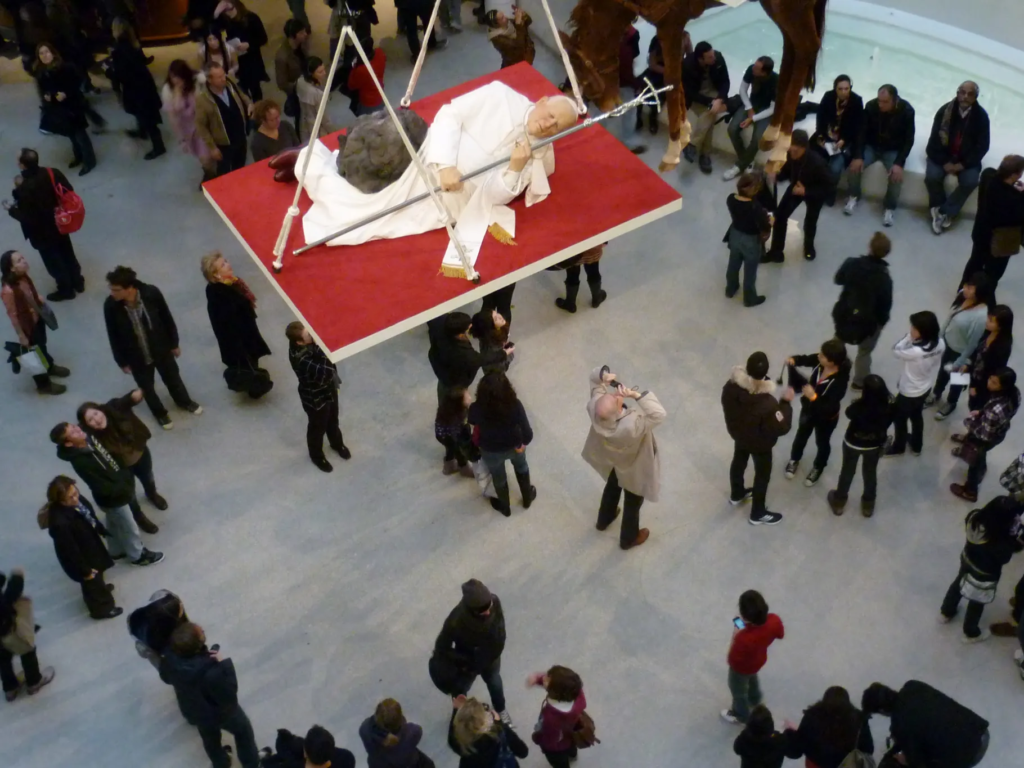
The project coincides with the renewed circulation of La Nona Ora (1999), Cattelan’s controversial sculpture depicting Pope John Paul II struck down by a meteor. Originally met with widespread outrage upon its debut, the work has since become one of the artist’s most recognizable pieces, embodying his approach to destabilizing authority and iconography.
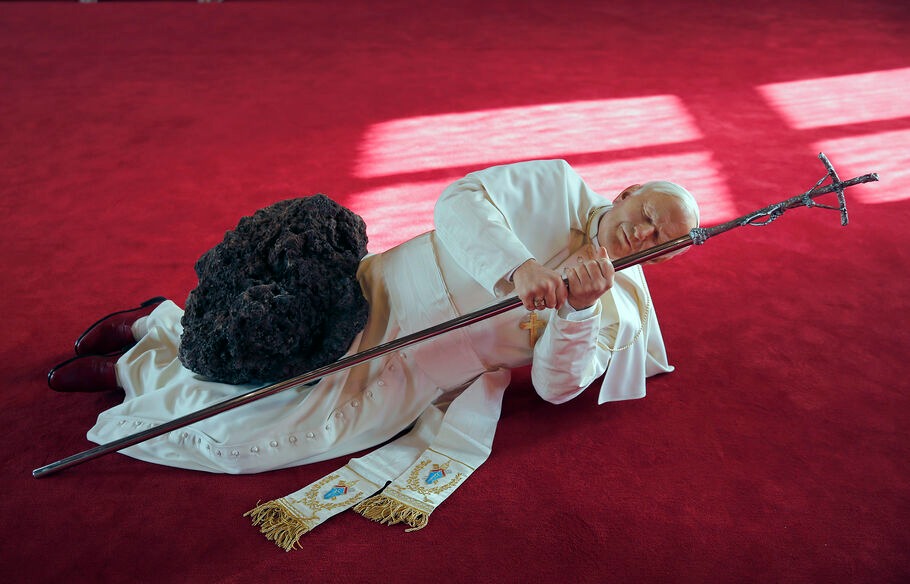
A new edition of the sculpture has been released through Avant Arte in a limited run of 666, further extending the project’s conceptual framework. First exhibited in 1999 and later the subject of political intervention and auction success, La Nona Ora continues to occupy a central place in Cattelan’s practice.
By merging performance, participation, and mass communication, The Confessional reframes the act of confession as both spectacle and critique, highlighting the enduring tension between personal belief systems and public display in contemporary art.
Raja Ravi Varma Painting Sets $17.9 Million Record at Auction
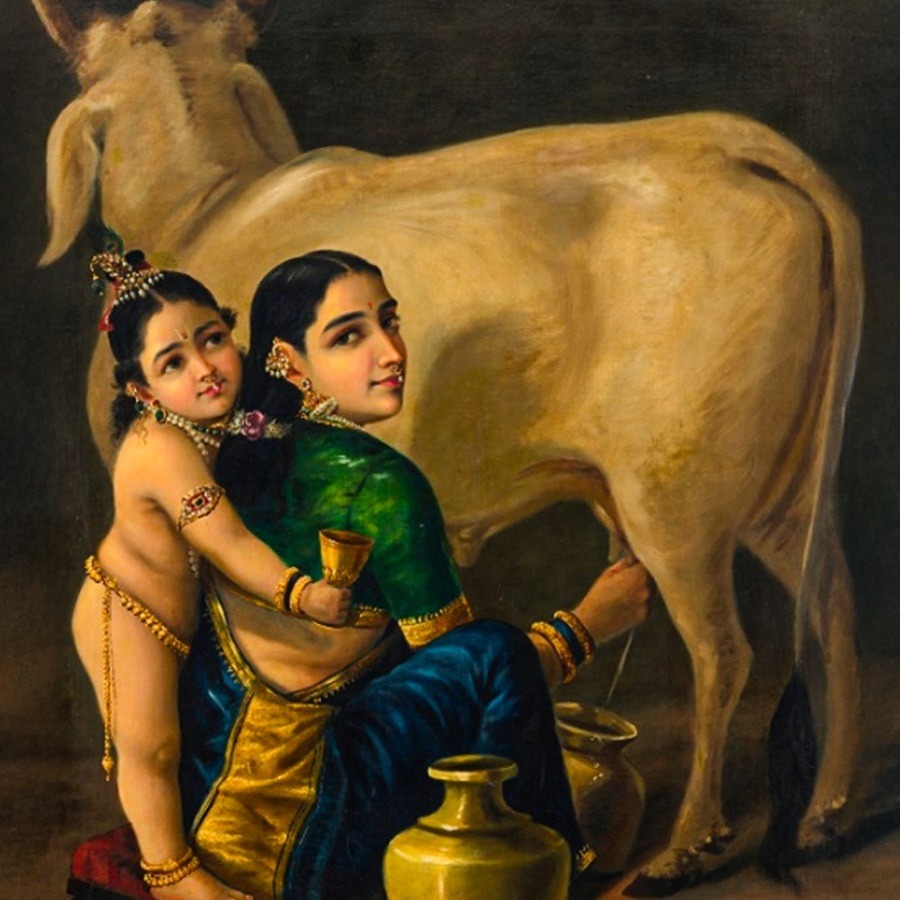
A painting by Raja Ravi Varma has set a new benchmark for Indian art at auction, with Yashoda and Krishna (ca. 1890s) selling for ₹1.67 billion ($17.9 million) at a Saffronart sale in New Delhi. The work, acquired by industrialist Cyrus Poonawalla, now holds the record for the most expensive painting by an Indian artist ever sold at auction.
The painting depicts a devotional yet intimate moment between the Hindu deity Krishna and his foster mother Yashoda, rendered with the naturalism and attention to detail that defined Varma’s practice. Known for bridging academic European techniques with Indian mythological subjects, Varma played a foundational role in shaping modern Indian painting in the late 19th century.
The result marks a significant leap from the artist’s previous auction record, set in 2023 when another version of the same subject sold for $4.5 million. It also surpasses the prior benchmark for Indian art, held by M. F. Husain’s Untitled (Gram Yatra) (1954), which achieved $13.75 million in 2025, and earlier by Amrita Sher-Gil’s The Story Teller (1937), which sold for $7.4 million in 2023.
Varma remains one of a small group of artists designated as “national art treasures” under India’s Art and Antiquities Act of 1972, a status that restricts the export of his works and underscores their cultural significance. The latest sale reflects growing demand for historically important South Asian art, as collectors increasingly compete for works that combine artistic legacy with national identity.
Picasso’s Guernica Could Leave Madrid for First Time in Decades
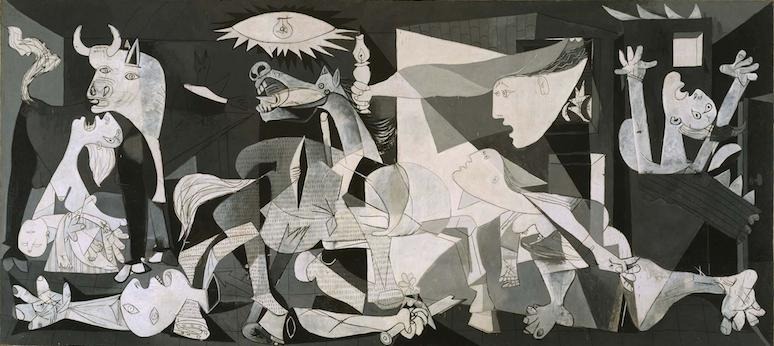
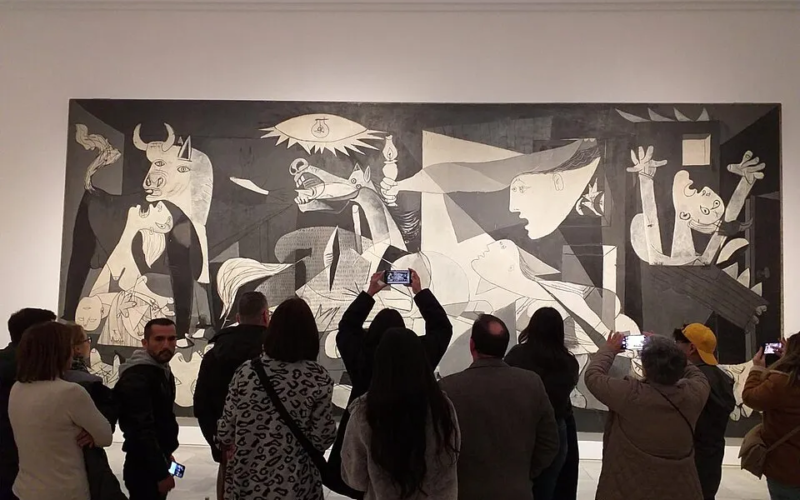
Pablo Picasso’s Guernica (1937), one of the most significant anti-war paintings of the 20th century, may travel outside Madrid for the first time in over three decades. According to reports by the Catalan-language newspaper Ara, the Basque regional government has petitioned Spain’s Ministry of Culture to authorize a loan of the work to the Guggenheim Museum Bilbao in 2026, marking the 90th anniversary of the bombing of the Basque town of Guernica.
If approved, the loan would see the monumental canvas temporarily leave its long-standing home at the Museo Reina Sofía, where it has been housed since 1992. The proposed exhibition would run from October 2026 through mid-2027, positioning the painting within a broader effort to commemorate historical memory and regional identity.
Painted in response to the 1937 bombing carried out during the Spanish Civil War, Guernica has long been understood as a powerful political statement. Its fractured figures and monochromatic palette convey the violence and devastation of war, while its exhibition history, spanning from the 1937 World’s Fair to decades at Museum of Modern Art, reflects its global cultural significance.
The proposal, however, remains contentious. Conservation concerns have repeatedly prevented the painting from traveling, with officials at the Reina Sofía emphasizing the risks associated with moving the fragile work. At the same time, the request carries political weight, as Basque leaders frame the potential loan as both symbolic restitution and a broader statement on the legacy of conflict.
As discussions continue, the question of whether Guernica should travel once again underscores the complex intersection of art, history, and politics, particularly when a work carries not only artistic value, but deep national and cultural meaning.
Matisse, Renoir, and Cézanne Works Stolen in Italian Museum Heist
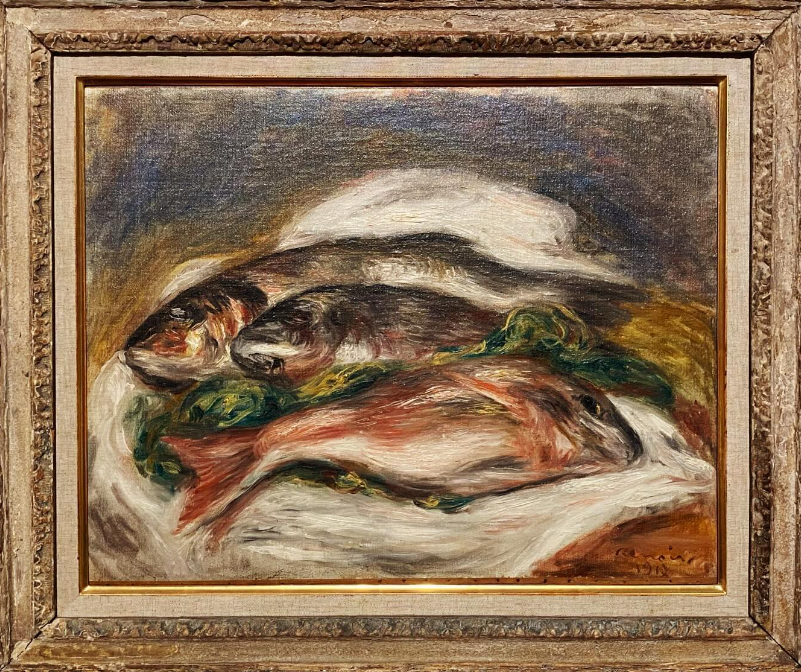
Paintings by Henri Matisse, Pierre-Auguste Renoir, and Paul Cézanne were stolen during a late-night break-in at the Magnani Rocca Foundation in Italy. The robbery, which took place on March 22, was confirmed by Italian authorities on March 30, as reported by The New York Times.
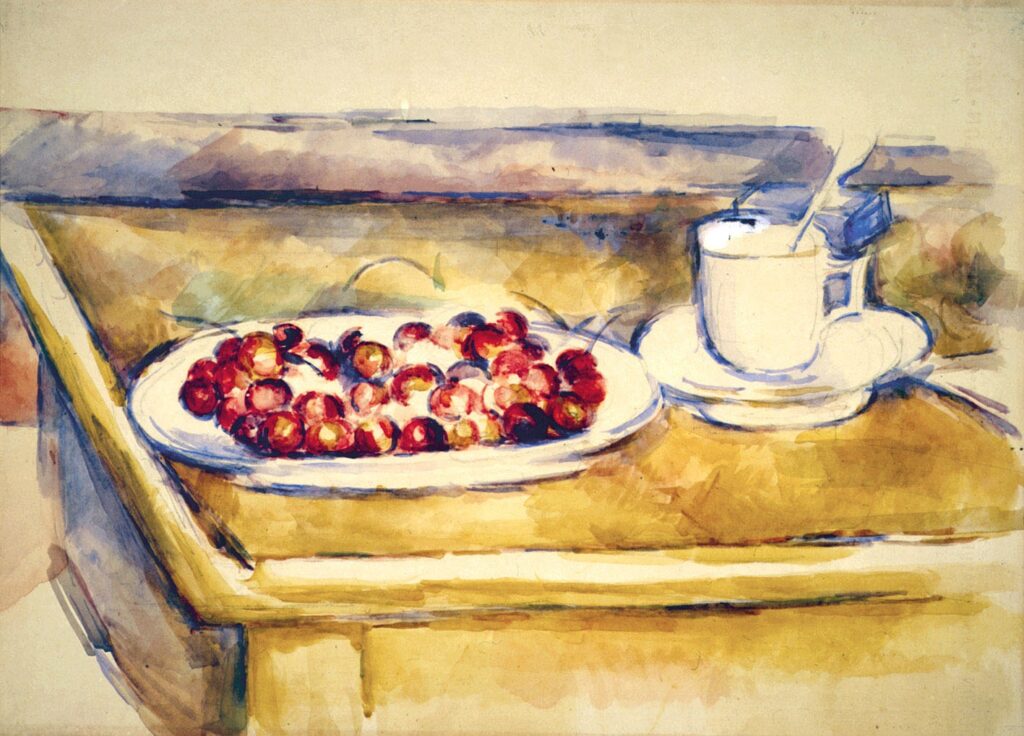
The stolen works include Renoir’s Les Poissons, Cézanne’s Tasse et Plat de Cerises, and Matisse’s Odalisque on the Terrace. Together, the paintings are estimated to be worth around €9 million ($10.34 million), according to Italy’s public broadcaster RAI, though the valuation has yet to be officially confirmed by police.
Authorities stated that the thieves entered through the museum’s main entrance using a crowbar, completing the heist in approximately three minutes before escaping through the surrounding grounds. Italian outlet La Repubblica reported that a fourth artwork was left behind, though its identity has not been disclosed.
Founded in 1977 by collector Luigi Magnani, the Magnani Rocca Foundation houses a significant collection of European art, including works by Titian, Francisco de Goya, Anthony van Dyck, and Claude Monet. The museum has remained open following the incident.
The theft adds to a growing pattern of high-profile art crimes across Europe. In recent months, major robberies have targeted institutions including the Louvre in Paris and the Drents Museum in the Netherlands. According to Interpol, such incidents are on the rise, driven in part by increasingly sophisticated methods of trafficking stolen artworks.
Joan Mitchell Painting Sets $17.6 Million Record for Women Artists in Asia
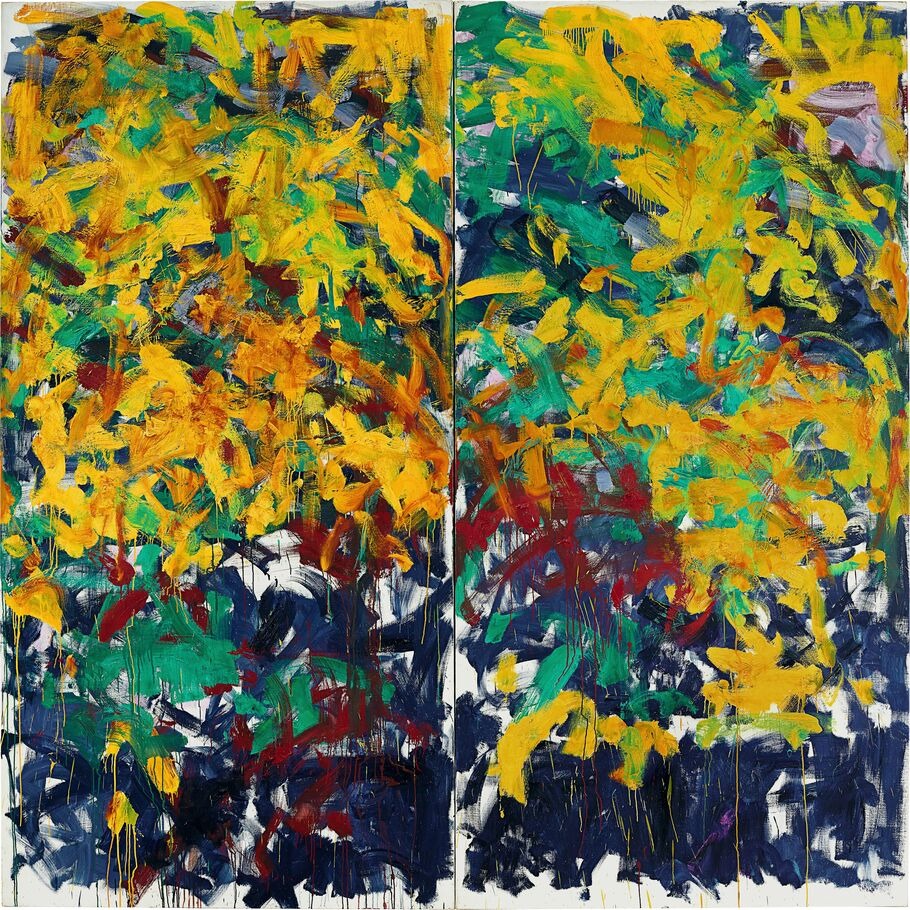
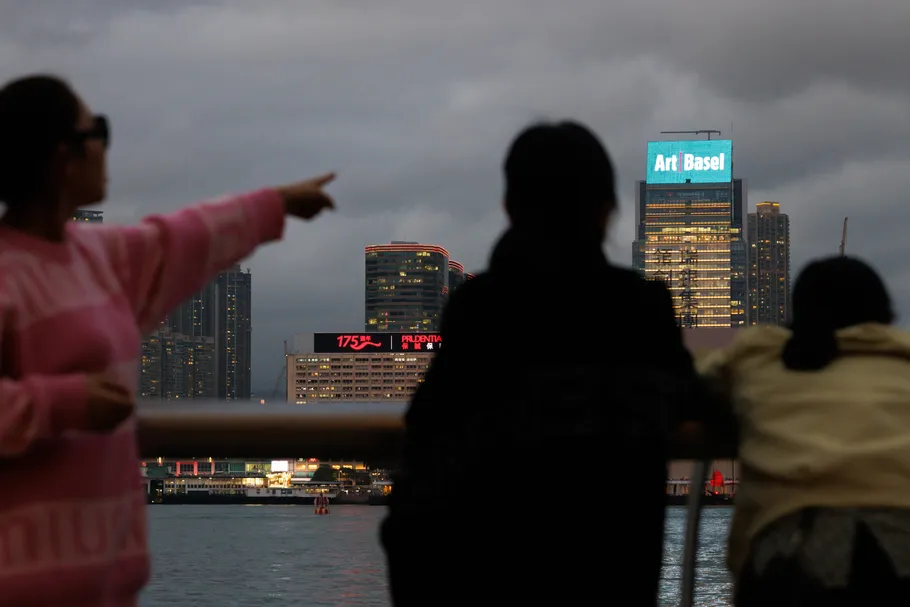
A major work by Joan Mitchell has set a new benchmark for women artists at auction in Asia, with La Grande Vallée VII (1983) selling for HK$137.4 million ($17.6 million) at a Sotheby’s evening sale in Hong Kong. The result, reported following the house’s modern and contemporary auctions during Hong Kong Art Week, marks the highest price achieved by a female artist in the region.
The painting, part of Mitchell’s celebrated Grande Vallée series, sold just above its low estimate to an online bidder, continuing the artist’s strong market trajectory. Created at the height of her career, the series is known for its vivid palette and energetic brushwork, reflecting both personal memory and emotional intensity.
The sale took place during a rare alignment of auction calendars across Sotheby’s, Christie’s, and Phillips in Hong Kong. Christie’s reported a total of HK$886.9 million ($113.4 million) with a 100 percent sell-through rate, while Phillips exceeded expectations with sales totaling HK$88.6 million ($11.3 million), surpassing its high estimate by 30 percent.
Other leading results across the week included Gerhard Richter’s Abstraktes Bild (1991), which sold for HK$92.1 million ($11.8 million), and Mark Rothko’s No. 10 (1949), which achieved HK$66.8 million ($8.5 million). Works by Sanyu, Walter Spies, and Yayoi Kusama also ranked among the top lots, reflecting sustained demand across both Western and Asian markets.
Mitchell’s result not only underscores her continued market strength but also signals a broader shift toward increased recognition and valuation of women artists within the global auction landscape.
Taken together, these developments reveal an art world that is simultaneously expanding and under pressure, where cultural value is being both elevated and contested. Record-setting sales signal growing market confidence, even as thefts and debates over cultural stewardship expose ongoing fragilities. Meanwhile, artists like Cattelan continue to challenge how audiences participate in and interpret art itself. The latest in the art world, then, is defined less by a single direction and more by tension between permanence and risk, spectacle and meaning, and the evolving ways art is experienced across global contexts.
As artists continue to reshape meaning across contexts, it’s worth revisiting how symbolism has evolved over time, something we explore in our feature on flowers in art:
https://artstoheartsproject.com/flowers-in-art-beauty-symbolism-paintings/