

Is Chaos Just Part of Being an Artist?
👁 183 Views
We all like to imagine the serene artist’s studio, don’t we? A sun-lit loft, clean brushes lined up like disciplined soldiers, and a steaming cup of coffee that somehow never gets cold. Reality usually looks more like half-finished canvases stacked in a corner, a messy table where last night’s snack crumbs mingle with paint tubes, and your phone buzzing with three different notifications before you even find your palette knife. Stress doesn’t wait politely at the door of a studio, it sprawls across the floor with you.
The truth is, even the most talented and organised artists struggle with chaos. It’s not about lacking discipline or being unprofessional; it’s the reality of juggling too many things at once. Think of the last time you sat down to sketch, but your mind kept replaying that unpaid bill, the friend you forgot to call back, or the ten open tabs on your laptop about “how to write a better artist statement.” That’s not a lack of focus, that’s modern life crashing into your creative space.
What makes this worse is the illusion we get from social media. Everyone’s studio shots look tidy, warm, and calm, like they’re in total control of their practice. Behind the camera? Probably a mountain of laundry and a half-eaten sandwich next to their laptop. Comparing your behind-the-scenes chaos to someone else’s staged perfection is like comparing your warm-up sketch to their finished exhibition piece. Stress thrives on those comparisons.
Artists also deal with unique pressure that other professions rarely understand. A lawyer might stress about a deadline, but rarely about whether their soul is reflected in their brief. An artist has to manage both the practical task and the existential weight of it. Every brushstroke feels like a reflection of identity, so when chaos enters, it feels personal. That’s why calming the chaos matters not just for productivity but for self-worth.
The good news? Chaos is universal. You are not the only artist surrounded by buzzing phones, unfinished projects, and mental clutter. If anything, you’re in good company. The myth of the perfect studio is just that, a myth. What matters is learning to tame the mess so that it doesn’t tame you.
When you start from this truth, that stress and distraction are part of the creative territory, you can finally stop beating yourself up. You don’t need a monastery-like silence to create, you just need tools that fit into your messy, real life. That’s what this article is here for.
Why Your Brain Treats Instagram Like a Hungry Toddler
Let’s talk distractions, because they’re probably the number one thief of focus in any artist’s day. Picture this: you sit down to work on a piece. You open Instagram to check “one reference photo” and suddenly you’re deep in a reel about how to make sourdough bread. It’s not that you’re weak or lack willpower, it’s that your brain treats apps like Instagram the way it would treat a toddler screaming in the corner. You can’t ignore it for long without giving in.
This isn’t your fault, it’s biology. Dopamine, that little chemical spark that makes us feel rewarded, fires up every time we scroll, click, or see a new notification. Your brain thinks it’s getting fed, like tossing snacks to a restless toddler to keep it quiet. The problem? The toddler never actually fills up. That’s why you keep scrolling long after you said “just five minutes.”

For artists, this is doubly dangerous because distraction feels like research. You tell yourself you’re “getting inspiration” or “studying trends,” but 45 minutes later, you’ve only collected a folder full of screenshots you’ll never look at again. Meanwhile, the canvas sits untouched, quietly judging you. That guilt compounds stress because now you’re not just distracted, you’re behind.
The sneaky part is that distractions don’t always look like distractions. Checking your email, cleaning your brushes, even reorganizing your bookshelf can disguise themselves as “productive” but often serve the same role as scrolling. They’re easy wins that trick your brain into feeling accomplished while avoiding the hard, uncertain work of creating.
Here’s the truth: your focus will always be fragile in the face of endless digital toddlers demanding snacks. The solution isn’t deleting every app or pretending you’ll never be tempted. It’s about training yourself to notice when you’ve handed the toddler another cookie and gently redirecting back to the real meal, your art.
Once you see distractions for what they are, a biological game your brain is rigged to lose, you can start playing smarter. This doesn’t mean being perfect, it means being prepared. The toddler isn’t going away, but you can learn to feed it on your own terms.
The To-Do List That Eats Your Creativity Alive
If distractions are the noisy toddler, then the overstuffed to-do list is the monster lurking under the bed. We all write them, we all believe they’ll save us, but often they do the opposite. A long list feels like safety at first, a way to capture everything so you don’t forget. But then you look at it, realize it’s longer than a novel, and suddenly your brain freezes. Where do you even start? Cue stress.
Think about the last time you scribbled a list: buy groceries, prep portfolio, send application, call mom, finish sketch, reply to curator email. By the time you’ve listed it all, the sheer weight of it makes you want to nap. The more items you cross off, the more magically appear. It’s like the Hydra from Greek mythology, cut off one head and two more grow back.
For artists, this list isn’t just chores. It includes emotionally loaded tasks like “paint something meaningful” or “rewrite artist bio.” That’s not the same as “pick up milk.” It’s heavy, soul-stretching work disguised as a bullet point. No wonder your brain wants to avoid it. Stress comes from treating creative labor as if it were as straightforward as errands.
One trick is to shrink the monster. Instead of one massive to-do list, create a “must-do today” list with no more than three items. Three feels manageable, like an appetizer plate instead of a buffet. If one of those items is big, break it down further. “Finish painting” becomes “block in background color” or “sketch composition.” Smaller steps create less friction, which lowers stress and helps you actually start.

The funny thing is, we often overestimate how much time we have in a day. By putting 15 items on a list, you’re already setting yourself up for failure. The result? Guilt at the end of the day, even if you worked hard. A short, clear list is kinder and ironically gets more done.
When you tame the to-do list, you also tame that nagging voice in your head saying you’re not doing enough. Focus comes more naturally when the monster under the bed is replaced with a manageable puppy at your side.
Multitasking Is Just Fancy Procrastination
We’ve all bragged about multitasking at some point. “I can paint while listening to a podcast, answering emails, and planning dinner.” Sounds impressive, right? In reality, multitasking is a scam. Your brain isn’t doing all those things at once, it’s frantically switching between them, like a clumsy juggler dropping balls left and right. No wonder you feel stressed.
Science backs this up: every switch between tasks costs you focus and energy. That’s why you feel drained after “doing so much” but realize you haven’t actually finished anything. For artists, this means you might spend hours half-painting, half-scrolling, half-answering messages, and end up with nothing truly satisfying to show for it. It’s not laziness, it’s fragmentation.
Think about how it feels when you finally get into flow, that delicious stretch of time where the world disappears and it’s just you and the work. Now compare it to when you’re constantly checking your phone between brushstrokes. The first feels like a deep swim in the ocean, the second like being splashed every five seconds while trying to float. Which one do you think leaves you calmer at the end of the day?
Multitasking also creates the illusion of productivity. You feel busy, which tricks your brain into thinking you’re moving forward. But busyness is not the same as progress. Crossing off small, shallow tasks while never touching the big, meaningful ones is a recipe for burnout. Stress comes from running but never arriving anywhere.
The solution? Ruthless monotasking. Pick one thing, set a timer if you must, and commit. Even 20 focused minutes on one painting is more powerful than two hours of distracted dabbling. Monotasking feels awkward at first because we’re conditioned to split our attention, but once you taste that clarity, you won’t want to go back.
Let multitasking go, and you’ll notice something magical. Your stress levels drop not because the workload shrinks but because your brain finally gets to do what it loves best: one thing at a time, well.
When stress spikes around outreach or talking money, having a starting point makes all the difference. The free How to Pitch to Galleries + email template resource provides a well-crafted, professional email framework. Rather than dreading starting from scratch, you get a refined launchpad to confidently reach out, and keep your focus where it belongs: on your art
Why Rest Feels Like Cheating (And Why It’s Not)
Raise your hand if you’ve ever felt guilty for taking a break. Most artists do. There’s always one more sketch to finish, one more grant application to submit, one more client to email. Rest feels like cheating on your future self. But here’s the irony: the more you skip rest, the less productive you become. Stress isn’t just about too much to do, it’s also about never letting yourself stop.
Artists often buy into the myth of endless hustle. Because your work is tied to passion, you feel like you should always be creating. But passion doesn’t replace biology. Your brain and body need recovery time.

The tricky part is that rest doesn’t always look like lying on the couch. For some, it’s taking a long walk, for others, it’s doodling without pressure, or even cooking something slowly. Rest is anything that gives your mind a chance to soften its grip. The point is not what you’re doing but how it feels, light instead of heavy.
When you deny yourself rest, you send a signal that worth only comes from output. That’s not sustainable. Stress builds not because the tasks are impossible but because the expectation is relentless. A rested artist produces better work in half the time than an exhausted one does in double.
The guilt comes from thinking others are working while you’re pausing. But think about it: have you ever seen someone burn out so hard they stop creating entirely? That’s the cost of ignoring rest. Pausing isn’t selfish, it’s preventative care.
Small Rituals, Big Calm
Stress thrives in uncertainty, and artists live in a world full of it. Will this piece sell? Will the grant come through? Will the gallery reply? You can’t control those outcomes, but you can control your daily rituals, and that’s where calm is born. Small, consistent routines act like anchors in a sea of uncertainty.
A ritual doesn’t have to be grand. It could be lighting a candle before starting work, always sharpening your pencils before sketching, or playing the same playlist when you paint. These cues tell your brain, “We’re entering creative mode now.” Over time, your body responds automatically, dropping stress and finding focus without the mental wrestling match.
Think about how athletes have rituals before a game. It’s not because tying their shoelaces a certain way makes them play better, it’s because the routine calms their nerves and focuses their energy. Artists can use the same trick. Even the act of tidying your desk before beginning can reduce mental clutter.
The beauty of small rituals is that they don’t depend on motivation. On days when stress feels like a storm cloud, the ritual acts like a gentle push. You don’t have to feel ready, you just follow the familiar steps, and focus sneaks in through the back door.
Rituals also give structure to the endlessness of creative work. Unlike office jobs with set hours, artists often drift between projects. A ritual creates bookends that signal beginnings and endings, so your mind doesn’t carry stress 24/7. Even closing your sketchbook and placing it in the same spot each evening can help your brain release the day.
The biggest misconception is that calm comes from big life changes. In reality, it often comes from small, repeated actions that tell your nervous system, “You’re safe here.” The more you practice these rituals, the more your studio, messy or not, becomes a place of ease.

Establishing rituals (like lighting a candle before you begin) is one thing, but maintaining them consistently requires structure. Tools like the Studio Planner for Artists and Artwork Series Planner for Artists guide you with simple, art-friendly planning systems. If part of your stress is feeling adrift in your projects, these planners are like gentle nudges that help your creativity align with your daily rhythm.
Your Studio Isn’t a Battlefield, It’s a Sanctuary
If your studio feels more like a cluttered storage closet than a creative haven, no wonder stress sneaks in before you even pick up a brush. Creative chaos is romanticized, but in reality, stepping into a space where supplies are buried under piles of forgotten projects can instantly drain your focus. Think about the last time you tried to find a particular tube of paint and wasted half an hour digging through boxes. That time wasn’t “quirky artist energy,” it was stress disguised as normal.
Imagine instead walking into a room that smells faintly of coffee or candles, where everything you need is visible and within reach. Your brushes stand ready, canvases wait in their place, and the lighting is set just right. Suddenly, the energy shifts. You’re no longer battling against the space, you’re flowing with it. Even small changes, like clearing one shelf or labeling jars, can flip the entire mood.
Artists often resist tidying because they fear it will stifle creativity, but order doesn’t mean sterile. It means giving your mind space to breathe, so the ideas can land without fighting against clutter. Try this: pick one corner, clear it out, and set it up as your calm zone. Let it be the place you sit when overwhelm spikes. It doesn’t need to be perfect, just intentional.
Remember, your environment constantly signals to your brain whether you’re safe to relax or need to brace for chaos. Every paint-smeared rag and random pile of papers tells your nervous system something. The fewer stressful cues, the easier it is to focus on what matters: making. Your studio is your second skin, and when it’s calm, you’re calm.
So the next time you put off cleaning, remember: you’re not doing chores, you’re designing your sanctuary. And that’s the foundation of stress-free focus.
Stop Doomscrolling, Start Daydreaming
It’s easy to lose hours scrolling through other artists’ feeds, especially when stress hits. You tell yourself you’re “getting inspired,” but more often than not, it turns into a spiral of comparison. Every award announcement, every sold-out drop, every flawless studio shot can leave you feeling like you’re behind. This mental clutter weighs heavier than physical mess.
Instead of doomscrolling, reclaim that time for daydreaming. It may sound unproductive, but neuroscience proves letting your mind wander sparks problem-solving and fresh ideas. Remember when you had your best thought in the shower or on a walk? That’s not an accident, it’s your brain’s default mode network at work. Give it more room.
Artists throughout history have often extolled the virtues of daydreaming. Salvador Dalí famously napped with a spoon in his hand, letting it drop to wake him right as ideas surfaced. Georgia O’Keeffe often retreated to nature for long, unstructured time, which showed up directly in her art. You don’t need to copy them, but you do need to protect some space where imagination isn’t competing with notifications.
Here’s a practical swap: every time you’re tempted to scroll, set a timer for 10 minutes and do nothing but doodle, stare out a window, or let your mind wander. You’ll be surprised how much creative tension releases. Unlike social media, daydreaming gives instead of takes.
So the next time your thumb hovers over that app, ask: am I feeding stress or feeding imagination? Chances are, you already know the answer.
Movement is Medicine, Even for “Non-Sporty” Artists
Artists often spend hours hunched over desks, easels, or screens, convincing themselves that aching shoulders and tired eyes are just part of the job. But the truth is, our bodies weren’t designed to sit still all day. Stress builds up like static electricity in unmoving muscles. The antidote doesn’t require gym memberships or marathons, just small movements woven into your routine.
You don’t need to rebrand yourself as an athlete to benefit.
Even playful movements help. Dance badly in your studio to a favorite song, mimic the shapes of your paintings with your arms, or do a few squats while waiting for layers to dry. It’s not about fitness goals, it’s about unjamming the system.

Your brain gets sharper when blood flows freely. Stress dulls focus, but a few minutes of movement can flip the switch. You wouldn’t expect your laptop to function without recharging, so why treat your body differently?
Movement isn’t a side note, it’s part of your creative practice. And the more you let your body move, the lighter the mental weight feels.
Set Boundaries Like You Mean It
Stress often comes less from making art and more from everything surrounding it. Endless favors, unpaid “opportunities,” last-minute requests, or friends who assume you’re always available. Without clear boundaries, you become a magnet for overwhelm. The good news is, boundaries aren’t about being harsh, they’re about protecting the space where your creativity can actually breathe.
Consider this: saying yes to one unpaid mural or design might seem harmless, but what you’re really doing is saying no to your own projects, your rest, and your sanity. Every artist who has burned out can usually trace it back to blurred lines between what they could do and what they should do.
Boundaries don’t have to sound aggressive. They can be simple, like, “Thanks so much, but I’m only taking on paid projects right now,” or, “I’d love to help, but my studio hours are full this week.” These phrases buy you peace without guilt. And with practice, they roll off the tongue.
An illustrator once shared how she went from accepting every request to limiting her client load to three projects at a time. At first, she worried she’d lose opportunities. Instead, her stress halved, her income went up, and her focus sharpened. That’s the power of boundaries: less chaos, more clarity.
If you struggle, think of boundaries not as walls but as guardrails. They don’t shut the world out, they keep you on the road you’ve chosen. And anyone who respects your art will respect your limits. Those who don’t aren’t your people.
Remember, every no you say to stress-inducing chaos is really a yes to focus better, healthier work, and art you’re proud to stand behind.
Calm Isn’t a Luxury, It’s a Tool
There’s a myth that great art only comes from struggle and chaos, but most artists know the truth. While passion and intensity matter, burnout never built a masterpiece. Calm isn’t laziness, it’s fuel. It’s the quiet breath that lets ideas rise and the focused energy that carries them to completion.
If you’ve ever had a project flow so smoothly that hours slipped by unnoticed, you’ve already felt the magic of calm focus. The more often you can return to that state, the less stress dictates your choices. Chaos doesn’t vanish forever, but you become better at steering through it.
Think of calm like sharpening your tools. A dull chisel makes carving miserable, but once honed, the same effort becomes almost effortless. Your brain and body are no different. Stress dulls, calm sharpens. It’s that simple.
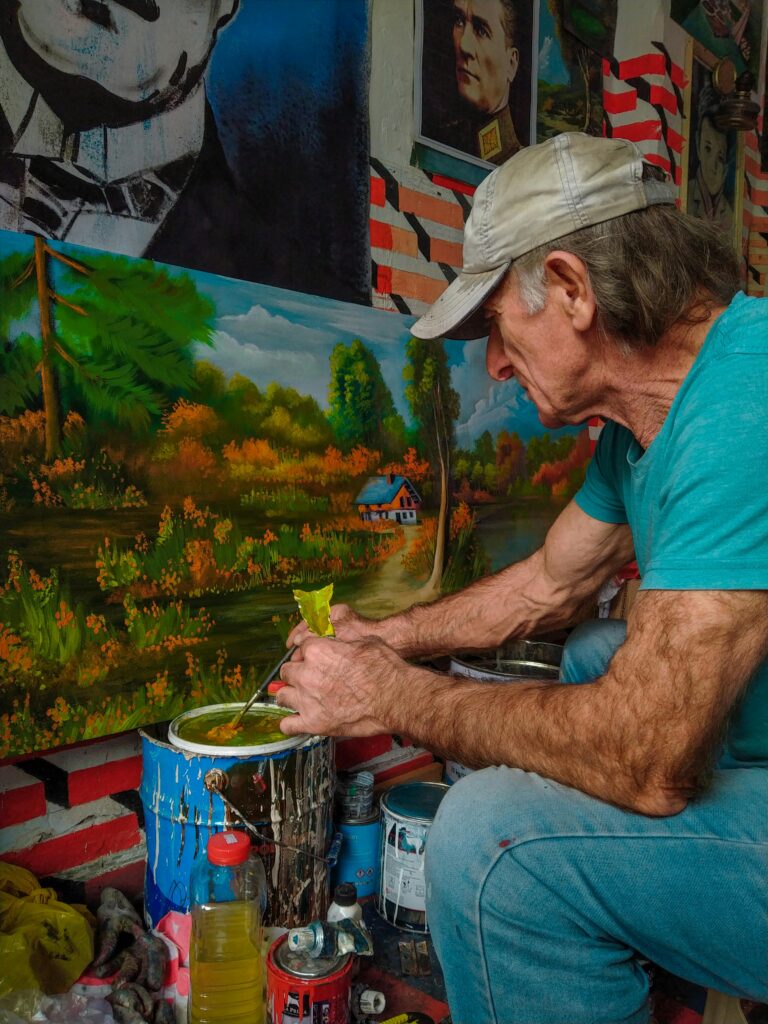
Artists worldwide struggle with this balance, whether they’re painting in small apartments, running busy studios, or juggling side jobs. What unites them is the reminder that calm isn’t a luxury only the privileged can afford. It’s a tool every creative can shape with daily choices , from clearing their desk to taking a walk.
So the next time stress whispers that chaos is unavoidable, remember: you have more power than you think. With each boundary, each pause, each breath, you reclaim your creative fire. Calm isn’t the opposite of art, it’s the secret that keeps you making it.
And maybe that’s the biggest takeaway: less chaos doesn’t mean less creativity, it means more of the kind that lasts.