
This artist chose instinct over artificial intelligence I Sam Woodward
👁 13 Views
At Arts to Hearts Project, every now and then we come across an artist and something about their work just won’t let us move on. We look at it once and then we look again and then we keep coming back and eventually we have to ask ourselves, what is it about this work that stays with us?
When we started putting together our 101 Collage Edition, we knew we wanted to show people what collage can really be. Because it is one of the most misunderstood art forms out there. People hear collage and their mind goes straight to scissors and glue sticks. Cutting and pasting pretty things onto a surface. But collage at its best does something that most art forms struggle to do. It takes the messy, broken, scattered pieces of a life and holds them all in one place without pretending they fit neatly. It says this is everything I carry and I am not hiding any of it. That honesty is rare, and when you find an artist who works that way, you pay attention.
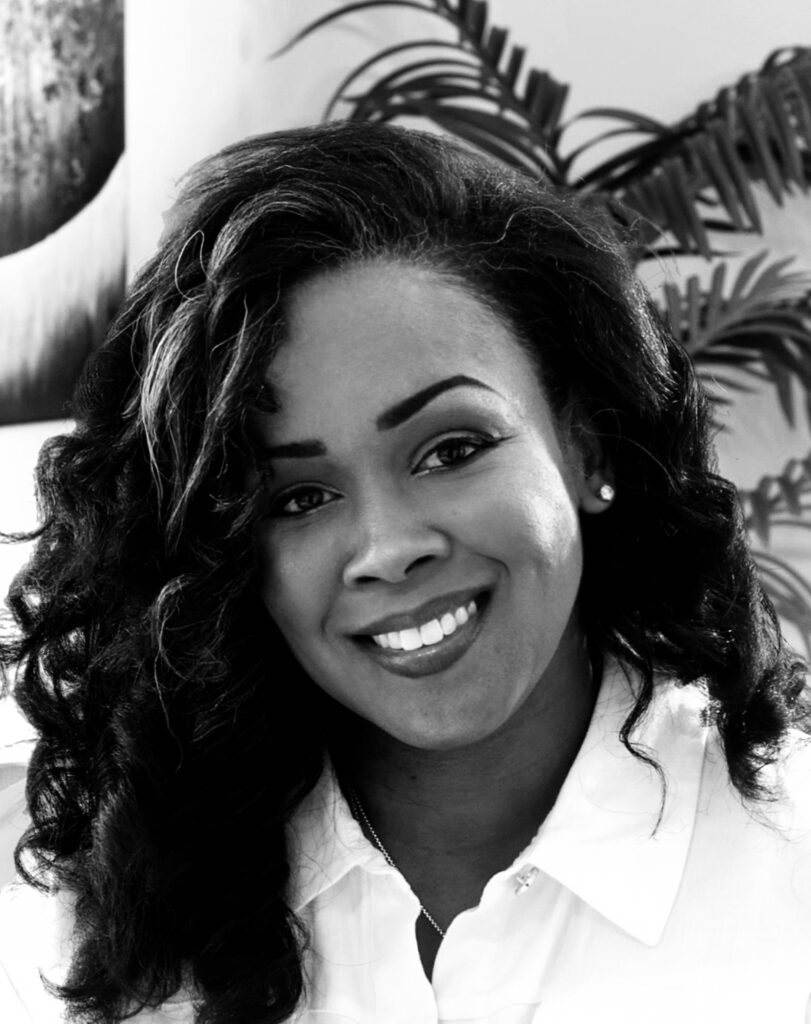
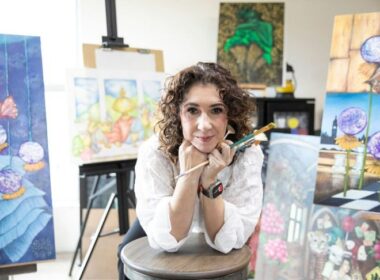
Sam Woodward is one of those artists. Among our 101 selected artists, her work is something we keep coming back to because there is a realness to it that you cannot manufacture. It is layered and spiritual and deeply personal and alive with something that only comes from lived experience.
So before you get to the interview, let us tell you a bit about Sam Woodward.
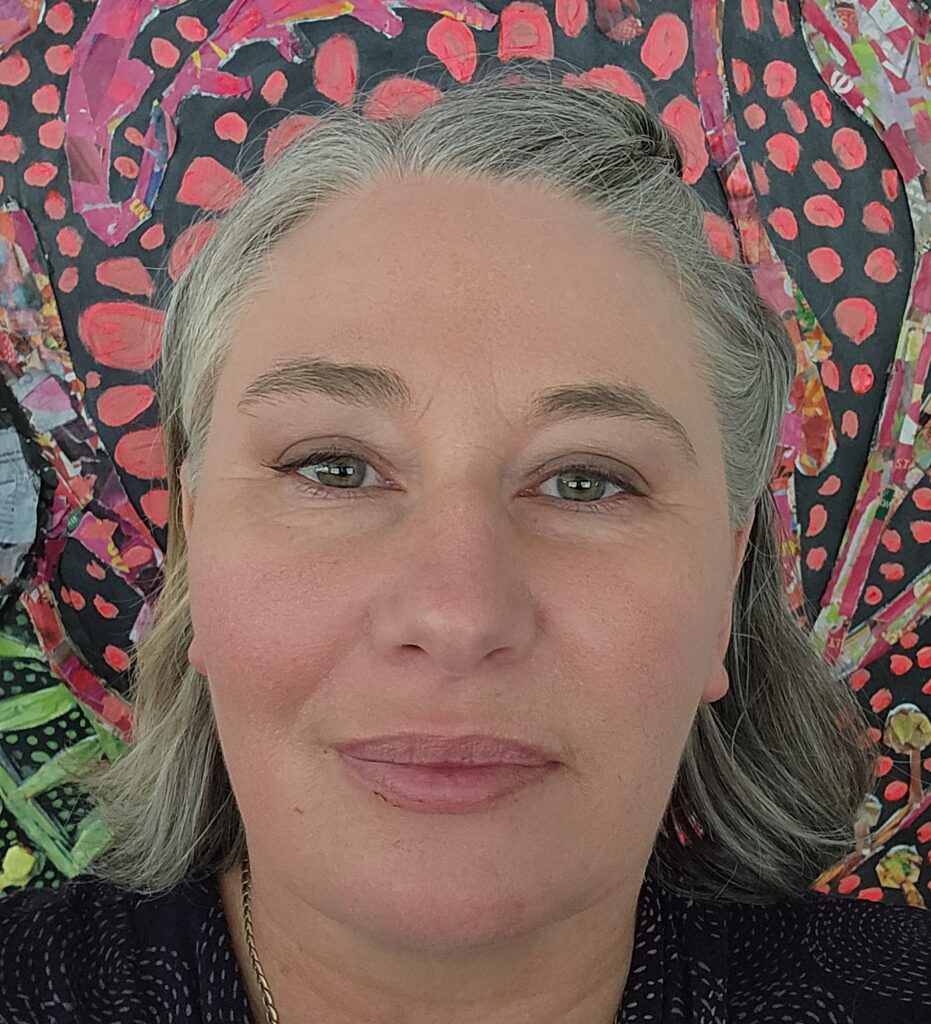
Art came into Sam’s life before almost anything else did. She was three years old when she started making things with her hands. Three. Before school, before language could catch up with what she was feeling, she was already creating. She grew up on the coast in the Illawarra in New South Wales, near Sandon Point beach.
Her father’s family lived on the Aboriginal reserve at Coomaditchie Lagoon. She is Aboriginal Australian and that tie to the land was something she carried in her body from the very beginning. Nobody had to teach it to her. She just knew.
But life did not let her hold onto that connection easily. Her parents split up when she was young and what followed was not just a divorce. It was a kind of unravelling. She lost her father. She lost her Aboriginal family. She lost her culture, her roots, the people and places that could have helped her make sense of who she was.
She was a child who knew something about herself that the world around her could not reflect back. She felt Aboriginal. She carried it. But she could not reach it. And that is a loneliness that is hard to describe to someone who has not lived it.
Everything she made for a long time came from that place. The early work was angry. It was heavy and unsettled and holding more than it knew what to do with. You could feel the searching in it. The not knowing where to put things down.
She went to Wollongong University. She kept going. Kept experimenting. Acrylic, oils, markers, ceramics, anything she could build with. She never stopped making. But underneath all of it there was something unresolved that no amount of technique could fix.
Then about six years ago she found her way back to her father. He started telling her about their family. About the land. About where they come from. And something in Sam that had been closed for a very long time started to open. Her art changed. The anger did not go away but it was not alone anymore.
Joy came in beside it. Freedom. Peace. Things she had been looking for her whole life finally had a place to exist in her work.
Her paintings got brighter and freer and you could feel something had shifted. Not because the hard years stopped mattering but because they were no longer all she had.
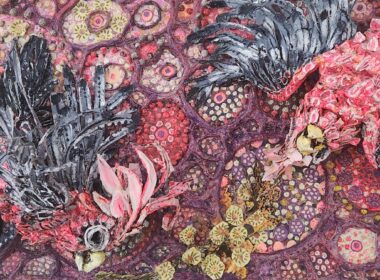
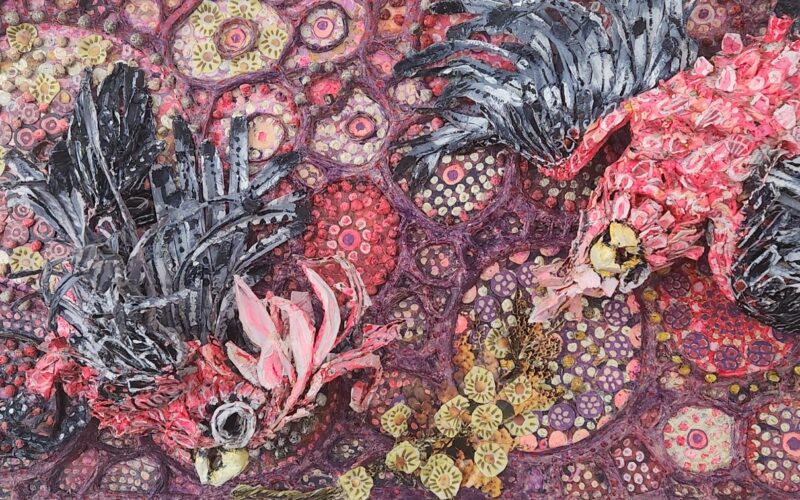
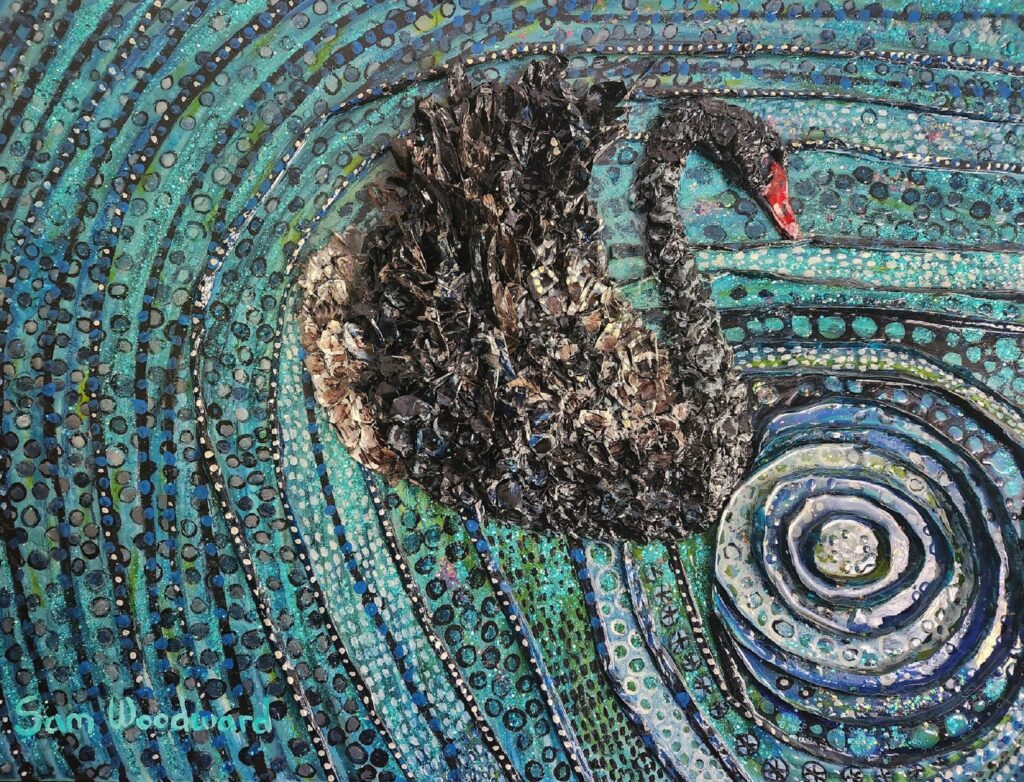
Today everything she makes is built in layers that push off the surface. Nothing sits flat. She calls it sculptural painting. She paints birds constantly, pelicans, cockatoos, the critically endangered Swift Parrot, and none of them are just birds.
They carry meaning that goes deep into who she is and what she has survived and what she believes art can do in this world. And at a time when the world is speeding toward AI, Sam is choosing the opposite. Her hands. Her instinct. Her body. A practice built on things no machine can touch.
Now let’s get to know Sam a little more through this conversation about her journey, her connection to Country, and the experiences that shape her work as an artist.
Q1. Can you share your background and how your Aboriginal heritage and upbringing in the Illawarra shaped the way you see the world as an artist?
The Illawarra is a beautiful natural corridor between a mountainous escarpment and the sea. For much of my childhood I lived within walking distance and sight of Sandon Point beach. I have always felt a spiritual connection to certain water areas in the Illawarra and I have always taken my problems and questions to the waters edge or to animals for guidance. To this day I have vivid dreams of both Sandon Point and Coomaditchie Lagoon and feel like I am astral traveling , like I am being called to these areas and called to paint the animals where I have lived. For me as an artist I am not just painting a landscape or wildlife, I am painting a spiritual feeling and emotional connection. From an early age I have known my connection instinctually without being told. My father has talked to me about our family connection and talked of living on the local Aboriginal reserve/ Official camp Coomaditchie. My background and my experiences with nature has shaped my values and thoughts of the world. I am now embracing nature and building a sustainable life and I feel compelled to reject AI and my future work as an artist will reflect this. As the world barrels ever closer to the age of the machine I find myself looking inward for a solutions and a safe space.
Q2. Your work often draws on native fauna and flora. When did you first recognise the connection between country, culture, and your creative expression?
I have always known of my Aboriginal heritage and felt a connection to country. I have been estranged from my father for most of my life since my parents divorced which disconnected me from our family group and my culture. About 6 years ago I reconnected with my father and my culture and as an artist my style changed.
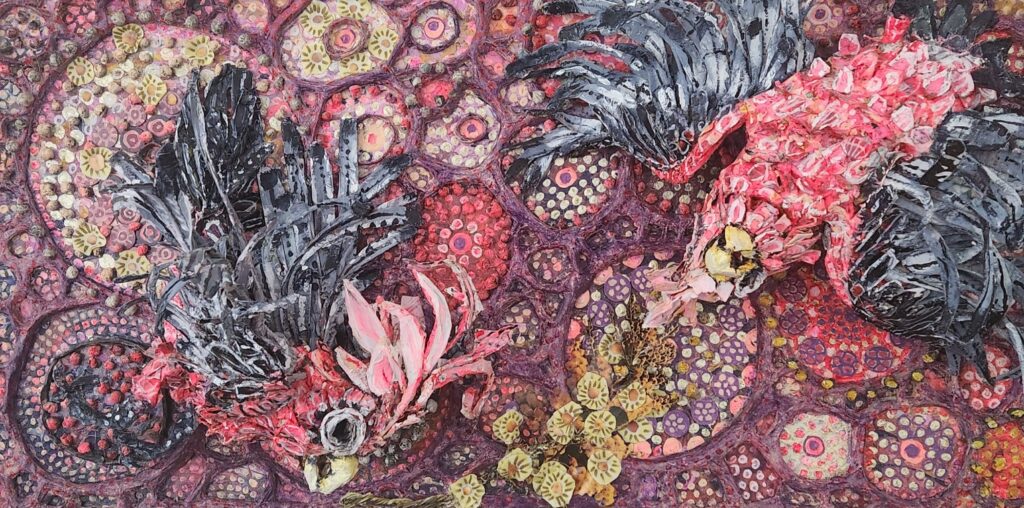
Q3. Some of your pieces, like the pelican and cockatoo works, feel both joyful and deeply grounded in place. How do you balance representing natural beauty with the complexity of cultural meanings tied to those species?
I have experienced turmoil and abuse throughout my life. When I was creating work at University I was very angry and felt abandoned and my work reflected what I was feeling. For the past 11 years I have been on a journey of self discovery and I have been in search of finding happiness. My work now reflects my resolve and inner peace and a sense of freedom .I connect bids with freedom. The spirit of my work is joyful as I am joyful. The animals that I feel a spiritual connection to have a greater depth and are more repetitive in my work. I have an understanding of cultural meanings and I am trying to develop my own style. My work is instinctual at its core and I try and give the viewer a feeling of the spirit of the animal and my spirit. In many instances the animals are symbolic representations of me or family members. For the most part I am directed to make works that are meaningful to me. I create for different purposes and have considered making work that is purely about natural beauty as this supports animal conservation.
Q4. Can you describe a moment in your studio practice when a painting took an unexpected turn, perhaps breaking your plans but bringing something vital to the work?
For the most part my work is symbolic and representational . An individual painting may be an abstraction but is not purely abstract. I may experiment with using different mediums and materials but most results are anticipated . What you are describing is something that is for the most part alien to me. Most of my work I have been creating for the past 2 years comes to me in dreams and is fully formed. Have experienced happy accidents in ceramic works but that’s the nature of the beast with more variables to that medium.
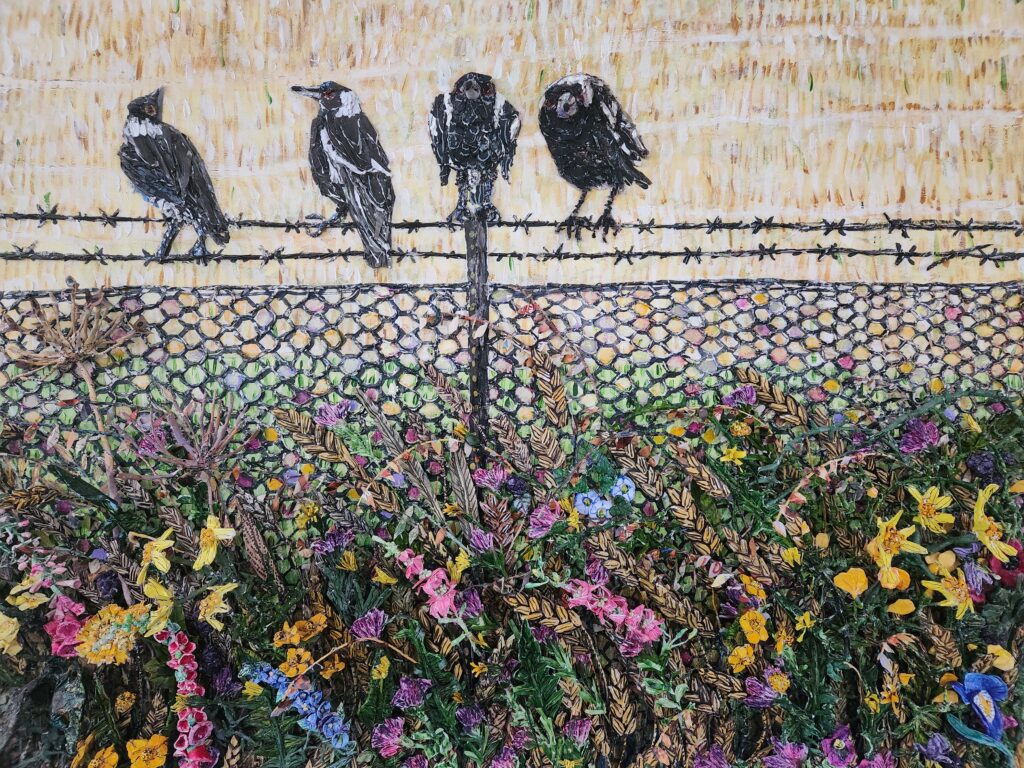
Q5. Your paintings combine mixed media, acrylic, markers, oils, and energetic mark-making. How do you decide which materials or techniques best express a particular idea or emotion?
I have been experimenting with materials as an artist since I was 3 years old. Over the years I have tried lots of different artforms and ways of making marks. I studied at Wollongong University and some of the works I create now are hybrids of experiments I did in high school and university. Improvements within work because of changes in technology and my own personal idea and challenge to increase depth and build meaning within layers. Sometimes the correct material, technique or feeling of success comes to you after 3 or 4 paintings or a break of in activity.
Q6. When people respond emotionally to your work, whether they laugh, recognise a memory, or see something sacred, how does that affect the way you think about audience and connection?
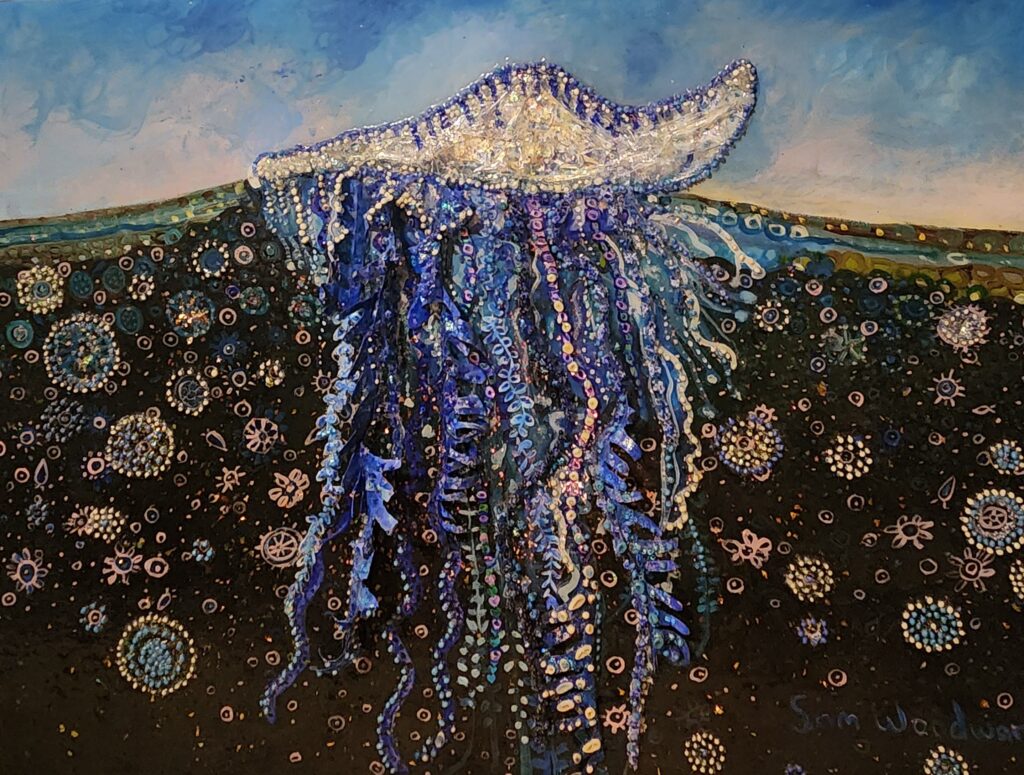
I have one painting in particular that a lot of people seem to feel a religious and spiritual connection to which involves a beam of light and a bloom of jelly fish. Light has been historically used by artists to build community and explain an internal knowing and give hope. In uncertain times most people are voicing a feeling of uncertainty and lack of positivity about the future and are wanting hope. No one person should have so much power that they can negatively effect the future of a planet . I painted my painting “Is extinction too swift for our parrot ” because I wanted people to make a connection and have an understanding of the critically endangered Swift Parrot plight to help save the bird from extinction. Artists can be powerful tools and the individual can become mighty and effective with support.
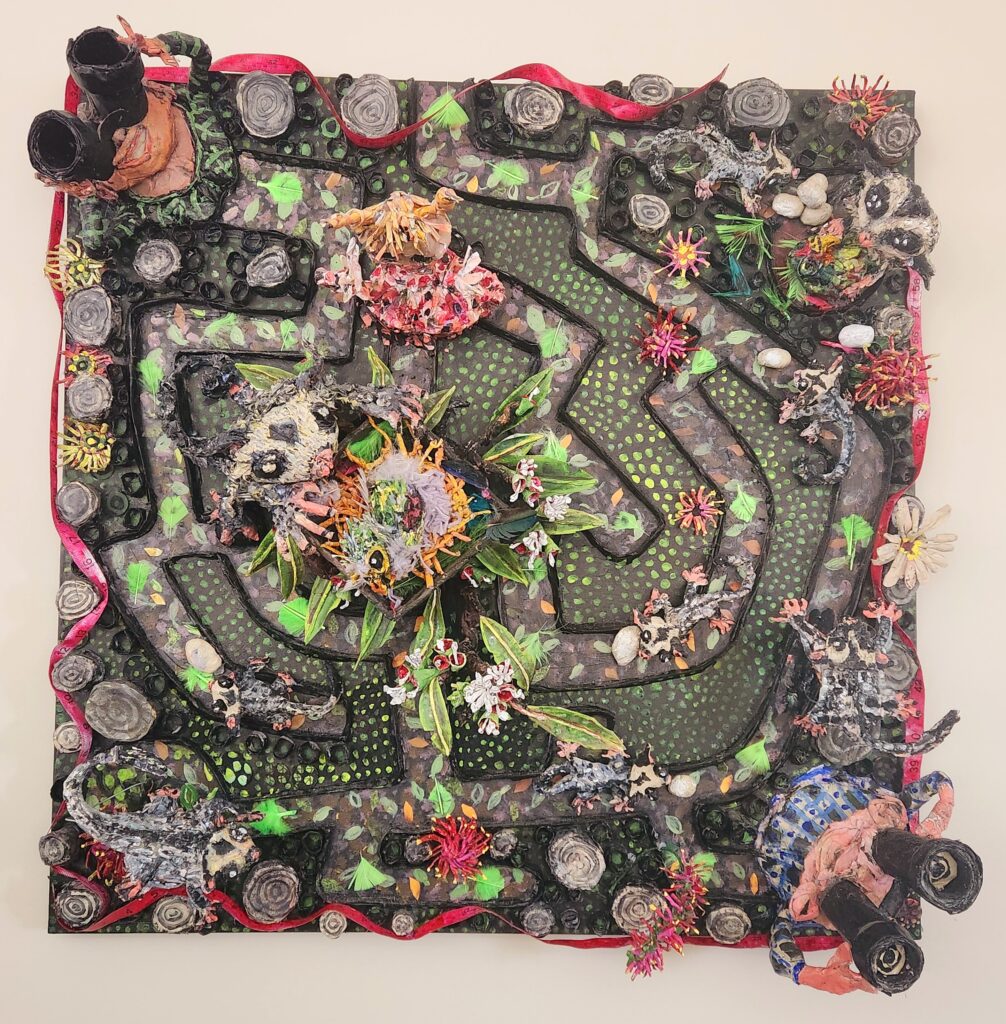
Q7. Do you feel there are misconceptions about Aboriginal art or wildlife art that your work pushes against?
There are different types of Aboriginal art and different types of Wildlife art which is created for certain purposes based on individual artists experiences and goals. Not trying to push against other Aboriginal artists or other Wildlife artists. Just creating my own challenges and making meaning from my own experiences and trying to make work which is recognisable as mine and responsible within my own capabilities.
Q8. If you could describe your work in a single sentence that captures its heart or purpose, what would that sentence be?
Sculptural painting un- trapped by the canvas the wild thing within rises to be free.
Q9. What advice would you offer to young artists, especially those looking to honour their cultural heritage while finding their own creative voice?
Some times the journey is long and hard to make a cultural connection with a maze of red tape. Follow the rabbit for as long as you need to. The Stolen generation was made stolen for a reason to cause disconnection and to muddy the waters. You are not wrong or any less. Stay true to you. Be fierce, deadly and determined and don’t let anyone ever steal your light.
As our conversation with Sam came to a close, we walked away thinking about how easy it is to let the things we lose define us forever. And how rare it is to see someone refuse to let that happen.
Sam did not have an easy path. Most of us would have stayed stuck in the anger. Stayed in the heaviness. Let it become the whole story. But she kept going. She kept making. And when the door to her roots finally opened again she walked through it and let everything change.
That is something we can all learn from. Not just as artists but as people. That it is never too late to go back and reclaim the parts of yourself the world took from you. That the things you make with your hands can become the bridge back to who you are. That healing does not mean the pain disappears. It means you finally make room for something else to exist next to it.
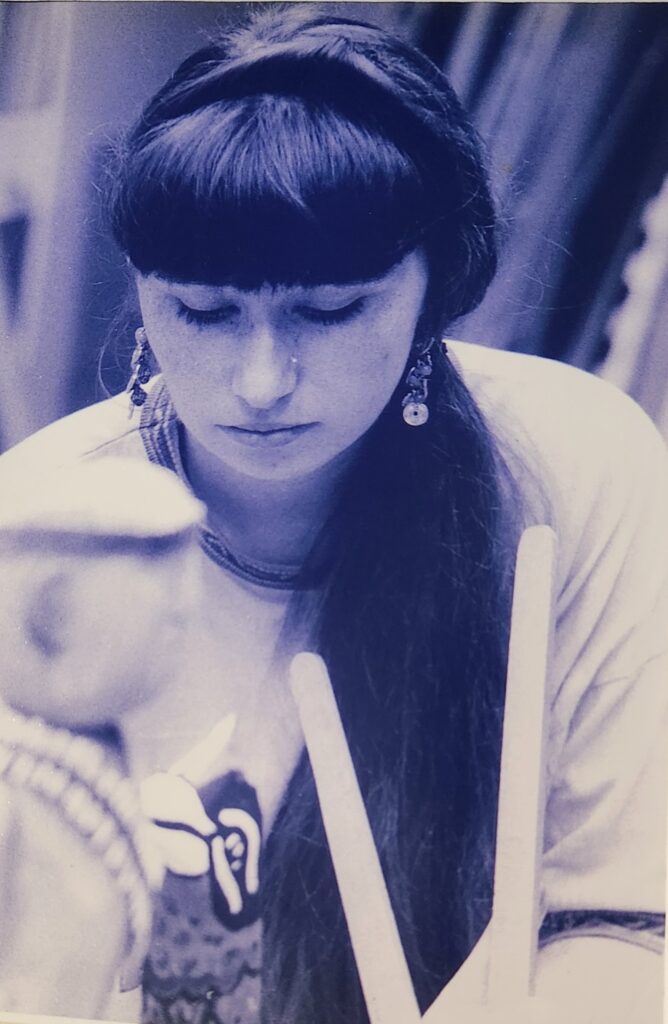
And in a world that keeps telling us to go faster, automate more, let machines do the work, Sam is proof that there is another way. Slow down. Trust your instinct. Use your hands. Build something real, layer by layer, the way only a human being can. That choice is not outdated. Right now it might be the most important choice an artist can make.
So if you are sitting somewhere feeling disconnected from your roots, from your creativity, from yourself, let Sam’s story remind you. The way back exists. It might take years. It might take a long and painful journey to get there. But your hands already know the way. Trust them.
Follow Sam Woodward through the links below to see what happens when an artist chooses instinct over everything else.