
Iconic Art That Feels Like It Belongs in 2025

👁 97 Views
Some artworks do not stay in their own era. They reappear at specific moments when the world feels uncertain, and suddenly their questions, tensions, or quiet observations line up with what we are experiencing now. It is one of the most revealing things about art, the way a piece created decades or centuries ago can feel like it was speaking directly to the atmosphere of today. That alignment is rarely accidental. It reflects how certain themes, no matter the era, return in cycles that shape every generation.
What makes these works feel so timely is not just their subject matter, but the clarity with which they capture human patterns. The concerns in them, whether emotional, social, or existential, are not tied to a trend or a movement, they sit underneath the surface of every period. When you revisit these pieces now, the familiarity can be startling, almost grounding, as if their creators had been observing the same undercurrents we are navigating.
There is also something reassuring in this recognition. In a moment when so much feels in flux, these artworks offer a steadier lens. They remind us that uncertainty is not new, that change is not unprecedented, and that people before us have lived through similar tensions and left behind a record of how they made sense of it. That quiet continuity can bring perspective, especially when modern life feels crowded with noise and constant updates.
What becomes clear as you sit with these works is that they endure because they are built on something real, not fashionable. The details may belong to the past, but the emotional architecture feels contemporary. It is a reminder that art lasts not because it survives time, but because it keeps finding its way into conversations that keep happening, generation after generation.
This list highlights a few of those pieces, the ones that feel strangely in step with the present moment. They do not echo the past, they reflect a shared human rhythm that stretches across it. And in that reflection, you may find something steady to hold on to.
Wassily Kandinsky’s Composition VIII, and the Strange Calm of Controlled Chaos
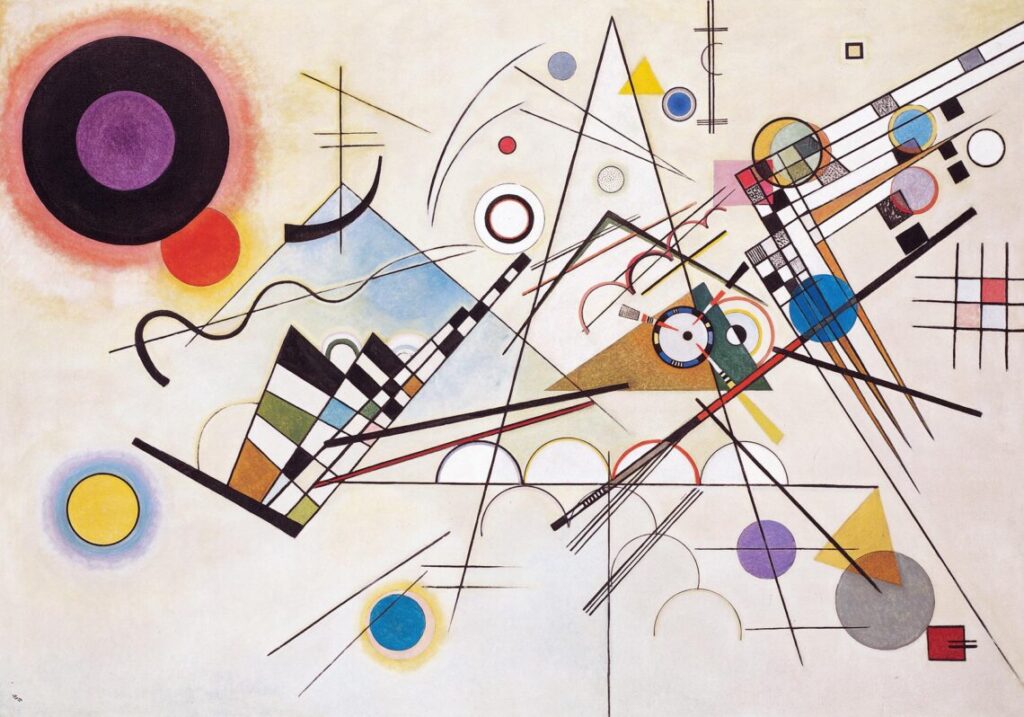
There is something quietly electrifying about Kandinsky’s Composition VIII, a painting built from lines, circles, angles, and color blocks that never collide yet constantly interact. When you look at it today, it mirrors the exact feeling of trying to keep your life balanced while everything around you shifts faster than expected. The shapes behave like responsibilities that overlap without overwhelming each other, a visual reminder that structure is possible even when things feel scattered.
What makes this artwork feel especially relevant now is how it finds harmony inside disorder. Many artists understand this instinctively, the moments when the studio is a mess, deadlines stack up, and the mind buzzes with unfinished ideas. Composition VIII captures the same energy, but shows what happens when you reframe chaos as a system waiting to be understood. It feels like a gentle nudge that you can create clarity without removing the complexity.
The color choices, bright yet controlled, make the painting feel like a map of emotional life. Nothing is smoothed over or simplified, and that honesty is exactly why it resonates today. We live in a time shaped by unpredictability, so seeing order emerge from unexpected shapes feels strangely comforting. It reinforces the idea that your creative path does not need to look linear to be purposeful.
Artists, especially, might see themselves in the way the lines guide the composition. They do not restrict anything, but they influence direction, much like routines, boundaries, or new habits. This turns the image into something more than abstract art, it becomes a blueprint for staying grounded when the world demands constant adjustment.
Even though it was painted a century ago, its message lands with surprising force right now. Composition VIII offers a quiet but confident reminder, that the pieces of your life can align even when they are all moving at different speeds.
Käthe Kollwitz, “The Mothers” (1922–1923)
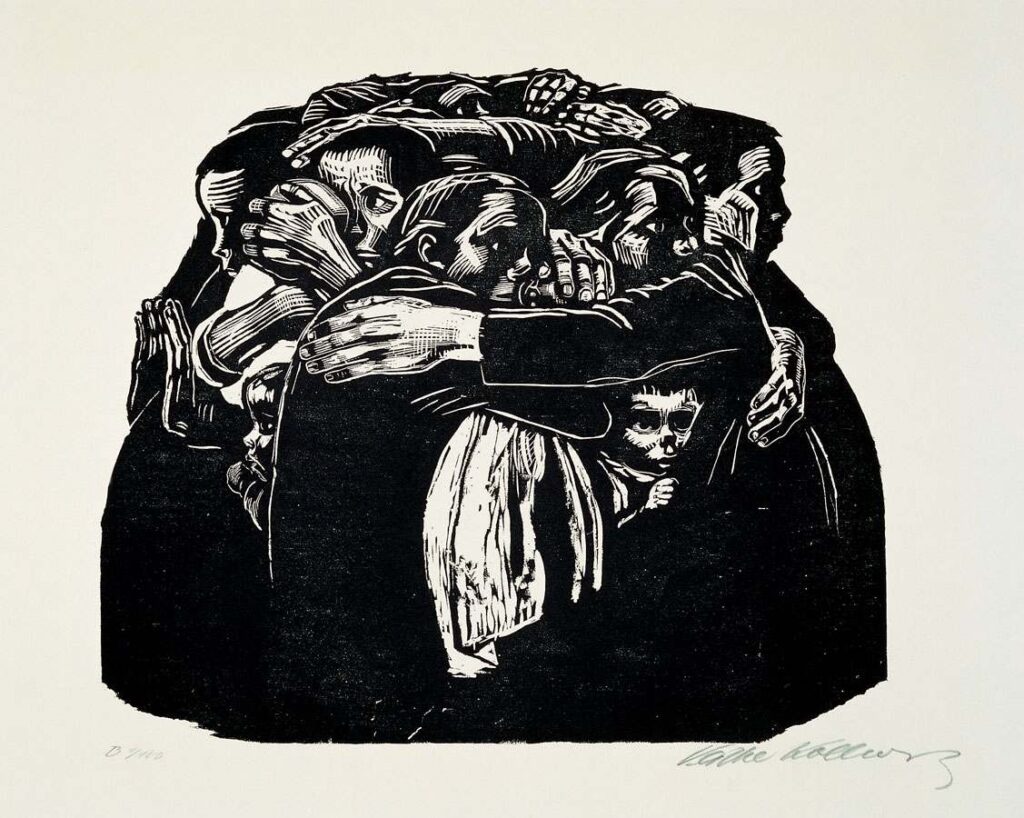
Käthe Kollwitz’s work has always carried a quiet emotional gravity, but “The Mothers” hits differently in today’s environment. The image of a tight circle of women clutching their children is a reminder of what people instinctively protect when the world feels fragile. You can sense fear, solidarity, and an unspoken promise all at once. It speaks directly to the current global mood, where families everywhere navigate uncertainty while trying to safeguard what matters most.
This piece feels timeless because it focuses on instincts rather than eras. Kollwitz wasn’t interested in romanticizing motherhood, she was portraying the raw, tense, protective energy that rises when society shakes. That emotional truth resonates deeply today, especially with the growing awareness around caregiving, community responsibilities, and the mental load carried by women worldwide.
Another reason the piece feels so current is its depiction of strength as collective rather than individual. These women are not isolated; they form a wall around their children. That idea mirrors the present push toward mutual support, communities, friend groups, and even strangers stepping in for one another when systems fail or stress peaks. Kollwitz captured the power of shared protection long before the rest of the world articulated it.
The palette, the shadows, the heavy forms, they all contribute to a sense of weight that feels familiar right now. Many people are navigating invisible pressures while trying to hold everything together. The piece doesn’t judge or pity that struggle, it simply acknowledges it with empathy. That is why it feels strangely contemporary.
Even after a century, “The Mothers” continues to remind us that resilience doesn’t always look bold or loud. Sometimes it looks like holding on, standing close, and refusing to let anything reach the ones you love. That message lands with particular force today.
Hilma af Klint, “The Ten Largest, No. 7, Adulthood” (1907)
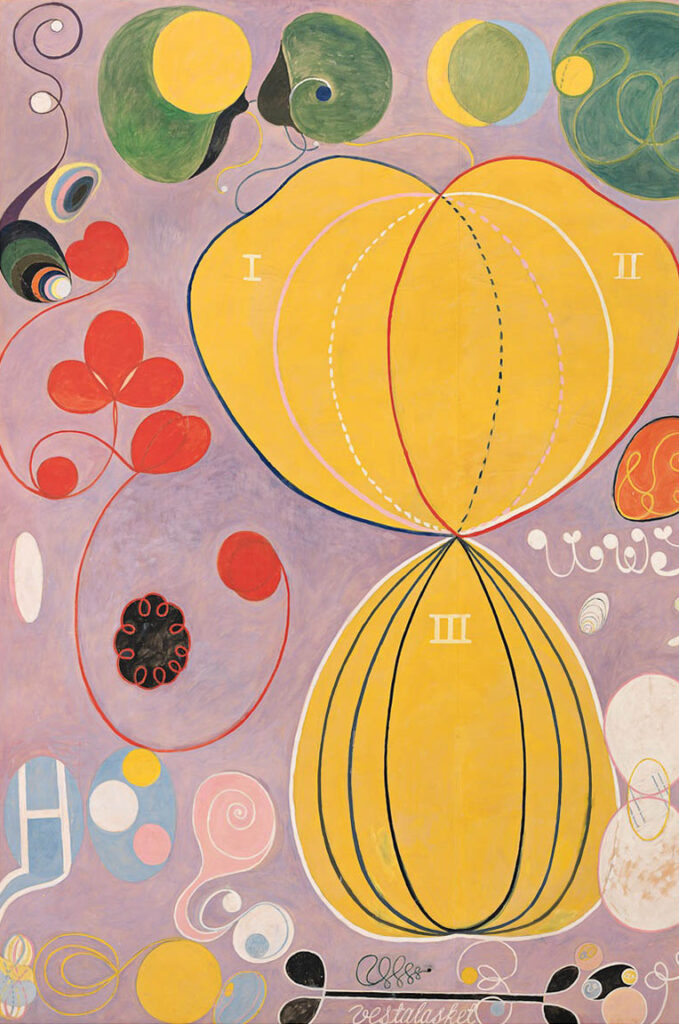
There’s something uncanny about how Hilma af Klint’s work feels like it belongs more to 2025 than to 1907. Her abstract, symbolic, intuitive forms echo the very things people talk about now: growth, identity, transformation, emotional complexity. “The Ten Largest, No. 7” captures adulthood not as a fixed state but as an ongoing expansion. That idea feels incredibly relevant in a time where people are reassessing what adulthood even means.
Hilma painted from a place of internal truth rather than external pressure, a decision that aligns closely with today’s shift toward more introspective, emotional, and spiritual ways of understanding life. Her swirling forms, soft palettes, and symbolic shapes feel like visualizations of self-reflection, therapy culture, inner child work, and emotional mapping, themes people discuss daily now. She was, in many ways, ahead of the emotional language that defines this era.
The strange timelessness of the piece also comes from how it refuses to be pinned down. It doesn’t look like traditional abstract art from her time, nor does it fully mimic contemporary aesthetics. Instead, it floats in a space that feels connected to every generation that grapples with identity evolution. You can look at it today and see your own transitions, your own phases, your own cyclical growth.
In a world where burnout, pressure, and reinvention are constant themes, this artwork becomes a visual reminder that adulthood is not a destination. It is a shifting, layered experience. Hilma captured that fluidity long before modern culture began speaking openly about nonlinear paths. That is why the work feels more alive now than ever.
The painting pulls you into a gentle, expansive understanding of the self. And in a moment where many are rethinking their priorities and redefining their lives, that perspective feels deeply needed.
Claude Monet’s Water Lilies, and the Relief of Stillness in a Fast World
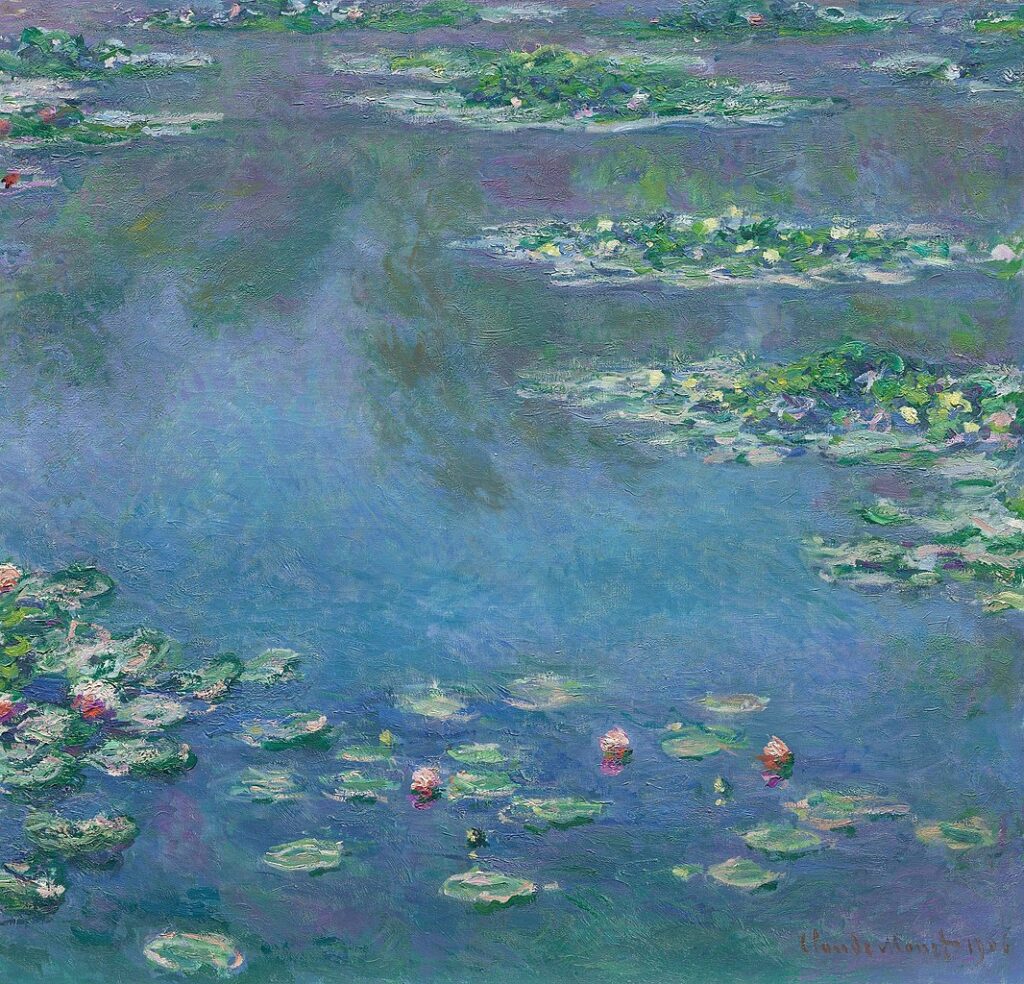
Monet painted his Water Lilies series to capture how light rests on water, but in today’s world, these works read almost like an antidote to overstimulation. There are no figures, no narratives, no distractions, just a surface that ripples gently and allows the eye to pause. It feels uncommon today to find imagery that encourages rest without asking for anything in return, and that is exactly what makes this work feel so immediate and needed.
The layers of color, soft yet intentional, create a world that absorbs tension as soon as you look at it. When life starts to feel loud, Water Lilies reminds you that beauty does not need to announce itself, it can whisper and still be powerful. This is the kind of painting that teaches slowness, a skill that feels more radical now than ever before. It makes serenity feel like something you can practice.
Artists often talk about mental clutter, and Monet’s work offers a gentle counterweight. Instead of demanding clarity, it invites presence. The reflections melt into one another in a way that mirrors how thoughts blend during quiet moments, especially the ones that lead to creative breakthroughs. It feels like a sanctuary built from brushstrokes.
What’s especially timeless is how Monet captured movement without agitation. The water shifts, but softly, and that subtlety is what lands with emotional weight today. It suggests that change does not always need to feel chaotic, that sometimes it can happen in slow waves without losing its impact.
More than anything, Water Lilies feels timeless right now because it defies the pace of modern life. It gives you permission to breathe a little deeper, to let go of the pressure to always be doing, and to allow softness a place in your routine. For artists, and for anyone moving through life quickly, this painting feels like a reminder that stillness is not a luxury, but a tool.
Edvard Munch, “The Dance of Life” (1899–1900)

Munch’s “The Dance of Life” is often overshadowed by “The Scream,” yet this work feels uncannily relevant right now. It captures the entire emotional arc of a life in one scene: innocence, passion, loss, longing, cycles, and change. With so many people reassessing relationships, identity, and purpose in the wake of global shifts, the painting’s emotional language lands with new clarity.
The three women in the foreground, youthful in white, passionate in red, reflective in black—mirror the phases people cycle through emotionally. Today’s world encourages constant reinvention, which makes this painting feel like a psychological portrait of modern adulthood. You can look at it and instantly recognize yourself in one figure or see three versions of your own emotional history.
What makes the work so timeless is how it captures transitions rather than static states. Munch was painting the tension between desire, growth, memory, and acceptance. That emotional complexity mirrors the present moment, where people are negotiating who they were, who they are becoming, and who they want to be. It has the same emotional texture as the inner conversations people have today.
It resonates now because modern life often feels like a series of overlapping dances—relationships shifting, identities evolving, priorities rewriting themselves. Munch visualized that long before emotional vocabulary caught up. His colors, gestures, and symbolism feel aligned with the themes of self-discovery and emotional honesty so central to contemporary conversations.
The painting holds a kind of quiet wisdom: life is not a straight line. It loops, circles, sways, pulls you one way and then another. In a time where people are trying to make sense of uncertainty and internal change, the work feels more relevant than ever.