
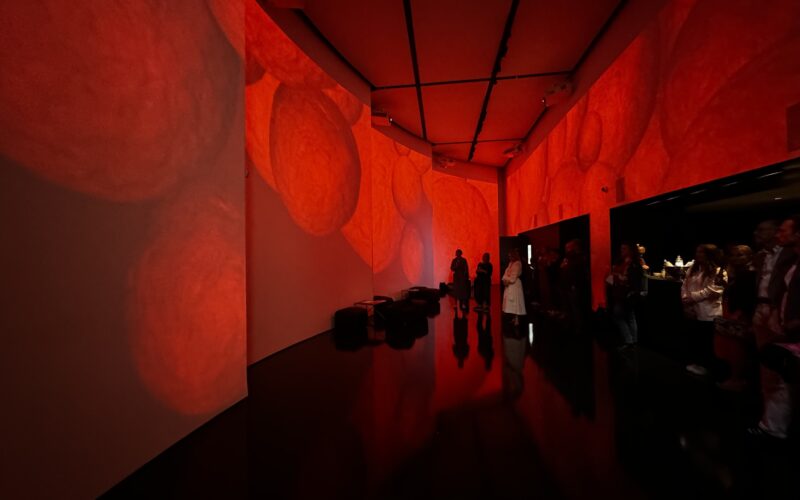
Laura Dzelzytė’s red light installations immerse viewers in total colour
👁 36 Views
At Arts to Hearts Project, sometimes a studio is just a room with good light and a table. And sometimes a studio is an abandoned Jesuit college of philosophy and theology with grey corridors and concrete steps and doors so heavy you need your entire body to open them. Laura Dzelzytė works in the second kind. And honestly, the way she described her space to us is one of the warmest, most vivid things we have heard an artist say about where they work.
Studio Visit Book 7 has always been about taking you inside the real spaces where artists think and work and doubt and make. Not the polished version. The honest one. Among our many selected artists for this edition, Laura stood out to us right away. Not just because of what she makes but because of where she makes it.
Her studio is a place where colour and light and energy do something together that is hard to explain but impossible to miss. The room feeds her creativity and she feeds it right back.
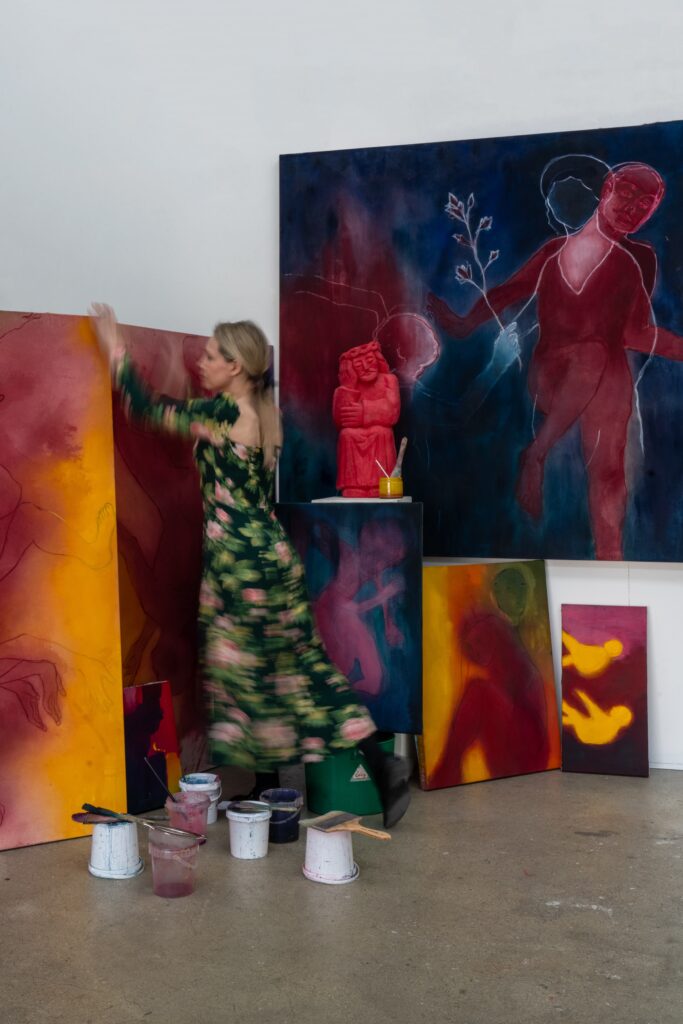
Everything in that space is in conversation with everything else. We do not want to say too much because the way Laura talks about it in the interview is so much better than anything we could paraphrase. But we will say this. When she described walking into that room for the first time, we could feel it. Even through words. Even without being there.
But before you get to the interview, let us tell you a bit more about her.
Laura is Lithuanian. She grew up under Communism in a country that demanded rationality and dismissed anything magical or spiritual as backward. She never believed in that. But it shaped her. It is part of her skin, she says.
The map she uses to access deeper layers of herself. And that tension between the rational system she was raised inside and the spiritual, empathetic, magical world she actually believes in, that sits quietly at the centre of everything she creates.
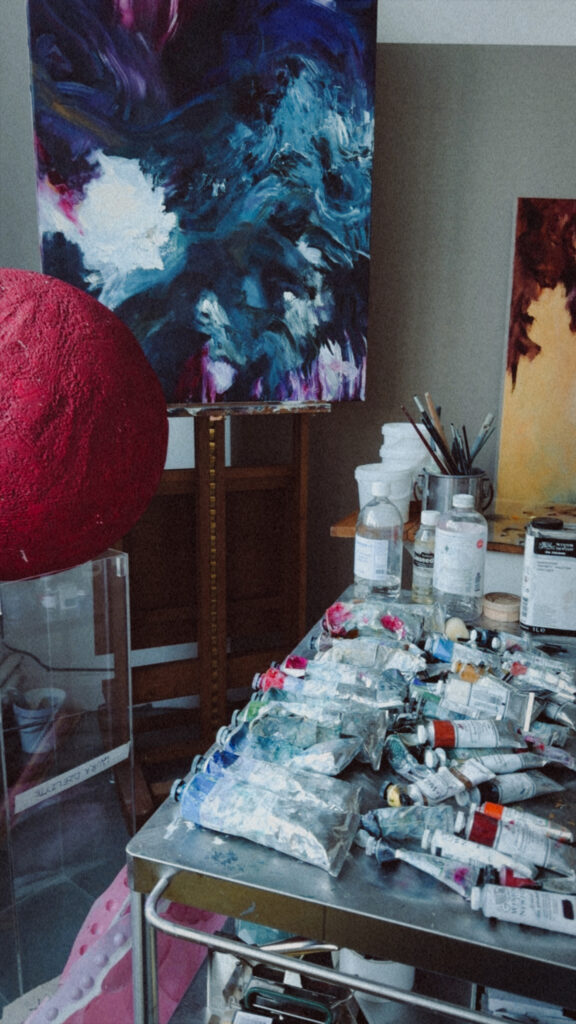
She studied at the Royal College of Art. She works across painting, sculpture, video, material experimentation. And nothing in her practice stays neatly in its own lane. Mediums bleed into each other. Ideas cross borders.
She does not believe in hard edges between forms any more than she believes in hard edges between people. And once you know that about her, you start to understand why her work feels the way it does. Open. Porous. Alive with connections you did not see coming.
Her process always begins with taking something apart. She will carefully disassemble an object piece by piece. She will start a painting as a precise classical drawing and then obliterate it with paint.
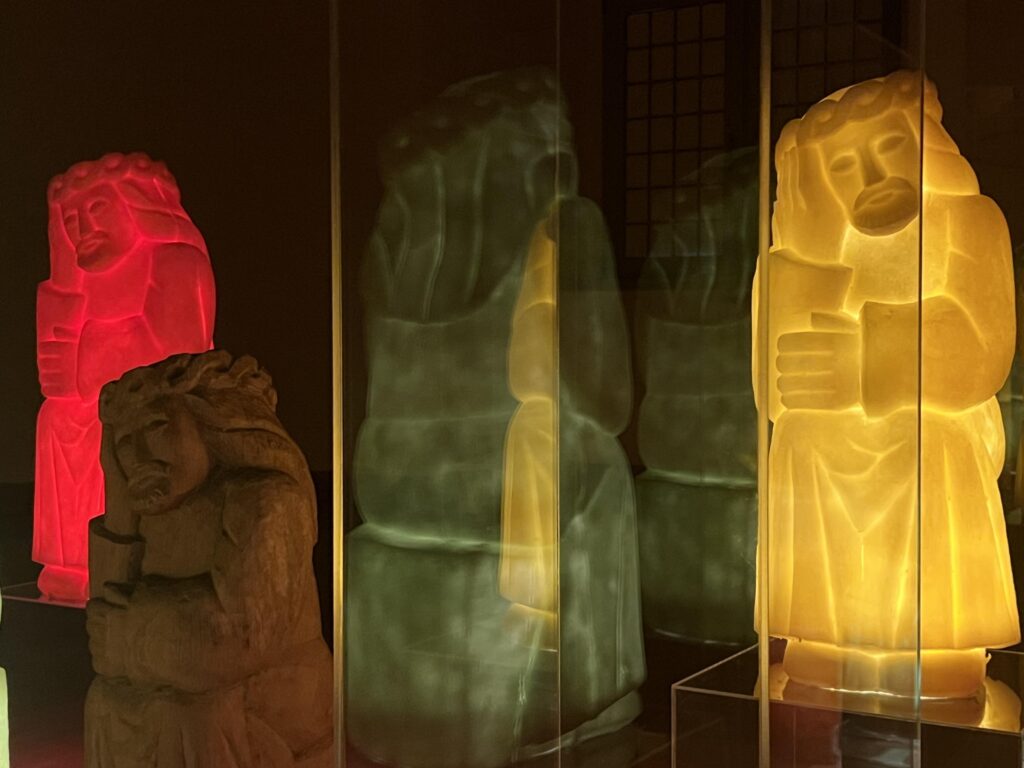
She builds structure just so something deeper can break through it. That cycle of making and unmaking is not chaos for Laura. It is how she finds what is honest underneath what is expected.
And she does not want to tell you what her work means. She would rather it be a portal. Something you step into and find your own meaning inside. We think that is a really generous way to make art.
Let’s hear from Laura about what it is like to make art inside a former Jesuit college, why destruction is always her first step, how Communism and magic live side by side in her practice, and what her studio has taught her about light and colour and the beautiful space between things.
Q1. Let’s begin with your studio as it is right now. When you step inside, what do you immediately notice, a smell, a light change, a material waiting something that tells you where you are in your work?
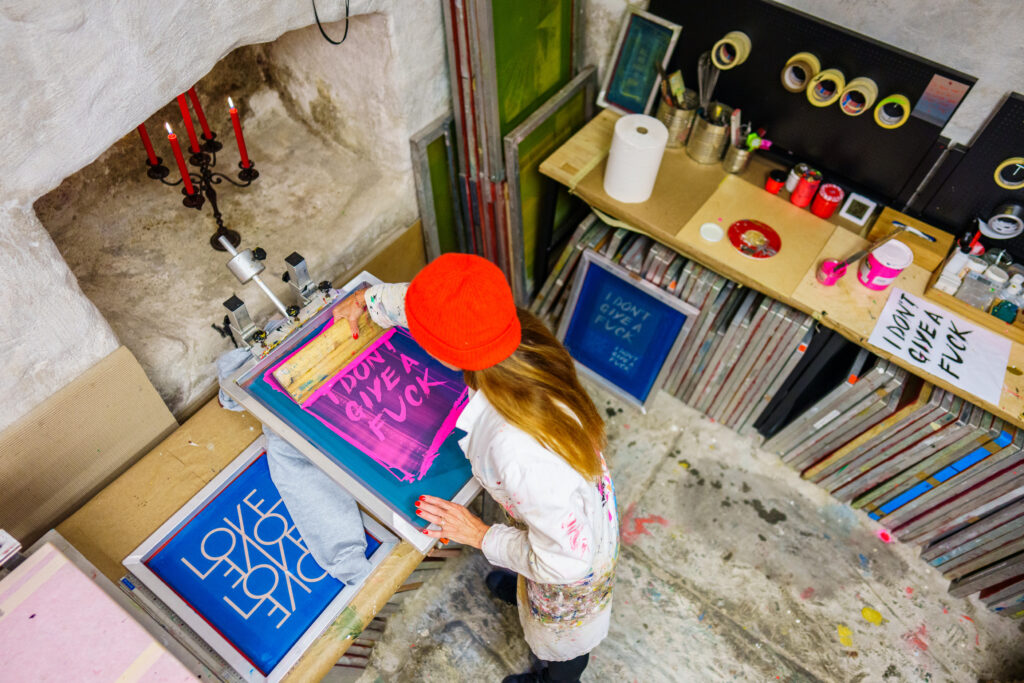
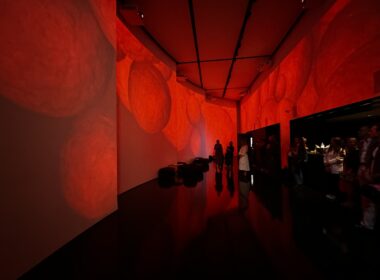
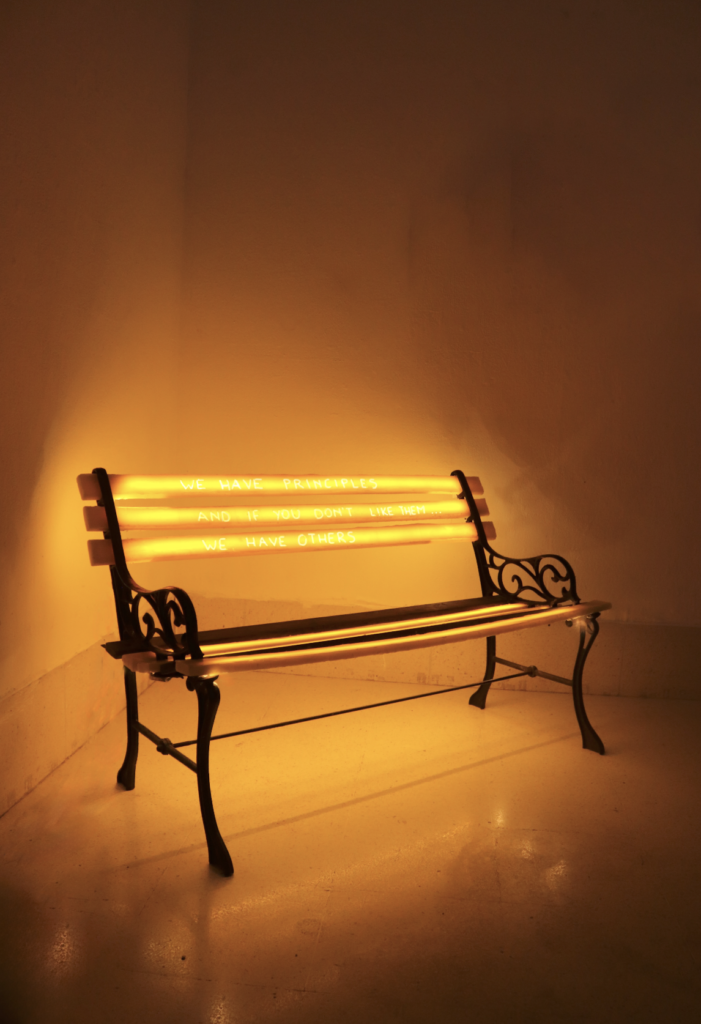
My studio has a name: W22. It faces west, towards the Hammersmith and City rail tracks and a large block of flats that reminds me of Soviet architecture back at home. I am lucky. In the morning, the sun bounces off the building’s windows, and in the afternoon it hits the studio at a right angle, providing warmth and light without altering the colour of the paint too much. I am in an abandoned Jesuit college of philosophy and theology. The corridors are grey. The steps to the second floor are wide and concrete. The doors are heavy. I need two hands and my full body to open them. When I am bringing heavy loads of wax for sculpture or wood for large stretchers, I have to wedge my foot into the door to keep it from shutting, slip through with my body, then quickly pull the planks or bags in before it closes. It’s a choreography worthy of Pina Bausch. Henri Matisse painted The Red Studio. I have yellow. Colour is what greets you, it hits you with visual pleasure. A Victorian bench in wax glows and activates the paintings and books in the studio. I love the magic of this interaction. Colours and energy feed off each other and, in turn, feed my creativity.
Q2. Your practice moves between painting, sculpture, video, and material experimentation. How do these different forms coexist in your studio space, do they overlap, interrupt one another, or stay carefully separated?
At the Royal College of Art, I became fascinated with the matrixial borderspace, a psychoanalytic theory developed by the artist Bracha Ettinger, which proposes that a psychic space is shared between self and other, allowing for empathy, trauma-sharing, and transformation. From there, I developed my own conception of space. Borders don’t exist. There are no edges, frontiers, or margins. Only relational existence. The hard line is an optical illusion. The molecules of pigment are not contained within the structure of the painting but, through thermal motion, interact with particles of air, moisture, odours, and even my skin. Leonardo da Vinci insisted that nature does not actually have outlines. Instead, forms are perceived through light, shadow, and transitions of colour. Donna Haraway argued that the boundaries between nature and culture, organism and environment are fictions sustained by human narratives. I subscribe to this fully, and it is how forms and works coexist in my studio.
Q3.When working with materials that have their own behaviour wax, pigment, poured elements, how much control do you try to maintain, and where do you allow the material to decide?
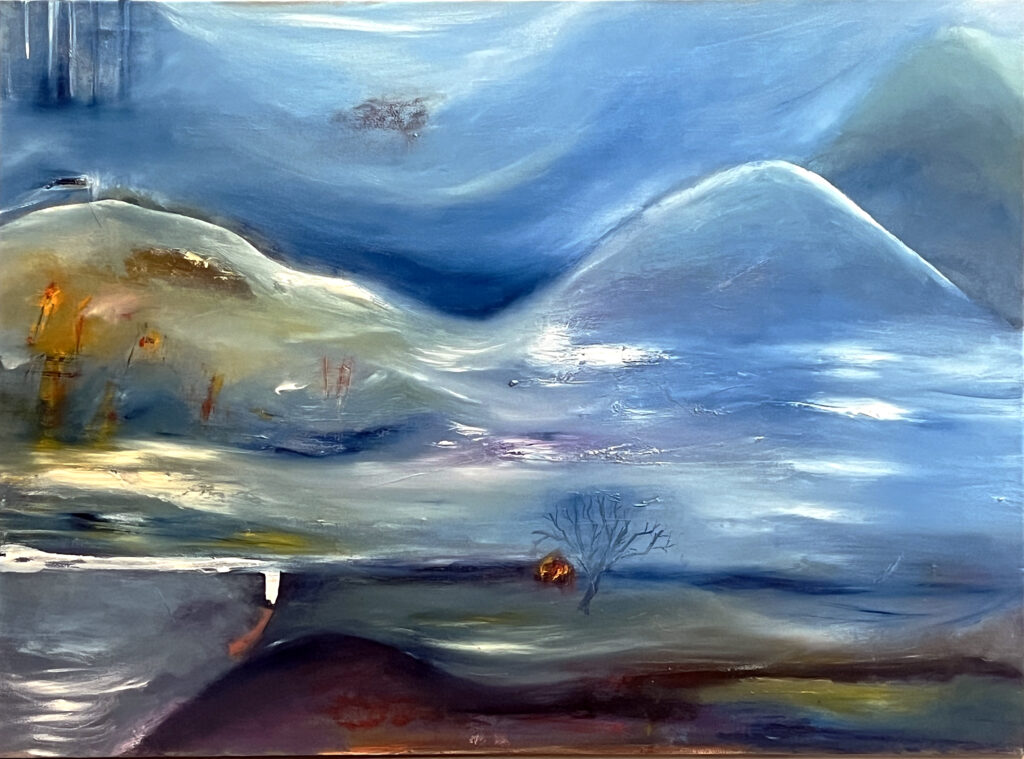
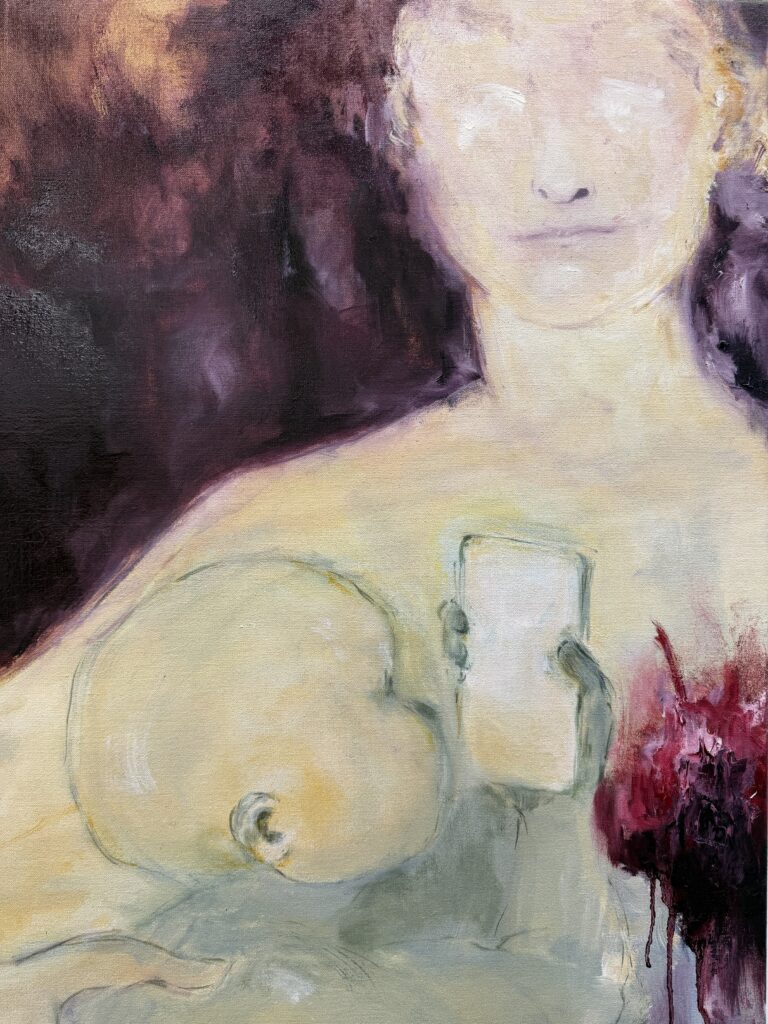
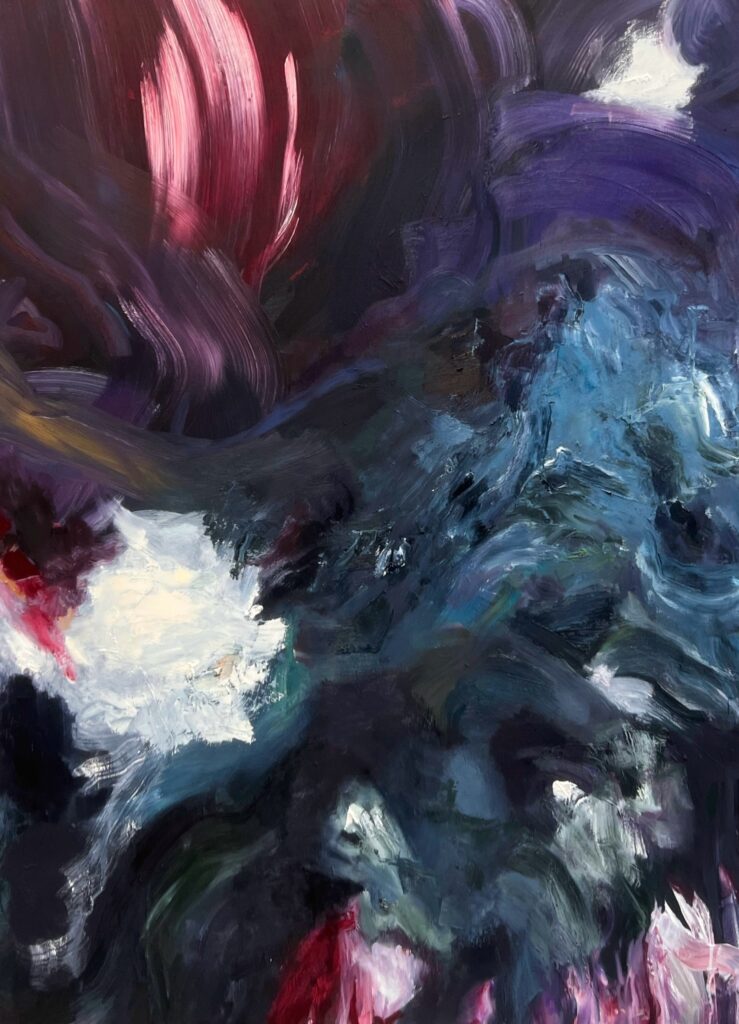
My practice is an eternal attempt to process and let go so that to reimagine objects and ideas. Yet the beginning is always dissection and reduction. I grew up in a Communist country, which was built on dialectical materialism, scientific atheism, and hostility to religion, so magic, spiritualism, and related practices, which are cornerstone of my work, were usually treated as backward superstitions or banned altogether. Homo Sovieticus was supposed to be rational, scientific and atheist. I have never held those values true, but they are part of my skin that I grew as a child. They are map through which I access deeper layers of unconsciousness. I usually start with dissecting a shape or a form, or an idea, then reimagine it. For example, for my project Soft Square (and a triangle), I used paper and maths to create an origami based self-collapsible container made from precisely 32 squares and 30 triangles as a response to the single use plastic overconsumption. I explored tensions between soft and hard, malleable and durable as a metaphor for femininity. For Mayfair Marxist Manifesto I took an antique Victorian bench, I painstakingly disassembled it, as they screws were eroded and remade planks from wax. I made casts of the bench and then poured wax into it, and wrote on the planks while they are hot. My painting also begin with structure as classical pencil and charcoal drawings on paper. Then I transfer them onto canvas, as a blueprint just to obliterate later with paint. Allowing the unconscious to reprocess the visual with energy and colour.
Q4. Your work often carries a sense of internal narrative without being illustrative. While working, do you think in terms of stories, or do meanings emerge only after the work is finished?
French literary critic and theorist Roland Barthes argued against using an author’s life, psychology, or intentions to define a meaning. I do not believe in a singular, authoritative interpretation. My work is an attempt to understand the world and reimagine it with more empathy, but I am not a didact, I simply want to share the tensions I feel or observe and invite the audience to deliberate and meditate themselves. I hope my works to be portals rather than a prescriptions.
Q5. For artists who are still learning how to inhabit their own studio spaces: what would you encourage them to pay attention to first, before thinking about outcomes or audiences?
Light. Studio needs light. Light is energy. It’s the key companion in creativity and one’s ability to create.
As our conversation with Laura came to a close, we just sat with it for a while. Did not rush to write anything down. Did not try to summarise what she said. Just let it settle.
Because talking to Laura does something to the way you think. Not in a dramatic way. In a quiet way. Like someone gently moved a piece of furniture in your brain and now the room looks different. You cannot point to what changed but you know something shifted.
We went into this conversation expecting to talk about paint and process and studio routines. And we did. But what we actually walked away thinking about is how much of what we accept as fixed is actually not fixed at all. Borders between mediums. Between rational and spiritual. Between making and unmaking. Between what a painting is and what the air around it is. Laura does not respect any of those borders.
And the more she talked the more we realised maybe those borders were never really there. Maybe we just drew them because it made things easier to organise.
Her whole practice is about that. Taking something that looks solid, a bench, a drawing, a political system, a belief about how the world works, and pulling it apart to see what is actually inside. And then putting it back together in a way that is more honest. More alive. More hers.
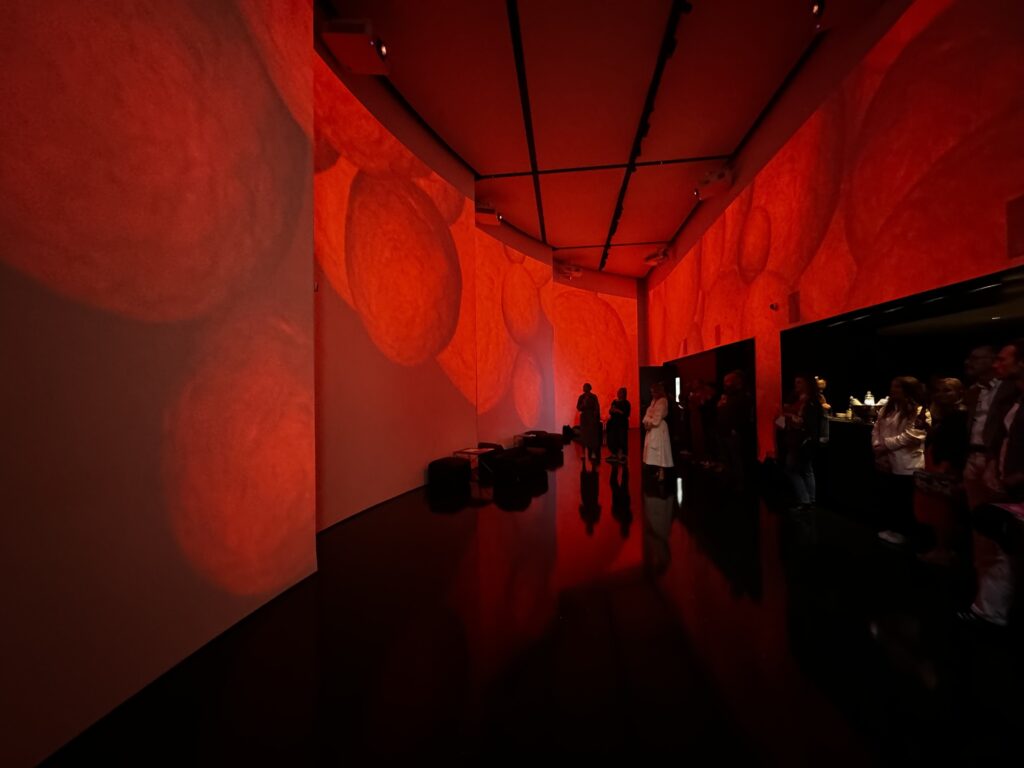
She does not destroy things for the sake of destruction. She destroys them because she trusts what comes after. The unconscious. The unexpected. The thing that could not exist until the planned version got out of the way.
For anyone looking to bring work into their collection that has real weight behind it, Laura is worth serious attention right now. This is not decorative art. This is not trendy art. This is work made by someone who studied at the Royal College of Art, thinks deeply about philosophy and psychoanalysis and material history, and then puts all of that into objects you can feel with your body as much as you understand with your mind.
Her pieces change with the light and the time of day. They talk to the room they are in. They give you something new every time you look at them. That is the kind of work that does not lose value. It gains it. Because it was made by someone who has something real to say and the skill and the courage to say it.
Follow Laura Dzelzytė through the links below.