
From Silicon Valley to Sebastopol: How Emily Eccles Built Nanny Goat Gallery

👁 13 Views
Galleries are where art finds its first home. They are the spaces that take a risk on an artist before the rest of the world is ready to. They are the rooms where someone walks in not knowing what they are looking for and leaves with something that changes their wall, their morning, their understanding of what beauty can look like.
Without galleries, without the people who build them, run them, and pour their taste and their conviction into every single wall so much of the art we love would simply never be seen.
At Arts to Hearts, we have always known that celebrating the art world means celebrating everyone in it. Not just the artists, but the curators, the champions, the ones who quietly make it possible for creativity to reach the people it was always meant for.
Our Best of the Art World editorial was built with exactly that in mind to spotlight artists, yes, but also the galleries and the gallerists who stand behind them, who take the leaps and open the doors and create the spaces where something real can happen.
And today, we are genuinely honoured and if we are being honest, a little excited to bring you one of those spaces and the woman behind it.
When we first came across Nanny Goat Gallery, the name alone made us stop. Because you don’t call your gallery Nanny Goat and then show safe, predictable art. You call it Nanny Goat when you have decided, from the very beginning, that you are going to do something different. And different is exactly what Emily Eccles does.
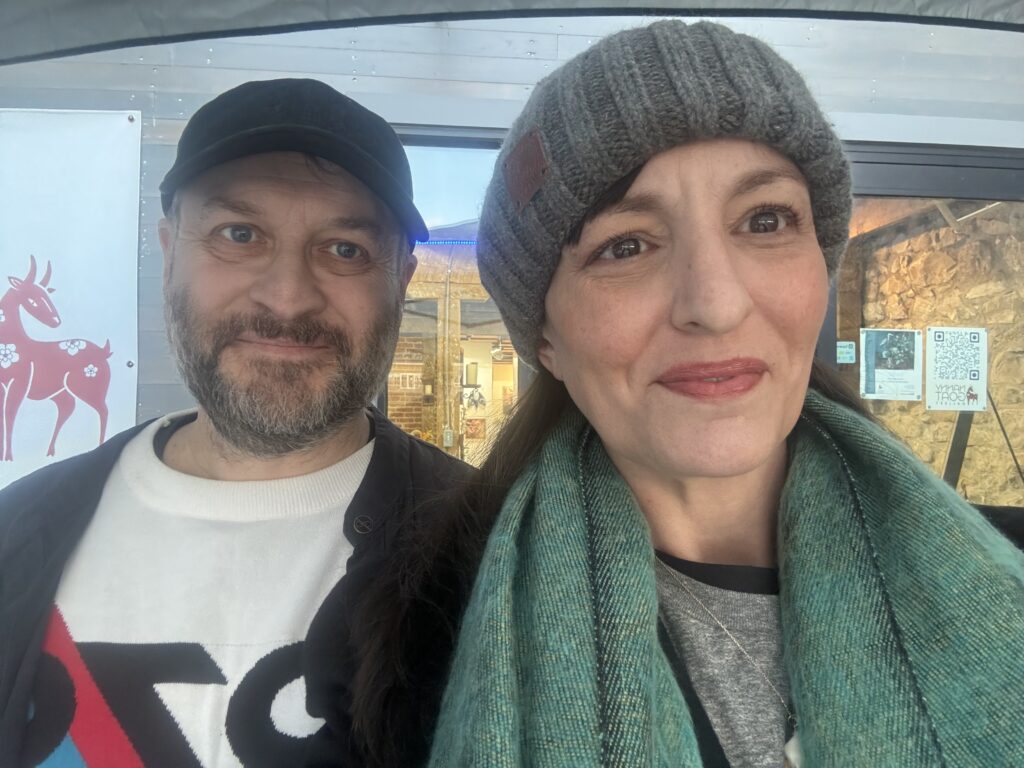
Emily grew up in San Francisco, her family’s roots in the city going back to the 1940s. She studied art history alongside English literature, spent two semesters interning at the Legion of Honor during college, and fell in love with art for the first time in high school through a French teacher who opened a door she has never once closed.
For years she and her husband Paul collected quietly, passionately, and with real conviction not as investors or insiders, but simply as two people who genuinely loved what they were bringing home. Paul came from the world of technology and law, which sounds like a completely different universe, but what they had in common was a taste and an instinct that turned out to be the most powerful foundation a gallery could possibly be built on.
When they retired early and moved from Silicon Valley to Sebastopol in Northern California, the gallery wasn’t a calculated next step. It was more like something that had been waiting patiently for the right moment. Emily looked at Paul one day and simply said she thought she really needed to do this. He said yes.
They went to look at spaces that same week. A few months later they had a lease. And Nanny Goat Gallery rustic brick walls, 19th century building on Water Street, not a minimalist white cube in sight opened its doors.
Today Paul is, as Emily describes him with obvious warmth, the best assistant she could ever ask for. He has another job, he shows up fully for her vision, and the two of them have built something together that neither could have built alone.
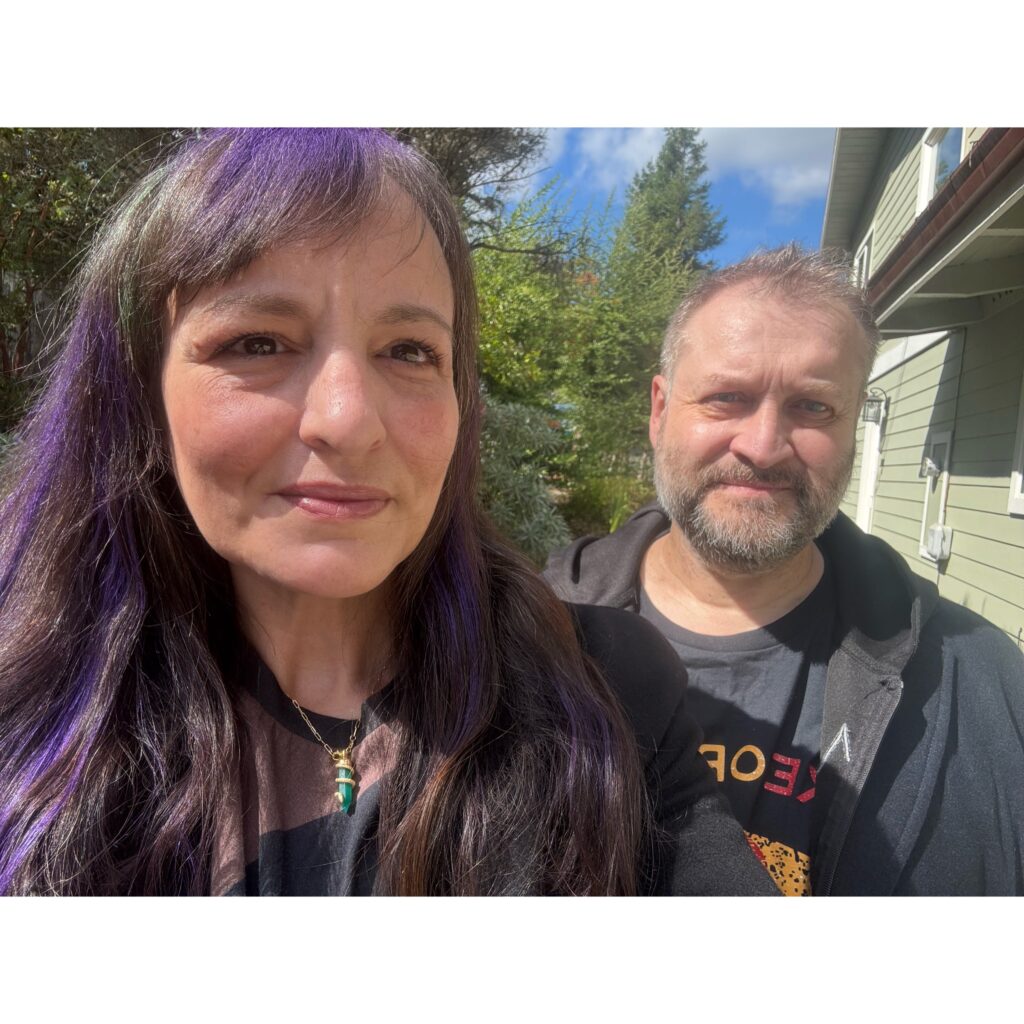
The gallery now has over 600 available works, a roster of artists from California to Australia to the UK, and a collector base that reaches across the world 95% of their sales happen online all from a small town thirty miles north of San Francisco that most people in the art world would never think to look at twice.
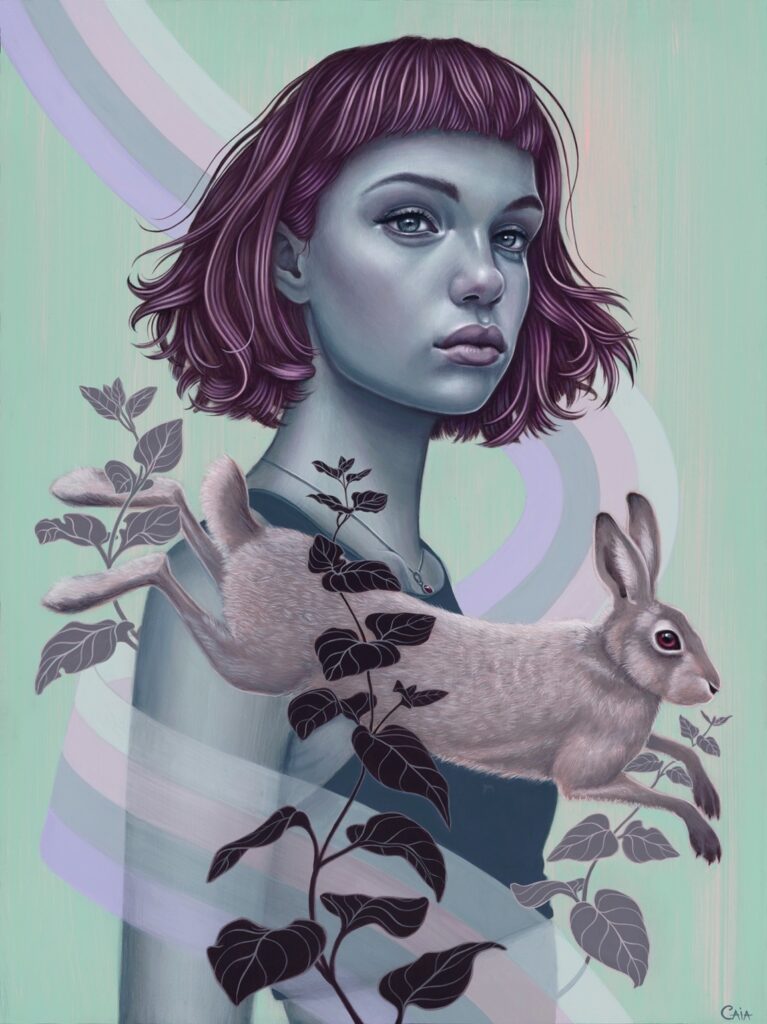
And what they show is surreal, narrative, and fantasy art. The beautiful, enchanted, and curious, as Emily puts it. Work that sits entirely outside the mainstream gallery world and is, as she will tell you plainly, grossly underrepresented in it.
The kind of art that makes people walk in expecting one thing and leave completely enchanted by something they never expected to love. We know exactly what she means. It happened to us too.
Let’s get to know Emily through our conversation with her, where she talks about the French teacher who started it all, what it actually takes to build a gallery from scratch, and why she has never once second guessed the name.
Q1. Emily, you come from a family with deep roots in San Francisco going back to the 1940s, and Paul, you bring a background in technology and law. Neither of those screams “gallery owner.” What was it about art and specifically surreal, narrative, fantasy art that pulled you both in so strongly that you were willing to risk a business on it?
Paul actually has a history in veterinary and business but no worries;) Really, the gallery is my baby and Paul is just a huge help and the best assistant ever, as he also has another job. I studied art history (as well as English literature) and also had a two-semester long internship at the Legion of Honor in San Francisco during college. I have always loved art and first fell in love with it in high school after an introduction from a beloved French teacher. When Paul and retired early and moved to the North Bay from Silicon Valley it felt very natural to open a gallery as art collectors ourselves for years.
Q2. The gallery is named after Nanny Goat Hill where three generations of Emily’s family lived. At what point did that family history stop being just a nice name and start shaping the actual spirit of how you run the gallery?
It was always going to be a funky name because we were always going to show different art. Nanny Goat is hardly a traditional gallery name and we don’t show traditional art so in that way I believe they compliment one another. I don’t think you walk into a gallery named Nanny Goat expecting old fashioned landscapes and bronze sculptures of ballerinas.
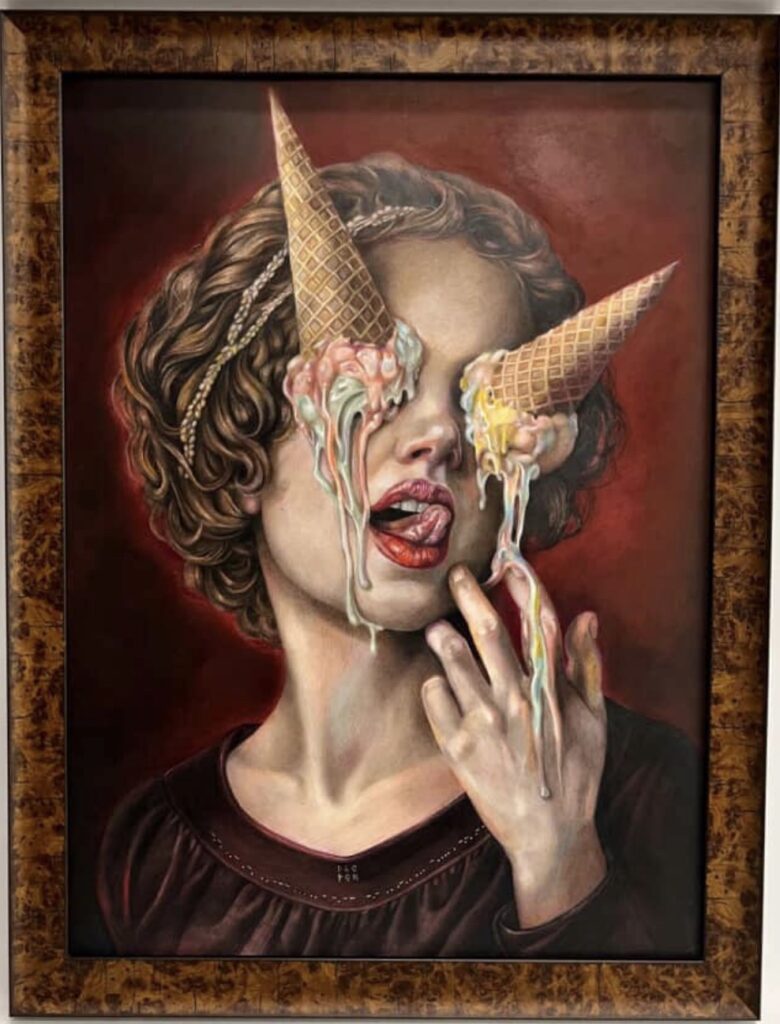
Q3. You describe yourselves as showing “the beautiful, enchanted, and curious.” Most galleries pick a safer lane. What made you commit to surreal and fantasy art knowing it sits outside the mainstream gallery world?
I think there’s quite an audience for what we show and it’s actually a genre grossly underrepresented. We hear that from many of our clients especially the ones that come into the physical gallery. We can tell it’s not everyone’s cup of tea but it’s so beautiful that they often leave totally enchanted even if it’s not what they were expecting. And it’s again what we collect so we know we’re not going to be the only ones who love it!
Q4. You’ve deliberately avoided the minimalist white walls experience and leaned into rustic brick and the historic character of your 19th-century building on Water Street. How much does the physical space itself influence which art you choose to show?
I’d have to say the biggest impact the space has had on what we show is just size. We can’t accommodate, say, a huge solo of giant canvases so we have what we often call mini solos and ask that artists try to send work under 30” to the group shows. We have some larger pieces just not as many. Otherwise, it hasn’t really had a huge impact.
Q5. Opening a business as a couple is something you’d long imagined but weren’t sure would ever happen. What was the conversation that turned it from a dream into an actual plan?
Well, I started online with very emerging and fabulous artists and when we moved to Sebastopol where there was more of an art scene and vibe, we decided we’d look for a brick and mortar space. I really enjoyed being online but many artists want their work shown in an actual space so getting the physical gallery really opened things up. The conversation was pretty matter of fact. I just looked at Paul and said I thought I really needed to do this and he agreed to help out. We went to look at places for rent that week and had a lease signed a few months later.
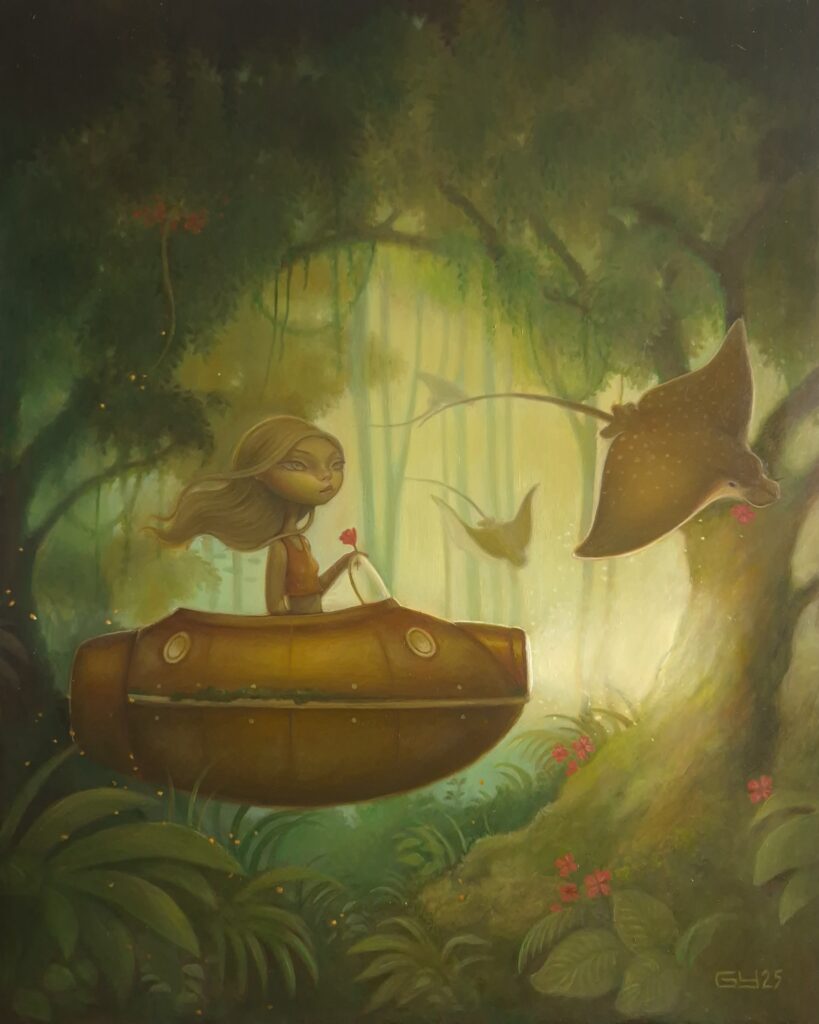
Q6.You’ve shown everyone from local Petaluma artists like Rhea O’Neill to international artists like Tammy Whitworth from Australia and Mark Facey from the UK. How do you discover artists working on the other side of the world, and what makes you say “they belong on our walls”?
Rhea is in Santa Cruz 🙂 We usually find people on instagram or they find us and submit. Again, we really just bring in the artists we feel have a cool, unique vibe and that we ourselves would collect or have collected. In fact, we probably own art by nearly half of the artists we’ve shown! (It’s a big collection lol)
Q7. Your exhibition themes are very intentional, Ephemeral, Roots, Beyond the Sea, Good vs Evil, Fear to Tread, Imagine. How far in advance does a theme start forming, and does the theme come first or do the artists come first?
That’s funny because I always have a hard time with themes. I choose a theme about a year or more ahead of time and then start to think of artists I believe would be great for that theme. But they’re always a bit of a challenge. I want to give some fun guidance while also not being too controlling.
Q8. With over 600 available works and a roster that keeps growing, how do you balance giving emerging artists a platform while also keeping the gallery financially sustainable?
It’s the group shows that really help. Like I say below (sorry I kind of jumped around on the questions) having group shows with fun themes and perhaps more recognizable names allows us to give solos to emerging artists and a good number of spots to emerging artists in the group shows as well. Since we only bring in artists whom we’d collect ourselves, their sales are often great because they’re great artists!
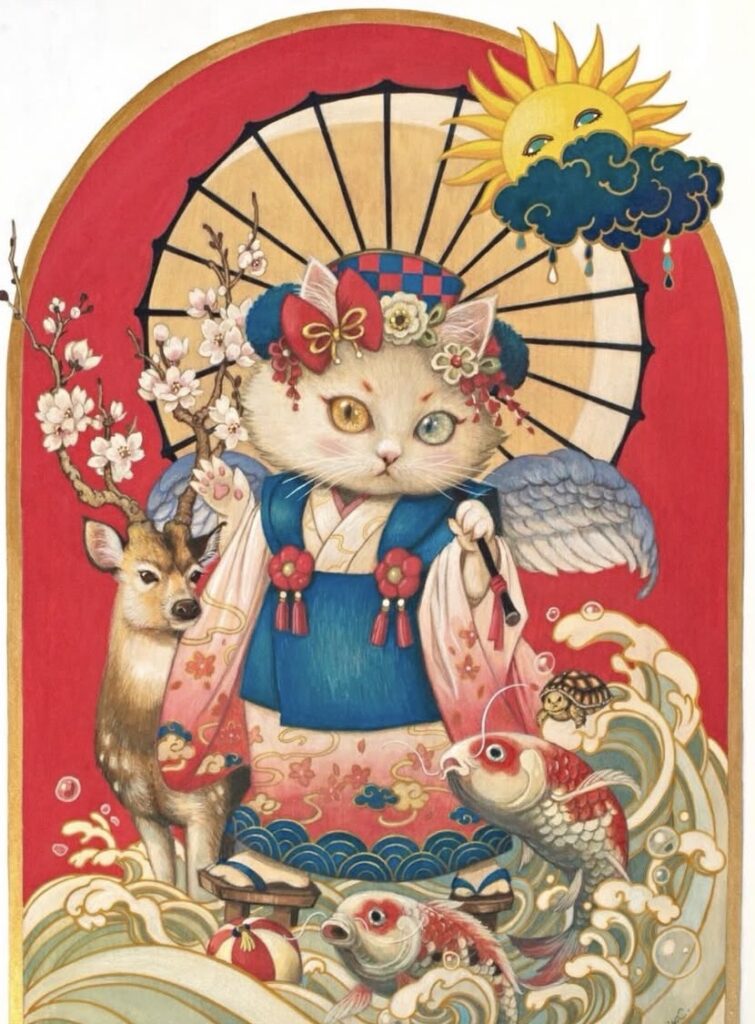
Q9. A lot of people dream about opening a gallery but never do it. What do you think is the real thing that stops most people money, fear, or something else?
I’d have to say money. Paul and I retired a bit younger and finally had the means to do it or it probably wouldn’t have been as likely. Not to say you can’t open a gallery without having money but it helped us. It also takes some of the pressure off of having to have every show be a knock out success if we have a quiet month. It’s made the gallery more of a passionate hobby rather than a feast or famine affair.
Q10. You opened in a small town, not San Francisco or LA where the collector base is massive. Was Petaluma itself a risk, and has it turned out to be an advantage?
Oh it’s a huge misnomer that galleries have to be in big cities. We do 95% of our sales online and have collectors all over the world. Petaluma is a well-to-do town just 30 miles north of San Francisco where most people actually live who work in the city. Our walk in clientele love art as the town, as does most of Northern California, has a huge art scene. Lots of local artists and galleries! If anything, we’re the only ones showing the style of art we do which has been an advantage.
Q11. How do you balance giving a solo show to one artist versus a group show where many artists share the spotlight? What goes into that decision?
We love to give emerging artists the solo shows. Having the group show with a variety of artists allows us to take a “chance” on a newer artist, if that makes sense. It takes the pressure off the solos’ sales and hopefully off the artist. They’ll know we have a 35+ artist show on display concurrently with perhaps more recognizable names. We really love introducing the public to newer artists while at the same time they may find the gallery through the artists they’ve come to know.
Q12. Running a gallery as a married couple means the business never really turns off. How do you protect the relationship from the stress of the gallery, or has the gallery actually made you closer?
We have certain times we’re “allowed” to talk about the business which is pretty much Monday through Friday from 8-6 lol. We really try to have proper weekends where we don’t think or talk about work although easier said than done.
Sometimes the business causes an argument, admittedly, but if anything it probably has made us closer because we really rely on one another to fill our roles.
Q13. How do you define success for the gallery is it sales numbers, the artists you platform, the community you’ve built, or something else entirely?
Oh I’d say it’s all of the above. Of course, sales are important to both the artist and the gallery. But having a nice turn out on opening night, receiving compliments on the art and curation, and having artists express how excited and proud they are to have their work displayed is always a joy.
Q14. Has there been a moment where an artist told you that being shown at Nanny Goat changed their career? What did that feel like?
We recently had a sold out solo and that was a great feeling. We haven’t quite been open long enough to change an art career but I can only hope we’ve provided a really great opportunity to a number of emerging artists and that it’s been helpful to them.
Q15. You started as newcomers in the gallery world with no traditional art background. Do you think that outsider perspective is actually your biggest competitive advantage?
I think our perspective as art collectors has helped a huge deal in just getting a feeling for what collectors are looking for and what we love. Admittedly, we curate what we would collect which makes it very easy and enjoyable.
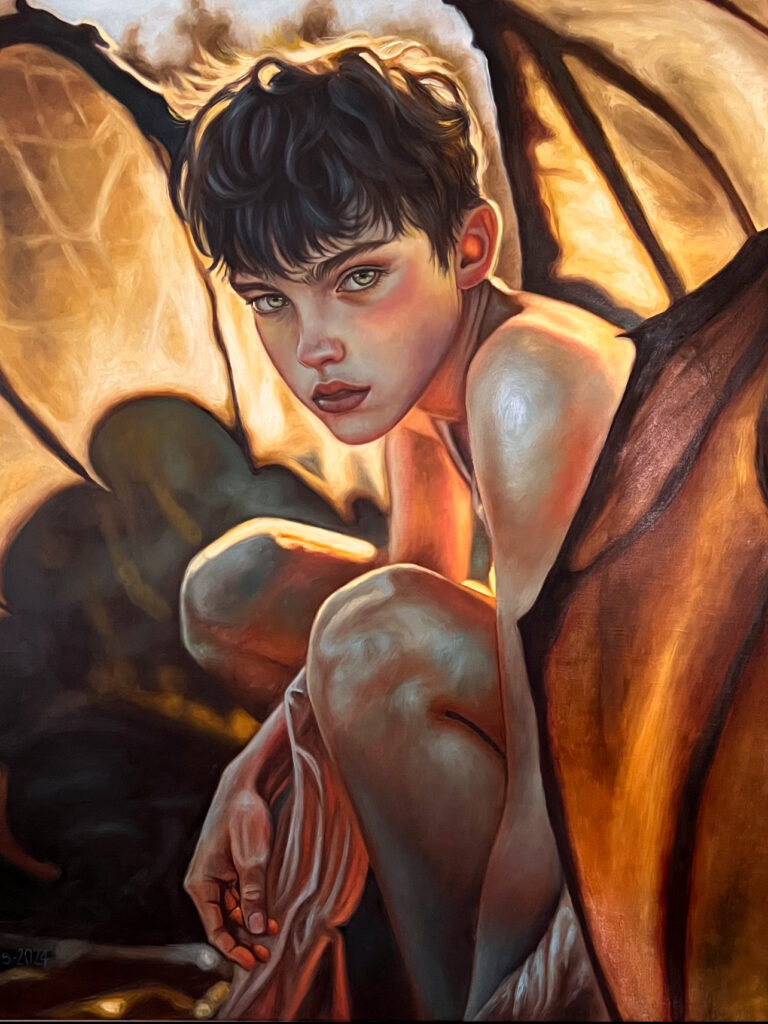
As our conversation with Emily drew to a close, we found ourselves thinking about something that rarely gets said out loud in the art world that taste is a form of courage. That choosing to show work that sits outside the mainstream, that commits fully to the beautiful and the strange and the enchanted, is not the safe choice. It is a statement.
And making that statement consistently, show after show, artist after artist, in a small town that most people in the art world would never think to look at twice that takes a particular kind of conviction that is genuinely worth celebrating.
What strikes us most about Emily and what she has built is how completely it comes from who she actually is. This is not a gallery built to impress the art world. It is a gallery built because two people who loved art deeply decided they wanted to create a home for the kind of work that moved them and trusted that other people would feel it too. That instinct, rooted in years of collecting and genuinely loving what they brought home, turns out to be the most powerful curatorial tool there is.
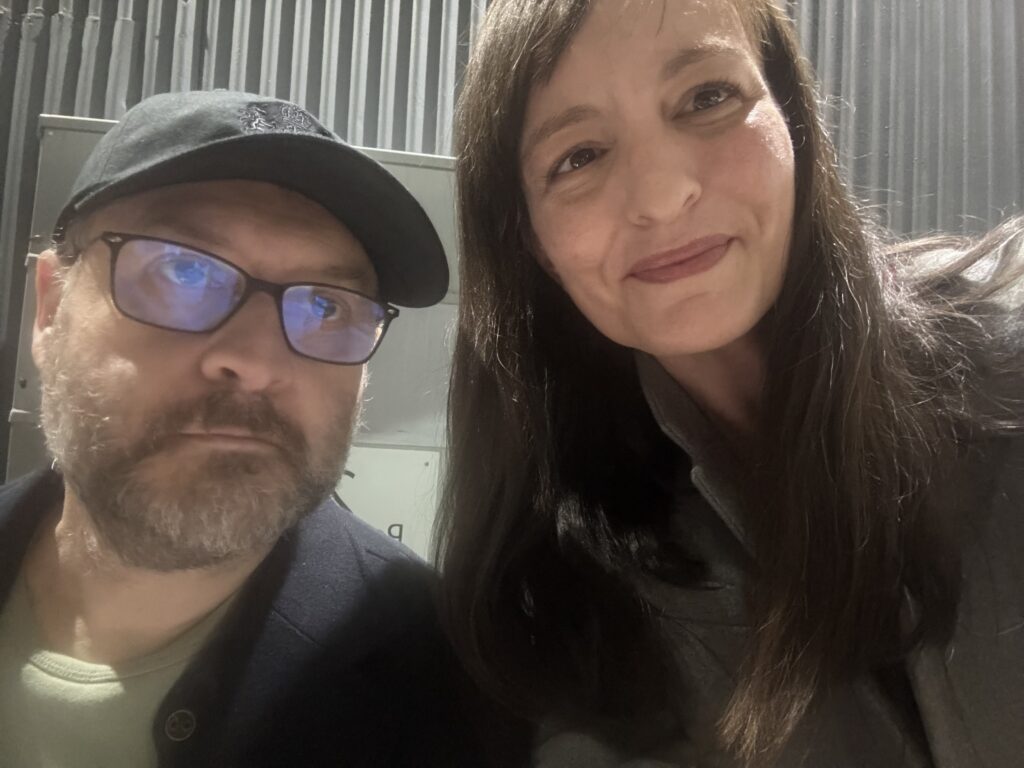
Because you cannot fake that kind of authenticity. You either mean it or you don’t. And anyone who spends five minutes with Nanny Goat Gallery can feel that Emily means every single bit of it.
There is also something quietly important about what she is doing for emerging artists. In an art world that can feel impossibly difficult to break into, Emily is one of the people holding a door open. She takes chances on newer artists not because it is the strategic thing to do but because she genuinely believes in them. She shows their work alongside names that collectors already know and trust. She gives them the kind of platform and the kind of care that can change the trajectory of a practice. That is not a small thing. For the artists it has happened to, it is everything.
And for the collectors who have found their way to Nanny Goat whether they walked through the door on Water Street or stumbled across the gallery online from the other side of the world what they found was something rare. A space curated with real love, real knowledge, and a completely unapologetic commitment to the beautiful and the strange.
The kind of place you keep coming back to because it keeps surprising you. Because the person behind it never stops looking, never stops believing, and never once plays it safe.
Follow Nanny Goat Gallery and Emily Eccles through the links below. And if something enchants you trust that feeling completely.