

How 30,000-Year-Old Cave Paintings Evolved This Artist’s Work I Caroline Absher

👁 211 Views
Some artists paint what they see, others paint what they remember but Caroline Absher paints from somewhere deeper: a quiet, elemental current where intuition moves before words, and feeling comes before form. Her work starts not with ideas but with vibration colour as sensation, gesture as instinct, light as something felt before it is fully understood. This week, for our Best of the Art World series, we’re excited to share the journey of Caroline Absher a story shaped by intuition, place, and the slow unfolding of an artistic voice.
Her story begins in the forests of South Carolina, where she grew up without screens, clocks, or the noise of modern life. Days passed to the rhythm of the land, wandering in the woods became a kind of meditation, and the natural world was both playground and teacher. It was here that Caroline learned to listen inward, to trust subtle feeling, and to follow the quiet intelligence that would later guide her work.
A major turning point came during the pandemic, when she moved from set design to full-time painting. What emerged wasn’t just a change in medium it was an unraveling, a release of years of creative tension into a daily practice built on discipline, curiosity, and discovery. Painting every day became a way to grow, to experiment, and to meet the discomfort that often signals real artistic progress.

Today, her canvases glow with a rare, layered luminosity. Built through scraping, revealing, and reimagining, her work draws from meditation, consciousness studies, and ancestral mark making from prehistoric cave walls to personal memory. Her paintings live between body and spirit, abstraction and figure, presence and mystery.
Caroline’s practice is intuitive, porous, and deeply tied to place. Time spent in monastic stone rooms, mornings in front of 30,000-year-old cave paintings, and the energy of natural landscapes all seep into her work. Her paintings feel alive open, vibrating, and resistant to a single interpretation inviting viewers to find their own connection within the image.
Let’s step into Caroline Absher’s world through this conversation where colour breathes, forms shift, and painting becomes a way to touch something older and quieter within ourselves.
Can you share your background and how growing up in South Carolina shaped your early experiences and ultimately led you to pursue painting?
I grew up in nature with no access to TV or cell phones or anything until the last couple of years of high school. It felt like the most normal thing to get lost in the woods all day, to not have a concept of time, to be constantly connected and grounded to earth. I remember when texting and messaging became conversational and suddenly there was this new language to learn, I always say the reason I am not a writer is because I am a painter. Painting is how I express myself most clearly.

You’ve spoken about moving from set design into full-time painting during the pandemic. What did that transition change in your process technically and emotionally?
I loved set design because I was able to put my heart into something separate from my work. It’s rare to be able to use that same creative life force without the pressure. The transition into painting every day felt like a slow unraveling of something that had been wound up in me for a long time. Every painting regardless of how it goes is in service of the one that follows. For me, there is an anticipation in each, it’s about learning and expanding. Discomfort or fear usually means you’re doing something right.
Your recent solo, “The Silver Cord,” at The Journal Gallery (LA), suggests a body soul tether. What sparked that title, and how did you translate such metaphysical ideas into composition, scale, and colour?
I believe we are within and of a field of consciousness that connects everything, and that certain practices allow us to understand and use this energy. Over the past year, I sank into this knowledge and stillness through a meditation practice called Hemisync, which led me to a coherence I had never experienced before. Of course, it never ends, and there is no real resting place on the path, which is what my paintings are about. They represent the idea that a spirit is both an ever-changing thing and also a never changing thing that we find our way back to. Duality, paradox, tension, and contradiction are all elements of painting I am drawn to. I like the thought that through all this, those paintings hold the tension of the silver cord.

Your paintings often seem to glow with vibrant, luminous colour. Can you share how you layer or work with paint to create that effect?
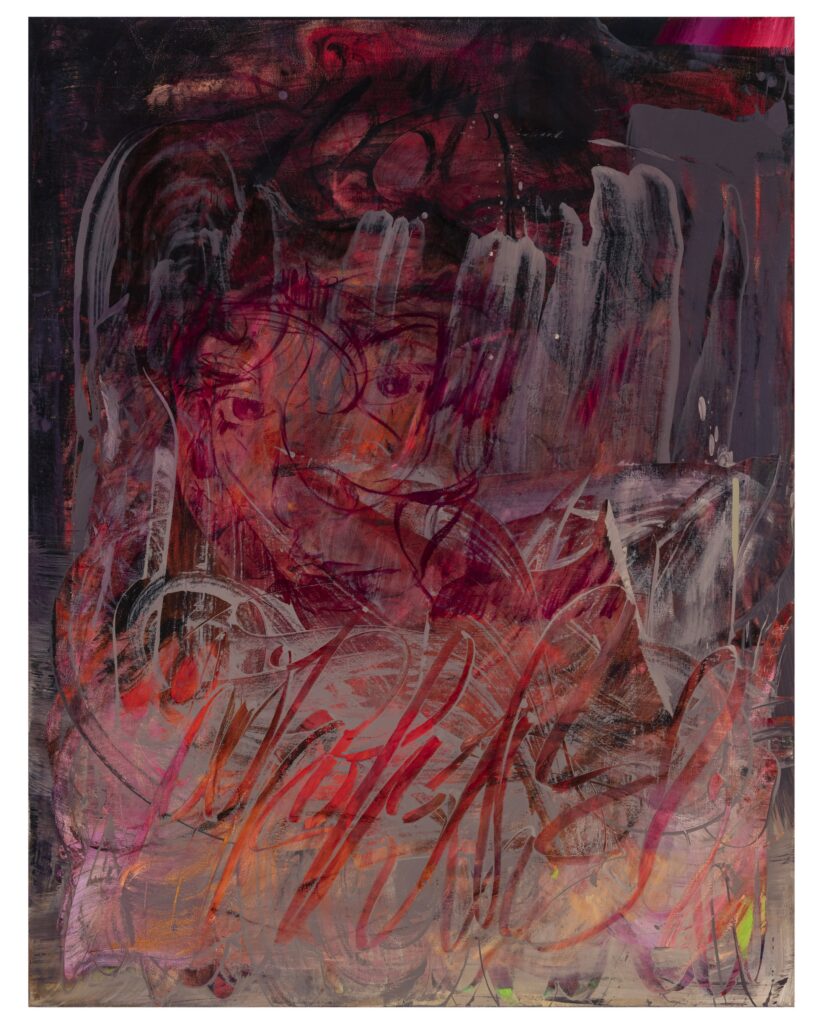
I layer endlessly, scraping away paint using all sorts of tools, and the luminosity is often a result of chance – when the painting starts glowing, I slow down and start thinking more about subject and detail.
In works like Magic Spider (2022) and Somewhere Only We Know (2023), the titles feel very evocative. How do you approach titling your paintings do the titles come first, during, or after the process?
Titles either jump out instantly or are very difficult… but I have been reading poetry recently which has made it easier.
The interplay of abstraction and figuration in your work invites multiple interpretations. How do you balance these elements to convey your intended message?
The process of the painting is a constant push and pull between how much I want to spell out or leave behind. Every day I am either adding or subtracting, creating new ways “in”, until finally the balance feels right (and sometimes it isn’t “right”, it’s more about being at a certain level of imbalance that draws the eye around or does something specific).
In your creative process, do you start with a concept, a feeling, or just let the work evolve organically? Can you describe a recent piece and how it developed?
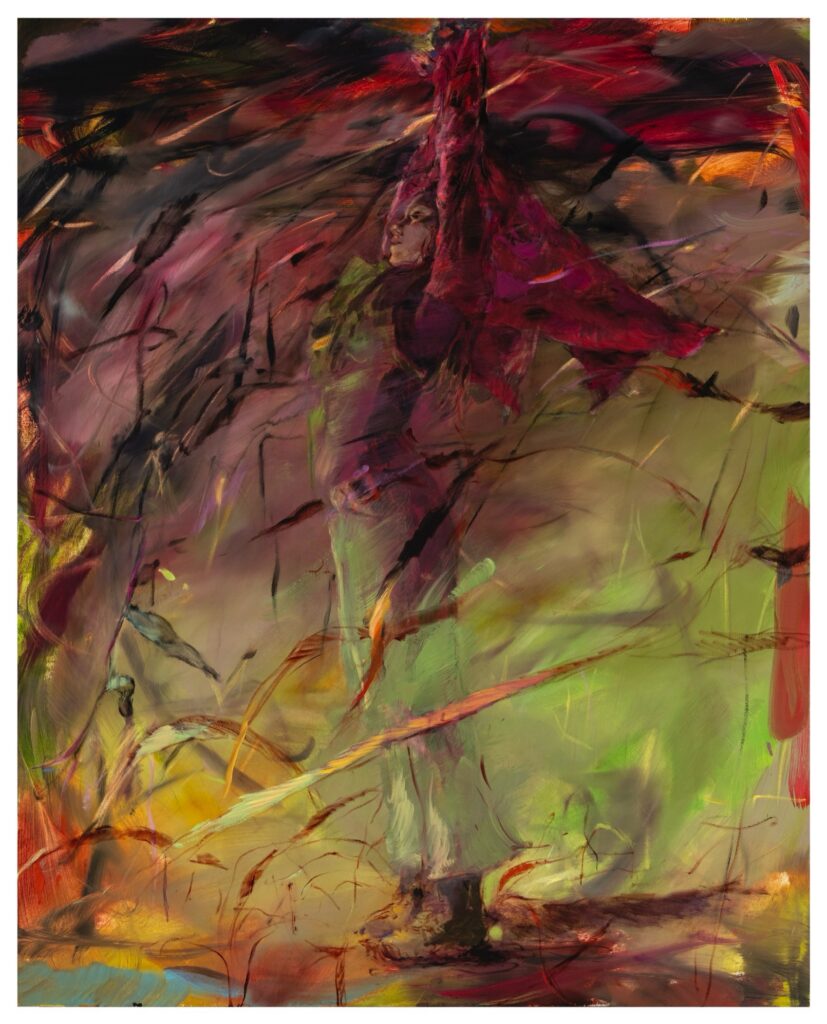
It’s always a feeling and letting it evolve. Recently I spent some time working in a 13th c monastery in the Dordogne region of France, where a friend lives and is restoring the building. This region is home to many of the prehistoric cave paintings. I would wake up, drive to a cave, stand in front of a 30,000 year old painting, then return to let that old stone house into the paintings as well. For me, place has so much to do with it. Everything is energy that I allow in to my paintings, and I hold no expectations for them.
Have there been moments when a viewer’s interpretation of your work surprised you or gave you a new perspective on your own creations?
I am so grateful to hear what people have to say, it is always so varied! Some experience the newer work as abstraction, while others find the figures immediately and tell me stories. Your art often challenges conventional ideas of the body and identity.
How do you see your work contributing to broader conversations about these topics?
I try to allow for space and fluidity in everything and embrace the concept of transformation in all aspects.
What advice would you give to emerging artists who want to create work that is deeply personal, emotionally resonant, and visually compelling?
Keep making things without the need for them to make sense or look good. Trusting your intuition is a learned skill – you can get a little better at it every day. <3
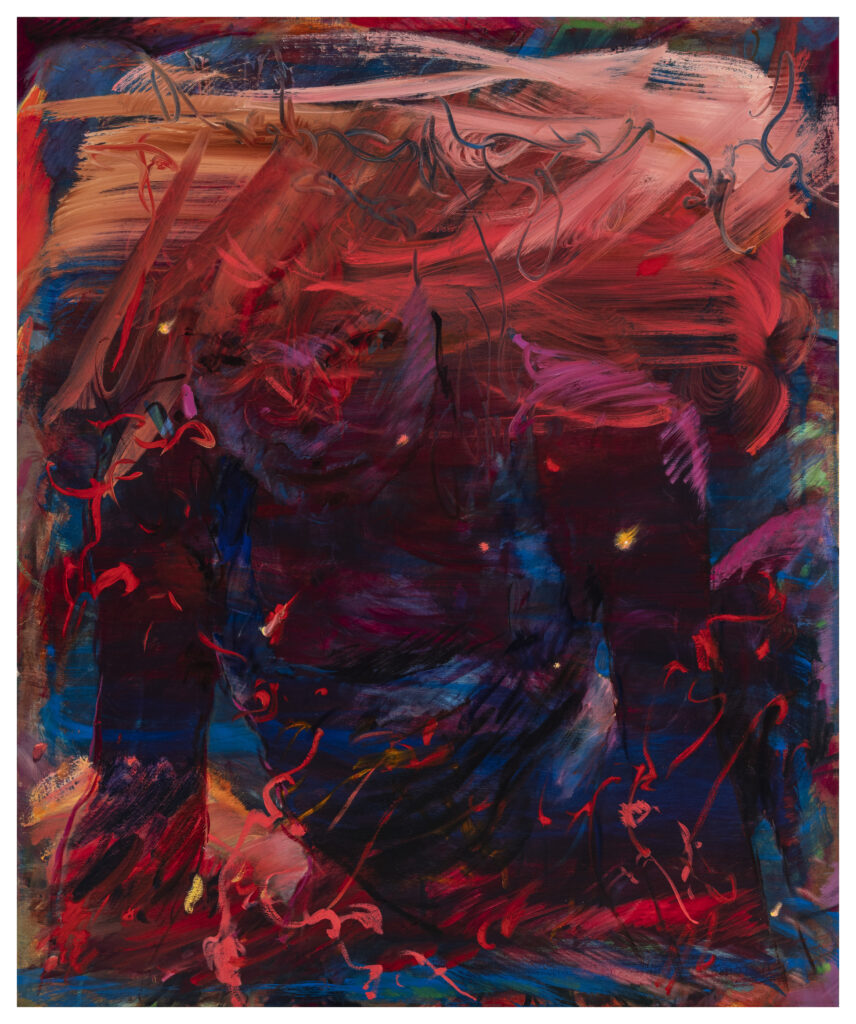
As we step away from our conversation with Caroline, we are struck by how much she trusts the act of painting itself. In her world, colour beats like a pulse, texture tells a story, and intuition guides the way. Her work reminds us that creativity doesn’t always start with an idea sometimes it starts with a feeling, a place, or a quiet moment that asks to be explored.
With each canvas, she builds a space that welcomes uncertainty and celebrates change. She embraces imbalance, contradiction, and the slow, unpredictable nature of making art, letting each painting reveal itself layer by layer. Rather than telling viewers what to see, she opens a space for them to find their own meaning, their own reflections, their own stories within her work.
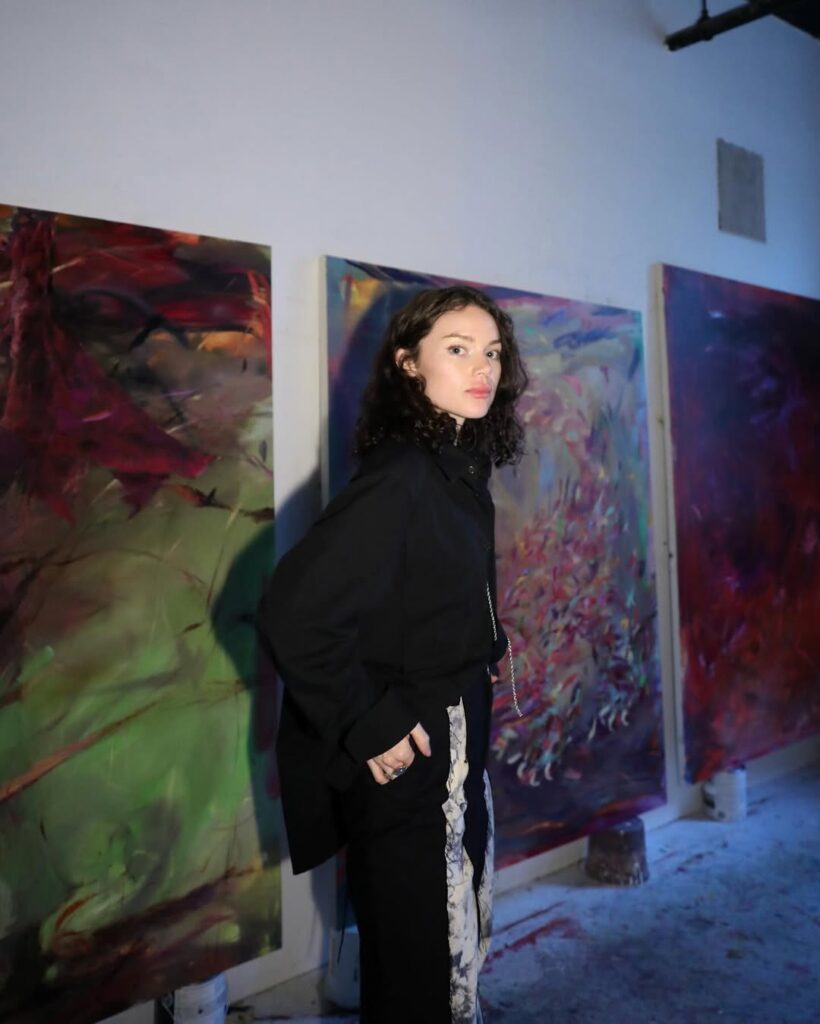
Her practice reminds us that art is not about perfection it’s about presence. Not about explanation, but about attention. The most powerful work often comes from trusting the quiet impulses we tend to ignore.
Follow Caroline to see a painter who creates with sincerity, courage, and curiosity one glowing layer at a time and who invites us all to stay open, stay fluid, and keep returning to the places where intuition leads.