


The Secret Language of Hands in Famous Paintings
Before we notice the faces in many famous paintings, we notice the hands. A fingertip reaching across empty space. A loosened grip on silk fabric. Folded palms caught in silent prayer. Hands in art have long carried emotions that words, and sometimes even expressions, cannot fully contain. Some of the most memorable Hands in Famous Paintings reveal entire stories through gesture alone, love, grief, devotion, longing, intimacy, and human connection captured in the smallest movements.
Across centuries of painting, artists have treated hands as far more than anatomical details. They have used them to communicate longing, devotion, grief, intimacy, motherhood, power, vulnerability, and human connection with astonishing subtlety. Some gestures are dramatic and unforgettable, while others are so delicate they almost escape attention entirely: fingers barely touching, hands quietly intertwined, or palms occupied with the rituals of everyday life.
What makes painted hands so fascinating is their ability to feel alive. They guide the eye through a composition, create emotional tension, and often become the detail that lingers in memory long after the rest of the painting fades. Artists like Michelangelo, Caravaggio, Rembrandt, Frida Kahlo, and Vincent van Gogh understood that the smallest gesture could hold enormous emotional weight.
In these paintings, hands do far more than complete a figure. They speak, sometimes softly, sometimes dramatically, but always with extraordinary humanity.
1. The Creation of Adam – Michelangelo

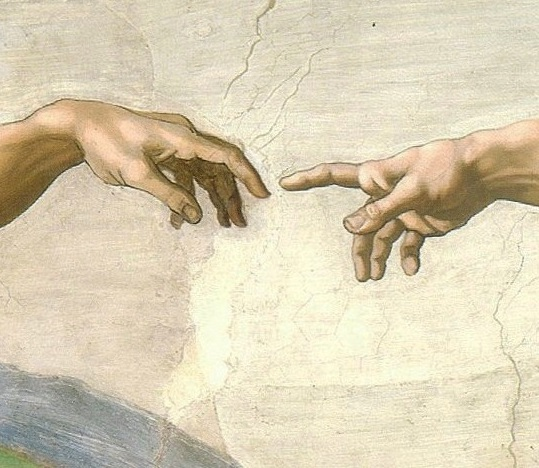
There are few gestures in art history as recognizable as the nearly touching hands in The Creation of Adam. Painted by Michelangelo on the ceiling of the Sistine Chapel around 1512, the fresco captures the suspended moment before divine life passes from God to Adam. Yet what makes the scene unforgettable is not grandeur alone, it is the tiny space between two fingertips.
The hands carry the entire emotional and symbolic weight of the painting. God’s hand reaches outward with certainty and energy, while Adam extends more softly, almost lazily, as if humanity itself is still awakening. That narrow gap between them has fascinated viewers for centuries because it transforms a simple gesture into something deeply human: anticipation, longing, dependence, and possibility all exist within a fraction of an inch.
Michelangelo understood the expressive power of anatomy better than almost any artist of his time, and nowhere is that clearer than here. The tension in the fingers feels alive. Even without looking at the faces, the viewer understands the relationship between creator and creation through gesture alone.
What makes these hands so enduring is their universality. They have become symbols not only of religion, but of connection itself, the desire to reach another person, to be understood, to receive life, love, knowledge, or touch. In many ways, the painting proves that sometimes the smallest movement in art can hold the largest meaning.
2. The Arnolfini Portrait – Jan van Eyck

Painted in 1434 by Jan van Eyck, The Arnolfini Portrait is often remembered for its mirrors, symbolism, and luxurious detail, but one of its most quietly powerful elements is the way the couple hold hands. Their gesture is restrained, almost formal, yet it carries an extraordinary emotional and symbolic weight.
At first glance, the hands appear simple: Giovanni Arnolfini gently lifts his wife’s hand in a gesture that feels ceremonial rather than passionate. But within Northern Renaissance painting, gestures were never accidental. The joined hands likely symbolized union, trust, fidelity, and the sacred nature of marriage itself. The touch feels careful and deliberate, reflecting a world where emotion was often communicated through subtle posture rather than dramatic expression.

Van Eyck’s precision makes the moment even more intimate. Every finger is rendered with astonishing realism, softened by delicate light and texture. The gesture becomes less about physical touch and more about emotional presence. The couple do not embrace, yet their connection feels unmistakable.
What makes these hands so fascinating is how controlled they are. Unlike romantic paintings overflowing with movement, this scene remains still and composed. The emotion exists beneath the surface, in the quietness of the touch, in the hesitation of the fingers, in the almost contractual dignity of the gesture.
Centuries later, those hands still feel deeply human. They remind us that intimacy in art does not always need drama. Sometimes it exists in the gentlest contact imaginable.
3. William II and His Bride – Anthony van Dyck

In royal portraiture, emotion is often hidden beneath layers of silk, ceremony, and political symbolism. Yet in William II and His Bride, painted by Anthony van Dyck, the delicate meeting of hands quietly softens the grandeur of the scene. Amid luxurious fabrics and aristocratic posture, the gesture between the couple feels surprisingly tender.
Van Dyck was celebrated for bringing elegance and humanity into court portraiture, and this painting captures that balance beautifully. The hands do not cling tightly or dramatize affection. Instead, the touch feels restrained, careful, and deeply refined, exactly the kind of intimacy expected within royal life. Their fingers lightly overlap, creating a moment that feels personal despite the formality surrounding them.
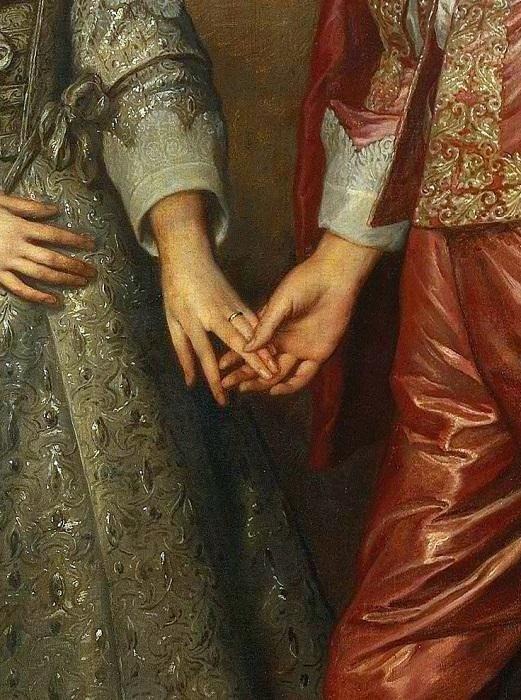
What makes the gesture so compelling is its subtlety. The painting is filled with symbols of status and power, yet the eye naturally returns to the hands. They introduce warmth into an otherwise ceremonial composition. The softness of the skin against richly painted fabric creates a visual contrast between public image and private connection.
Van Dyck’s handling of texture also heightens the emotional effect. Lace cuffs, satin sleeves, and pale fingertips are painted with extraordinary delicacy, making the hands appear almost luminous against the darker tones of the composition.
The result is a portrait where touch becomes its own quiet language. Without dramatic expressions or movement, the painting suggests affection, partnership, and emotional closeness through nothing more than the gentle placement of fingers.
4. Portrait of Philippe de Croÿ – Rogier van der Weyden

Few artists painted hands with the precision and spiritual intensity of Rogier van der Weyden. In Portrait of Philippe de Croÿ, the folded hands become far more than a simple pose, they transform into symbols of devotion, discipline, and inner stillness.
Positioned carefully in prayer, the hands immediately anchor the composition. Their gesture is quiet and controlled, reflecting the deeply religious atmosphere that shaped much of Northern Renaissance art. Unlike dramatic Baroque gestures or romantic embraces, these hands communicate emotion through restraint. Every finger appears intentional, held together with a calm that feels almost meditative.
Van der Weyden’s extraordinary attention to detail gives the painting its emotional depth. The skin appears soft yet structured, the knuckles subtly defined, the fingertips delicately illuminated against dark clothing. The realism is so refined that the hands feel physically present, as though frozen in a moment of silent contemplation.
What makes the portrait especially powerful is the contrast between stillness and emotional intensity. Nothing in the composition appears theatrical, yet the folded hands quietly reveal humility, faith, and self-control. They suggest a man engaged not with the outside world, but with inward reflection.
The gesture also reflects the larger role hands played in Renaissance portraiture. Artists often used them to reveal moral character as much as physical likeness. Here, Philippe de Croÿ’s hands become an extension of identity itself, measured, disciplined, and deeply spiritual.
Long after the details of the portrait fade from memory, it is the calm geometry of those folded hands that continues to linger.
5. Woman With a Feather Fan – Rembrandt

In many of Rembrandt’s portraits, hands are treated with the same emotional attention as faces, and Woman With a Feather Fan is no exception. Though the painting is filled with luxurious textures, pearls, velvet, lace, and soft feathers, it is the sitter’s hand that quietly steadies the composition and gives it emotional balance.
Resting delicately beneath layers of elegant fabric, the hand appears controlled yet natural, poised without feeling rigid. Rembrandt avoids theatrical gestures and instead captures something subtler: composure. The fingers are relaxed, almost weightless, contributing to the painting’s atmosphere of quiet sophistication.

What makes the hand especially striking is the way Rembrandt paints light across the skin. The softness of the flesh contrasts beautifully with the rich textures surrounding it. Lace cuffs dissolve into shadow while fingertips emerge gently into illumination, making the gesture feel alive and immediate. The hand becomes not just an anatomical detail, but a reflection of status, refinement, and personality.
The feather fan itself also plays an important role. Associated with elegance and aristocratic femininity, it frames the hand while emphasizing delicacy and restraint. Rather than dominating the portrait, the accessory draws attention back to the subtle movement of the fingers holding it.
Rembrandt understood that stillness could be emotionally powerful. In this portrait, the hand does not perform or dramatize emotion, it simply exists with grace. Yet through that simplicity, the painting communicates confidence, intimacy, and the quiet authority of presence.
6. Catherine Brass Yates – Gilbert Stuart

Unlike grand historical paintings or royal portraits, Catherine Brass Yates finds beauty in an ordinary, deeply personal moment. Painted by Gilbert Stuart, the portrait captures a woman sewing quietly, her hands absorbed in careful domestic work. The gesture may appear simple, but it reveals an intimacy that feels remarkably modern.
The hands immediately become the emotional center of the composition. Rather than posing dramatically, they are occupied, holding fabric, guiding thread, engaged in an act of patience and concentration. Stuart transforms sewing into something poetic, showing how everyday gestures can carry tenderness, discipline, and identity.

What makes the painting especially compelling is its realism. The fingers are neither idealized nor theatrical. They appear natural and purposeful, reflecting the rhythms of domestic life rather than aristocratic performance. Through this small action, the portrait quietly honors labor that was often overlooked in traditional art history: the invisible, repetitive work associated with femininity and home.
The softness of the lighting adds to the emotional warmth of the scene. Fabric folds, skin tones, and delicate movements blend together gently, allowing the hands to feel alive without overpowering the portrait. The sewing itself becomes symbolic, not just of craft, but of care, routine, and quiet resilience.
In a genre often dominated by status and spectacle, Stuart’s attention to working hands feels unusually intimate. The painting reminds viewers that hands do not need to reach dramatically or gesture theatrically to hold meaning. Sometimes the most moving gestures are the quietest ones, performed every day without notice.
7. Portrait of the Sisters – August Schiøtt

In Portrait of the Sisters, painted by August Schiøtt, the emotional connection between the figures is expressed less through facial expression and more through the quiet closeness of their hands. The gesture is subtle, but it becomes the emotional heartbeat of the painting.
Rather than dramatic embraces or overt sentimentality, Schiøtt chooses restraint. The sisters’ hands rest gently near one another, creating a sense of familiarity that feels deeply natural. Their touch suggests years of shared experiences, private understanding, and emotional comfort, things that cannot easily be spoken aloud. The intimacy comes not from movement, but from stillness.
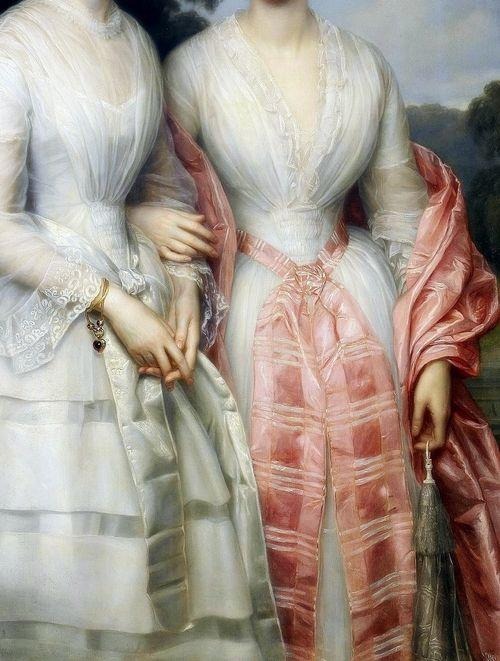
What makes the painting especially compelling is its softness. The hands are painted delicately, almost blending into the surrounding fabric and muted tones of the composition. This creates an atmosphere that feels calm, tender, and reflective. The viewer is invited to notice the smallest details: the placement of fingers, the relaxed posture, the unspoken closeness between the two women.
Schiøtt also avoids idealized theatricality. The hands do not perform for the viewer; they simply exist within a quiet moment of companionship. That realism gives the painting its emotional sincerity. The gesture feels lived-in rather than symbolic.
Throughout art history, hands have often been used to express romance or religious devotion, but here they communicate something gentler: sisterhood. The painting captures the comfort of being deeply known by another person, proving that affection in art can be soft, understated, and profoundly moving.
8. Ottoman With a Butterfly – Harold H. Piffard

In Ottoman With a Butterfly, Harold H. Piffard creates a moment that feels suspended in time. The painting’s emotional power lies not in dramatic expression, but in the extraordinary delicacy of a single hand poised near a butterfly, a gesture so careful it almost seems to disturb the stillness around it.
The hand becomes a symbol of restraint and fragility. Rather than grasping or controlling, it hovers gently, suggesting curiosity, admiration, and hesitation all at once. The butterfly, often associated with transformation and fleeting beauty, intensifies this feeling. Together, the hand and butterfly create a visual dialogue about transience: how beauty exists briefly, and how touch itself can alter or destroy it.
Piffard paints the fingers with remarkable softness. Their relaxed positioning contrasts beautifully with the richly textured surroundings, including flowing fabrics and decorative interiors. The gesture feels elegant but also deeply human, as though the figure is trying to preserve a quiet moment before it disappears.
What makes the painting especially memorable is its emotional subtlety. Nothing overtly dramatic occurs, yet the suspended hand creates tension through stillness alone. The viewer becomes aware of how delicate the interaction is, how easily the moment could break.
In many paintings, hands communicate power or devotion. Here, they communicate sensitivity. The gesture reflects an awareness of beauty’s fragility and the careful distance often required to truly appreciate it. Through one restrained movement, Piffard transforms a decorative scene into something poetic and quietly melancholic.
9. Lady Hillingdon – Frank Dicksee

Painted by Frank Dicksee, Lady Hillingdon captures elegance in its most restrained form. While the portrait is rich with luxurious fabrics and refined beauty, it is the sitter’s hand, softly resting, almost absent-mindedly, that gives the painting its emotional atmosphere.
The gesture feels effortless. The wrist relaxes gently, fingers loosely touching fabric as though caught in a passing moment rather than a formal pose. This natural softness is what makes the hand so compelling. Instead of projecting authority or grandeur, it conveys vulnerability, grace, and introspection.
Dicksee was known for his romantic sensibility, and that tenderness appears clearly here. The hand is painted with extraordinary delicacy, illuminated subtly against darker tones so that the skin appears luminous and fragile. Satin textures and jewelry frame the gesture without overpowering it, allowing the viewer’s attention to settle quietly on the movement of the fingers.
What makes the portrait especially memorable is its emotional ambiguity. The sitter appears poised and composed, yet the relaxed hand introduces something more intimate beneath the surface, a sense of melancholy, thoughtfulness, or emotional distance. It transforms the portrait from a display of beauty into something psychologically alive.
In many classical portraits, hands symbolize status or social refinement. In Lady Hillingdon, however, the hand feels deeply personal. It reveals not performance, but presence. Through one understated gesture, Dicksee creates a portrait that feels elegant yet emotionally human, proving how even the smallest movement can shape the mood of an entire painting.
10. Madame Roulin and Her Baby – Vincent van Gogh

In Madame Roulin and Her Baby, Vincent van Gogh transforms an ordinary maternal gesture into something deeply emotional through color, texture, and movement. Unlike the polished realism of Renaissance portraiture, Van Gogh’s hands feel alive through expressive brushstrokes, carrying warmth and emotion rather than precise anatomical perfection.
The mother’s hands gently support and steady the child, becoming symbols of protection and care. Their placement is calm and instinctive, reflecting the quiet physical language of motherhood—the unconscious gestures of holding, comforting, and safeguarding another life. Even without dramatic facial expressions, the viewer immediately understands the emotional bond between the two figures through the positioning of the hands alone.
What makes the painting especially moving is Van Gogh’s brushwork. The hands are not rendered with rigid detail; instead, they pulse with texture and color, blending into the emotional rhythm of the composition. Thick strokes of paint create a sense of movement and tenderness, allowing feeling to take precedence over realism.
The contrast between the softness of the baby and the steadiness of the mother’s hands adds another emotional layer. The gesture becomes grounding, reassuring the viewer amid the painting’s vibrant, almost restless energy. In many ways, the hands act as the emotional anchor of the work.
Van Gogh understood that touch itself could communicate intimacy more powerfully than expression. Here, the hands do not simply hold the child, they embody comfort, devotion, and the deeply human instinct to protect what we love.
11. The Calling of Saint Matthew – Caravaggio


Few artists used gesture as dramatically as Caravaggio, and in The Calling of Saint Matthew, a single pointing hand becomes the emotional and visual center of the entire painting. The moment Christ extends his hand toward Matthew is quiet in action but overwhelming in meaning, transforming an ordinary scene into something spiritually charged.
The gesture itself is deceptively simple. Christ does not touch Matthew or dramatically command attention. Instead, he points. Yet that small movement carries enormous tension. The hand slices through shadow and light, directing the viewer’s eye instantly across the composition. In true Caravaggio fashion, the gesture feels theatrical without becoming artificial.
What makes the hand especially fascinating is its resemblance to the gesture in Michelangelo’s Creation of Adam. Art historians have often noted how Caravaggio echoes that iconic Renaissance hand, subtly connecting divine creation with spiritual awakening. Here, the gesture symbolizes not the creation of life, but the calling of purpose and faith.
The surrounding hands within the painting intensify the drama even further. Some figures clutch coins, others gesture in confusion, while Matthew appears to point toward himself in disbelief, as if asking, me? Through these layered movements, Caravaggio transforms hands into a complete emotional language of doubt, greed, surprise, and revelation.
Light falls sharply across the fingers, making the gestures feel immediate and alive. In the end, the painting proves how a single outstretched hand can alter the emotional gravity of an entire scene.
12. The Two Fridas – Frida Kahlo

In The Two Fridas, painted in 1939 by Frida Kahlo, hands become symbols of emotional survival. The double self-portrait shows two versions of Kahlo seated side by side, connected not only by exposed veins and shared pain, but by the simple act of holding hands. Amid the surreal intensity of the painting, that quiet gesture feels profoundly human.
The joined hands immediately soften the emotional heaviness of the work. One Frida wears traditional Tehuana clothing while the other appears in a European-style white dress, reflecting Kahlo’s divided identity and emotional conflict following her divorce from Diego Rivera. Yet despite their differences, the two figures remain connected through touch, as though offering comfort to one another.
Unlike romantic hand gestures in classical portraiture, these hands do not symbolize ceremony or elegance. They symbolize endurance. The grip feels steady and intentional, grounding the painting emotionally while chaos unfolds elsewhere in the composition. The connection between the figures suggests companionship within loneliness, the idea of becoming one’s own source of support during grief.
Kahlo paints the hands with clarity and stillness, allowing them to stand out against the stormy sky and exposed anatomical details. Their calmness contrasts sharply with the emotional vulnerability surrounding them, making the gesture even more powerful.
Throughout her work, Kahlo transformed personal pain into visual language. Here, the hands quietly express resilience, intimacy, and self-preservation. They remind viewers that sometimes the most important forms of connection are the ones we create with ourselves.
Across art history, hands have carried prayers, promises, grief, affection, longing, and love. They have reached toward the divine, comforted children, held companions close, and revealed emotions too delicate to be spoken aloud. While faces may introduce us to a subject, it is often the hands that make us feel connected to them.
Perhaps that is why these gestures continue to resonate centuries later. A painted hand can feel startlingly familiar, reminding us that human emotion has always existed in the smallest movements, an open palm, intertwined fingers, or a hesitant touch suspended in time.
And maybe that is the true power of these paintings: they remind us that even silence can communicate something unforgettable.
If you could step into one of these paintings for a moment, which hand would you reach for first?
If you love discovering the quieter, stranger, and more fascinating details hidden inside art history, you might also enjoy reading about the artist behind art history’s strangest cats.