

The First and Last Paintings of 8 Iconic Artists
👁 54 Views
Most artists are remembered through a handful of defining works, paintings that come to stand in for an entire life’s practice. These are the images that circulate widely, that enter textbooks and museum walls, and that shape how we come to understand an artist’s vision. What often remains unseen, however, is the distance between where that vision began and where it ultimately arrived.
Looking at an artist’s first and last paintings side by side offers a rare and revealing perspective. Early works tend to carry traces of observation, influence, and uncertainty, moments where technique is still being negotiated and identity is still forming. In contrast, later works often reflect a distilled language: a confidence in gesture, a clarity of thought, or, in some cases, a deliberate unlearning of everything that came before. The shift between the two is rarely linear. Some artists move toward complexity, others toward reduction; some refine, while others dismantle their own foundations entirely.
This selection brings together ten artists whose practices evolved in strikingly different ways from academic realism to abstraction, from narrative to fragmentation, from control to spontaneity. By placing their earliest known works alongside their final paintings, the focus shifts away from singular masterpieces and toward the arc of artistic development itself.
What emerges is not simply a story of improvement, but something more nuanced: a record of persistence, experimentation, and change. In tracing these beginnings and endings, we begin to see art not as a fixed achievement, but as an ongoing process, shaped as much by doubt and discovery as by mastery.
Frida Kahlo
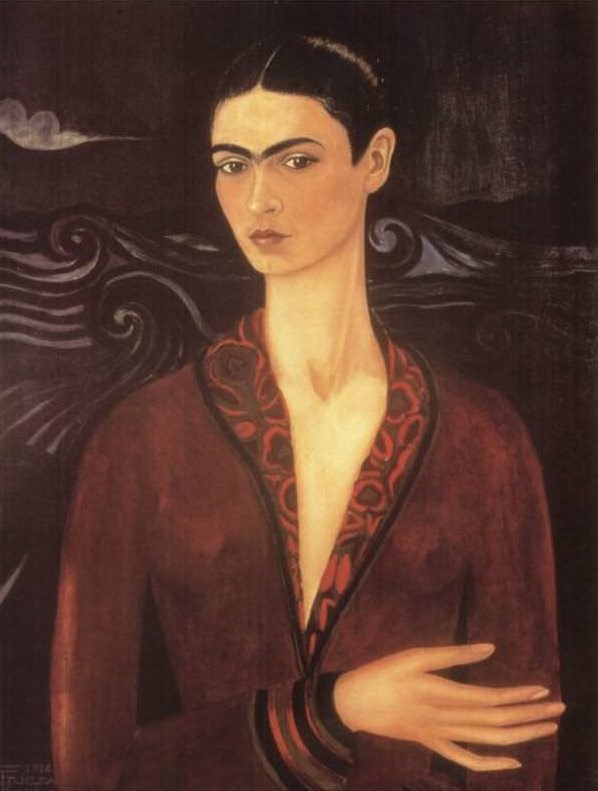
Self Portrait in a Velvet Dress (1926), Source
Frida Kahlo’s work is often read through the lens of autobiography, but the distance between her first known self-portrait, Self-Portrait in a Velvet Dress (1926), and her final painting, Viva la Vida (1954), reveals how that personal language was shaped, refined, and ultimately distilled over time.
Painted when she was just seventeen, shortly after a life-altering accident, Self-Portrait in a Velvet Dress carries both vulnerability and intention. Created for her then-boyfriend Alejandro, the painting presents Kahlo in an elongated, almost stylised pose, set against softly undulating waves. The influence of European painting is evident, particularly in the composition’s resemblance to Botticelli, suggesting an artist still looking outward, measuring herself against established traditions. And yet, even here, there is a quiet insistence on presence. The gaze is direct, unwavering, already aware of its own power.
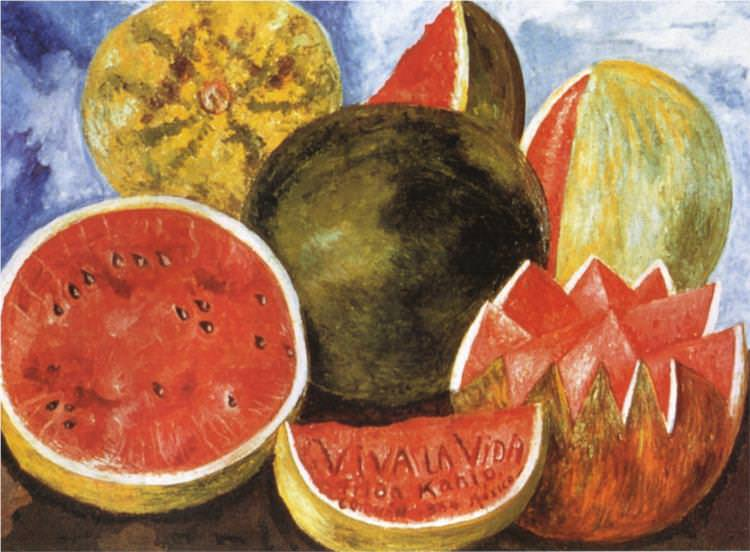
Viva la vida (1954), Source
By contrast, Viva la Vida, completed shortly before her death in 1954, shifts away from portraiture entirely. Instead, Kahlo paints a cluster of watermelons, vivid, fractured, and inscribed with the phrase “Viva la Vida” (“Long live life”). At first glance, the subject appears simple, even celebratory. But within the context of her life and failing health, the painting carries a more complex resonance. The watermelons, often associated with Día de los Muertos in Mexican culture, evoke both vitality and mortality. The bright reds and greens pulse with life, even as the act of carving into the fruit suggests its fragility.
The movement between these two works is not a rejection of self, but a redefinition of it. Where the early portrait constructs identity through appearance, the final painting expresses it symbolically, through colour, object, and cultural reference. Kahlo’s body, once the central subject, becomes implicit rather than visible.
Seen together, these paintings trace a shift from self-image to self-awareness. What begins as an attempt to be seen ends as a statement of acceptance, of life, of pain, and of everything in between.
Vincent van Gogh
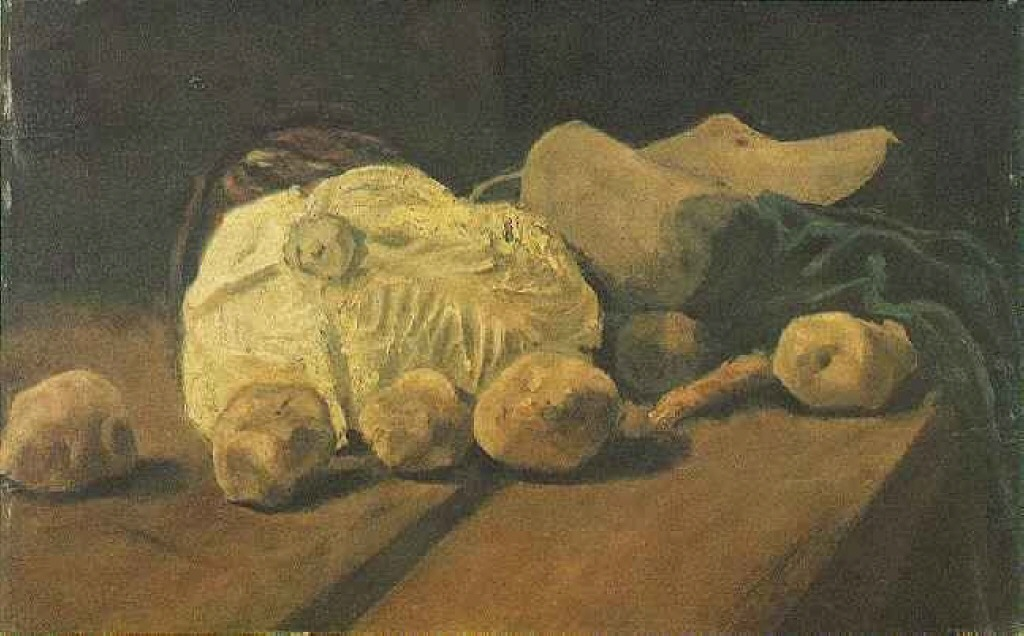
Still Life with Cabbage and Clogs (1881)
Vincent van Gogh’s career unfolded over just a decade, yet within that brief period, his painting underwent one of the most dramatic transformations in art history. The contrast between Still Life with Cabbage and Clogs (1881) and Tree Roots (1890) makes that shift immediately visible, not as a gradual refinement, but as a complete rethinking of what painting could be.
Painted shortly after he began formal training in The Hague, Still Life with Cabbage and Clogs reflects a moment of careful observation and instruction. Under the guidance of his cousin-in-law, Anton Mauve, van Gogh was introduced to oil painting and encouraged to study simple objects. The composition is modest: a pair of worn clogs, a cabbage, arranged without drama. The focus lies in texture and tone, the roughness of the wood, the density of the leaves. There is discipline here, and a clear effort to understand the fundamentals of light, surface, and material. At this stage, van Gogh is learning how to see.
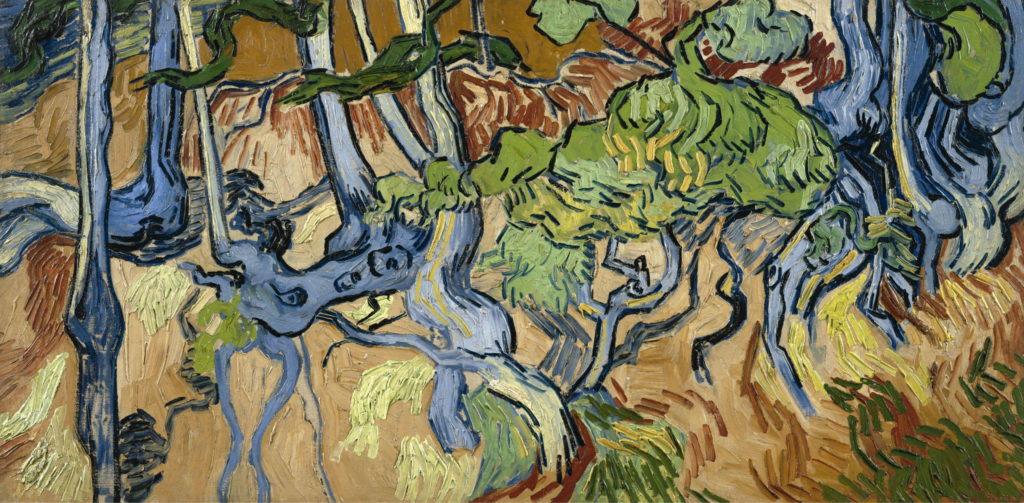
Tree roots (1890)
Less than ten years later, Tree Roots, painted in Auvers-sur-Oise in July 1890, feels almost unrecognisable in comparison. The subject itself is ambiguous, tangled roots emerging from the ground, but the treatment is urgent, almost unstable. Forms dissolve into thick, rhythmic brushstrokes; colour is no longer descriptive but expressive. Rather than depicting a scene, the painting seems to pulse with movement, as if the surface itself is alive. It is widely considered his final work, created in the last weeks of his life.
The distance between these two paintings is not simply stylistic, it reflects a profound shift in intent. Where the early still life is grounded in observation, Tree Roots abandons clarity in favour of sensation. Over time, van Gogh moved away from representing the visible world toward translating experience, emotion, energy, and perception into paint.
Seen together, these works collapse the idea that mastery leads to control alone. In van Gogh’s case, it leads somewhere far less predictable: toward intensity, distortion, and a kind of visual language that feels, even now, almost unresolved.
Claude Monet
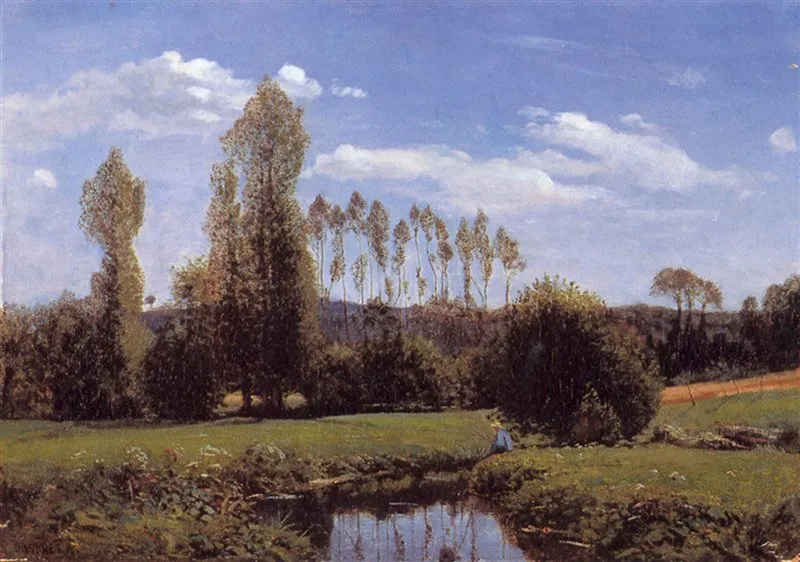
View from Rouelles (1858)
Claude Monet’s work is often associated with consistency, light, atmosphere, and the shifting effects of nature, but the distance between his earliest known painting, View from Rouelles (1858) and one of his final works, Les Roses (c. 1925–26) reveals a quieter, more gradual transformation.
Painted when he was just seventeen, View from Rouelles captures a landscape near Le Havre with careful attention to detail. Signed “O. Monet,” the work predates the artist’s full embrace of Impressionism. The composition is structured, the brushwork controlled, and the scene rendered with a clarity that aligns more closely with traditional landscape painting than with the dissolving forms of his later work. It reflects a young artist still working within convention, observing the natural world with patience rather than urgency.
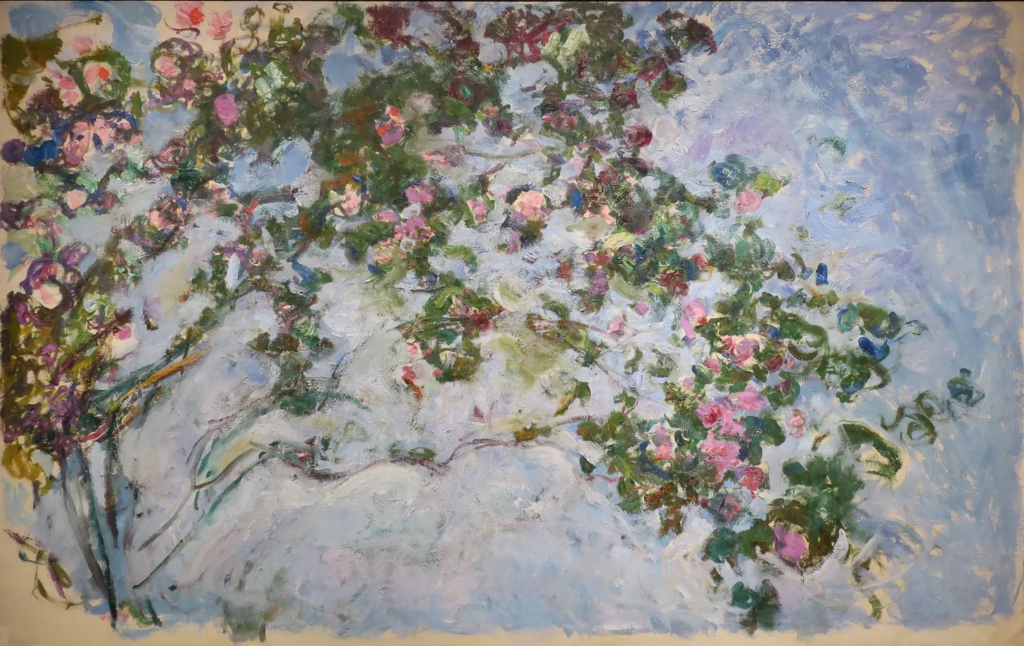
Les Roses
By the final years of his life, Monet’s approach had shifted dramatically. Having spent decades painting his garden at Giverny, and while struggling with deteriorating eyesight due to cataracts, his later works take on a more immersive, almost abstract quality. Les Roses, believed to be among his last paintings, abandons clear spatial depth in favour of dense colour and loose, enveloping brushstrokes. The forms are softer, less defined, as if the painting is no longer about capturing a scene, but about experiencing it.
This transformation is not abrupt, but cumulative. Over time, Monet moved away from depicting landscape as something to be framed and instead treated it as something to be entered, something that surrounds rather than sits at a distance. His late works, shaped in part by changes in vision, reflect this shift toward immersion and atmosphere.
Placed side by side, these two paintings suggest that Monet’s evolution was not about departure, but deepening. The careful observation of his youth gives way to a more fluid, sensory understanding of nature, one that dissolves boundaries between subject, light, and perception itself.
Leonardo da Vinci
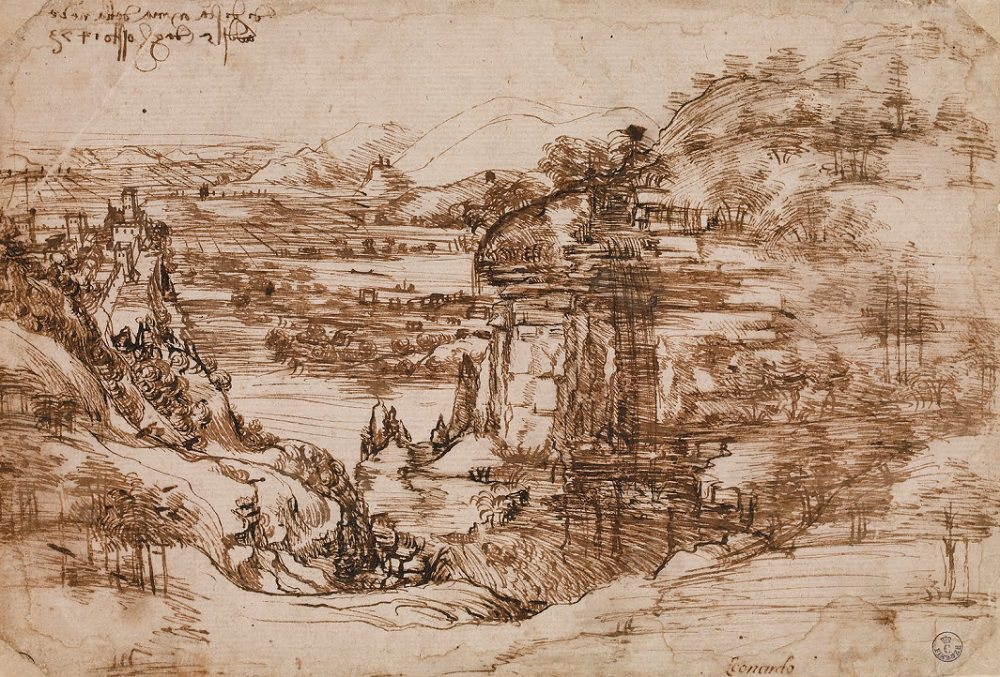
Landscape Drawing for Santa Maria Della Neve (Source)
Leonardo da Vinci’s earliest known work, Landscape Drawing for Santa Maria della Neve (1473), offers a rare glimpse into the beginnings of an artist who would later redefine the possibilities of painting. Executed in pen and ink when he was just twenty-one, the drawing captures a Tuscan landscape with remarkable sensitivity to atmosphere and space. Horizontal lines suggest the shimmer of light across water, while the layered recession of hills demonstrates an early understanding of perspective. At the same time, certain elements, such as the fortress and waterfall, appear less integrated, hinting at later additions or an evolving approach to composition.
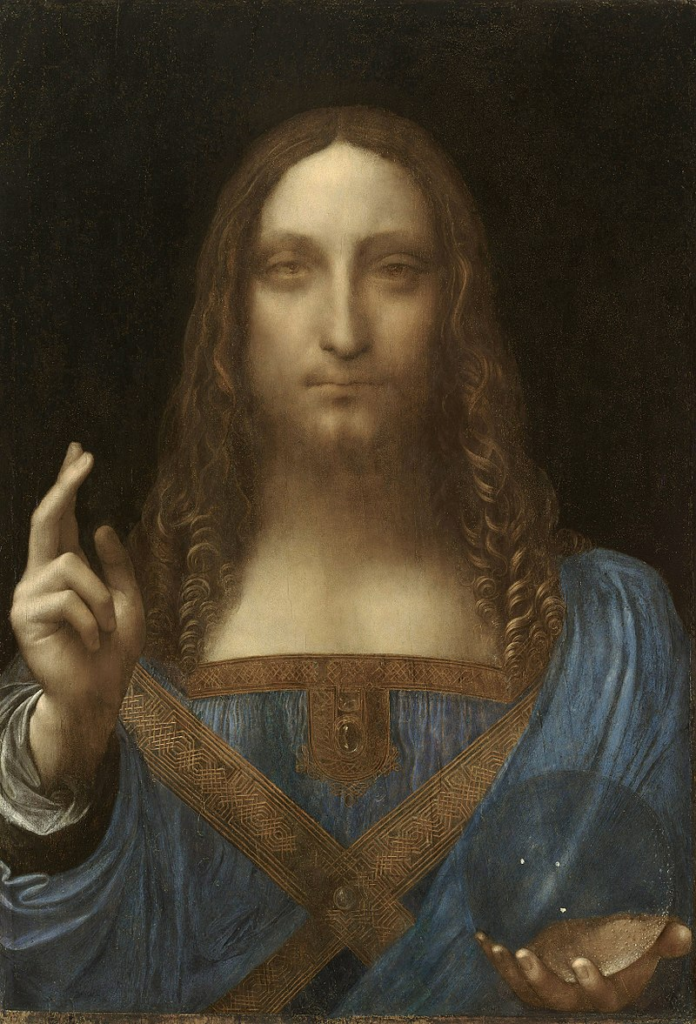
Salvator Mundi (1500), Source
Unlike many artists, da Vinci’s final works are more difficult to define with certainty. Among the most widely cited is Salvator Mundi (c. 1500), a painting whose attribution has been both celebrated and debated since its restoration and re-emergence in the early 21st century. Despite ongoing discussions around authorship, the work encapsulates many of the qualities associated with Leonardo’s зрел style: the soft transitions of sfumato, the subtle modelling of the face, and an almost intangible sense of presence.
Particularly striking is the crystal orb held in Christ’s hand. Rather than rendering it with strict optical accuracy, Leonardo allows it to remain slightly ambiguous, less a scientific demonstration than a poetic one. This balance between observation and imagination would become central to his mature practice.
Placed alongside the 1473 landscape, the contrast is not simply one of skill, but of intention. The early drawing studies the world; Salvator Mundi interprets it. What begins as an effort to record nature evolves into a practice concerned with perception, illusion, and the boundaries between the visible and the unseen.
Pablo Picasso
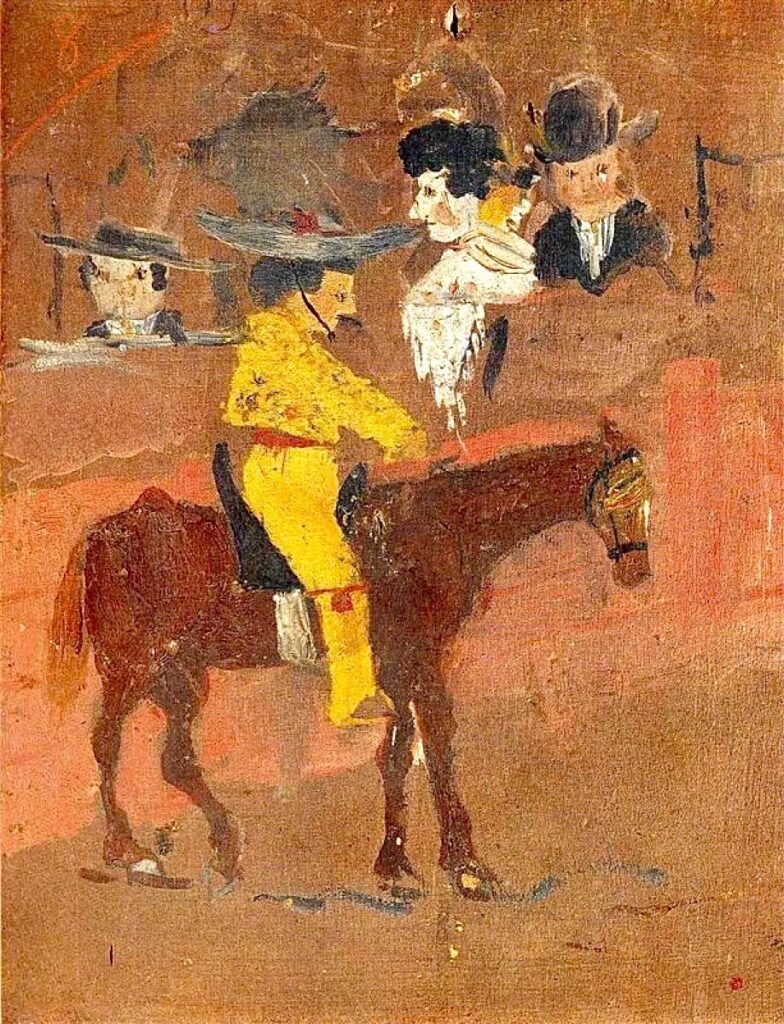
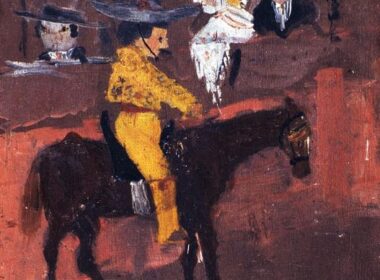
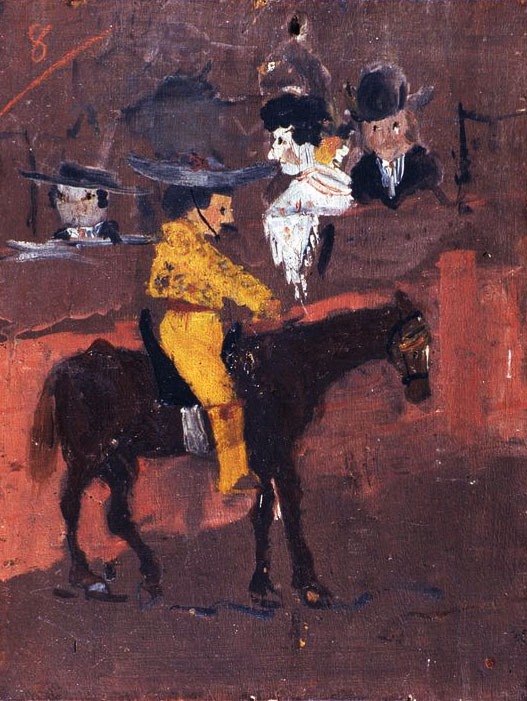
Le Petit Picador Jaune
Pablo Picasso was trained to paint before he was taught to question painting. This is evident in Le Petit Picador Jaune (c. 1889), among his earliest known works, created while he was still a child. The painting centres on a mounted picador, a subject drawn from the visual culture around him. Even at this stage, the composition is controlled and legible, with clearly defined forms and a reliance on observation rather than experimentation. It reflects an artist learning the discipline of representation, absorbing its rules before challenging them.
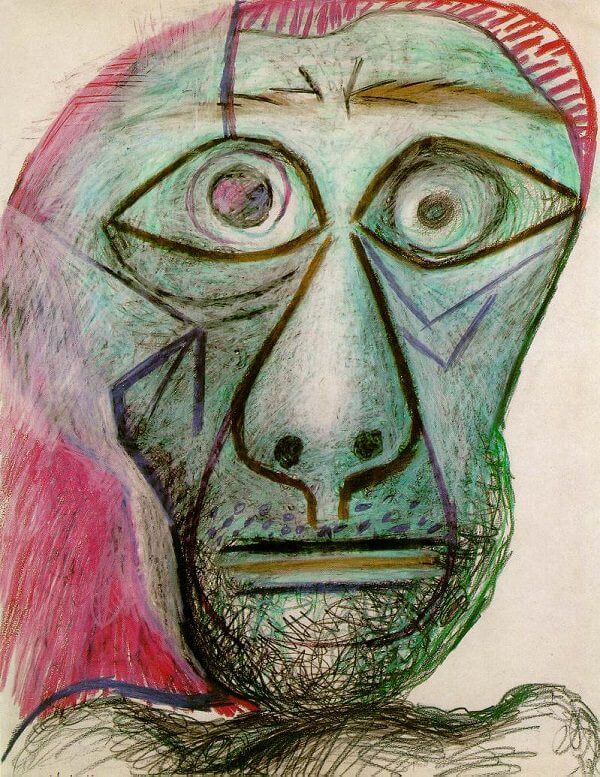
Self-Portrait Facing Death
More than eight decades later, Self-Portrait Facing Death (1972) presents an entirely different relationship to painting. The face is reduced to sharp, almost frantic lines; colour is applied with urgency rather than care. The eyes, wide and unblinking, dominate the composition, confronting the viewer with an intensity that feels both psychological and immediate. There is no interest in likeness here, only presence.
The shift between these two works is not simply stylistic, but philosophical. Where the early painting operates within the logic of depiction, the late self-portrait abandons it altogether. Over the course of his life, Picasso moved from learning how to represent the world to dismantling the very idea of representation.
Seen together, these paintings resist the notion that artistic development leads toward refinement alone. In Picasso’s case, it leads toward reduction, toward stripping away technique until only gesture, instinct, and the act of seeing itself remain.
Salvador Dalí
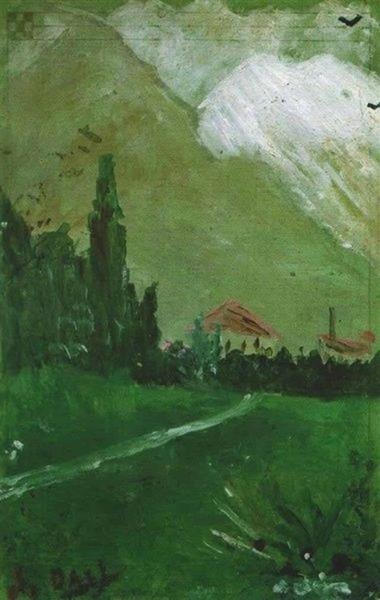
Landscape near Figuere
Salvador Dalí did not begin with surrealism. Long before melting clocks and dreamlike distortions, his earliest known work, Landscape near Figueres (c. 1910), presents a quiet, observational view of the Catalan landscape. Painted when he was still a child, the scene is grounded in naturalism: trees, sky, and earth rendered with careful attention to light and atmosphere. There is little indication here of the theatrical imagination that would later define his work, only a young artist studying the visible world with patience and control.
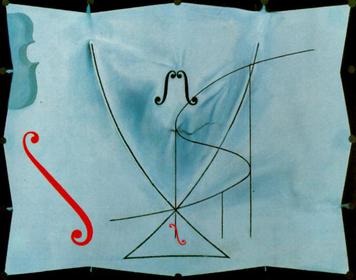
The Swallow’s Tail
By the time he painted The Swallow’s Tail (1983), one of his final works, that relationship to reality had shifted entirely. Inspired by mathematical theory, specifically René Thom’s catastrophe theory, the painting replaces landscape with abstraction. Sharp curves and precise forms intersect across the surface, creating a composition that feels calculated rather than observed. The imagery is minimal, almost clinical, yet still carries Dalí’s fascination with illusion and structure.
The movement between these two works is not a rejection of skill, but a redirection of it. Where the early landscape seeks to capture what is seen, the later painting constructs something conceptual, an image derived from ideas rather than direct observation. Over time, Dalí moves away from depicting the external world and toward visualising systems, theories, and the architecture of thought itself.
Seen together, these works reveal an artist who did not simply invent surrealism, but continually reshaped his approach to image-making. What begins in observation ends in abstraction, tracing a path that moves from the tangible world to something far more elusive.
Edvard Munch
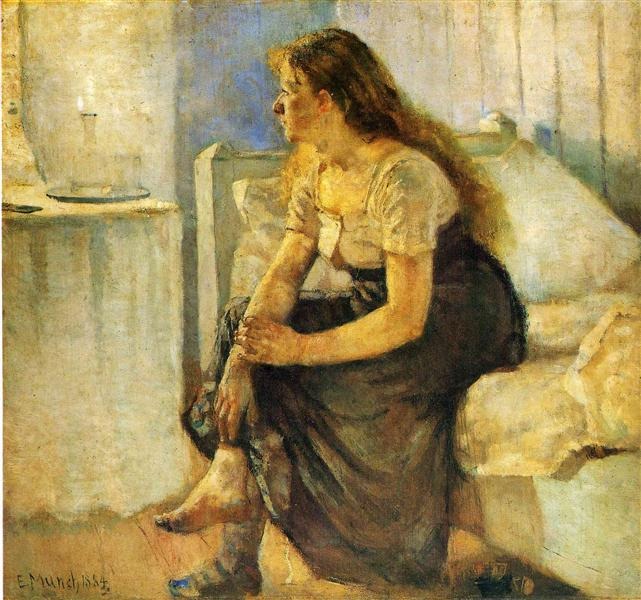
Morning
Edvard Munch’s work is often associated with emotional intensity, but his earliest paintings suggest a quieter beginning. Morning (1884), created when he was in his early twenties, depicts a young woman seated by a bed in a softly lit interior. The composition is restrained, the palette muted, and the atmosphere contemplative rather than overtly expressive. Influenced by naturalism and interior genre painting, the work reflects an artist still working within established traditions, observing rather than projecting.
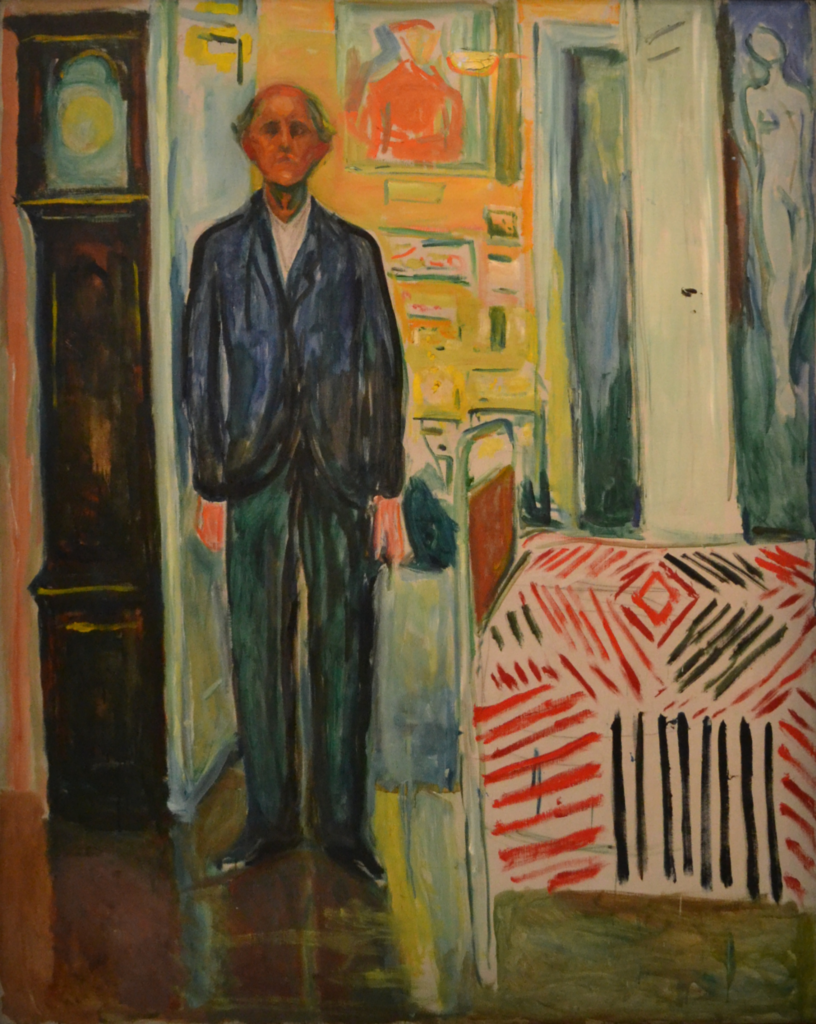
Self-Portrait Between the Clock and the Bed
Decades later, Self-Portrait Between the Clock and the Bed (1940) presents a starkly different presence. Munch stands rigidly between two symbolic forms: a clock without hands and a bed that suggests both rest and mortality. The space is flattened, the colours heightened, and the figure confronts the viewer directly. Unlike the quiet distance of Morning, this painting feels declarative, less about observing a moment and more about confronting time, aging, and inevitability.
The shift between these works is not defined by a sudden break, but by an intensification. Where the early painting maintains emotional restraint, the later self-portrait makes that inner life explicit. Over time, Munch moves from depicting scenes to embedding meaning within them, transforming space, objects, and the human figure into carriers of psychological weight.
Seen together, these paintings suggest that Munch’s evolution was not about abandoning his concerns, but about sharpening them. What begins as quiet observation becomes, over time, an unfiltered confrontation with the self.
Mark Rothko
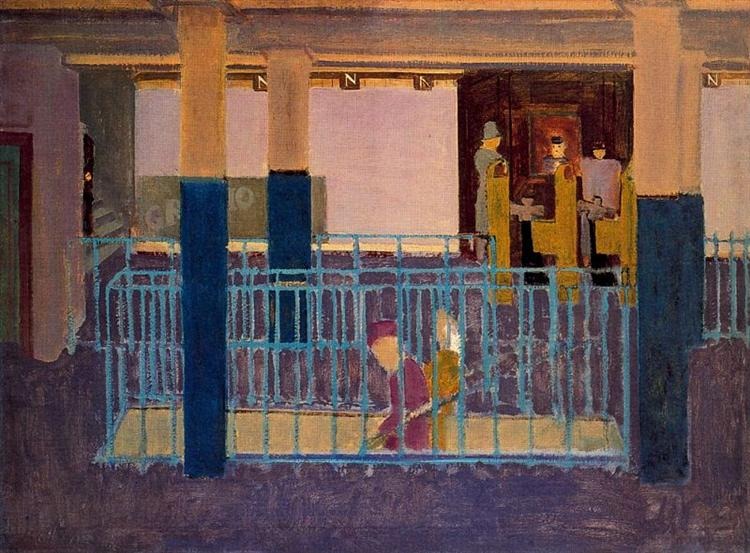
Entrance to Subway
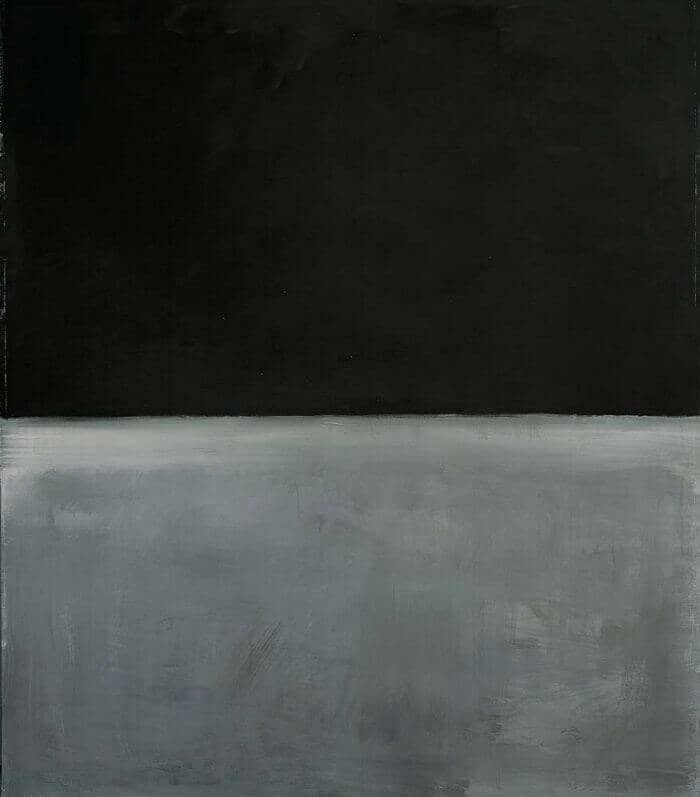
Black on Gray
Before the vast fields of colour that would come to define his work, Mark Rothko was painting figures. Entrance to Subway (1938), one of his early works, depicts an urban scene populated by elongated figures moving through a shadowed underground space. The composition is structured, the architecture clearly defined, and the figures retain a sense of narrative presence. While there are hints of simplification, the painting remains grounded in representation, a world that can still be recognised and read.
By the end of his life, that world had almost entirely disappeared. In Untitled, Black on Gray (1969), one of his final paintings, Rothko reduces the canvas to two hovering fields of colour. The surface is quiet, but not empty. Subtle shifts in tone create a sense of depth that feels less spatial than emotional, inviting prolonged looking rather than immediate interpretation. There are no figures, no setting, no story, only colour, scale, and atmosphere.
The movement between these two works is not abrupt, but deliberate. Over time, Rothko gradually removed elements from his paintings, first narrative, then form, then even colour intensity, until only the essential remained. What began as a depiction of external space becomes an exploration of internal experience.
Seen together, these works suggest that Rothko’s evolution was not about adding complexity, but about stripping it away. The crowded subway scene gives way to a near-silent surface, where meaning is no longer described, but felt.
Across these works, what becomes visible is not a straightforward progression from simplicity to mastery, but a series of shifts, sometimes subtle, sometimes radical, in how each artist approached painting itself. The first work often carries the weight of learning: observation, influence, and the careful construction of form. The last, however, tends to move in a different direction, toward distillation, experimentation, or even uncertainty.
In some cases, detail gives way to reduction; in others, clarity dissolves into ambiguity. What connects these moments is not perfection, but persistence. Each painting, whether early or late, exists as part of a longer process, one shaped by time, doubt, repetition, and change.
Seen this way, an artist’s practice is less about arriving at a final style and more about continuously negotiating it. The distance between the first and last work is not just technical, but deeply personal, a reflection of how ways of seeing evolve over a lifetime. Do you prefer an artist’s first work or their last?