
Why they turn to ancient vessels when they need fresh ideas I Barnaby Ash
👁 285 Views
At Arts to Hearts Project, we’ve always been drawn to artists who arrive somewhere unexpected. Not the ones who had a plan from the beginning, but the ones who took a detour so sharp it almost doesn’t make sense and then made something so specific, so intentional, that you realize the detour was actually the whole point.
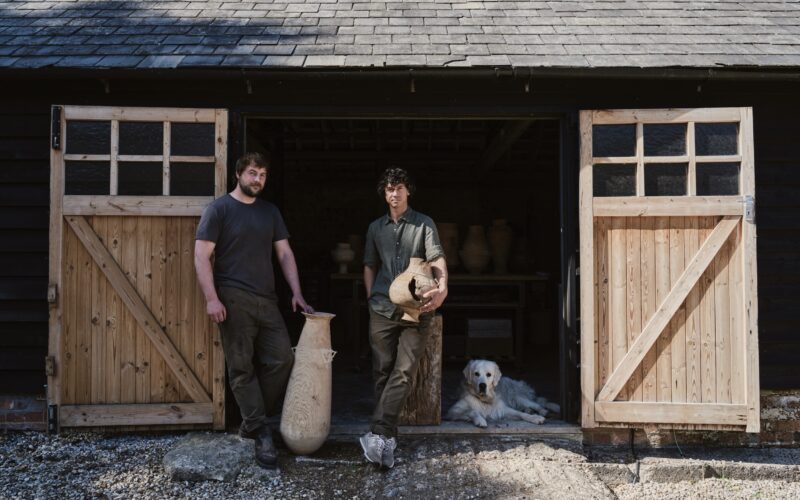
That’s exactly how we felt when we came across Ash & Plumb.
A menswear editor and a PR strategist making hand-turned wooden vessels inspired by ancient Greek amphora. That sentence alone makes you pause, doesn’t it? Not because it’s strange for people to change paths but because of how completely they changed. How far they went. And how much of what they left behind quietly followed them into the workshop anyway.
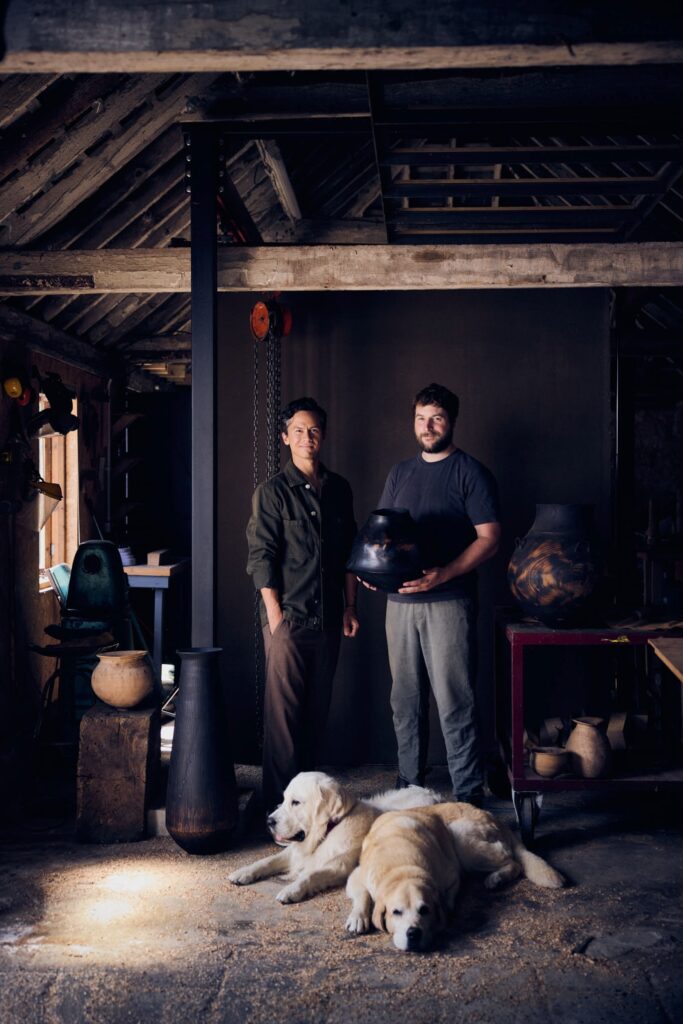
When we were putting together our Best of the Art World editorial, we were looking for makers whose work carries something beyond technical skill. Work that has a point of view. Work that makes you feel something before you even know why. We came across Ash & Plumb and stopped scrolling immediately.
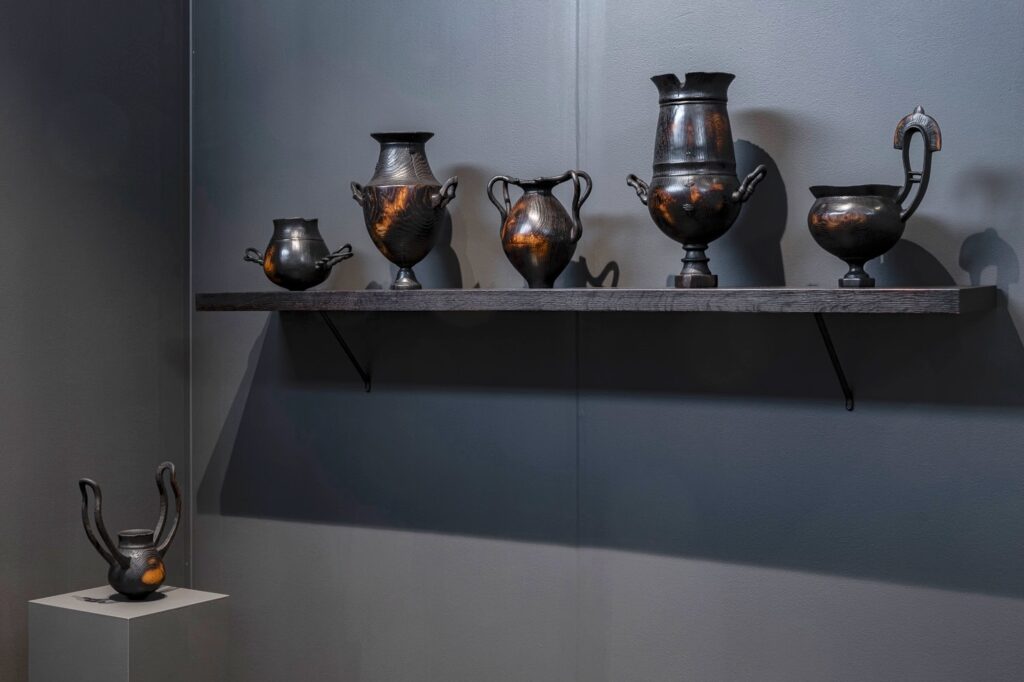
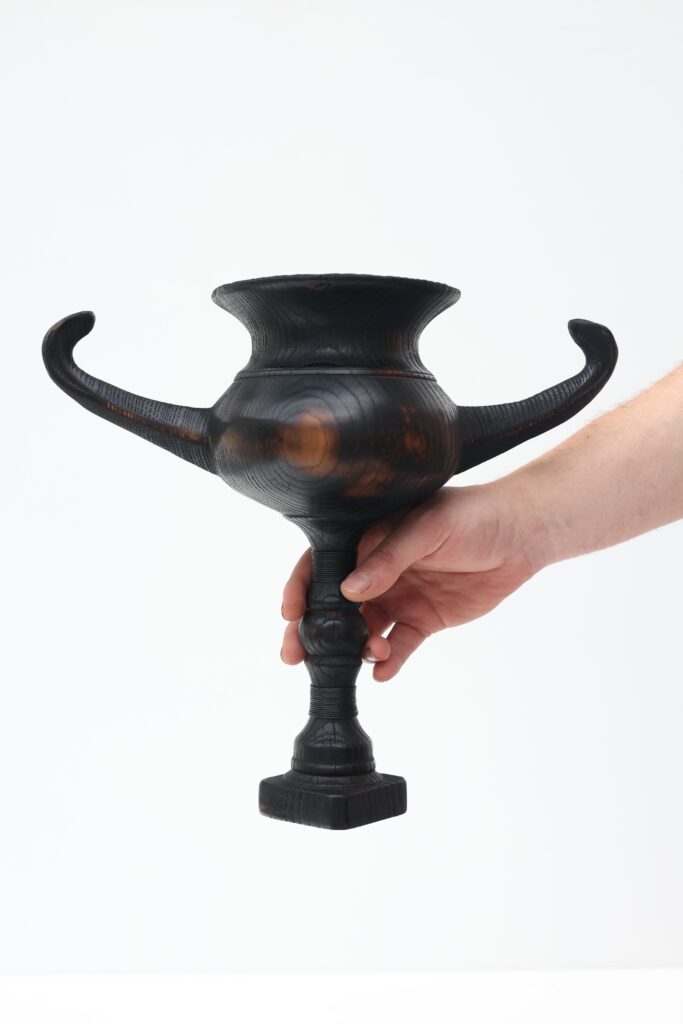
Their vessels are turned from green oak a living, moving material that cracks and shifts as it dries. And instead of fighting that, instead of chasing a perfect surface, Barnaby and Dru stitch the fissures. Literally stitch them. Running thread across the natural breaks in the wood like the crack deserved to be seen, not corrected. The result is something that feels ancient and alive at the same time. Something that feels, oddly, deeply human.
We started digging into their story to prepare for this conversation. And the more we learned, the more questions we had.
Because this wasn’t always their life. Barnaby grew up around the south of England, built a career in fashion as a menswear editor and stylist in London. Dru moved from Australia to join that same world PR, marketing, events. They met there, built a life there, and then walked away from all of it. Moved to Australia. Barnaby fixed bicycles for a while, built trails, briefly returned to fashion at Australian GQ. Dru moved through events and financial tech. Neither of them was heading anywhere obvious.
Then they came back to the UK. No real plan. Just a pull toward something different. Barnaby started getting into basic woodcraft, tried a friend’s lathe one afternoon, and something shifted permanently. They bought their own lathe. Set up in a single garage. Started figuring it out the slow, physical, unpredictable way that wood demands.
What came out of that garage eventually became Ash & Plumb. And what Ash & Plumb makes now vessels referencing sacred and ancient forms, stitched and honest and unlike almost anything else being made today feels like the only logical conclusion to two people who spent years learning how to see before they ever learned how to make.
We wanted to understand all of it. How fashion trained their eye in ways they didn’t realize until later. How you learn to collaborate with a material that has its own agenda. What it actually means to celebrate imperfection rather than just talk about it. And what it feels like to build something this deliberate from a single afternoon on someone else’s lathe.
Let’s hear from Barnaby about how it all happened.
Q1. Can you please share your backgrounds both individually and as a creative partnership and how the move from your earlier careers into woodturning came about?
We originally met when we were working in the fashion industry in London, Dru having moved there from Australia and working across PR, Marketing and events whilst I was working as a Fashion Editor and stylist in the within the menswear sector having grown up largely around the south of England. We moved to Australia soon thereafter and did quite the variety of jobs, from myself working as a bicycle mechanic and trail builder for a while as well as a stint working back in mens fashion at Australian GQ for a year. Dru on the other hand did a variety of work across events and also working in financial tech before we ultimately moved back to the UK. Once back in the UK we were looking to start our own business and I had started to get into some basic woodcraft, eventually I had a go on a friends lathe and knew I wanted to pursue woodturning. It wasn’t long after that we bought a lathe and set up a modest workshop in our single garage, although we didn’t have much of a plan at the time.
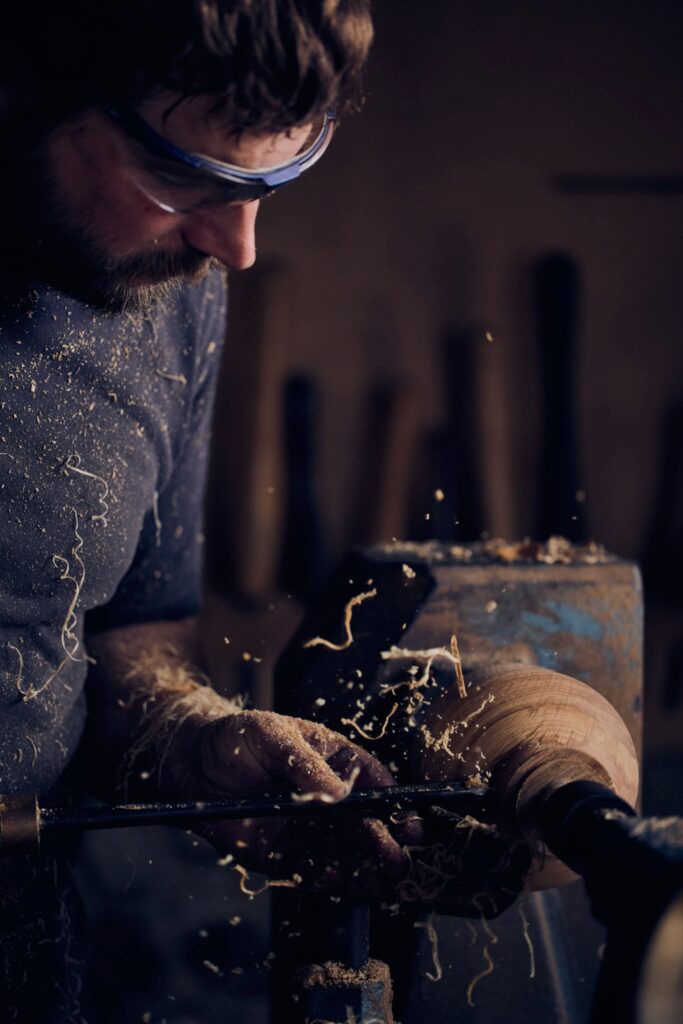
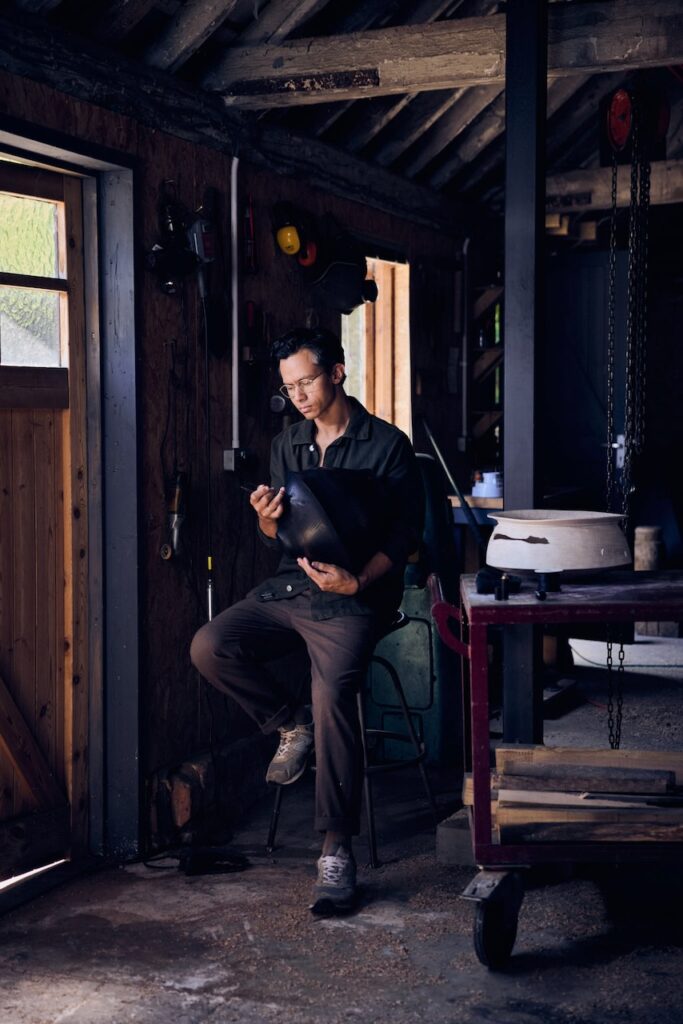
Q2. When working with such raw, living material (green oak) and a process that involves drying, shifting, potential fissuring how do you maintain control of form and finish, yet allow the wood to “speak” its own language?
There is quite the degree of predictability with the way the wood is likely to move during the drying process, that understanding can help you collaborate with the woods qualities during the making process to achieve the desired outcome. That being said you often find unexpected imperfections during the shaping process, this is part of the challenge of working with a natural material, the way you can embrace these features is what defines the raw quality of the end result.
Q3. Your previous career paths (Barnaby in fashion-editing, Dru in PR/marketing/events) are quite different from fine craft and woodturning. How do those earlier experiences inform your current practice both in approach to making and in building the enterprise of Ash & Plumb?
Not so much in a technical sense, but very much in how we think. Working in fashion taught us about proportion, silhouette and restraint. You become sensitive to balance like how something sits, how it carries weight, how it feels within a wider composition. Editorial work sharpened our understanding of presentation and cultural context whilst PR and marketing teach you how to communicate clearly and understand your audience. Those experiences mean we don’t just think about the object in isolation. We always tried to consider how a vessel will sit within a space, how it will be photographed, how it will be perceived and discussed. The making itself is rooted in craft, but the wider awareness like how the work lives in the world comes directly from our earlier careers.
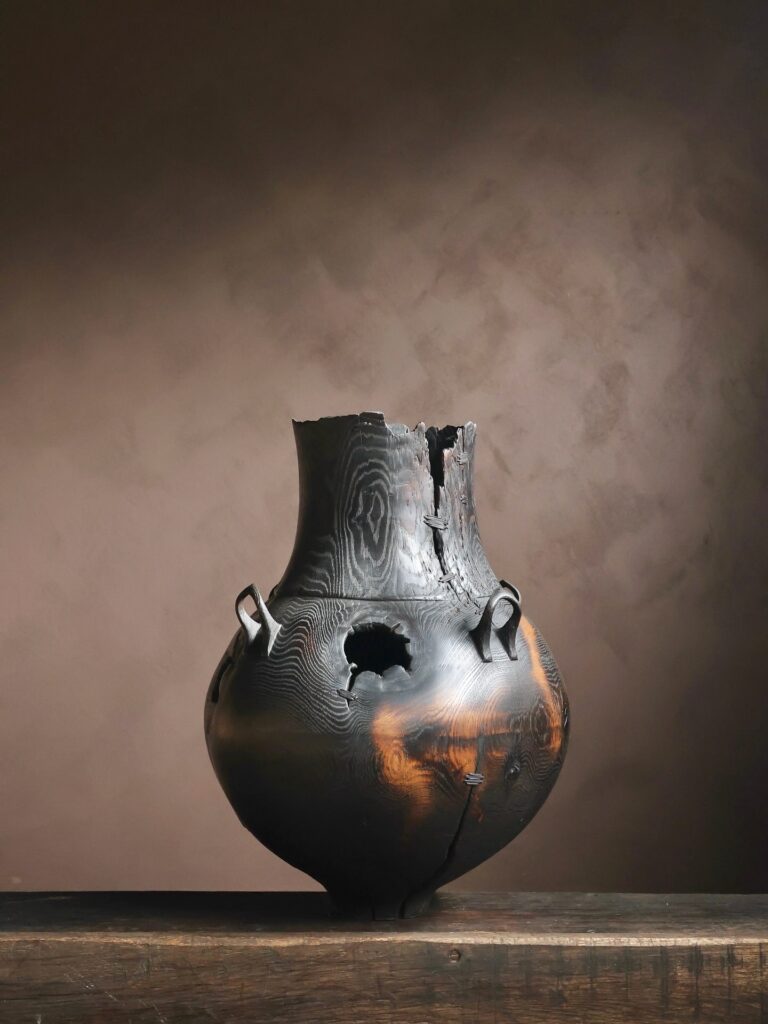
Q4. Many of your finished works include “stitched repairs” to natural fissures or imperfections. What meaning do you see in embracing flaws and repairs in your work, and how does that concept translate to the viewer?
We see ourselves as imperfectionists, we prefer to celebrate that which is natural and characterful. It is these ‘flaws’ that we see reflected in own selves. There is a degree to which perfection can tense and stressful, we seek to be an antidote to that, a more accurate reflection of the world we inhabit.
Q5. As a collaborative duo, how do Barnaby and Dru divide the roles (creative, technical, business, marketing) and how do you resolve creative differences when they arise?
I (Barnaby) do most with the woodcraft with the exception of some of the final shaping and finishing work which is a shared responsibility and Dru is in charge of all the stitchwork repair as well as photography and overall creative feel of the studio including web design and storytelling. Due to us having little crossover in actual responsibilities it is relatively rare for us to have significant creative differences but when they do arise you have to be willing to negotiate to a compromise of sorts whilst still being able to make a good case for whatever your opinion might be. More often though it will arise where one of us isn’t sure how to refine a particular detail or feature and will open up conversation with the other just to play out ideas. It is in this open and curious state that we do our best collaborative work.
Q6. Could you walk us through what a typical commission looks like from initial client brief to finished piece and how that differs from creating a piece purely for your own collection?
When you are working with a client to create something specific or even unique to their project you have to be open to the clients needs and how this commission will interact with the space within which it will reside. In a perfect world we prefer to know the scale and proportions of the intended location and then design a collection or piece proportionally from there. Often there will be a reference of a previous work that the client would like us to emanate or even an architectural detail within the location that we could subtly mirror within the design. We’ll then convert these ideas onto graph paper to refine proportions, digitise the proposal and send that over to the client if a meeting in person is not feasible. Then of course once agreed upon the works are created. When it comes to our own works everything is still sketched out and refined before we make anything, this wasn’t always the case but given the complexity of our current works it really pays to take your time considering the design before you commit to the making process.
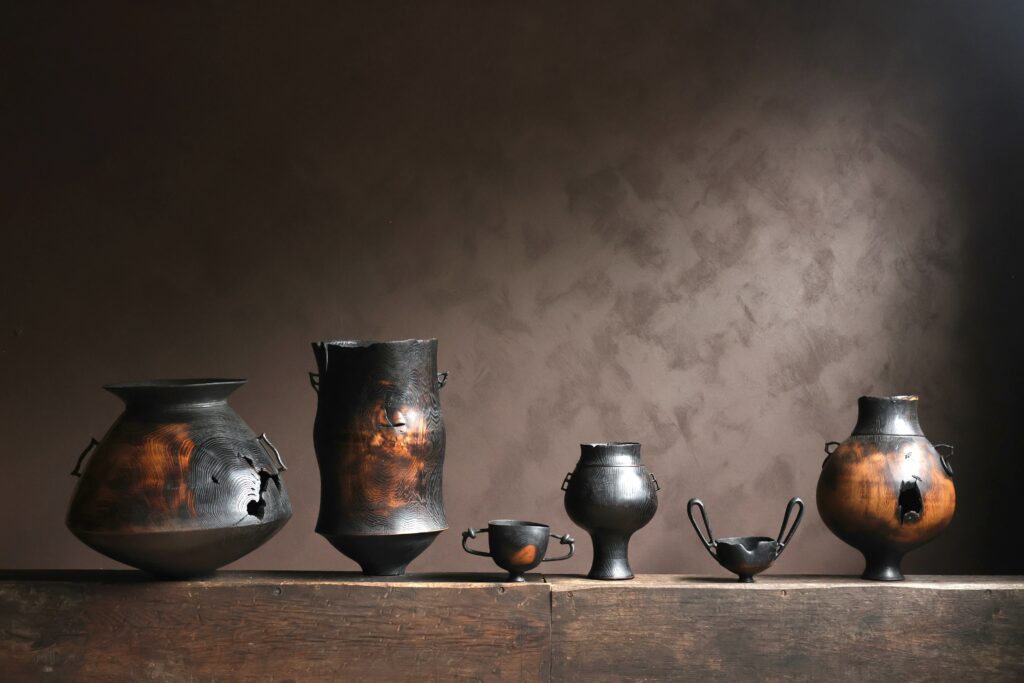
Q7. Your work is deeply hand-made and one-of-a-kind. How do you balance the tension between uniqueness (in craft) and the potential demands of business-scaling, exhibitions, commissions?
Our work being unique and one of a kind is a sort of non negotiable, the material itself imposes a degree of uniqueness on each piece regardless of how exactly we could recreate a piece. We only ever guarantee that a piece will carry the same feeling and energy of a previous piece, never quite the same, this is something we believe adds value to each iteration. Our intention is never really to scale up the production of these works, it is more about taking our time and seeing what is possible to create as a studio by pushing the limits of our practice. We have very much pivoted towards a market that celebrates and values the unique and exclusive nature of our work, allowing us to continue to elevate our practice.
Q8. Craft and art can demand a lot of physical effort, patience and risk (especially with large timber pieces). What are the most unexpected challenges you’ve faced in your studio practice?
The making of our particular work is very physical so that requires a degree of management with regard to recovery and so on. I would say the most significant thing, especially with regard to taking on highly complex works is understanding your emotional state and knowing when to continue working and when to pull back and reset. To work intuitively but not impulsively.
Q9. How has sustainability shaped the business and creative model of Ash & Plumb beyond material sourcing (for example re-use of shavings, local collaborations)and how do you imagine this evolving as you grow?
Beyond the sourcing of the material itself we are fortunate to require very little in the way of electrical power to create our works but we do produce significant byproduct with regard to shavings. We sell these shavings to a local gourmet mushroom farm who use them to feed the mushrooms. We have other ideas we’d like to explore with this waste too, we intend to experiment with making paper with them too and exploring that as a medium for other artworks.
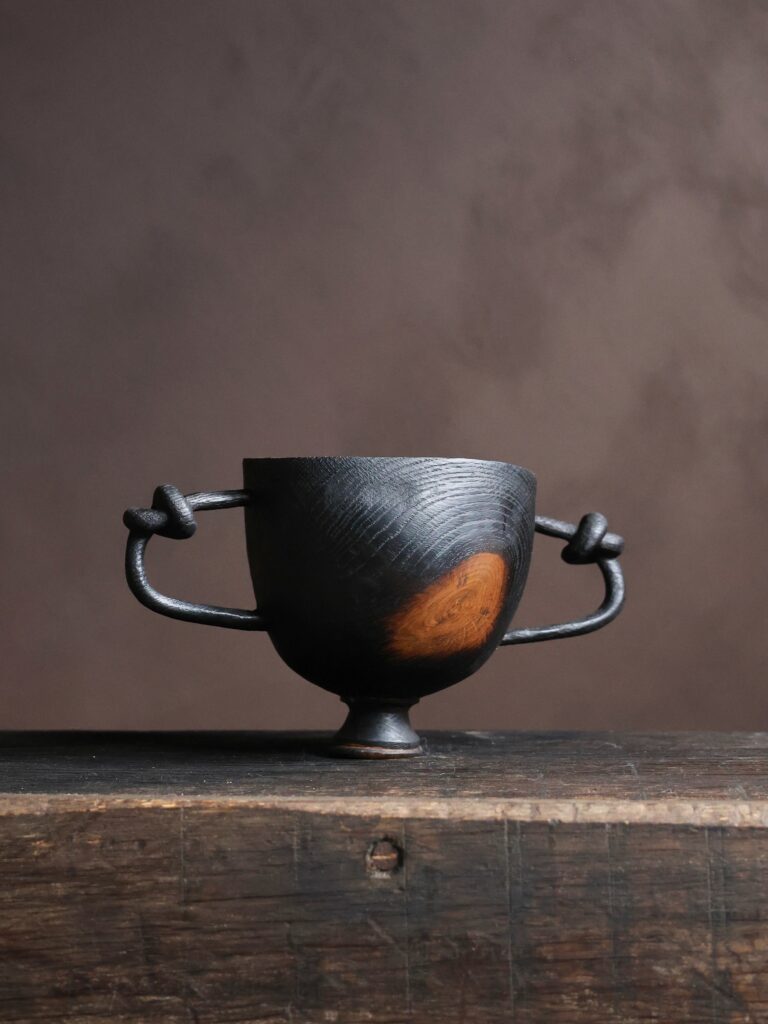
Q10. In turning wooden vessels, you reference forms such as amphorae, the psykter, classical wine vessels, etc. What do these vessel forms mean to you spiritually, symbolically, materially and how do you choose which forms to explore next?
We are drawn to ancient and sacred form, we seek to emanate these historical traditions and share our own reverence for those that created before us through the works that we create. As such we spend a lot of time researching historical form, whether through museum archives or books we have acquired, even on Pinterest. The key is to live a life rich in exposure to inspiration. We’ll then start to sketch out ideas often starting with a particular reference and then playing a little with rethinking the idea, perhaps completely reinventing, it really depends on where it takes you, you just need to put pencil to paper.
Q11. In carving and turning wood you’re in dialogue with tools, machines and handwork. How do you think about the role of technology or mechanisation (if any) versus hand-labour in your studio?
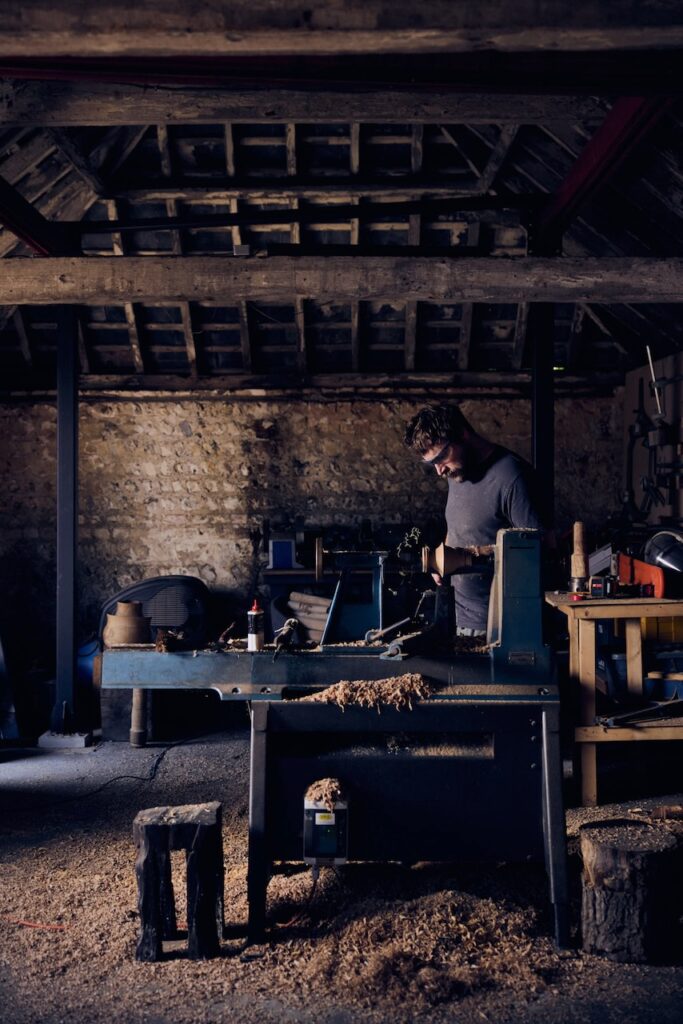
In many ways we’re not averse to having more technology in the studio but as it stands everything is made with a rather primitive mix of chainsaws, wood turning, angle grinders, drills and a variety of hand carving tools and rasps. One day we’ll likely get a CNC to collaborate with in the earlier stages of the making process but the final shaping and finishing touches will always be done by hand.
Q12. How do you hope your work affects the people who live with it? What kind of emotional, atmospheric or conceptual effect do you hope the vessel or sculpture brings into a space?
To inspire a curious fascination with the human mythos, to feel and connect with something that is both new and yet deeply familiar.
Q13. What advice would you give to someone maybe a maker or designer who is looking to pivot from a conventional career into a more hands-on creative craft path?
I would say that that to make a living at least as an artist you still need to understand the market that you intend to sell to. At the end of the day you have to consider the business reality too and act accordingly. This doesn’t mean that you can’t still create work you love but it does mean that you have to be flexible and realistic about what it is you are selling and what the market is willing to pay for it.
As our conversation with Barnaby came to a close, I kept coming back to one thing he said almost in passing, that the most important skill in their studio isn’t technical. It’s knowing your own emotional state. Knowing when to keep going and when to stop. When you’re working intuitively and when you’re just being impulsive.
That’s not a woodturning lesson. That’s a life lesson. And it came from a guy who started in a single garage with no plan.
What Barnaby and Dru have built is genuinely rare, not just the work itself, though the work is extraordinary. But the whole thing. The philosophy, the partnership, the refusal to chase scale or speed or any of the things the world tells you success should look like. They chose depth over volume. Slowness over hustle. And the work shows it in every single piece they’ve ever made.
Here’s what I wasn’t expecting from this conversation, that it would make me rethink my own relationship with imperfection. Because they’ve built an entire practice around something most of us spend our whole lives running from. The crack. The fissure. The thing that went wrong that you can’t undo. They stitch it. They put it right in the centre. They make it the most interesting part of the piece. And the more I sat with that, the more I thought about how much energy most of us spend hiding the exact things that make us interesting.
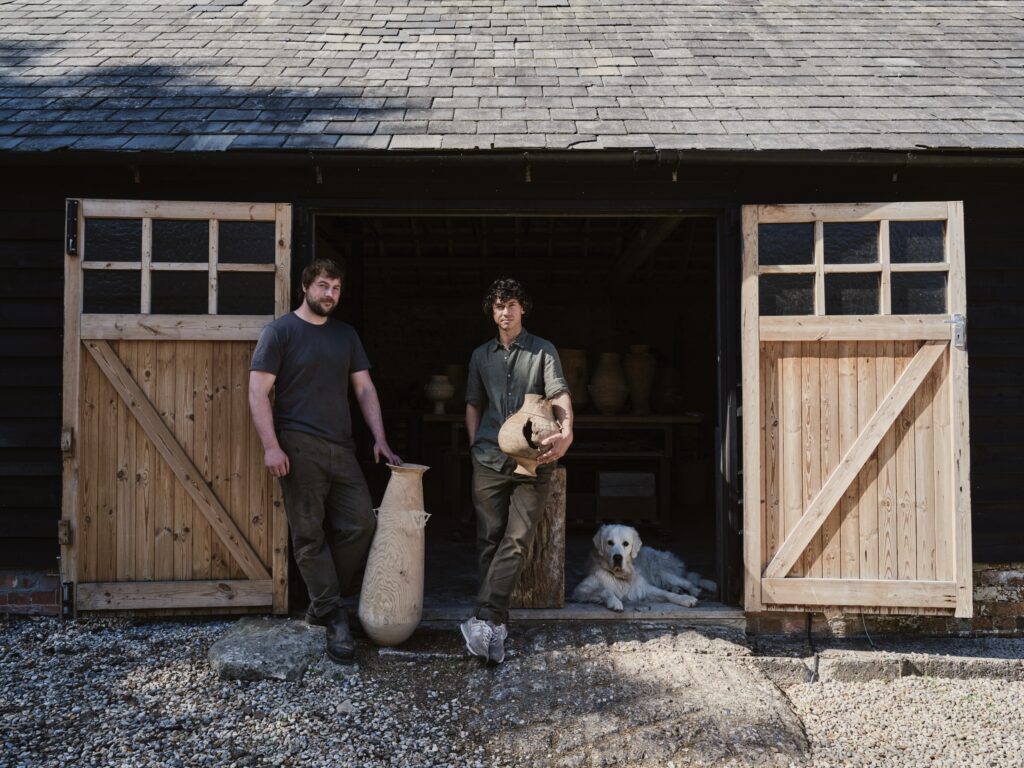
They didn’t come from craft backgrounds. They didn’t go to art school. They didn’t have a mentor or a clear roadmap. They had a fashion career, a PR career, a stint fixing bicycles, and one afternoon on a friend’s lathe. That kind of courage deserves to be named. Because it’s one thing to try something new when you have nothing to lose. It’s another to walk away from careers you’d built, identities you’d worn for years, and bet everything on a garage and a feeling.
Here’s what I’m taking from Barnaby and Dru and what I hope you take too. Your detour is not your delay. Every unexpected turn, every pivot that didn’t make sense to anyone around you, every version of yourself that felt like a wrong move is quietly building something you can’t see yet. The cracks in your story aren’t the parts to be ashamed of. They’re the parts worth stitching. Worth showing. Worth putting right in the center.
That’s what Ash and Plumb taught me. And I think it’ll stay with me for a long time.
Follow Ash and Plumb through the links below. And maybe look at your own cracks a little differently after.