

What makes Eszter Gróf’s landscapes feel like standing in nature?

👁 155 Views
At Arts to Hearts Project, when we chose Landscape as the theme for our 101 Artbook series, we were not thinking about scenery. We were thinking about what happens inside a person when they stand somewhere that moves them. That feeling of being small but not insignificant. Of being held by something larger. Of breathing differently because the air or the light or the silence has changed something in your body without asking permission.
Eszter Gróf’s response was one of the quietest in this edition. And one of the ones that stayed with us longest.
Her paintings do not grab you. They do not need to. They have this warmth that pulls you in so gently you do not realise you have been standing there for two minutes until you suddenly notice how still you have become.
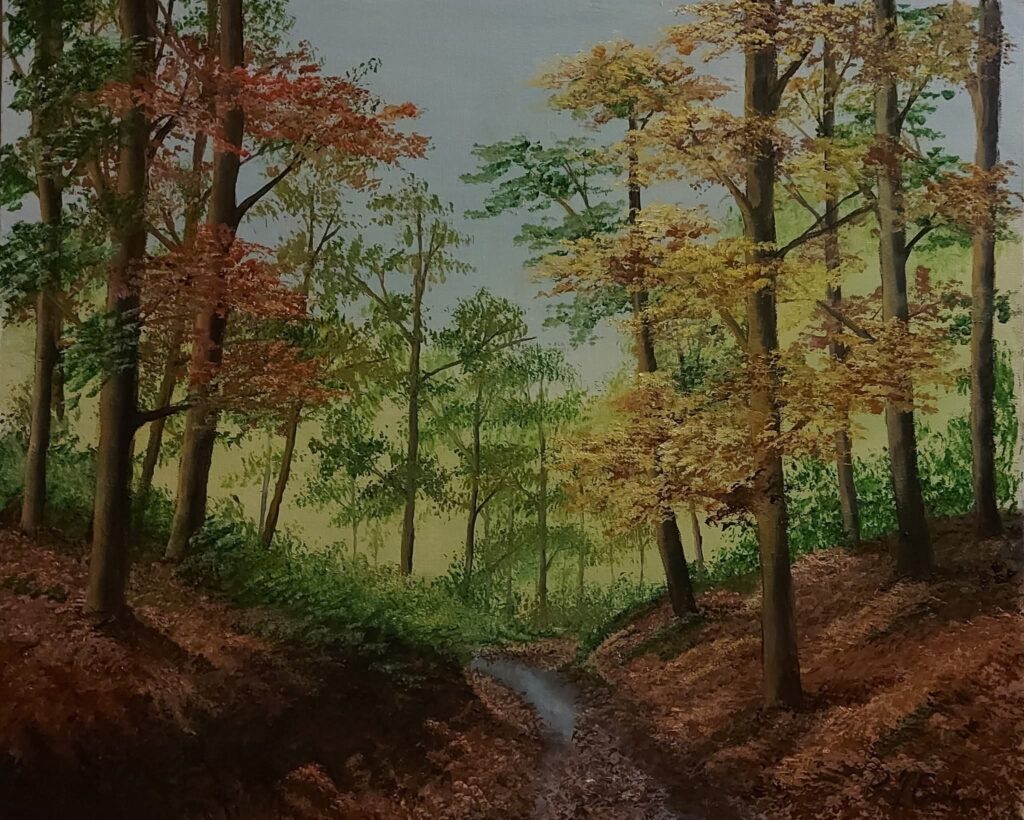
Her forests feel like actual forests. Not because every leaf is rendered perfectly but because the feeling is right. The temperature of the light. The balance between detail and open space. The sense that if you stepped into the painting the noise of your day would finally stop.
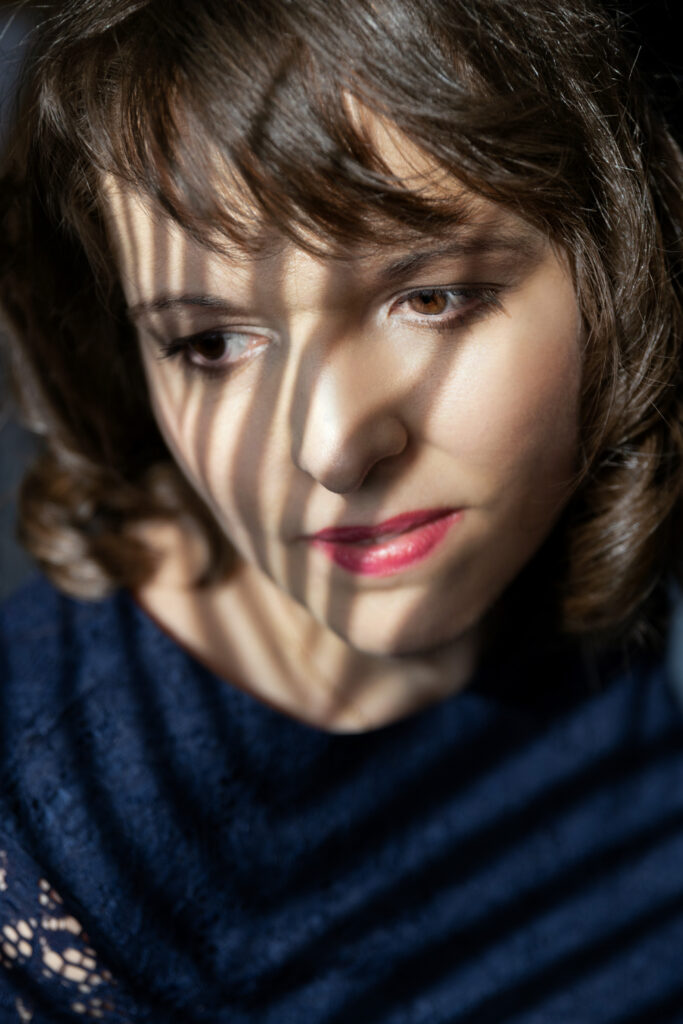
Eszter is Hungarian. She came to art through her mother who had a deep appreciation for fine art and passed that on not as pressure but as a quiet gift. She found a mentor. She learned. She developed. And she built a practice rooted in observation, patience, and a genuine love for what she makes.
She paints in oil, mostly on wood panel, and the surface matters to how her work feels. Wood absorbs paint differently than canvas. It holds colour with a stability and richness that gives her paintings this grounded quality. Her palette leans warm because that is simply who she is. Warm tones create closeness and her paintings feel close. Not in your face. Just near. Like a room with good light on a quiet afternoon.
She does not overcrowd her compositions. She knows where to stop. She knows when the painting is breathing on its own and does not need another stroke.
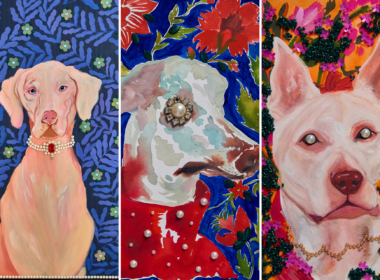
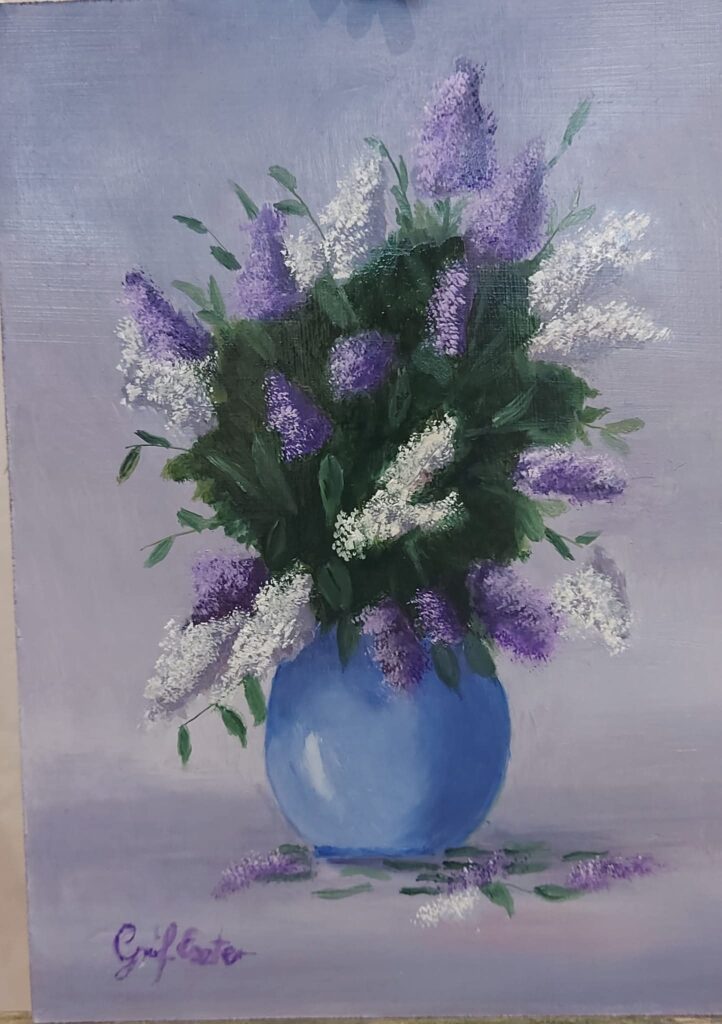
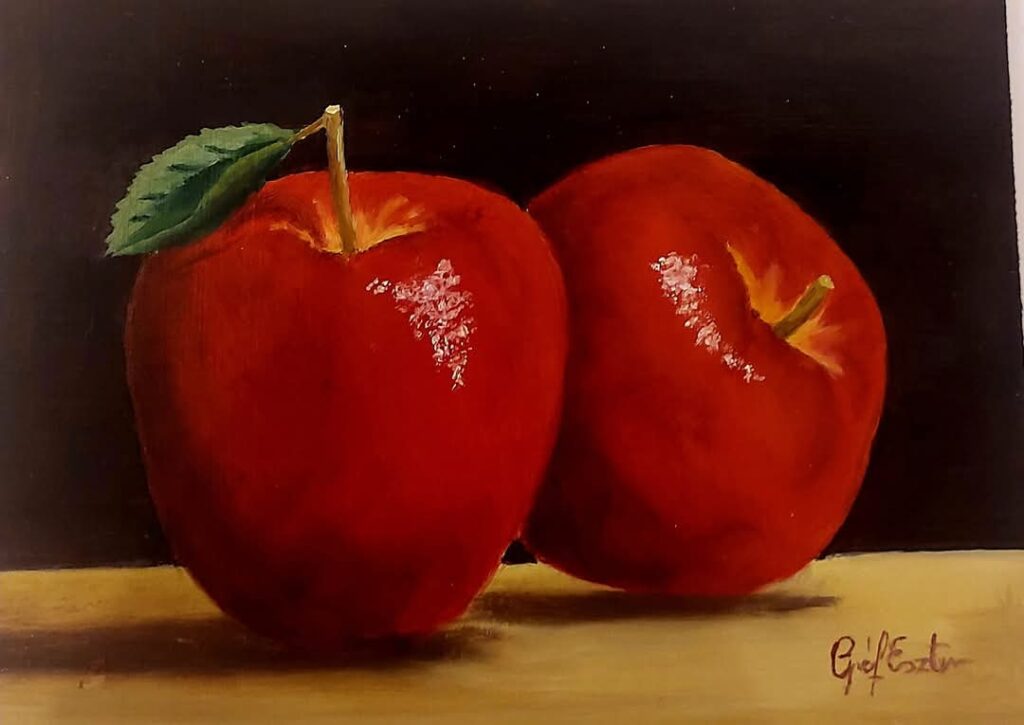
And her still lifes. Simple objects from her home. Painted not because they are remarkable looking but because they are loved.
Let’s hear from Eszter about how a surface changes everything, why she trusts warmth over drama, what her ordinary objects are really about, and why she believes the best thing an artist can do is love what they make.
Q1. What part of your upbringing first drew you to visual art, and how did you continue making work while developing your own voice before formal mentorship?
My mother always liked fineart. She found joy in it and taught me a unique sense of beauty. She was the one who helped find the place where I have met my mentor.
Q2. Your work frequently appears on oil on wood panel with a striking sense of surface and depth. How does the wood surface influence the feel and execution of a painting?
My approach to working on wood panel is largely technical. I appreciate the way the surface absorbs the paint; it creates a different interaction between pigment and ground. The paint settles into the panel in a way that feels stable and controlled, which allows me to work the surface more smoothly and refine transitions with greater precision. On wood, I feel that the paint retains its color value more consistently. The surface doesn’t compete with the pigment, and I can build layers without losing clarity or depth in the tones. That said, this doesn’t mean I’m committed exclusively to wood. My more recent works are created on stretched canvas. Each surface offers different possibilities, and I’m interested in exploring how the material influences the final result.
Q3. Landscapes like forests and waterscapes embody a quiet presence. How do you balance detail with atmosphere, so the viewer feels drawn in rather than overwhelmed?
My aim is that a viewer who approaches my work with openness can step out of everyday life, even if only for a minute. I want the painting to offer a quiet pause. I tend to use warmer colors, simply because they resonate with me more deeply. They help create a sense of closeness and subtle comfort. At the same time, I pay careful attention to proportion and balance. I avoid overcrowding certain areas, so the composition remains cohesive and the viewer can take in the image as a whole rather than getting lost in isolated details. I also believe that a well-crafted landscape can trigger subtle physiological responses, similar to what we experience when standing in nature — a slowing down, a softening of focus, a shift in breathing. That quiet presence is essential to me.
Q4. Your still lifes from avocados to wine bottles feel both intimate and composed. What guides your eye when arranging objects and colour relationships in these works?
I would say they are more intimate than composed. These objects have their own story for me or for my family and I wanted to make them eternal through the paintings.
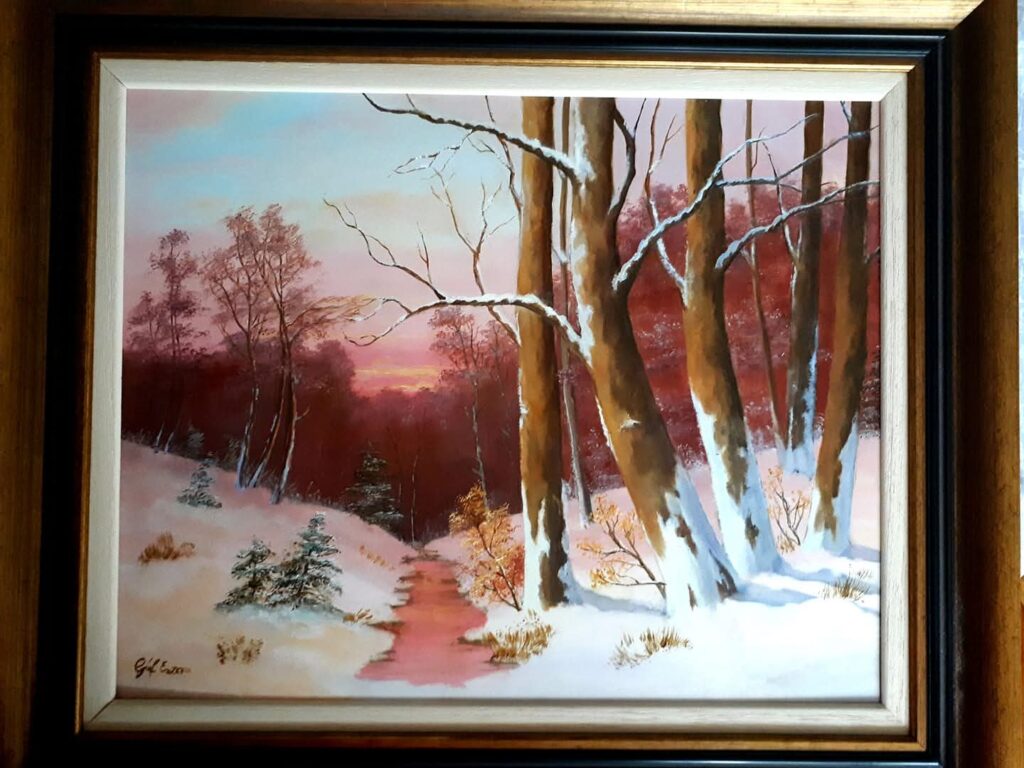
Q5. When painting seasonal subjects like Őszi Hangulat (Autumn Mood), how does the rhythm of the seasons shape your palette and gesture?
In my work, the rhythm of the seasons is not directly related to my palette or gesture. I don’t consciously adjust my painterly language according to the time of year. Rather, I aim to keep my work thematically diversified. Even when a painting carries a seasonal title, my focus remains on the internal balance, atmosphere, and structure of the composition rather than on representing a specific seasonal mood.
Q6. Colour harmony is a clear thread in your work. When you begin a painting, do you start with a palette in mind or let colour choices emerge through layering?
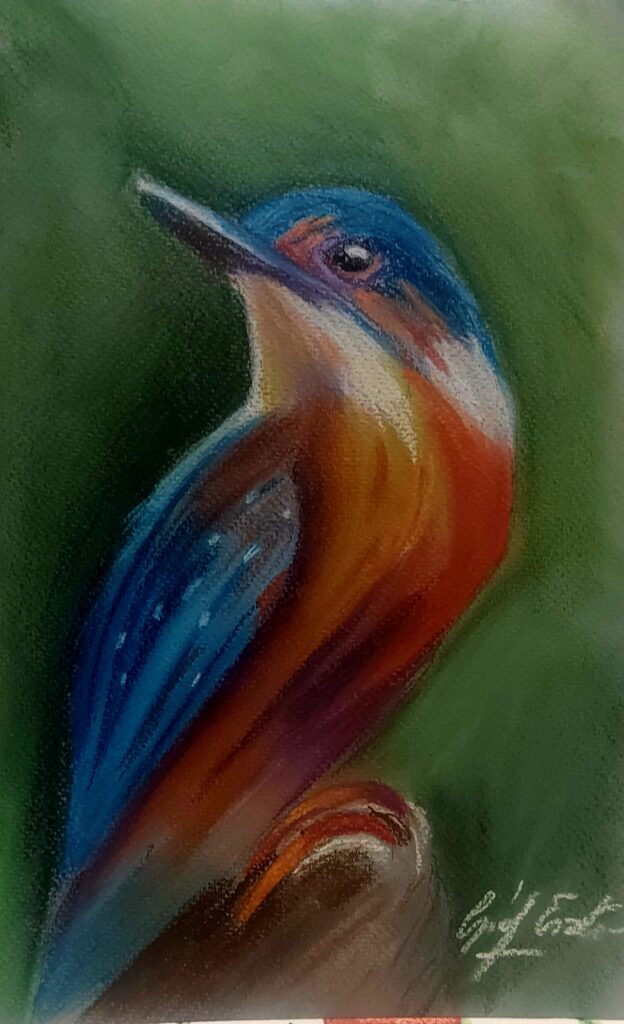
I let colour emerge through layering. I look at the picture in its integrity and see how the colours fit each other.
Q7. Many artists find that specific problems like colour unity or spatial tension recur across work. Are there problem areas you find yourself returning to, and how do you tackle them?
I have these 2 problems time to time coming up and I handle it with patience. One of the most wonderful attributes of oil painting is that it can be easily corrected in many ways.
Q8. Your solo show Mert ez így kerek… took place in early 2025. How did preparing a cohesive body of work for that context differ from creating standalone pieces?
Honestly I stepped back and let the galery organize this and put the pieces together. I wanted to see how they organize my works and what is the outcome. I was very satisfied with the result.
Q9. Looking back from your earliest landscapes to your current practice, what shifts in technique or theme feel most meaningful?
Looking back at my earliest landscapes, the most meaningful shift is that I learned how to construct an image and how to truly represent what I want to show. As my understanding of structure and painting developed, the works began to feel more alive. I don’t consider my early paintings to be poor or unsuccessful, but there is a clear difference in quality between them and my current work. The change comes mainly from experience — from learning how to build a painting so that it holds together as a whole.
Q10. What advice would you give to artists who are building a practice rooted in observation and studio discipline, especially those teaching themselves classical techniques?
Do it with love and joy! It is your child, a beautiful piece of you! Be proud of it!
As our conversation with Eszter came to a close, we kept thinking about what makes a landscape worth painting.
Not worth photographing. Not worth posting. Worth painting. Worth spending hours with. Worth sitting in front of a panel and slowly building layer after layer until the light feels right and the air feels right and the space between the trees feels like you could walk into it.
Because the truth is, most landscapes we see in our daily lives we do not even register. We drive past them. We glance out a window and look back at our phones. We walk through parks thinking about what we need to do next. The trees are there. The light is there. The sky is doing something beautiful, and we miss it because we are somewhere else in our heads.

Eszter does not miss it. She stops. She looks. She paints what she sees with enough patience and warmth that when you stand in front of the finished painting, you feel what she felt. Not a dramatic feeling. A quiet one. The kind that is easy to miss in real life but impossible to ignore when someone has taken the time to hold it still for you on a surface.
That is what landscape painting can do when it is done with this kind of care. It does not take you somewhere exotic or far away. It takes you right back to where you already are and makes you realise you were not paying attention. The forest you walk through every week. The light that comes through your window at a certain hour. The season that is changing right now while you are too busy to notice. Eszter paints those things. And suddenly they matter in a way they did not before.
We think more people need that right now. Not more noise. Not more spectacle. Just someone saying look at this. It was here the whole time. You just forgot to see it.
So next time you are outside and the light hits something in a way that makes you pause even for half a second, stay there. Do not pull out your phone. Do not keep walking. Just stay in it. That is the feeling Eszter is painting. And it is available to all of us every single day if we slow down enough to let it in.
Follow Eszter Gróf through the link below and remember what it feels like to actually stand inside a landscape instead of just passing through one.