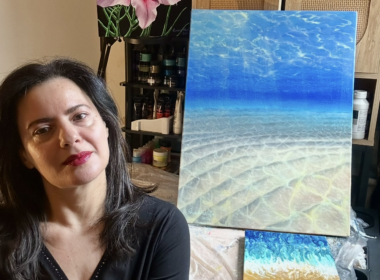

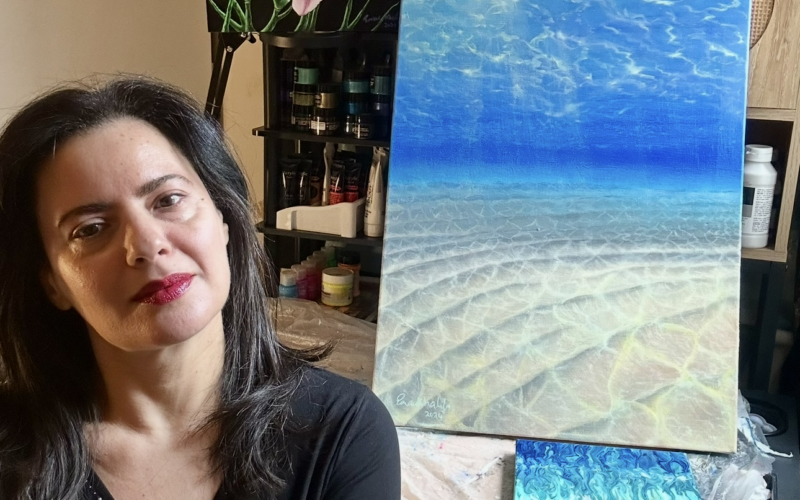
Eman Khalifa turns cool blues & sandy hues into the most harmonious landscapes you’ll ever see
👁 17 Views
At Arts to Hearts Project, we have spent years exploring one idea: what happens when you hand artists a single theme and step back to see what they do with it?
Our 101 Artbook series has now featured over 808 artists across eight thematic editions. Every book begins with one word, and every time, we are amazed by how many ways that word can be seen, felt, and made real. No two artists ever give us the same thing. That is what keeps this series alive.
After editions on Floral, Animal, Nature, Abstract, and Portrait, we chose Landscape for our sixth because landscape carries something the others do not. It is personal in a way that goes beyond subject matter. It is the sky you grew up under. The ground that held you when nothing else did. The view that made you feel free or the one that made you realise how far from home you were. Some landscapes comfort you. Some unsettle you. Some do both at the same time and you cannot look away.
What surprised us with this edition was how intimate the submissions were. These were not scenic paintings. They were emotional territories. Places that lived inside the artists long before they lived on canvas.
One artist in particular held our attention from the moment we saw her work. Not because it was trying to. That is the thing. It was not loud, not dramatic, not reaching for you. It was still. But it was the kind of stillness that has weight. Like the painting knew something and was not in a rush to tell you. Like the light inside it had been carried from somewhere far away.
That artist is Eman Khalifa.
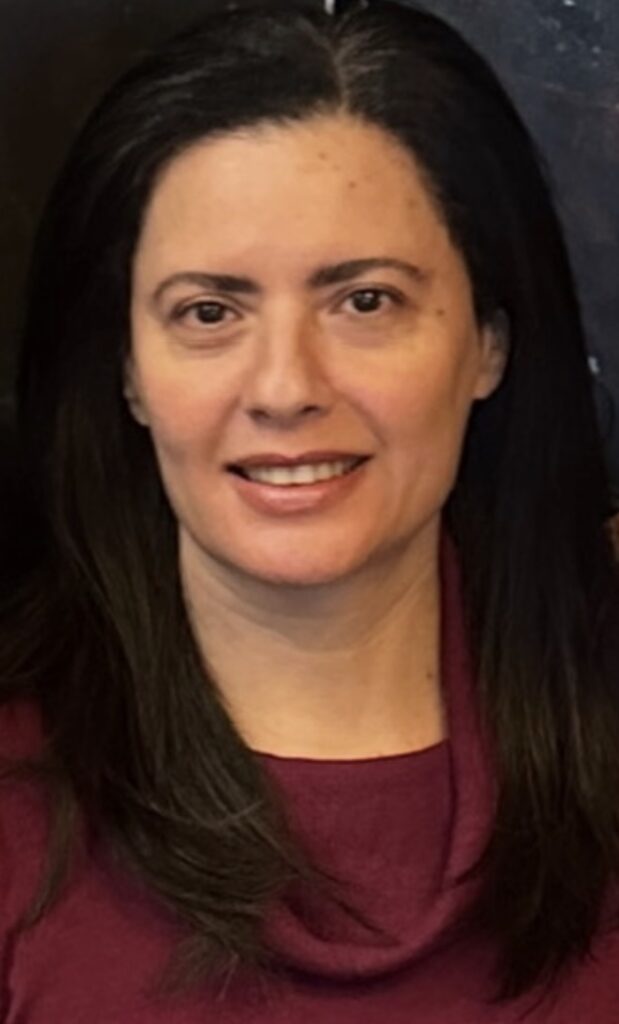
Eman was born in Kuwait, raised between Egypt and the United States, and has lived in the UK for over fifteen years. Three continents. Three completely different ways of seeing. Egypt surrounded her with colour and symbolism and visual richness that is just part of being alive there. America opened doors to experimentation and individuality. The UK brought restraint and a sharpness for subtlety. She absorbed all of it. And painting became the one place where none of it had to be chosen over the other. It could all exist together.
Before art became her focus, Eman spent years in corporate leadership and global business. Strategy, systems, high stakes decision making. A world that demands clarity and leaves no room for hesitation. And that world did not disappear when she entered the studio. You can see it in her compositions.
The precision. The confidence. The way nothing feels accidental. But what happened alongside that is the part that interests us. Because the studio gave her something the boardroom never could. Permission to not know. Permission to follow instinct. Permission to start something and let it lead her somewhere she did not plan. That tension between control and surrender is where her work lives. And it is what makes it feel so honest.
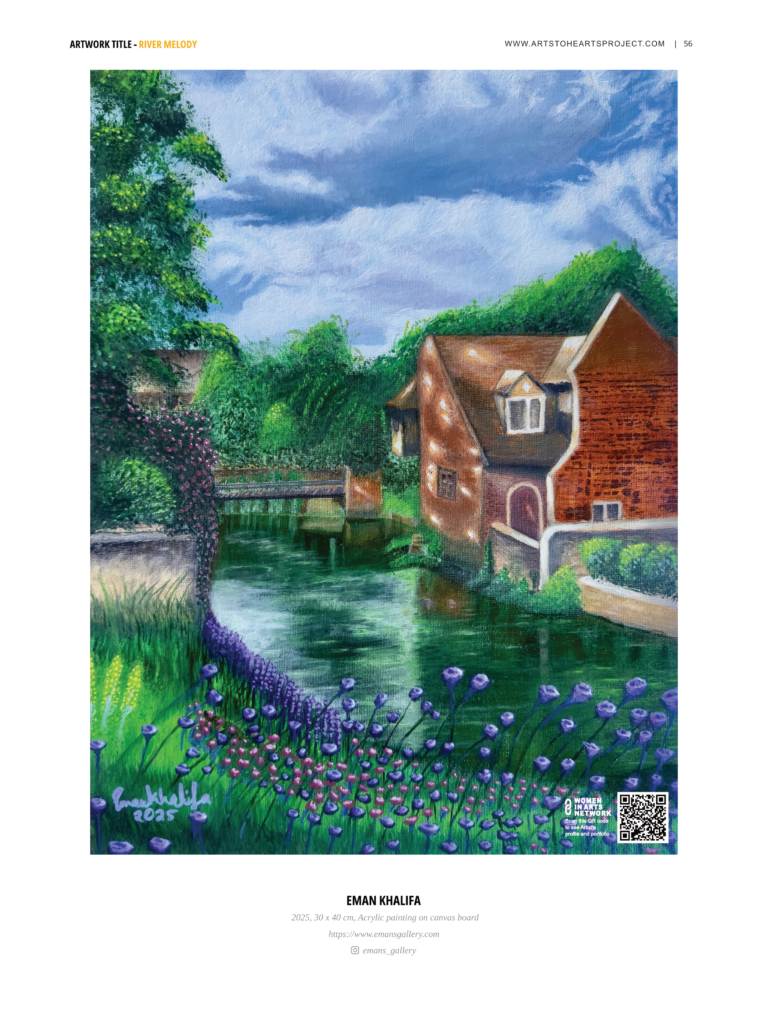
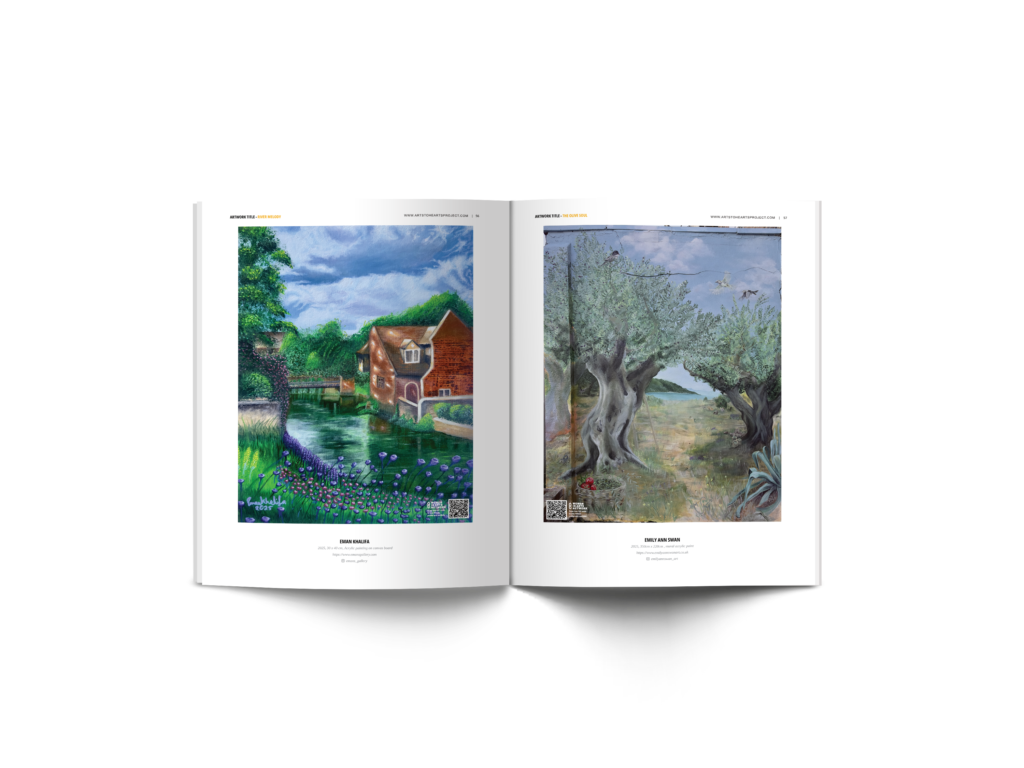
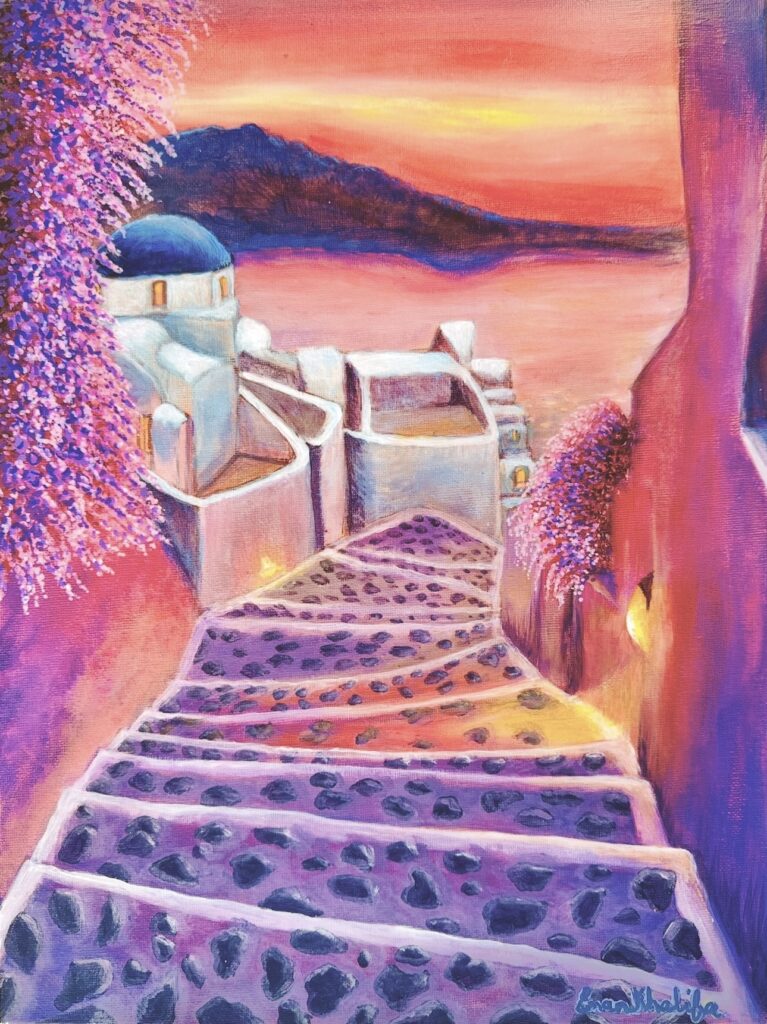
Her landscapes are not locations. They are states of being. Warmth, stillness, safety, the feeling of being held, the feeling of softly letting go. She paints the way a place sits inside your body after you have left it.
And she constructs her paintings with the ear of a musician. Where does the intensity build. Where does it quiet down. Where does the eye need to rest. Everything is considered but nothing feels rigid.
Now, let’s hear from Eman about how three continents shaped one artistic voice, what corporate life taught her about composition, why her landscapes are emotions not places, and the moment she finally allowed herself to say I am an artist.
Q1. Could you share your background, where you grew up, and how your multicultural upbringing between Egypt, the U.S., and the UK informed your early connection to art?
I was born in Kuwait and raised between Egypt and the United States, and later settled in the UK, where I’ve lived for over fifteen years. Moving between cultures from an early age shaped how I see the world — not as a single fixed narrative, but as layered, shifting, and often contradictory. Egypt gave me a deep visual memory: color, ornament, history, and symbolism are part of everyday life there. The U.S. introduced openness, experimentation, and permission to explore individuality. The UK added restraint, structure, and an appreciation for nuance. Art became a way of making sense of these crossings. Even before I understood it consciously, drawing and painting were places where multiple identities could coexist without needing to be resolved. That sense of plurality still underpins my work today.
Q2. How did your experience in corporate leadership and global business shape the way you approach creativity, composition, and decision-making in the studio?
My years in corporate leadership taught me clarity, decisiveness, and accountability — skills that quietly transferred into my studio practice. I’m comfortable making strong compositional choices, committing to them, and standing by the result. Business also trained me to think systemically: how parts relate to a whole, how tension and balance operate, and when to refine versus when to let something breathe. At the same time, painting became a counterbalance to that world. Where business demanded control, the studio allows intuition. The dialogue between structure and freedom — between intention and surrender — is something I actively cultivate in my work.
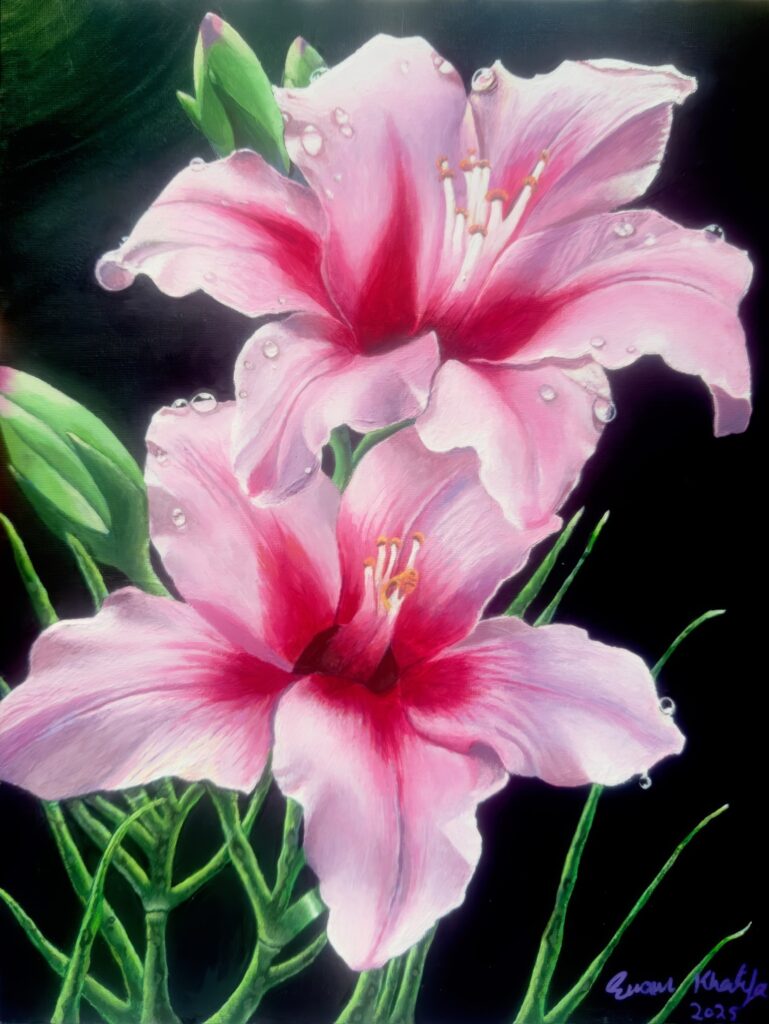
Q3. Your work spans expressiveness, geometry, landscapes, still life, florals, and abstract collections. How do you navigate between such varied visual languages, and what common thread unites them?
I don’t experience these modes as separate. They are different dialects of the same emotional language. Whether I’m working with geometry, a landscape, or an abstract composition, I’m responding to states of being — tension, stillness, fragmentation, longing, or calm. The common thread is rhythm and emotional resonance. I’m less interested in depicting a subject than in capturing how it feels to encounter it. Movement, spatial dialogue, and the balance between control and release appear across all my collections, regardless of style.
Q4. Many artists experience a kind of threshold when they shift from hobbyist to professional practice. What internal dialogue did you encounter as you made that transition?
The shift was less about confidence and more about permission. I had to confront the idea that taking my art seriously didn’t require external validation first. There was an internal negotiation between responsibility and desire — between the life I had built and the voice that kept asking to be listened to. Crossing that threshold meant accepting uncertainty as part of the work, rather than a sign I was doing something wrong. Once I allowed myself to claim the title of artist, the work deepened.
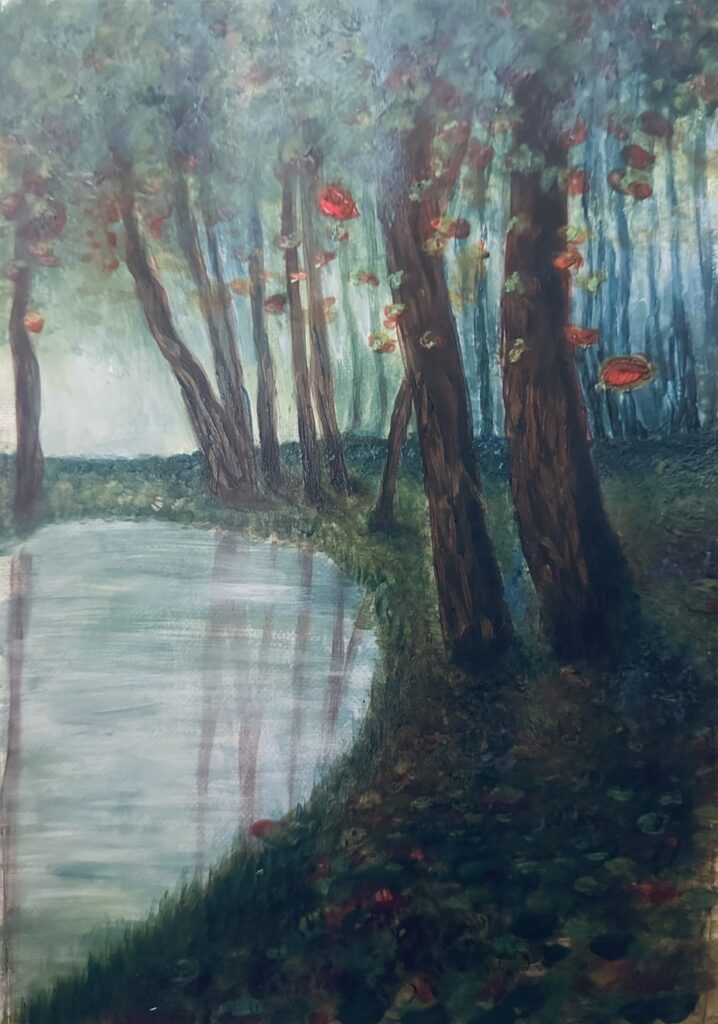
Q5. You’ve mentioned uncertainty and fear of creating art in public settings. How do vulnerability and risk enter into your work, both in the studio and in live settings?
I should gently correct one thing — I don’t actually experience fear in public or live settings. If anything, I find them energising. Working in front of others sharpens my focus and pulls me fully into the present moment. Where vulnerability does enter is not in being seen, but in allowing a piece to unfold without over-controlling it. The real risk for me lies in trusting the process — resisting the urge to resolve things too quickly and staying with uncertainty long enough for something more honest to emerge. Whether in the studio or in a live environment, that willingness to let the work lead rather than impose an outcome is where vulnerability truly lives for me.
Q6. With landscapes and seascapes featured in your collections, what role does nature play in your work — as subject, metaphor, or emotional anchor?
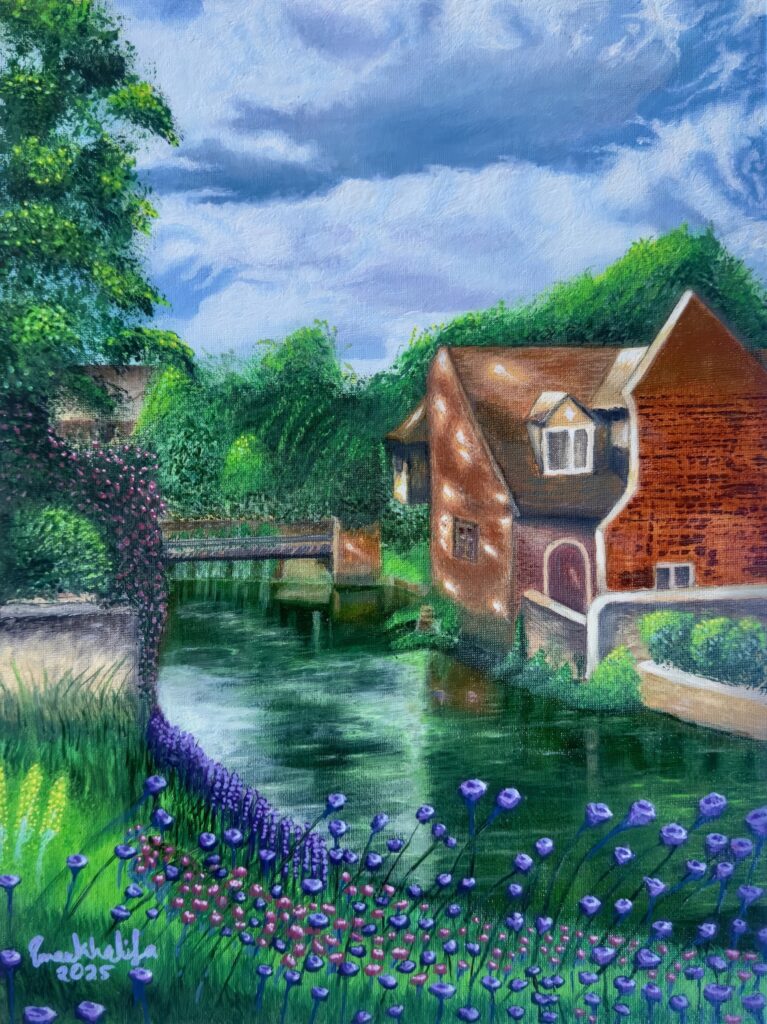
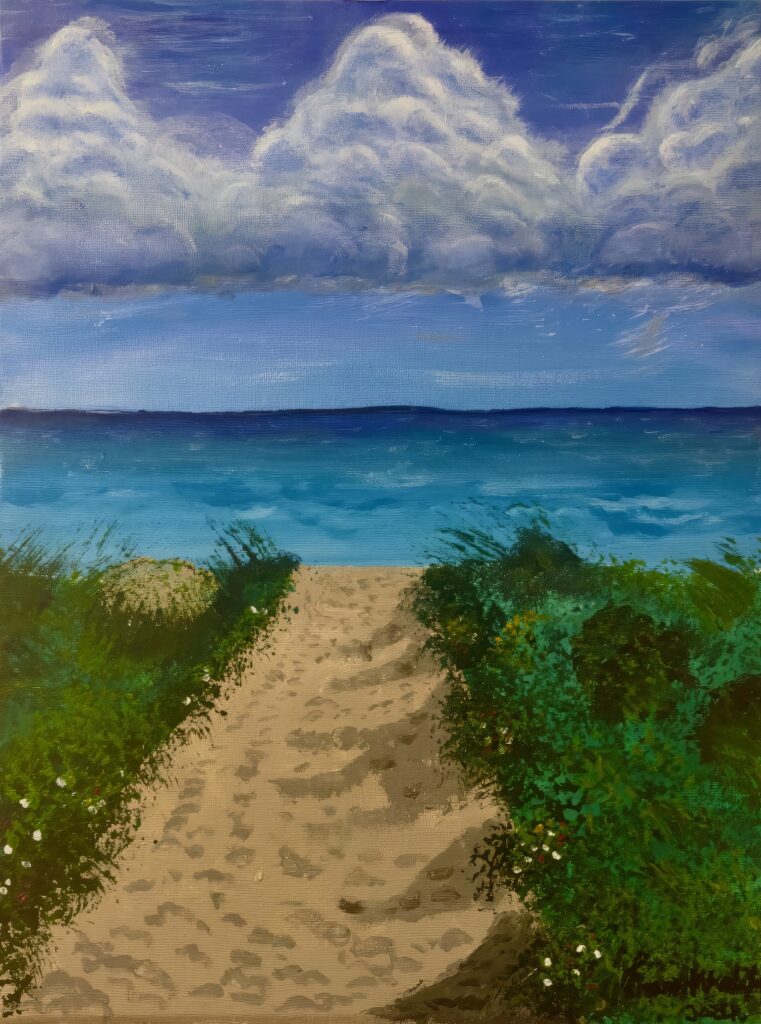
Nature in my work often functions less as a place and more as an emotional condition. Landscapes and seascapes give me a vocabulary for states that are difficult to articulate directly — safety, surrender, rest, and sometimes quiet vulnerability. In recent works like Warm Embrace and Before I Sleep, nature becomes an intimate presence rather than a grand one. These pieces are less about distance or horizon and more about closeness — the feeling of being held, or of gently letting go at the edge of rest. The environment acts as an emotional container, offering reassurance rather than drama. Across my work, nature serves as an anchor — a space where intensity softens and where emotion can settle without needing explanation.
Q7. In creating art that’s meant to be felt and experienced, how do you think about pacing, rhythm, and spatial dialogue within a composition?
I think about a painting the way one might think about music. There are moments of intensity and moments of rest, areas that pull the eye forward and others that allow it to pause. Negative space is as important to me as gesture or color. I’m attentive to how the viewer moves through the work — where the eye enters, where it lingers, and where it exits. That journey matters as much as the final image.
Q8. How do you respond to the emotional or interpretive responses people share with you? Do public interpretations ever surprise or enrich your understanding of your own work?
They often do. I don’t see interpretation as something to be corrected. When someone sees something I hadn’t consciously intended, it expands the life of the work rather than diminishes it. Once a painting leaves the studio, it no longer belongs solely to me. The emotional responses people share — sometimes deeply personal — reaffirm why I make art in the first place.
Q9. What are you exploring now? Are there new themes, concepts, or visual experiments that excite you as you look ahead?
I’m currently exploring the space where control meets release, particularly through fluid art processes that allow movement, gravity, and chance to play an active role in shaping the work. This approach has opened new ways of thinking about flow, disruption, and emotional residue — how feeling travels across a surface rather than settling into fixed form. Conceptually, I’m interested in memory and transformation — how experiences leave traces that can’t always be contained within structured composition. Fluid techniques allow me to work with uncertainty in a very direct way, while still engaging with intention through color, pacing, and scale. Looking ahead, I’m excited by the dialogue between fluid abstraction and more resolved forms — letting each inform the other rather than exist as separate practices.
Q10. What advice would you give to emerging artists who want to explore authenticity, depth, and human insight in their work without losing the joy of creative play?
Protect curiosity. Skill matters, discipline matters, but play is what keeps the work alive. Don’t rush to define yourself too narrowly, and don’t wait for permission to take your work seriously. Authenticity isn’t found by trying to be original — it emerges when you stay present, attentive, and honest with what moves you.
As our conversation with Eman came to a close, we found ourselves thinking about permission. Not the kind someone gives you. The kind you give yourself.
Because that is really what Eman’s story comes down to. Not talent. Not training. Not the right opportunity at the right time. Permission. The moment she stopped asking whether she was allowed to be an artist and just became one. Everything before that was preparation. Everything after it was depth.
And we think that is the thing most people get stuck on. Not the making. The allowing. We wait for someone to tell us we are ready. We wait for the gallery, the feature, the sale, the comment from someone we respect. We build entire internal cases for why it is not the right time yet. And meanwhile the work sits inside us getting heavier and louder and more urgent until we either say yes to it or spend the rest of our lives wondering what would have happened if we had.
Eman said yes. And her work got deeper. Not louder. Deeper. The other thing we are carrying from this conversation is about contradiction. About holding multiple things at once without forcing them to agree. Because the world keeps telling us to simplify. Pick a lane. Find your niche. Be one thing and be it clearly.
But some of the most powerful work we have ever seen comes from people who refused to do that. Who said no, I am all of these things, and my art will hold all of it. That takes courage. And it takes trust that the viewer will meet you in that complexity instead of being confused by it.
We think the world needs more art that trusts people like that. More paintings that do not hand you a single emotion on a plate but ask you to sit with something layered and nuanced and unresolved. More artists who are willing to leave space in the work for the viewer to bring their own story into it.
So if you have been holding back because your path does not look like anyone else’s, let that go. If you feel like you contain too many things to fit neatly into one artistic identity, good. And if you are still waiting for permission, here it is. Not from us. From you. You already know.
Follow Eman Khalifa through the links below and see what happens when someone stops waiting and starts making.