


Edvard Munch and His World of Disturbed Paintings
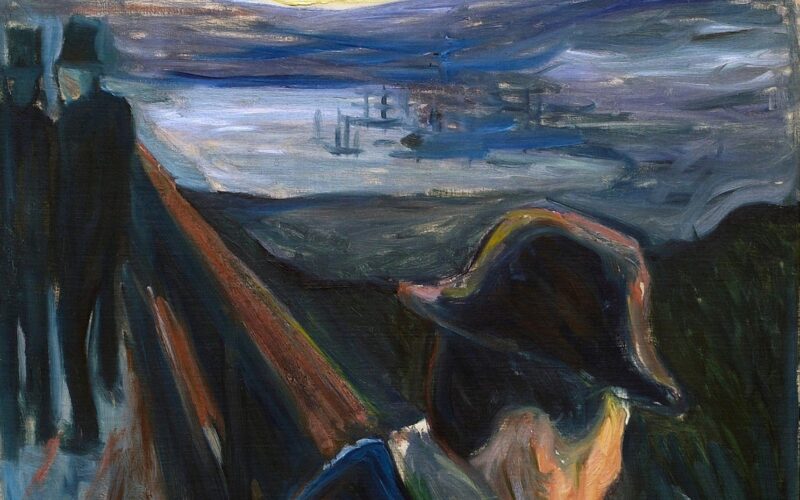
There are paintings you admire, and then there are paintings that seem to understand you before you fully understand yourself. The art of Edvard Munch belongs to the second category. More than a century after they were created, his images still feel strangely alive, not because they depict dramatic events, but because they capture emotional states with unsettling precision. Fear, loneliness, grief, panic, exhaustion: in Munch’s world, these feelings do not stay hidden inside the mind. They spread outward into skies, streets, and bodies until reality itself begins to feel unstable. It is this emotional intensity that continues to define Edvard Munch and his world of disturbed paintings.
Today, The Scream is often reduced to a cultural symbol of anxiety, endlessly reproduced across posters, memes, and popular culture. But Munch’s achievement was far greater than creating a single iconic image. Across decades of painting, he developed an entirely new visual language for psychological distress, one where color vibrates with panic, crowds feel emotionally vacant, and even silence appears restless. His paintings do not simply show suffering; they recreate the physical sensation of living through it.
Long before modern psychology developed language for trauma, dissociation, or emotional alienation, Munch was already painting these experiences with startling clarity. He understood that anxiety changes perception itself, the way the body experiences light, space, memory, and human connection. That insight transformed not only his art, but the future of modern painting.
To look at Munch today is to encounter an artist who painted emotion not as metaphor, but as environment. His figures do not merely inhabit the world around them. They seem overwhelmed by it.
The Sky Was Never Meant to Feel This Loud
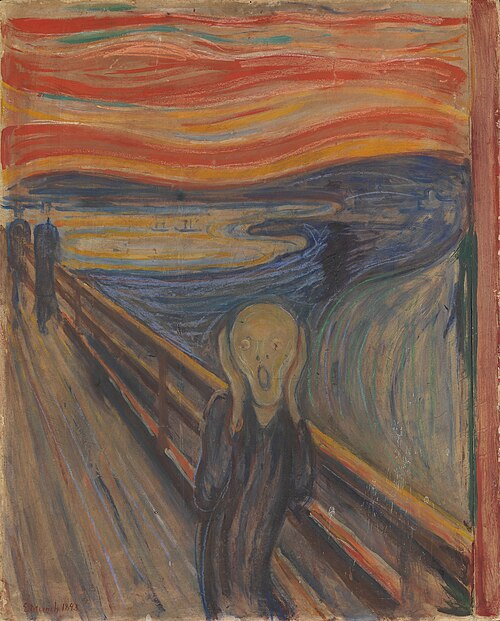
Before Edvard Munch painted faces, he painted atmospheres. Long before The Scream became one of the most recognizable images in art history, there was already something deeply unsettled in his world, skies that ripple instead of resting, streets that tilt under emotional pressure, and colors that seem less observed than felt. Nothing in a Munch painting simply exists. Everything trembles.
What makes his work feel so disturbingly modern is that he was never interested in painting reality as stable. He painted perception under strain. In Munch’s hands, the world bends according to emotion. A sunset becomes suffocating. A crowd becomes threatening. A room becomes spiritually airless. His paintings do not describe anxiety from the outside; they place the viewer inside its weather.
That is why standing before a Munch painting can feel less like looking at art and more like overhearing someone’s nervous system. The unease arrives before interpretation does. Even viewers unfamiliar with his life instinctively recognize the sensation: the exhaustion in hollowed faces, the strange loneliness inside crowded scenes, the feeling that the world itself has slipped slightly off balance.
Munch understood something radical for his time, that emotions are not invisible. Fear changes the shape of space. Grief alters the body’s relationship to light. Anxiety distorts how the eye receives the world. His paintings carry this distortion everywhere. The sky swirls too loudly. The shadows feel conscious. Even silence appears unstable.
He did not paint people standing inside landscapes. He painted landscapes infected by human feeling.
He Painted Feelings Before Psychology Could Name Them
By the time psychology began formally studying anxiety, trauma, and emotional instability, Edvard Munch had already spent decades painting them. Not as medical conditions, but as lived sensations, raw, physical, and impossible to separate from the body itself.
This is what makes his work feel strangely ahead of its time. Munch did not approach emotion symbolically in the way many nineteenth-century painters did. Sadness in his paintings is not represented through theatrical gestures or dramatic storytelling. Instead, emotion leaks into everything: the texture of walls, the heaviness of color, the unnatural stillness of a figure sitting alone beside water. His paintings feel psychological because they behave psychologically.
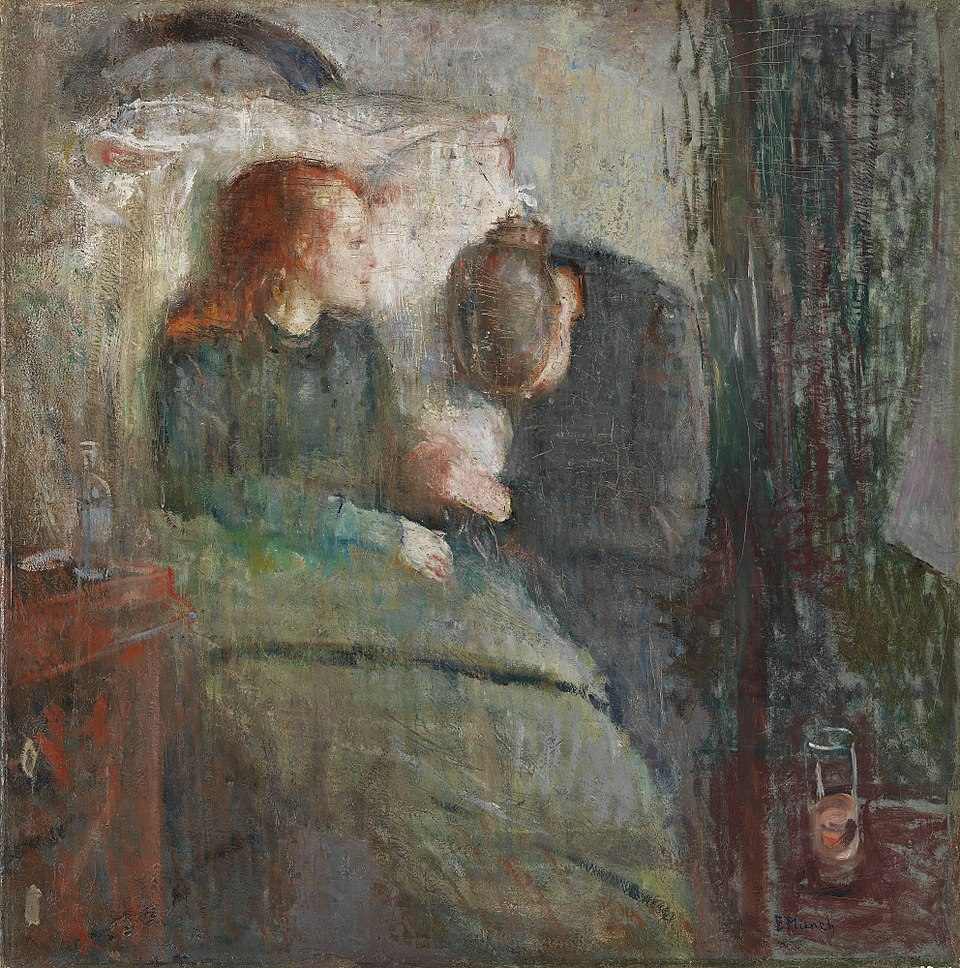
In works like The Sick Child, grief does not appear as a single moment. It lingers like a fever. The paint itself seems exhausted, scraped, blurred, almost wounded. In Despair, the landscape bends under invisible emotional pressure, as though the environment can no longer contain the weight of human feeling. Even when his subjects are still, nothing feels calm.
Munch understood that fear is rarely dramatic while it is being lived. Often, it is quiet. Repetitive. Claustrophobic. It settles into rooms, relationships, and routines until reality itself begins to feel distorted. His figures stare outward but seem trapped inward, unable to fully reconnect with the world around them.
Decades later, psychologists would develop language for dissociation, emotional projection, panic, and trauma memory. Munch painted all of it before those terms became part of modern understanding. His genius was not that he illustrated emotion. It was that he understood how emotion alters perception itself.
Nothing in His World Stays Still
In a painting by Edvard Munch, stability is almost impossible to find. Streets lean forward like they are collapsing under invisible pressure. Horizons twist. Faces blur into pale masks. Even the air appears restless. Looking at his work, one begins to realize that the discomfort does not come only from the subjects themselves, it comes from the way the entire world seems emotionally destabilized around them.
This was one of Munch’s most radical departures from traditional painting. He refused to treat emotion as something contained inside the human figure. Instead, emotion spreads outward into color, movement, and space. A bridge no longer behaves like architecture; it vibrates with panic. Water does not reflect calmly; it pulses. The sky in The Scream famously twists into violent ribbons of orange and red, as though nature itself has become overwhelmed.
The effect is deeply physical. His paintings create tension not through narrative drama but through visual instability. The eye is never allowed to settle comfortably. Lines pull the viewer inward too quickly. Colors clash instead of harmonizing. Figures often appear trapped between dissolving into the background and emerging from it. In works like Evening on Karl Johan, crowds move toward the viewer with a ghostly sameness, their faces drained of individuality, turning the ordinary act of walking down a street into something quietly terrifying.
What makes this visual language so powerful is that it mirrors the mechanics of anxiety itself. Fear rarely arrives as a single image; it alters how everything around us feels. Space becomes oppressive. Light sharpens unnaturally. Crowds feel hostile. Familiar places lose their safety. Munch understood this instinctively. He painted not just emotional suffering, but the terrifying moment when reality begins to absorb it.
Even Crowds Feel Lonely in a Munch Painting
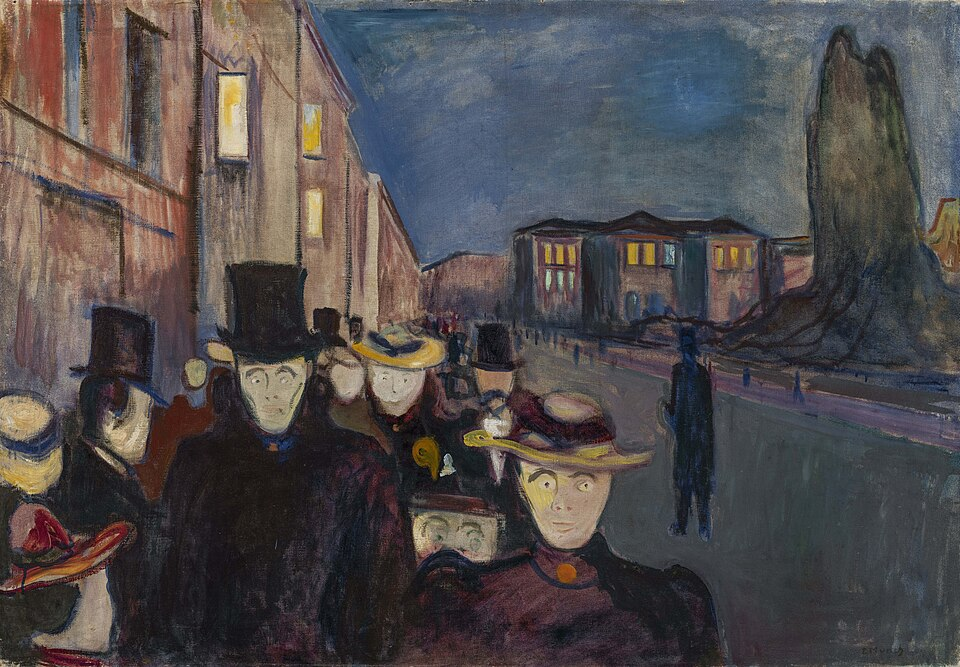
Loneliness in Edvard Munch’s work is rarely represented through isolation alone. More often, it appears in rooms filled with people, on crowded streets, or between figures standing painfully close to one another. His paintings understand a particular kind of emotional distance, the feeling of being psychologically unreachable even while surrounded by others.
In Evening on Karl Johan, one of his most unsettling urban scenes, a crowd moves directly toward the viewer beneath the darkening sky. Their faces are pale and hollow, almost corpse-like, stripped of warmth or individuality. No one appears connected to anyone else. The street is full, yet emotionally vacant. What should feel social instead feels claustrophobic, as though the city itself has become incapable of intimacy.
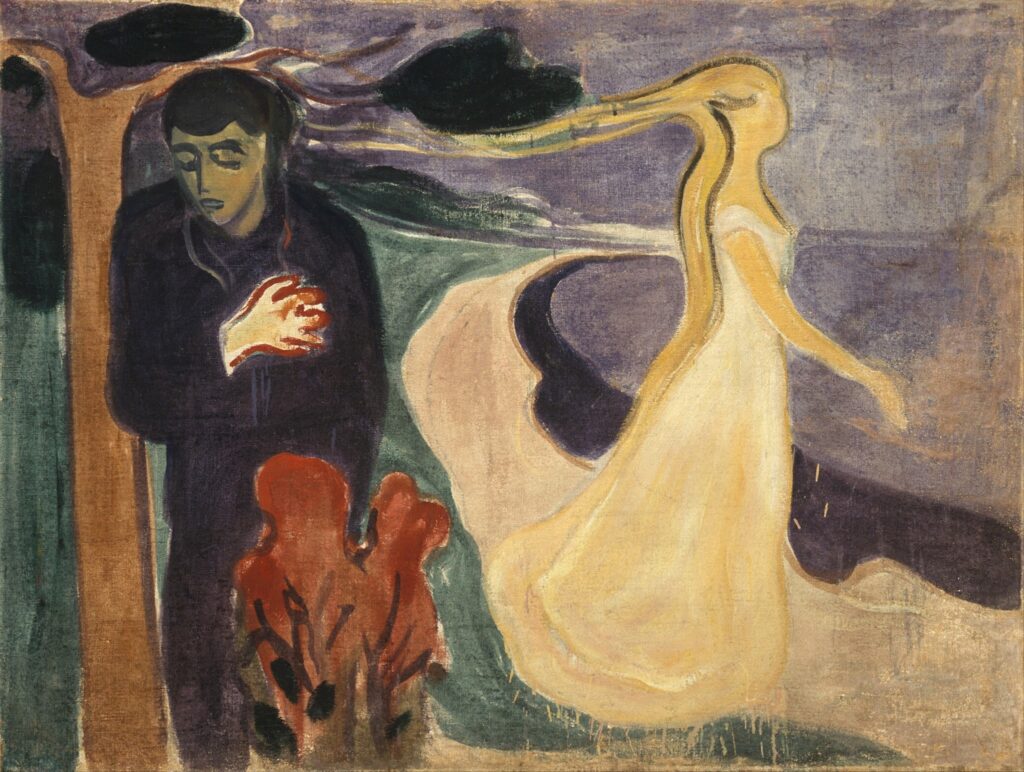
Munch repeatedly returned to this emotional contradiction throughout his work. Couples stand together while appearing spiritually separated. Families occupy the same room but seem locked inside private grief. Even his friendships and romances often enter the canvas carrying tension, silence, or psychological fatigue. Human closeness in Munch’s world is fragile, constantly threatened by misunderstanding, jealousy, illness, or emotional withdrawal.
Part of what makes these paintings so haunting today is how familiar this loneliness feels. Modern life has created endless forms of connection, yet emotional alienation remains deeply intact. Munch seemed to understand that loneliness is not always the absence of people. Sometimes it emerges from the inability to fully reach another person, or to feel fully visible oneself.
That is why his crowds feel uncanny. His figures do not merely walk beside one another; they drift past each other like separate emotional worlds, briefly sharing the same physical space without ever truly meeting.
Grief Kept Returning to the Canvas
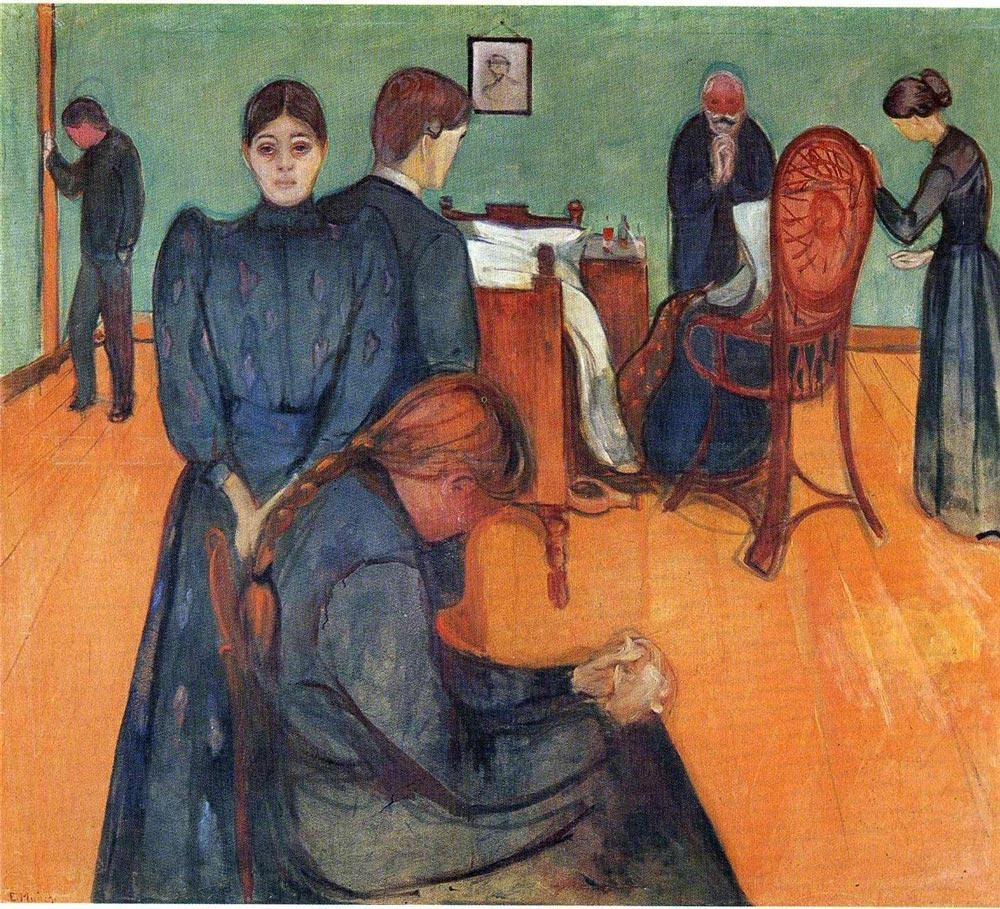
Few artists returned to grief as obsessively as Edvard Munch did. Throughout his life, he repainted illness, deathbeds, mourning figures, and fading faces over and over again, as though memory itself refused to stay buried. His paintings do not treat grief as an event that passes. They treat it as something that settles permanently into the body and quietly reshapes a life from within.
At the center of this emotional landscape stands The Sick Child, the work Munch himself considered a turning point. Inspired by the death of his sister Sophie from tuberculosis, the painting feels less like a scene being documented than a memory struggling to hold itself together. The brushstrokes appear scraped and fragile. Faces dissolve into light. The room itself seems exhausted by sorrow. Rather than painting precise details, Munch paints emotional residue, the way grief blurs perception long after the moment has passed.
What shocked audiences at the time was precisely what now makes the painting feel revolutionary. It looked unfinished, unstable, emotionally raw. Munch abandoned polished realism in favor of sensation, allowing the surface of the canvas to carry the instability of memory itself. The result feels startlingly intimate, as though the painting is remembering alongside him.
Again and again, Munch revisited the same emotional wounds because repetition was central to how he understood suffering. Trauma does not move neatly forward. It circles back. It interrupts the present. It reappears unexpectedly inside ordinary moments. His paintings embody this repetition with painful honesty.
Looking across his work, one senses that Munch was not trying to escape grief through painting. He was trying to survive inside it.
A Century Later, We Still Recognize the Feeling

More than a century later, Edvard Munch’s paintings still feel uncomfortably current. Not because the world looks the same as it did in the late nineteenth century, but because the emotional conditions he painted have never disappeared. Exhaustion, overstimulation, alienation, emotional dread, these sensations continue to shape modern life with startling intensity. Looking at Munch today can feel less like entering history and more like confronting a mirror.
Part of this enduring relevance comes from the fact that Munch painted internal states that remain deeply recognizable. The emotional fatigue visible in his figures feels familiar in an age defined by constant noise and psychological overload. His crowded streets resemble the strange loneliness of modern urban life. His distorted spaces echo the instability many people experience under stress, grief, or anxiety. Even his silence feels contemporary, heavy, suspended, emotionally charged.
Unlike many artists associated with symbolism or expressionism, Munch rarely offers emotional resolution. His paintings do not comfort the viewer or restore balance. Instead, they linger in uncertainty. Faces remain unreadable. Relationships feel fragile. Fear hangs in the atmosphere without fully explaining itself. This refusal to simplify emotion is precisely what makes the work feel so modern. Human psychology, Munch understood, is rarely neat or coherent.
Today, images move past us faster than ever, yet very few hold emotional attention the way Munch’s paintings do. They remain powerful because they are not merely seen; they are felt physically. The viewer absorbs them almost instinctively, before language fully catches up.
That is why his work continues to endure across generations. Munch did not simply paint sorrow or fear. He painted the uneasy texture of being emotionally alive in the world.
After Munch, Painting Could Never Fully Return to Calm
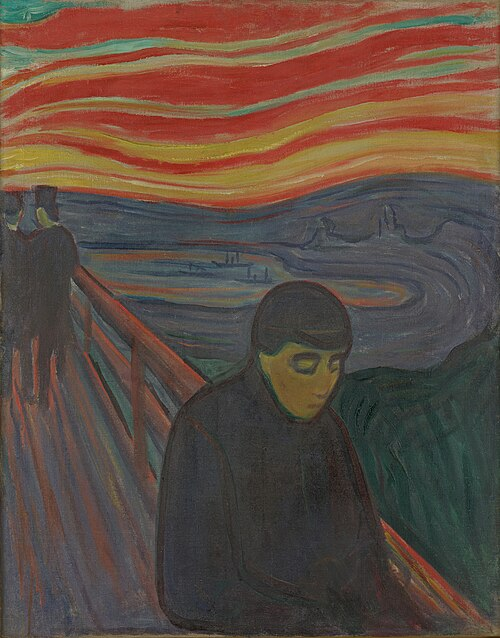
What Edvard Munch changed was not simply the subject matter of painting, but its emotional logic. Before Munch, Western art largely treated reality as something stable and observable, even when depicting tragedy or despair. Emotion existed inside the image, but the world around it remained intact. Munch shattered that separation. In his paintings, emotion invades everything.
After him, artists no longer needed to paint the world realistically in order for it to feel true.
This shift would become foundational to modern art. The emotional distortion later associated with Expressionism, the fractured spaces, violent color, psychological intensity, and unstable forms, already exists inside Munch’s work decades earlier. He transformed painting from a window into reality into something far more internal: a record of perception itself.
You can see this influence everywhere across twentieth-century art. The idea that a painting could communicate panic through color, loneliness through empty space, or emotional exhaustion through the physical handling of paint owes an enormous debt to Munch. His work opened the possibility that subjective experience could become the central truth of an artwork.
What makes this achievement remarkable is that Munch never painted abstraction for its own sake. Even at his most distorted, the human presence remains painfully visible. Faces stare back at us. Bodies slump under invisible emotional weight. Rooms still resemble rooms, streets still resemble streets, but they feel psychologically altered, as though reality itself has absorbed human suffering.
That is why Munch still feels so contemporary within modern visual culture. He helped create a language artists continue to use today: a language where emotion does not decorate the image, but transforms its entire world.
His Paintings Don’t Explain Anxiety. They Recreate It.
What makes Edvard Munch so enduring is not simply that he painted suffering, but that he understood suffering as an atmosphere, something that changes the texture of existence itself. His paintings do not stand at a safe distance from emotion. They pull the viewer directly into its instability.
This is why his work continues to feel so psychologically immediate. Many artists depict fear or grief as moments that can be observed from the outside. Munch approached them differently. In paintings like The Scream and Anxiety, anxiety is not illustrated as a subject inside the frame, it becomes the structure of the frame itself. The lines vibrate. The colors pulse with unease. Human figures seem trapped between dissolving and enduring. Even the surrounding landscape appears emotionally contaminated.
What viewers recognize in these paintings is not only sadness, but the frightening physicality of emotional distress. The tightening of perception. The sensation that the world has become too loud, too sharp, too emotionally charged. Munch transforms private feeling into visual experience so completely that the viewer no longer watches anxiety from afar; they inhabit it.
That may be why his work has never faded into history. Every generation finds itself inside these paintings again. Not because human beings continue to suffer in the same ways, but because the emotional confusion of being alive remains impossible to outgrow. Munch understood that fear, grief, loneliness, and longing are not interruptions to life. They are part of its texture.
His paintings endure because they do not offer escape from anxiety. They offer recognition.

Near the end of his life, Edvard Munch once wrote, “Without anxiety and illness, I am a ship without a rudder.” It was not a romantic statement about suffering, nor a performance of artistic torment. If anything, it reveals how deeply he believed emotion shaped perception, how fear, grief, desire, loneliness, and memory became inseparable from the way he experienced the world itself.
That belief changed painting forever.
Before Munch, emotion in art was often narrated through gesture, mythology, religion, or symbolism. After Munch, emotion could distort reality itself. A landscape could panic. A room could mourn. A face could dissolve under psychological pressure. He opened the door to an entirely different visual language, one where inner life became more important than outward accuracy.
And perhaps that is why his work still feels so alive today. Not because viewers necessarily know his biography, or understand the history of expressionism, but because the emotional truths inside his paintings remain painfully recognizable. We still know what it means for the world to suddenly feel unfamiliar. We still understand exhaustion that cannot easily be explained. We still recognize the strange loneliness that can exist even in crowded spaces.
Munch painted these feelings with unsettling honesty long before modern culture developed the vocabulary to describe them. His paintings do not solve emotional suffering, soften it, or turn it into beauty for comfort’s sake.
They simply refuse to look away from it.
Which emotion do you feel most strongly in Munch’s work?
If you enjoy exploring the emotional and psychological worlds behind great artists, you may also like these art books to read this summer.