
Is A Curator The Silent Author Of The Art World? I Marcelle Joseph

👁 54 Views
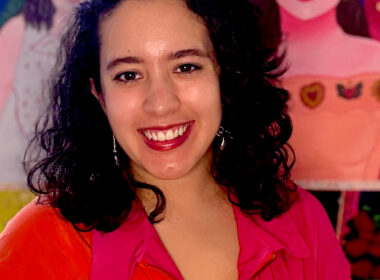
Art has the power to connect, challenge, and inspire and at Arts to Hearts Project, we highlight those who curate these transformative experiences. This week, for our Best of Art World series, we had the privilege of interviewing Marcelle Joseph, a visionary curator known for her thought-provoking exhibitions and bold approach to storytelling through contemporary art. Marcelle’s curatorial practice centres on creating spaces where underrepresented voices are amplified and fresh perspectives come to the forefront.

With a background that bridges cultures and disciplines, she has established herself as a champion of emerging artists, bringing together dynamic works that speak to today’s social, cultural, and political realities. Her exhibitions often blur boundaries between art and life, encouraging audiences to not only view but deeply engage with the work and its context. Each show she curates is a carefully woven narrative that reflects her commitment to inclusivity, innovation, and critical dialogue in the art world.
Step into Marcelle Joseph’s world in this interview and discover how her vision continues to shape conversations within contemporary art.
Q1. You started your career as a lawyer in New York. Was there a specific moment that drew you towards art curation and choosing it as your career path?
I grew up in a small rural town in upstate New York so I was surrounded more by nature than culture as a child. My first introduction to art and art history was at university. While at Cornell University, I took one art history class and fell in love with that period of experimentation and creativity in the 1960’s in New York – Pop Art. In particular, I was fascinated by Robert Rauschenberg’s Combines, works in which he affixed cast-off items, such as tires or old furniture, to a traditional support. Bed (1955) was my favourite, and I always remember that tingling sensation I felt when I first laid eyes on this work at the MoMA after studying it at university. The idea of painting on your own worn-out pillow, sheet and quilt as a self-portrait of sorts excited me. As Rauschenberg said about this work, ‘Painting relates to both art and life…I try to act in that gap between the two’. I went on to take about five other art history courses while at Cornell, acquiring an unofficial minor in the subject.

After finishing university, law school at New York University and a diploma year at Oxford, I worked as a corporate lawyer in New York and London for the firm Davis Polk & Wardwell for over a decade. At the tail end of my legal career, I started to get involved as a patron at the Royal Academy of Arts and visit London galleries and museums. Feeling burnt out, I finally left the law and began to search for a profession that I was more passionate about. I went back to school for a year in 2010, finishing a degree course in Art Business at Christie’s Education in London before later embarking on a Masters in Art History at Birkbeck, University of London. In 2011, I started Marcelle Joseph Projects, a nomadic curatorial platform devoted to supporting early career artists and have never looked back. Work isn’t work for me anymore as I love what I do.
Q2. As an “activist collector”, how do you discover artists or artworks that resonate with your vision?
I call myself an “activist collector” as I largely collect the work of womxn and queer artists who explore the performativity of gender in their practices. I am also drawn to work where the artist’s hand is visible, so material-led practices are my go-to. Additionally, I care a lot about supporting artists at the point in their career when they need it the most, so I am predominantly buying the work of early career artists. This is enforced by setting a strict maximum financial amount per artwork so at a certain point in an artist’s career, I am priced out of their market. But what I’m most interested in achieving across all my activities – whether it be curating, collecting or patronage – is the representation and support of artists who have been marginalised by the patriarchal canon.
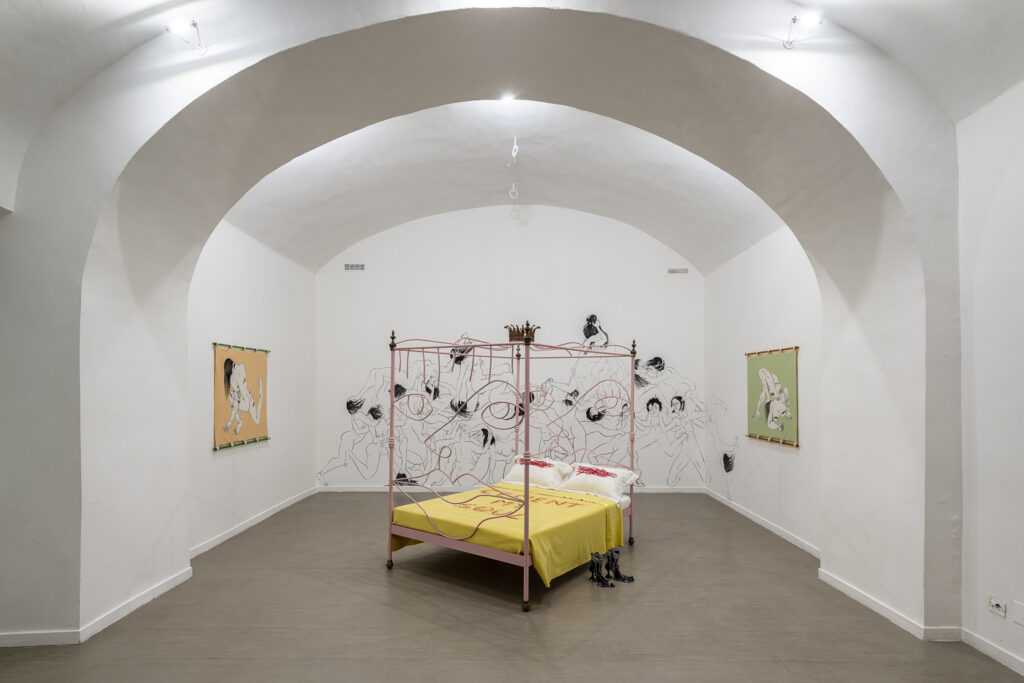
So, by limiting the playing field so to speak, I am able to focus on artists that fit within my collecting philosophy. I discover these artists by seeing a lot of art. Graduate degree shows and solo and group shows at small to mid-size commercial galleries are some of my favourite stomping grounds. The London galleries I frequent the most are Arcadia Missa, Hannah Barry Gallery, Cooke Latham, Copperfield, Brooke Benington, Niru Ratnam and Richard Saltoun. Exhibitions at smaller institutions like Mimosa House, Modern Art Oxford, Hepworth Wakefield and South London Gallery are excellent places to discover new artists too.
Q3. How do you strike a balance between showcasing the works of budding artists and established ones?
For me, creating an intergenerational dialogue in an exhibition is one of the most exciting things I can do as a curator. Art speaks across time and space. Unlike nationhood and the patriarchy, art has no fixed boundaries, borders or binaries. One of my favourite exhibitions I curated took place last year at a commercial gallery in London, where I restaged an earlier exhibition I did in 2014. Titled “Material Girls and their Muses”, it was a group exhibition featuring the work of five female-identifying sculptors with material-led practices alongside their chosen muses. So, for example, three of the artists in the show, Saelia Aparicio, Sacha Ingber and Cathy Pilkington, chose artists who are no longer with us – Ovartaci, Heidi Bucher and Marion Adnams, respectively. These cross-generational conversations were rich, allowing the viewer to time travel and perhaps to realise that history endlessly repeats itself, leaving artists of different generations to revisit similar concerns, both formally and otherwise. And in the earlier version of the exhibition, Turner Prize winning artist Jesse Darling turned the concept of the muse on its head and paid it forward, choosing a much younger artist as his muse (Andrea Crespo).

Q4. Artists have often referred to you as “a safe space” in their interviews. How do you navigate the emotional dimensions of curating when working closely with artists?
The word “curate” means “to look after items in a collection or exhibition” but I prefer to extend the meaning of that word to include taking care of the artists themselves. My modus operandi as a curator, collector, patron and residency provider is to support the predominantly early career female and queer artists in my network throughout their careers, not just when I am including their work in an exhibition or choosing them to take part in the GIRLPOWER Residency I co-founded in 2023. This support can take many forms from catch-up studio visits to platforming them on my social media channels or even inviting an artist to a meal in my home.

Q5. Do you think curators play a definite role in promoting inclusion and diversity in the art world? Please elaborate.
Absolutely. Curatorial choice can be driven by many things depending on the research interests or expertise of any given curator. For me, diversity and inclusion is built into my remit as a curator as I largely highlight the work of female-identifying and queer artists in the exhibitions I choose to curate. I also aim to include the work of artists from the Global Majority or the diaspora of the Global Majority as well as artists from different socio-economic backgrounds to better represent the world we live in and our collective humanity.

Q6. What advice would you offer to the emerging curators, based on the lessons you gained from your ‘DIY curating’ experience?
Don’t wait to be asked to curate a show! Find a free space and produce your own exhibition! But first, make sure you have a fully researched theme and have met all of the artists you are working with in the studio before you choose the work in the show. This DIY approach is such a good learning tool for young curators, teaching them all of the aspects of mounting an exhibition from logistics and insurance to marketing and installation.

As we wrap up our interview with Marcelle Joseph, we are struck by the passion, clarity, and innovation she brings to her curatorial work. Her ability to create meaningful spaces for artists and audiences alike highlights the profound role curators play in shaping cultural narratives. Marcelle’s journey reflects a dedication to fostering dialogue, supporting emerging talent, and pushing the boundaries of how art is experienced today.
Follow Marcelle Joseph’s curatorial journey and discover her upcoming projects as she continues to redefine the role of the curator in the evolving landscape of contemporary art.