
Cheryl Russell’s Abstract Paintings Reveal Hidden Stories of Identity
At Arts to Hearts Project, our Women Artists on the Rise is one of the publications we care about most deeply. It came from a belief that women artists deserve more than a moment of recognition.
They deserve a permanent record. A hardcover, collector-quality book that documents their work and their voices at a formative stage of their careers and ensures that record exists long after the news cycle moves on. This is our fourth edition, featuring one hundred women artists from around the world, selected through the Women Artist Award, working across painting, sculpture, photography, mixed media, ceramics, textile, and digital forms.
For this edition we made a conscious decision not to assign a theme. We wanted artists to arrive exactly as they are, bringing forward the work that feels most urgent and most honest to their practice. And what came back was extraordinary. Work exploring memory and identity, tenderness and resistance, belonging and displacement, joy and grief, imagination and inquiry.
Together these artists remind us that creative excellence does not look one particular way and that the only real theme of this edition is the courage to define your own voice and share it with the world.
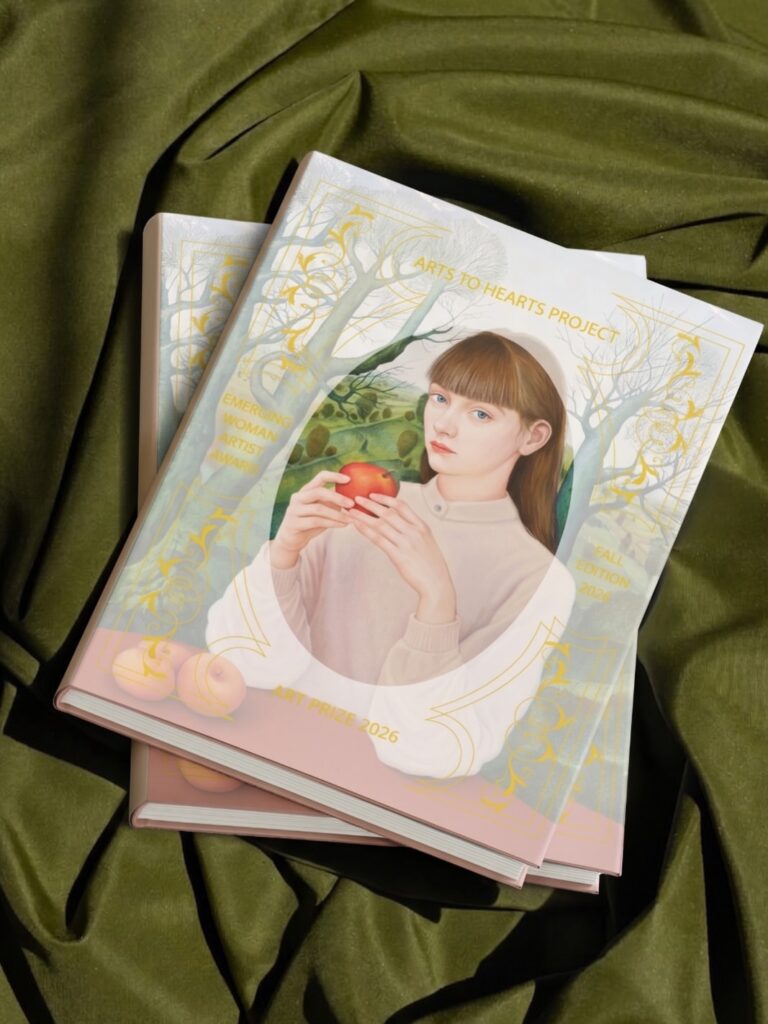
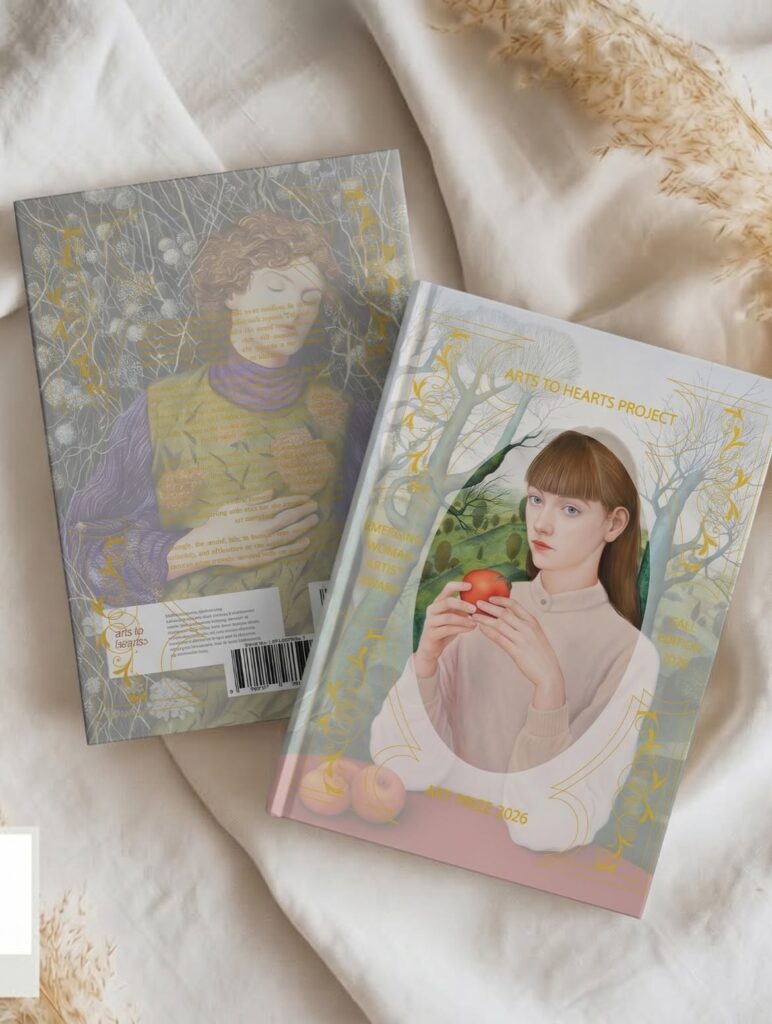
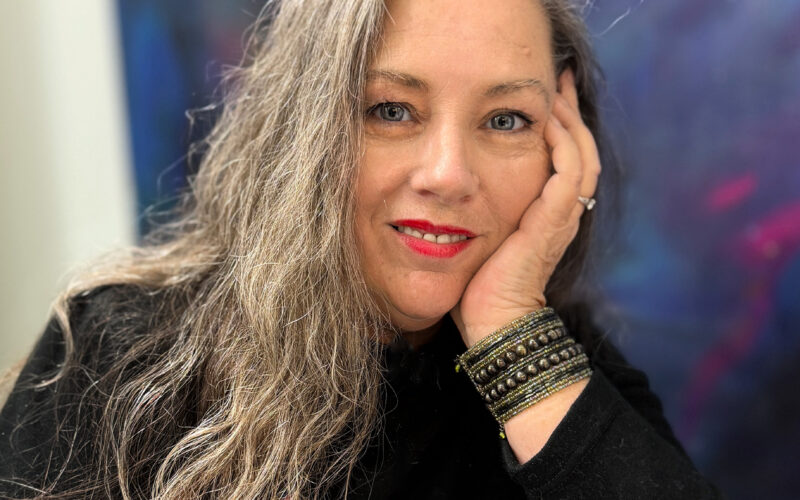
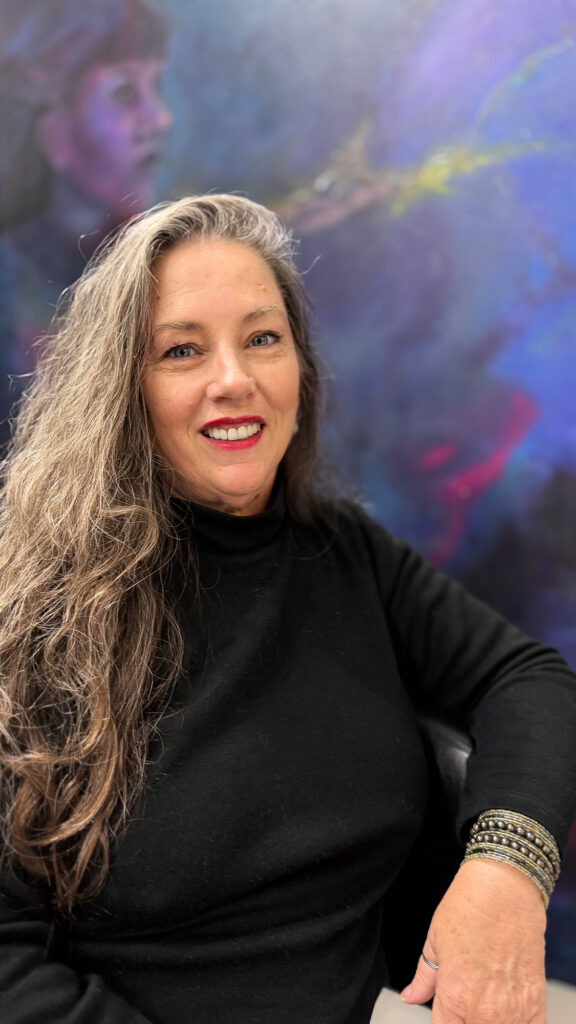
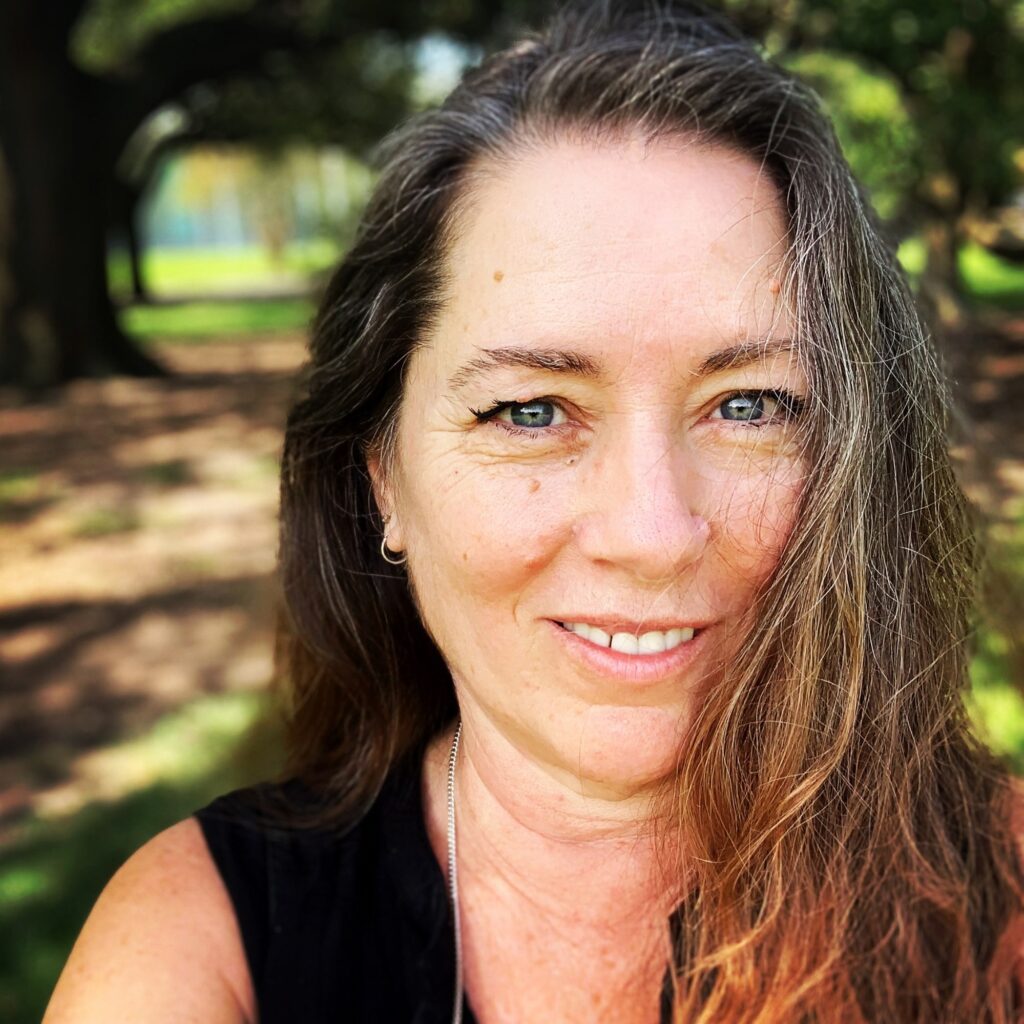
Among our selected artists, Cheryl Russell is someone whose work hit us with a force we were not expecting from abstract painting. Because Cheryl’s abstractions are not abstract in the way that word usually implies. They are deeply, specifically, personally charged with a lifetime of experience that she has been excavating through paint for years.
She is based in Houston, Texas, working out of Silver Street Studios at Sawyer Yards. She came to painting through photography and sculpture first, then printmaking, collage, drawing, and years of working as a web and graphic designer.
All of those disciplines live inside her painting practice now as instinct rather than technique. The compositional intelligence, the understanding of negative space, the obsessive attention to colour temperature, how warm colours push forward and cool colours recede, all of that was built across decades of working in different mediums before it landed on canvas.
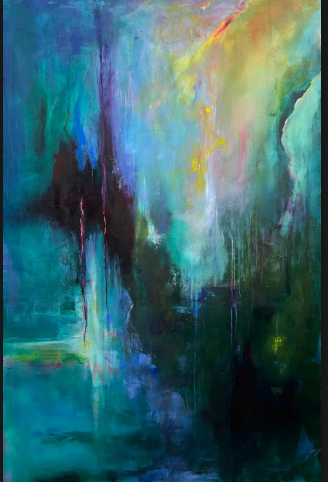
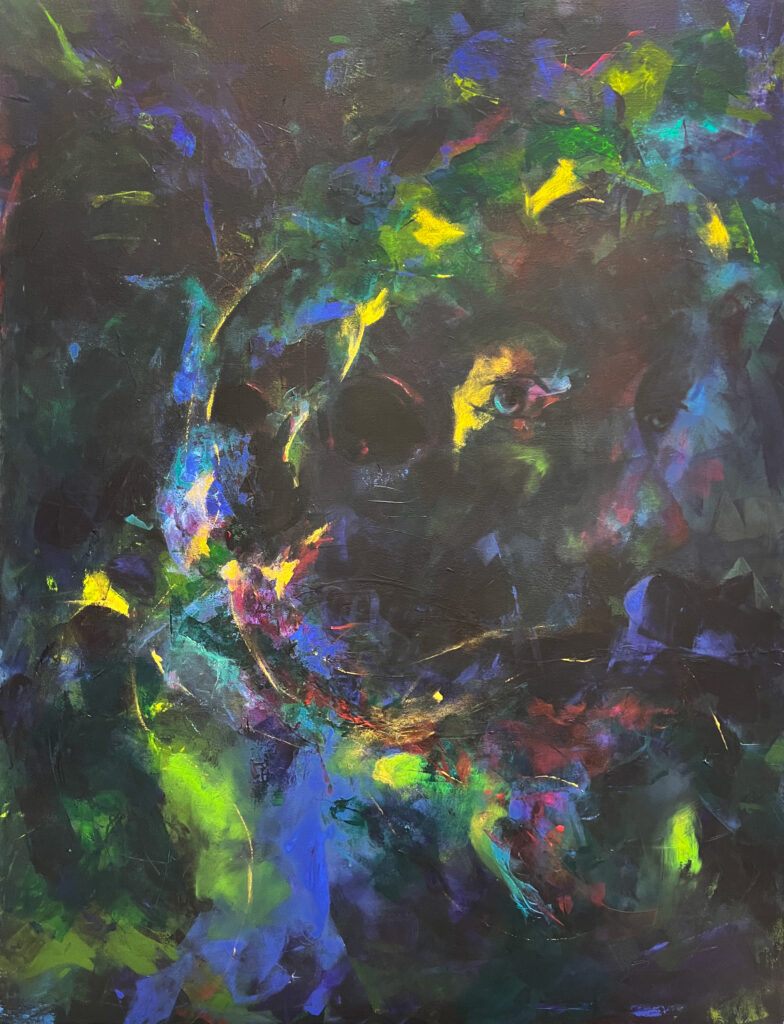
She paints in acrylic, large scale, building surfaces through a process that is more like excavation than construction. She lays down marks, buries them, scrapes them back, covers what does not feel true, and keeps going until something underneath reveals itself.
The paintings are physical and layered and carry the evidence of every decision that was made and unmade during the process. Nothing is neat. Everything is earned.
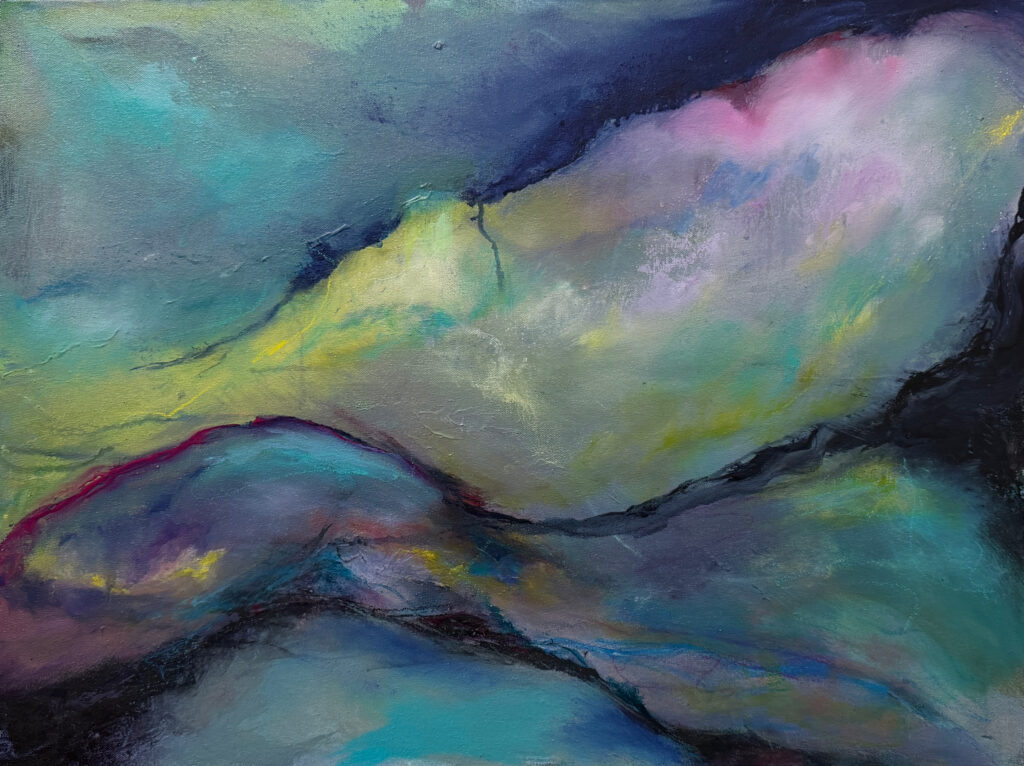
There are things hidden in her work. Bones, stars, silhouettes, constellations tucked into night skies that most people do not notice on the first look. That is deliberate. Cheryl wants you to stand close, let your eye adjust, and find something rather than have it handed to you.
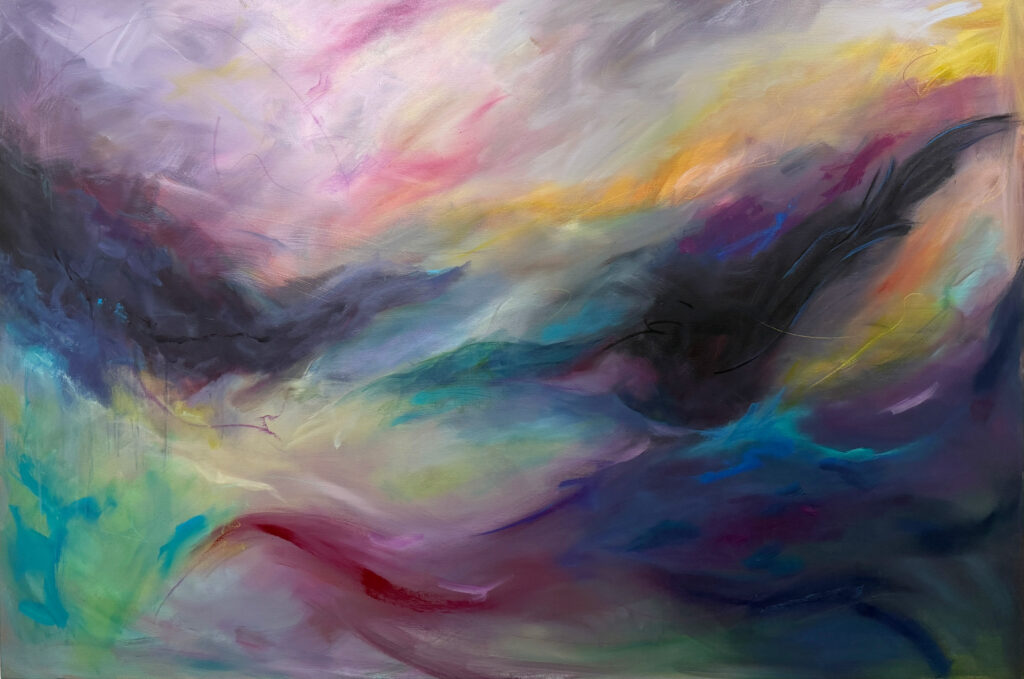
The hide and reveal runs through everything she does, from the imagery to the colour temperature to the way she thinks about what truth actually looks like when you stop performing it.
She has been featured in international publications and has exhibited her work in exhibitions that have brought her practice serious attention. The momentum behind her work right now is real and it is growing and honestly every new piece she makes feels braver than the last.
Let’s get to know Cheryl through our conversation with her about the childhood moment that started it all, why she hides things in her paintings, and what it took to stop performing and start telling the truth.
Q1. Cheryl, can you take us back to the beginning and share how your journey as an artist first started?
Honestly, it didn’t start with painting but with a car. I was about six years old, and I watched my grandmother buy a car with her own money, from her own job, through her own effort. And then she was told she couldn’t sign for it without her husband. I didn’t have language for what that meant yet, but I understood the message loud and clear: no matter how capable a woman is, the world can still decide she isn’t enough on her own.
That planted something in me that never left. I grew up being taught to be looked at, not known. Be pretty. Don’t need too much. Don’t ask questions. Don’t be too much. Those aren’t just phrases, they’re contracts, and most of us sign them before we know we had a choice.
Q2. You describe painting as a place where you learned to trust your instincts. How has that changed the way you work?
It’s changed everything. When I started, I had voices in my head, mostly my professors, people who taught me a lot but also filled my head with rigid ideas about what a painting is supposed to do.
For a long time I was painting for them, or against them, which is really just another way of not painting for myself. Trusting my instincts meant learning to quiet that noise. I still hear it, I’m not pretending it’s gone. But I recognize it now. It’s the same voice that told me to be pretty and quiet and easy to understand. It just got more sophisticated.
In the studio, my best work happens when I get entirely out of my own way. I stop deciding what the painting should be and let it tell me. I bury a mark, scrape it back, cover what isn’t true, keep going until something underneath shows itself. When I let it lead, I know the painting is true. That’s the whole difference.
Q3. Bones, stars, and silhouettes often appear beneath the surface of your paintings. What draws you to hidden imagery?
Because that’s how truth actually shows up in real life. It doesn’t announce itself. It’s buried under everything you were taught to perform, and you only find it if you’re willing to slow down and look. I grew up learning that being fully seen could be unsafe, but being unseen was unbearable.
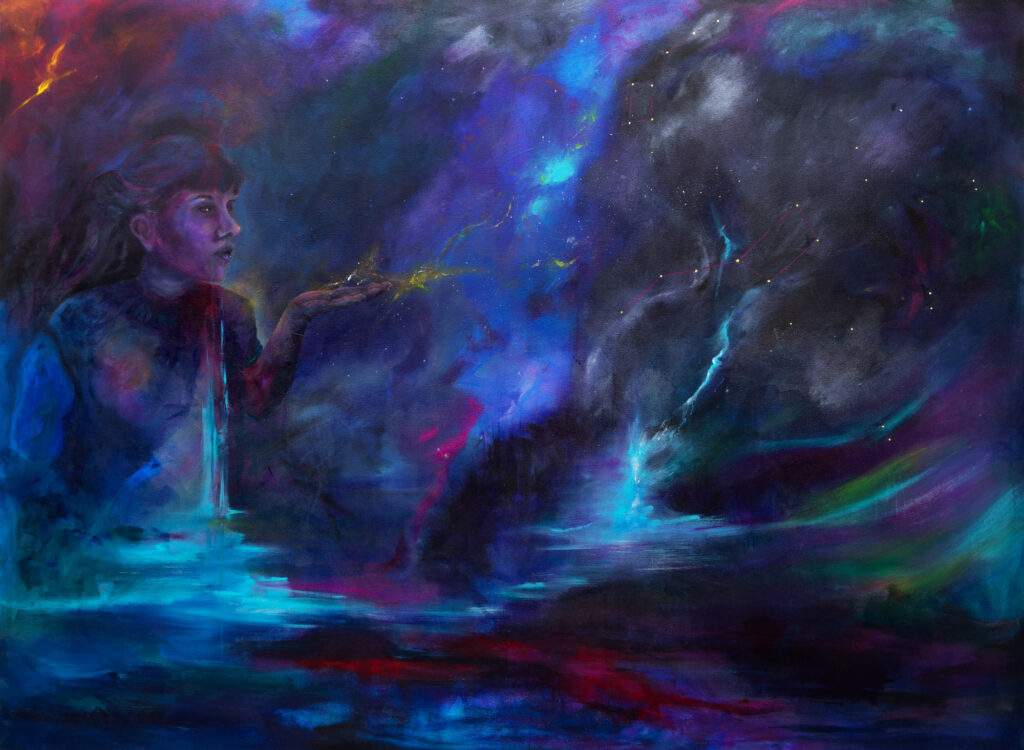
That tension is what shows up in the work. The bones, the stars, the silhouettes, the structures in the distance, they’re not decoration. They’re evidence. Evidence of what was lived, what was covered, what still remains. Tribute is a good example. It’s a tribute to Judith Love Cohen, the NASA engineer who worked on the Apollo 13 abort guidance system, and yes, Jack Black’s mother.
She spent her life believing in girls the world was ignoring long before that was an easy thing to do. In the painting, a woman stands in darkness, sending light out into a storm with her bare hand. Look at the night sky behind her and Ursa Major and Ursa Minor are hidden there. Most people don’t see them right away. But once they do, the whole painting shifts for them. That’s not an accident. I want the viewer to have to work a little, to find something, not just look at it.
Q4. Your work is deeply connected to questions of worth and identity. When did these ideas become central to your practice?
They didn’t become central. They were always there, I just didn’t have a way to say them yet. I told you about my grandmother and the car. It’s the moment I usually point to, because it’s the clearest one, but it wasn’t isolated. I was raised in a world, even among the strong, capable women around me, that still operated inside a rigid structure about what a woman’s worth was and where it came from.
I was told, in a hundred different ways, that my value was tied to being attractive and finding someone to take care of me. I was raised to be arm candy. Smart, but decorative. I didn’t wake up one day and decide worth and identity were my themes. I’d been working through that conditioning long before I called it art. So when I finally started painting seriously, it just showed up.
The work is where all of that had somewhere to go. What changed over time wasn’t the subject. It was my willingness to stop hiding it. Early on I was still being careful, still performing a little, even in the studio. Somewhere along the way I stopped asking the painting to be palatable and started asking it to say what was true. That’s when worth and identity stopped being a theme I was working with and became the engine of the work.
Q5. Ideas of autonomy often appear in your work. How do you bring them into your abstract paintings?
Autonomy in my work isn’t a picture of a woman with her arms crossed. It’s a mark that refuses to apologize for taking up space, a color that pushes forward instead of receding. I think about my grandmother a lot without ever painting her literally, that refusal she felt is in the tension of my compositions. You don’t need a body for that. The paint carries the fight.
Q6. Your WORTH Excavated series explores questions of self-worth. What led you to build an exhibition around this idea?
I want to clarify one thing first. It’s not a separate series, it’s the exhibition, WORTH / Excavated, opening this October. But I get why it reads that way, worth isn’t new territory I stepped into for one show. It’s the question underneath everything I paint. This exhibition just gave it a name and a room of its own.
What made me want to build a whole body of work around it is simple. I spent most of my life being told my worth came from somewhere outside me, how I looked, how useful I was, how well I behaved. My paintings had been doing the work of excavating that for years without me ever saying it out loud. WORTH / Excavated is me finally saying it.
Q7. Your background includes printmaking, collage, drawing, and design. How have they shaped your approach to painting?
They’re in everything, even though you won’t see prints or collage for sale from me these days. I still do printmaking when I get the chance, I genuinely love it. I still draw, still collage. But those are mine now. Not for anyone else. That’s been a relief, having a part of my practice that exists purely because I want to make it, with no audience in mind at all. What all of that gave me is range. Photography and sculpture were where I started, and they taught me to
think about light and form as physical things, not just images. Printmaking teaches you to think in reverse, in layers, in what happens when you commit to a mark you can’t take back. Collage teaches composition through relationship, how one shape changes depending on what’s next to it.
Drawing is where I think fastest, nothing between the idea and the mark. And design, I was a web and graphic designer for years, trained an eye for structure and negative space I use constantly, even in the most chaotic parts of a painting. None of that shows up as literal technique. It shows up as instinct, and hardest in color. I’m a little obsessive about color theory, especially temperature.
Warm colors push forward, cool colors recede, and I use that to decide what a viewer’s eye finds first and what it has to go looking for. It’s the same hide and reveal instinct that runs through everything I do, just at the level of temperature instead of imagery. I can look at a canvas and know a shape or a color is wrong before I could tell you why. Decades of moving between mediums, still talking.
Q8. You’ve said seeing your work in person is very different from seeing it online. What changes for the viewer?
Scale, first. A painting that’s six feet tall does something to your body that a thumbnail on a phone can’t. You’re not looking at it, you’re standing in front of it, and there’s a physical relationship happening whether you’re aware of it or not. Then there’s color. I play constantly with temperature, and you cannot feel that on a screen. In person, color has dimension. It moves as the light in the room changes, as you move.
Online, a painting is flat by definition. In person, you can see where I built something up and scraped it back, where an edge is rough because I fought with it, actual texture catching actual light. A screen shows you the image. The room shows you the life. And then there’s the hidden work, the bones, the stars, the silhouettes.
Those reward proximity. You have to stand close, let your eye adjust the way it would in low light. You can’t do that with a JPEG. I don’t make paintings for a quick scroll. I make them for someone willing to stand still.
Q9. You teach art journaling and intuitive making. What has teaching others taught you about your own practice?
I haven’t been teaching much lately, exhibition prep has taken every spare hour, but I still art journal. It’s core to my being. Teaching reminds me to play, and watching students make something with no pressure to get it right always sends me back to my studio looser than before.
Q10. What have you learned about building relationships with collectors beyond the sale of an artwork?
That the sale is really just the beginning of the relationship, not the end of it. I love my collectors, genuinely. I think my work attracts people who are trying to live their lives in full color, who aren’t interested in playing small anymore. When someone brings a painting like that into their home, we already have something in common before we’ve said a word to each other.
When I first opened my studio, I always wanted to stay in touch, I just wasn’t organized enough to keep track of everyone, and some of those connections quietly slipped away without me meaning for that to happen. Now I keep a real database, and I look forward to reaching out. I’ll check in and see if a piece needs any care, ask how they’re doing, invite them back to the studio for tea or just to sit and talk.
Collectors aren’t a transaction, they’re part of an ongoing conversation the painting started. Some of my favorite relationships are with people who bought one small piece years ago and have come back again and again since, their collection growing alongside the relationship. That’s the real reward.
Q11. Beyond the artwork itself, what makes an exhibition meaningful to you?
Having the work on the wall is the easy part. The meaningful part is what happens around it. For me, it’s watching someone stand in front of a painting long enough that something shifts in their face. That moment when they find the thing I hid, a figure, a doorway, a shape in the dark, and I can see them realize they’re looking at something they recognize in themselves. That’s not something I can plan or fake. It either happens in a room or it doesn’t. It’s also the people.
An opening isn’t just a room full of my paintings, it’s a room full of the collectors, friends, and community who’ve been part of this journey with me, some of them for years.
Watching those relationships collide with the work, that’s the part that actually matters. And for this show in particular, WORTH / Excavated isn’t just a collection of paintings I made in the last year. It’s the clearest I’ve ever said out loud what my work has been about all along. Giving that idea a room of its own, and watching people walk through it and see themselves in it too, that’s the meaning.
Q12. How has your understanding of professional success changed throughout your career?
Early on, success looked like external validation, getting picked, getting written about. Now it’s staying true to my own voice, whatever else happens around it. I’ll hit a milestone and it feels good, but then what matters shifts again underneath it. Success stopped being a destination. Now it’s a practice.
Q13. What advice would you give artists who are still learning to trust their own voice?
Notice when you’re painting for approval instead of the truth. You can feel the difference, a tightness when you’re managing the outcome instead of following the work. The truest things happen when you stop asking permission.
As our conversation with Cheryl drew to a close, one word kept circling back. Nice. A word most people hear as a compliment but that Cheryl recognised as a cage. Be nice. Paint nice. Make something pleasant that nobody has to sit with too long or feel too deeply about.
Cheryl broke out of that cage. And that is exactly when her paintings started mattering.
And it made us wonder how many artists are still inside it right now. Still softening edges that need to stay rough. Still picking the safe colour over the honest one. Still cutting out the part of the painting that frightens them because it might frighten someone else.
Still producing work that is technically strong and visually polished and emotionally vacant. And not understanding why it feels like something is missing.
What is missing is usually the thing you took out. The uncomfortable part. The personal part. The part that came from somewhere real and raw and was edited away because someone once taught you that being easy to look at was the same as being good at what you do.
Cheryl stopped editing those parts out. She let them stay in the painting and then she buried them underneath layers of paint so that finding them requires effort and closeness and the kind of looking most people do not do anymore. And that is where the real power in her work lives. Not on the surface. Underneath it. The same place where the real power in most people lives too.
Every artist can take something from that. Whatever your medium is and whatever stage you are at. The thing you are most tempted to remove from your work because it feels too exposed or too strange or too much is almost always the thing that would make the work undeniably and irreplaceably yours. Cheryl figured that out and now her paintings carry a charge that polite work never will.
For art lovers and collectors, Cheryl’s paintings are not the kind you buy to complete a room. They are the kind you buy because something in the painting recognised something in you before you were ready for it. Her work hides things that only reveal themselves to people who are willing to stand close and stay a while. And it carries the unmistakable energy of someone who chose truth over approval and never went back. That kind of energy does not diminish on a wall. It deepens. Year after year after year.
Follow Cheryl Russell through the links below and see her work for yourself.