


The Secret Lives of Cats in Art
👁 56 Views
Cats appear in art more often than you’d expect.
Not always at the center. Not always doing anything obvious. Sometimes they’re tucked into a corner, half-hidden in shadow. Sometimes they’re staring directly back at you, as if they know something the rest of the painting doesn’t. And yet, they’re rarely just… there. Their presence tends to feel intentional, even when it’s quiet.
Across centuries, artists have included cats for very different reasons. In some works, they signal power and protection. In others, they hint at danger, independence, or even a kind of subtle disruption that unsettles an otherwise calm scene. At times, they feel like observers, present, but slightly removed from everything around them. At others, they take over the composition entirely, becoming impossible to ignore.
What’s interesting is how easily they slip between these roles. The same animal can move from sacred to suspicious, from background detail to bold statement, from symbol to personality, without ever fully losing its sense of mystery. They resist being pinned down, and perhaps that’s exactly what makes them so compelling to artists.
This isn’t a complete history of cats in art, and it’s definitely not every example. Think of it more as a closer look at the different “lives” cats have taken on across artworks, sometimes obvious, often overlooked, but rarely insignificant.
Because if you start paying attention, you’ll notice something: cats in art don’t just sit inside images. They quietly change how you read them.
1. Cats as Power
Long before cats appeared in quiet corners of paintings, they held a very different position.
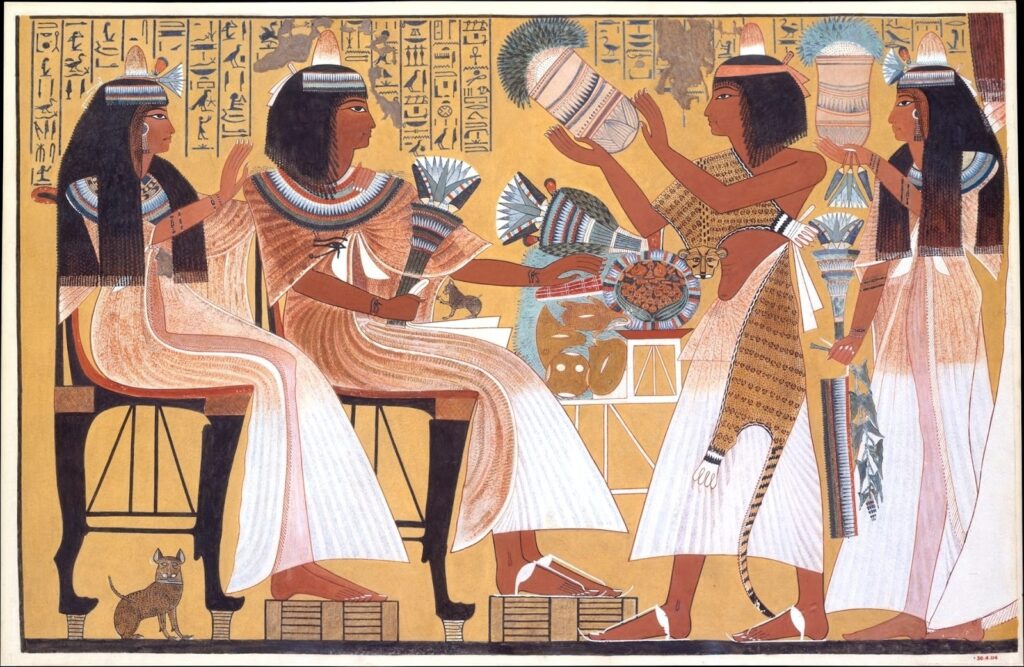
In ancient Egypt, cats were not simply animals living alongside humans, they were closely tied to the divine. The goddess Bastet, often depicted with the head of a lioness or domestic cat, was associated with protection, fertility, and the home. Her presence made the cat more than a companion; it became a symbol of care, guardianship, and quiet authority.
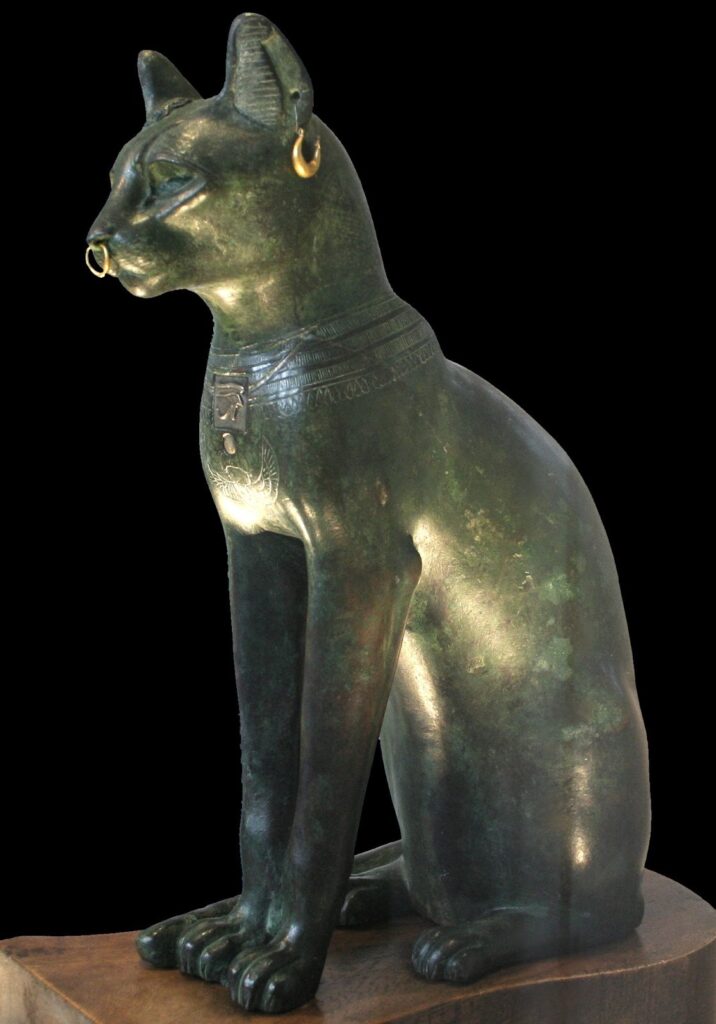
This wasn’t just symbolic. Archaeological evidence shows that cats were deeply revered, mummified, mourned, and represented across tombs and objects. You can see this clearly in the Gayer-Anderson Cat (c. 600–300 BCE), now in the British Museum. Sitting upright, adorned with jewelry, it presents the cat not as an animal, but as something almost ceremonial.
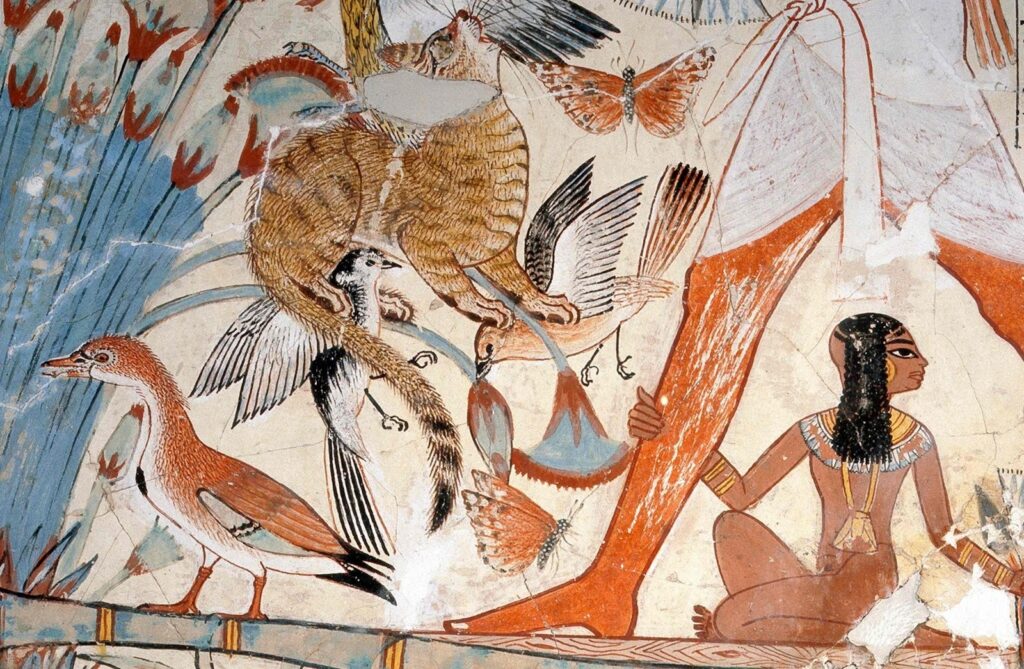
In wall paintings like Nebamun Hunting in the Marshes (c. 1350 BCE), cats appear alert and purposeful, catching birds mid-flight. Even here, they aren’t incidental. They are controlled, precise, almost extensions of order within the scene.
They don’t move through the image like other animals. They hold their position.
There’s no playfulness here, no ambiguity. The cat isn’t observing human life, it stands slightly above it, tied to something larger, something protective.
It’s a version of the cat that feels distant now but it sets the tone for everything that follows.
2. Cats as Suspicion
The image of the cat doesn’t stay sacred for long.
By the time we move into medieval and early modern Europe, something shifts. The same animal that once symbolised protection and order begins to take on a far more uncertain role, one tied to superstition, unpredictability, and, at times, fear.
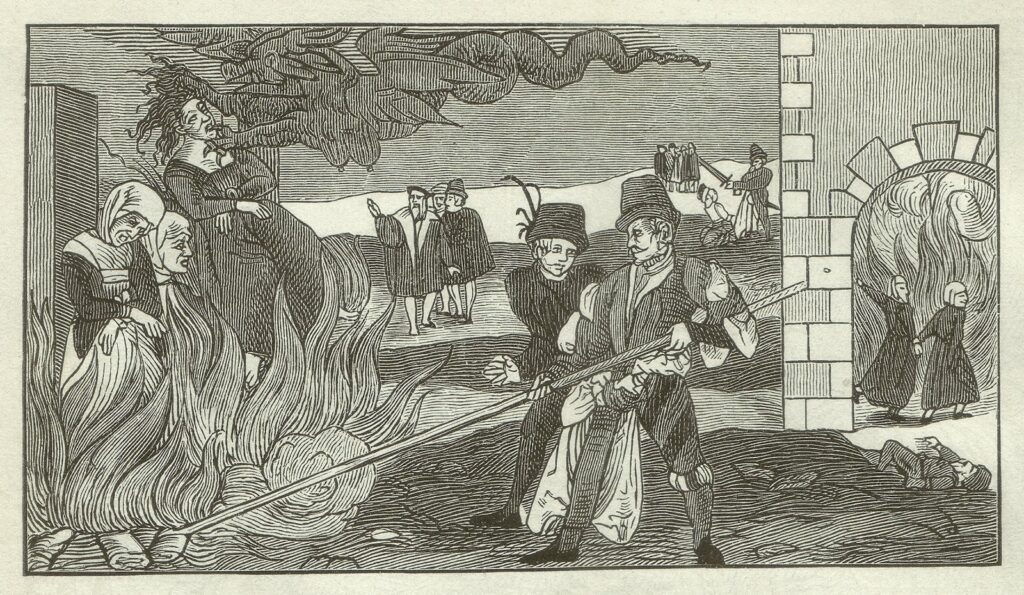
Cats, particularly black cats, became associated with witchcraft and the supernatural. In woodcut prints and early illustrations, they often appear alongside witches, familiars, or figures linked to the occult. Works like The Witches’ Sabbath imagery circulating in early modern Europe frequently include cats as companions to figures operating outside accepted social and religious norms.
But it’s not just in overtly symbolic scenes that cats take on this strange energy.
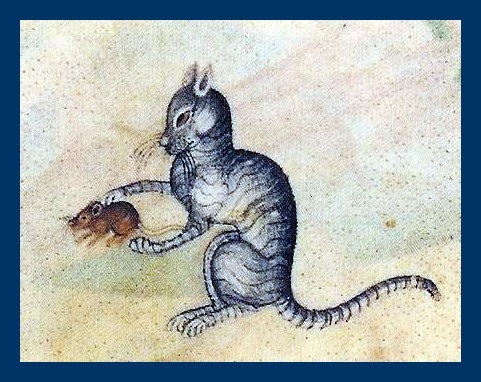
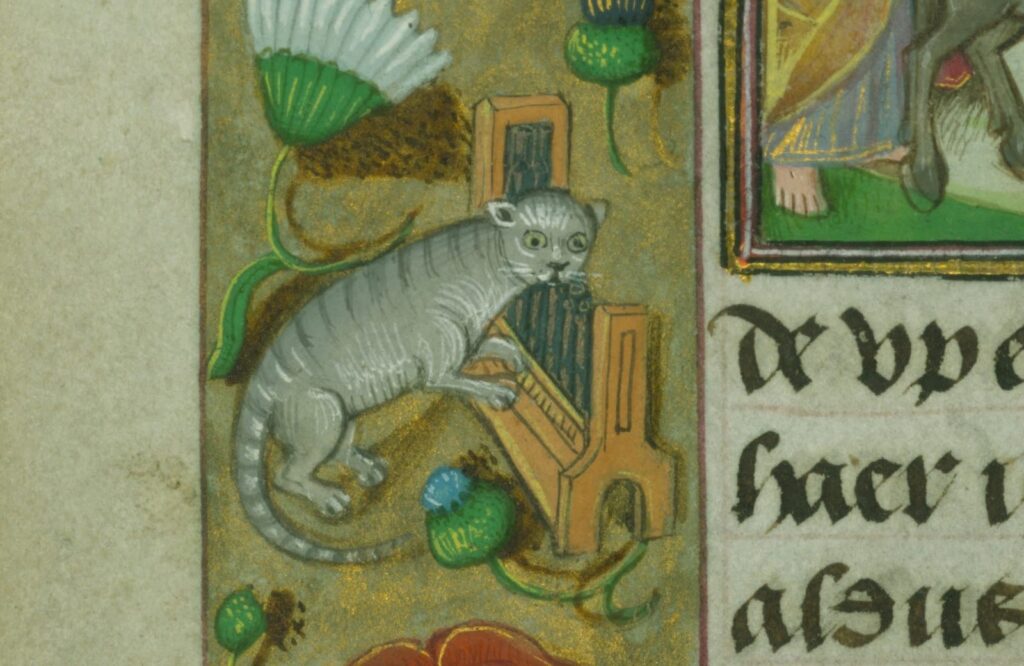
In medieval manuscripts, especially in the margins of illuminated texts, cats begin to behave in unexpected ways. In works like the Luttrell Psalter (c. 1325–1340), cats appear chasing, clawing, or interrupting otherwise orderly scenes. These marginal drawings often feel chaotic, humorous, and slightly disruptive, as if they exist just outside the control of the main narrative.
And that’s where their role becomes interesting.
They are no longer divine. But they’re not entirely ordinary either.
They sit somewhere in between, familiar, but not fully trusted. Present, but unpredictable.
If the Egyptian cat held its place with certainty, the medieval cat unsettles it.
It doesn’t dominate the scene.
It disturbs it, quietly, but unmistakably.
3. Cats as Observers
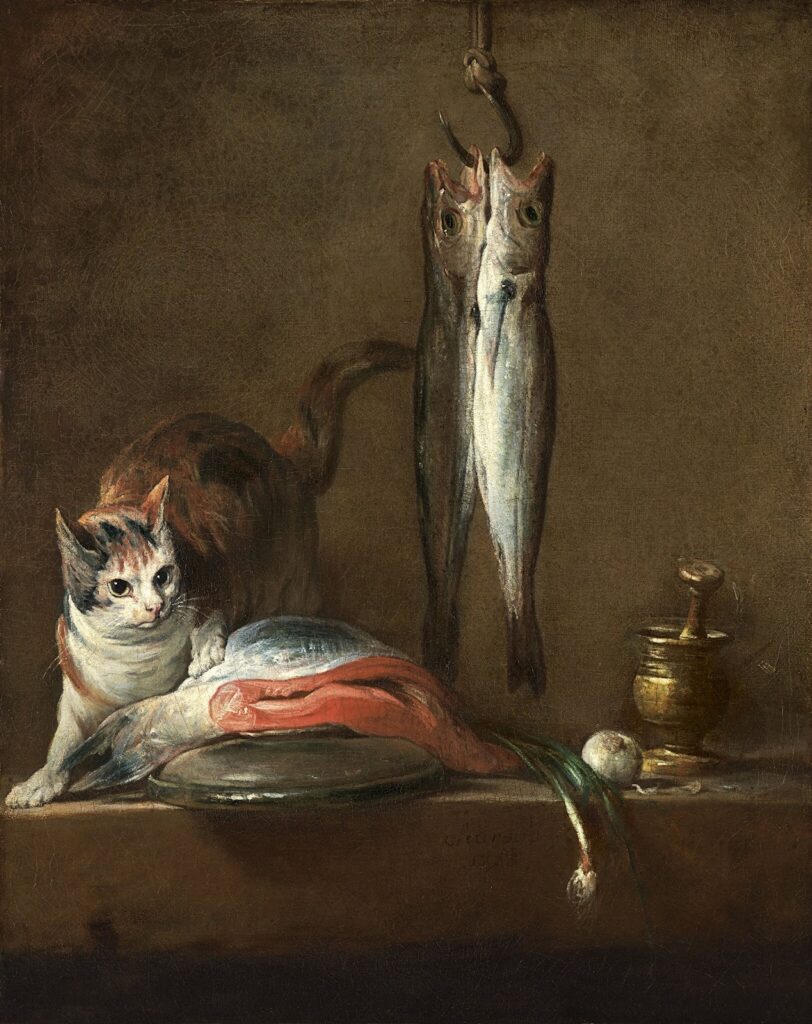
As we move into early modern painting, cats begin to take on a quieter, more familiar role.
They are no longer feared, and no longer sacred. Instead, they settle into domestic life, appearing in interiors, near figures, or just at the edge of the frame. You’ll often find them beneath tables, beside chairs, or lingering in the background, as if they’ve always belonged there.
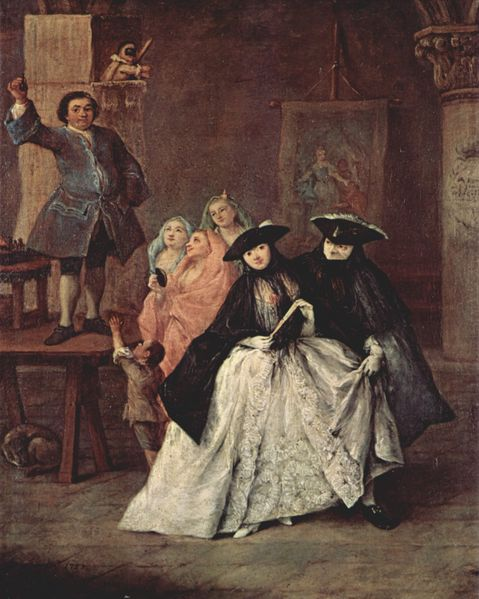
In works by Jean-Baptiste-Siméon Chardin, animals, including cats, appear within everyday environments, adding a sense of stillness and lived reality. Similarly, in the paintings of Pietro Longhi, cats quietly inhabit interior spaces, often unnoticed at first glance, but carefully placed within the composition.
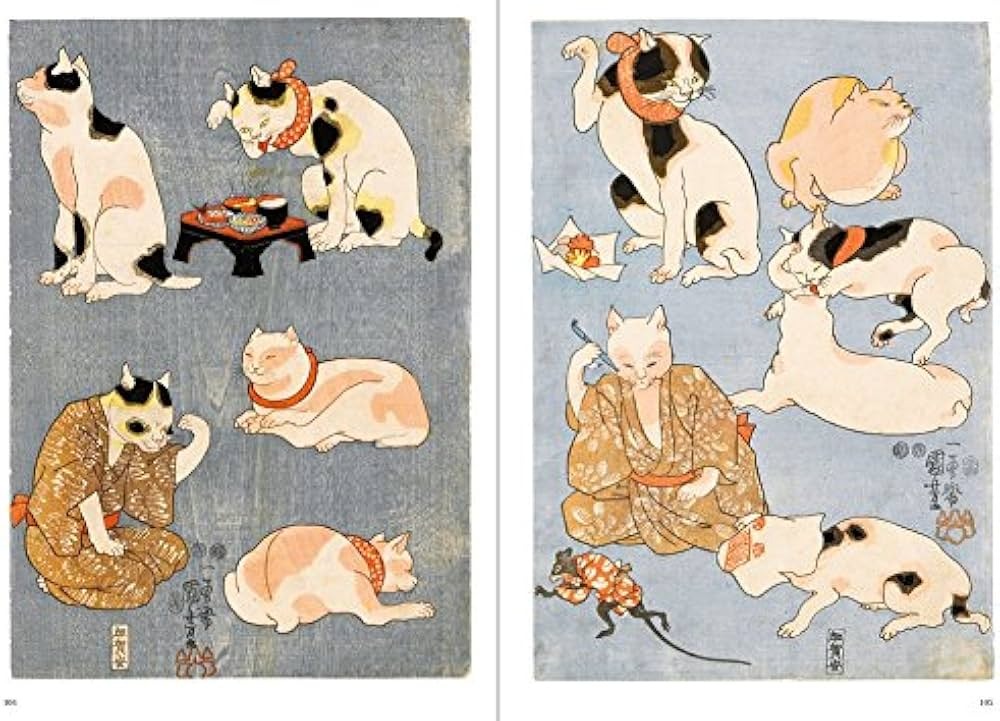
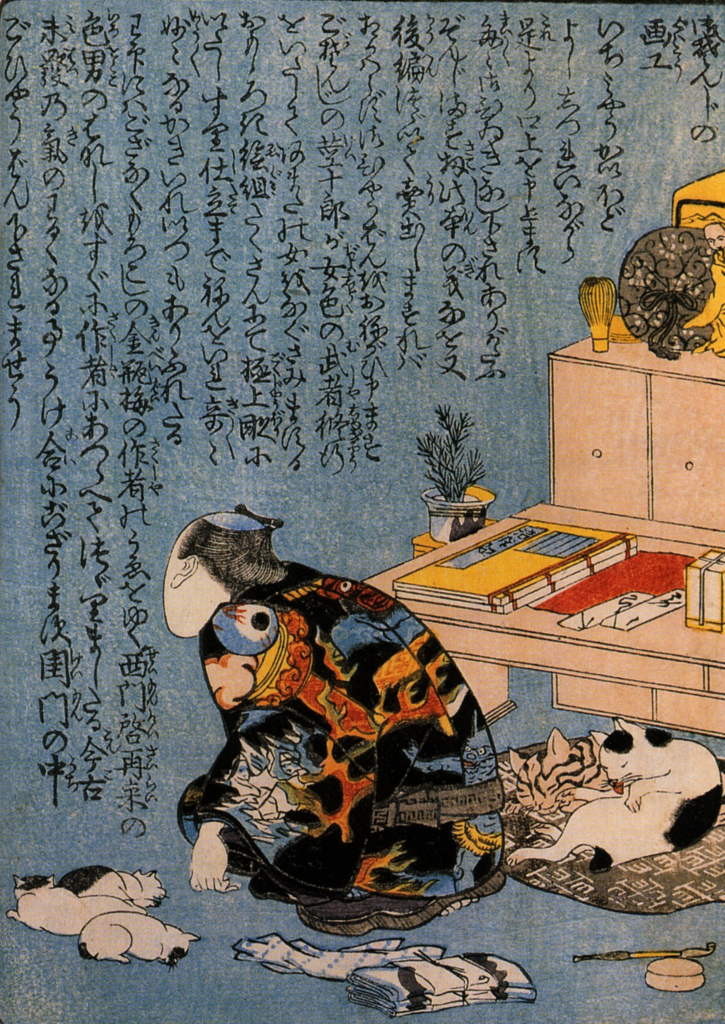
Outside Europe, artists like Utagawa Kuniyoshi brought cats into prints with a similar sense of familiarity, lounging, watching, or interacting subtly with their surroundings.
And that’s what defines their presence here.
They don’t interrupt the scene.
They don’t demand attention.
They observe.
They feel independent of the narrative, as though they exist alongside it rather than within it, aware, self-contained, and slightly detached.
If earlier cats carried meaning through symbolism or superstition, these cats shift something more subtle.
They don’t change the story.
They change the atmosphere.
4. Cats as Disruption
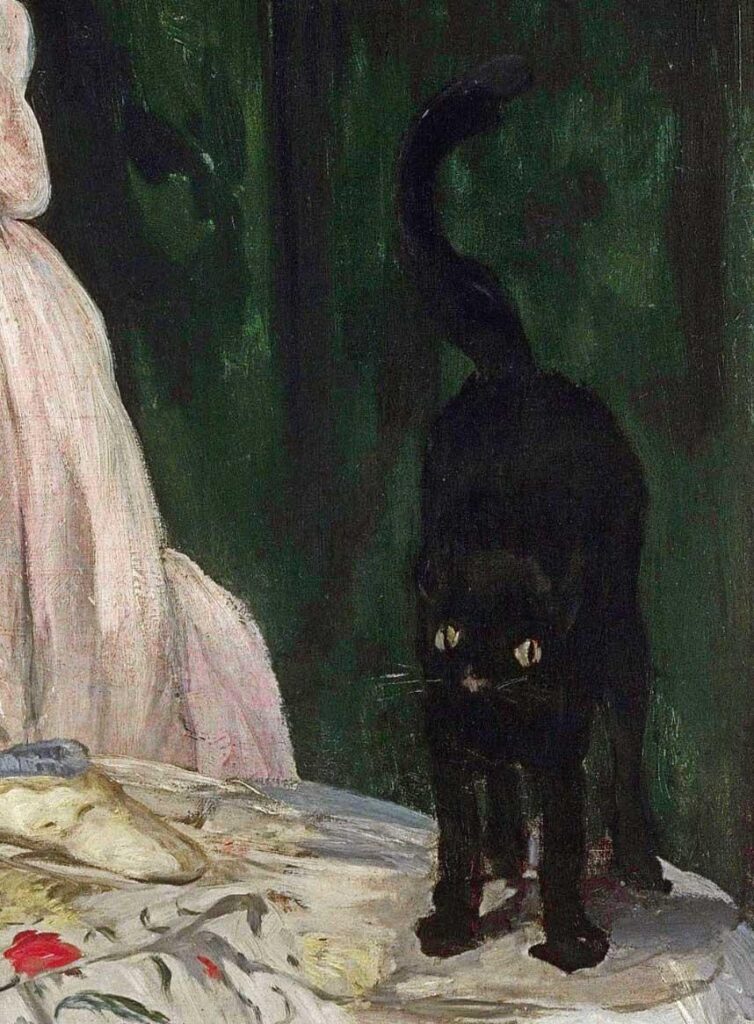
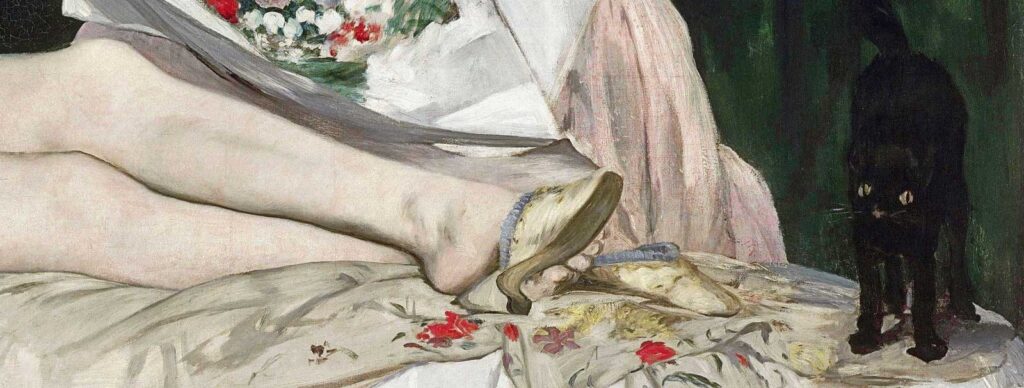
By the 19th century, the role of the cat shifts once again, but this time, it doesn’t settle quietly into the background. Instead, it begins to disrupt the scene in subtle but unmistakable ways.
This is most clearly seen in Olympia (1863). At first glance, the composition recalls the tradition of reclining nude paintings, a subject that had long been associated with idealised beauty and passive elegance. However, Manet’s version refuses to follow that expectation. The figure of Olympia confronts the viewer directly, and at the foot of the bed, a small black cat, tail raised and alert, introduces a quiet tension that shifts the entire atmosphere of the work.
Unlike the gentle, loyal dogs that often appear in earlier paintings, the cat here is not comforting. It feels sharp, aware, and slightly unpredictable. Its presence reinforces the painting’s departure from tradition, echoing the independence and directness of the central figure rather than softening it.
This is where the role of the cat becomes particularly interesting. It is no longer symbolic in an obvious sense, nor is it simply observing. Instead, it actively influences how the painting is read. The scene feels less idealised, more immediate, and undeniably more modern.
In this context, the cat does not dominate the composition, but it refuses to disappear into it. And in doing so, it changes the way we experience the entire image.
5. Cats as Personality
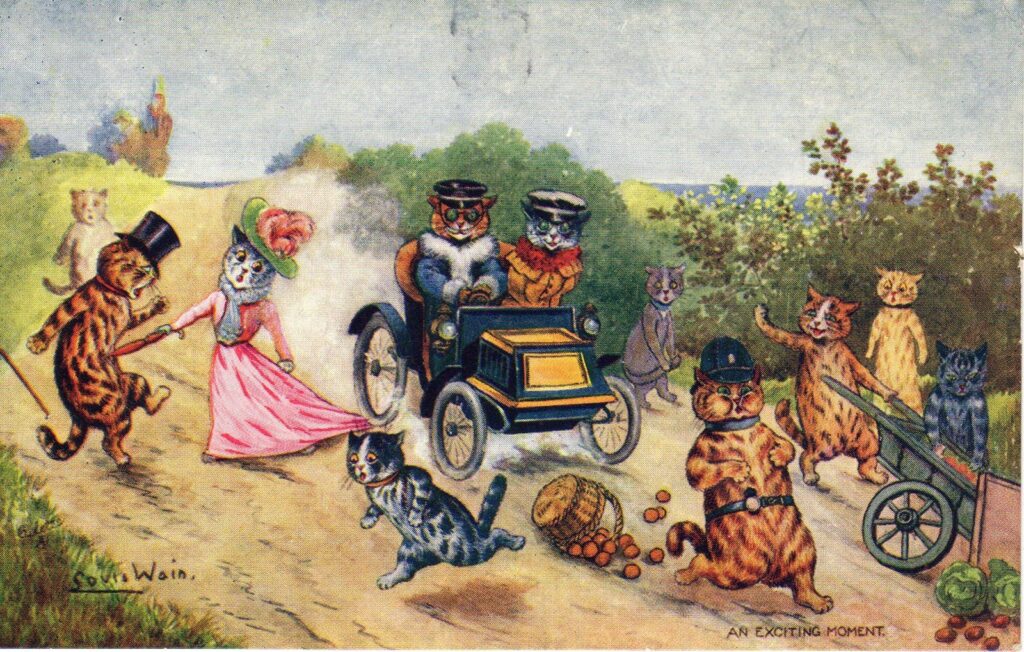
By the late 19th century, cats undergo one of their most unexpected transformations in art. They are no longer simply part of a scene, nor are they symbolic additions placed with intention but restraint. Instead, they begin to take on lives of their own.
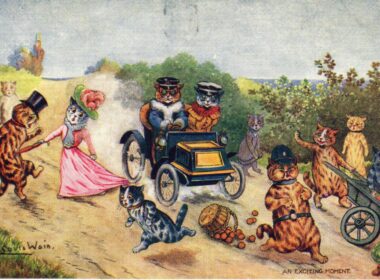
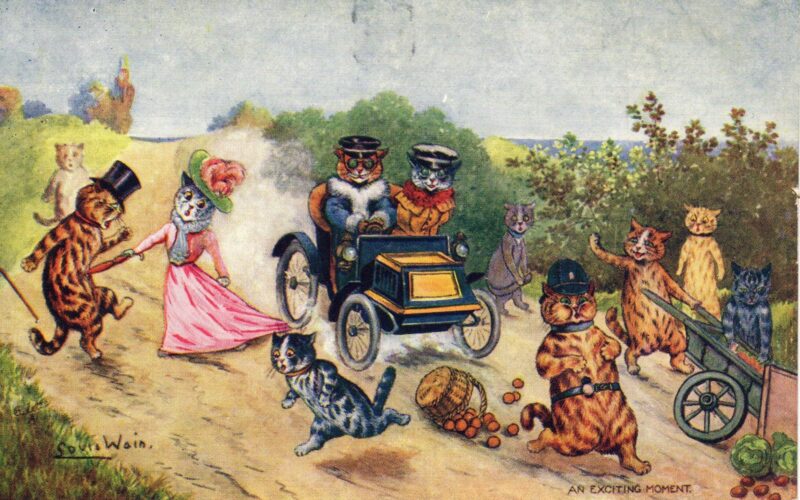
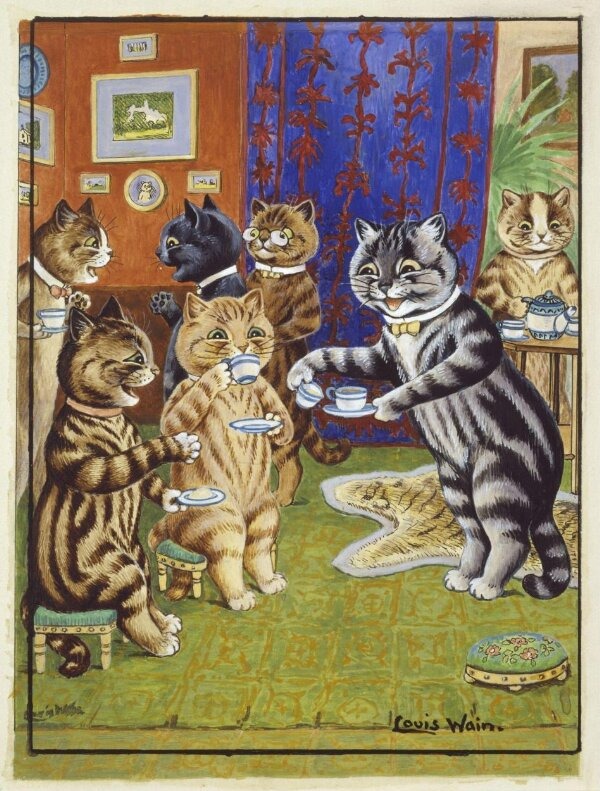
This shift is most closely associated with Louis Wain, whose work brought cats out of the margins and placed them firmly at the center of attention. His illustrations, widely circulated in newspapers and prints, depicted cats not as animals, but as active participants in human life, dressing, socialising, playing instruments, and engaging in everyday routines with an unmistakably human quality.
At first, these images feel playful, even humorous. The cats are expressive, animated, and full of character, reflecting the rhythms and absurdities of modern social life. But the more you look, the more something else begins to emerge. These are not just charming illustrations; they are reflections of behaviour, habit, and personality, translated through the form of a cat.
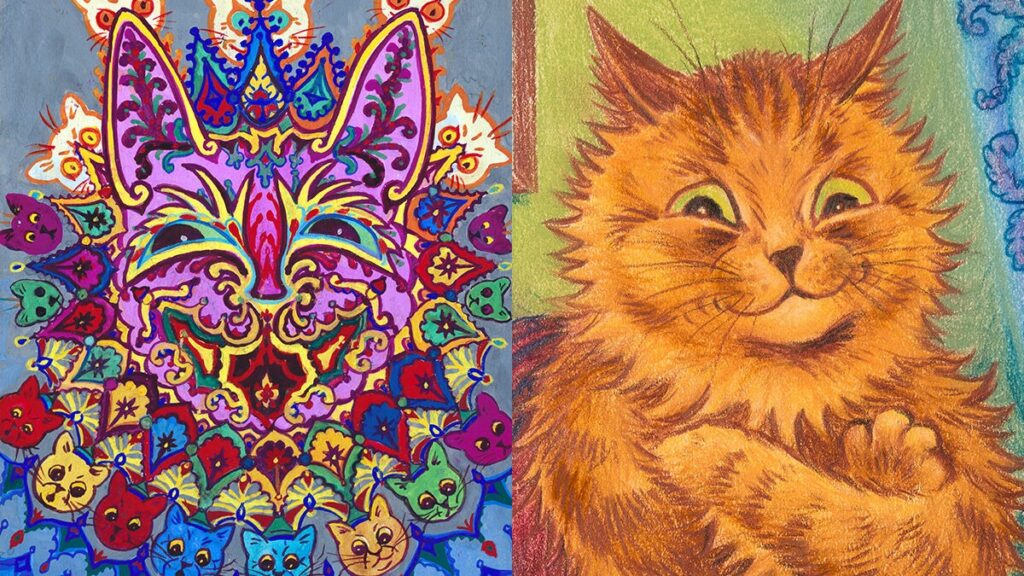
In Wain’s later works, this transformation becomes even more striking. The cats remain central, but their forms begin to shift, patterns intensify, colours become more vivid, and the compositions grow increasingly complex and immersive. The familiarity of the animal gives way to something more abstract, more internal, as if the image is less about the cat itself and more about a state of mind.
What makes this moment significant is not just the change in style, but the change in role. Cats are no longer symbols or observers; they become subjects with presence, emotion, and individuality.
And once that shift happens, it doesn’t really reverse.
6. Cats as Culture
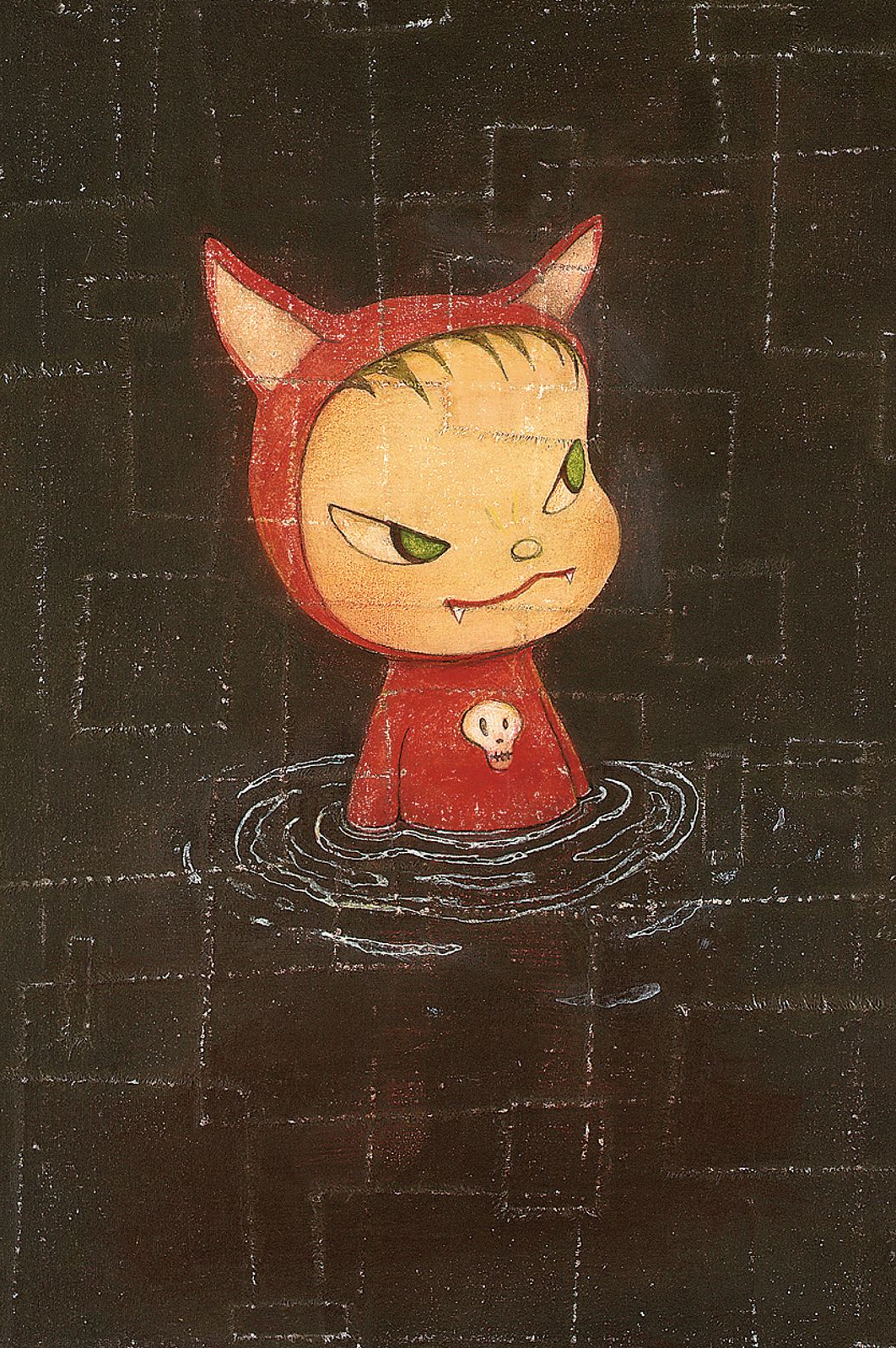
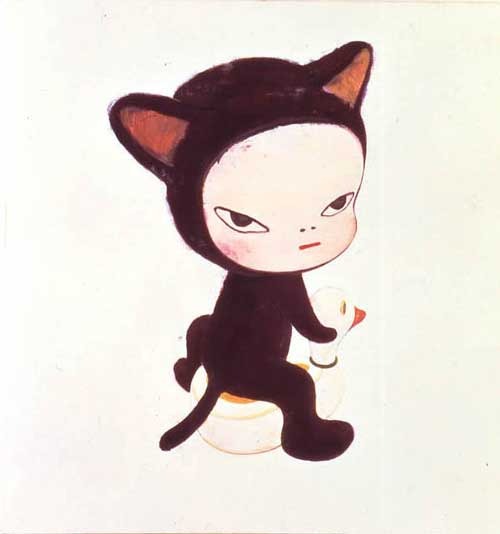
In contemporary culture, cats don’t need to be placed carefully within a composition to be noticed. They arrive with their own presence, immediate, familiar, and often impossible to ignore.
Unlike earlier periods, where their meaning was shaped by symbolism or context, cats today carry a kind of built-in recognition. They are already understood, already loaded with personality. Whether in illustration, digital art, or contemporary painting, they appear less as subjects to be interpreted and more as figures we instinctively respond to.
Artists like Yoshitomo Nara often tap into this shift. While not always working exclusively with cats, his characters carry a similar energy, playful on the surface, but layered with emotion, attitude, and a quiet intensity that lingers. In other contemporary practices, cats move even further into humor and absurdity, echoing the language of internet culture where they dominate visual space with an effortless sense of familiarity.
And that’s what defines their role now.
Cats are no longer placed into meaning.
They arrive with it.
They can be ironic, expressive, detached, chaotic, or strangely relatable, all at once. They don’t need explanation in the same way earlier representations did, because we already bring our own understanding to them.
If earlier cats shaped the meaning of a painting, contemporary cats move differently. They connect instantly, collapsing the distance between artwork and viewer.
They are no longer something to decode.
They are something to recognise.
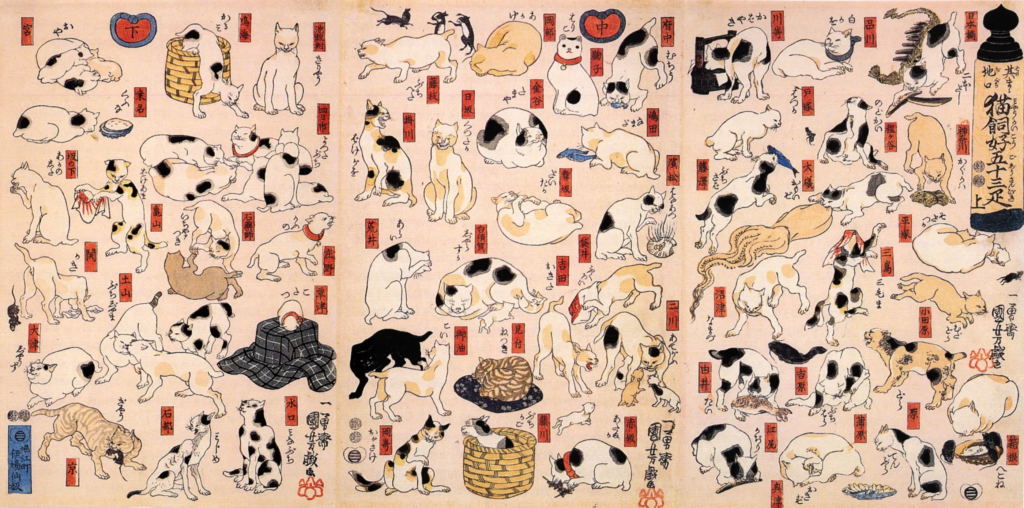
Looking across these different appearances, one thing becomes clear, cats in art have never stayed in one place for long. They move easily between roles, shifting from something sacred to something suspicious, from quiet observers to disruptive presences, from symbols to fully formed personalities.
And yet, despite all these changes, something about them remains consistent.
They rarely announce themselves as the main subject, but they are almost never incidental. Whether placed at the center or at the edge of a composition, they tend to alter the way a scene is read. A cat beneath a chair, a cat at the foot of a bed, a cat staring outward, each of these moments carries a subtle weight that extends beyond the animal itself.
Part of this comes from their nature. Cats have always existed slightly apart from human structures, close enough to be familiar, but distant enough to remain unpredictable. That quality translates easily into art. They can belong to a scene without fully participating in it, which allows them to carry multiple meanings at once.
They can soften a space, or sharpen it.
They can stabilize an image, or quietly disturb it.
And often, they do this without demanding attention.
That is their “secret life” in art, not as background detail, and not always as subject, but as something in between. A presence that shifts tone, adds tension, or introduces a layer of meaning that isn’t immediately obvious, but is difficult to ignore once seen.
Because once you begin to notice them, you realise they were never just there. Which “cat in art” are you, powerful, mysterious, observant, disruptive, or expressive?
From cats to flowers – discover how small details in art carry deeper meaning – read here.