
Why Carmen Samoila Is Obsessed With Blurring Faces
👁 15 Views
At Arts to Hearts Project, we have always been drawn to artists who are not trying to give you answers. The ones who understand that a painting does not need to explain itself to be powerful. That sometimes the most honest work is the kind that stays open, unresolved, and lets you bring your own meaning to it.
When we created our 101 Artbook Landscape Edition, we wanted to show people that landscape is not just scenery. It is not mountains and sunsets and pretty views. Landscape can be a language. It can carry grief, memory, solitude, joy, things that are hard to name but impossible to ignore. We were looking for artists who understand that. Who paint not what a place looks like but what it feels like to stand inside it.
Carmen Samoila is one of our 101 selected artists. And her work does something that is hard to put into words, which is probably exactly the point.
Carmen describes her work as a search. A search for meaning within darkness and for what lies just beyond immediate understanding. That line stayed with us because it tells you everything about how she approaches a canvas. She is not trying to arrive somewhere. She is trying to stay in the looking.
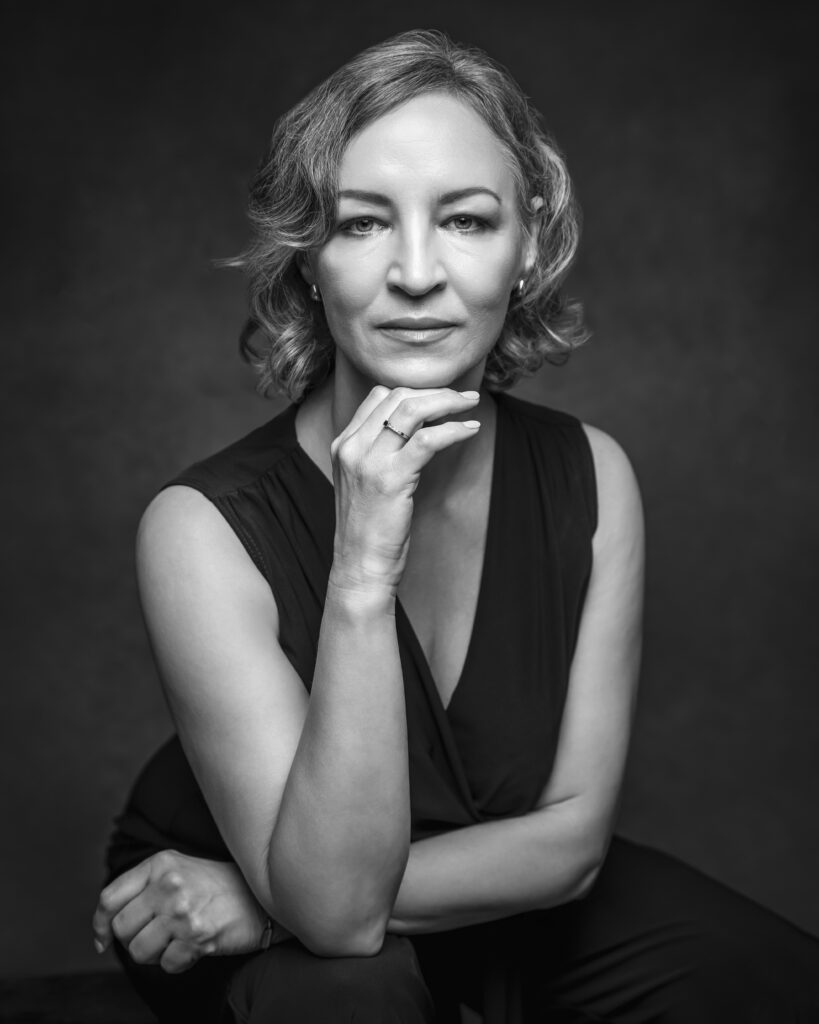
She came to art without formal training. No plan, no direction. Just the physical act of pushing paint across a surface. It started as something meditative, a way of discovering herself before she had the language for what she was feeling. And that instinct, that trust in what unfolds rather than what is planned, became the foundation of everything she has made since.
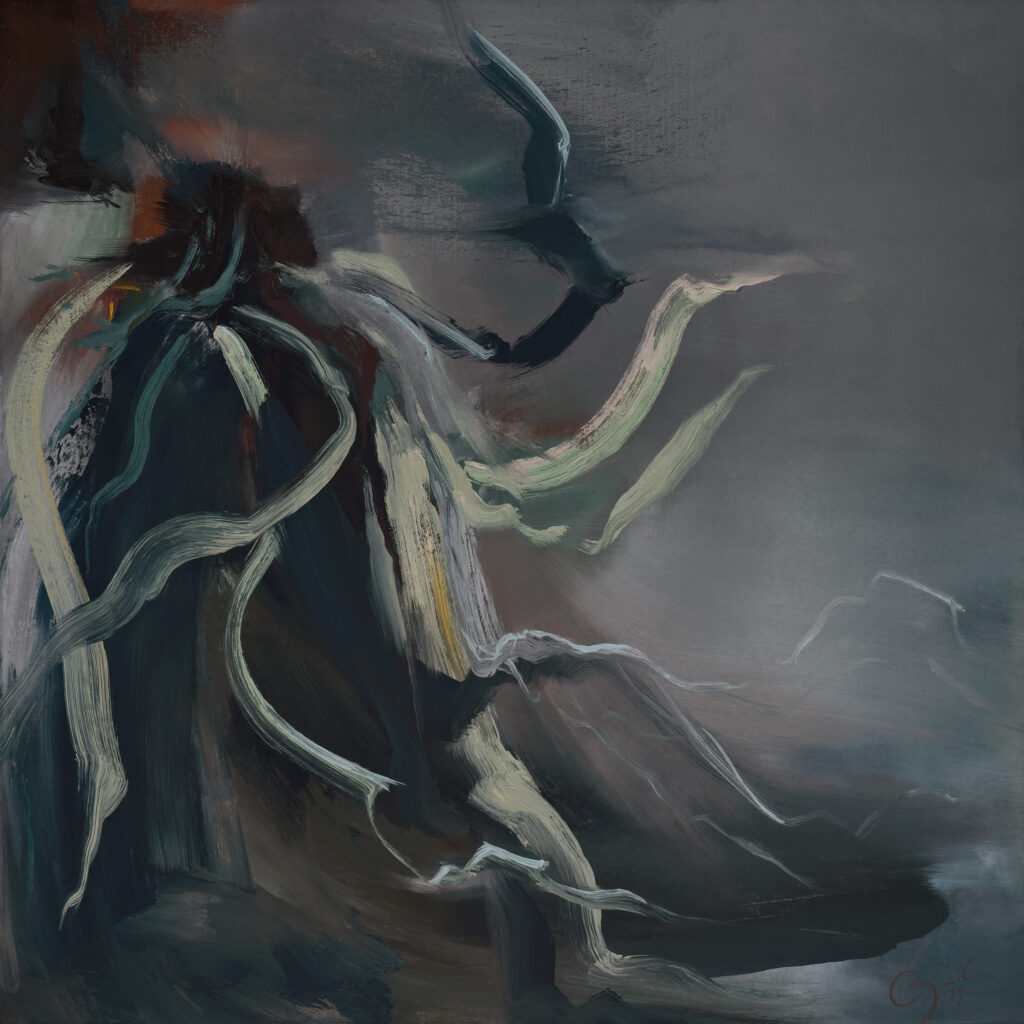
Her paintings are quiet but they are not soft. Faces appear blurred, cropped, turned away. Bodies dissolve into landscape. You cannot always tell where a figure ends and the land begins. She is not interested in telling you who someone is.
She is interested in that space where instinct takes over and the boundaries between inner and outer, past and present, briefly soften. Her word, not ours. And it is a perfect description of what her work does to you.
She began as a sculptor. Spent years carving form from stone, responding to the material, letting it reveal what it wanted to become. But the physical toll became too much and she had to leave that medium behind. She brought everything she learned into painting. The physicality, the intuition, the way of starting without a fixed idea.
Her practice spans over three decades. She has worked through doubt, exhaustion, material sensitivities, financial limitations, loss. She has adapted and changed and found new ways to keep making when the old ways stopped being possible. That kind of commitment does not come from ambition. It comes from necessity.
Her colour choices come from wherever she is standing emotionally. Dark and heavy when that is where she was. Bright and overwhelming when joy showed up. She does not decorate. She records what it feels like to be alive in a specific moment and then she leaves it open for you to feel it too.
Let’s hear from Carmen about what it means to paint landscape as a language of inner life, why she blurs the faces in her work, and how three decades of trusting instinct over explanation have shaped everything she makes.
Q1. Can you share how your early experiences with art, whether education, personal observation, or emotional intuition shaped the way you think about painting as a language of presence and absence?
I came to art through chance encounters with materials and artists, without formal education or a clear sense of direction. What drew me in was the physical act itself — the steady, methodical movement of pushing media across a surface. It became a meditative anchor for self-discovery, long before I had language for expression. Over time, unexpected forms began to emerge. What appeared felt less like something made, and more like something revealed. Through that process, I learned to trust intuition and to stay with what was unfolding rather than forcing it. This became the beginning of learning emotionally — and the foundation for how I understand painting now: as a way of holding what is present, while allowing space for what recedes.
Q2. In many of your paintings, faces are partially blurred, cropped, or turned away. What does reducing facial clarity allow you to communicate that a fully rendered portrait would not?
Reducing facial clarity allows the work to move away from identity and toward experience. A fully rendered face can anchor meaning too quickly — it tells the viewer who they are looking at. When features are blurred, cropped, or turned away, the figure becomes less about a specific person and more about an internal state. In works like Vale: Aurora, the form is intentionally unfixed — it could be body, land, or something in between. That ambiguity mirrors how I experience inner landscapes: sensed rather than seen, felt rather than named. By withholding clarity, the painting holds space for what moves through us — emotion, memory, perception — without pinning it down. It allows presence to exist without explanation.
Q3. When starting a new painting, do you work from photographs, sketches, or memory and how does that choice affect the final result?
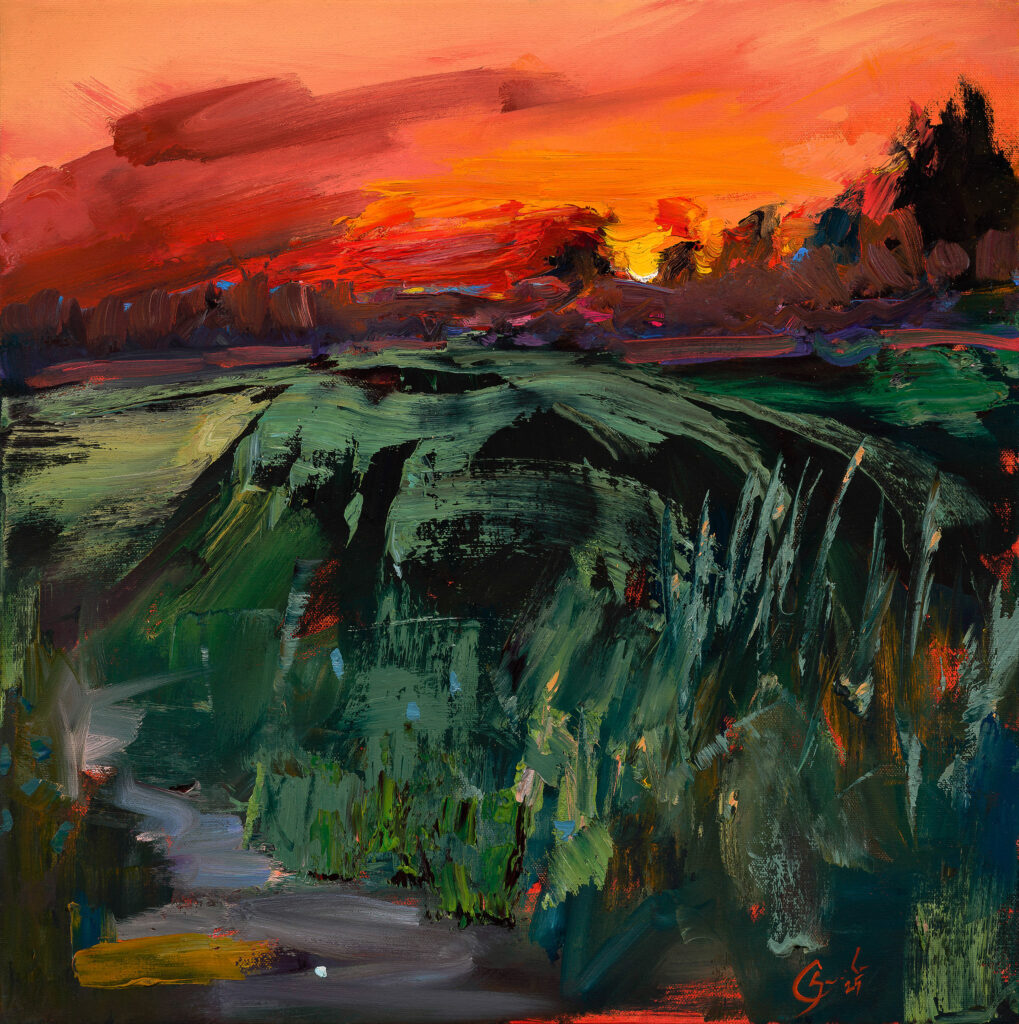
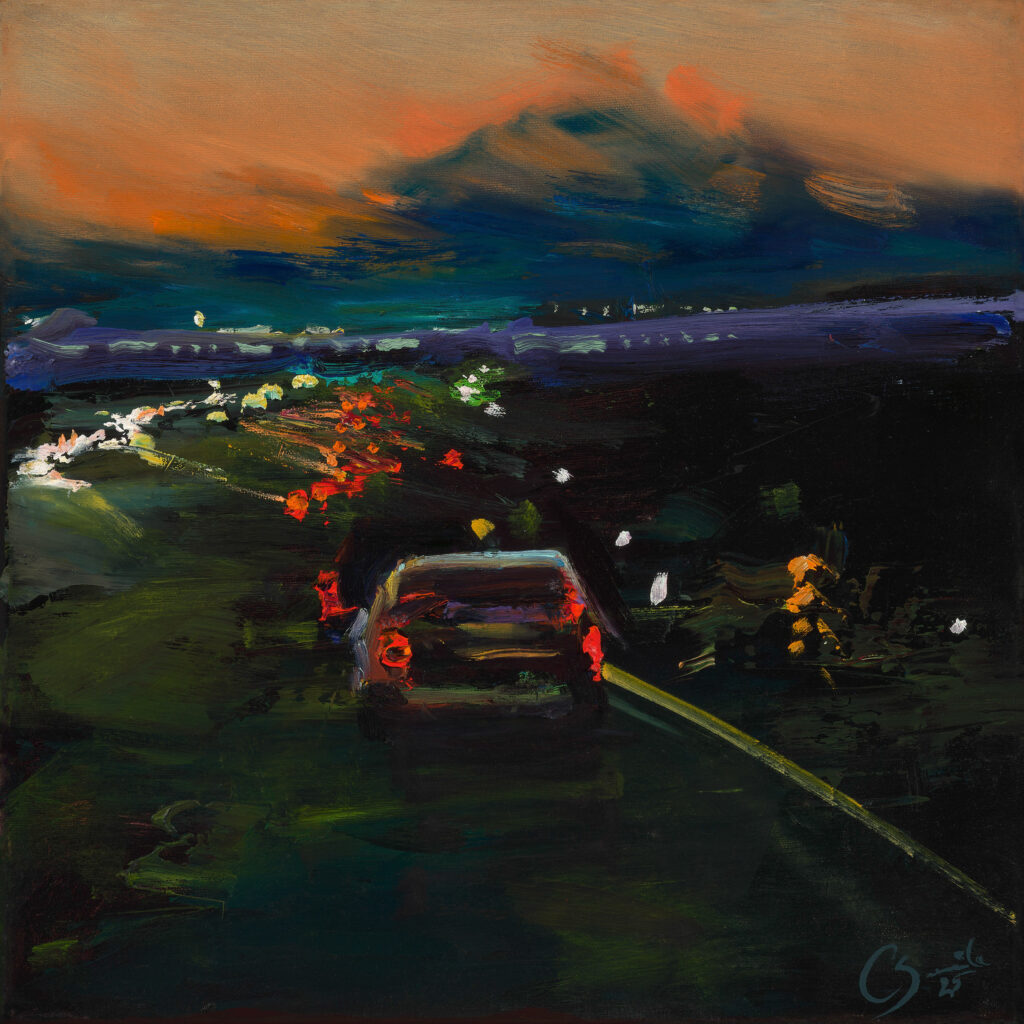
My approach depends on the series. For Echoe and Solena, the work is rooted in specific landscapes and cityscapes I know well and have experienced in place and time. I often begin with a photograph, which I then push and alter extensively — adjusting colour, contrast, and structure — to arrive at the mood and atmosphere that reflects how I experienced that environment. The image becomes a starting point, not a destination. What matters is the felt relationship between light, place, and presence. For the Vale series, the process is entirely internal. These paintings don’t begin with reference material, but with sensation. I work directly with the medium and surface, allowing forms to emerge through movement and attention. Over time, the work aligns with something within me — revealing how I feel and sense in that moment. In this way, the painting doesn’t illustrate an idea; it becomes it.
Q4. Your surfaces show both controlled brushwork and areas that feel intentionally unresolved. At what point do you decide that a painting is finished rather than incomplete?
I consider a painting finished when it reaches a point of internal balance — when nothing feels forced, and nothing feels absent. The unresolved areas are intentional; they allow the work to breathe and remain open rather than overdetermined. My process is often intense and physical. Because of both time and physical limitations, I work toward completing a painting in the first sitting whenever possible. Immediacy matters to me — if I step away for too long, the energy that shaped the work can dissipate. Rather than returning to resolve something, I tend to move forward, allowing each piece to remain a record of its moment. At the same time, I’m deeply aware of the history of painting and the evolving language of paint itself. My brushwork lives in dialogue with that continuum — moving between refinement and expression, restraint and release. Thick, loaded marks, quiet passages, and abstract gestures all carry meaning for me. The surface becomes a place where tradition, instinct, and contemporary experience meet.
Q5. Many of your works feel emotionally specific but avoid telling a story. How do you prevent the image from becoming narrative while still maintaining intensity?
I’m conscious of not fixing meaning too tightly. While the work often comes from emotionally specific places, I avoid translating those experiences into narrative. Once an image begins to explain itself too clearly, it closes down the space where the viewer can enter. Instead, I focus on intensity through colour, gesture, and atmosphere — elements that carry feeling without telling a story. Ambiguity is essential. It allows the work to remain intuitive and open, inviting others to bring their own associations, memories, and emotions into the painting. What matters to me is not conveying my story, but creating a space where many stories can quietly coexist.
Q6. Your colour palette is often restrained and muted. How do you choose colours in relation to the psychological tone of a piece?
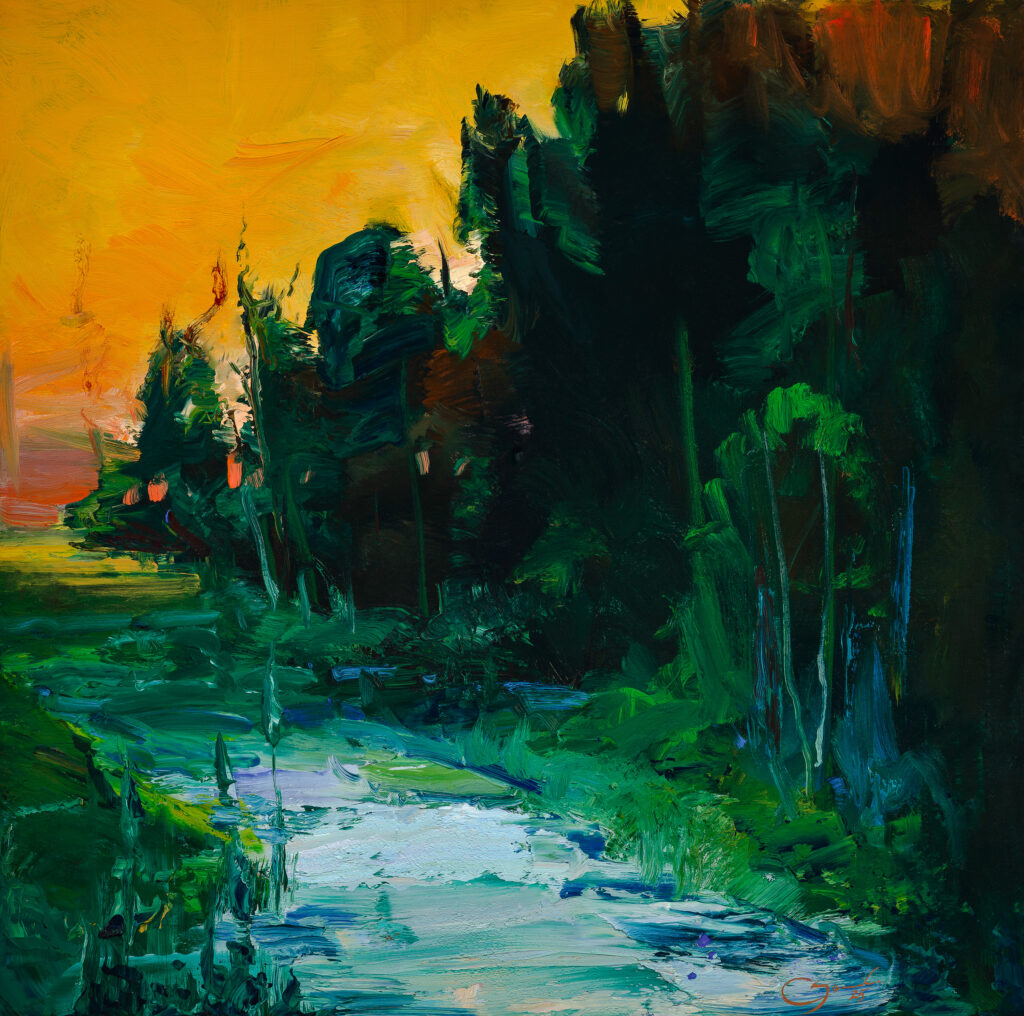
Colour is always tied to psychological tone for me. In Echoe, the palette leans dark and saturated, shaped by the heaviness and solitude I was experiencing at the time. The streets and highways of southwestern Canada carry depth, mystery, and unease, but also fascination. Light appears there in parallel with darkness — I’m drawn to beauty within shadow, not in spite of it. These works hold that tension as metaphor for how I experience the world. Solena moves toward the opposite register. Its colour emerges from lightness, warmth, and a sense of being fully alive — the intensity of summer, of renewal, of joy that can feel almost overwhelming. The palette reflects that openness and vitality. In Vale, colour becomes more internal and tonal. Rather than describing a place, it resonates with mood and atmosphere. Subtle shifts in tone allow emotion to surface quietly, without narrative. For me, tonality is a way of sensing — a language of feeling, vision, and presence held just beneath the surface.
Q7. Have you ever been surprised by an interpretation of your work something a viewer saw that you weren’t consciously thinking while you were making it?
Yes, and I’ve learned to value those moments. I make the work for myself first; it needs to be raw, honest, and true not simply decorative.
Often, what a viewer perceives isn’t something I was consciously thinking about while painting, yet it feels deeply accurate rather than surprising. That reminds me the work carries more than my own intention. Once it’s complete, it no longer belongs to me — it enters a shared space where meaning can surface through someone else’s perception. I see that exchange as a confirmation that the painting is doing its work: holding something open rather than fixed.
Q8. What has been the most difficult part of staying committed to a practice that moves so closely with emotional subtlety and embodied gesture?
The most difficult part has been sustaining the practice in a body and life that continue to change. I began in sculpture, but had to step away as the physical strain became unsustainable. Over time, sensitivities to materials and chemicals I love working with have also required me to continually adapt, finding new ways to work without compromising my health. Practical limitations — space, finances, unexpected losses — can make continuation feel fragile at times, and the business of art often demands a kind of visibility and endurance that runs counter to how I need to create. After more than three decades of practice, I recognize this cycle. I know that periods of doubt and exhaustion don’t last forever, and that momentum returns, often in a different form. Staying committed has meant trusting that rhythm — allowing the work to shift with my capacities, rather than forcing it forward. That willingness to change has ultimately deepened my relationship to the practice, even in its most difficult moments.
Q9. Looking at your work now compared to earlier pieces, what feels most changed technically, emotionally, or conceptually?
What’s changed most is how my body and intuition now lead the work. My early sculptural practice was highly precise and physically demanding, yet even then I never worked from a fixed idea. I would begin by responding to the stone itself, allowing the form to evolve as I chiselled away. At a certain point, something would reveal itself — and the work became about bringing that presence forward with greater clarity. When I moved away from sculpture, I was seeking freedom from the physical constraints of the medium, but that way of working remained. In painting, my process is still physical and intuitive. I often begin with expressive, gestural movement, then gradually hone the work into balance, much as I once carved form from solid material. Thick, tactile surfaces are layered against thinner, luminous passages to give form depth and range. What hasn’t changed is the need to let the process bring forth what is felt — to give form to an internal sensing rather than impose a predetermined outcome. The Vale works, in particular, continue this approach. They emerge through attention and recognition, shaped by what wants to surface rather than by what is planned.
Q10. What advice would you give to young artists who are learning to trust intuition and emotional depth while building a practice in a world that often rewards immediate clarity?
I would encourage them to move slowly enough to hear themselves. For me, learning to trust intuition began very early — not as a preference, but as a way of staying aware and responsive. Over time, the practice became part of my own evolution, a way of coming alive and learning to listen more closely. Intuition and emotional depth don’t announce themselves loudly, and they often run counter to pressures for immediate clarity or recognition. Trust is built through attention, repetition, and allowing the work to unfold. When an artist lets the practice act as a vehicle for discovery rather than a fixed outcome, deeper truths emerge — not all at once, but over time. That patience is what gives the work its resonance.
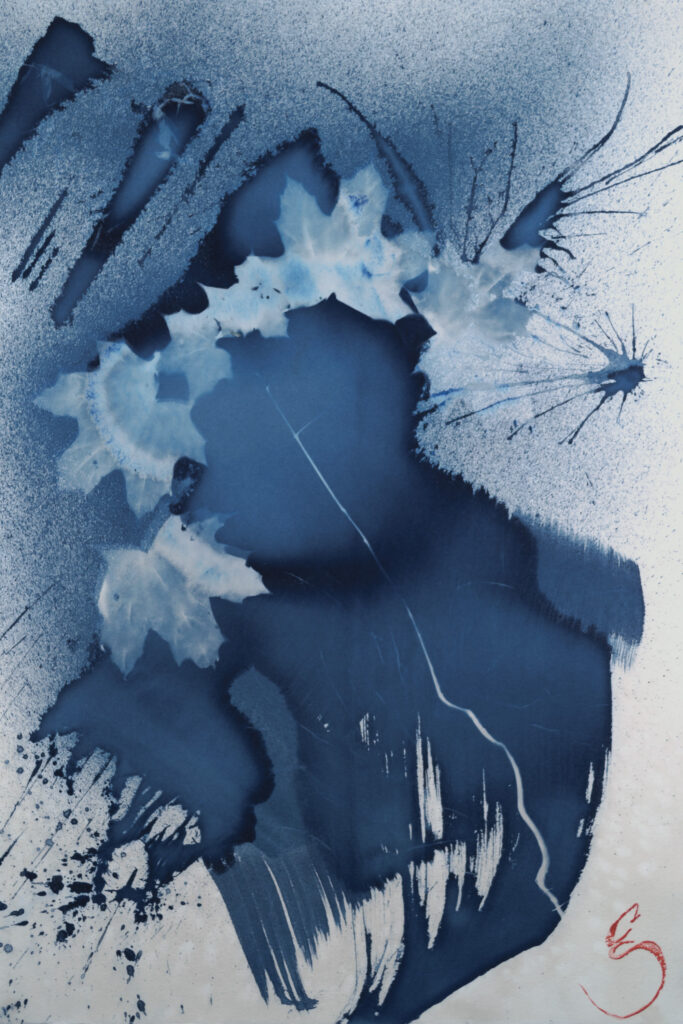
As our conversation with Carmen came to a close, we kept coming back to something she said about her work. That it is not meant to explain or resolve, but to remain open, allowing others to meet it through their own perception.
We think that is one of the most generous things an artist can offer. In a world that constantly demands clarity, that wants everything named and explained and tied up neatly, Carmen is making work that says no. You do not need to understand this completely. You just need to be present with it. Bring what you carry and the painting will meet you there.
And her journey to this point is not a simple one. She started in sculpture, carving stone with her hands, letting form reveal itself through physical labour. When her body could no longer sustain that work she had to walk away from it. That is a loss that most people outside of art do not fully understand. A medium is not just a tool. It is a relationship. And she lost that relationship not by choice but by necessity.
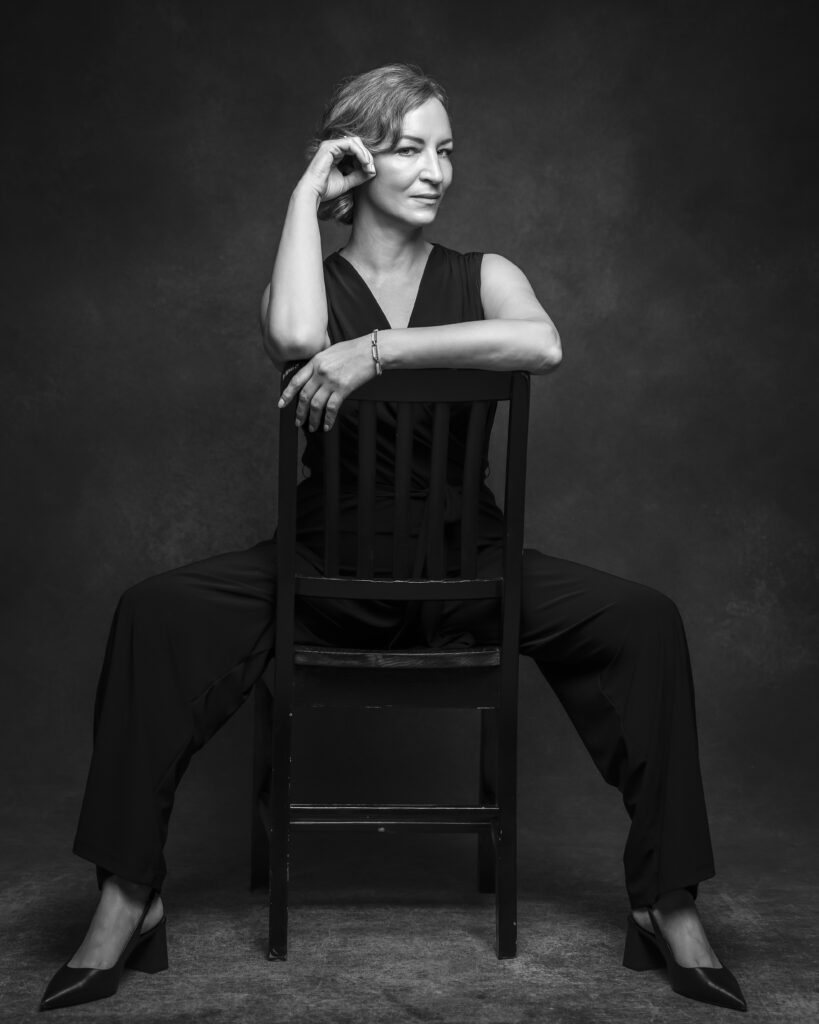
What she did next is what defines her. She moved to painting and carried everything forward. The instinct, the physicality, the refusal to start with a fixed idea. And over three decades she kept adapting. Materials changed. Her body changed. Life threw things at her that could have easily stopped the work. It did not stop.
That kind of commitment comes from something deeper than discipline. It comes from knowing that making is not separate from living. That the search Carmen talks about, for meaning within darkness, for what lies just beyond understanding, that search is not just her artistic practice. It is how she moves through the world.
So if you are someone who has ever felt pressure to make your art clearer, more accessible, easier to understand at first glance, let Carmen remind you that you do not have to. The open space in a painting is not emptiness. It is an invitation. And the viewer who is meant to meet your work there will find their way in.
And if your path as an artist has asked you to change, to let go of something you loved, to find a new way forward when the old way broke, know that the work survives it. It changes shape. It finds new surfaces. But the core of it, the searching, the feeling, the attention, that stays. Carmen is living proof of that. Three decades in and still looking. Still painting what she cannot name. Still trusting that what needs to surface will surface. Not all at once. But in time.
Follow Carmen Samoila through the links below and see what happens when an artist spends three decades trusting what she feels over what she can explain.