


Watch & Listen to this podcast Episode.
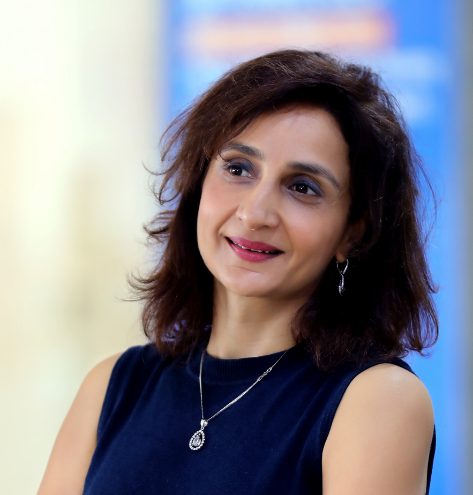
In this episode of the Arts to Hearts Project, Charuka chats with Bhargavi Gundala, a Hyderabad-based artist, printmaker, and the founder of The Art Space—a gallery and community-driven platform that supports emerging and mid-career artists. She talks about how she went from being an artist who felt lost in the art world to someone who created The Art Space in Hyderabad—a place where artists can show up as they are, ask questions without hesitation, and find others on a similar path.
Bhargavi discusses starting from scratch, why she kept one wall in her gallery open to the public, and how small, everyday conversations can shape entire communities. She also shares how she balances running a space with her own creative practice, and why she believes there’s room for everyone in the art world.
If you’ve ever felt unsure about where you belong or what to do next in your creative life, this conversation will feel like a warm cup of tea with a friend who’s been there—and built something beautiful out of it.
00:00 – Bhargavi shares how she started exploring art and printmaking.
04:15 – She talks about feeling lost after returning to Hyderabad.
07:32 – The idea behind starting The Art Space begins to take shape.
11:08 – She explains how The Art Space encourages open conversation.
15:40 – Why she includes artists of all levels in her shows.
19:20 – Bhargavi discusses the gaps left by traditional art education.
24:03 – Balancing her creative work with running the space.
28:17 – How simple conversations can create big shifts.
33:10 – What keeps her motivated through challenges.
37:42 – Bhargavi shares a message for artists figuring things out.
Charuka (00:00.164)
Welcome to the podcast Bhargavi Gobi. How are you?
Bhargavi Gundala (00:04.441)
I’m very well, thank you very much, Arka.
Charuka (00:06.35)
Thank you so much for coming in. Bhagavi, don’t want to introduce yourself, introduce you and I want to invite you to introduce yourself so that people who are listening from all parts of the world, they can know truly who you are and what you do. How about we start from there?
Bhargavi Gundala (00:22.807)
Okay, good. I’m Bhargavi Gundala. I’m a founder of the art space in Hyderabad.
Charuka (00:23.62)
Thank
Charuka (00:35.49)
Yes, yes.
Bhargavi Gundala (00:39.639)
I’m a gallerist, but before that, I’m an artist.
Charuka (00:43.84)
And so you identify as an artist first or a gallerist first. Let me ask you that.
Bhargavi Gundala (00:48.037)
Right now I would say gallerist. Yes, because I’m not practicing art much so I would definitely say it’s gallerist and I’ve been an art collector. I collect art still, I definitely do collect but then I started with collecting art then moved ahead and started studying art and then very later in life I started
Charuka (00:50.902)
Okay, in that state of life.
Charuka (01:13.243)
wow.
Bhargavi Gundala (01:17.039)
being a gallerist.
Charuka (01:18.496)
Yeah, you know, this is so interesting. How long has your, let’s say, how long has your career been for that?
Bhargavi Gundala (01:25.957)
It is more than two decades. It’s been more than two decades, more than two decades, yes. Thank you.
Charuka (01:28.644)
two decades. So that’s a really long good time. Yeah, Manu, congratulations. It’s truly like, you know, to be in, in a
Bhargavi Gundala (01:40.537)
The journey of art may be two to one half decades, but you know, being a gallerist, just a decade.
Charuka (01:46.85)
Yeah, okay. You know what’s even amazing is, you know, the role that you have today wasn’t as common in, you know, let’s say 10 years ago, 15 years ago, I would say. But today, artists have been taking multiple roles, like, you know, let’s say, before the age of social media, artists were not as much exposed, marketing was very different, they were not as hyper-connected and
Still, was the way of structuring of all the business side of their own work was very different. Versus today, a lot of artists have businesses which are within the arts. I’m counting myself also like that. But I know a whole community of our own, as we are artists, but also like a lot of my friends have galleries. I have a publishing business in the arts. So it’s become more common. But while you were doing that, did you see that a lot of artists were taking up different roles also?
within the art specifically.
Bhargavi Gundala (02:48.229)
When I say this, you know, about 10 or 15 years ago or even 15, 20 years ago, this is not a, I mean, it’s changing. The times are changing rapidly. Earlier, you know, things were more organic, I feel. And I mean, I can’t complain though, but things were different, you know. The connectivity was not as much as it was today. So, you know,
Charuka (03:00.513)
Absolutely.
Charuka (03:11.364)
That’s how it’s done.
Bhargavi Gundala (03:14.637)
artists from different schools belong to that place. And now the travel has become so popular. People started traveling from one city to another. They know what’s happening in the other spaces. So it’s not very big thing, know, artists from Kerala, know, showcasing in Mumbai, you know, it can happen just like that. It doesn’t need a time and effort. But earlier it wasn’t like that. It was definitely an effort to…
Charuka (03:19.969)
Bhargavi Gundala (03:42.359)
send the work there, showcase there and things like that.
Charuka (03:45.902)
What, okay, I’ll come to the transition part, but let’s touch upon your early years. First, what brought you to the arts? Like specifically making art, being an artist, what was that first instant that brought you there? Were you always very creative? Did you think you would become an artist?
Bhargavi Gundala (04:03.745)
No, I was not, I have done my bachelor’s and bachelor’s in commerce and economics and then I was busy with my children and but I always did art, know, it was just a practice which was
doing at home just like any other woman. I wouldn’t say it was contemporary art or something, but it was just something, some scribbles and something like that. It was a hobby. I would say that’s called hobby. But then over a period of time, I kind of developed a certain interest. I wanted to look at artwork and know…
Charuka (04:31.736)
You’re going to be pursuing a career, okay?
Bhargavi Gundala (04:53.541)
collect, you know, small things. And which made me start to collect artwork and then wanted to study art. I mean, that’s when, you know, by then my son was already in his middle school. His middle school, but then I wanted to study art. Then I think I made an effort. I made an effort to…
Charuka (05:00.781)
Okay.
Charuka (05:09.975)
Okay, wow.
Bhargavi Gundala (05:18.063)
you know, do my basics right, get my basics right and then started doing a little research, you know, then that’s where actually it started. I started preparing for my, you know, entrance examination and I gave my entrance examination. Luckily I got through, I studied in JNTU. I did my bachelor’s and after doing bachelor’s, you know, my son was then in his high school.
Charuka (05:39.79)
Okay.
Charuka (05:46.549)
wow! Both of you were studying together. Both of you were studying together.
Bhargavi Gundala (05:47.487)
Yeah and then you know I had no choice to sorry.
Yeah, we were studying together. But then, know, by then, you know, I had no choice to go out of the city. So I definitely wanted to do my masters, but then I had no choice to go out because, of family reasons and all that. And then I said, OK, let me let me try and get into as in school if possible. You know, I’ll write my entrance. Let me see what. So I casually wrote and I got into printmaking, though I wanted to do painting. I got into printmaking.
Charuka (06:00.834)
Yeah.
Charuka (06:06.328)
You had response.
Charuka (06:22.199)
Okay.
Bhargavi Gundala (06:22.359)
I finished my printmaking from Essence School and that year I was a gold medalist that year. Yeah. And then after finishing my masters from Essence School, there was, during my Essence School days also, you I mostly used to…
Charuka (06:31.414)
wow.
Bhargavi Gundala (06:47.641)
travel to Baroda and other universities like J.J. or Delhi and a lot of universities to see their final displays. That was something which always interested me. So majority of times I never missed Baroda. It’s been more than two decades that I’ve never missed going to Baroda.
Charuka (07:08.834)
Okay.
wow, you’re going to be young.
Bhargavi Gundala (07:14.039)
So I always went for the final display. That’s when I also collected a lot of artwork and a of printmaking. Printmakers, you know, I collected from lot of printmakers. And during that period of time when I went there, a lot of interesting things happened. So.
Charuka (07:19.029)
on
Charuka (07:36.302)
Lights.
Bhargavi Gundala (07:37.317)
Why? Like those days, you know, everybody considered MSU, know, MSU, University of Baroda has been considered a phenomenon, you know, it’s one of the best universities in the country. It was, you know, it was a happening university, know, Manitha was there and many other very interesting professors and artists were teaching there. So during that period of time, when I went, very interestingly, I found
Charuka (07:41.794)
Yeah. Yeah.
Charuka (07:47.342)
Thanks. Yeah, it was like a mech.
Yeah.
Bhargavi Gundala (08:08.173)
wonderful things happening there. you know during as soon as they finish their classes you know in the evening by four o’clock or five o’clock whatever time you know. Everybody I mean most of the people would definitely go homes right here that didn’t happen so everybody you know gathered at one place you know by evening you know at Chai Bandi or you know in somewhere near the you know some some place where they would sit and talk.
Charuka (08:22.648)
Thanks.
Charuka (08:39.012)
What kind of conversations? Yes.
Bhargavi Gundala (08:39.319)
anything and everything you know the conversations were very simple you know this girl is displaying there and you know this show is happening there but the information was like you know i was always wondering how did they all know about this so this was it so the information was passing on
Charuka (08:57.348)
How is this coming here? How, how? Yeah.
Bhargavi Gundala (09:04.301)
very easily you know it was it was not never intentional it was not intentional but they were talking about everything okay this girl is displaying there you know he has got a show with somebody else and you know he’s got a show with somebody else so
Charuka (09:20.366)
But you know, the conversations today versus the conversations there, I’m sure there must be some kind of difference because you know, there’s so much of difference.
Bhargavi Gundala (09:30.593)
Very interestingly here, the interesting part is, know, like be it Indro or Vasu or anybody, all of them are part of the conversations. It’s not that, it was only students. It was the teachers and students together. So that’s where I think, you know, that, you know, the style of the Gurukulam, I found that element of it there. I wouldn’t want to use that.
Charuka (09:43.684)
students it results in the best.
Charuka (09:54.788)
Yeah.
Bhargavi Gundala (09:59.275)
a word but then definitely there was you know a conversations between professors, teachers and the students were happening very easily. There was no hierarchy, there was no that drama which happens usually.
Charuka (10:01.924)
passing on it.
Charuka (10:06.66)
So good.
Yeah.
But that’s also the creative feeling, right? Which is what we see a lot in the art schools a lot of time where, you know, the creative spirits of people who are creative, like carefreeness and like, you know, that is what we like. I come from a design school. I’ve seen that in art schools. I’ve seen that like there is a different kind of energy specifically, like even in our workspaces. If you see like the studios have a very different energy versus let’s say a corporate floor.
Bhargavi Gundala (10:37.741)
Right, so that’s something which really attracted me, you know, I was so, so, so jealous about it, you know, how come these people know so much and you know, they they know everything. Today we are having a presentation happening at certain space or, you know, a gallery or some residency or an artist. There are so many residency spaces there. So everybody would
Charuka (10:45.378)
on this.
Bhargavi Gundala (11:07.589)
spend time you know take time to go there and spend that evening there you know all the artists not just one or two go you know if they find time no you can expect that all art fortinity will be there
Charuka (11:11.095)
I’m taking it.
Charuka (11:22.776)
You did. Wow.
Bhargavi Gundala (11:24.549)
That’s the fantastic part of it.
Charuka (11:26.68)
I think what’s even more wonderful is like, you in today’s time, it’s on the fingertips. you know, it’s so easy to just send a message to show you care. A lot of times it’s also very, you know, facade.
Bhargavi Gundala (11:36.965)
Today we have everything on the phone. Internet is like know Insta, social media. You know everything what’s happening. But those days it’s not that way. You know have to make an effort to know something. So while this was happening, whenever I went I found this very challenging to know why is this thing not happening in our city. In Hyderabad though when I was doing
Charuka (11:45.164)
Right.
Charuka (11:51.97)
Yeah.
Charuka (12:04.566)
And you were in Hyderabad then?
Bhargavi Gundala (12:06.437)
When I was doing my masters in Essen School, this was not the practice. But then things changed after that. So when I finished my masters, when I came out, I always wanted to have, we should have one interactive space, know, where people can just come meet, sit and talk, chat, have a discussion, who wants to present their work, they can. Or you know, just like an adda where we can have.
Charuka (12:24.025)
Peace.
Charuka (12:33.986)
wow, I love that idea.
Bhargavi Gundala (12:34.629)
small space you know, chai banalo baithke baath karo jo bhi hai. That you know very organic way I wanted to have it that’s when you know we started something called the art space so we don’t call it a gallery. So initially when we started it was not a gallery so it’s an interactive space. So we started this interactive space with one library and one printmaking studio because I being a printmaker
Charuka (12:38.446)
Yeah. Yeah.
Charuka (12:43.384)
Okay.
Charuka (12:46.786)
Yeah, yeah, I know that.
Okay.
Okay.
Charuka (13:00.622)
Okay.
Yeah.
Bhargavi Gundala (13:04.311)
wanted to give that opportunity, know, just have a printmaking unit so that anybody can use it. So we started the interactive space library and a printmaking studio. So that’s how Di was born.
Charuka (13:07.108)
Hmm.
Charuka (13:12.1)
How would you rate it?
Charuka (13:18.233)
Well.
Charuka (13:22.862)
How were the early days of setting up the space? And I also want to ask you, I think one part you’ve covered in the conversation, why you intended, and I kind of connect with it because I think why I also started Arts2us project was very similar. I think we’re just in two different time space because while I was having a lot of conversations, I figured like sitting in India and a lot of my community and friends were in different parts of the world. And I felt like,
you know, we need to connect and I need to connect and we all have such similar experiences that we all need to connect. But also some part that we also started to, we all needed conversations in the sense of fine navigating our careers and what the art world is or how to move forward or just, you know, just
just share experiences like in real time because we all have such drastic experience and then there’s no rule book when it comes to being in the art world or being an artist or running a business, any of that. So I’m trying to understand what was your perspective as an artist also apart from the experience that you wanted to create, but your own experience, any of that part also had to do with supporting artists or how you were in your art career, anything around that.
Bhargavi Gundala (14:41.509)
Yeah, see, you know, when we start this interactive space, didn’t, you know, we tried to activate it because it was not, it was something new for the city. We tried to, but then, you know, suddenly I found this, you know, a couple of young artists came across, you know, they came inside, you know, they would want to talk with me and ask, ma’am, how about, can we, this is such a beautiful, so our gallery is quite huge.
Charuka (14:53.378)
Yes.
Charuka (15:10.603)
Yeah.
Bhargavi Gundala (15:11.109)
So can we have a chance to show our work here? Because know, big galleries usually don’t take our young artists to showcase. So that gave me a thought. Why not I start a gallery which fundamentally supports young artists? So that’s when the vision started and that’s when I, we kind of see
Charuka (15:24.996)
Okay.
Charuka (15:32.717)
Young artist.
Bhargavi Gundala (15:39.681)
The Art Space formally inaugurated in 2014 as The Art Space in an art gallery.
Charuka (15:43.3)
14.
Charuka (15:47.426)
Wonderful, such an incredible initiative. But tell me something.
Bhargavi Gundala (15:50.686)
Yeah, so that’s when you know the the vision and of the gallery became you know we would only work with the young upcoming artists and we would take it as a challenge to see them grow and you know nurture them and so we did a lot many things to handle this like when we came up initially you know we started with shows not many shows we used to do about four shows a year
Charuka (16:00.548)
contest.
Charuka (16:15.661)
Okay.
for shows a year.
Bhargavi Gundala (16:18.219)
and we kind of stick to the young artists across the city. would pick up, already I was going to many universities and I’m aware about the young contemporary artists. it was easy for me to go pick them and start showcasing them. So while this was happening, so there’s always a negation here, whenever I would sit, there’s an artist in me always saying, when I would talk with an artist,
Charuka (16:31.524)
and final.
Bhargavi Gundala (16:46.671)
when they want to display. I know how it is to display in the gallery, but it’s very difficult for an artist to display because in terms of economics or financials, it’s so difficult to put up. So then as a gallerist, have certain set of rules. As an artist, I want some help from the gallery to put this show.
Charuka (16:49.174)
Yeah.
Charuka (16:58.243)
Yeah.
Charuka (17:09.024)
and you want to support.
Charuka (17:13.824)
Yeah. Yeah.
Bhargavi Gundala (17:16.453)
So that was like, you know, always a thing. But I kind of, you know, always balanced and I was always being a balance between. in between that, I was also an art collector. So I should know where to, you know, draw these lines and all that. So then I started off, I started off with showcasing art, young artists and, you know, creating them a platform. And importantly,
Charuka (17:18.5)
We will toss with two sides.
Charuka (17:28.066)
Yeah, invest. Yeah.
Charuka (17:40.974)
That’s it.
Bhargavi Gundala (17:42.721)
We wanted to nurture them in many ways. So we used to have lot of these mentorship programs and a lot of panel discussions and artist presentations mainly. So we always made sure that artists come to Hyderabad. We made sure they would present their work here. And more importantly, we started with something very interesting called talking works where like down south here, we have a
Charuka (17:47.916)
Okay.
Bhargavi Gundala (18:12.045)
issues with our language. We think we are not that good in language. we are, so always a difficulty in communication. So, you know, we wanted to work on that. So, so we said, you know, when, whenever we, they ask, you know, you have to present your work, they would not come forward thinking that, you know, it’s not possible. You know, we don’t want to, you know,
Charuka (18:13.952)
Okay.
Charuka (18:19.758)
Okay.
Charuka (18:24.492)
Okay. Okay.
Charuka (18:34.98)
for this.
Yeah.
And this is a very common problem with a lot of people who…
Bhargavi Gundala (18:41.269)
showcase a lot of it. So, but how did we work on that? You know, we called them, we gave them a chance to do it without anybody in the gallery. We asked them, we made sure, you know, you sit in front of them and, you know, talk, help them with the presentation, help them with other activities. And then, you know, slowly process things and then it moved and went ahead. And it was a huge success, you know, people came, you know, really accepted.
and they started showcasing a lot of things. That was a huge success working on talking works.
Charuka (19:16.174)
Wow. And I think at that point, I think today a lot of people have started taking a lot more efforts, like there so many more programs. There are also services, like there are all kinds of spectrums and that spectrum is only growing. But at that point, I don’t think there were enough resources for artists. And just even a drop in the ocean really counts.
Bhargavi Gundala (19:38.499)
yes, by then you know we were also equipped with lot of digital material like you know we had a lot of digital films and lot of digital activities and all that.
Charuka (19:44.044)
Okay.
Charuka (19:53.24)
Wow. What do you think was the biggest challenge since starting the art space? Till now, what are the few top challenges that you feel?
Bhargavi Gundala (20:08.421)
The challenges I would say are, know, every day was like, you know, something, you know, come up with, I didn’t want to, you know, replicate something or I don’t want to do something which has already been done. So I always came up with something interesting to make sure that, you know, young get attracted and see that, you know, we work in a very interesting way. So one such thing was during, I think it’s before pandemic.
Charuka (20:15.523)
in.
Bhargavi Gundala (20:38.213)
very interesting thing. So lot of times I found this thing, know, the youngsters, you know, finding it difficult. So I used to receive a lot of emails, emails, you know, first thing they wouldn’t know artists, most of the artists wouldn’t know how to write an email. I was, I’m sorry to say that, but a lot of people didn’t know how to address, how to email.
Charuka (20:47.265)
Okay.
Charuka (20:53.738)
email, how to reach out.
We still receive, in this time in age also still receive just blank emails with a PDF attached. That’s it.
Bhargavi Gundala (21:04.677)
Yes, now at least now I see last two three years there is a change but previously they didn’t know how to write an email they didn’t know how to put things together they send their work nothing of that sort but So during that time, you know, I came up with a very interesting thing called beyond classrooms Your beyond classroom is a very interesting project which we did
Charuka (21:09.355)
Absolutely.
Charuka (21:25.505)
Okay.
Bhargavi Gundala (21:33.557)
like what is not taught in classroom. So I picked up about seven or six or seven speakers who would talk about
Charuka (21:36.728)
Okay.
Charuka (21:45.155)
Okay.
things you wouldn’t find in the classroom.
Bhargavi Gundala (21:49.387)
Yeah, whatever like Indra, Indra Pramit Roy was a professor or he teaches in MS University. So he would talk about the discipline of being an artist. What is not taught, know, everything about being an artist. And so he would he would take up 30 minutes and he would do a recording. That’s one of one of it. And then after that, we had somebody like Surya Jayaram. He
So artists didn’t know how to approach residencies, didn’t know how to approach trusts and like, you know, how to write to them. Where are these places? Where are the residency programs? Where are these awards? And you know, how do you approach international residencies? So we requested him to talk about it. So in the video, he gives the list of these spaces, programs, everything what happens.
Charuka (22:25.942)
Yeah.
Bhargavi Gundala (22:45.135)
So that was one. The other was Vidya. Vidya didn’t do it. then, yeah, we had Naman. Naman did, so aesthetics was very important. And how do you write? How do you make an understanding? How art history was very important. So all this, you know, including discipline, art, trust, how do you approach people? Everything was like, you know, it’s called a series called Beyond Classrooms.
Charuka (22:58.404)
I just.
Yeah.
Charuka (23:10.551)
agency.
Charuka (23:14.882)
I love them.
Bhargavi Gundala (23:15.053)
It’s a series of six series and very beautifully documented and then it helped a lot. It helps because a lot of information is being given there.
Charuka (23:17.985)
Okay.
Charuka (23:25.868)
Yeah, wow. So are these programs like, are artists still using them? Are these like available online? How are they still here?
Bhargavi Gundala (23:27.791)
So.
Bhargavi Gundala (23:36.803)
They’re all available. They are available.
Charuka (23:38.262)
Okay. So people who are listening, let’s say if they’re interested, how would they find them?
Bhargavi Gundala (23:44.645)
It’s all on these websites and YouTube channels.
Charuka (23:49.956)
wonderful. So it’s completely accessible. So if you’re interested, I’m going to make sure that we dig in and find those links for everyone. But OK.
Bhargavi Gundala (23:54.191)
right.
Bhargavi Gundala (23:58.947)
Right, right. So then we moved on further and you know, we came up with much more interesting, like we had mentorship programs, like you know, we would invite B.V. Suresh or they would come spend about three days, understand their work and you know, he can sit with them for three days completely and you know, have a conversations and see that, know.
There are a lot of things which happen when you sit with such artists. So there were wonderful things which we kind of incorporated in our calendar.
Charuka (24:30.04)
Well, the
Charuka (24:38.254)
But how was your shift from being an artist to then running a business? Because even though there’s a lot of similarity, but there’s also a lot of lot of dissimilarity. So how did you personally take up these two different roles?
Bhargavi Gundala (24:54.949)
didn’t find big difference at all somehow. Because you know, okay, when you say business, yeah, maybe, but then yeah, I didn’t find because you know, whenever you’re dealing with art and visually you’re placed everywhere, engaging yourself. So I didn’t find it much difficult.
Charuka (25:12.406)
Yeah, but you know the scaling of the business, making sure the P &Ls, know, the sales side and all of these things. Were you like…
Bhargavi Gundala (25:21.859)
I know, I think it naturally came in, but I think I didn’t work on it.
Charuka (25:26.724)
So it wasn’t like a much of a shock. It was a smooth transition for you. What does your role look like today? What is that interests you today the most? And what are you working on most right now?
Bhargavi Gundala (25:34.596)
Yes.
Bhargavi Gundala (25:43.471)
So right now we’re also looking forward now to do a lot of international shows. So right now we are in India Art Fair, so we’ve been getting invites to do a lot of international shows. So we want to wait another one or two years to make that big leap. So right now, I’ve been also working, we’re working on paper, but then definitely want to do a lot of international shows.
Charuka (25:48.258)
Okay.
Charuka (25:53.751)
Yeah.
Charuka (26:01.08)
Yeah.
Charuka (26:09.784)
And how do you find artists, this is a common question I always ask, today’s galleries, how do you find your artists? What is your mindset looking at?
Bhargavi Gundala (26:17.025)
That’s one thing, I travel to lot of universities, the residencies and residential programs. we go and see. I visit lot of artist studios. So that’s one of the ways where I can go. And people know me as a collector who only collects young artists.
Charuka (26:33.485)
Okay.
you
Charuka (26:43.628)
Young artists.
Bhargavi Gundala (26:43.855)
So that’s also even more easier for me. So people approach me because they know that I collect. So it becomes much easier.
Charuka (26:48.972)
I love that. because it’s also, yeah. How’s the change of social media, digital media? Has that brought a change in your life?
Bhargavi Gundala (26:58.789)
That’s a wonderful, that’s a fantastic technology. It’s mind boggling, but yeah, it all depends on how you use it. Yeah. I know sitting here, I know what’s happening at, what are the artworks displayed at Art Basel Miami, Art Basel anywhere. I know each and every work which is being displayed at any art, any banali.
Charuka (27:10.2)
How do you use social media Instagram to find artists?
I might.
Charuka (27:25.316)
You
Bhargavi Gundala (27:27.467)
Benales or any art fairs, each and every work is being kind of spoken about and talked about.
Charuka (27:32.516)
Bye!
Charuka (27:37.806)
But you know what’s even interesting is it’s become so much easier. if you love someone and admire someone’s work, like there’s so many artists I’ve connected with, so many other entrepreneurs I’ve worked with that have looked up and I’ve just sent a message, you know, I really love the work that you do. And it’s like, it’s blossomed into friendships and in partnerships and collaborations and creating works together. And like, I think that’s also something that’s become very powerful that we’re always now, which is the negative and the positive, we’re always a message away.
Bhargavi Gundala (28:08.855)
Right, very very interesting you know, social media has become the priority right now.
Charuka (28:16.472)
So how are the artists of today that you’re like from, let’s say a decade ago to artists from this age and time, is there a difference?
Bhargavi Gundala (28:27.365)
the decade ago or even two decades ago people artists like you know they were just artists artists were just artists you know they would paint and they didn’t have much to do with the marketing or sales or all this was not their yeah but today things are different youngsters are everywhere in anything they know how to do
Charuka (28:34.424)
Yeah.
Charuka (28:46.378)
on the video.
Bhargavi Gundala (28:54.937)
how to market, how to sell, how to approach a gallery in terms of contracting and all that. It’s becoming very easy for them to be, I’m happy that things are.
Charuka (29:06.862)
But I think it’s also easy, it’s also gotten complicated in the sense of sometimes too much information also gets too much.
Bhargavi Gundala (29:14.371)
Yeah, we also have those problems. know, we definitely, was discussing with that with somebody else, right? Just about an hour ago. So yeah, we have difficulties, you know, there are certain ethics which are missing, you know, we have contract systems where, know, our artists, know, most of the artists are very, very, you know, good, and you know, they’re very sweet, you know, they know how they’re very ethical. No, being an artist is being
Charuka (29:41.399)
Yeah.
Bhargavi Gundala (29:43.317)
they have to be very ethical anybody be it a gallerist or an artist anybody should follow certain ethics so while doing this you you sign a contract with a gallery then you have to abide by that the rules but then you know the next day you get to do something else which actually bothers the yeah all this keep happening but once you know that you know you are
Charuka (29:44.761)
Yeah.
Charuka (29:50.264)
Right.
Charuka (30:00.835)
Yeah.
Charuka (30:05.764)
Yeah, I’ll reuse them.
Bhargavi Gundala (30:13.283)
doing something I think you have to take up the responsibility of being a good artist.
Charuka (30:20.598)
Yeah. So what’s okay, one last question. What’s your advice for young emerging artists who listening, which is the audience that we have for this podcast? There’s a lot of young women from across the world who listen to the podcast and they’re artists, creators. And what is your advice for them who are ambitious, who want to, I think, know, grow their careers or make a living out of their work?
or just be better artists. What’s your advice?
Bhargavi Gundala (30:56.325)
So these days being, I’ll talk as a gallerist, because galleries play a vital role in doing a lot of the work, certain work for the artist. I would also suggest, youngsters or the artists who are moving further, they need to work with certain galleries or they have to stick to certain people whom they trust and work with them.
Charuka (31:06.145)
Yeah.
Bhargavi Gundala (31:26.051)
give that responsibility of doing that marketing and sales to somebody else and you concentrate on your work. You concentrate on your work. You do your duty better when others are there to do their duty. know, do that so that, you know, there is certain kind of bond which happens. know, there are wonderful people, you know, most of it runs that way. Most of the
Charuka (31:43.981)
Thank you.
and
Bhargavi Gundala (31:56.193)
galleries and run that way you know they have certain beautiful bonding between their artists and you know they constantly have this but you know you work with multiple galleries multiple artists multiple because there is certain kind of you know stigma to it where you know there are trust issues because if you’re working for you’re just working you just work let the dirty work be done by somebody else
Charuka (32:25.124)
Yeah.
Bhargavi Gundala (32:25.497)
Being an artist, you need to have that pleasure of just that peace of mind to sit and work, enjoy. Let the marketing and sales and other things be done by somebody else. So when you start doing both things all at a time, there is one of you who is lost. Either…
Charuka (32:30.572)
Yeah.
Charuka (32:35.406)
Hmm.
Charuka (32:50.52)
Yeah.
Bhargavi Gundala (32:52.133)
you are lost as an artist or either you lost as a you will be not able to do as much as marketing or sales or know multiple when you start doing multiple things you can’t juggle between all of them together
Charuka (32:59.502)
Yeah.
Charuka (33:05.676)
There’s always an incremental and an incremental.
Bhargavi Gundala (33:07.189)
Yeah, so you stick to be what you want to do or strictly you want to be on a social media do you? Yeah, you can but you can’t do all five things at a time Yeah, so then you lose out on something. So just be aware that you know what you want to be and stick to it Yeah, so you stick to what you want. Let the let the others do their job So then you know, it’s much easier and you know Things are more transparent
Charuka (33:16.814)
at once.
Charuka (33:24.58)
There’s only so much we all can do.
Bhargavi Gundala (33:37.359)
Keep things transparent.
Charuka (33:37.476)
But then what, you know, there’s, I think all artists would love it if there was somebody else selling it for them, promoting for them. But unfortunately in the time and space we live there way more artists than there are art agents, art gallerists, you know. So then, you know, the question comes back that if we don’t have enough structure, if we don’t have enough artists, resources for artists to be representative of art with,
and they feel left and confused.
Bhargavi Gundala (34:15.269)
There are enough galleries, there are enough spaces. So I did definitely speak with lot of young artists because I get to. So if their work is good and they are 100 % approached by a gallery, you will never be neglected because these are not old times where you you’re sitting in a corner, nobody can see you. can see you, people can.
Charuka (34:18.2)
Yeah.
Charuka (34:39.382)
you were yeah
Bhargavi Gundala (34:44.773)
you so be more approachable than being able to you know find it you know I don’t find somebody to promote
Charuka (34:54.5)
Hmm. Hmm.
Bhargavi Gundala (34:57.199)
So you just have to get a little more approachable.
Charuka (35:00.928)
accessible. Wonderful. Thank you so much, Bhagavi. It was very nice speaking to you. How can people find you? Can you share how can people find the art space and the website or Instagram, anything, or if they want to use your message.
Bhargavi Gundala (35:17.121)
Yeah, we’ll share everything. Very interestingly, we started as The Art Space, then we moved ahead and started something called The Residency, where we also support your residency program. We do lot of international collaborations where we invite artists from France, Germany, whichever place, they would come stay with us for a month or two and then go back.
Charuka (35:23.32)
Yeah.
Charuka (35:30.123)
Okay.
events.
Bhargavi Gundala (35:45.565)
and that’s a residency program. do local residencies also like we invite artists from the country, anywhere from the country to apply and we just take some of them. second, we are also coming up with a curator’s residency this coming year.
Charuka (36:02.393)
wow.
Bhargavi Gundala (36:05.027)
And we, after that, you we started something called The Collective. The Collective is a very interesting discipline where we don’t just work with the art, we work with multiple disciplines like dance, performances, music, or theatre, poetry, anything. So they’re all intellect. So The Collective has
Charuka (36:05.038)
Monday.
Charuka (36:09.144)
it.
Charuka (36:18.102)
Okay.
Okay.
No man.
Bhargavi Gundala (36:35.479)
We organize a lot of other cultural activities and all that in the Collector. And then we move forward and we started something called FACE Foundation, Foundation for Art and Culture Education. So in that foundation, we usually support, give grants, we do lot of some things like Beyond Classrooms and very interesting programs like Hyderabad, the city of many stories. So we…
Charuka (36:35.992)
I just need to.
Bhargavi Gundala (37:05.103)
We work with lot of oral historians and bring out lot of information about Hyderabad in bits and pieces, not more than 20 minutes. We do these recordings. They’re all available on FACE Foundation. And then lastly, the fifth vertical is The Contemporary. We recently started The Contemporary last year. And you know, the rest. So yeah.
Charuka (37:13.537)
Okay.
Charuka (37:17.901)
Okay.
Charuka (37:21.956)
Yeah.
Okay.
Charuka (37:28.42)
Yes, we all know the rest. So wonderful. A big congratulations for the amazing work that you’ve done for two decades and beyond. And I really hope there’s just the start or the tip of the iceberg and such more incredible work that you have in the future for all of us. So thank you. Thank you so much for sharing your experience, your thoughts and stories with us. It was very nice speaking to you and I hope to see you soon again. Thank you. Bye bye.
Bhargavi Gundala (37:34.309)
Thank you very much.
Bhargavi Gundala (37:54.457)
Thank you very much. Thank you. Bye bye.
Charuka (37:59.146)
I’ll take a pause.
.
About the Guest(s):
Bhargavi Gundala, the founding director of Dhi, is an artist, gallerist and avid collector of contemporary Indian art. She received training in printmaking from S N School of Arts and Communication, University of Hyderabad. Her willingness to be a support to the young artists in the early years of their careers encouraged her to create a space for exchanges and interactions. And hence, Dhi Artspace was envisioned and came into its physical existence in October 2014. Her perennial effort to bring thinking minds together and engage them in dialogue has conceptualized and initiated a series of panel discussions, talks, workshops, mentorship programmes and many such activities.

Episode Summary:
In this engaging conversation, Bhargavi Gundala—artist, art collector, and founder of The Art Space in Hyderabad—shares her unconventional journey into the art world. With a background in commerce and a deep-rooted passion for creativity, Bhargavi began by collecting art, which led her to formally study fine arts, including a gold medal in printmaking from SN School. Her early experiences visiting iconic institutions like MSU Baroda exposed her to vibrant, collaborative art environments that deeply influenced her vision.
Motivated by the lack of such interactive and nurturing spaces in Hyderabad, Bhargavi established The Art Space—initially not as a gallery, but as a community-oriented, non-hierarchical adda with a printmaking studio and library. Over time, it evolved into a gallery with a strong mission: to support and mentor young and emerging artists.
Bhargavi emphasizes mentorship, access, and communication training through unique programs like “Talking Works” and “Beyond Classrooms”, addressing common gaps in art education such as writing emails, applying to residencies, and presenting one’s work. Her approach blends her roles as a gallerist, educator, and collector.
Despite challenges—like shifting communication norms and the complexities introduced by social media—she welcomes the digital age’s reach while staying grounded in values of collaboration, dialogue, and ethical engagement. She’s now focusing on taking The Art Space to international platforms, further amplifying the work of Indian artists globally.
Key Takeaways
- Bhargavi’s journey began as an art collector before she found her voice as a practicing artist.
- The Art Space in Hyderabad was created to offer the community-driven art environment she couldn’t find locally.
- She believes in mentorship as a core pillar to support emerging artists, not just exhibitions.
- Bhargavi challenges hierarchical gallery models by prioritizing collaboration, not gatekeeping.
- Initiatives like “Talking Works” and “Beyond Classrooms” help artists build essential life and career skills.
- She emphasizes the importance of writing, communication, and application processes in an artist’s career.
- Her vision is to amplify Indian contemporary art globally without losing its contextual roots.
Notable Quotes:
“I didn’t want to be just another gallery; I wanted to build a space that makes you want to stay and talk.”
“The most difficult thing in art is not making the work—it’s talking about it.”
“There’s so much happening inside the studio, but the outside world rarely gets to hear those stories.”
“Our educational systems teach you to make art, but not to navigate the art world.”
“Collecting art helped me understand artists before I became one—it shaped how I built this space.
Charuka Arora is the founder of the Arts to Hearts Project and Host of the Arts to Hearts Podcast. She is also an acclaimed Indian artist known for her contemporary embellished paintings. Her unique blend of gouache, collage, embroidery, painting, and drawing explores the intersection of art, culture, heritage, and womanhood. Through her work, she tells stories of female strength and encapsulates them in pieces that can be treasured for generations.

Charuka’s work draws inspiration from Hindu mythology, recognizing women as vessels of Shakti, the cosmic energy. She beautifully portrays powerful goddesses like Durga Maa riding a tiger or lion, symbolizing their unlimited power to protect virtue and combat evil.
Through her art, Charuka invites us into the world of women, showcasing their beauty, strength, and resilience. Her creations not only exhibit exceptional talent but also serve as an inspiration and a symbol of hope for those challenging societal norms.
Arts to Hearts Podcast is a show delving into the lives and passions of renowned artists. From running creative businesses and studio art practices to cultivating a successful mindset, Charuka Arora engages in heartfelt conversations with her guests. Experience your personal happy hour with your favorite artists right in your studio.
Through candid discussions, Charuka and her guests reveal the joys and challenges of a vibrant creative life, both within and beyond our studios. Get ready to be inspired and uplifted as you tune in.
Bhargavi Gundala, the founding director of Dhi, is an artist, gallerist and avid collector of contemporary Indian art. She received training in printmaking from S N School of Arts and Communication, University of Hyderabad. Her willingness to be a support to the young artists in the early years of their careers encouraged her to create a space for exchanges and interactions. And hence, Dhi Artspace was envisioned and came into its physical existence in October 2014. Her perennial effort to bring thinking minds together and engage them in dialogue has conceptualized and initiated a series of panel discussions, talks, workshops, mentorship programmes and many such activities.
In this episode of the Arts to Hearts Project, Charuka sits down with Bhargavi Gundala, an artist and the founder of The Art Space in Hyderabad, India. From her early days of sketching in silence to running a community-driven gallery, Bhargavi’s journey is one of quiet grit, a love for making, and a desire to make things better for others in the art world.

When You Don’t See What You Need, You Create It
Bhargavi didn’t always dream of being a gallerist. She started just making art on the side—trying things out, joining art groups, and posting work online. But over time, she began to notice something missing: a space where early-stage artists could ask questions, make mistakes, and be guided without fear.
“I had no idea how the art world worked. No one told us how to apply for a show or what a curator does. That confusion stayed with me.”
That feeling led to a bigger thought—what if she created the kind of space she had always needed?

Starting The Art Space with Zero Plans and All Heart
In 2019, Bhargavi discovered a small space and decided to open The Art Space. No perfect plan. No big funding. Just the desire to offer something meaningful for artists like her.
She kept things simple—one wall of the gallery was left empty, allowing anyone to hang their work without judgment or criteria.
“We called it ‘The Blank Wall Project’. Anyone could just bring their art and display it for a few hours. No jury, no fees.”
This open-door attitude quickly made The Art Space a go-to for emerging and curious artists in the city.

What Happens When You Let Conversations Lead
For Bhargavi, the real value of art spaces lies in what happens around the art—not just the exhibitions. Over time, The Art Space evolved into more than just a gallery. It became a place where people came to talk, learn, and sit together. She started hosting discussions, small group sessions, and artist meetups where there was no pressure to perform.
It started feeling like an adda, you know? Like that corner tea stall where people just come and chat for hours. That’s the vibe I wanted.”
Bhargavi Gundala- Arts to Hearts podcast s05e03

Teaching What No One Talks About in Art School
One of Bhargavi’s most impactful projects is called “Beyond Classrooms.” It’s a series of sessions that cover everything from writing artist bios to applying for residencies and understanding pricing.
“We don’t learn these things in college. You’re expected to figure it out later, but most artists don’t even know where to begin.”
She invited professionals—curators, writers, organisers—to come and explain the basics. Artists showed up, asked questions, and found a sense of community.

Why Supporting Each Other Matters
Bhargavi believes that the art world becomes better when artists stop seeing each other as competitors. She wants artists to cheer each other on, share contacts, and lift others as they grow.
“Everyone’s trying so hard to find a place. But the truth is, there’s space for everyone if we stop gatekeeping.”
Through The Art Space, she’s doing her part to build a culture of care and sharing—without waiting for permission or approval from traditional systems.
Making Time for Yourself and Your Practice
Even though she runs a gallery and works on multiple programs, Bhargavi still makes time to create art. Her work often involves printmaking, exploring materials, and playing without pressure. She admits it’s not easy balancing both roles, but the trick is not waiting for the “perfect time.”
Bhargavi’s journey shows us that you don’t need fancy degrees, a big network, or years of experience to build something valuable. Sometimes, you need to start with what you wish existed, and stay open to what happens next.
Whether you’re an artist, a curator, or someone curious about how art communities grow, this episode is a reminder that conversations, care, and curiosity can build lasting spaces.
To connect with Bhargavi, visit her website and Instagram links.
Click here to read more about the Arts to Hearts Podcast and its episodes.
Listen to this & other episodes on
How Artist Sarah Fishbein Turns 1950s Romance Comics into Modern Paintings
Inside Susie Sprinkel’s Art Stories Woven with Fabric and Thread
How The Restless Creative Anita Clipston Turns Trauma into Art
Inside Radhika Gupta-Buckley’s Creative Journey with Indian Roots