

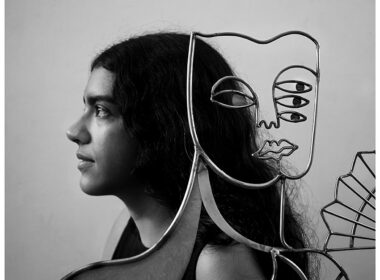

Barbara Felix on making Art Rooted in Dance and Community
👁 123 Views
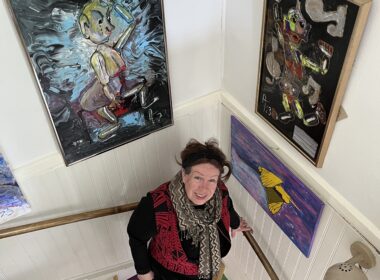
Barbara Felix’s work grows out of attention. Attention to bodies as they move through space, to voices shaped by experience, and to the ways stories live inside everyday people. Based in San Antonio, Felix has built a practice that moves easily between painting, fabric installation, sound, stop motion, and performance video. In this interview, she traces the path that led her there, beginning with early memories of noticing skin tone and likeness as a child, through a long career in graphic design that taught her how to think and plan, and into a later return to figure study that sharpened her understanding of anatomy and form.
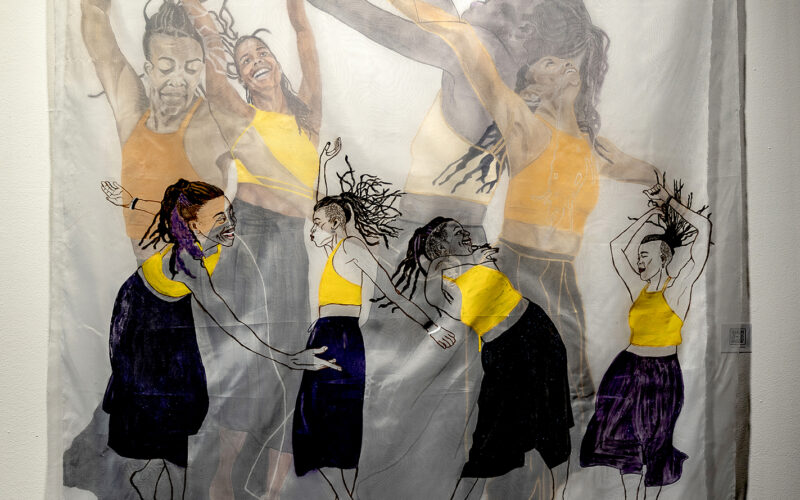
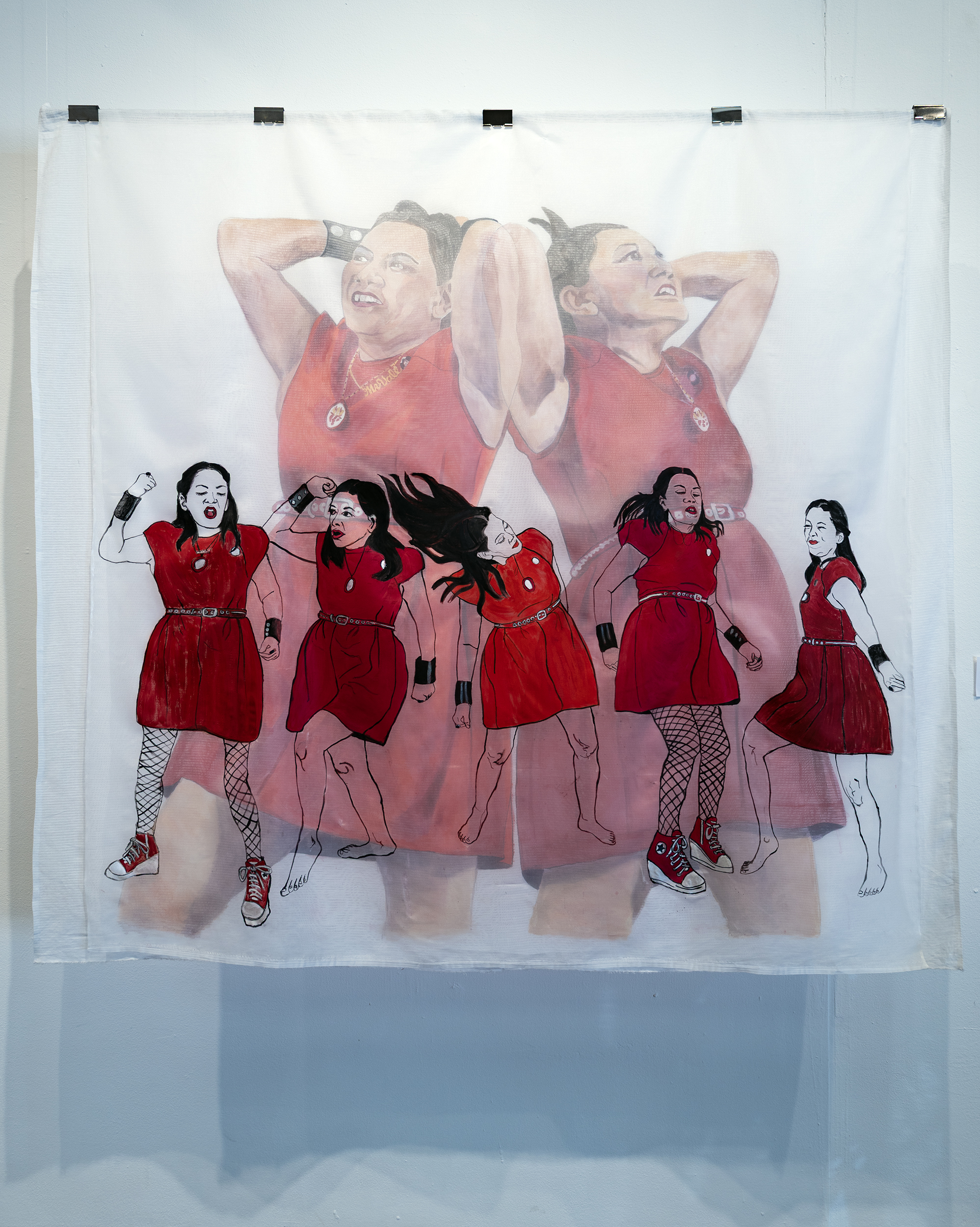
Much of the conversation centres on The Glorious Way She Moves, a project that has followed Felix across years, cities, and institutions. She explains how each portrait begins with filming a woman as she dances, then selecting still moments that convey gesture and presence. These images become layered paintings on Yupo paper or translucent fabrics that hang in space, allowing viewers to move among them. Each work is paired with an audio recording from the woman portrayed, adding another layer that brings context, history, and lived experience into the encounter. Through this process, Felix speaks about her desire to make space for women’s stories at a time when listening to one another feels increasingly necessary.
Felix also discusses why movement continues to pull her beyond still images. She shares the discipline behind her stop-motion work, where months of daily drawing yield only minutes of animation, and how performance video opened new directions when invitations and time constraints pushed her to experiment. Throughout, she makes clear that the medium is never the starting point. Instead, the needs of each project guide whether she draws, paints, records sound, or turns on a camera.
Beyond the studio, the interview reveals how Felix’s role in the San Antonio art community has grown. What began as a practical decision to invite other artists into an exhibition became a sustained commitment to organising shows, supporting Black artists, and building platforms for others to be seen. She talks about leadership, mentorship, and the responsibilities that come with running a gallery alongside her husband. Closing the conversation, Felix reflects on leaving a corporate design career in 2022 and what surprised her most since then: not a slower pace, but a fuller one, and the ongoing work of learning how to balance making, collaboration, service, rest, and family.
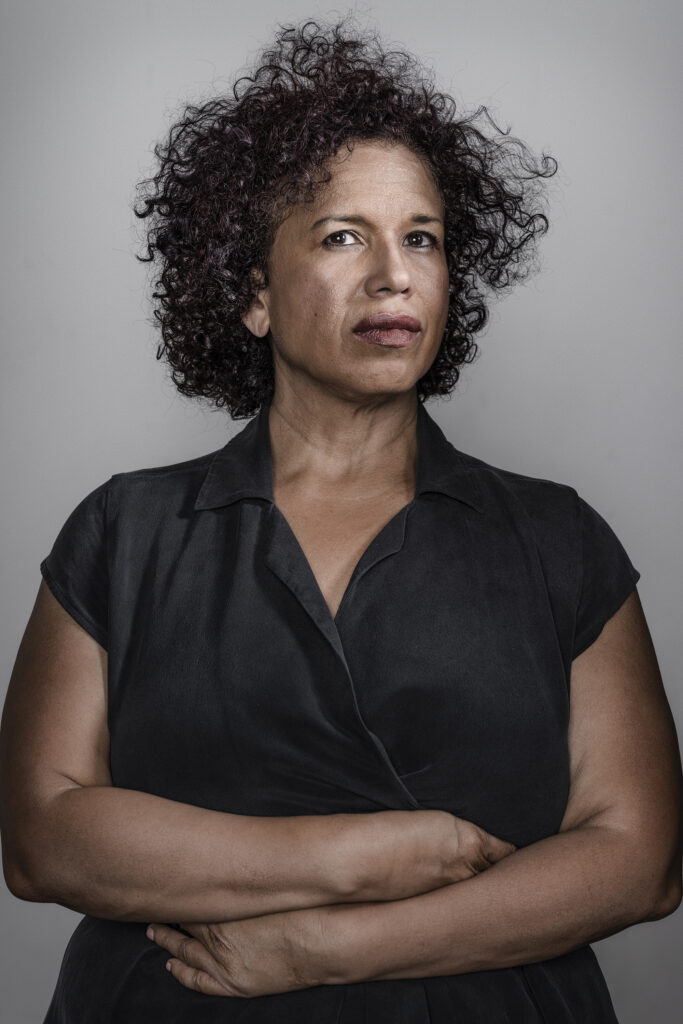
Barbara Felix is a San Antonio–based interdisciplinary artist whose contemporary portrait work explores dance, movement, and expressive depth. She holds a BFA in Graphic Communication from Texas State University and a certificate in Drawing, Painting, and Printmaking from the Southwest School of Art. Largely self-taught in stop-motion animation, experimental video, and audio editing, Felix integrates multimedia approaches into her practice. Felix is a recipient of the City of San Antonio Individual Artist Grant, the Women & Their Work Gallery solo exhibition grant, and the Alice Kleberg Reynolds Foundation Working Artists Fund for Women Grant. Her work has been exhibited and screened throughout Texas, across the United States, and internationally in Germany and Mexico. In 2025, she was recognized by the Texas Parks & Recreation Arts & Humanities Award for her participation in In Conversation: The Artist & Her Muses, honoring the importance of joy in everyday life. Felix serves as President of the San Antonio Ethnic Art Society and sits on the Executive Board of Contemporary Art Month. She co-founded The Beacon@Midtown Gallery & Studios in San Antonio. STATEMENT: The Glorious Way She Moves is my exploration of the female form, portraying women’s journeys from innocence to empowered maturity. Through dynamic, movement-based portraits, I celebrate the individuality, vitality, and spirit of women I know, encounter, or admire. Each work magnifies their presence, honoring diverse experiences and paying tribute to women’s resilience and strength. My process begins with filming women as they dance. From this footage, I select still frames that capture signature gestures, then layer them into whole-body portraits that feel both personal and universal. I work in water media and acrylic on Yupo paper as well as translucent fabrics such as voile and organza. Suspended and layered, these fabric pieces move beyond the frame, surrounding viewers in an immersive encounter where the portraits themselves appear to dance. Every painting is paired with an audio recording of the woman portrayed, creating multi-sensory works layered in paint, fabric, and voice. These voices share truths of struggle, empowerment, and joy—reminding us that survival and celebration are intertwined.
1. Growing up in San Antonio and having roots in both Black and Mexican cultures, how did those early surroundings shape your interest in the human figure before formal art training began?
Growing up rooted in both Black and Mexican cultures, I was always drawn to people. I remember painting my first self-portrait in second grade—carefully mixing browns to capture my skin and painting my braids. Even before formal art training, I was paying close attention to the human figure and how identity lives in the body. I was a late bloomer as an artist, but figure drawing was the first elective I took in college, and it’s where I discovered I had a natural ability to render likeness. I’ve always been deeply social; even as a child, my friendships reflected the diversity of the environments I moved through. I noticed physical differences, but I never experienced them as points of judgment. To me, skin tones felt like variations within a shared human palette—something expansive and interconnected. As an adult, and with a growing awareness of racial discrimination, it became important for my work to affirm the beauty of darker skin tones while also acknowledging the wide range of complexions within both African American and Mexican American communities. My portraits celebrate that diversity and reflect a belief in coexistence—honoring difference while emphasizing our shared humanity.
I remember painting my first self portrait in second grade, carefully mixing browns to capture my skin and painting my braids.
Robyn Gram-Barclay
2. Moving from graphic communication at Texas State to figure study in Honolulu and later at the Southwest School of Art involved very different environments. What did each place challenge or undo in your thinking?
I earned my degree in graphic design in 1991, though I always took fine art electives. At eighteen, when I first recognized my artistic ability, graphic design felt like a practical way to stay close to creativity while I figured out what I wanted to say. At Texas State University, we were taught how to think—conceptually and critically—which gave me structure and discipline, even as I began to realize I had a more personal visual voice. Fifteen years later, studying at the Southwest School of Art challenged me in a completely different way. I went there to focus on technique, and learning anatomy, proportion, and oil glazing transformed my work. What had once been intuitive and somewhat naïve became more grounded, even as I returned to a gestural, expressive style. That balance between accuracy and emotion continues to define my portraits. For years, I resisted using technology in my artwork, but eventually I recognized that my graphic design and Adobe skills were valuable tools rather than limitations. Today, I use them to capture my muses, build compositions, and create stop-motion animation and performance video. Embracing both design and fine art ultimately led me to work interdisciplinarily—allowing thinking and intuition, structure and movement, to coexist in my practice.
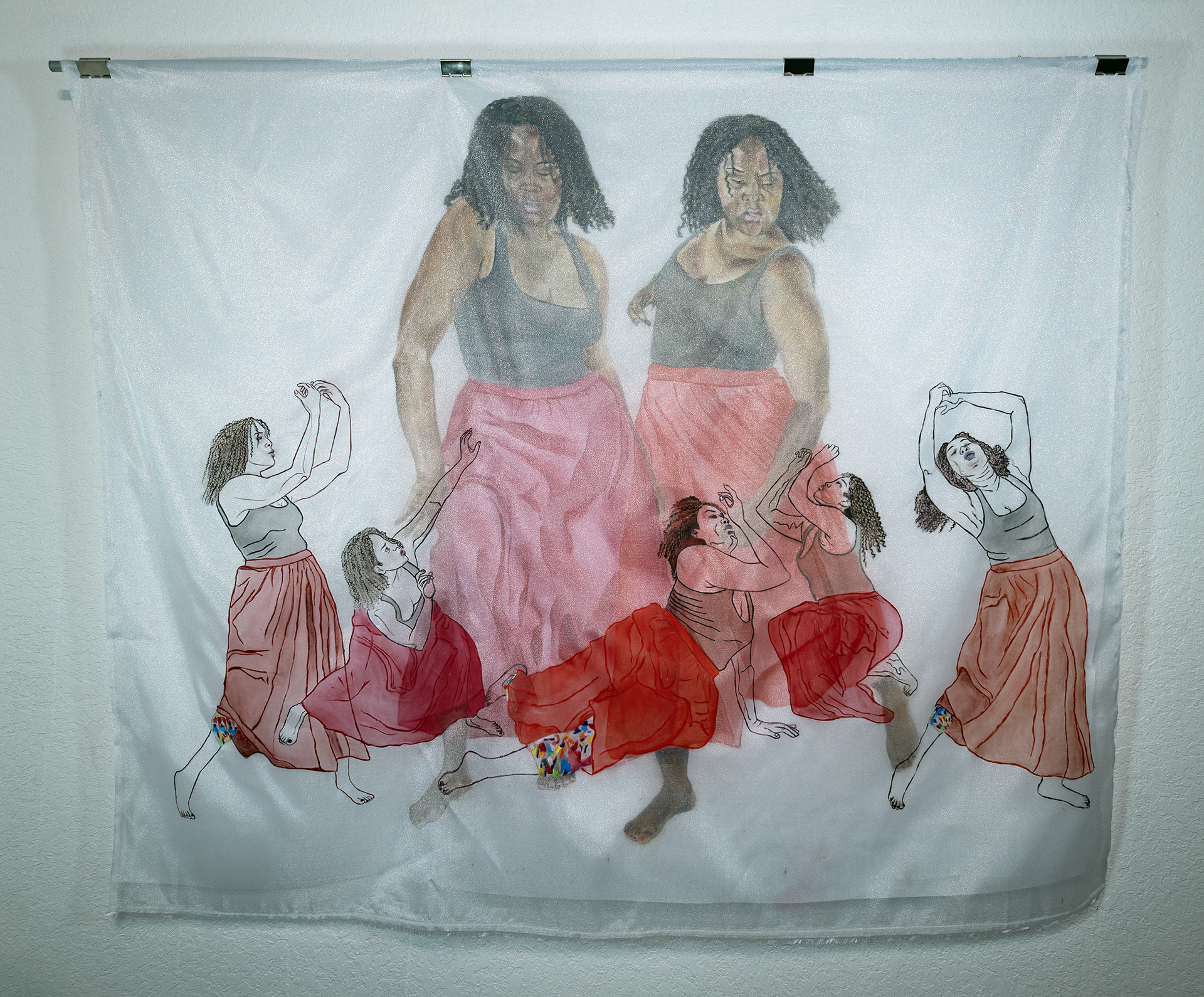
3. The Glorious Way She Moves has resurfaced across years, cities, and institutions. What keeps you returning to this work instead of letting it close as a finished chapter?
I keep meeting women that I want to paint, particularly when I hear there story and learn what the did for community or life challenges they overcame. I think today, these stories are vital for the continued progress of women, which is under assault right now. Women need each other. We need to hear each other’s stories. We need to inspire to aspire to our fullest potential. So many everyday women in my community are doing incredible things and many of their stories are unknown. There is nothing that has inspired me more than the women that surround me. Women I meet and know. So I I feel may work is important. So far I have filmed 60 women and painted half of that number. I am considering stopping when I reach 100 women. We’ll see. This may be my life’s work.
4. Your use of stop-motion, performance, and projection suggests a need for movement beyond still images. What does video allow you to say that drawing or print cannot?
I’m deeply fascinated by the expressive power of video. Stop-motion animation, in particular, feels like old-world magic to me. I’m largely self-taught in Adobe Premiere, After Effects, and Audition, and while the process is labor-intensive, I genuinely love it. When I created the stop-motion animation for The Proximity of Being, I made 360 drawings on paper over the course of two and a half months—drawing every single day. After photographing each drawing, I assembled the film using Premiere and After Effects. It felt like stepping into the lineage of early Disney animators, watching my expressive drawing style quite literally come to life. The method was incredibly satisfying, though time-consuming: all of those drawings resulted in about a minute and a half of animation. I extended the sense of duration by playing the sequence forward and backward, allowing the motion to breathe. My second video emerged through experimentation. While exploring claymation, I wrapped glitter ribbon around a clay and wire puppet, which became The Ribbon Dancer. After taking an animation class and learning GarageBand for sound effects, I instead composed a simple, one-finger musical score that became integral to the piece. The performance videos grew out of time constraints but opened up new possibilities. One began as improvisation—filming myself moving through a house we were renovating early one morning as sunlight filled the space. Using my iPhone, I recorded in multiple speeds and layered poetry, wind, heartbeat sounds, and an original GarageBand score. A later performance film was more intentional; I constructed a two-way mirror and filmed myself through it, turning the act of looking inward into both subject and method. Both works were created in response to invitations to make video specifically. Ultimately, video gives me another way to capture expressive body language in motion—where movement itself tells a story or creates a meditative space for reflection. Sometimes video is the perfect solution; other times I feel compelled to draw or paint. I let the project guide the medium unless a curator requests a specific modality. It’s often a matter of intuition rather than hierarchy. As The Glorious Way She Moves continues to evolve, I’m actively considering how video might enter future iterations as I work toward my goal of 100 portraits—extending the language of movement beyond the still image.
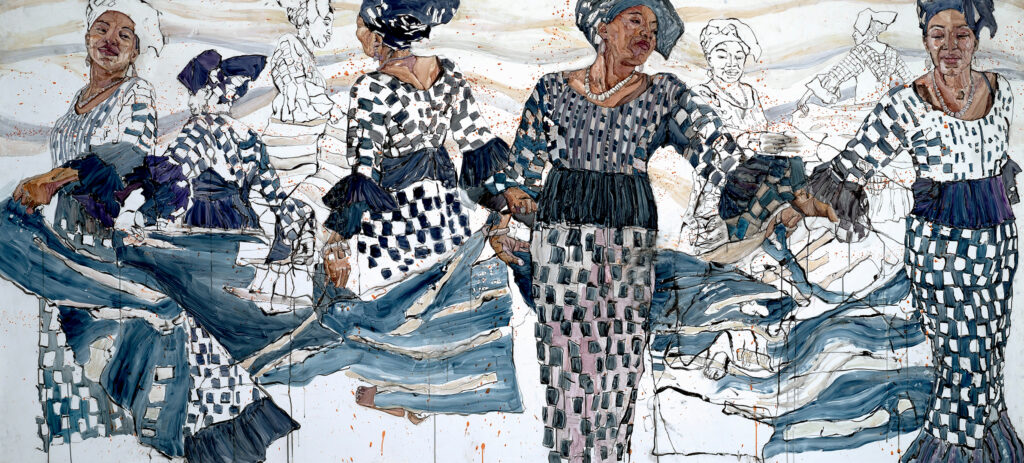
So far I have filmed 60 women and painted half of that number. I am considering stopping when I reach 100 women. We’ll see. This may be my life’s work.
Robyn Gram-Barclay
5. You’ve taken on sustained curatorial work, particularly around Black artists in San Antonio. How has organizing exhibitions changed how you see your role within the local art community?
Organizing exhibitions has reshaped how I understand my role in the local art community. My relationship to leadership began early—in high school JROTC—where I learned both how to follow and how to lead. My father also emphasized the importance of giving back, a value that continues to guide me. Today, my community is the art community where I live and work. Curating was never part of my original plan as an artist; it found me. My first experience came when I was offered a solo exhibition but didn’t yet have enough work to fill the space. Instead, I invited other women artists into the gallery, and that act of inclusion changed everything. What began as a practical solution became a meaningful extension of my practice. Over time, I was invited to curate exhibitions centered on women artists and Black artists, including projects for Black History Month, the City of San Antonio, and experimental gallery spaces committed to emerging voices. These experiences showed me that curating is a way of creating space—physically and symbolically—for artists to be seen. While curating has become a side passion, I remain first and foremost a working artist. I’m mindful of maintaining balance between making work and supporting others. My goal is to mentor aspiring independent curators who can activate non-traditional spaces, ensuring this work continues beyond me. Serving as President of the San Antonio Ethnic Art Society and continuing as Community Art Liaison has further clarified my role: I also now own a gallery in San Antonio, Texas with my husband, The Beacon at Midtown Gallery and Studios which is a space for creative community building though exhibitions and performing arts events. I am one of many artists committed to building, nurturing, and giving back to the community that sustains us.
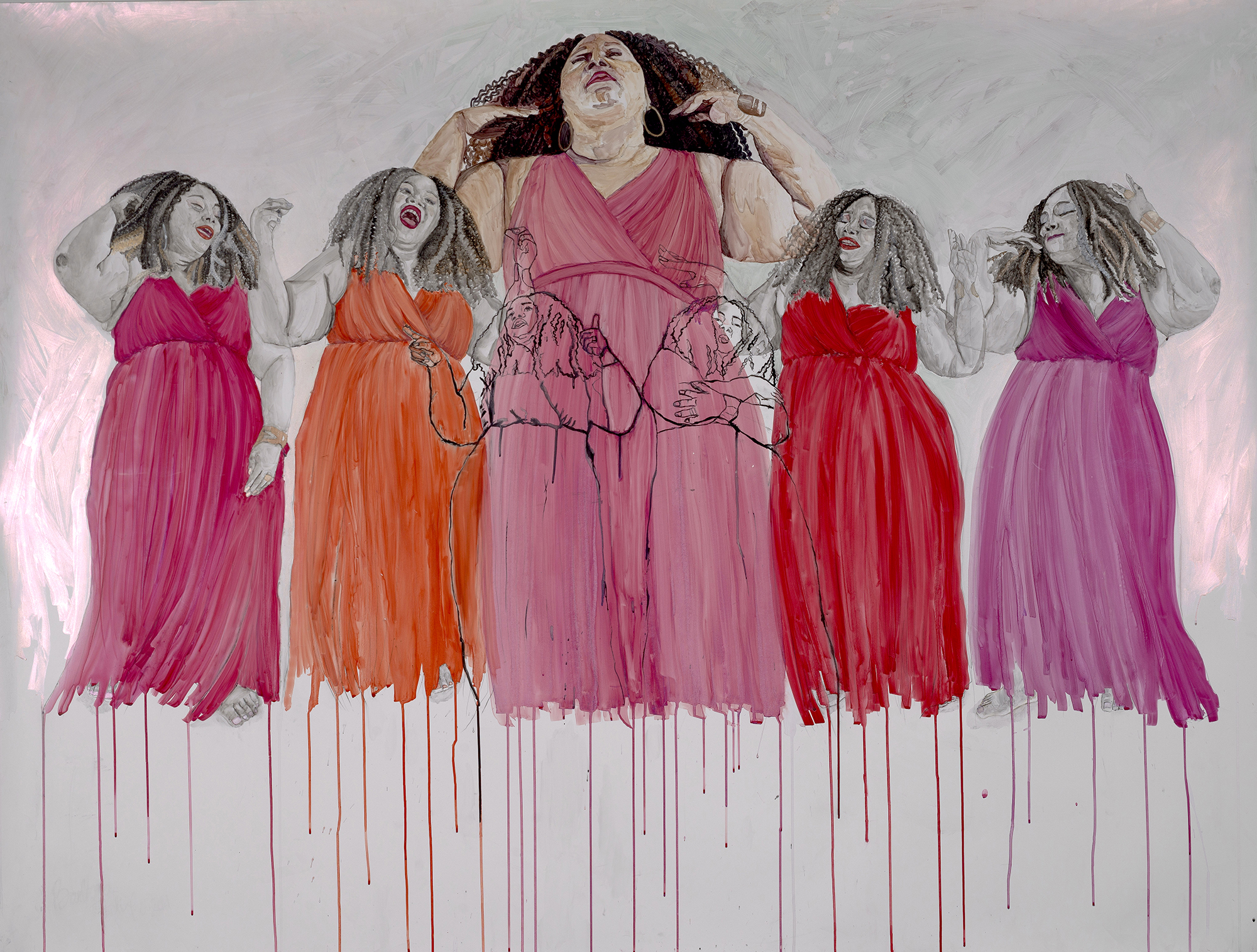
6. Leaving a long corporate design career in 2022 marked a major shift. What has surprised you most about working full-time as an independent artist since then?
How full my life could be as an artist. Now I am trying to find work/life balance so that I do not overwork myself and get burned out. It is difficult because I love collaboration and community service as much as I love making art. But I also have a husband, family and friends that I desire to spend quality time with, and I also most importantly need time to rest.
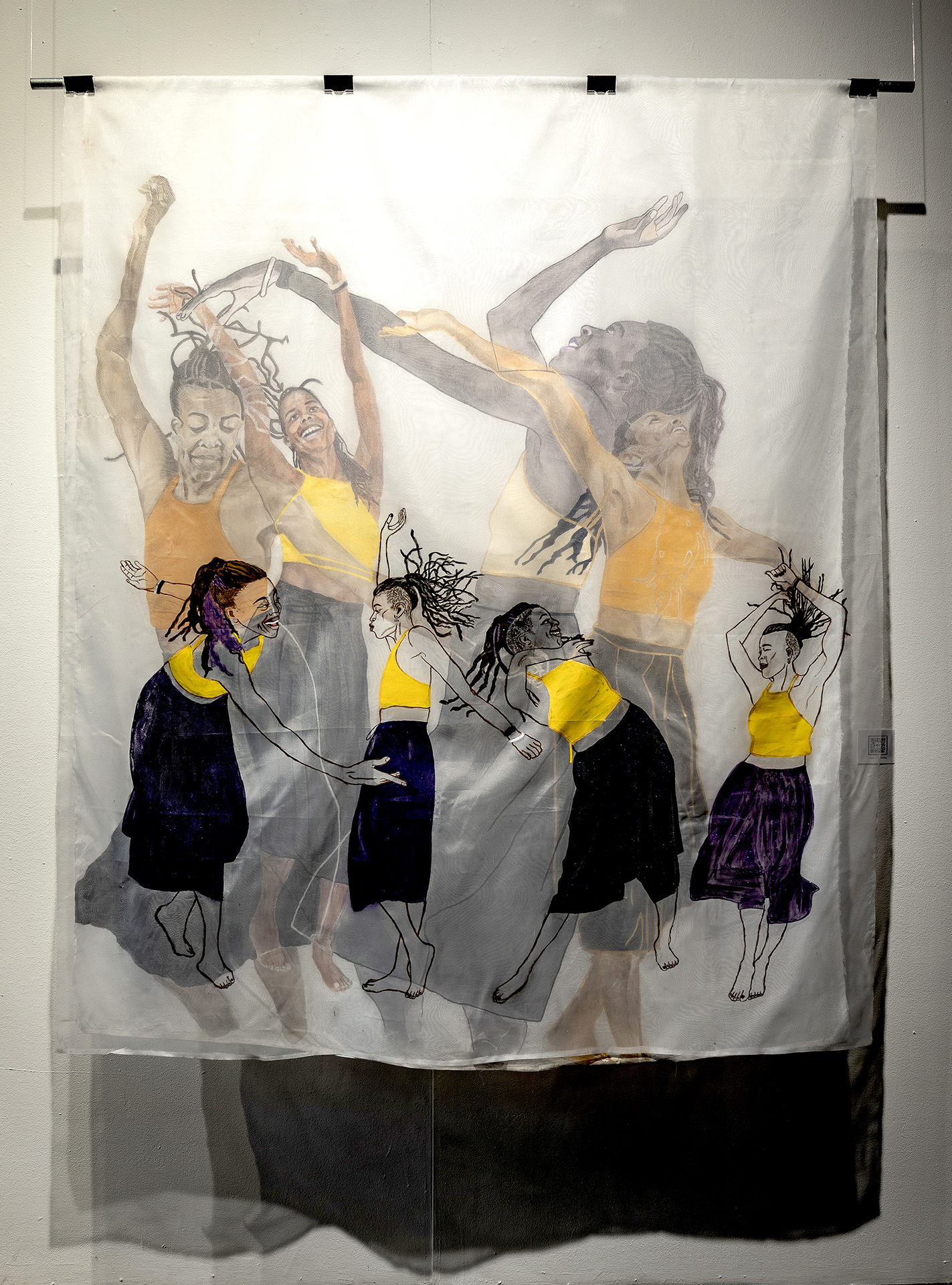
Barbara Felix’s work centers on women in motion and the stories carried in their bodies and voices. Through painting, fabric installation, sound, and video, she builds portraits that begin with movement and extend into shared experience. Her process shows that a figure can hold more than likeness. It can hold history, struggle, humor, and endurance. By filming women as they dance and pairing the resulting images with recorded voices, she creates works that ask viewers to slow down, listen, and consider how much knowledge exists within everyday lives.
From her journey, we learn that a creative path does not have to be linear to be meaningful. Felix’s early attention to the human figure, her years in graphic design, her return to formal figure study, and her later turn toward video and community organizing all inform the work she makes today. Her story also shows how making space for others can become part of a studio practice, whether through curating exhibitions, mentoring, or building a shared gallery. Taken together, her work and her path speak to the value of persistence, curiosity, and staying open to where a long running project might lead, even when it begins to look like a life’s work rather than a closed chapter.
To learn more about Barbara, click the following links to visit her profile.
Arts to Hearts Project is a global media, publishing, and education company for
Artists & Creatives. where an international audience will see your work of art patrons, collectors, gallerists, and fellow artists. Access exclusive publishing opportunities and over 1,000 resources to grow your career and connect with like-minded creatives worldwide. Click here to learn about our open calls.