
Austin Howlett Was Told to Get a ‘Real Job’, He Chose Art and Won
👁 516 Views
At Arts to Hearts Project, we’ve spent years asking ourselves what makes an artist’s work stop you mid-scroll. What is it that pulls you in when you’ve seen a thousand paintings that week already? It’s not always technical skill, though that matters. It’s not always subject matter, though that helps. Sometimes it’s something harder to name a feeling that the person who made this needed to make it. That it cost them something to create it. That they weren’t performing, they were reaching.
That’s what we felt when we saw Austin Howlett’s work.
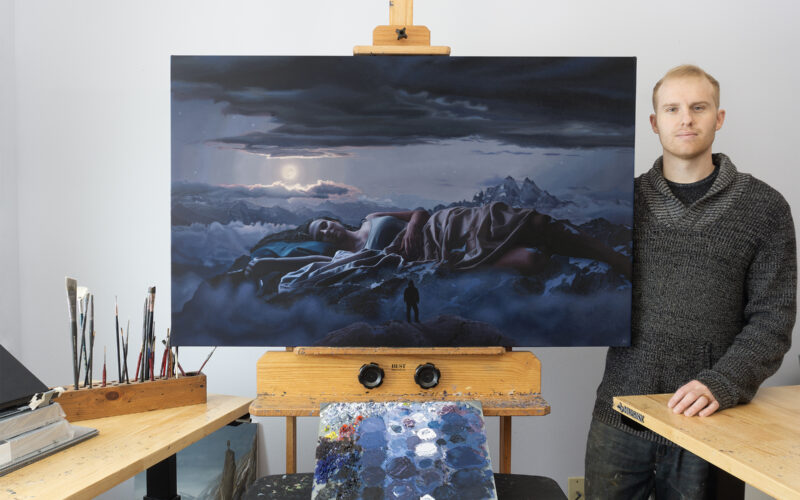
His paintings don’t just show you figures in nature they show you what it feels like to need nature. To seek it out when life gets too heavy. To find yourself again in the vastness of a landscape or the quiet of a forest. His work merges human bodies with natural elements in ways that feel surreal but not fantastical. They feel true. Like he’s painting the relationship we all have with the world around us, the one we forget about until we’re standing under a sky that makes us feel small in the best way.
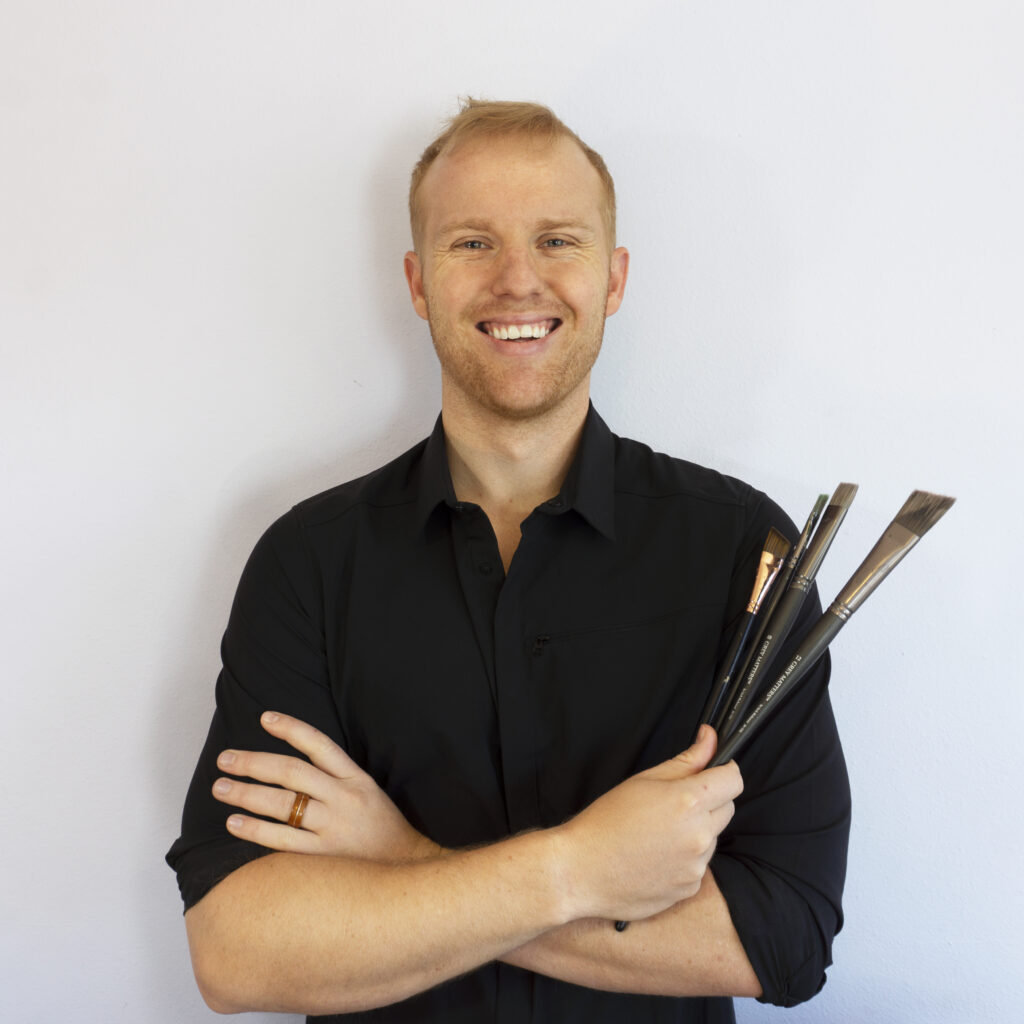
We wanted to feature Austin in our Best of the Art World series because his work doesn’t just demonstrate technical ability though he’s clearly mastered that. It demonstrates something rarer: emotional clarity. He knows what he’s trying to say, and he says it without flinching. Vulnerability. Connection. Self-discovery. The ways nature holds us when nothing else can.
Austin’s story starts on an island that most people only visit in dreams. Maui wasn’t just where he grew up it shaped how his brain works, how he sees beauty, how he treats people. Imagine spending your formative years surrounded by that much natural wonder, learning empathy not as a concept but as a way of life. Then imagine leaving all of that to find your voice somewhere completely different.
That’s what he did. Colorado taught him how to dig deeper. New Mexico pushed him further than he thought possible. And somewhere along the way, he stopped avoiding the human figure because it was hard and started embracing it because it was essential. He began painting with a level of detail that makes you lean closer, wondering how he captured something so specific, so true.
But here’s what makes Austin different: he doesn’t paint to impress you. He paints because he believes the world desperately needs more vulnerability. More openness. More honest communication. He watched division and hatred infect communities and thought maybe art can bridge that gap. Maybe if he laid himself bare on canvas, others would feel permission to do the same.
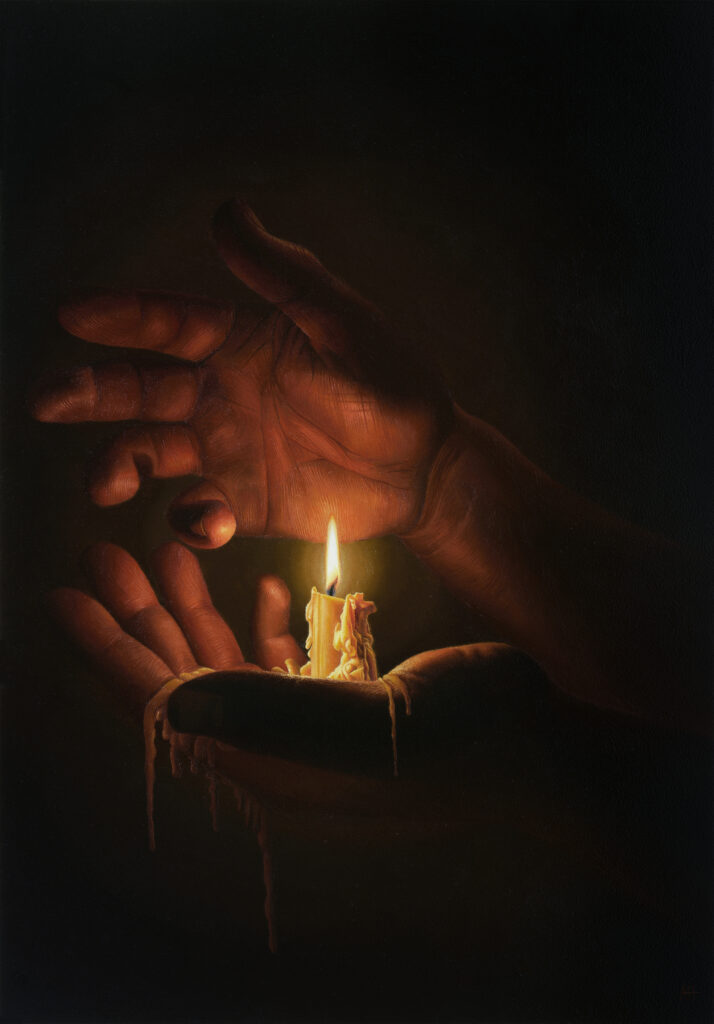
His paintings take months to finish. He chips away at them daily, building patience, finding meditative rhythm in the process. And when he’s done, what emerges isn’t just technically accomplished, it’s emotionally alive. Figures intertwined with trees. Hands reaching toward light. Bodies half-submerged in landscapes. Scale that feels dreamlike but emotion that feels undeniably real.
He’s been recognized by the ARC Salon multiple times, but he’ll be the first to tell you that awards don’t define an artist. What defines him is the care he puts into every brushstroke, the vulnerability he refuses to hide, and the belief that his work can remind people there’s still good in this world still passion, kindness, and connection if you’re willing to look for it.
Now, let’s hear from Austin about how he got here, what drives him, and what he hopes his work can awaken in the people who encounter it.
Q1. Can you tell us about your early life, growing up on Maui and how those experiences shaped your creative sensibilities before you moved to New Mexico?
I was incredibly fortunate to grow up in one of the most beautiful and culturally rich places in the world. Maui, Hawaii was my home from the age of two to eighteen and I think this environment wired my brain to appreciate beauty in many different aspects of life. I was not only surrounded by natural wonders but also kind and unique individuals who showed me how to treat all people with respect and empathy. From ages 6 to 13 I attended a Waldorf school which deeply fostered my love for all of the arts including, painting, drawing, singing, dancing and acting. When I left Maui to attend college in Colorado I wanted to bring this island spirit with me wherever I ended up in life. In the same way that Maui taught me to appreciate beauty, Colorado showed me how to find my own artistic voice. In college as well as several years later I really took the time to hone in on what I wanted my art to say. Through experimenting with different imagery and techniques I started to explore messages of vulnerability, self-reflection and human connection, delving deeper than my art had ever gone before. My years in New Mexico so far has been my most significant yet. I’ve pushed my abilities further than I ever thought they could go all while living in a completely different high desert landscape surrounded by vast mesas, expansive skies and curious wildlife. I have been so lucky to live in beautiful and unique places in my life so far and each one has heavily influenced me as a person as well as my art by proxy.
Q2. Your paintings often combine human figures with natural settings, merging humanity and nature in a surreal, dreamlike way. What draws you to explore the intersection of human vulnerability and the natural world?
I think I am drawn to combining these elements because of my own life experiences that have shown me how much more we as people are connected to ourselves when we are in nature. The natural world seems to encourage self-exploration as well as relational connection in such a beautiful and unique way that I always seek to capture in my paintings. I hope that my work can encourage viewers to see our world a little differently, possibly seeing depth and love that previously wasn’t there. Personally in my hardest moments in life I have found myself seeking nature for comfort and a vision of the bigger picture and I love the challenge of capturing this relationship in my paintings.
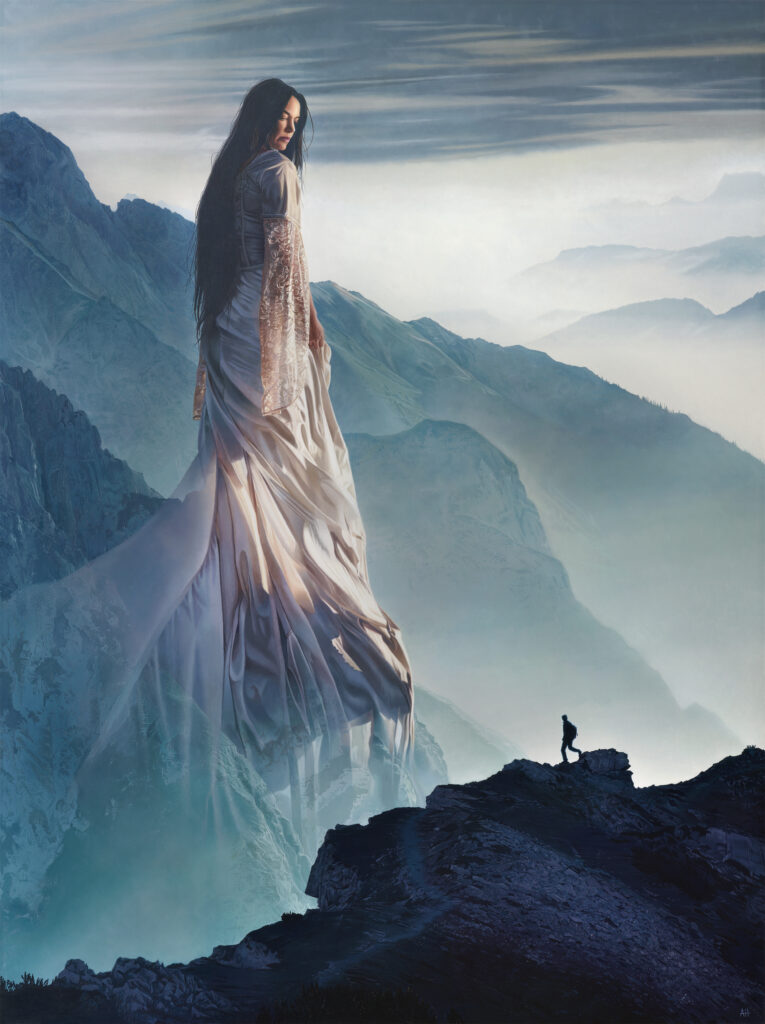
Q3. You mentioned that your work as exploring “emotional vulnerability and self-discovery,” and examining our connection to nature. Could you unpack how personal history, memory, or identity inform that instinct toward vulnerability?
In my college years I started to be able to put language to the character qualities that I most value in other people and in myself and one of the key qualities that so many characteristics and behaviors are built upon is vulnerability. The ability to be open, honest and raw about one’s feelings, laying yourself bare to another person fully open to temporary pain if it means stronger bonds can be formed. And when I graduated I was thrust into the harsh adult world where I started to realize that vulnerability was something that the world at large would greatly benefit from. With so much division, hatred and miscommunication infecting our communities, I hope that my art can connect people and encourage open and honest communication. I realized that I had a message worth sharing, so that really solidified vulnerability as a central theme of my work that I want to communicate with the world.
Q4. Early in your career you mention shying away from realistic human figures because of technical challenges, favouring abstraction or elongation. What changed was it a particular work, or a shift in mindset that led you to embrace realism and vulnerability together?
My shift from abstract elongated figures to more realistic and detailed ones was a gradual change that took place over several years after college. As I started to get the hang of painting the figure through rigorous practice, I think my natural inclination to find and replicate tiny details started to kick in. The more I practiced the more I understood the universality of the basic building blocks of the human form but also how tiny differences and abnormalities give every person their own uniqueness. I began to find immense satisfaction in seeking out nuanced details that make a person unique and replicating them in a painting. In my humble opinion, these details and subtleties give my paintings a certain quality that viewers find fascinating but can quite identify why. The details and realism make the painting feel lived in and tangible therefore allowing the viewer to get lost in their thoughts while visually processing the painting.
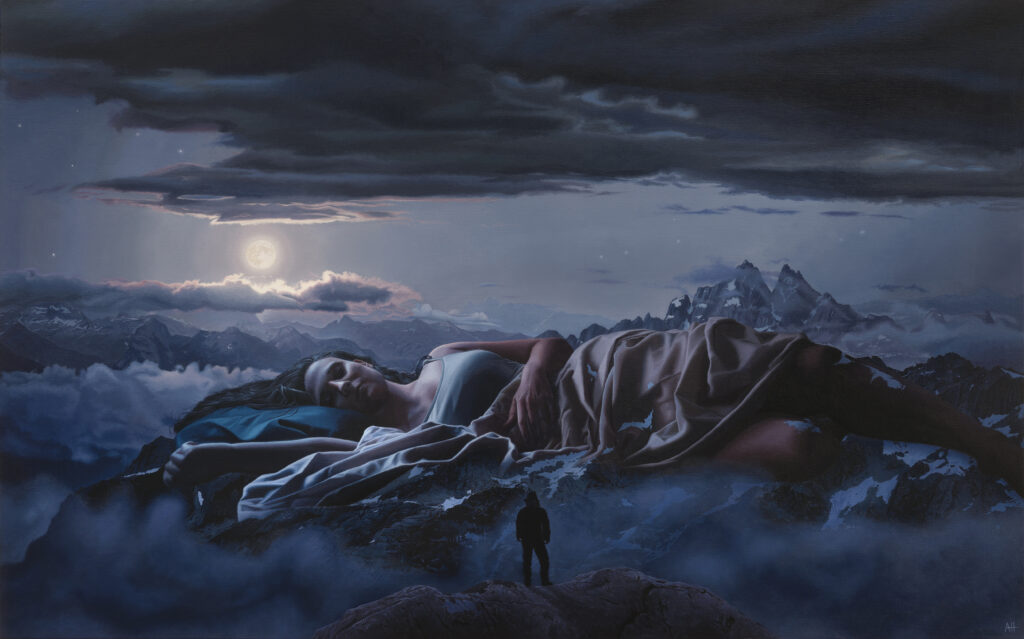
Q5. Throughout your journey from early interest to exhibitions were there moments of doubt, creative blocks, or pressure to conform? How did you navigate those, and what helped you stay true to your vision?
Yes there were plenty of these moments. In my college years I experienced plenty of self doubt usually in the form of a fear of not having a unique voice.
I worried that I wasn’t an interesting enough person to be an artist and that my life experiences weren’t intense enough to be drawn upon for my art.
Fortunately, I was reassured by close friends that I had the beginnings of a unique voice and that just like anything else it would take time to develop. Because of the kind voices of my friends I started to understand that every voice is unique and that creating is an act of immense value in and of itself. And in my transition from graphic designer to working artist I received many offhand comments and insults suggesting that I should conform to a 9-5 job in the interest of financial stability. I also had my fair share of rude internet comments when my notoriety began to spread, insulting my technical abilities, my methods and my subject matter. In all of these instances I took refuge in my passion for this craft and the pride that I felt when I made something completely original from nothing. Those people who made fun of me may have their so-called “financial stability” but I can say with absolute certainty that they have never created anything as unique or thought-provoking as one of my paintings.
Q6. In blending humans with landscapes and natural elements, your work often evokes a sense of oneness with nature sometimes healing, sometimes haunting. Do you view your painting as a form of emotional therapy for yourself, for the viewer, or both?
I absolutely view my creation process as a form of therapy (supplemented by actual therapy with a professional). When painting I am often able to slow down and reflect on things that are going on in my life. For me, the routine of painting allows thoughts and emotions to develop in the background so that I can intentionally reflect on them later when I’m not painting. Painting the way that I do takes a lot of time, some pieces take several months to finish and this has definitely allowed me to develop a high level of patience. Knowing that if I chip away at a painting diligently everyday I will eventually finish something unique and beautiful is very valuable and definitely applies to other aspects of my life. I also find myself reflecting on difficult topics in my painting descriptions as a means to process them. As an example my painting “Wishing for Eternity” deals with my fear of not being able to appreciate beautiful moments in life because I know that they are fleeting. I made this painting to express my unrealistic wish for life to never change so that I could live in a perfect moment forever.
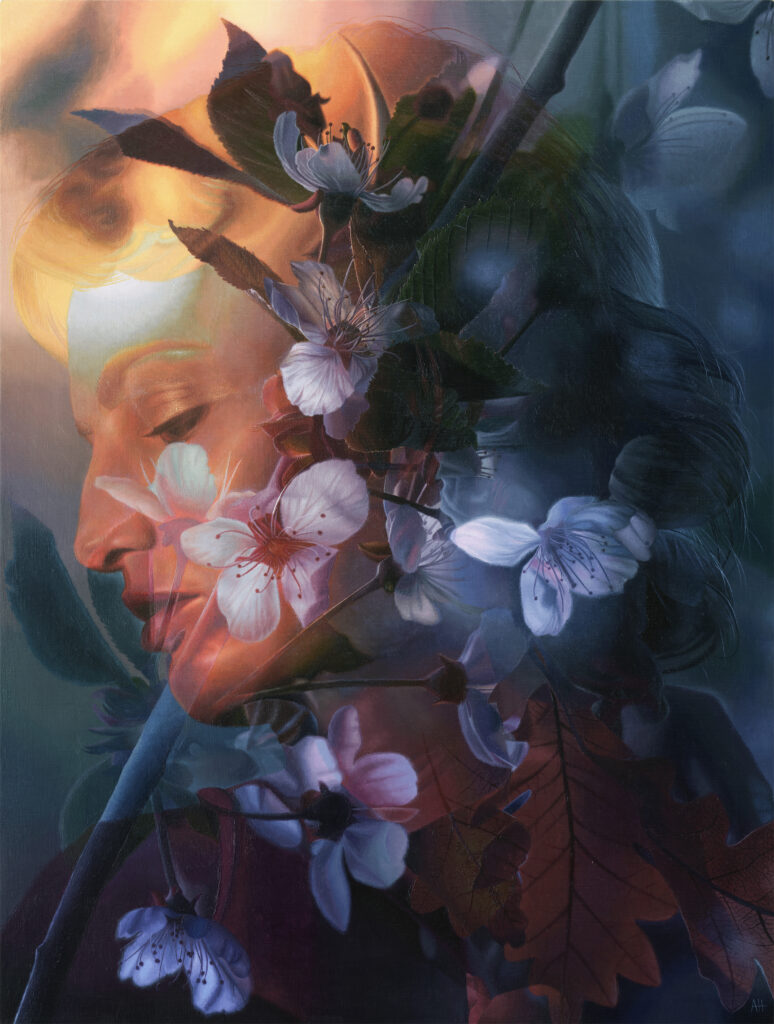
Q7. You were selected as a finalist in the ARC Salon multiple times (e.g. 2024, 2025) for your paintings. How has this kind of institutional recognition affected your confidence, ambition, or sense of direction as an artist?
Getting some recognition from the Art Renewal Center has been extremely reassuring in a number of ways. And I want to say that these types of competitions and awards absolutely do not define an artist’s success and there are plenty of amazing and successful artists who never even opt into these competitions. That being said, to have several paintings recognized as finalists by an organization that fosters representational art and rewards refined technical abilities is immensely humbling and serves as an indicator for me that I am on the right track. Seeing my work reach this level absolutely gives me more confidence in my abilities and makes me excited to push myself even further.
Q8. How do you hope viewers will feel or think after encountering one of your surreal, nature-infused figurative works? What conversation or reflection are you hoping to inspire?
I hope that my work can firstly encourage a certain amount of self-reflection in its viewers. My goal is that maybe because I create the work in such a raw and vulnerable state that my art might inspire the same emotions in the people who see it. When they see the level of care that I put into every single painting I hope that they will feel it as a form of intimacy. This is my way of reaching out and asking for you to see me and for you to see yourself. My ultimate wish is that someone can look at my paintings and be reminded that this is still good in this word, there is passion, vulnerability, care, kindness and respect in the people and environments that inhabit our planet, and you just have to look for them.
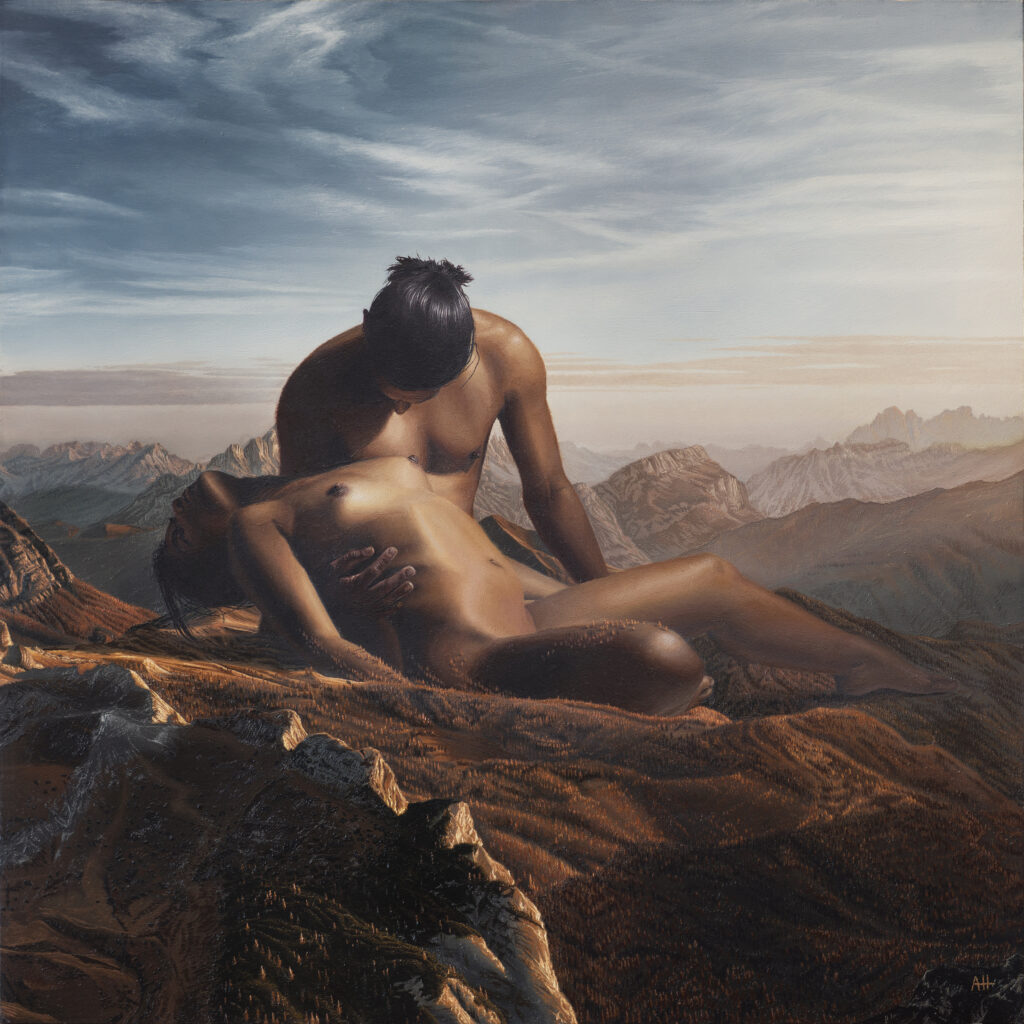
Sitting with Austin’s words, I keep coming back to one thing he said: “I worried I wasn’t an interesting enough person to be an artist.” That fear that your life hasn’t been dramatic enough, painful enough, extraordinary enough to justify making art is something so many creatives carry quietly. And here’s what Austin figured out that changed everything: every voice is unique. Creating is valuable in itself. You don’t need trauma to have something worth saying. You just need honesty.
What strikes me most about Austin’s practice is how deliberately he’s built it around values he can name. Vulnerability isn’t a vague concept for him it’s the foundation. It’s what he saw missing in the world: the willingness to be open, raw, honest, even when it risks temporary pain. So he paints it. He paints figures merging with nature because that’s when he’s felt most connected to himself. He paints hands because they’re the hardest thing to get right and because they hold so much expression.
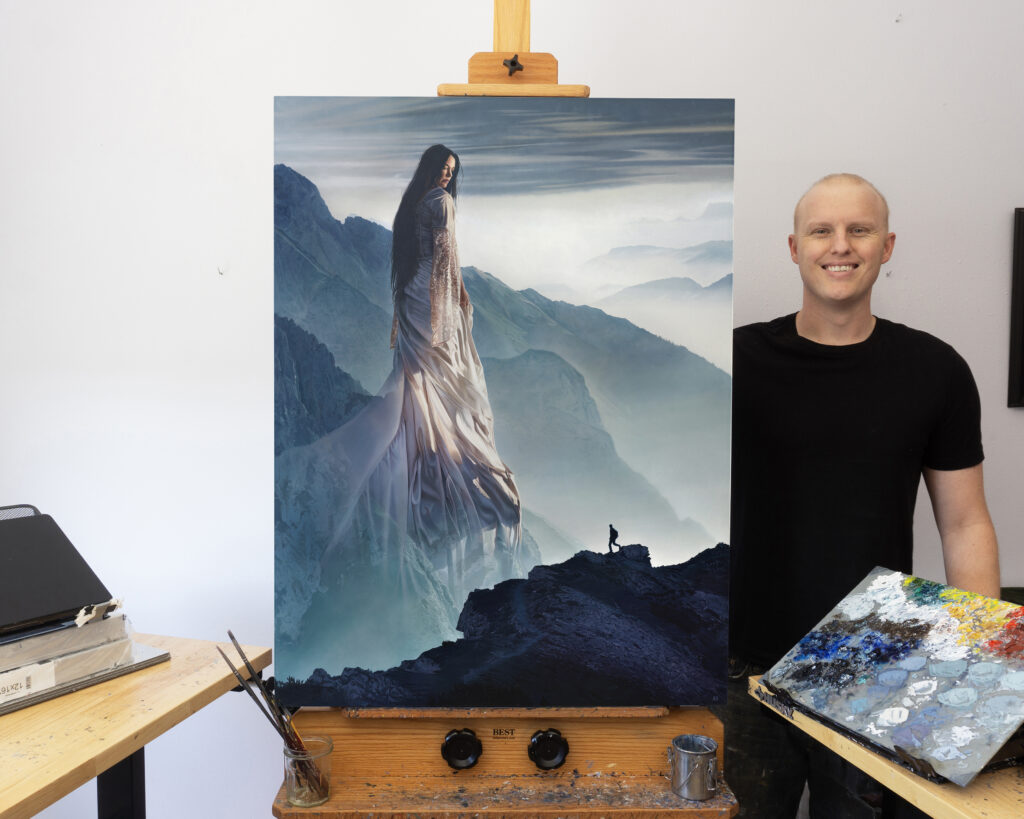
He paints slowly, sometimes for months, because patience isn’t just a skill it’s a life lesson. And he does all of this knowing that the internet will criticize him, that people will tell him to get a “real job,” that financial stability is supposed to matter more than passion. But he keeps painting anyway, because he’s created something those critics never will: work that’s completely original, deeply personal, and genuinely thought-provoking.
Here’s what I think Austin understands that many artists miss: your work doesn’t have to scream to be heard. It doesn’t have to be shocking or performative or wrapped in mystery. It just has to be true. His paintings feel lived-in because he puts himself into every detail the tiny differences that make a person unique, the surreal scale that mirrors how big nature feels when you’re small and overwhelmed, the vulnerability that asks viewers to see him and see themselves. He’s not trying to sell you something. He’s reaching out, saying: There’s still good here. There’s still beauty. You just have to look for it. And honestly? That message quiet, patient, deeply kind might be exactly what we need right now.
Follow Austin Howlett through the links below to see his process and new work as it develops.