

When 2 A.M. Is the Only Time Your Studio Makes Sense I Brandon Le
👁 247 Views
At Arts to Hearts Project, we believe that understanding an artist’s work means seeing where it comes to life. Alongside their latest artwork, we want to step into their studios the spaces where ideas take shape, where struggles become something visible, where the real work quietly happens. And here’s the thing: a studio isn’t defined by how big it is or how it’s set up.
It can be a kitchen table covered in brushes and half-squeezed paint tubes. A corner chair with an easel leaning against the wall. A makeshift workspace squeezed into a bedroom corner. Sometimes, it’s just the floor. What matters isn’t the space itself it’s what happens when someone shows up there, day after day, ready to create.
That’s why we started the Studio Visit Book series. We wanted to travel into artists’ most personal creative spaces and see not just where they work, but how they work. The small rituals. The routines that ground them. The choices they make when no one’s watching. We’re seven volumes in now, and honestly, each one has taught us something new about what it really means to keep showing up, no matter what kind of space you’re working with.
For Volume 7, we chose “Home” as our theme. We weren’t sure what we’d get back, but the responses? They moved us. We asked artists to tell us what home means to them, and the answers were all over the place in the best way. For some, home is a physical place. A return to where they grew up. A view of the ocean they can’t imagine living without.
For others, it’s less about geography and more about feeling safety, presence, that sense of finally being able to breathe. But one thing became really clear as we read through the submissions: wherever a studio exists, it becomes home. It’s where artists feel safe enough to mess up, brave enough to try things that might not work, and honest enough to keep coming back even when it’s hard. It’s where they can finally hear themselves.
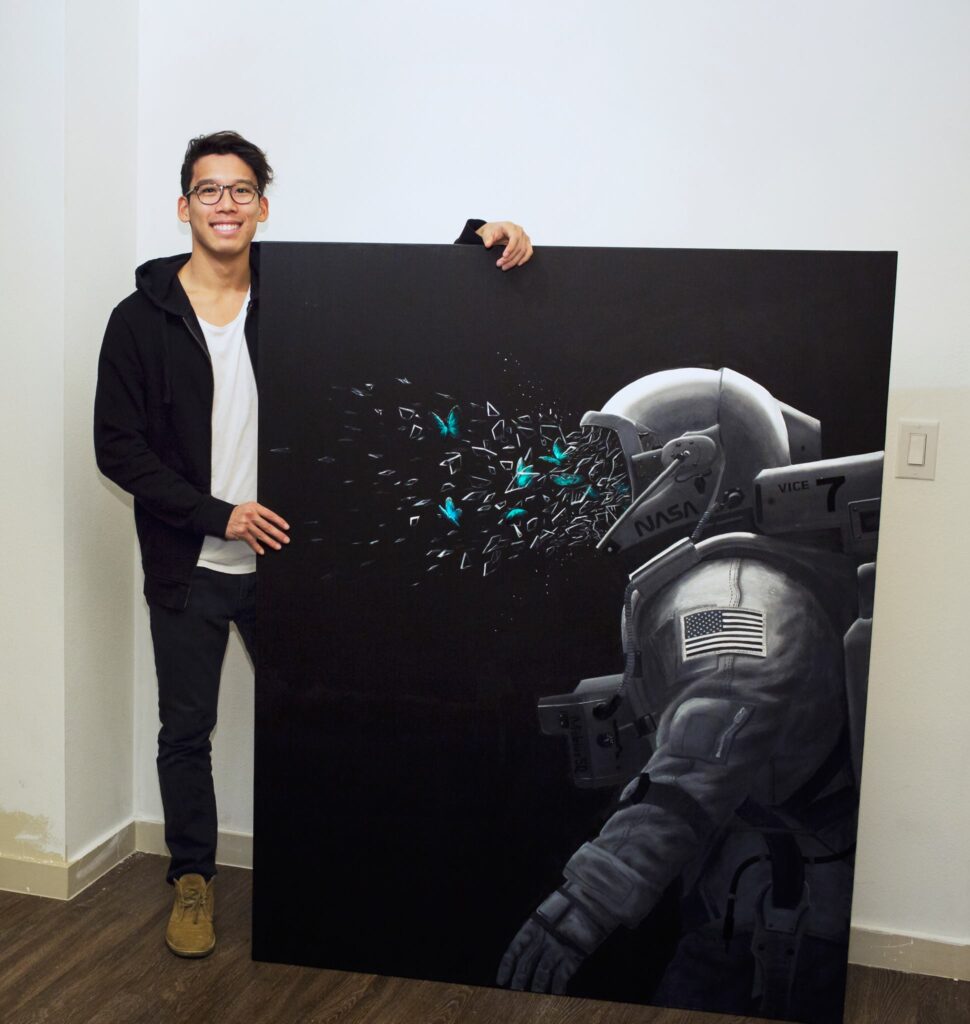
Going through the submissions for Volume 7 was overwhelming in the most beautiful way. So many artists opened their doors and their hearts showing us not just their workspaces, but their entire worlds. And among all those raw, honest stories, Brandon Le’s made us stop and pay attention. Not because it was loud or flashy, but because it quietly pulled us in and wouldn’t let go.
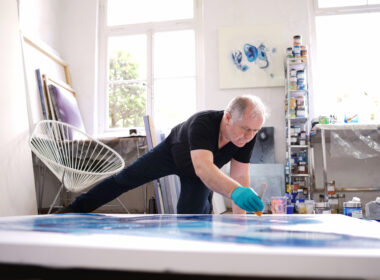
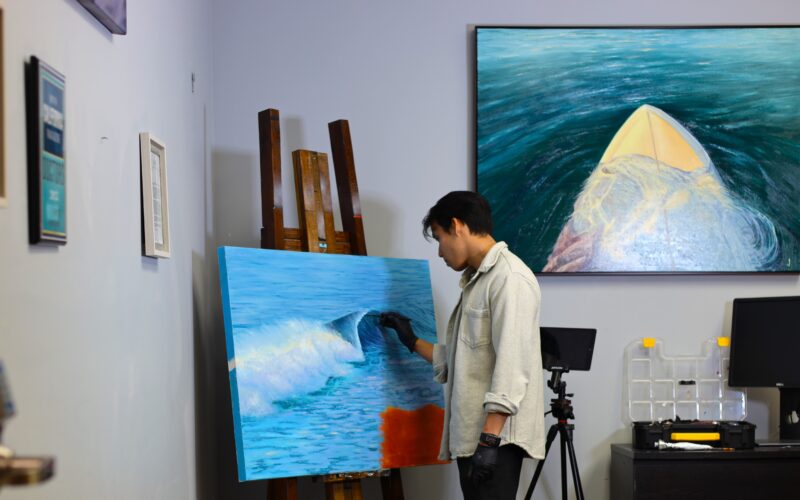
Brandon is a dentist. He converted a former surgical room in his office into a studio. He wakes up at 2 a.m. sometimes even earlier to paint while the rest of the world is still asleep. And here’s the thing: he never planned to become an artist.
During his second year of dental school, completely overwhelmed and seriously thinking about dropping out, he wandered into a Hobby Lobby and bought art supplies without really knowing what he was doing. That first painting? A total mess.
What was supposed to be a sunset ended up looking like a fried egg. But it became his reset button. Painting gave him a way to breathe through the chaos, to cope, to find some kind of stillness when everything else felt like it was falling apart.
So before we step into his studio and hear his story, let us tell you what drew us to Brandon. His version of home isn’t sentimental or poetic—it’s intentional. His studio is deliberately simple: an easel, some basic supplies, a small coffee table, a work desk. That’s it. No clutter. No distractions. And that simplicity? It’s not just about the space. It’s how he tries to live his whole life—present, deliberate, fully committed to whoever or whatever is right in front of him.
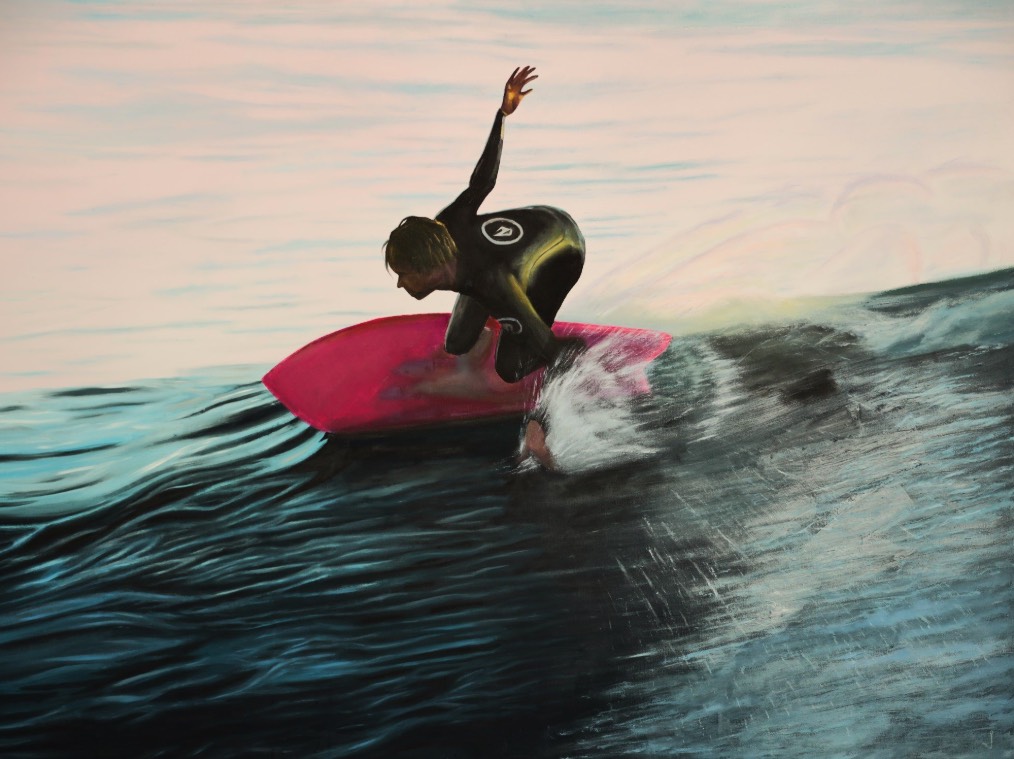
Brandon never went to art school. He taught himself through trial and error, through just showing up and doing the work even when he had no idea what he was doing. His background as a dentist shaped how he paints—both require you to see the whole picture from the start, to be precise, to commit fully and see something through to the end. He works fast because he has to, using wet-on-wet techniques where every single stroke matters because there’s no going back once the paint dries.
But underneath all that efficiency, there’s something quieter happening. Brandon has learned how to sit with himself in those early morning hours. He’s learned to listen—really listen—and to show up with intention, whether he’s painting before the light dries, catching waves at dawn, riding his motorcycle with full focus, or just sitting at the table with his family, phone put away, actually there.
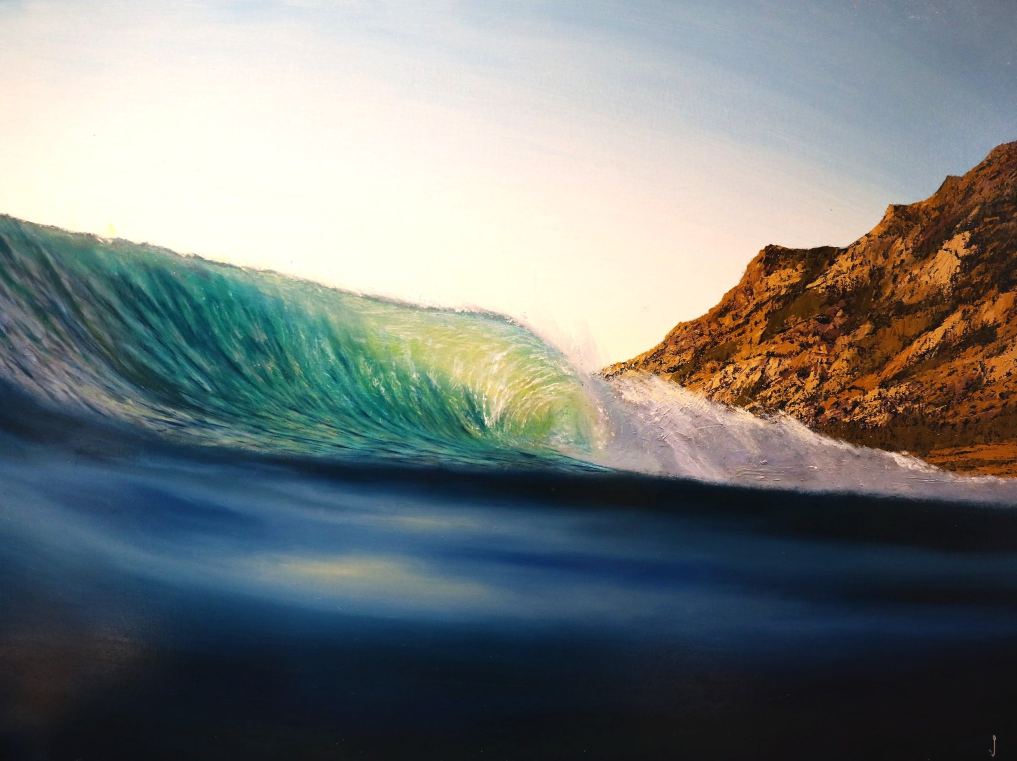
His paintings aren’t just about capturing how big the ocean is or how light moves across water. They’re about stepping back to see the bigger picture something he does with his art, with his patients, with his whole life.
Now, let’s hear from Brandon himself how he starts his day, what pulls him into the studio before sunrise, and what matters most to him when everything else is still quiet.
Q1. Let’s begin with your studio. How would you describe the space as it is right now, how it’s arranged, what’s surrounding you, and what kind of work you’re currently living with there?
My office includes a former surgical room in one wing of the building. Rather than expanding operatories, I converted it into a studio. It holds an easel and the basic supplies for oil painting. The room is intentionally sparse just a small coffee table, a work desk, the easel, and materials. I prefer the space uncluttered. That simplicity mirrors how I try to live outside the studio as well being present, keeping distractions to a minimum, and giving my full attention to whatever or whoever is in front of me.
Q2. Before painting became central to your life, your path into art wasn’t a conventional one. Looking back, what first drew you toward painting as something you needed to return to again and again?
Painting became my safe place. It’s a reset for my day, my week. During my second year of dental school, there was a moment when I seriously considered dropping out. One evening, overwhelmed, I went for a long walk and ended up at Hobby Lobby. I bought supplies without doing any research. I remember gently squeezing the paint tube, assuming it was acrylic—I had never worked with oil before. That first painting was a chaotic mess: a hairbrush, thick paint, and something that looked like a fried egg instead of the sunset I had intended. But I kept painting every evening. It helped me cope, and eventually it became something I needed—not just as an outlet, but as a way to slow down and really listen to myself in the same way I try to listen carefully to the people in my life.
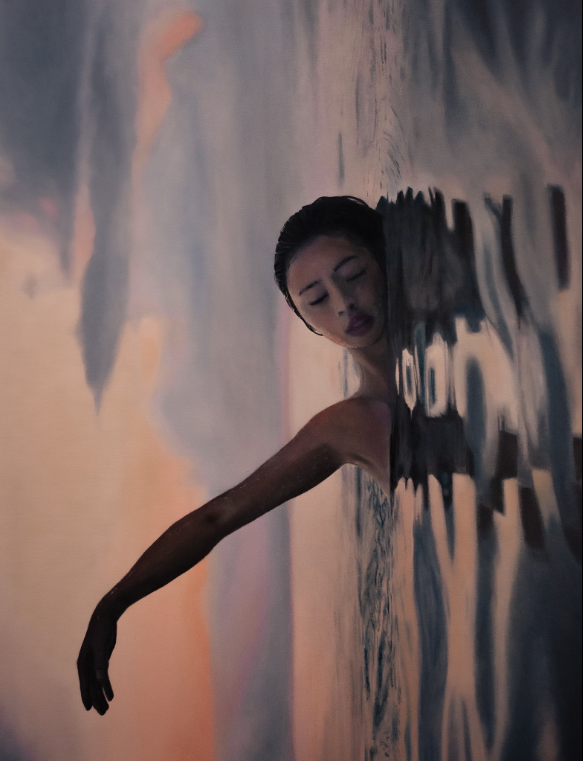
Q3. How did learning outside of a formal academic setting shape the way you approach the studio today, especially in terms of trust, patience, and experimentation?
The process of creating a strong oil painting closely parallels patient care. You have to hold the end result in mind from the beginning. Vision drives everything: composition, color, contours, hue, value, contrast. In dentistry, designing a smile rather than focusing on a single tooth is what separates clinicians. Without a clear vision, a painting can’t truly begin—and without commitment, it never really gets finished. Patients place trust in a dentist’s vision, quite literally, and success depends on the commitment of both parties. That sense of responsibility has also shaped how I try to show up beyond my patients—listening carefully to others, understanding where they’re coming from, and using whatever skills I have to help when I can, whether that’s professionally or within the community.
Q4. When you enter the studio to begin a day’s work, is there a small ritual or quiet habit that helps you settle into the rhythm of painting?
I usually put on music—lately I’ve been listening to Black Feathers by Sam Brookes—then brew a coffee or make a London Fog. I wake up at 5 a.m. or earlier, sometimes as early as 2 a.m. I like working while the world is asleep. Those early hours matter to me because they’re free of noise—no phone, no notifications. I try to carry that same presence into my time with family, being fully there, phone away, actually listening. Whether I’m painting, surfing, or sitting at the table with the people I care about, the goal is the same: attention.
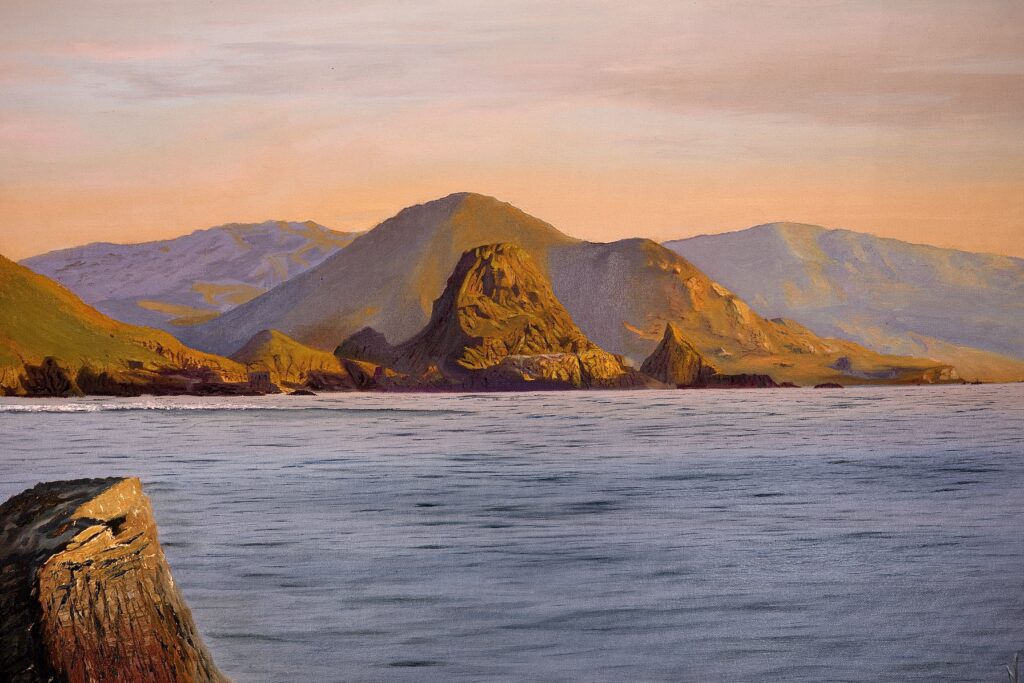
Q5. Oil painting requires time, drying, waiting, returning. How does that slowness shape the way you move through your studio and make decisions?
Most of my best work is done using a wet-on-wet technique. With my schedule, I often don’t have the luxury of returning to a canvas before it dries, so I try to accomplish as much as possible in each session. There’s something subtle and almost spiritual in that limitation. It’s a reminder that time isn’t infinite. Each stroke has to be deliberate, made with the understanding that it can’t truly be undone. That awareness extends beyond the studio—it shapes how intentional I try to be with my time, especially with family and with people who need to be heard.
Q6. Looking at older works alongside newer ones, what do you notice about how your questions as an artist have evolved?
My newer work reflects a more grounded sense of where I am in life—no longer in school, living in my home state, near the ocean. The questions I ask now are less about symbolism and motif and more about capturing scale and presence. I focus much more on the larger picture—composition, value, the mass of an ocean body—rather than details like ripples in a single wave. That shift has influenced how I see people, too: stepping back, listening more deeply, and understanding context rather than fixating on isolated details.
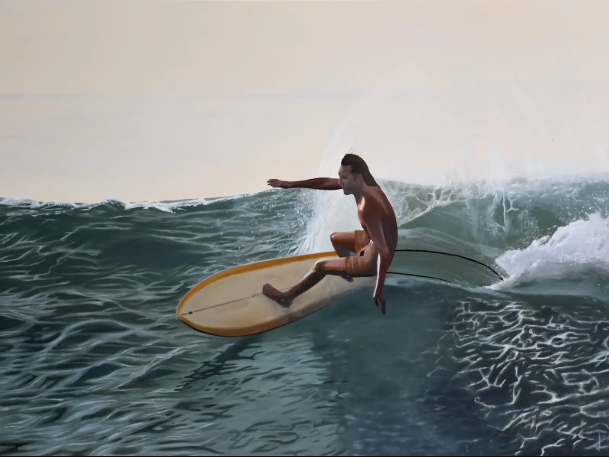
Q7. Do your walks, hikes, or time by the ocean ever influence how you place color or composition in the studio not just what you paint, but how you physically move to make the work?
Efficiency influences everything I do. Running a business, surfing, motorcycling—they all demand it. In surfing, one of the earliest lessons is efficient paddling and positioning. In graduate school, you quickly learn you can’t retain everything; you have to prioritize information that carries the greatest value and let the rest go. In motorcycling, many accidents are caused by target fixation. A skilled rider plans the turn deliberately and looks through it, toward where they want to go. In the studio, I apply the same mindset. I keep tools close, minimize unnecessary movement, and maintain a consistent distance from the canvas when stepping back to assess and correct the work. That discipline also allows me to protect time outside the studio—for family, for community involvement, and for showing up when people need help.
Q8. Has your relationship to the studio space itself changed since you began in 2015? Do you move through it differently now than in your earliest painting days?
I’m far more deliberate now. Early on, I skipped underpaintings entirely and worked directly on a blank canvas. I don’t have that kind of time anymore, so I approach things correctly from the start. Doing it the right way allows me to achieve strong results efficiently, without shortcuts.
Q9. What, would you share, from your own studio experience, as advice for artists learning to find stillness in their practice, especially within their own workspaces?
Learning to sit with yourself is difficult. I’ve heard this from people of all ages, professions, and walks of life and I’m still working on it myself. My best recommendation is simple but challenging: set a sleep routine where you’re in bed by 8 p.m. and wake up at 4 a.m. every day for a week. Put the phone away. Let the morning be quiet. There’s a peace in those hours that teaches you how to listen—to yourself, to the people around you, and to what the world might be asking of you. Once you experience it, it naturally carries into how you show up for your family, your work, and your community.
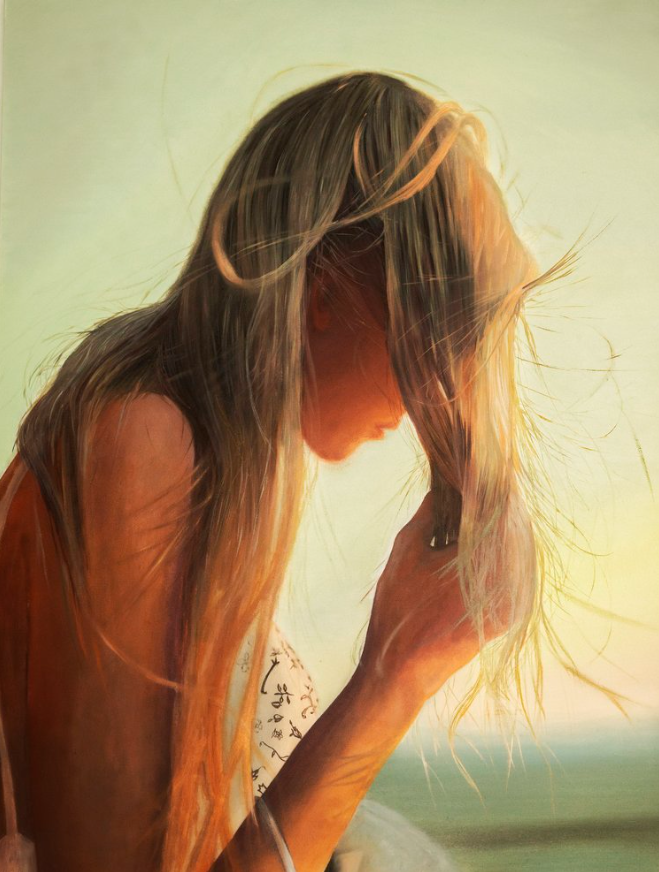
As our conversation with Brandon came to an end, we found ourselves just sitting there for a moment, taking it all in. Not just what he said about his studio or his paintings, but the way he talks about life itself, the choices he makes, the quiet hours he protects, the intentionality he brings to everything.
Brandon’s story isn’t the kind you usually hear in the art world. There’s no fairy tale here, no moment where everything clicked into place and suddenly he was an artist. It’s messier than that, and honestly, that’s what makes it so real. Here’s someone who was genuinely struggling, who walked into a store not knowing what he was looking for, who made a painting that looked absolutely nothing like what he intended—and somehow, in that chaos, found a way to keep breathing. What began as just trying to survive turned into something bigger: a practice, a rhythm, a way of understanding himself and the world around him.
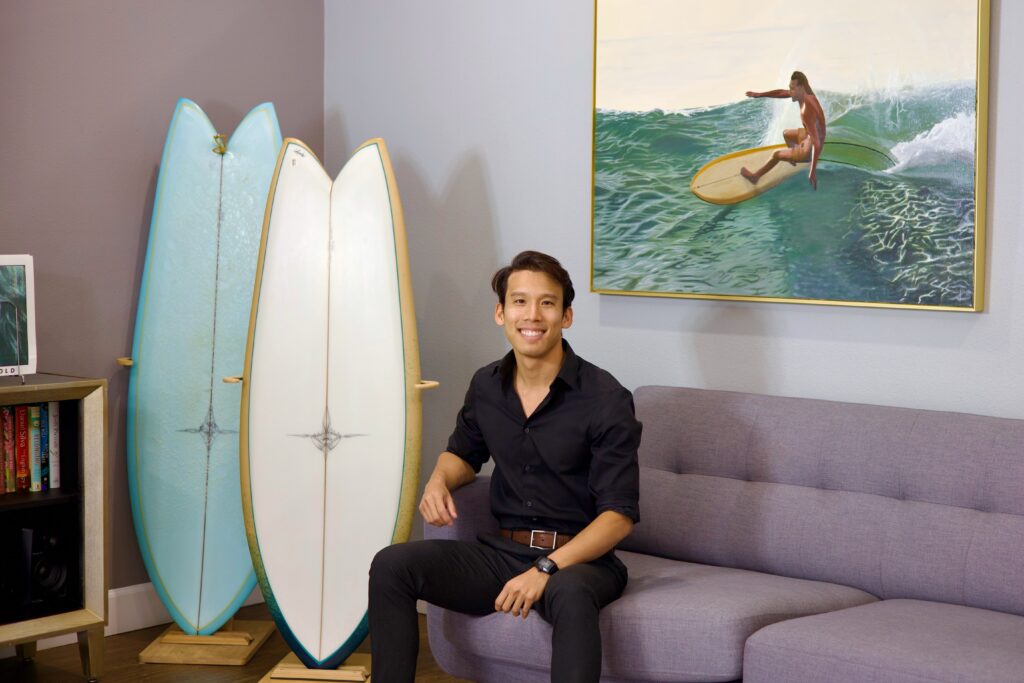
When you look at his studio simple, uncluttered, almost monk-like in its restraint you realize it’s not really about the space at all. It’s about what that space represents. It’s about clearing away the noise so you can actually hear yourself think. It’s about recognizing that every moment matters, whether you’re painting at 2 a.m. or having breakfast with your family or just standing outside watching the sunrise. It’s choosing to be fully there, wherever “there” is.
What gets us about Brandon is that he’s not trying to be anything other than himself. He’s not chasing awards or trying to prove something to anyone. He just keeps showing up brush in hand, day after day—trusting that the work itself, the simple act of doing it with care and attention, will mean something. And it does.
Talking to him reminded us that home isn’t really about a place. It’s about the routines we build, the quiet we protect, the ways we show up for the people and things that matter. It’s not about getting it perfect or having it all figured out. It’s just about being willing to start, to keep going, to sit with yourself when it’s hard and trust that something good will come from it.
If you want to see more of what Brandon’s creating and follow along with his journey, you can connect with him through the links below.