
5 Artists Who Turned Unconventional Materials Into Extraordinary Art
Art does not always begin with a canvas, a tube of paint, or a carefully arranged collection of brushes. Sometimes, it begins with something we would usually throw away, something found in nature, or a material that seems to have no place in a gallery. A pile of discarded plastic, a stack of newspapers, a handful of chocolate wrappers, or even an assortment of everyday objects can become the starting point for something extraordinary when an artist looks at it differently.
Some of the most fascinating artists in modern and contemporary art have built their practices around this very idea. They have challenged our expectations of what art should look like, what it should be made from, and where its value comes from. Their work reminds us that creativity is not always about having the finest materials available. It is about recognizing possibilities that others might overlook.
From sculptures made with everyday objects to installations constructed from discarded materials, these five celebrated artists have turned unconventional mediums into remarkable works of art.
1. El Anatsui: Turning Discarded Bottle Caps Into Monumental Art
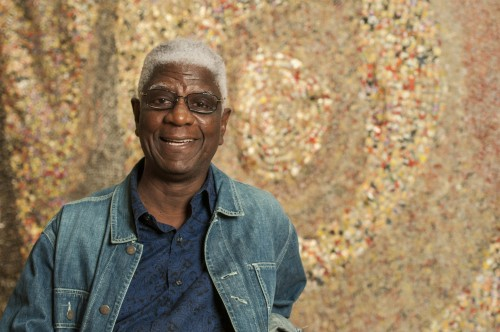
When Ghanaian artist El Anatsui looks at discarded bottle caps and aluminum scraps, he sees more than the remains of everyday consumption. He sees color, texture, history, and the possibility of creating something on an entirely different scale.
Born in Ghana in 1944 and based in Nigeria for much of his career, Anatsui is internationally recognized for his monumental, shimmering sculptures made from reclaimed materials. His best-known works are assembled from thousands of aluminum bottle tops, liquor-bottle seals, and other metal fragments, which are flattened, folded, and connected with copper wire. The resulting pieces resemble enormous tapestries, flowing between sculpture, textile, and painting.
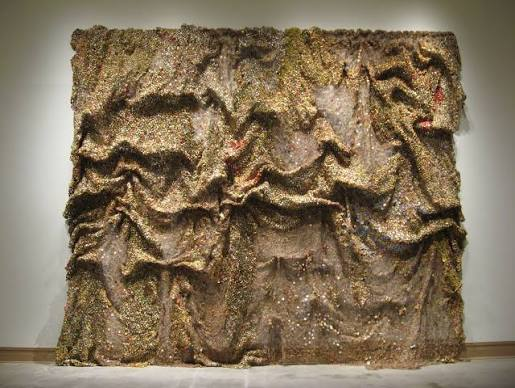
One of his celebrated works, Dusasa II (2007), demonstrates how a material associated with waste can be transformed into something visually rich and complex. Its surface is made up of countless small metal elements, each contributing to a larger composition of color, movement, and intricate pattern. From a distance, the work can resemble woven fabric or a sheet of precious metal. Up close, its individual components reveal the humble origins of the material.
Anatsui’s choice of materials also carries historical significance. The bottle caps evoke the circulation of alcohol, trade, consumption, and the complicated histories connecting Africa with the wider world. Yet his work does not depend on a single interpretation. Its beauty, texture, and shifting forms invite viewers to discover their own associations.
An especially interesting aspect of Anatsui’s practice is that his large metal works do not have to be installed in exactly the same way every time. They can be draped, folded, and arranged differently according to the exhibition space. This gives each installation a distinctive presence.
By turning discarded metal into monumental, jewel-like surfaces, Anatsui demonstrates that materials do not have to be expensive or traditionally artistic to hold extraordinary visual and cultural value.
2. Vik Muniz: Creating Art From Sugar, Chocolate, And Trash
Brazilian artist Vik Muniz has spent much of his career questioning how we see images and what happens when familiar pictures are recreated using unexpected materials. His works often begin with recognizable photographs or well-known visual references, which he reconstructs using materials that make viewers look twice.
In his Pictures of Chocolate series (1997), Muniz recreated images using chocolate syrup. Rather than simply painting with the substance, he arranged it to form recognizable compositions, photographed the results, and presented the photographs as finished artworks. The chocolate was temporary, but the photograph preserved the image, creating an intriguing relationship between the material, the process, and the final object.
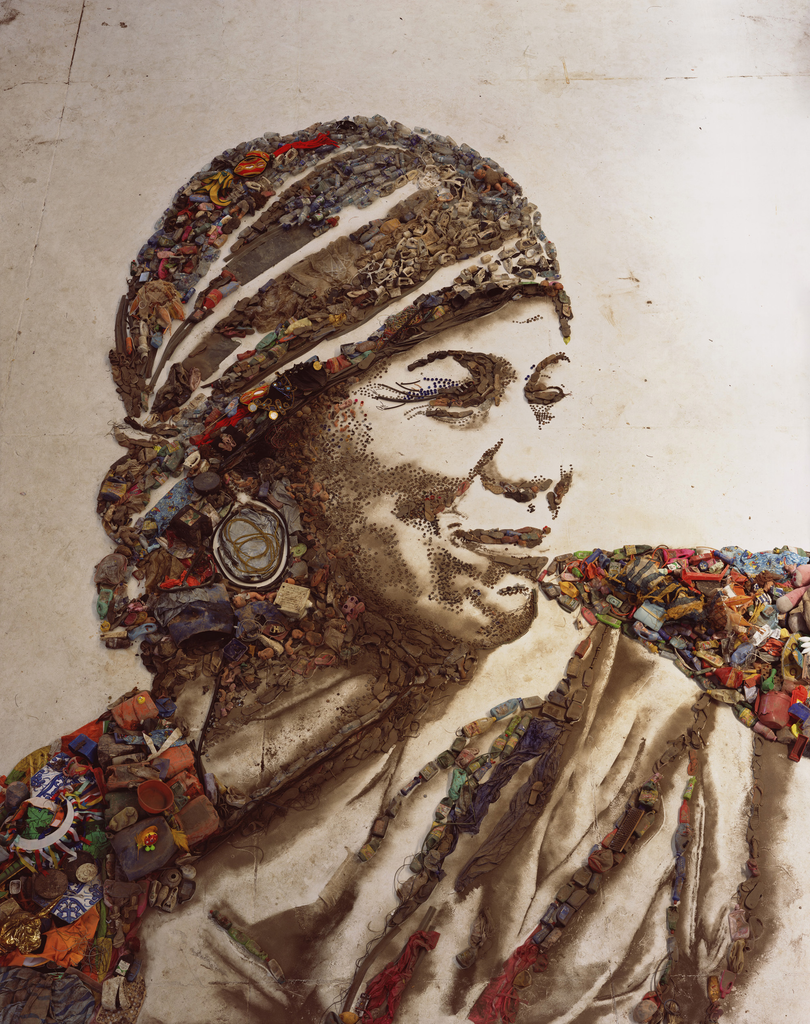
His experimentation extends far beyond food. In the Pictures of Garbage series, Muniz constructed large-scale images from discarded objects, arranging pieces of waste into compositions that become recognizable when viewed from the right distance. Individual scraps might seem insignificant on their own, but together they form carefully orchestrated images.
Muniz explored this relationship between art, waste, and human lives even further in Waste Land (2010), the documentary directed by Lucy Walker that follows his collaboration with workers at Jardim Gramacho, one of the world’s largest landfill sites at the time, in Rio de Janeiro. Working alongside the catadores, or recyclable-material collectors, Muniz created large photographic portraits from materials recovered at the landfill. The project brought attention to the workers’ lives, their labor, and the possibilities of transforming discarded objects into something meaningful.
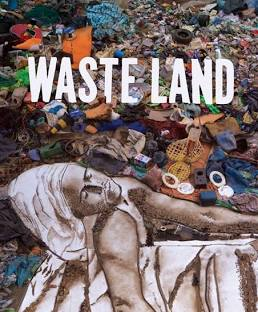
What makes Muniz’s work so compelling is the difference between what we see at first and what we discover upon closer inspection. An image that initially appears to be a conventional portrait may turn out to be made from plastic, metal, paper, or other discarded materials.
His art encourages us to reconsider the value we assign to everyday things. It also reminds us that an image can hold more than one story: the story of the person or subject represented, and the story of the materials and hands that brought it into existence.
3. Niki de Saint Phalle: Making Art Through Destruction
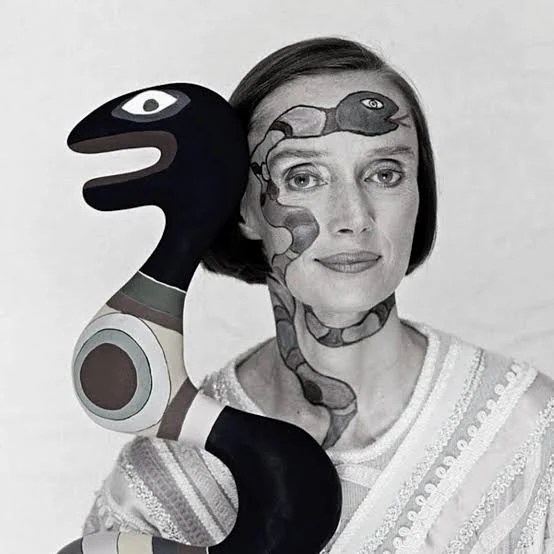
What happens when an artist decides that creating a painting should involve destroying it?
For French-American artist Niki de Saint Phalle, the answer came in the form of her extraordinary Tirs, or Shooting Paintings, series. In 1961, she began creating assemblages from unconventional materials, including toys, tools, bicycle wheels, clothing, chicken wire, and plaster. She embedded paint-filled plastic bags within these constructions, covered the surfaces in white, and then fired a rifle at them. As the bullets struck, the bags burst, sending streams of colored paint across the surfaces.
The result was a painting created through an act of controlled destruction. Instead of applying color with a brush, Saint Phalle allowed the materials themselves to produce unpredictable marks and patterns. The process transformed an otherwise static object into a dramatic, performative artwork.
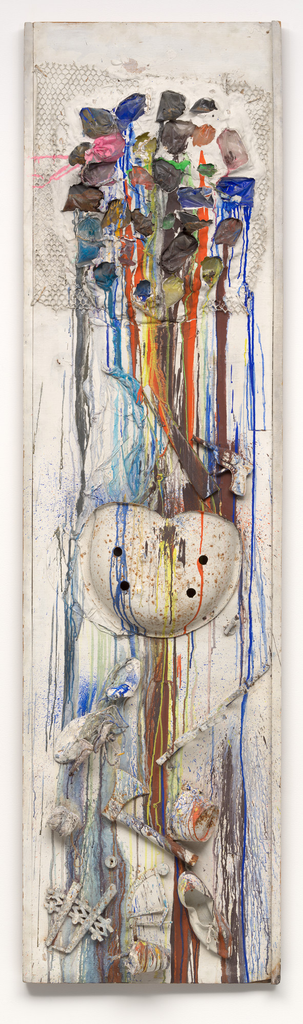
One example, Shooting Painting American Embassy (1961), brings together an extraordinary assortment of objects, including wood, plaster, plastic bags, wire mesh, and various found materials. The work challenges the traditional idea of painting as a carefully controlled process, replacing the familiar canvas with a layered construction that records the physical traces of its making.
Saint Phalle’s practice was about more than creating visually striking surfaces. She connected her shooting performances to personal anger, social injustice, and the violence of her time. By turning unconventional materials into the foundation of her work, she also challenged the boundaries separating painting, sculpture, and performance.
Her later work took a different direction. She became widely known for her colorful Nanas, exuberant sculptures of women characterized by bold patterns, rounded forms, and a joyful physical presence. These works demonstrate how radically an artist’s use of materials and forms can evolve while retaining a distinctive creative vision.
Saint Phalle’s experiments remain a reminder that art does not always have to emerge from quiet, predictable processes. Sometimes, the material becomes part of the performance, and the act of making becomes just as significant as the finished work.
4. Joseph Cornell: Finding Entire Worlds Inside Ordinary Objects
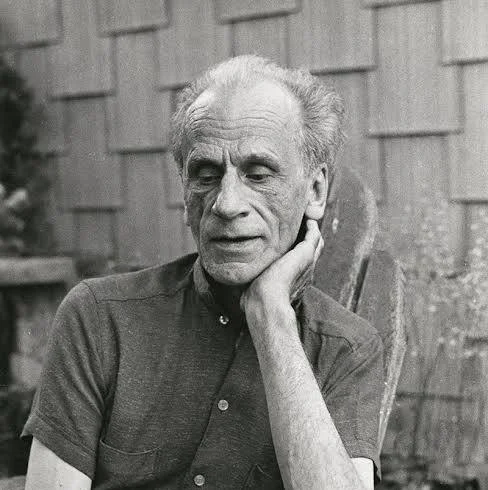
Not every extraordinary artwork needs to be monumental. Sometimes, it can fit inside a small wooden box.
American artist Joseph Cornell became one of the most influential figures in assemblage art through his delicate, dreamlike constructions. Working with found objects, photographs, printed papers, glass, and other collected materials, Cornell created box sculptures that feel like miniature worlds suspended between memory and imagination.
Cornell spent years exploring New York’s bookshops, antique stores, and flea markets, collecting objects that caught his attention. Rather than treating these discoveries as unrelated curiosities, he brought them together in carefully arranged compositions. A glass marble, a fragment of an old illustration, a small figurine, or a piece of printed paper could become part of a larger visual story.
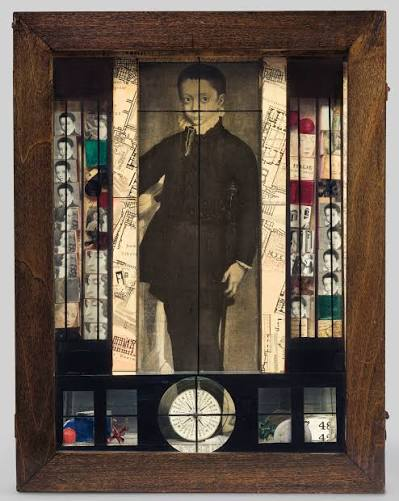
His Medici Slot Machine (1942) is a particularly fascinating example. Inspired by Renaissance portraits and the history of the Medici family, the box construction combines imagery, compartments, and small objects to create an intriguing visual experience. Its title evokes a mechanical game, while its references to historical figures invite viewers into a world where art history, collecting, and personal imagination intersect.
Cornell’s works often feel like little cabinets of curiosity. They encourage viewers to slow down, examine individual details, and invent stories about the relationships between objects. A simple arrangement of paper, glass, wood, and found materials can suddenly evoke a distant place, a forgotten memory, or an imaginary landscape.
There is something especially appealing about Cornell’s approach in a culture where we are constantly encouraged to replace, upgrade, and discard the things around us. His art suggests that objects can hold meanings beyond their original purposes. Something overlooked or forgotten might become precious when placed in a new context.
Cornell did not need rare materials to create a sense of wonder. He needed curiosity, patience, and an ability to recognize the possibilities hidden within ordinary things. His work shows that unconventional art can be intimate and quiet while remaining deeply imaginative.
5. Chiharu Shiota: Weaving Emotion With Thousands Of Threads
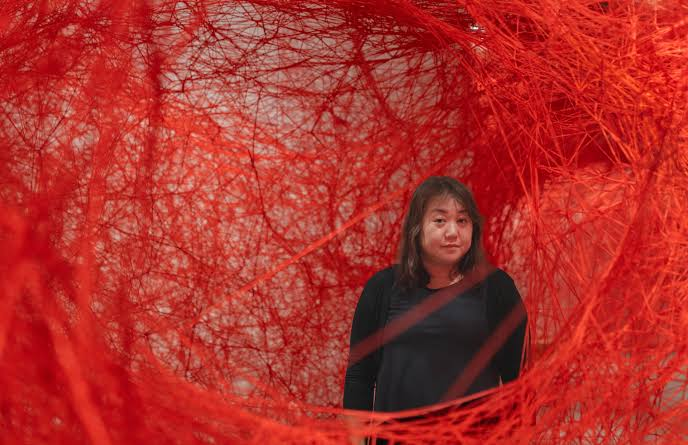
Imagine entering a room where thousands of red threads stretch across the space, connecting objects, crossing one another, and creating an intricate web that seems to envelop everything around you. It is an experience that feels both physical and emotional, and it is central to the work of Japanese contemporary artist Chiharu Shiota.
Shiota is internationally known for her large-scale installations made from interwoven threads, often incorporating objects such as keys, shoes, chairs, suitcases, and boats. Her installations transform ordinary exhibition spaces into immersive environments in which viewers move through layers of material, memory, and association.
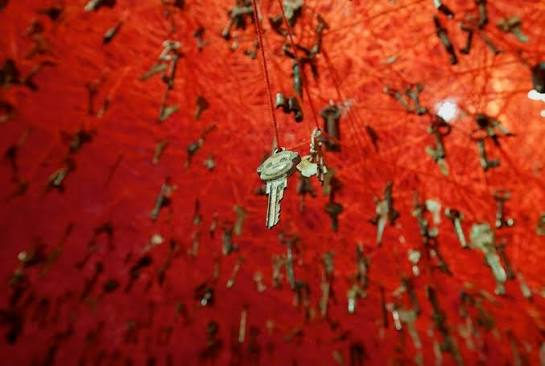
In The Key in the Hand, presented at the Japan Pavilion at the 2015 Venice Biennale, Shiota suspended thousands of keys from a vast network of red yarn above two wooden boats. The installation brought together objects associated with everyday life and travel, turning them into a meditation on memory, personal histories, and human connection.
Keys are practical objects we handle almost without thinking. They open doors, secure homes, and grant access to private spaces. Yet, when thousands of them are suspended together, they begin to suggest the countless lives, experiences, and stories they might represent. The red threads connect these objects visually, creating a sense of relationships that extend beyond any single person or place.
Shiota’s use of thread is particularly striking because the material is so familiar. We encounter it in sewing, knitting, embroidery, and countless domestic activities. In her installations, however, thread becomes architectural. It occupies entire rooms, alters our perception of space, and creates structures that seem delicate yet overwhelming.
Her work also demonstrates that unconventional materials do not necessarily have to be discarded or unusual in themselves. Sometimes, their extraordinary potential lies in the scale, arrangement, and emotional meaning an artist gives them.
By transforming thread into an environment that visitors can physically experience, Shiota blurs the boundaries between sculpture, installation, and performance. Her work invites us to consider the invisible connections that shape our lives, reminding us that even the simplest materials can communicate feelings that are difficult to express in words.
The Unexpected Beauty Of Unconventional Art
What connects these five artists is not a particular technique or aesthetic. Their works range from El Anatsui’s shimmering metal tapestries to Vik Muniz’s images made from waste, Niki de Saint Phalle’s explosive experiments, Joseph Cornell’s intimate box constructions, and Chiharu Shiota’s immersive installations. Yet, each artist begins by looking beyond what a material is traditionally expected to do.
Bottle caps become sculptural surfaces. Chocolate becomes a tool for image-making. Discarded objects become portraits and visual narratives. Found trinkets become windows into imaginary worlds, while ordinary thread becomes an environment filled with emotional significance.
Their work also reminds us that unconventional materials are not simply a substitute for traditional art supplies. They can carry their own histories, associations, and limitations, becoming essential to what an artwork communicates. The materials are not merely there to create an effect. They are part of the story itself.
Perhaps that is one of the most exciting things about art: the possibility of discovering something remarkable in what we already have around us. An object does not need to be expensive, rare, or conventionally beautiful to inspire creativity. It simply needs someone willing to imagine what else it could become.
And sometimes, the most extraordinary artwork begins with something the rest of the world has overlooked.
Editor’s Note:
The Artist of The Year Award 026 is now open for submissions. The deadline is November 16, 2026 and the theme is open. Go to apply.artstoheartsproject.com and submit to the open call now to be part of the new hard cover art book!