
Our Art Star Bengt O Björklund Knows Art Isn’t What He Makes, It’s Who He Is

👁 199 Views
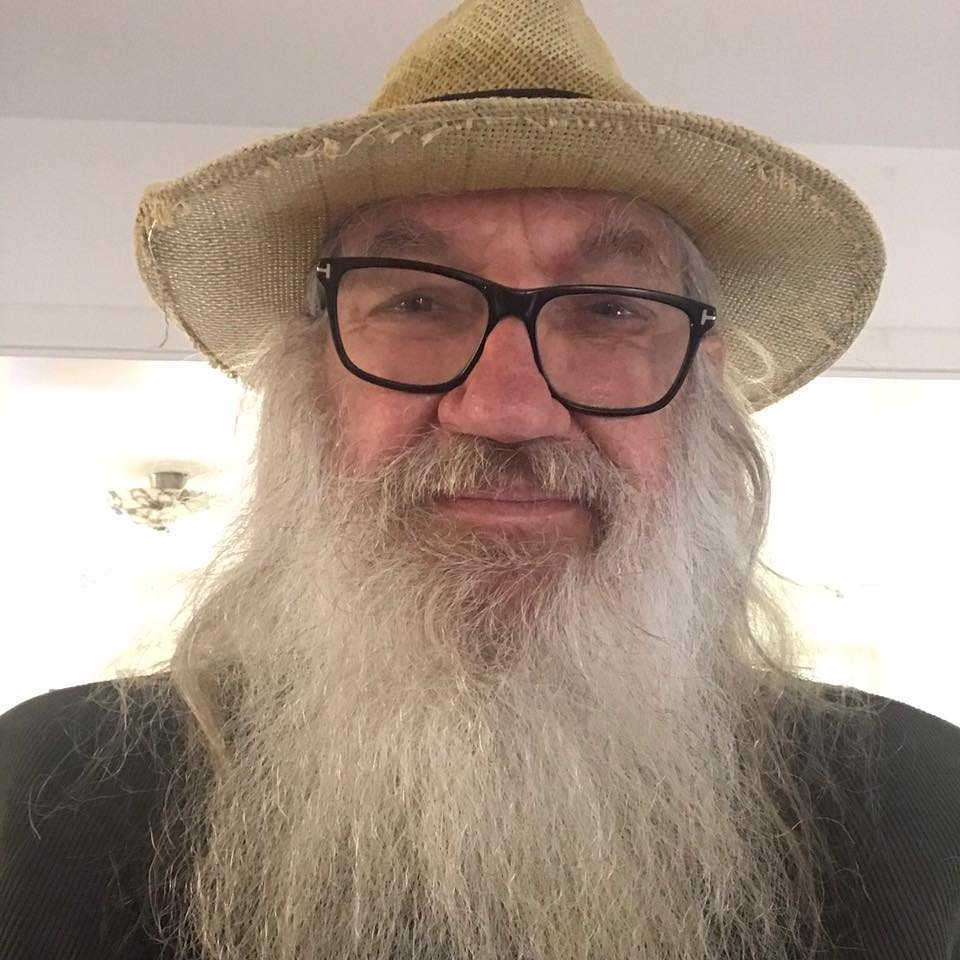
Every artist carries a story one shaped by moments of struggle, hope, and quiet transformation. At Arts to Hearts Project, we celebrate those artists who never give up, no matter the odds. This month, we honour Bengt O Björklund as our Art Star, a painter and poet who turns his life’s journey into light, creating art that feels deeply human, tender, and alive.
From a working class home in Stockholm to years of confinement in Istanbul, Bengt’s story is one of profound metamorphosis. It was within the stark walls of imprisonment that he first discovered painting turning pain into poetry, and confinement into creation. What began as watercolours and crayons in a prison cell grew into a lifelong dialogue between darkness and illumination, nature and mythology, silence and sound.
His birch trees, now iconic, stand as totems of memory and resilience rooted in Swedish soil yet reaching toward universal light. Through layered textures of oil, charcoal, and chalk, Bengt creates canvases that breathe, vibrate, and question. And through his poetry, he gives voice to the spaces between languages, where rhythm and emotion become one.
In this intimate conversation, Bengt reflects on the turning points that shaped his journey, his enduring fascination with light, and the balance between struggle and serenity that defines his art.
Let’s step into his world where colour becomes memory, contrast becomes truth, and art becomes the quiet triumph of the human spirit.
Can you share a little about your background where you come from, how art first entered your life, and the key turning point when you decided to pursue creating art seriously?
I come from a working-class home with no father in a Stockholm suburb. When I was 19 years old in 1968, I left Sweden aiming for India like so many others at that time. One night in Istanbul the police broke into my hotel room and found a piece of hash. After having been beaten I signed a statement that said I was a dealer, I was not.
The judge gave me 12 years. (Later some of what happened during my long stay in Istanbul was depicted in the movie Midnight Express. I am called Erich in the movie.)
It was in jail I first started to paint. Watercolour, coloured pencils and crayons. My Japanese friend Koji Morrishita inspired me with his Japanese style.
Another friend that inspired me during those days of incarceration was the Italian artist and Dadaist Antonio Rasile. When the Swedish government made a deal with Turks in 1973, I flew back home. After being pardoned by the Swedish king 1973 I got my first own apartment and I started to paint, mainly at night. Those paintings were exhibited at Joe Banks gallery in Copenhagen in 1975. After decades on the road, lived eight years in Brazil, I returned to Sweden 1990 and a few years later I met, in Stockholm, the American artist Harvey Cropper. That meeting had a great impact on my view of myself as an artist. For 18 years he was my mentor and his studio my second home. So, there were two key turning points.
Birch trees appear as a recurring symbol in your work. What do they represent to you personally, and why have they become such a meaningful motif?
Yes the birches have kind of turned into a totem. First of all it’s a stunningly beautiful tree. What i like most is the texture and the mesmerizing graphic of the bark. You can put a birch against almost any background and it’ll stand out. I know birches grow in many countries but they feel Swedish anyway to me. Here its a very common tree. And yes I’ve sometimes charged the birch with an impossible power and it has been The Tree of Life and a Menorah, for example.
You’ve described early phases of your painting as “a new mythology” and “giving birth to light.” How do you see those founding aims manifest today in your style or subject matter?
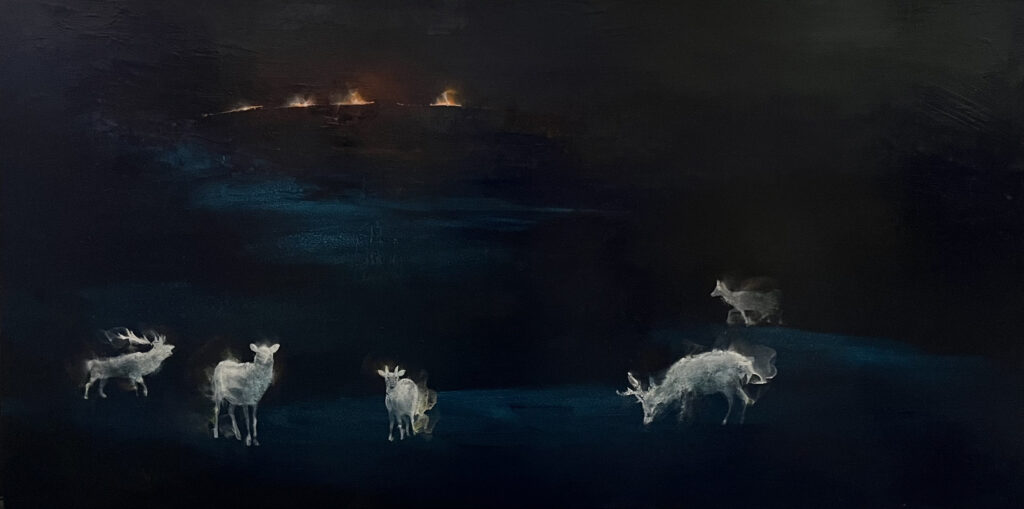
Yes, at that time 1973-1974 I was inventing my own mythologies based of course on other myths that I studied in Istanbul. Babylonian, Sumerian, Shinto, Greek, Nordic and some African myths. That does not influence my painting today. The one thing that is still there, although metamorphosed is the fascination of creating light. In the early days I marvelled at what i could do. I had no formal education in art. But I drew the landscape and the trees etc and started to paint straight from the tube on the dark side of every object, small or big, then i kept adding white into the paint, kept on doing that towards the light source, usually a sun or a moon. All my paintings at that time were done like that. Today I still work intensely with light, but in much wider, broader sense. Now, for example, there can be many light sources in the same painting.
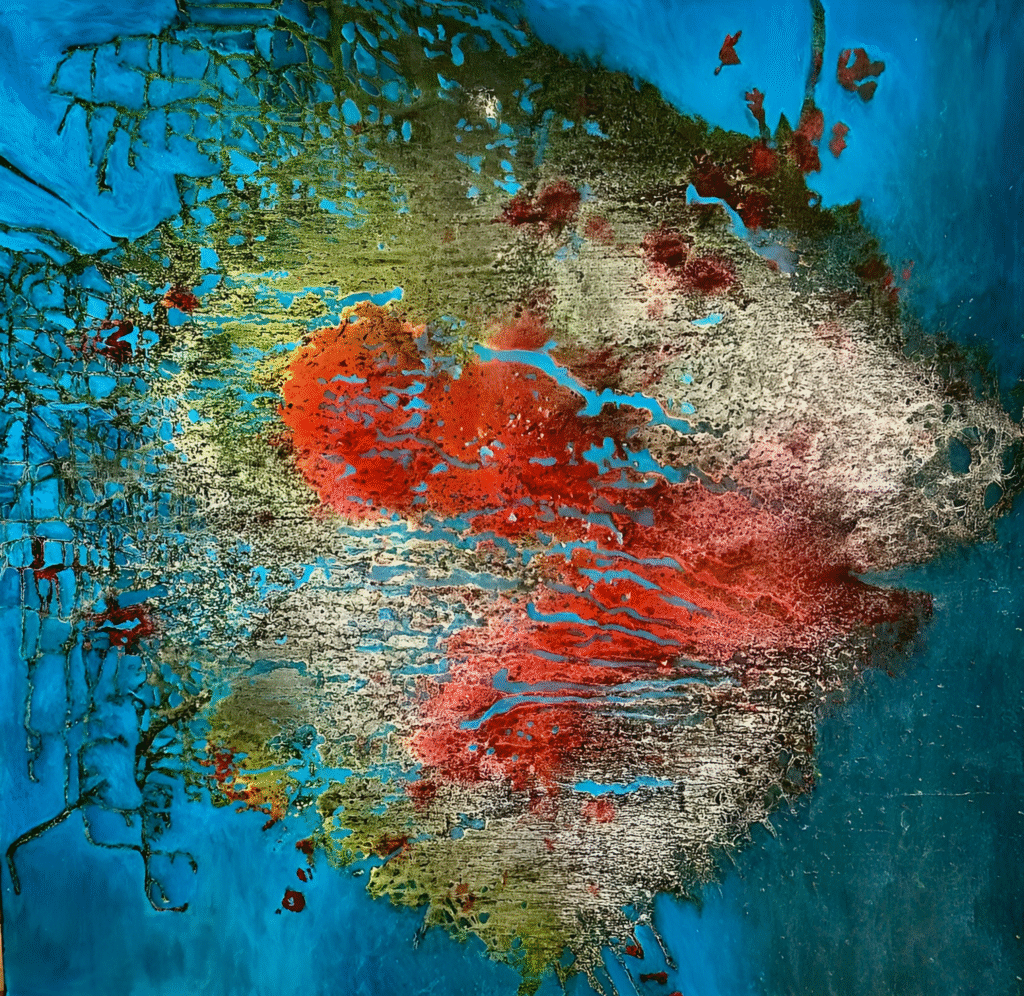
Your work often blends oil, charcoal, chalk, and layered textures. How do you balance the spontaneity of the materials with your creative intention?
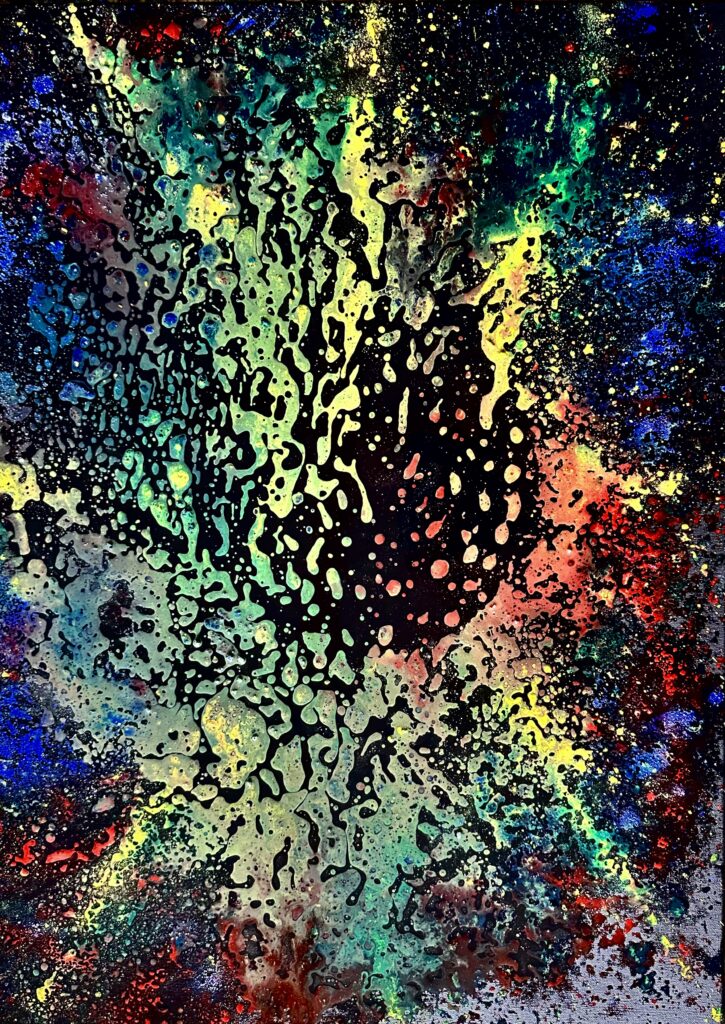
Yes, I have tried many different ways to express something specific, but equally often I sometimes watch different processes I’ve started, just nudging it a bit. I can also make drastic changes in the communication between me and the canvas. It’s a personal thing, I guess. Spontaneity I think arises in the space between control and canvas.
You’ve cited early influences from your time in Turkey as well as modernist and Dadaist traditions. Which artists or writers continue to inspire you today?
After my best friend and mentor Harvey Cropper passed away in 2014, I’ve been on my own path, always trying something new, never looking for any other inspiration then the one I am. I have classes in my studio, teaching what I learned so far when it comes to experimenting with colour pigments, water, oil, turpentine and alcohol. The meeting of those liquids can be spectacular with the colour pigments almost exploding in new forms. My Welsh publisher says one can hear echoes of Dylan Thomas in my poetry. I’d like that to be true. That he is still with me. I am also still with the Beat generations, old and new.
You’ve written poetry in both Swedish and English and mentioned that your English voice developed during a profound chapter of your life. How does language influence the rhythm and emotion of your poetry?
Hmmm Yes. I started to write poetry, short stories in verse, why, because no one spoke Swedish in Istanbul, almost every one of the others spoke English. So, if I wanted to be read, it had to be in English. Then years later when I was free, I was so used to it I just carried on. When I write in English it’s like I am the person I normally am with people that speak my native language. We share many things, authors, poets and all kinds of news updates. The melody in my English poetry is so different from the one in my native Swedish. And still, I am both. It’s a privilege.
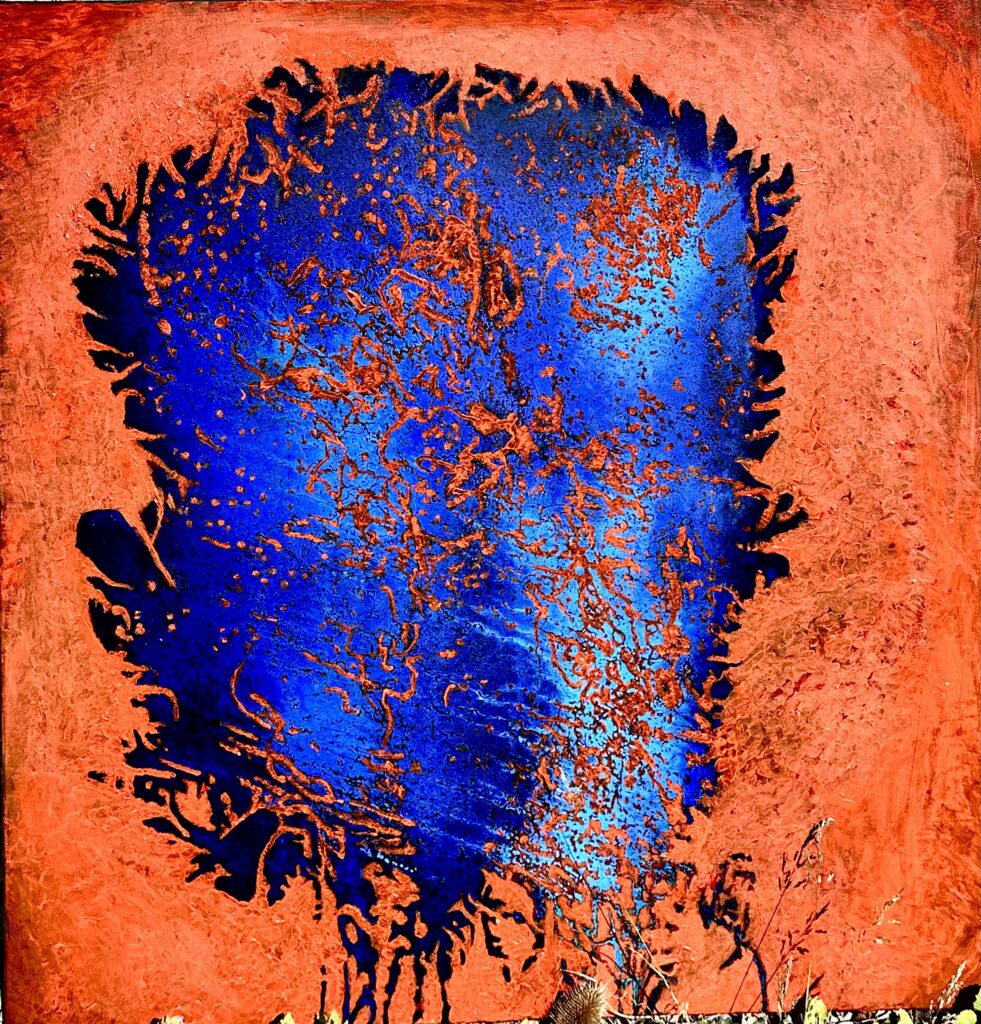
Many of your paintings play with the contrast between light and dark, or colour and monochrome. What does this balance mean to you, is it a metaphor for internal struggle, transcendence, memory, or something else?
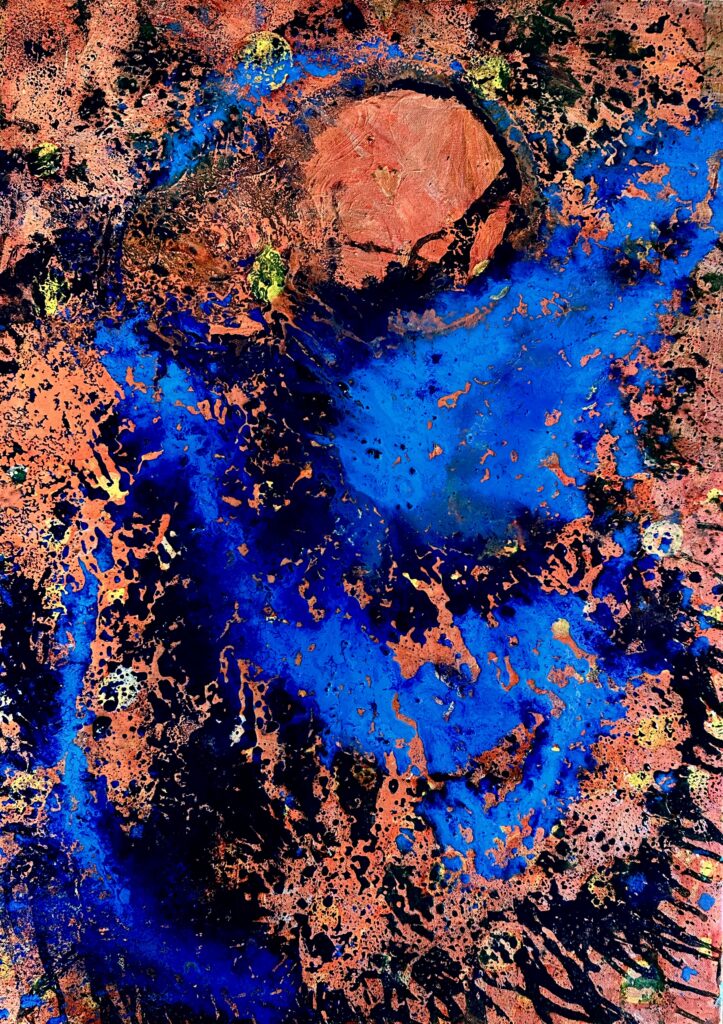
If anything, my art reflects my playfulness and curiosity. But yes, there is struggle too in all my recent compositions. But it’s a created struggle I leave behind in the painting. A struggle of common interest, the observer must stop and ponder. I guess in order to create struggle you really need to know what it is. Contrast is light and shadows, the colours you put side by side. Like I said earlier, using the birch is a very effective way of creating contrast, I want each of my canvases to draw attention. To make people stop and look.
How do you relate your poetry and writings to your visual art in a given piece? Do you ever start with a phrase or poem and let that viscerally shape the painting, or vice versa?
Though writing poetry can be a very visual process, there are many other aspects that needs to happen, musicality, rhythm and tone, the graphic, and last the most important aspect, when you read the poem out loud. Painting is mainly a visual endeavour. You see what you do before your eyes. It too needs rhythm, a tone and it can be graphic, but in all honesty, there is not so much overlap between my poetry and my painting. They are two separate parts that I rarely join. It’s like being able to move between two wondrous worlds and both are your home. I’ve written poetry though, to other people’s paintings and photographs.
What do you hope your art contributes to the larger cultural or emotional conversation happening in the world today?
I hope my art can give solace, start new thought processes, be a source of important questioning and offer moments of peace. There is light in my art. It comes with the painting. I think that is what we need. Light.
What advice would you offer to young artists and writers who wish to pursue a lifelong creative journey across different forms of expression?
Just do it! The rest is the rest. Never forget it must be fun, and a total absorption at times is a must. It will also be a struggle. The creative process can be a harsh mistress.
Congratulations on being featured as an Art Star by The Arts to Hearts Project! What does a recognition like this mean to you personally, and how do you feel it supports or impacts your growth as an artist?
Thank you so much! It means a lot to me! It empowers me. Strengthens my faith in my work. As an artist in my studio I never doubt myself. But when my art go public there’s always a tiny voices in my head mocking me. This kind of recognition silences that little voice. As an artist I like most artists need visibility, exposure and reputation. I truly hope more people can find my art. This kind of recognition makes me feel like I am doing something right. So thank you so much again.
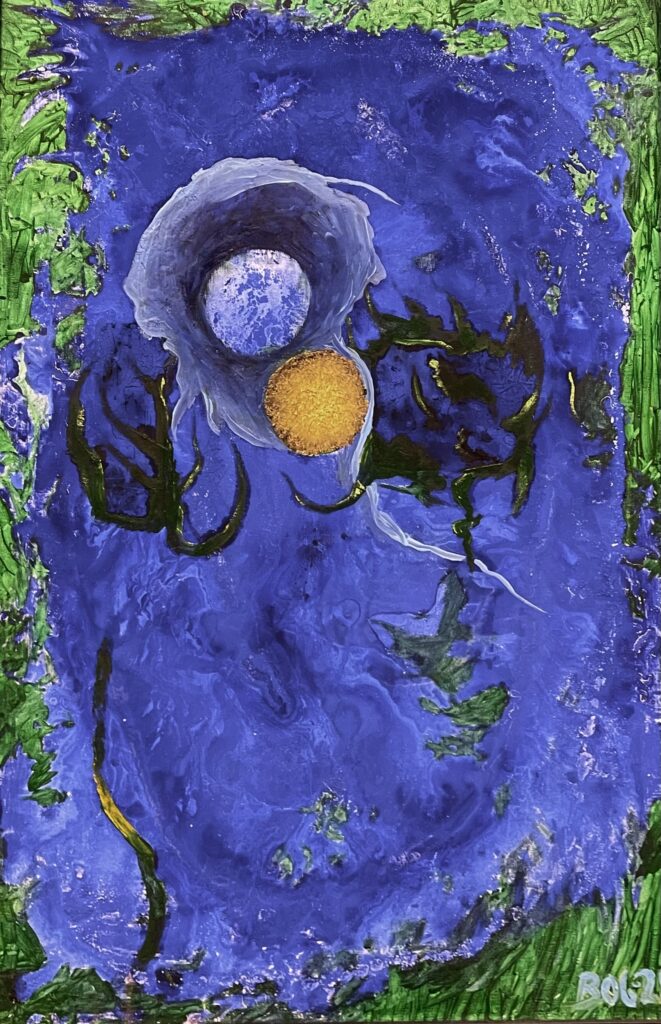
Bengt’s journey is a reminder that art can emerge from the most unexpected places from silence, solitude, and the longing to transform darkness into light. His story embodies the truth that creation is not only an act of beauty, but also one of survival and becoming.
Through his paintings and poetry, Bengt invites us to see beyond the surface to feel the quiet pulse of contrast, to recognize the light that endures even in shadow. Each canvas becomes a meditation on resilience, memory, and the infinite dialogue between control and surrender.
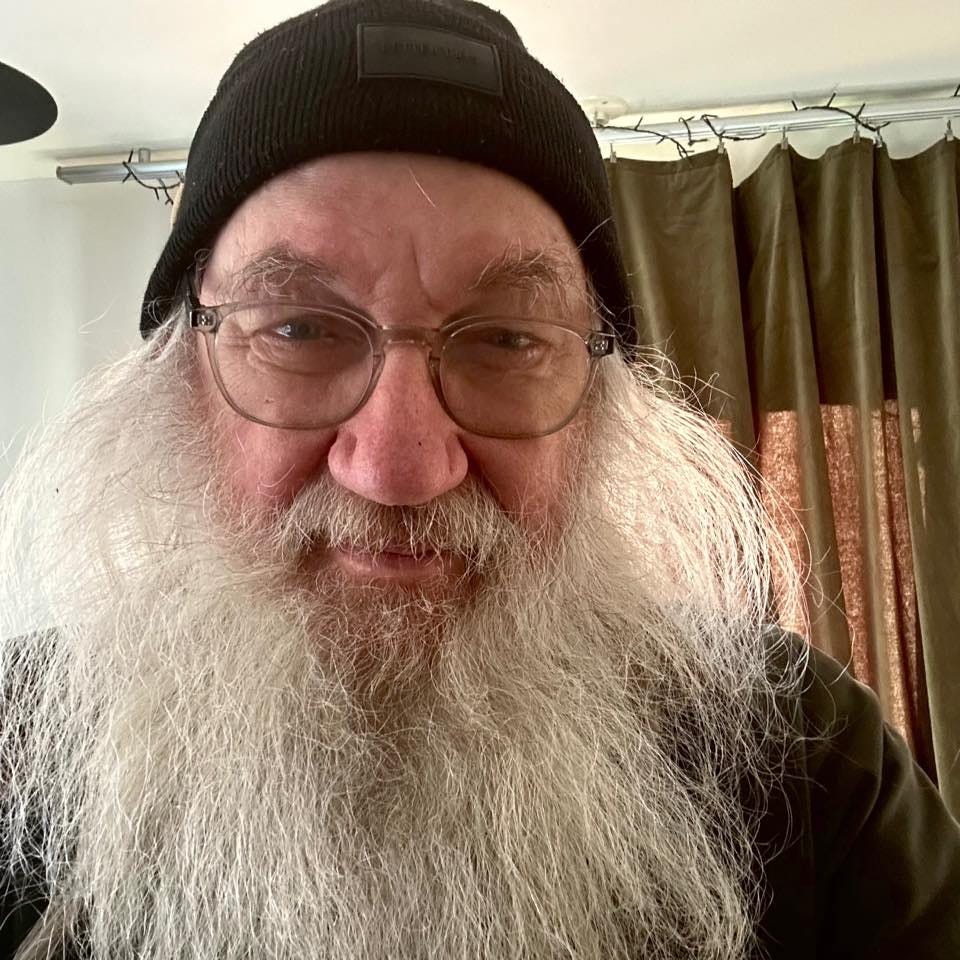
As he continues to experiment, teach, and explore new dimensions of expression, Bengt shows us that art is not a destination but a lifelong journey one that evolves, questions, and continually reveals new light.
Follow Bengt’s journey and step into his world through the link below.