
What If Art Is Just A Conversation You’re Having With Your Inner Self? I Ozlem Thompson
👁 441 Views
At Arts to Hearts Project, we’ve spent years asking artists one question: when did you know? When did you realize painting wasn’t just something you did, but something you were?
Most can’t answer. They point to moments, influences, teachers but the knowing itself remains elusive, something that happened so quietly they missed it in real time.
Ozlem Thompson remembers exactly when she knew. She was five years old, sitting in a field of wildflowers in rural Turkey, drawing for so many hours that time stopped existing. She didn’t know it then, but she was already meditating. Already having the conversation with herself that would become her life’s work.
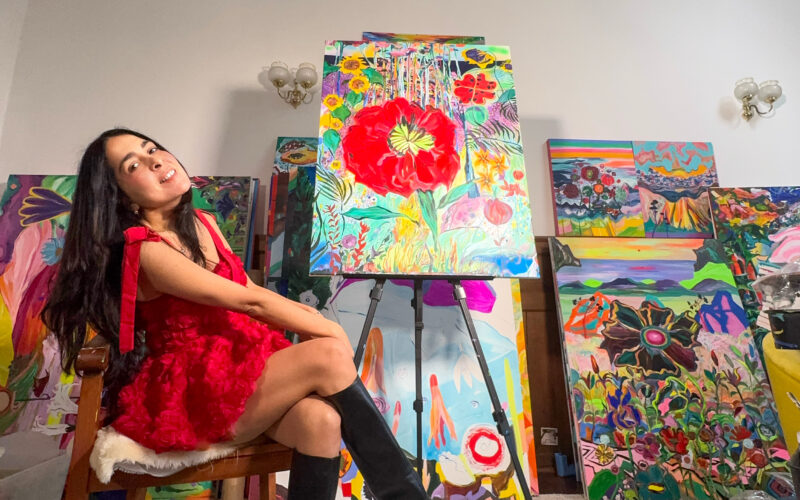
When we were searching for our next artist to feature in our Best of the Art World editorial, we came across Ozlem’s work and something stopped us completely. Her paintings are vibrant, organic worlds that feel alive, pulsing with cellular energy and botanical rhythms held us there.
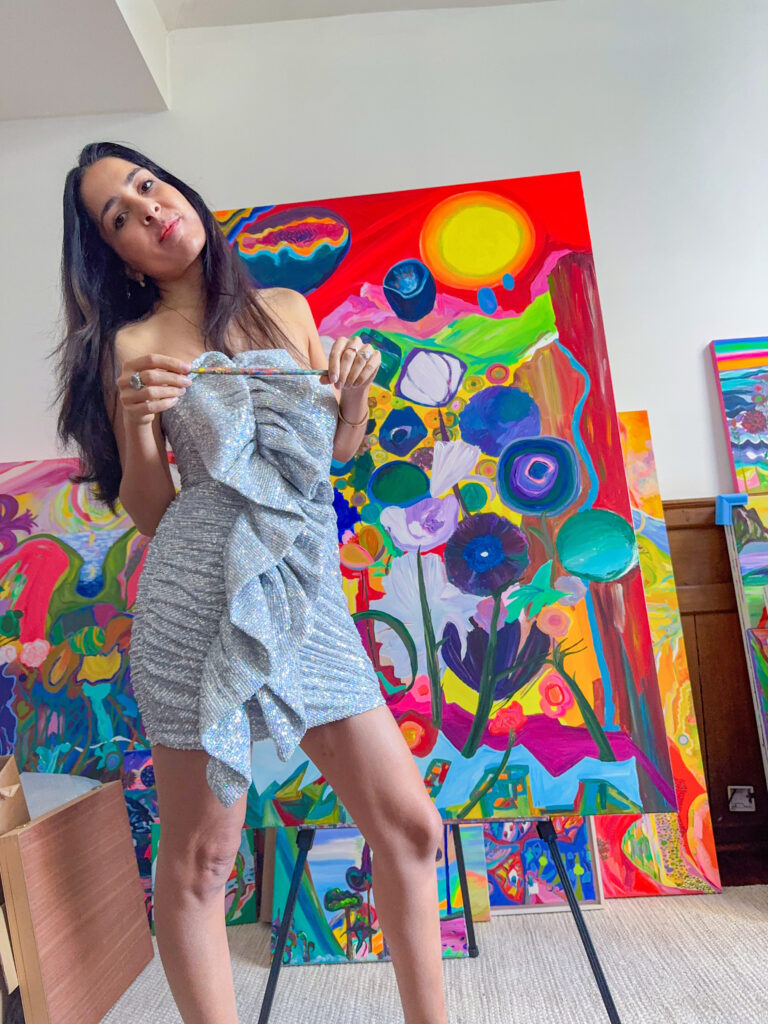
We found ourselves staring, trying to understand where that visual language came from. Because it’s not quite nature. It’s not quite abstraction. It’s something in between. Something that feels like looking at the world through a microscope and a telescope simultaneously.
We started digging. And the more we learned, the more curious we became.
Ozlem didn’t come to painting through traditional art school. Her background is in biology and botany years spent studying how living systems grow, interact, evolve. She examined cells under microscopes. Understood ecosystems as interconnected networks. And somehow, all of that scientific understanding found its way onto her canvases. Not as illustration. As something else entirely.
Her paintings translate rather than document. They take cellular rhythms, plant structures, ecological relationships and abstract them into color, movement, form. Science becomes feeling. Structure becomes poetry. What was once observed through a lens now emerges through paint in ways that feel both precise and wildly intuitive.
But here’s what really fascinated us: the way she describes her process doesn’t sound like making art. It sounds like meditation.
She’ll stare at an empty canvas until a scene begins appearing in her imagination. Not planning it. Not sketching it first. Just waiting. Watching. The same kind of deep absorption she experienced as that five-year-old in the field. And we wanted to understand: how does someone maintain that level of presence? What does it feel like when your inner world projects itself forward until it’s ready to become visible?
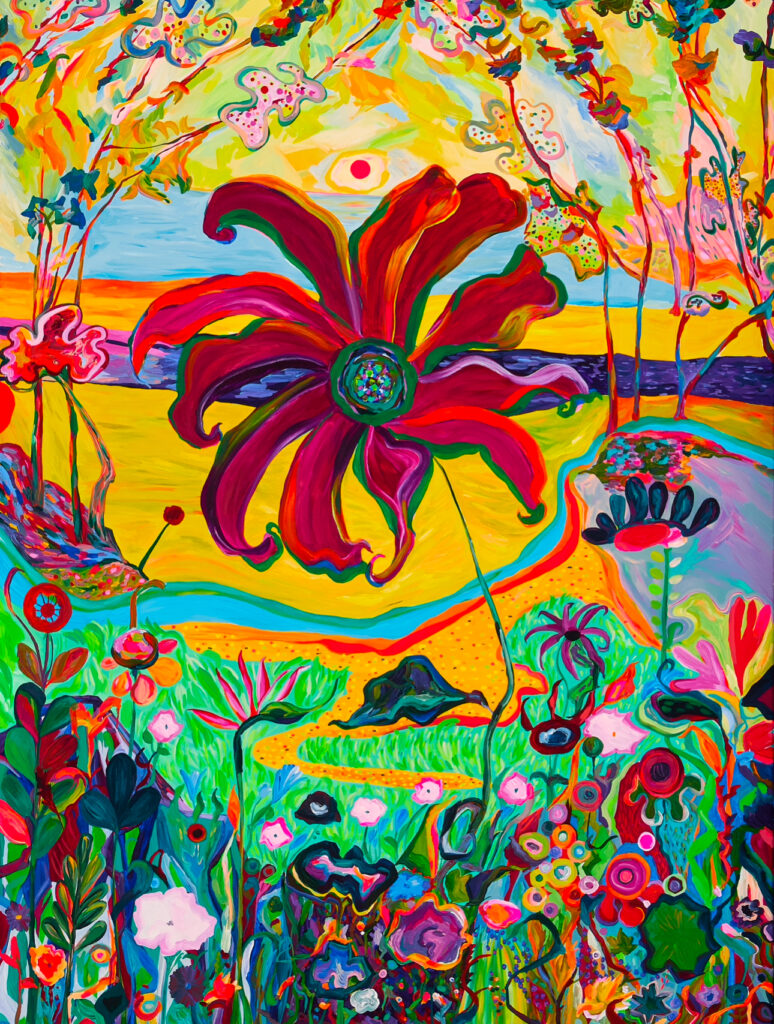
Growing up in Istanbul as the middle child and only daughter, she became a natural mediator observing, problem-solving, making sense of chaos. Before primary school, she spent years alone in rural landscapes. Fields of wildflowers, bees, snow. Developing quiet independence and intense attentiveness that most people never access even once in their lives.
Those experiences solitude, reflection, observation, they didn’t just influence her work. They became the foundation of how she thinks, how she sees, how she translates the world into paint.
We wanted to know: how does someone develop that kind of practice? What does it take to treat painting as dialogue rather than execution? How do you balance scientific understanding with subconscious expression? And what has painting taught her about perception, presence, being human?
Let’s get to know Ozlem through our conversation with her.
I began my conversation with Ozlem by asking her to take us back to her early days growing up in Istanbul, and how those early experiences of nature, art, and family shaped her belief that painting could become her life’s work.
Growing up in Istanbul, my inner world was shaped just as much by my family dynamics as by long, formative periods spent in rural landscapes. As the middle child and only daughter, I naturally became a mediator/observing, problem-solving, and learning to make sense of situations beyond my control; which later transformed into creative thinking. Before primary school, I spent years deeply immersed in nature, often alone in fields among wildflowers, bees, and snow, developing a quiet independence and attentiveness. By the age of five, I could spend entire days drawing with such focus that time seemed to disappear; only later did I realize this was an early form of meditation. These early experiences; of solitude, reflection, and intense observation, quietly convinced me that painting could become my life’s work.
Hearing about those formative years in rural landscapes that early meditation through drawing made me curious about how her scientific background enters the work. So, I asked: how did your understanding of life’s structures, from cells to ecosystems, transform into the vibrant, organic worlds that emerge on your canvases?
My understanding of life’s structures, from microscopic cells to complex ecosystems, comes directly from my background in biology and botany, where I studied how living systems grow, interact, and evolve. Rather than illustrating nature literally, I translate these patterns into colour, movement, and form, abstracting cellular rhythms, plant structures, and ecological relationships into vibrant, organic worlds by using my subconscious. On the canvas, science becomes intuitive and emotional, allowing real and imagined elements to merge into living landscapes that reflect the interconnectedness and energy of nature itself.
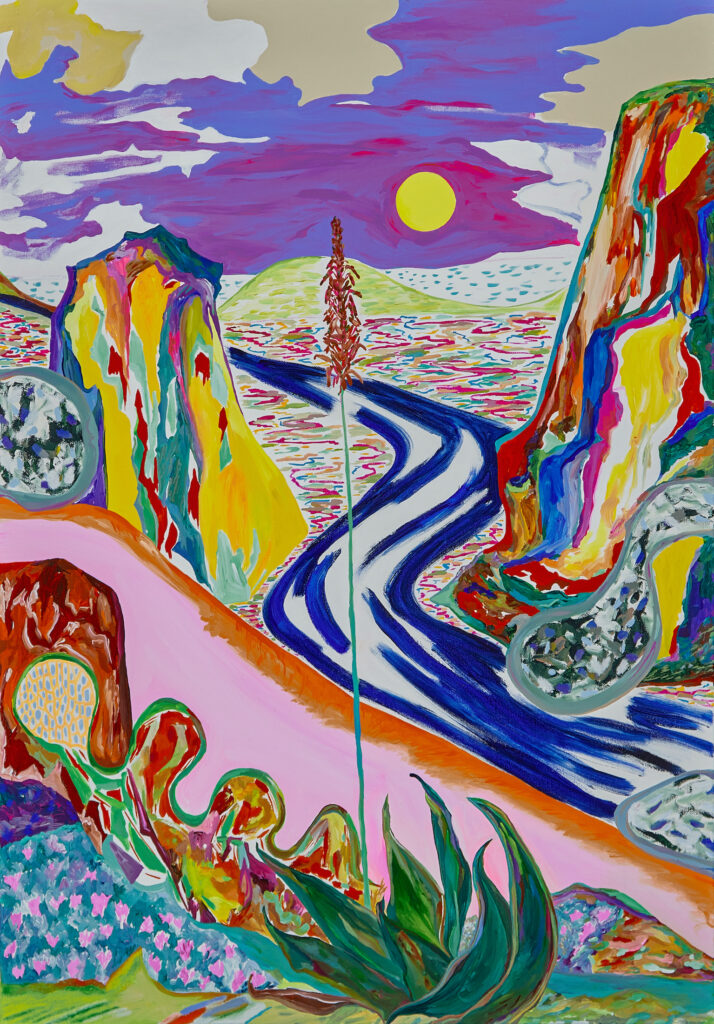
That translation from science to intuition fascinated me. And knowing she works in the same London studio once used by Mondrian and Nicholson, I wanted to understand what that continuity with art history means to her. So I asked about the emotional resonance that carries.
Working in the same London studio once used by Mondrian and Nicholson carries a quiet but powerful emotional weight for me. It creates a sense of continuity across time, of shared dedication, discipline, and belief in abstraction as a living language. I don’t feel overshadowed by that history; instead, it feels grounding and encouraging, a reminder that experimentation, persistence, and trust in one’s own vision are what truly endure.
Her paintings evoke something rare joyfulness alongside depth and complexity. I was curious how she learned to translate emotional experience into visual poetry.
I’ve learned to translate emotional experience into visual poetry by trusting my inner world and allowing it to unfold naturally on the canvas. Painting becomes a direct reflection of how I feel, think, and sense the world; joy, complexity, and depth coexist without needing to be explained. Rather than illustrating emotions, I let colour, rhythm, and movement carry them, allowing the inner landscape to find its own visual language. All my work is mostly experimental rather than planned.
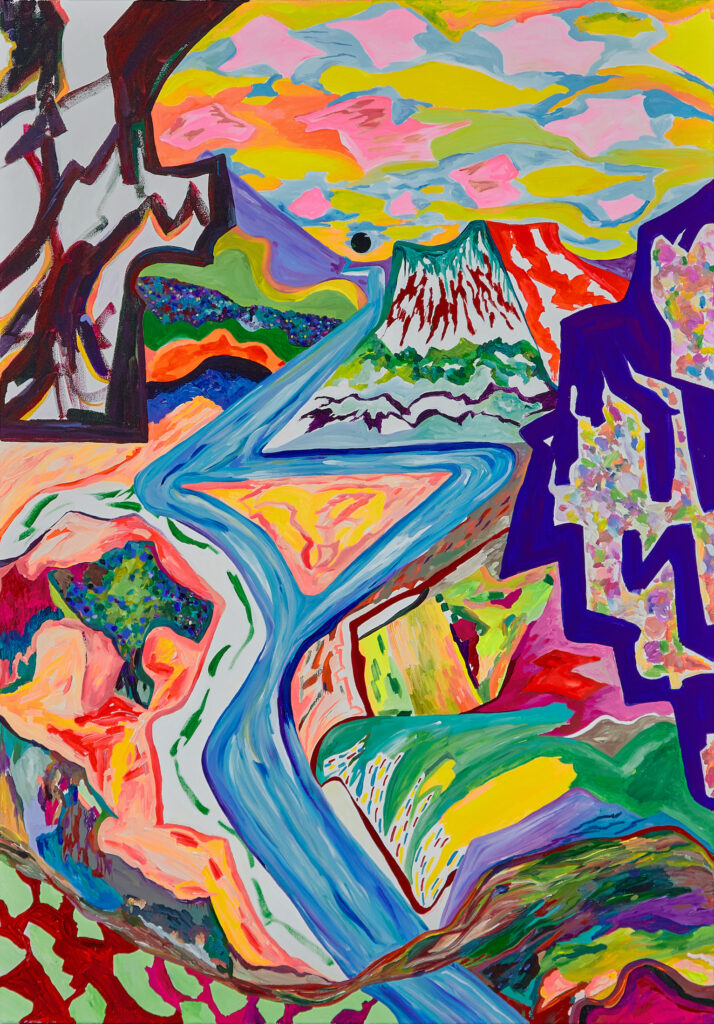
That experimental approach trusting rather than planning led me to wonder about the balance between observation and imagination. I asked how much of her creative impulse comes from nature observed directly, and how much comes from her internal world dreams, memory, subconscious.
My creative impulse lives in the space where direct observation and my inner world meet. Nature; plants, ecosystems, patterns of growth provides the starting point, but what appears on the canvas is shaped just as much by my memories, dreams and the subconscious. The external world is absorbed, transformed, and re-emerges as an internal landscape, where what is seen and what is felt become inseparable and unique.
She’s also created series like Dreams of Goddesses that explore feminine power and myth. I was curious how myth and archetype animate her creative world.
My interest in myth and archetype comes mostly from my fascination with ancient women figures and their ability to do things that were unusual, powerful, and often ahead of their time. These figures intrigue me not as distant myths, but as symbols of capability, resilience, and imagination. They animate my creative world by opening space to explore feminine power in ways that feel playful, curious, and deeply human rather than fixed or heroic.
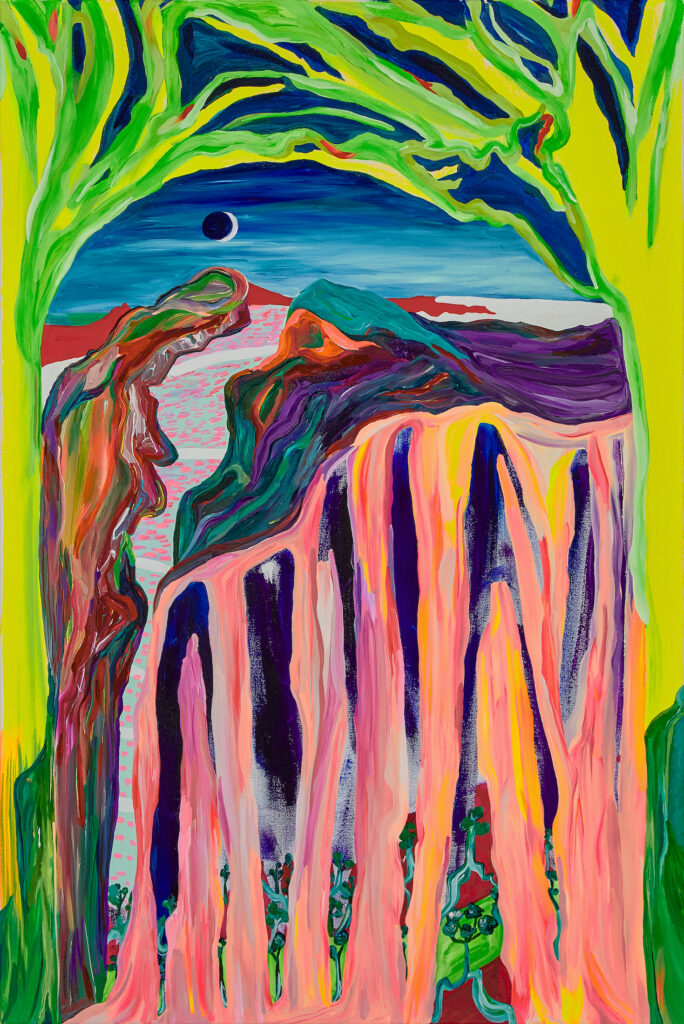
She’s described her paintings as developing like a conversation between her and the canvas. I wanted to know what that dialogue feels like emotionally whether it’s guiding, surprising, or even confrontational.
The dialogue with the canvas shifts constantly. Sometimes or often, even, I simply stare at an empty canvas until a scene begins to appear in my imagination. Other times, I return with different ideas or emotional states, and the work responds to that. It’s a quiet, intuitive exchange rather than a confrontational one, where the painting evolves day by day, guided by feeling, curiosity, and what the canvas seems to ask for next.
For my final question, I wanted to know what painting has taught her about perception, presence, and being human.
Painting has made me far more conscious, aware, and sensitive to the world around me. It has taught me how to truly see; details, rhythms, and connections that might otherwise go unnoticed. At the same time, the act of painting brings me fully into the present moment; being so deeply absorbed in the process is healing and meditative, a way of being human that feels grounded, attentive, and alive.
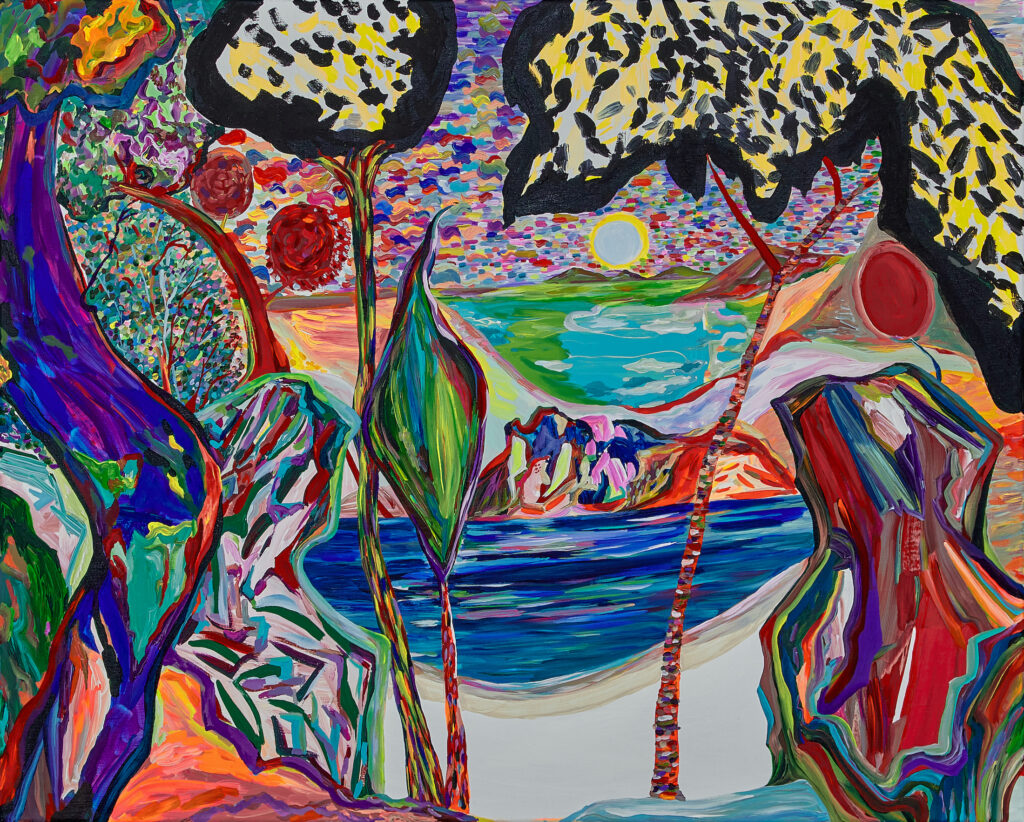
Wrapping my conversation with Ozlem, I kept thinking about one thing: she stares at empty canvases until scenes appear in her imagination. Not planning. Not sketching. Just waiting. And I realized most of us have completely forgotten how to do that.
We’ve forgotten how to sit with emptiness until something genuine emerges. We treat creativity like a factory: input, output, repeat. The idea of waiting for your inner world to project itself forward? That sounds unproductive. Almost irresponsible. But here’s what Ozlem proves: that waiting isn’t empty time. It’s the most essential part.
When you let something emerge rather than forcing it, you get work that feels fundamentally different. Paintings that pulse and breathe. That hold your attention not by shouting, but by inviting you into a conversation you didn’t know you needed.
Her five-year-old self already understood this. She’d spend entire days drawing in fields with such focus that time disappeared. She was meditating without knowing the word. Accessing a state most adults spend thousands trying to rediscover.
She never lost it. That’s the remarkable part. Most of us had that as children getting so absorbed hours vanished. Then we grew up. Got responsibilities. Learned to be productive. Forgot how to waste time beautifully.
Ozlem built her entire practice around returning to that state. And her scientific background doesn’t contradict this it supports it. She studied biology and botany, learning how living systems grow and evolve. Instead of abandoning that knowledge, she let it become the structure that allows her subconscious to play. Science became the foundation for intuition.
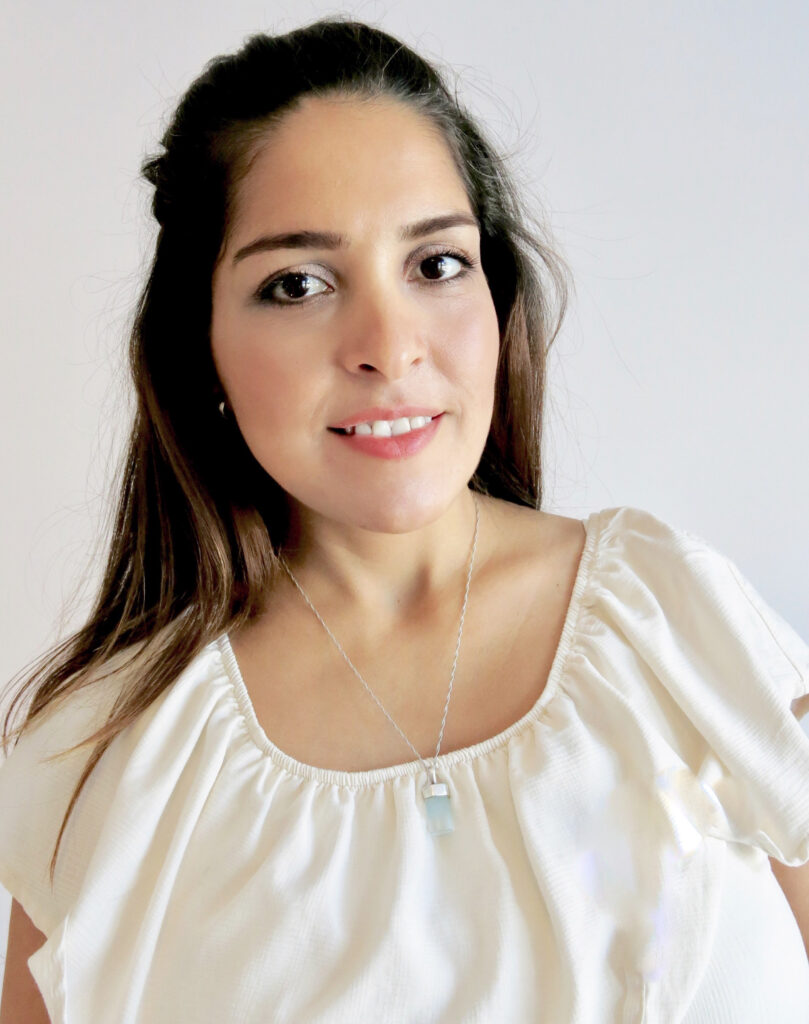
Most people think science and intuition are opposites. Ozlem proves they’re collaborators. Working in Mondrian and Nicholson’s old studio could have been crushing. Most would feel inadequate, paralyzed by legacy. She feels grounded instead. That continuity reminds her experimentation endures. The studio isn’t pressure it’s permission.
What fascinates me most: she’s not trying to communicate with you. She’s communing with herself. The canvas is where her inner world becomes visible not for your understanding, but for her discovery. You’re just allowed to witness it. That shift from communication to communion changes everything.
You’re not decoding messages. You’re watching someone think visually. Seeing the moment observation and imagination merge into something more alive than either could be alone. And if you stay long enough, something shifts. You start feeling what she felt. Here’s what hit hardest: she said painting taught her how to truly see. And the act itself brings her fully present in a way that’s healing and meditative.
The paintings aren’t the point. The state of being required to make them that’s the point. The work is the byproduct. The real gift is presence. So here’s my question: when was the last time you stared at something blank until your inner world projected itself forward? When did you last trust waiting instead of forcing?
Because Ozlem’s work suggests that’s not nostalgia. That’s not lost childhood innocence. That’s a skill. A practice. A way of being human still available if we remember how Her paintings don’t explain themselves. They ask you to stay longer than comfortable. To look without needing to understand. And in a culture built for quick consumption, that feels almost confrontational. But maybe that’s exactly what makes it necessary.
Follow Ozlem Thompson through the links below. Not to consume and move on. But to practice what she’s practiced for decades: staying present long enough that something alive emerges.
And if you find yourself staring at her paintings longer than planned, if time feels different that’s not the art doing something to you. That’s you remembering something you knew when you were five.