



The Art Business — Part 04 : How to Pack and Ship Artwork
Someone, somewhere, has looked at something you created and decided they want to live with it. Maybe they found you through Instagram. Maybe they discovered your website, saw your work in an exhibition, or came across your name through another collector.
And then comes the part nobody romanticizes quite as much: How are you actually going to get the artwork to them?
For many artists, shipping can feel like an entirely separate business. What box do you use? Should a painting be rolled or shipped flat? What happens if it is framed? How do you protect a sculpture? What about customs? Who pays the taxes? And what if your buyer is on the other side of the world?
The good news is that you do not have to become a logistics expert overnight. You simply need a reliable system that matches the kind of work you make and where you want to sell it. And if you are hoping to build an international audience, having that system in place can make a real difference.
Why Shipping Should Be Part Of Your Art Business
Shipping is not just something you figure out after an artwork sells. It is part of the buying experience.
A collector may love your work, but if your website says “shipping available on request” with no further information, they may hesitate to ask. If they are in another country and have no idea whether you ship there, what it might cost, or who is responsible for customs, that uncertainty can become one more reason not to complete the purchase.
You do not necessarily need to offer free worldwide shipping. You simply need to make the process clear. Start by knowing which countries you can realistically ship to, what your usual packaging costs are, which carriers serve those destinations, and whether you will charge the buyer separately for shipping or build some of that cost into your artwork price. Once you know your system, you can communicate it confidently.
Start With Local Shipping
If you are new to selling, local orders are the perfect place to learn.
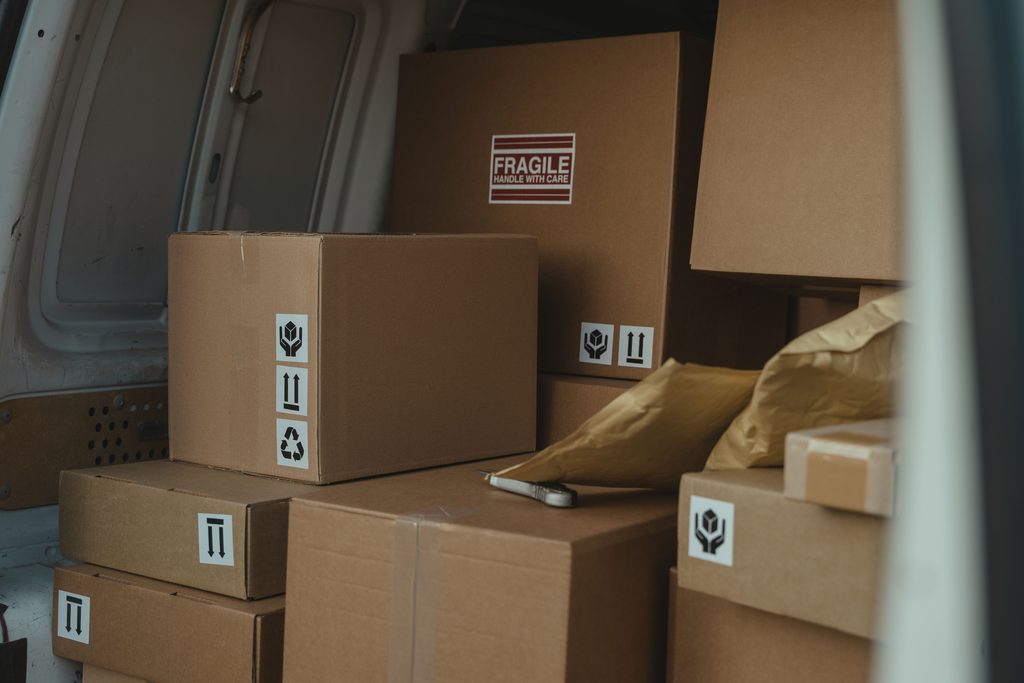
Before sending a painting across an ocean, learn how your artwork behaves during a shorter journey. Test different boxes, padding materials, corner protection and tape. Measure your packaged artwork rather than guessing its dimensions. Keep a record of what each shipment costs. This becomes especially useful when you start selling regularly.
For smaller works, prints and works on paper, a sturdy rigid mailer or appropriately sized box may be enough. Larger paintings often need much stronger protection, while high-value or particularly delicate works may require custom packaging or a wooden crate.
And always photograph your artwork before packing it, photograph the packing process, and keep your shipping receipt and tracking information. It may feel excessive for a small sale, but documentation becomes incredibly useful if something goes wrong.
How To Pack Paintings
The right packaging depends on whether your painting is framed, unframed, on canvas, on paper, under glass, or particularly delicate.
Unframed Canvases
For an unframed canvas, one practical option for smaller works is to protect the surface with a suitable archival barrier such as glassine, then add cushioning and place the work inside a strong, appropriately sized box. For works that can safely be rolled, a sturdy shipping tube can reduce weight and shipping costs considerably.

But do not automatically roll every canvas. Paintings with thick impasto, fragile surfaces, mixed media, or materials that could crack, flatten or adhere during rolling may need to travel flat instead. When in doubt, the artwork itself should determine the packaging method, not simply the cheapest shipping option.
Framed Paintings

For framed paintings, protect the artwork first and then the frame. If the work has glass, additional precautions are needed because broken glazing can damage the artwork itself. A rigid outer layer, strong corner protection and enough cushioning to prevent movement inside the box are essential.
For valuable or large framed works, consider a double-walled box or custom crate rather than trying to make an ordinary cardboard box do a job it was never designed for.
One useful rule is simple: The artwork should not be able to move freely inside its package. Movement creates impact, and impact is one of the easiest ways to damage art during transit.
How To Pack Sculptures
Sculptures are where things get more complicated because there is no universal “sculpture box.”
A small, sturdy sculpture might travel safely inside a strong box with carefully positioned cushioning. A fragile ceramic piece, however, may need a completely different system. Large sculptures, delicate protrusions and irregular forms often require custom foam inserts or a wooden crate.
The goal is not simply to wrap the sculpture in as much bubble wrap as possible. You need to stabilize it. Fragile areas should be protected individually, the sculpture should be prevented from shifting, and there should be enough cushioning between the artwork and the outer packaging to absorb knocks. For larger or high-value sculptures, professional crating is often worth the additional cost.
If you make sculpture regularly, it can be worth designing a reusable crate or packaging system for your most common sizes. The initial investment can save considerable time later.
Prints And Works On Paper Can Be Easier
If you sell prints, drawings or smaller works on paper, shipping can become much simpler. Protect the surface with archival material, place the work against a rigid backing, and use a sturdy mailer or box that prevents bending. For rolled prints, a strong tube with protection at both ends can work well.
This is one reason editions and prints can be an interesting part of an artist’s business. They can make your work accessible to collectors who cannot purchase a large original, while also being considerably easier to send around the world.
When You Start Shipping Internationally
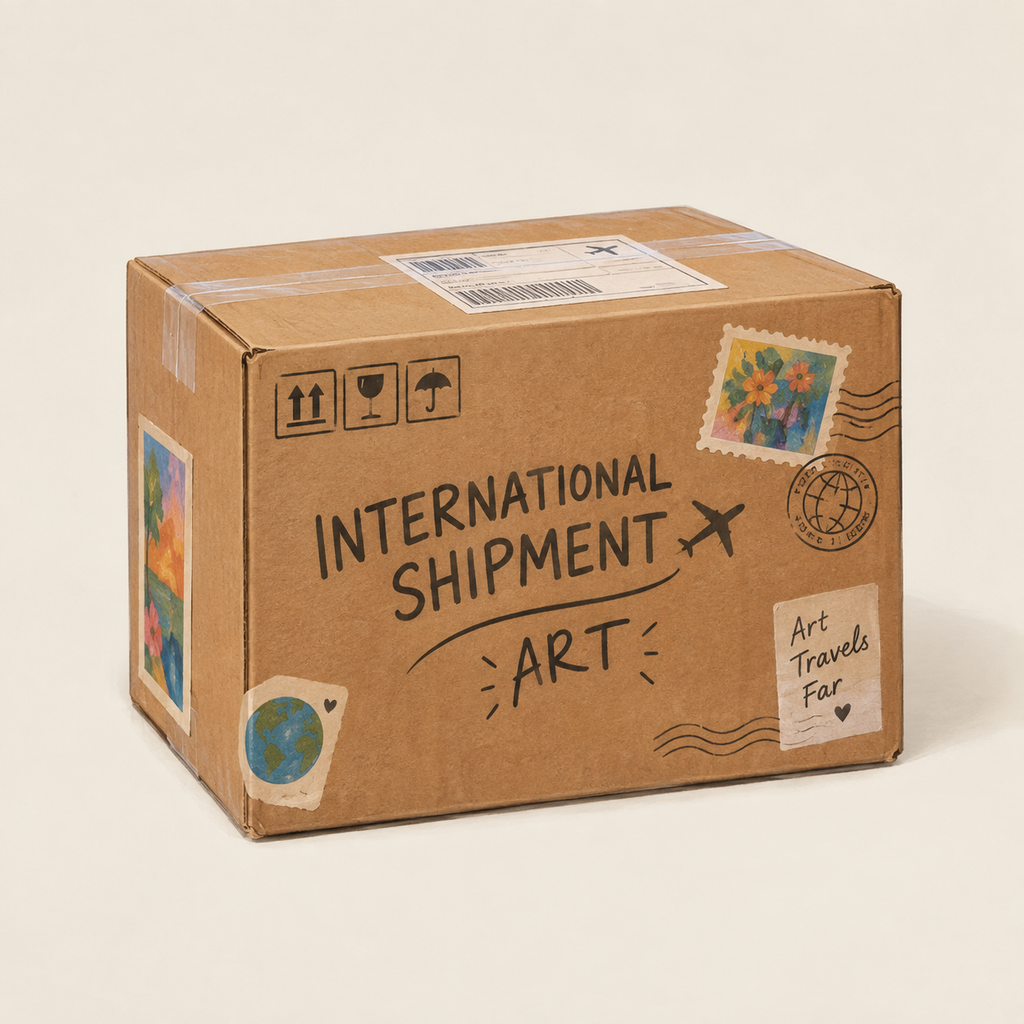
International shipping is where the process changes. You are no longer simply sending a parcel from one address to another. Your artwork is crossing a border, which means customs authorities need to know what is being imported, where it came from, what it is worth and, depending on the destination, how it should be classified.
A commercial invoice or other customs documentation is commonly required, and the exact paperwork depends on the origin, destination, value and nature of the shipment. FedEx, for example, notes that commercial invoices, pro forma invoices, certificates of origin and packing lists may be required depending on the shipment.
Be precise. Instead of writing something vague such as “art,” provide the relevant details of the work, including the artist, medium, dimensions, value and country of origin where required. Incorrect or incomplete customs information can lead to delays, additional charges or a shipment being returned.
What About Taxes And Customs Charges?
This is probably one of the biggest areas of confusion for artists. When an artwork enters another country, the buyer may have to pay import duties, VAT, GST, customs fees or other charges depending on that country’s rules.
These costs are not necessarily included in the price you charge for the artwork or the courier’s shipping fee. Who pays them should be clear before the artwork leaves your studio.
You can make the buyer responsible for destination taxes and duties, or, depending on the shipping arrangement and destination, use a service where the sender pays certain import charges in advance. Shipping companies offer different arrangements, so check the terms for the specific destination rather than assuming every international shipment works the same way.
For example, FedEx’s U.S. international shipping guidance notes that shipments can incur customs-related fees in addition to duties and taxes, including charges associated with customs clearance and special handling. These costs can vary depending on the destination and shipment, so artists should always check the current rates before giving a buyer a final shipping estimate.
The important thing is not to surprise your collector after the sale. If the buyer may have to pay import taxes when the artwork arrives, tell them before they purchase.
You Do Not Have To Pack Everything Yourself
This is something artists sometimes overlook. There are professional companies that specialise in packing and transporting artwork. Some will come to your studio, pack the work, crate it if necessary and arrange transportation. Others focus specifically on fine-art logistics and can coordinate international delivery.
For smaller and less complicated shipments, major carriers such as DHL and FedEx can also be practical options. FedEx, for example, offers professional packing services through some of its locations and has specific packaging options for artwork.
For large paintings, expensive works, sculptures or museum-quality pieces, however, a specialist art shipper can be a much better choice than treating the artwork like an ordinary parcel.
Yes, it costs more. But so does replacing a damaged artwork, refunding a collector, or dealing with a complicated insurance claim.
Build A Shipping System, Not A One-Off Solution
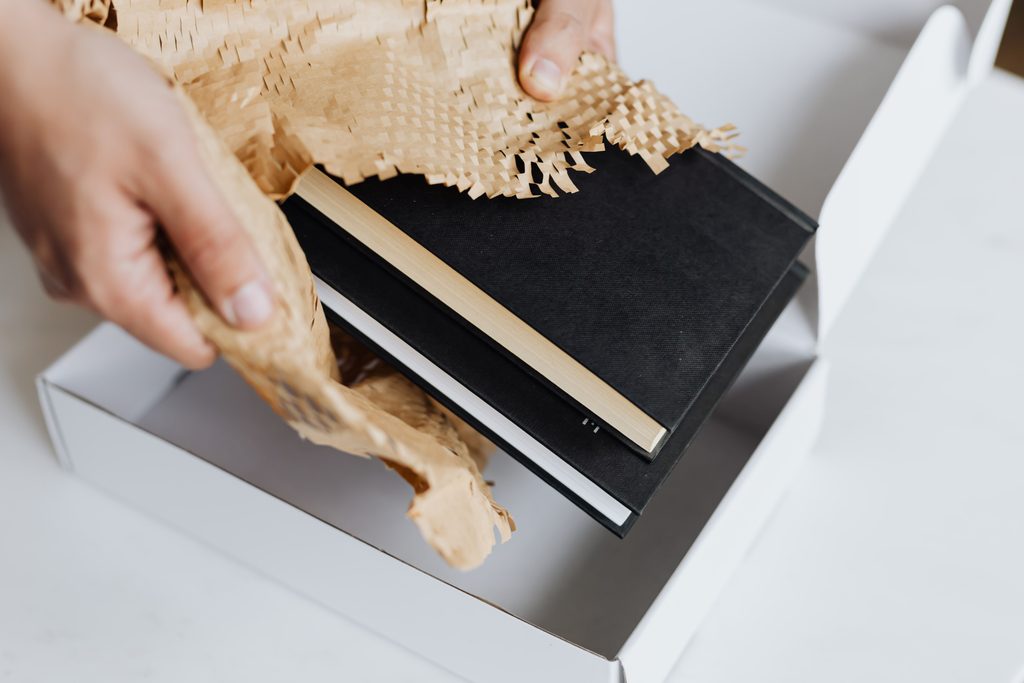
If you are selling internationally, make a small shipping checklist for yourself. Record the artwork’s dimensions and weight. Keep a list of your preferred packaging materials. Note the cost of shipping to your most common destinations. Save your customs documents and invoices. Keep tracking information. Photograph the artwork before it leaves your studio.
You can also create a simple shipping page on your website explaining where you currently ship, how shipping is calculated, whether international buyers are responsible for duties and taxes, and how long orders generally take. That page can remove a surprising amount of uncertainty for buyers.
How To Make Your Art Available Around The World
You do not necessarily need to ship a giant original painting to every country on Earth. Think in layers.
Your original works can be available internationally with calculated shipping. Your prints and editions can travel more easily and at lower costs. You can also work with galleries, online art platforms, print fulfilment companies or third-party logistics providers that already have systems for reaching international customers. Some platforms handle parts of the transaction and shipping process for artists. ArtMajeur, for example, allows artists to sell to international customers and offers worldwide delivery through express partners, while artists can also choose to manage shipping themselves.
The idea is to remove geography as a reason someone cannot buy your work. That does not mean promising “free shipping worldwide.” It means making your work buyable worldwide.
Global Reach Can Change Who Finds You
There is real evidence that expanding beyond a local audience can significantly change an art business, although there is no honest universal percentage for how much “worldwide shipping” alone increases an artist’s sales.
One useful example comes from Castle Fine Art in the UK. After redesigning its website to better support online art purchases and international audiences, the business reported a 165% increase in ecommerce revenue over two years. Its international sales grew by 118%, while its online purchase conversion rate increased by 53%.
Another example comes from Alan Cristea Gallery, which sold just two works through Artsy in 2015 and more than 50 in 2016 after putting greater focus on its digital sales strategy.
These examples are not proof that simply switching on international shipping will multiply your sales by a particular percentage. They show something more useful: when artists and galleries remove barriers between their work and buyers, the potential audience becomes much larger. And shipping is one of those barriers.
If you found this feature helpful, read more of our Art Business Series including how consignments and contracts work, and how to sell prints and editions.
Make Buying From You Feel Easy
If someone in another country discovers your work tonight, what happens next? Can they see the price? Can they understand the artwork’s dimensions? Can they find out whether you ship internationally? Do they know roughly what shipping will involve?
Can they contact you easily if they have a question? The more of these questions you answer before the buyer has to ask, the easier it becomes for someone to move from I love this to I would like to buy this.
That is the real purpose of building a good shipping system. It is not only about getting an artwork safely from your studio to someone’s home. It is about making the distance between artist and collector feel smaller.
Your work may be created in New York, Nairobi, Melbourne, Manchester, Paris or somewhere in between. Your collector may be sitting thousands of kilometres away. That should not automatically make the sale impossible. With thoughtful packaging, reliable shipping partners, clear customs information and a little preparation, your studio can become much more connected to the rest of the world.
And once you stop thinking of shipping as the final, stressful step after a sale and start treating it as part of your art business from the beginning, selling beyond your own city becomes a lot less intimidating.