
This artist built a tea house on wall street using mirrored veils I Areesha Khalid
👁 23 Views
At Arts to Hearts, the work that stops us most is always the work that comes from somewhere true from a life actually lived, a loss actually felt, a longing that never fully went away.
Our Best of the Art World editorial was built on exactly that belief: that the most meaningful creative work is not made from ambition alone, but from something far more personal and far more urgent than that. And today, we are so excited to bring you an artist whose work stopped us completely the moment we found it.
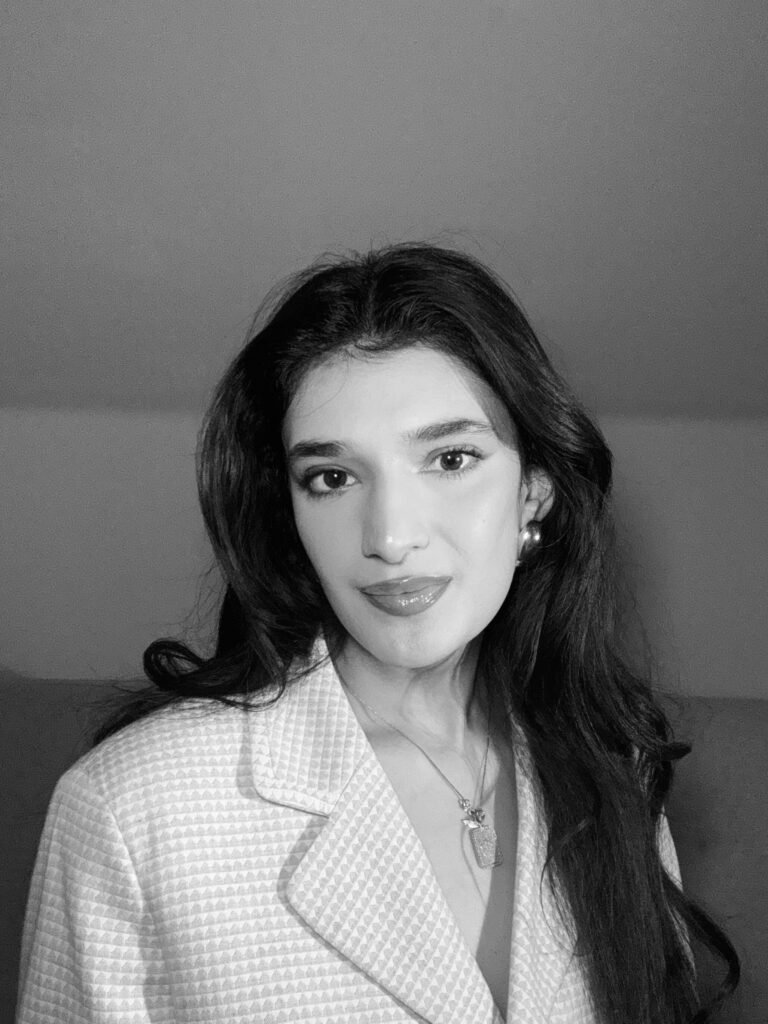
Areesha Khalid known widely as architecturebyari is a London based architectural designer and arti t. And when we first came across her work, we did something we don’t always do. We sent it around to each other.
Because there is a particular kind of art that makes you want to immediately show it to someone else, not to explain it, just to say look at this. Do you feel that too? That is what her work does.
She draws South Asian spaces. Interiors, corridors, courtyards, rooftops, the worn walls of older homes, the handwritten signage layered over itself in an old city market, the faint handprints on a grandmother’s wall where the ground was uneven and she used it for support when walking through the corridor.
Details that most people would never think to notice, let alone preserve. And yet sitting with her work, you realise that those are exactly the details that matter most. The ones that hold the memory of a life actually lived in a space. The ones that, once gone, cannot be recovered.
Areesha left her homeland at ten years old to move to the UK. And if you know anything about what it feels like to leave a place you love as a child the particular grief of it, the way it sits quietly in you for years then you already understand something essential about where this work comes from.
She didn’t arrive in London and immediately find her footing. She felt out of place. She missed home. It took years, and eventually university in London and the experience of finally feeling seen among people from all over the world, before she turned toward her heritage openly and decided she wanted to honour it. She went to her mother and her grandmother for stories. She made trips back home. She listened. And she started drawing what she heard.
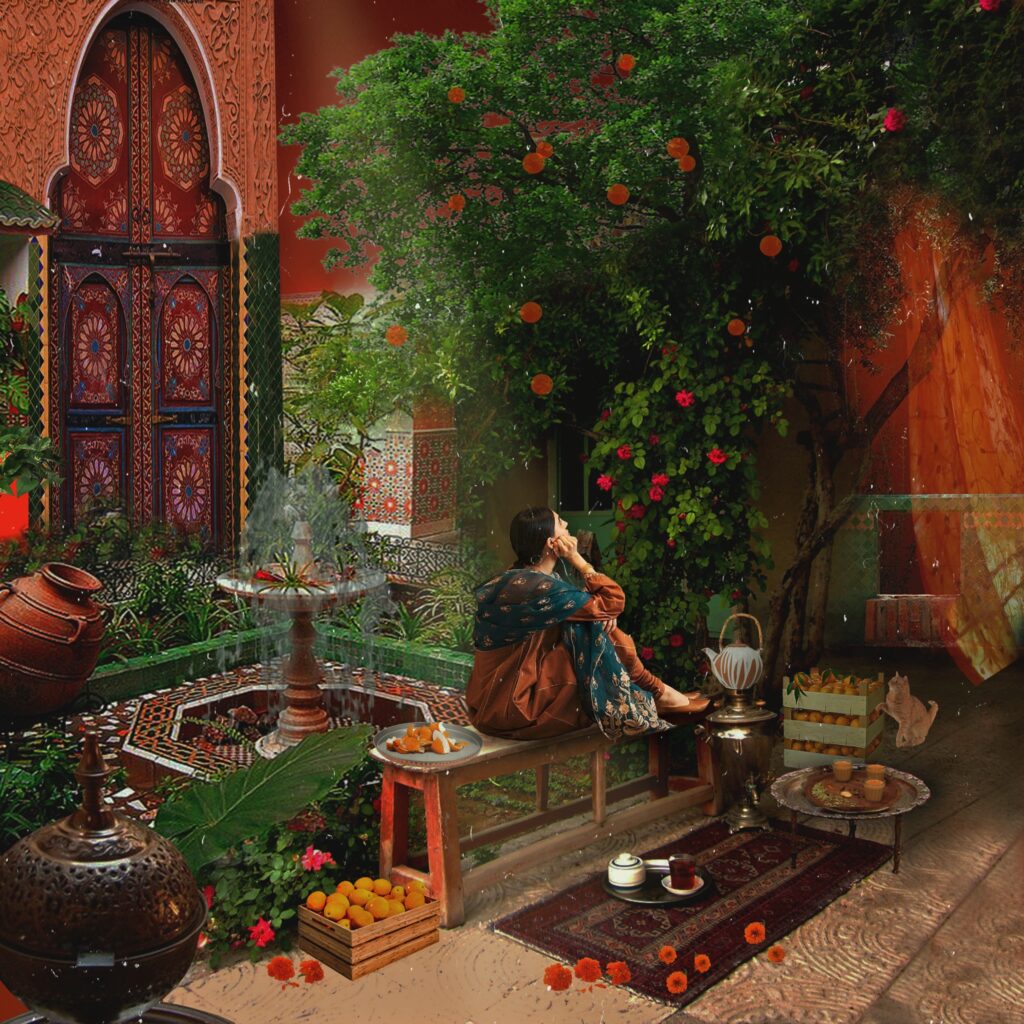
What she built from all of that is something genuinely beautiful. Her illustrations are warm and dreamy light-filled rooms with soft pink walls and terracotta tones and the golden warmth of a sunset she says you simply have to see to understand. Her style, cartoonish and intentional and completely her own, took four years of experimentation to arrive at. RIBA commended it.
But more than any institutional recognition, what tells you it is right is how natural it feels like this is simply how her brain sees spaces, and she finally found the way to show everyone else.
Let’s get to know Areesha through our conversation with her, where she shares the childhood move that changed everything, the grandmother’s handprints that inspired a whole way of seeing, and what it really means to give people a piece of home.
Q1. For someone discovering your work for the first time, how would you describe who you are and the path that led you to become an artist?
I am a london based architectural designer. I create art and installations focused on culture and nostalgia experienced through spaces. Having left Pakistan at the age of 10 to move to the UK, my work centers the diaspora experience of longing for a “home” left behind. The fusion of both Western and South Asian culture is an integral part of my identity and my work is an expression of both the conflict and harmony that comes with this. Illustrating aspects of my heritage that I feel closest to but also most disconnected from, whilst highlighting the often overlooked, mundane, yet cosy corners of South Asian homes. The main goal of my work is to ignite some feeling of nostalgia and connection and bring some warmth to other diaspora’s homes.
Q2. Growing up between cultures can create both distance and intimacy with heritage. How has your experience shaped the way you see and reconstruct South Asian spaces in your work?
When I first moved to the UK at 10, I hated it here and wanted to desperately go back home. I missed my friends, my school, my life as it was. I didn’t quite fit into the very white dominated small town my parents had moved to. Eventually, I learnt to blend in by putting my identity somewhat on the backburner when it comes to being loud and proud about it, but always kept it very close to my heart. When I moved to London for uni at 18, I met people from all over the world, it made me feel so seen, I was no longer the odd one out. This is when I began to be more outward about my heritage and wanted to honour it and learn more about it. I turned to the elders in my family for stories of their childhood, as well as yearly trips to Pakistan throughout my childhood that had still kept me connected to home. Due to these yearly trips, family stories and the media I grew up consuming (bollywood films e.g. sanjay leela bhansali, pakistani dramas etc.) I had a fairly good understanding of the overall culture and built environment back home in order to make my art. A lot of my work is quite a romanticised depiction of home. This is because a lot of it is based directly off stories told by my mum and grandmother, where certain spaces sit as an integral part of their memories. I refer to them as humble corners of South Asian homes that hold countless precious memories. The spaces are mundane, yet the descriptions they give from memory are dreamy and nostalgic. My work aims to capture this dreamy nature of memory into a still image. This is also the very thing that connects many globally to my work. They are able to feel that shared sense of nostalgia through an image.
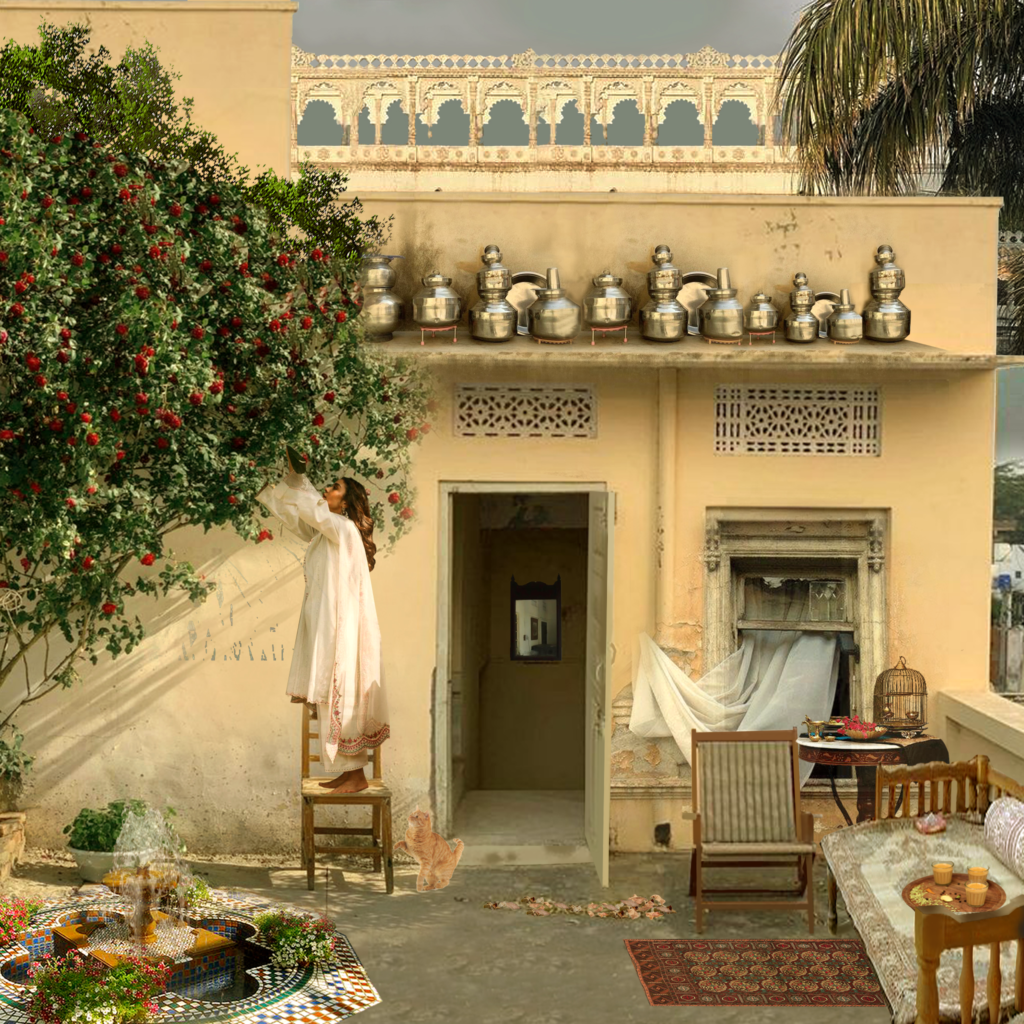
Q3. You were on track to study medicine the “predestined family path” as you put it and then quit and started architecture that same year. That’s a huge swerve. What did you have to trust in yourself to make that call?
I mostly had trust in my creative abilities that I’d be able to make something of myself. But a lot it was just taking a chance / risk to be honest. I just knew I could never be happy doing medicine and being away from the creative world fully. So I made the somewhat safer choice to pick architecture which sits at the intersection of art and science. I didn’t know it would eventually work out so well for me. I didn’t have much knowledge or do too much research about the field before going into it, within 2 weeks I went from studying medicine to starting my first day at architecture school. It was a very rushed and somewhat uninformed decision actually. But looking back now, there’s absolutely nothing else I can imagine myself studying.
Q4. Architecture shapes the way people live without them always realizing it. Do you ever imagine the daily lives that will unfold inside the spaces you design?
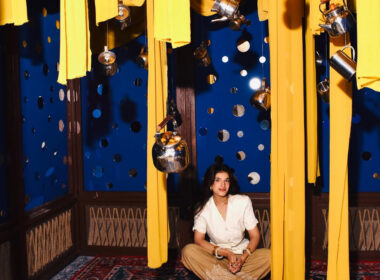
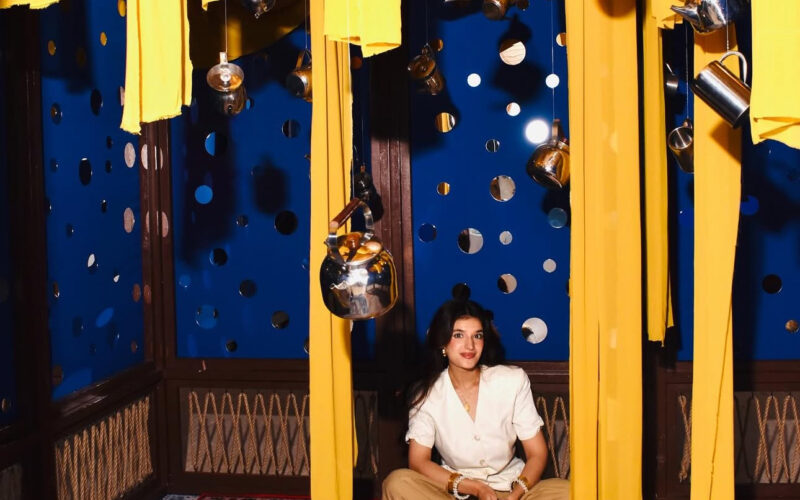
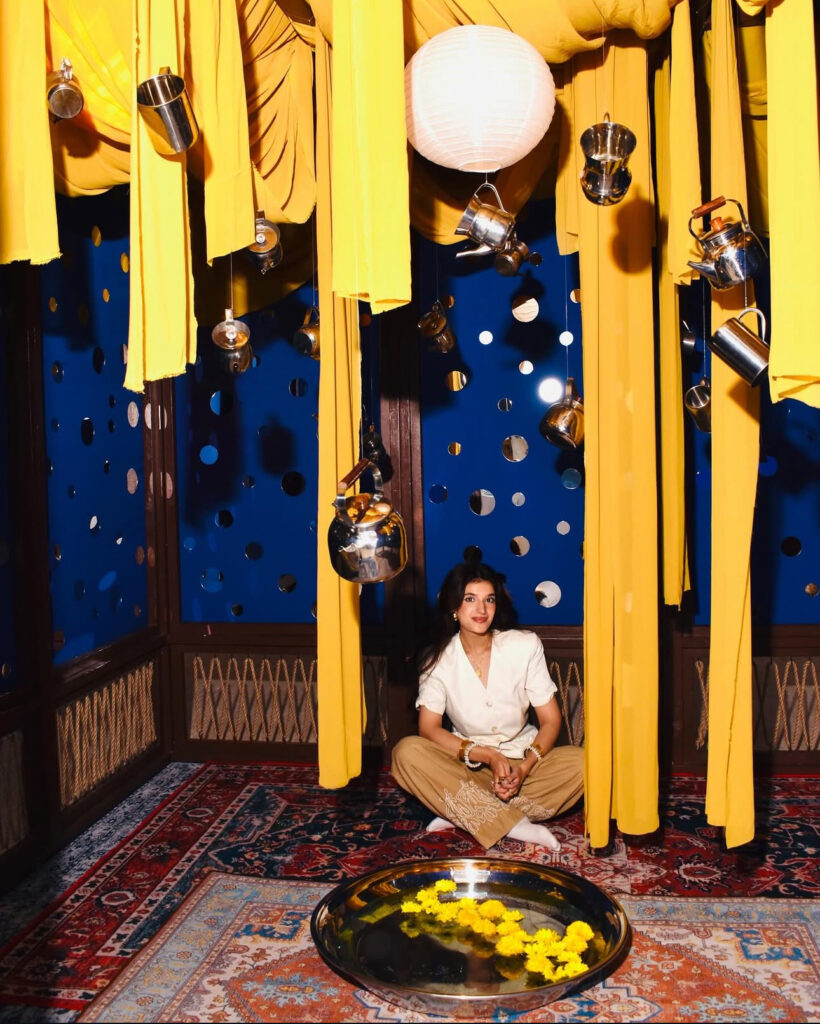
I definitely think that architecture shapes the way people live. I’ve recently been doing a deep dive into some of my favorite Pakistani drama homes and how architecture dictates and upholds gender norms. Whether that’s gendered hierarchy of occupation, instilling the idea of ‘pardah’ (veil) through ‘jalis’ (wooden carved screens) or the use of balconies for women to stand at vantage points to observe the central courtyard/home in a traditional south Asian home. Allowing women to take on the role of the silent observer. They hear and see everything but aren’t quite a part of the conversations. I’ve always had a fascination with how the spaces we inhabit can shape us, hide things from us or reveal the hidden to us. My tea house for chai that I designed as part of the CHA CHA festival at the WSA building on wall street, NYC last year was a great example of design based around how the space will be inhabited and what narrative it will tell the user. I wanted to pay homage to the hidden, every day, semi-public/private female chai spaces in the south Asian vernacular; the aangan (courtyard), the chatt (rooftop), the living rooms etc. Taking attention away from the glamourised but often alienating (for women) roadside Dhaba’s that mostly sit at the centre of local chai culture.
So, the space was modelled around a courtyard typology, with its strict symmetry, 4 corners, central water feature with floating flowers (representing the nature element in courtyards). The open relationship to the sky which provides a direct, private connection to God in courtyards, implemented through hanging drapes and a central light feature representing the sun or moon depending on time of day. This was reflected in the water feature below to really amplify the presence of the sky. I wanted the user to feel like they were in a traditional south Asian courtyard in the middle of wall street and use this space like you’d inhabit a courtyard. To sit, to sip chai, to talk and to take a moment, and people did exactly that. The installation was made of panels of semi-transparent, mirrored ‘dupattas’ (woman’s veils) stretched across wooden frames, with a small rope woven section at the bottom representing a char pai (traditional south Asian day bed), often hand woven by women. The semi-transparent nature of the dupatta panels also mimics the central courtyard’s categorisation as a semiprivate space for women. Basically, the user of the space had no choice but to be absolutely surrounded by female energy and take note of the fact that this tea house is an homage to female chai spaces, overthrowing male dominated Dhaba’s. Perhaps even making male visitors feel slightly out of place. As for the spaces I design in my art. The answer is simple,
I always imagine the women in my art living a life of bliss, on their own terms, completely detached from worldly (gender) issues.
Living in a utopia of sorts. It’s meant to be very romanticised and other worldly, yet grounded in culture and local architectural language.
Q5. Your illustrations have this cartoonish, warm, almost nostalgic quality that RIBA commended and that you’ve grown to love. But it wasn’t a style you chose consciously, it arrived. What does it feel like to have a style find you rather than the other way?
This style feels so natural to me. For years before landing on this style of work, I experimented with countless design languages. My most common feedback during university crits throughout my architecture degree always used to be about how I need to find my style. The work looks good but it’s not YOU. I’d say it took me around 4 years of trying out countless design languages to find mine. Once I found it, it felt supernatural and so ME. It’s a great representation of how I see and imagine spaces in my brain. Everything is light, dreamy and beautiful.
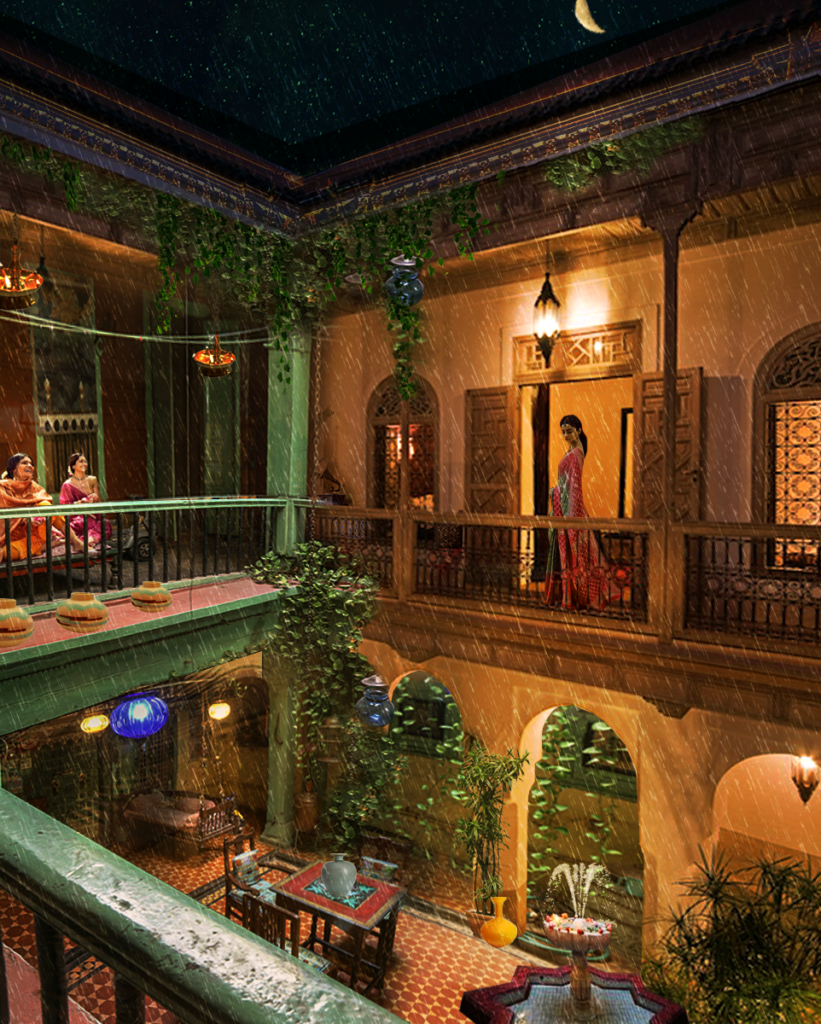
Q6. You work with cultural motifs, signage, wear and tear, everyday objects from South Asian homes, the mundane details that most people wouldn’t think to preserve. What made you realise those details were worth drawing?
When I visit anyone’s home, specifically older homes which I have a fascination with, of course the overall design features stand out and are beautiful. But what tells me a story of those that lived there and how they made this house into their home is the wear and tear. The hand written make-do signage drawn on by a shop keeper in androon lahore and the several shop keepers who have drawn on top of it, leaving traces of old paint / chalk slightly peeking through underneath. It’s literally history layered. It adds narrative and life to spaces. That wall in your grandmother’s home that has faint hand prints where the ground was uneven so she would use the wall as support when walking through that corridor, to me perfectly painted walls don’t hold tangible prints of my grandmother’s everyday life that I can touch and connect with years after she’s gone. So, for me wear and tear and evidence of humans living and enjoying a space will always be worth drawing.
Q7. You illustrate South Asian architecture free from the orientalist lens of Western media. What does it actually feel like to look at how your culture’s spaces have been depicted by others and what are you correcting when you draw them yourself?
I think it’s mostly about reclaiming the narrative. If I draw romanticised depictions of my home, that still comes from a very self aware and intentional place, as opposed to someone who is not well informed about the local culture and is using it to profit off. Also, most south asian art from the orientalist lens often portrays our culture as exotic and is heavily drawn from the male gaze. Sexualising women and simplifying our complex and layered culture. My art is quite literally the opposite of that. It puts women at the forefront and is rooted in a deep, first hand knowledge of culture.
Q8. You draw spaces interiors, buildings, streets but what you’re really drawing is feeling. How do you translate something as intangible as nostalgia into a colour, a line, a pattern on a wall?
I believe the spaces that we occupy tend to soak in the culture of the people that they house. Spaces can tell people’s stories through color, pattern, writing, signage, wear and tear and much more. Capturing this ‘lived in’ quality of space is essentially what conveys the nostalgia in my work.
Q9. Your work often features warm, glowing palettes soft pinks, terracotta tones, sunset oranges, and lush greens. How do you decide the color atmosphere of a piece before you begin?
I always pull colour palettes from the local environment (the landscape of Pakistan for me) and culture. Our culture and people are so colourful in the way they carry themselves through everyday life, whether that’s the way they dress, the way they decorate their homes, the food they eat, it’s impossible to run out of colour inspo. Also, I’ve always said the sunsets and skies back home are different. I can’t explain it; you just have to see it. The sun glows in warm, golden hues like no other. I always want to translate that warmth onto paper.
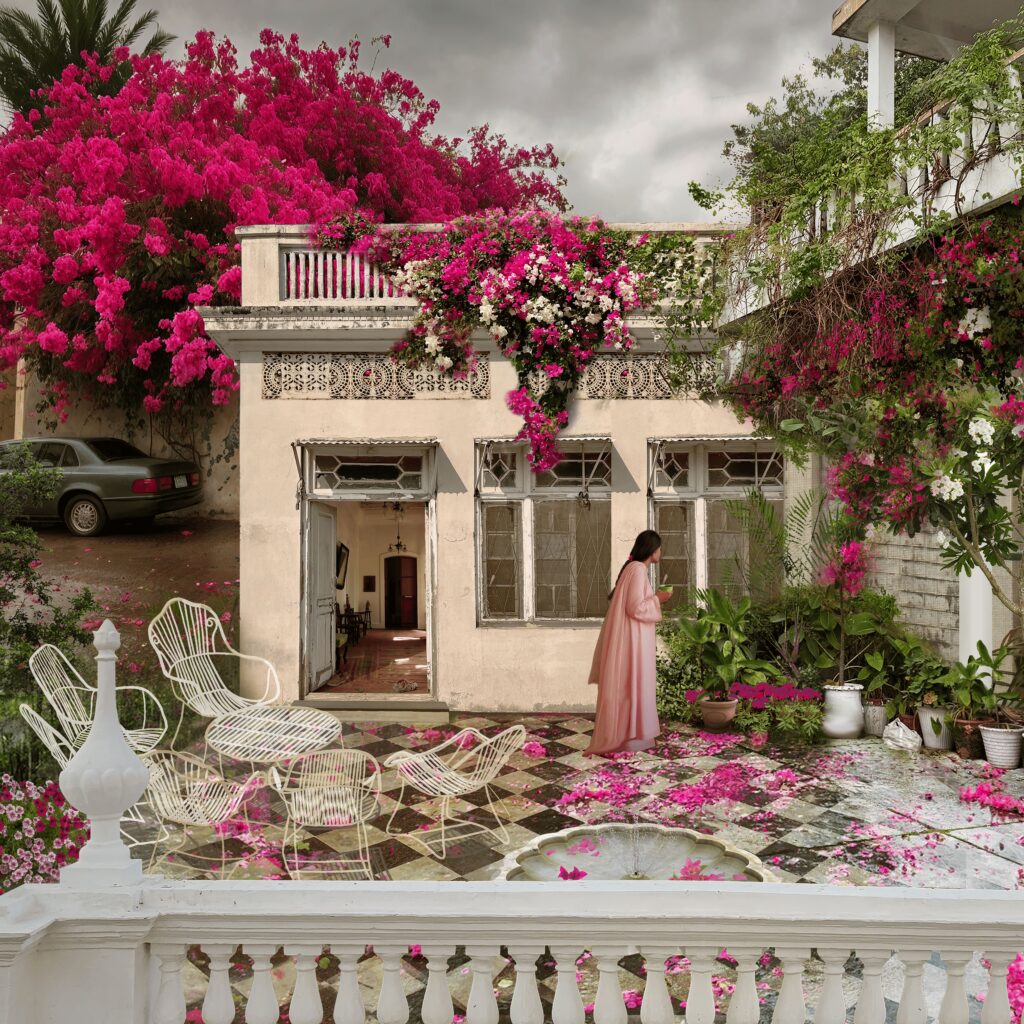
Q10. Your one of the drawings is populated with 99% women as a response to feeling unsafe there. How did it feel to use your art as an act of reclaiming a space that had been taken from you?
This has been the goal from day 1. I felt a huge shift in how I experience trips back home when I entered my 20s. I became hyper aware of the reality that I could not carelessly take up space in public in Pakistan the way I do in England. This is a very male centred society and women always have to be extra cautious doing every day tasks, that’s just the sad reality of it. So, I wanted the world of my art to be the absolute opposite. You’ll almost never see men in my work, unless they are accompanied by a woman. It’s my own little act of reclaiming public space in the world I create.
Q11. Your prints often end up in people’s homes. How does it feel knowing your reinterpretations of cultural spaces become part of other people’s everyday environments?
Nothing makes me happier. I would have never imagined so many people would connect to such personal pieces of my life / story, which is what my art is. What I thought was extremely personal to me is actually a huge shared experience for so many. What makes me happiest is how intergenerational my work is, my favourite messages are of people connecting with their parents and grandparents over my art.
I love that I am able to give a piece of home to so many around the world.
Q12. You’ve built a personal brand, a product line, and a creative practice all at once. What’s one thing about the business side of being a creative that nobody warned you about?
The admin. It’s very long and very exhausting and never ending. You have to be so organised every day and really have a solid system set in place to not fall behind. Notion is my best friend and thankfully I am very type A! Everyday my mornings are blocked off for admin and sometimes an entire day or two in the week, if I don’t do this and fall behind, everything becomes extremely difficult. The other thing I’d say is the issues around suppliers, unpaid invoices, people stealing your work and the legal side of things. I have had to learn so much about UK art and copyright laws over time in order to protect myself from people screenshotting and printing my work and reselling it. I now have some proper legal help which makes things a lot smoother.
Q13. Ten years from now, what does the fullest version of architecturebyari look like, is it a studio, a publication, a movement, or something else entirely?
Ideally, I would love to expand my product line to bespoke, thoughtfully designed, limited edition home decor items rooted in heritage and craft. I am actually working on some right now! Running a design studio with several artists and designers sounds incredible but also like a lot to manage. Perhaps in 10 years I’ll have the wisdom to handle and run that. But right now, I am happy and content where I am.
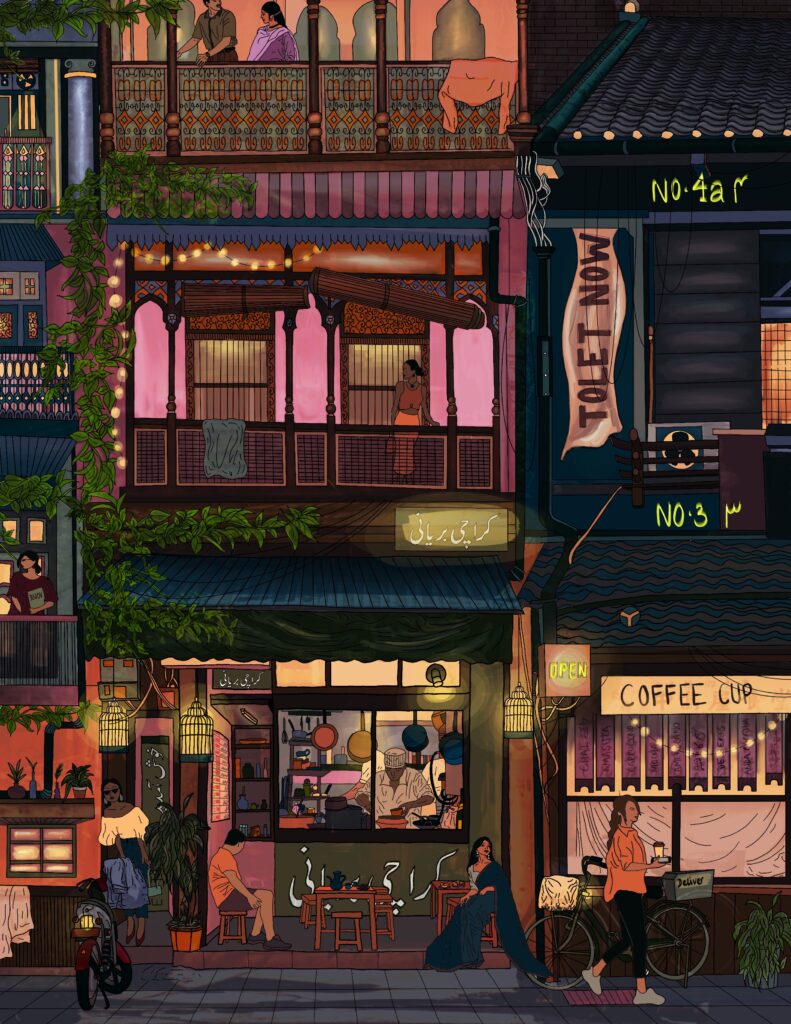
As our conversation with Areesha drew to a close, one thing became undeniably clear there is a particular kind of creative courage that does not announce itself. It does not arrive with a manifesto or a grand statement. It arrives quietly, in the decision to draw a grandmother’s handprint on a wall.
In the choice to build a tea house from mirrored veils in the middle of Manhattan. In the refusal to let a culture be seen through anyone else’s lens but your own.
Areesha is doing something that sits at a genuinely interesting intersection between architecture and illustration, between the personal and the political, between the deeply rooted and the globally resonant. Her practice resists easy categorisation, and that resistance is precisely what makes it worth paying serious attention to. She is not illustrating culture from the outside looking in.
She is reconstructing it from memory, from family stories, from the texture of lived experience and doing so with a visual language precise enough to be immediately recognisable and open enough to hold the experiences of an entire diaspora.
And that quality, that ability to be at once deeply specific and profoundly universal is what makes her work so alive on a wall. Her prints do not simply occupy a space. They change the feeling of one. They bring warmth, memory, and a sense of cultural rootedness that is increasingly rare in a world of mass-produced imagery.
People who own her work speak about it the way they speak about objects that have been in their families for generations as something that holds meaning, that carries feeling, that connects one generation to the next. That is an extraordinary thing for a young practice to have already achieved.
What is also worth noting is how rare it is to find a practice this young that is already this coherent. The illustrations, the installations, the brand she has built around architecturebyari they all speak the same language. They all come from the same deep and honest place. That kind of clarity of vision, at this stage of a career, is not common. And it suggests a body of work, still very much in its early chapters, that is going to keep getting richer, more complex, and more important with time.
Follow Areesha Khalid through the links below. This is a practice worth following closely and a voice worth listening to for a long time to come