
She Struggled With What Art ‘Should’ Be! Until She Decided It Could Be Anything I Annick Létourneau
At Arts to Hearts Project, we’re always trying to bring different opportunities to artists with different themes, different open calls, books, exhibitions, features. But when we sat down to plan our next virtual exhibition, we hit a wall. We were all a bit confused, honestly. What should the theme be? How do we choose something that feels different from the traditional themes everyone’s already seen a hundred times? Something that isn’t just “nature” or “identity” or “dreams” again, those are beautiful, but we wanted something else. Something bigger. Something that didn’t box anyone in.
And then someone said it: “Everything is art.”
We stopped. Because it’s true, isn’t it? For a photographer, capturing light in a single frame is art. For a writer, stringing words into sentences that make someone feel something, that’s art. For a sculptor, shaping clay or stone until it holds meaning is art. For a painter, mixing colours until they say what words can’t is also art. A dancer moving through space. A chef plating a dish. A gardener tending roses. All of it is art.
So we thought: why not make that the theme? Why not launch an exhibition called “Everything is Art” and see how artists respond? What would they submit? How would they interpret it? What does “everything” mean to a painter versus a photographer versus someone working in mixed media? We opened submissions, curious and a little excited to see what would come back.
And the work that arrived was stunning. Diverse, honest, unpredictable. Some pieces were quiet observations. Others were bold declarations. Some felt like whispers, others like shouts. Every artist brought their own understanding of what “everything” could mean and how art holds it, translates it, makes it visible.
Then we saw Annick Létourneau’s work, and we understood immediately why she belonged here.
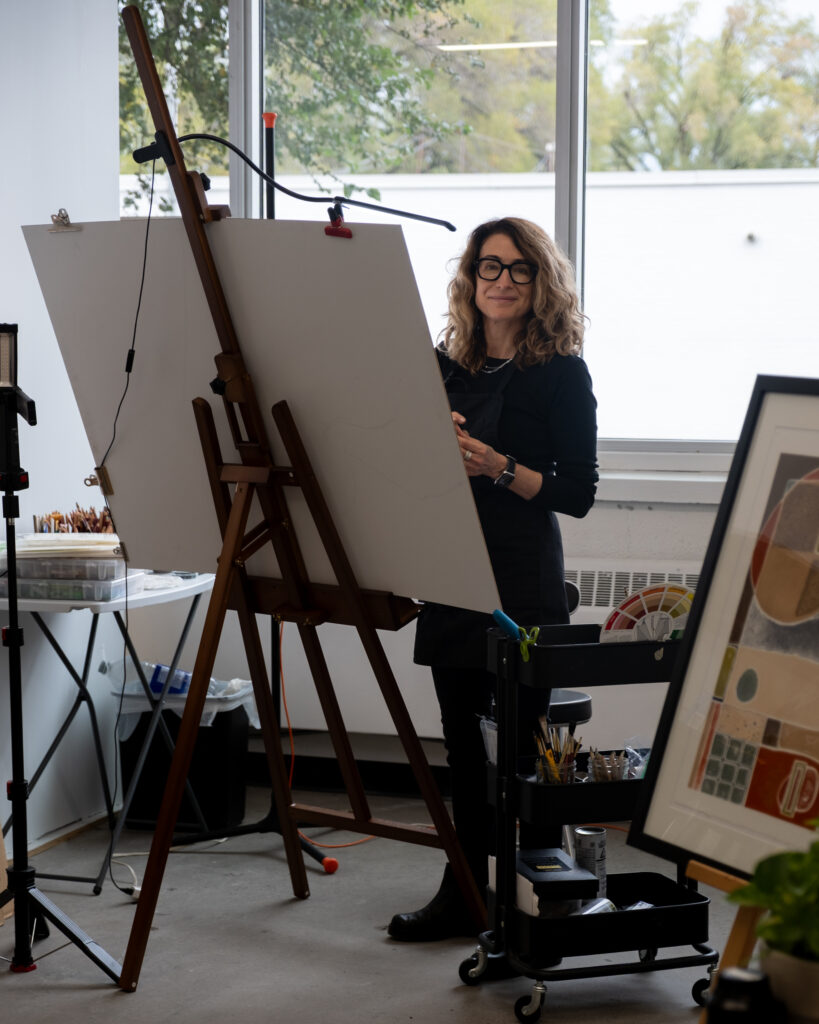
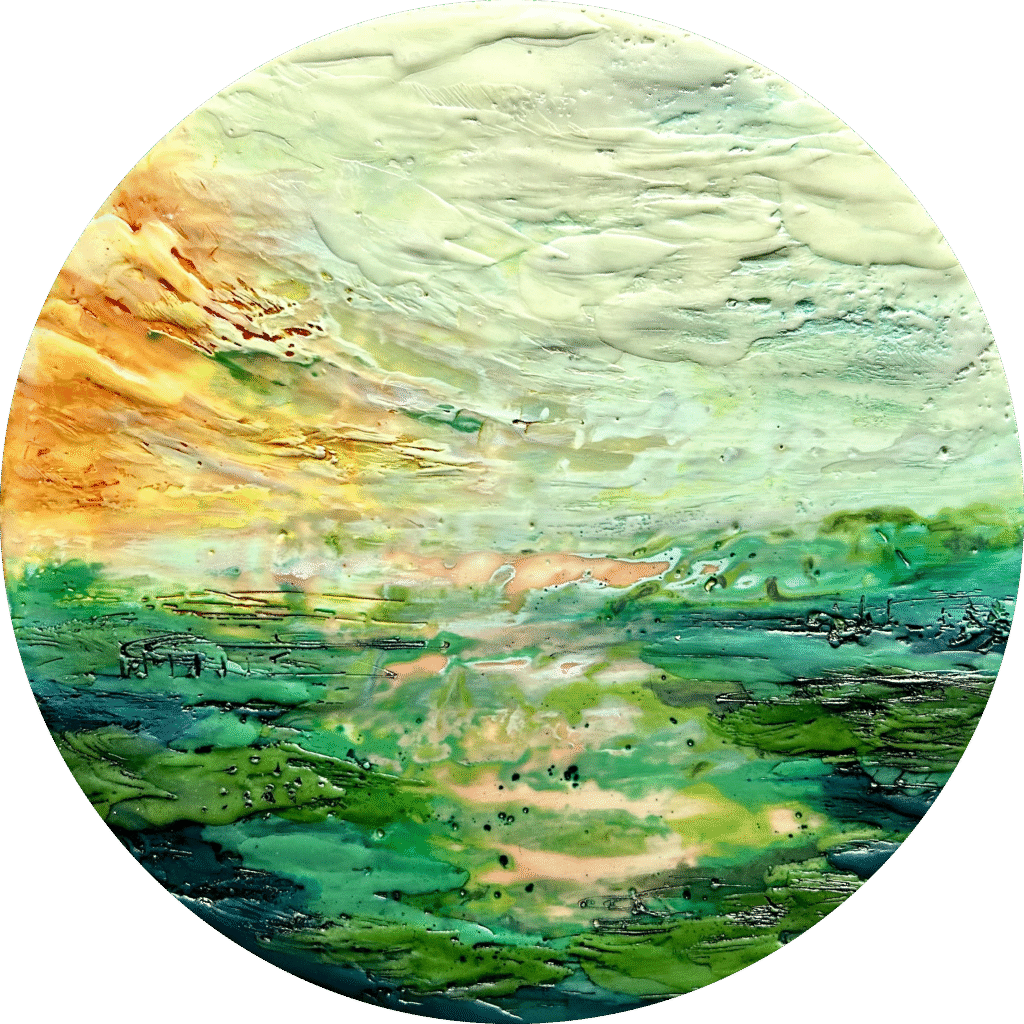
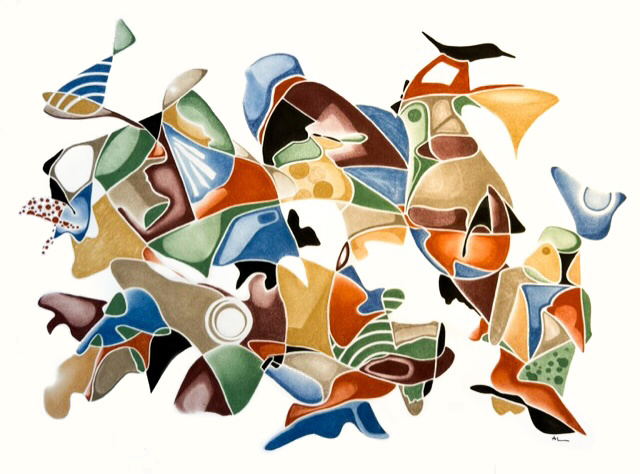
Her abstract pastel compositions didn’t just look interesting; they behaved like living systems. Shapes interacting, clashing, blending, asserting themselves, retreating. Some intricate and heavy, others light and carefree. Some rough and primal, staying true to their origins. It felt less like looking at art and more like watching relationships unfold in real time the way people move around each other, test boundaries, find rhythm, or fail to.
We selected Annick for the exhibition because her work proves exactly what the theme suggests: everything is art. Human connection is art. The way people interact is art. Tension, harmony, complexity, joy all of it can live on paper if you know how to translate it. And Annick knows.
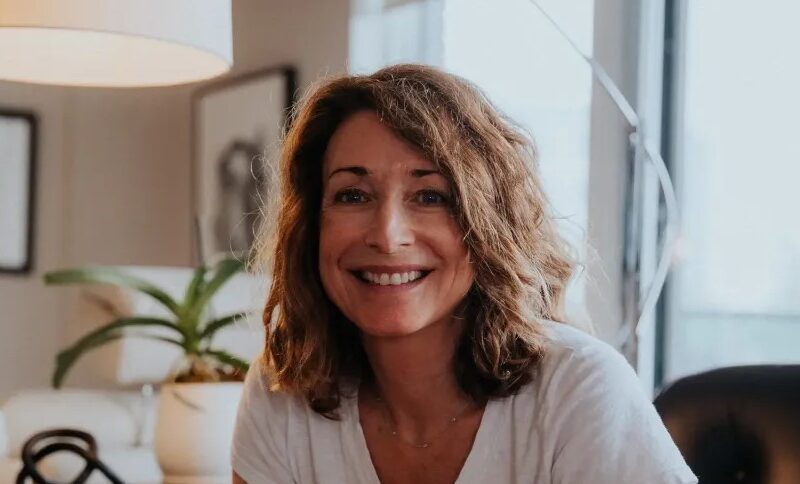
Before we move into her words, here’s what you need to know about Annick.
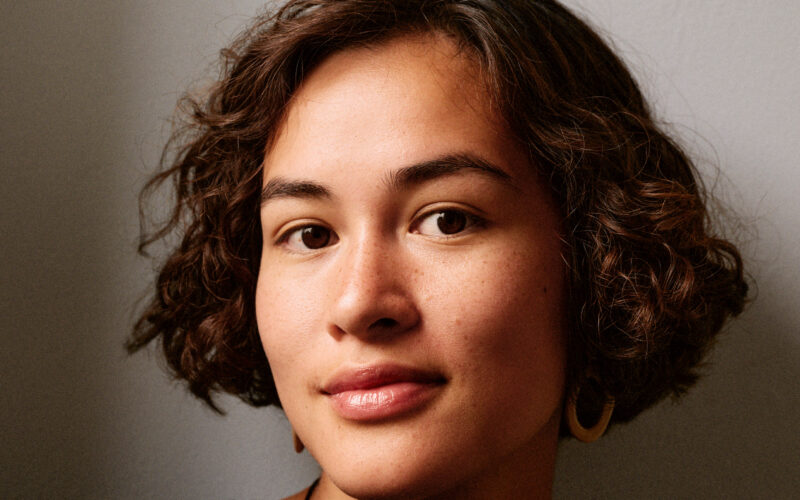
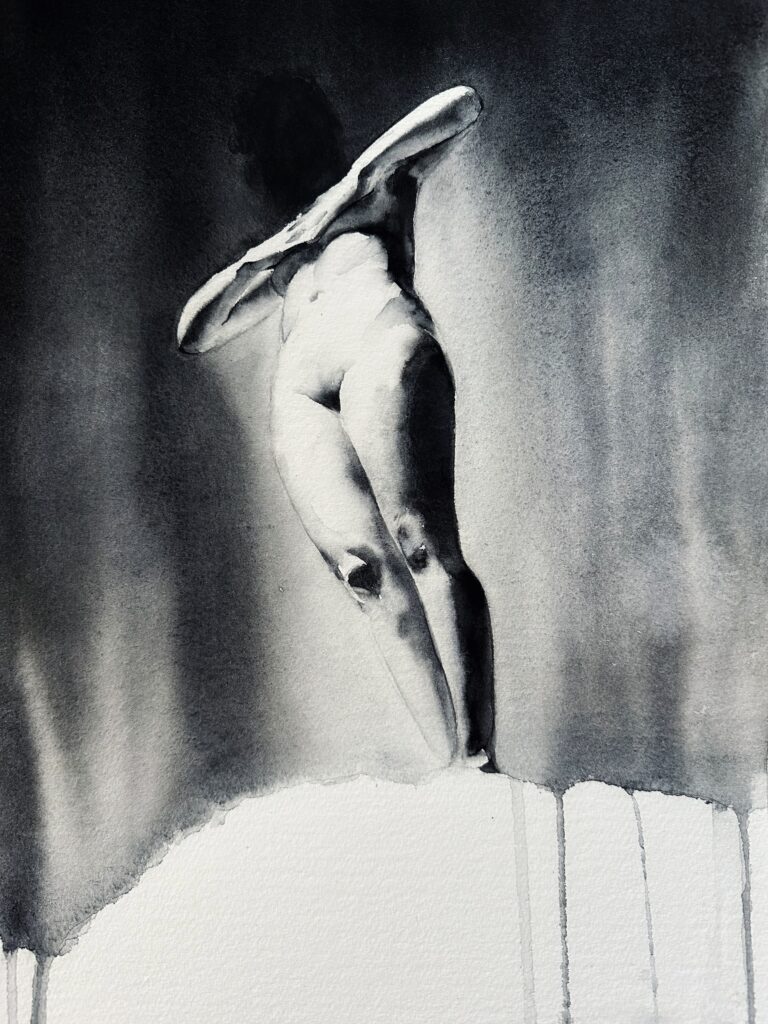
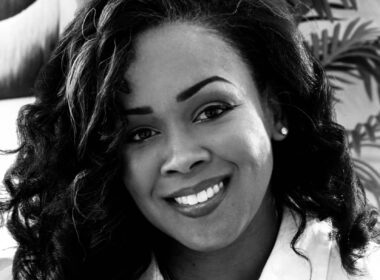
She’s based in Montreal and comes from a family of artists, though she took a detour through law first, ten years practicing before shifting to communications, all while drawing on the side. She’s been seriously dedicated to her art for over 14 years now, constantly learning, constantly evolving. She started with figurative work in graphite bodies, forms, the human figure rendered with precision, but abstraction called louder. It offered her something figurative work couldn’t: absolute freedom.
Annick works almost exclusively in dry pastel, which makes her rare. Most pastel artists lean toward realism or landscape. Annick chose abstraction and developed a style so distinctive that once you’ve seen her work, you recognize it instantly. The textures she creates with pastel are unexpected raw, organic, layered, alive. She’s spent over a decade pushing what the medium can do, and she’s still discovering new possibilities.
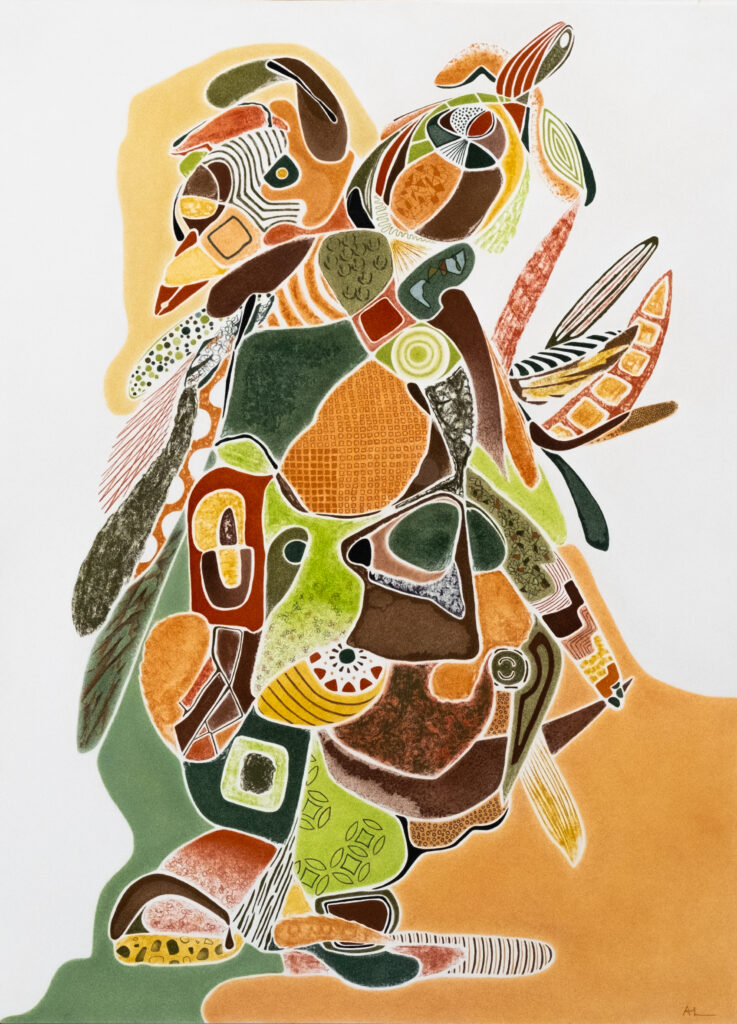
Her work has been featured in major art blogs like AATONAU, in Curators magazine, she is also featured in three books published by Arts to Hearts Project, including Studio Book v.2 and The Great Book of Art Makers. Her pieces have been shown on-screen at Art Basel, Artexpo New York, Paris Carrousel du Louvre, Miami Art Week, and more. She won the Creativity Award at a collective pastel exhibition in 2024 and had a solo show in Montreal in 2023. She’s preparing for another solo exhibition in 2026 at Gallery 203 in Montreal.
But here’s what matters more than the résumé: Annick doesn’t make art to fill walls. She makes it to explore what happens between people. How relationships grow. How they sour. How they stay light or become unbearably heavy. How some interactions are easy from the start, and others are complicated before anyone says a word. Her shapes are stand-ins for all of us trying to coexist, trying to connect, trying to hold our ground or blend in or break free.
She’s captivated by light and how it changes everything it touches colour, form, texture, mood. That’s why she layers shades of the same colour, creating depth and contrast that mimics the way light moves through a room or across a face. And by working abstractly, she gives you space to bring your own interpretation. She’s not telling you what to see. She’s offering a starting point, and the conversation happens between you and the work.
Annick’s creative process is intuitive but disciplined. She starts with a sketch, loose, temporary, more feeling than plan and then she improvises. She pushes pastel in ways it’s not supposed to go, creating textures that feel raw and unexpected, almost primal. Some shapes get intricate, detailed, complex. Others stay rough, unfinished, true to their origins. The contrast between meticulous and spontaneous is what gives her work its tension and its life.
Now, let’s hear from Annick herself.
I started by asking Annick about her shift from figurative graphite work to abstraction in pastel. What pulled her in that direction, and how did it change the way she thinks about form? She answered:
A profound feeling, a strong need to truly create and find my path, led me to abstraction. I also needed much more freedom. Abstraction allows me to create with absolute freedom, without conventions, rules, or proportions to adhere to. I now explore and draw figures that please me, ignite me, and take me where I want to go. Often different from one another, once combined and annexed to their neighbors, they playfully reveal one or more silhouettes depending on who is looking… silhouettes that will evoke something different for each person. It is in this freedom of interpretation, given to the observer, that lies, in my opinion, one of the strengths of abstraction and especially of the works I offer.
My second question from her was how she decides the energy of a piece whether it should feel tense, playful, or steady. She explained:
The feeling towards the previous piece and my mindset just before and at the beginning of an artwork will generally dictate the overall direction of a piece. Colors play a significant role as well. Together, they usually set the tone. Then, the chosen textures will confirm and enhance, for example, the dramatic aspect or, conversely, introduce a certain innocence or cheerfulness into the composition, lightening its interpretation. As a result, just like in everyday life, some shapes in my pieces will assert themselves over their neighbors, immediately creating discomfort for what follows; while others will choose a softer, more delicate approach, sometimes engaging in a certain mimicry. It is clear to me that a piece with lighter colors and textures will generate a very different feeling and interpretation in the observer and in me than a darker piece with intricate and heavy textures.
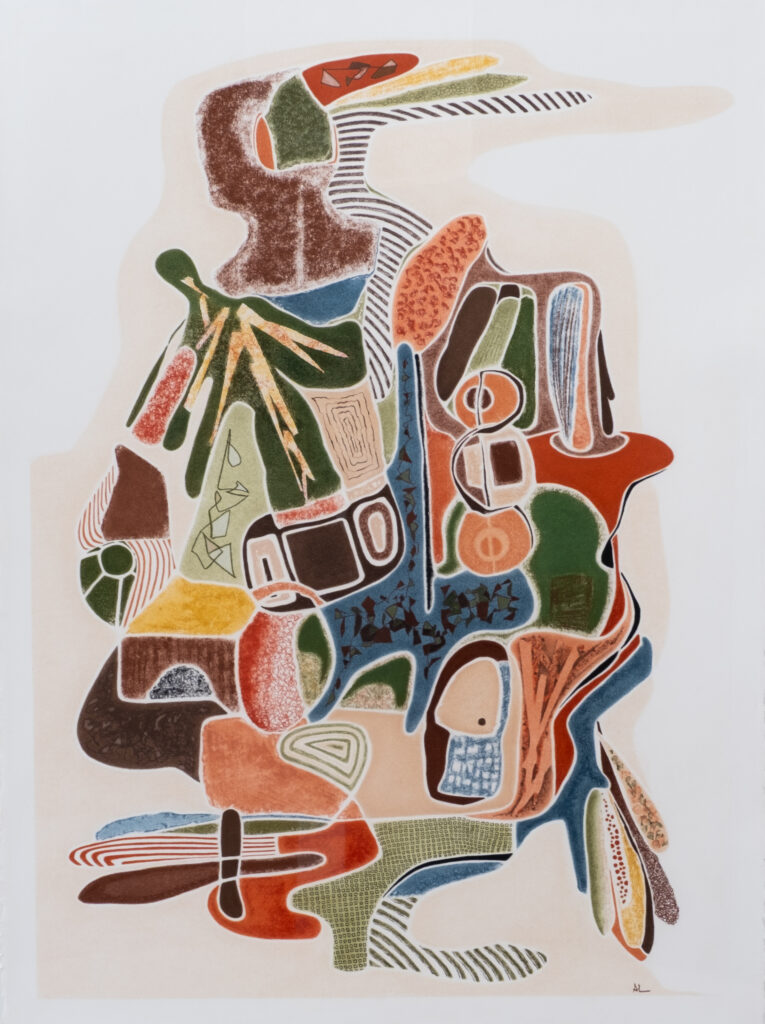
My next question was about time, fourteen years is a long time to dedicate to one medium. What keeps bringing her back to pastel again and again? She shared:
In my opinion, anything is possible with pastel. It just requires meticulousness and a well-developed working method, because pastel means pastel dust—on the paper, on your fingers, and pretty much everywhere! That said, it’s my love for textures that drives me to explore and continually push the boundaries of pastel. The raw finish obtained derived from the first strokes of pastel on paper, as well as the texture play achieved with a brush, has particularly enchanted and motivated me to trust the medium and continue to embrace the new and the unusual whenever the opportunity arises.
Then I got curious about the contrast in her work, how she balances obsessive detail with raw, spontaneous marks. How do those two opposing forces come together?
On which she said:
Improvisation plays a significant role in the choice of details and textures that will compose each figure. Once the choice is made, I ensure a certain balance between the selected textures, colors, and shapes. Sometimes for the sake of harmony, sometimes out of respect for the ongoing creation that seems to call for one finish over another. It’s probably intuition manifesting at that moment. I might decide during the creation process that an emerging silhouette needs to breathe; I would then abandon complex textures in favor of raw ones, which are often simpler and inspire calm. Another drawing might naturally call for turmoil, with its textures being more intense and complex. Colors will also impact the appearance and feel. An intensity drawn with soft tones will be less unsettling than one expressed through darker colors.
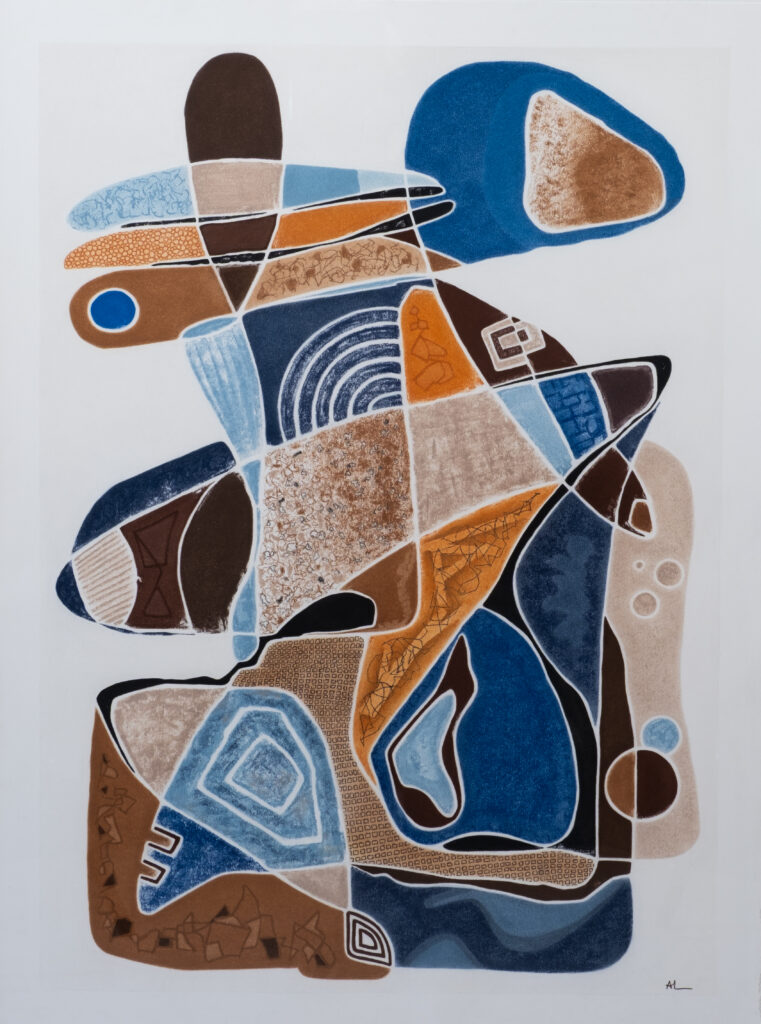
Her work is about to be shown across three continents, Art Basel, Paris, Dubai, New York. When your art starts appearing in all these places, something usually shifts. So, I asked if this visibility is changing how she creates. She reflected:
Yes, I am very happy to know that my art is seen in many places around the world; however, most of these are on-screen presentations for now. My intention, as I prepare for an upcoming exhibit in Montreal, is primarily to reach as many people as possible with my art. That being said, this fall will mark a significant moment in my career as many of my pieces have attracted media attention, resulting in beautiful coverage. I feel honored and am very grateful that they chose to feature me in their respective outlets. Will it change the way I create? No, definitely not. On the contrary, it confirms that my art is on the right path, that what I do with pastel is indeed new and unconventional, but worthy of attention. Therefore, I am now mostly focused on delivering a series of drawings that make sense, that come from the same root and the same place within me.
My last question to her was about her solo exhibition, the one she’s preparing for in 2026. What themes are guiding her right now in the studio? She opened up:
I am at a point where I can look back at my life experiences and realize that my roots, where I come from, my family, and the environment I grew up in have given me my values, influenced my beliefs, and greatly contributed to shaping my life. I know I dearly value trust, respect, family, and friendship. I thrive on true human connections. I choose to express myself through many different shapes that connect with each other to tell a story once the final silhouette reveals itself. In this series, the story is about roots, what you choose to believe in as a human being, and how it affects your life.
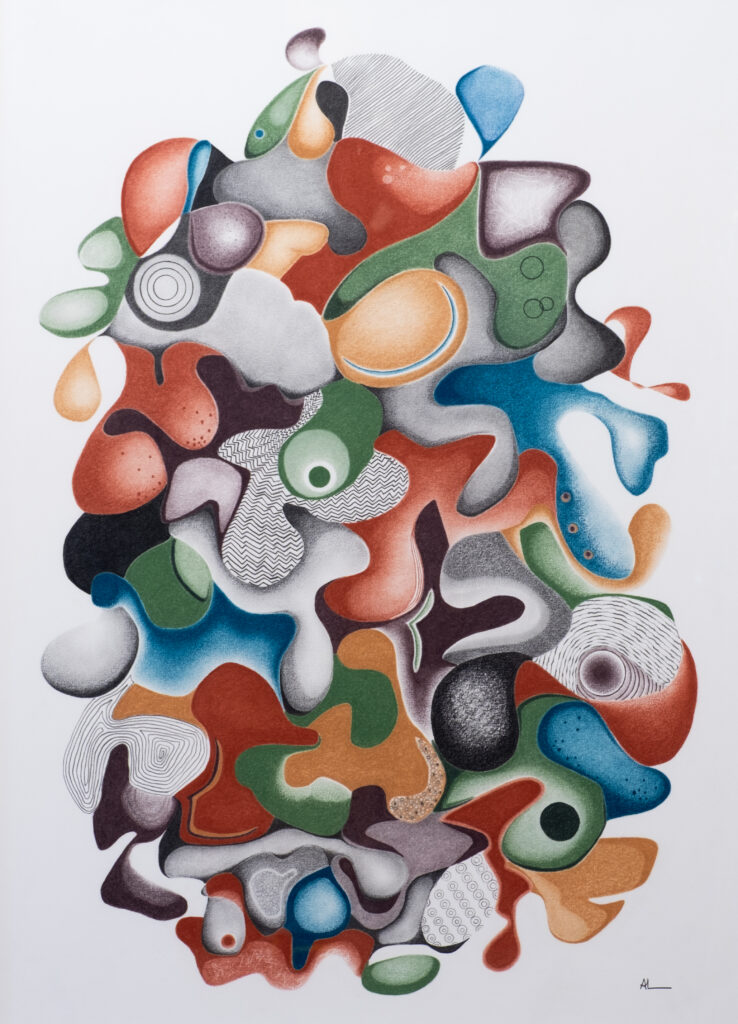
Wrapping our conversation with Annick, something clicked: she’s not making art to be understood she’s making it to be felt.
What struck me most wasn’t her technical mastery of pastel, though 14 years with one medium has clearly taught her things most artists never discover. It was her clarity about what abstraction actually does. It doesn’t escape meaning it expands it. By refusing to define her shapes, she gives them permission to become whatever you need them to be. That’s not vague. That’s generous.
Her process mirrors this philosophy. She doesn’t plan. She starts with a feeling, sometimes from the previous piece, sometimes from her own mood and lets color set the tone. Texture confirms, deepens, or completely subverts it. Some shapes get obsessive detail. Others stay raw, primal, unfinished. The contrast works because it mirrors how we actually experience life: some things demand everything, others ask to be left alone.
And here’s what makes Annick rare: after over a decade with pastel, she’s still curious. She’s not chasing mastery for ego she’s chasing what the medium can still teach her. That refusal to settle is what keeps her work alive.
Now, as her work appears across Art Basel, Paris, Dubai, New York, she’s facing the question every artist eventually meets: does visibility change the work? Her answer matters. No. Recognition doesn’t redirect her it confirms she’s on the right path. That distinction is everything. She’s not letting success dictate her direction. She’s letting it affirm what she already knows.
But the most telling moment came when she talked about her upcoming solo exhibition. She’s going deep into roots, values, family, the foundations that shape us. And true to form, she won’t explain it. She’ll express it through shapes that connect, overlap, reveal silhouettes that mean something different to each person who looks.
Because that’s what Annick understands: art isn’t about delivering answers. It’s about creating space for conversation with the viewer, with herself, with what can’t be easily said.
In a world obsessed with clarity and control, her willingness to hold complexity, ambiguity, and contradiction feels necessary. She’s proving that art doesn’t need to be obvious to make sense. Sometimes it makes more sense when it refuses to be pinned down.
Follow Annick Letourneau to watch her process unfold. Her work is available through her website and upcoming exhibitions.