
Artists With Day Jobs Paint the World They Want but Can’t Have During Office Hours I Amanda Rheeders
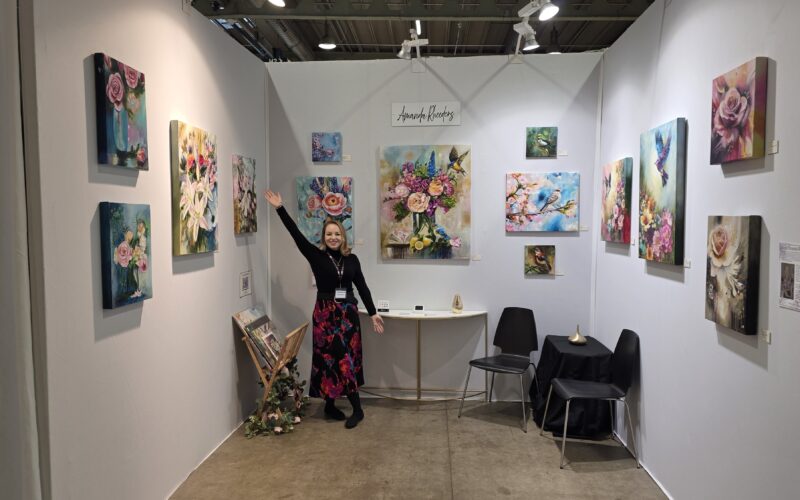
👁 224 Views
Some of the most striking work we encounter at Arts to Hearts Project doesn’t come from full‑time artists it comes from people whose days are consumed by structure, logic, and responsibility. People who shouldn’t have creative energy left yet somehow produce work that feels urgent and alive.
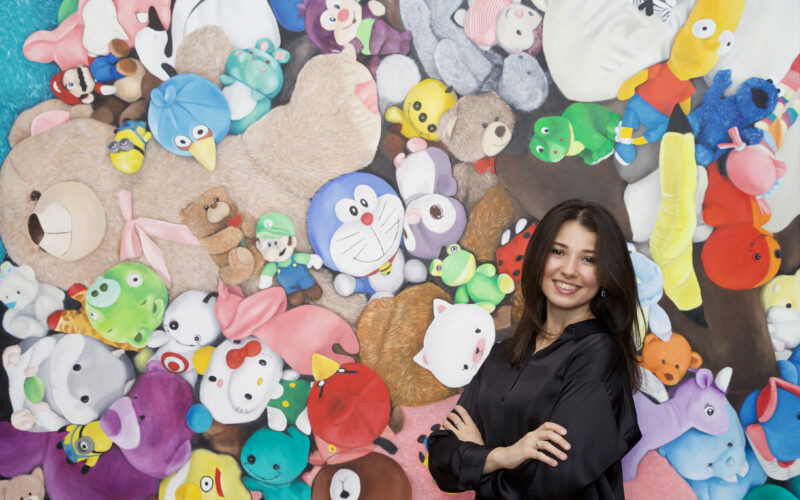
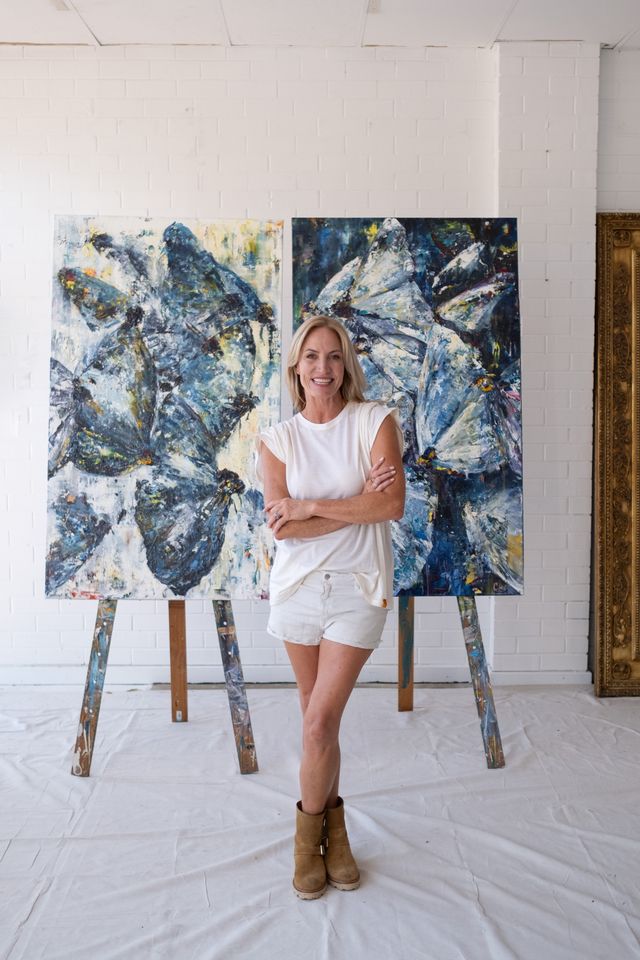
Amanda Rheeders is one of them.
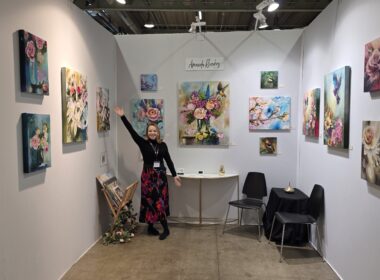
When we first saw her vivid oil paintings animals and florals rendered with intensity and emotional charge we assumed she lived in the studio. Instead, we learned something far more interesting: Amanda is a full‑time lawyer. Her days are spent in analytical problem‑solving; her nights and weekends are devoted to building a world through color, intuition, and imagination.
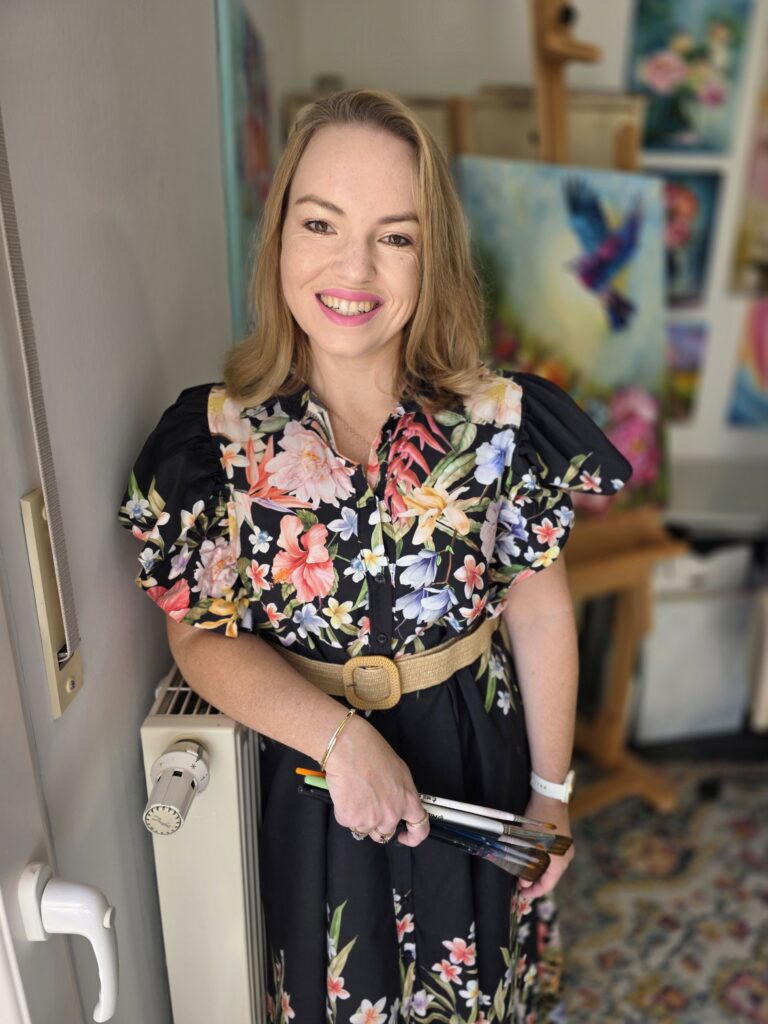
What looks like contradiction to others is, for her, a form of balance. The structure of her profession creates the hunger her art satisfies. The discipline of legal work sharpens the freedom she seeks on the canvas. Her practice isn’t an escape from her day job—it’s a response to it.
Her story challenges a persistent myth in the art world: that you must choose between a creative life and a conventional career. Amanda shows that the tension between the two can be generative, not limiting.
This interview explores how she sustains both, how her work has evolved through personal transformation, and what it means to create the world you long for when your daily reality doesn’t offer it.
Ready to meet her? Let’s begin.
I began by asking Amanda to share her background and reflect on how her early life and environment shaped the way she first understood art and creativity.
I was born in South Africa and grew up on the east coast in a small town by the ocean. I discovered my love for art at school and took art as a subject up to Matric. My art teachers at the time encouraged me to pursue art as a career but I opted for a more academic route in the end, which I do not regret. I used to paint every day when I came home from school and I would paint for hours on end, sometimes past midnight because I was in the flow. The creativity was an outlet for me, and I am grateful for it looking back.
Knowing she’d spent many years in the legal profession, I was curious how that period influenced the way she now thinks, observes, and makes decisions within her practice.
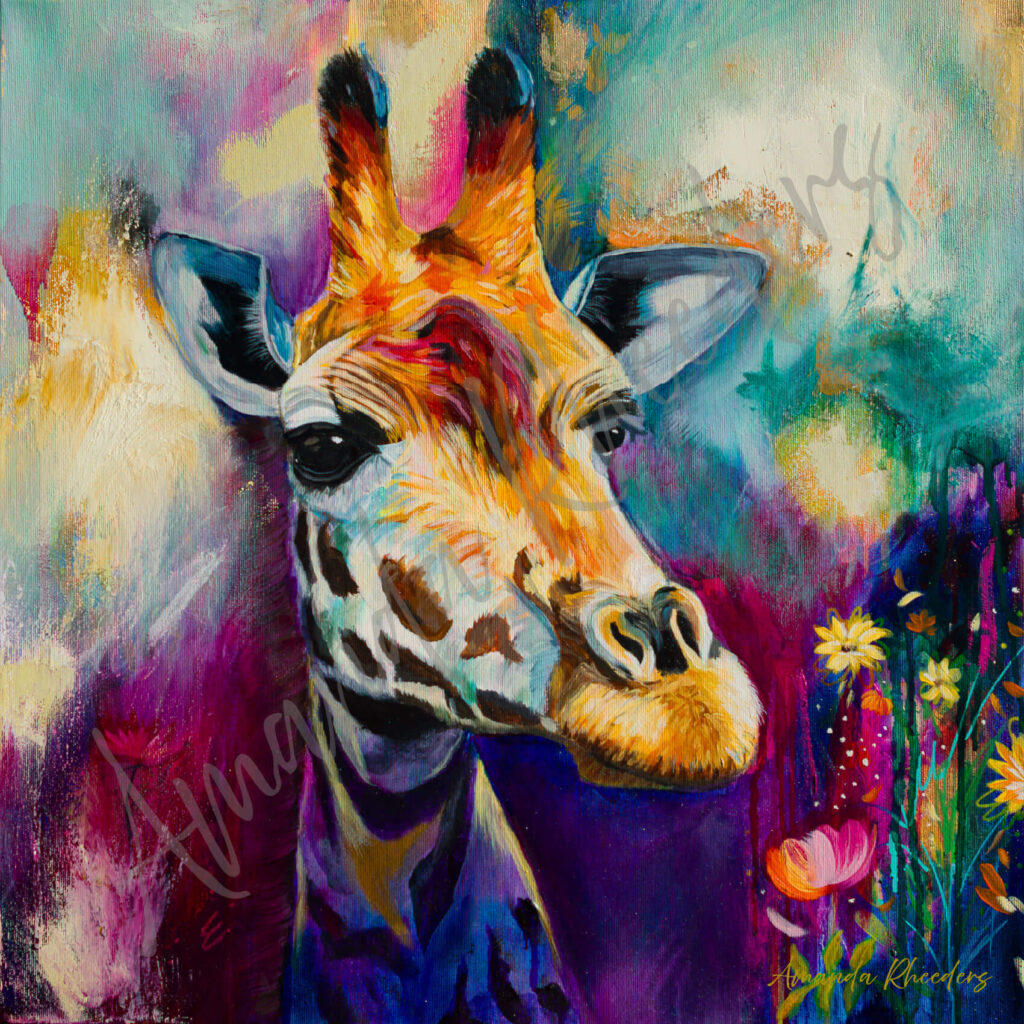
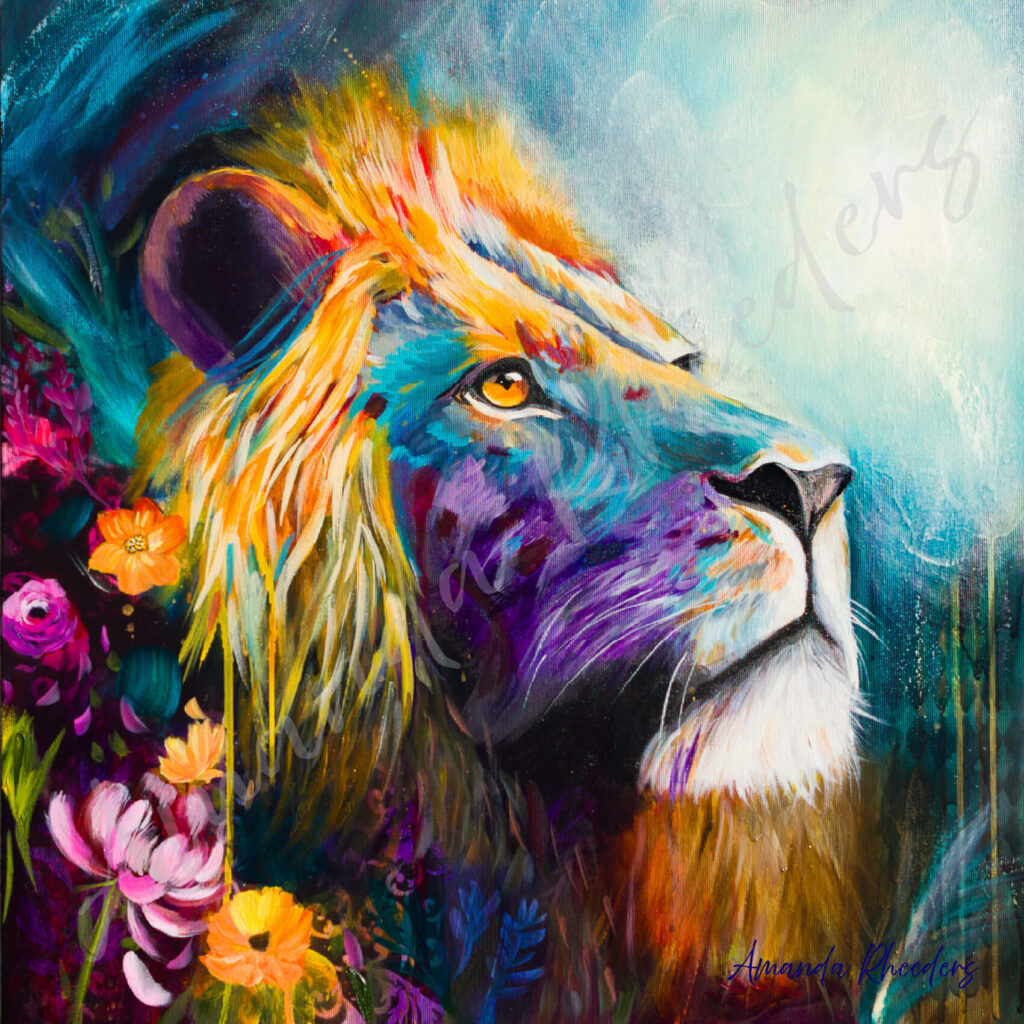
I am still a full time lawyer and I use art to balance my brain. Because I use the left side of my brain for more than 8 hours a day, I am engrossed in logic and problem solving, so when I switch to my right brain at night, I become obsessed with form, shape, line, colour and it provides a huge amount of relief to me mentally, and it actually makes my day job alot easier because my brain gets a chance to “rest” when I am creating, which means my problem solving during the day happens much quicker. Having a corporate day job shapes the way that I think and observe because I paint the world that I want to live in. I do not see colour or have any means for self expression during the day, so when I am in my studio at night I am looking for all the vibrancy and freedom that I do not see or experience during the day at work.
Her work often draws from nature, memory, and imagination. I wanted to understand how these elements intersect for her, and where the image truly begins in observation, recollection, or invention.
I would say most of my work stems from observation and invention. I like to work in abstract realism, to portray an ethereal and magical feeling, that the impossible is possible. Almost like “If you can dream it, you can achieve it”. I paint from the heart and from a point of empathy. In the last year I have undergone a huge personal transformation so a lot of my work depicts a quiet space where the external scene meets the internal shift. The canvasses have become a meeting point between what I have observed, what I have felt and what I am becoming. All of it symbolizes the freedom that came with putting boundaries in place and the beauty that life holds for me.
She works primarily in oil, a medium with a long and demanding history. I asked her what continues to draw her to it, and how she makes space for personal expression within such a tradition.
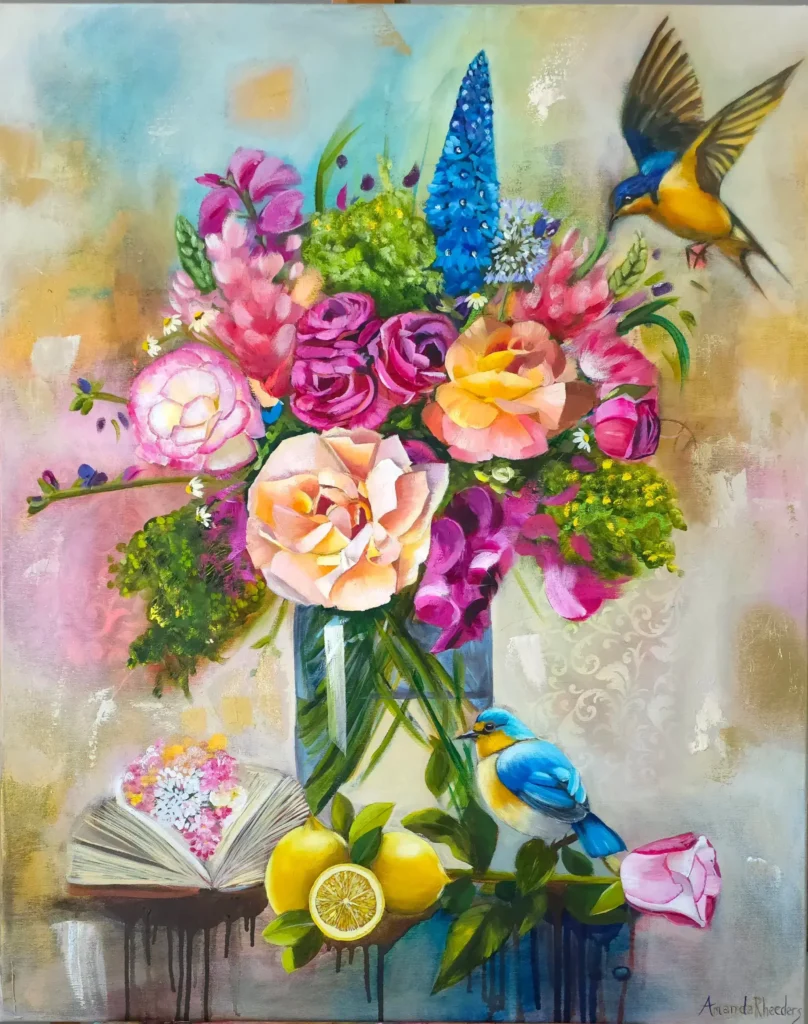
I am obsessed with oil paint because of the diversity that can be achieved with it. I am able to use colour temperature to achieve 3-dimensional form in my renderings of animals and flowers which makes the painting much more inviting for the viewer, and creates movement and dimension. Acrylic paint lacks the charge in the pigments so they are a lot flatter upon closer inspection. I can achieve a lot more vibrancy and depth with oils by using colour theory and temperature to my advantage. Oil paints are much juicer and more buttery and just a pleasure to work with. I do not often paint using the traditional methods that the old masters used. I do an underpainting in acrylic and then I finish the painting with 3 or 4 layers of oil paint, mixed with a fast-trying medium, which allows me to be must more expressive than the traditional methods.
I asked her to reflect on a specific work where her practice shifted beyond representation toward a more experiential or suggestive mode, and describe the artistic challenge that transition demanded.
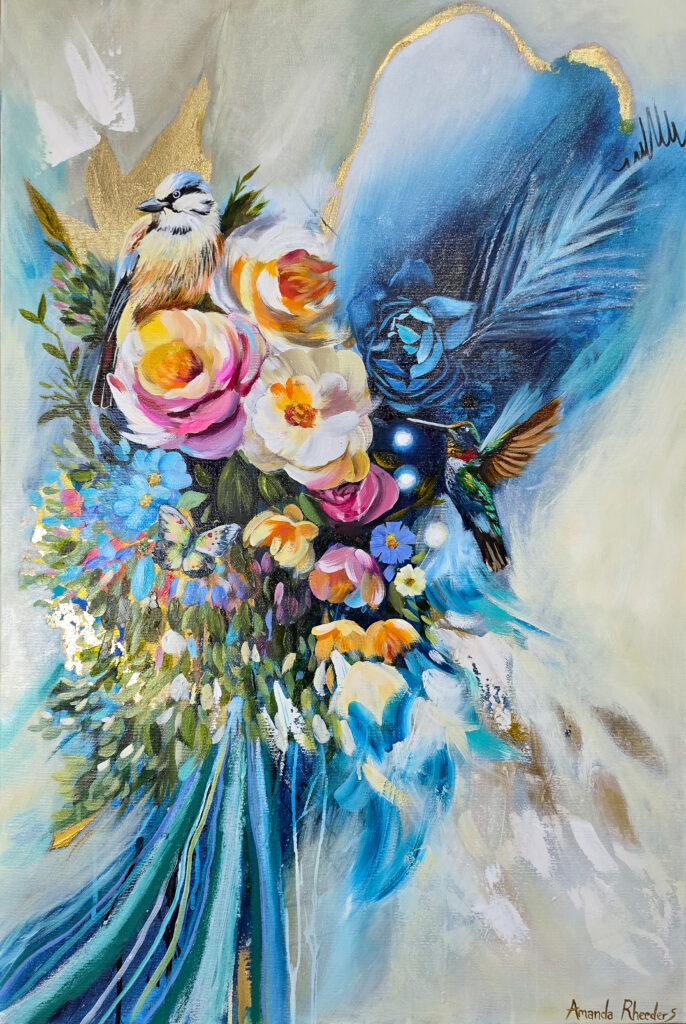
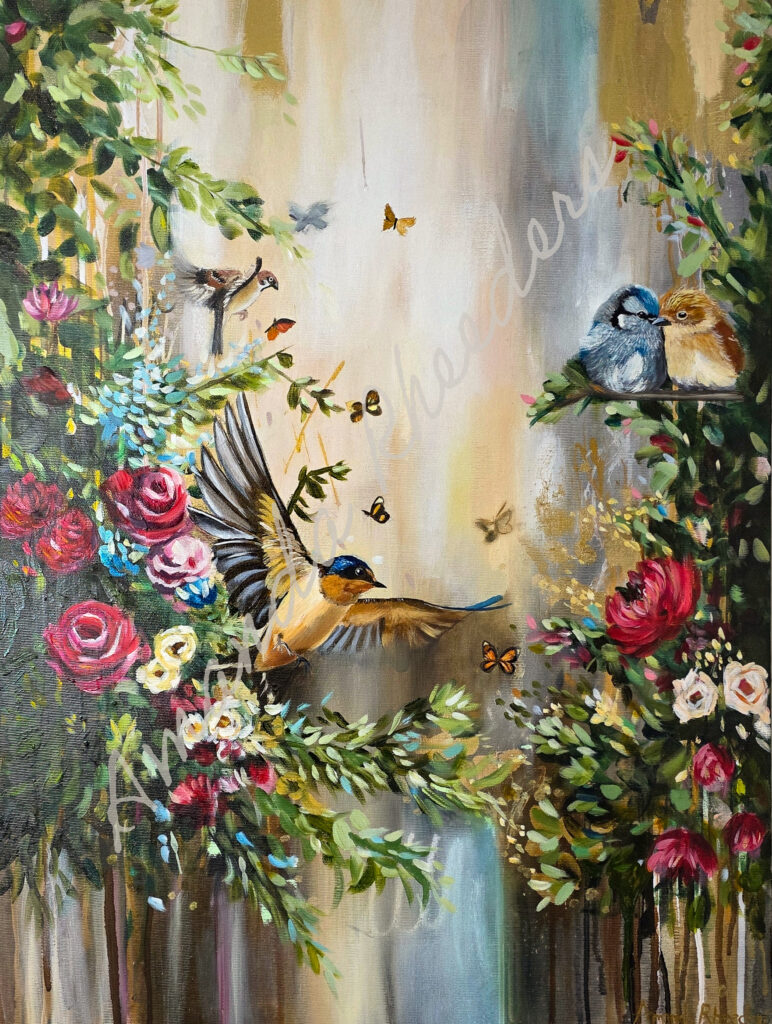
The piece is a diptych called “Two Hearts 1” and “Two Hearts 2”. This was my largest and most challenging painting yet. I hit a total block because it was more abstract than realistic. I wanted to create a very peaceful and ethereal piece with a lot of birds flying in the right direction. I used a neutral palette which was extremely uncomfortable for me and I did not really have a source image, I worked mostly from my imagination which created a huge block because I could not rely on the comfort of representation.
Eventually, after reading a book called “Fear and Art”, I was able to overcome the discomfort and the fear and I started to paint intuitively and much more expressively which was uncomfortable, but ultimately very rewarding as I had an artistic breakthrough and now the rest of my works are much more naturally expressive.
Curious about her process, I asked how she approaches the early stages of a painting does she work from structured preparation, or does the image reveal itself gradually through the act of painting?
I usually start each painting with a light charcoal drawing of my focal points, it is very loosely drawn in and sprayed with a fixative so that the charcoal does not move. I then start with a very loose and messy underpainting which begins with inks and acrylic washes, just to loosen up and activate my right brain. Once I have my first layer down, I then start to render the form of the focal points with acrylic paints and I start looking at the colour story and juxtaposition with Chiaroscuro. Once I am at this stage, I usually put in some expressive mark making and then I move towards refinement when starting with the oils.
As her practice has evolved, I wanted to know how her understanding of “completion” has changed. What tells her that a work has reached its own resolution?
I know a piece is finished when no aspect of it bothers me. Throughout the painting process I am critiquing the work from a technical perspective and I am adapting as I go along. I am very mindful of overpainting, so if the composition, form, line, shape, colour and texture and technically correct, and I am not bothered by any aspect of the painting then I put the brush down and immediately clean my palette so that I cannot overpaint it.
Looking across her body of work, I asked what has remained constant in her way of seeing, and what has quietly transformed over time.
I would say the vibrancy and rendering of form have remained consistent, and my ability to express myself in a more fluid way with the abstract part of my paintings has evolved quite a lot. I am now a lot more bold with my mark making and abstraction than I was in the beginning.
For my final question, I asked what advice she would offer to artists who are building a practice with patience and integrity, particularly when clarity, recognition, or momentum feels slow to arrive.
Let go of recognition and recognize yourself! An artist without an audience is still an artist! Let go of the outcome, commit to yourself and your practice, implement discipline and paint every single day. Time behind the paintbrush and time with yourself is much more healing and rewarding than any accolade or social media following. Keep painting, the rest will follow.
Ending my conversation with Amanda made one thing unmistakably clear: we’ve been oversimplifying what it means to build a creative life.
We’re taught to see passion as an all‑or‑nothing choice. As if keeping a corporate career while making art means you’re undecided, waiting for the “real” moment to commit. Amanda’s story dismantles that idea entirely.
What looks like a divide between two worlds is, for her, a deliberate equilibrium. Structure doesn’t restrict her creativity—it supports it. The discipline of her legal work sharpens the freedom she seeks on the canvas. One practice steadies the other.
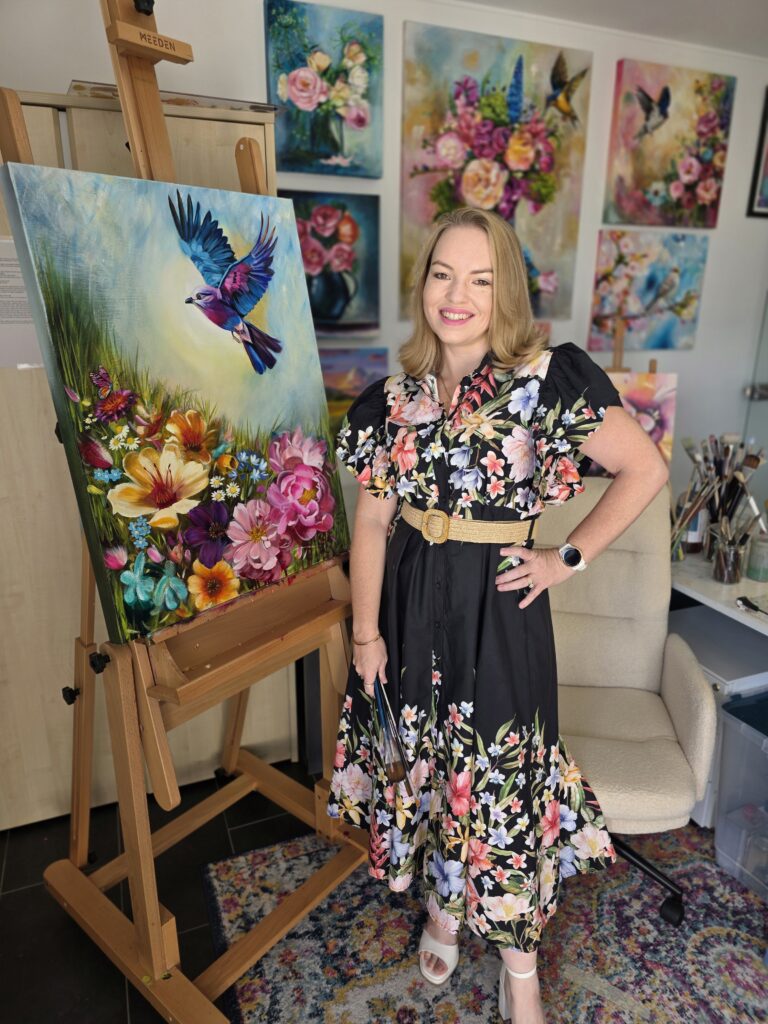
She isn’t painting in reaction to her profession. She’s painting in conversation with it. Her work imagines the world she wants to inhabit, not the one she navigates during office hours. That contrast isn’t a flaw in her path; it’s the engine of her expression.
Most of us try to eliminate tension in our careers. Amanda shows that tension can be the source of originality. She paints what’s missing—and that gap between the structured and the imagined is where her voice becomes unmistakably her own.”
Follow Amanda Rheeders through the links below to see what happens when someone refuses to wait for permission.