
Minnie Park- The Founder Who Built a Gallery for People, Not for Profit

👁 184 Views
Art often begins in the quiet corners of life a spark of curiosity, a sketch drawn just to feel something, a small act of seeing the world a little differently. For Minnie Park, that spark took shape in Busan, South Korea, where she drew on the backs of old calendars because sketchbooks were a luxury. Yet even then, imagination found its way through pencil lines and quiet determination, through the simple joy of creating when nothing else was available.
This week, for our Best of Art World series, we’re honoured to share Minnie’s story one that crosses borders, generations, and the many ways art helps us connect. As the founder and curator of the Minnie Park Art Project, she has built a space that bridges East and West, bringing together artists whose voices might have otherwise gone unheard. In her world, art isn’t confined to walls, it’s a conversation that travels, transforms, and brings people closer.
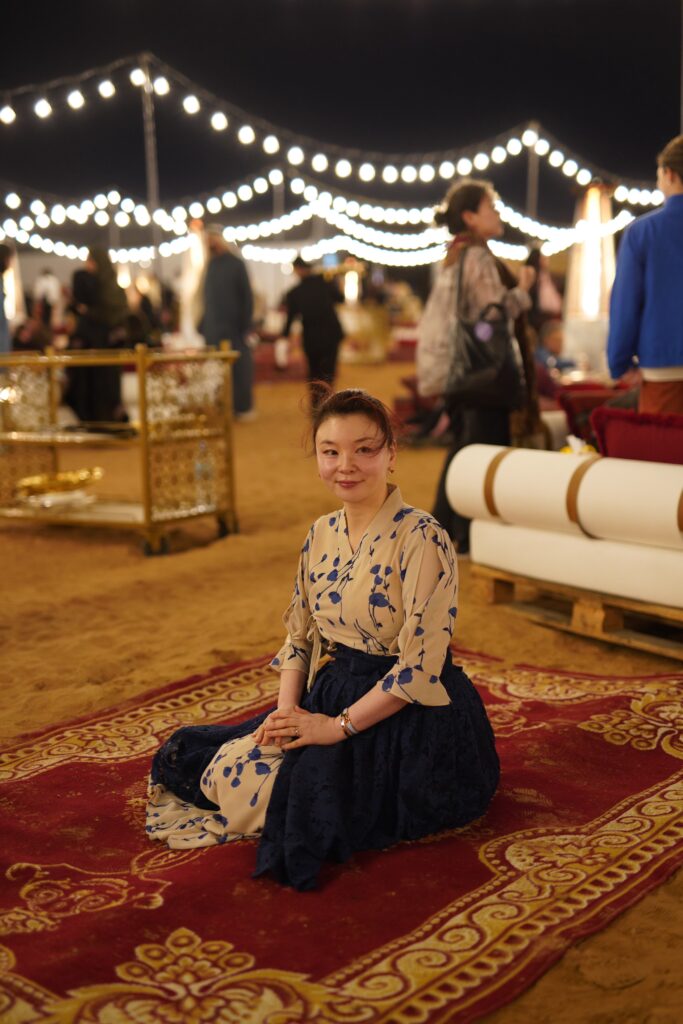
Everything changed when Minnie moved to New York. The city’s rhythm its museums, its murals, its constant creative pulse opened her eyes to a world where art wasn’t distant, it was alive. “In Busan, I didn’t grow up surrounded by art,” she said. “So, seeing how accessible it was here felt like discovering a whole new world.” She began sharing those moments online, not to be seen, but to remember. What began as small reflections became conversations, and those conversations grew into a global community that saw the world through her eyes.
Unlike the distant, minimalist “white cube,” Minnie’s gallery feels personal warm, filled with laughter, music, and the subtle hum of genuine conversation. Each exhibition feels like being invited into someone’s story. Her shows remind us that art isn’t about perfection or prestige it’s about being present, about creating moments where people can meet in their shared humanity, no matter where they come from.
Let’s get to know more about Minnie Park and her inspiring journey in this interview, tracing her path from those early sketches on the backs of old calendars in Busan to curating a global space where art, humanity, and hope beautifully to converge.
Q1. Can you share a little about your early journey what experiences or influences first drew you into art and eventually inspired you to start Minnie Park Art Project?
I loved drawing throughout my childhood — in Busan, South Korea, I used the backs of old calendars because we couldn’t afford sketchbooks. There wasn’t much art to experience growing up, so when I moved to New York, I was struck by the abundance of free museums and public art. I began documenting those experiences and sharing them on Instagram, which led to conversations with artists and gallerists. From there, it felt natural to create a space of my own that’s how Minnie Park Art Project was born.
Over time, I’ve also discovered countless incredible artists through social media, especially TikTok, which later became the main platform I used to share my own work. By consistently posting, I was able to grow a following of over 180K across platforms and reach 80 million views in a single year. This growth gave me the opportunity to pursue art full-time and continue expanding my brand in new and exciting ways.
Q2.Your gallery bridges East and West, multiple generations, and diverse practices. How has your own cultural background and personal story shaped the curatorial identity of Minnie Park Art Project?
I’ve lived in many places and travelled widely, and what I’ve learned is that once you’re truly in conversation with someone, the labels fall away. You stop seeing difference and simply recognize another human being. Art operates in the same way it cuts across culture, language, gender, or background, reminding us of our shared humanity.
At Minnie Park Art Project, I try to hold space for that recognition. My curatorial identity is rooted in bringing together artists whose stories may seem worlds apart, but when placed side by side, reveal something universally felt. I want viewers to discover that an artist they’ve never heard of, perhaps from the other side of the globe, can speak directly to their heart.
Q3. You describe the gallery as a space for “overlooked artists.” Can you share a story about one artist who particularly embodies that mission and what it meant to bring their work forward?
My aim has always been to understand my audience deeply while leading with the best interests of my artists at heart. People who come to my gallery aren’t chasing names or status they’re looking for authenticity, for work that carries a story they can feel. That’s why I look for artists who can meet that sincerity and give it back. One example is Austin Sanchez, who joined our Spring 2025 exhibition. It was his first time showing, yet his passion and honesty resonated immediately with collectors. The synergy between him and the audience created something magical, opening doors for him both inside and outside the gallery.
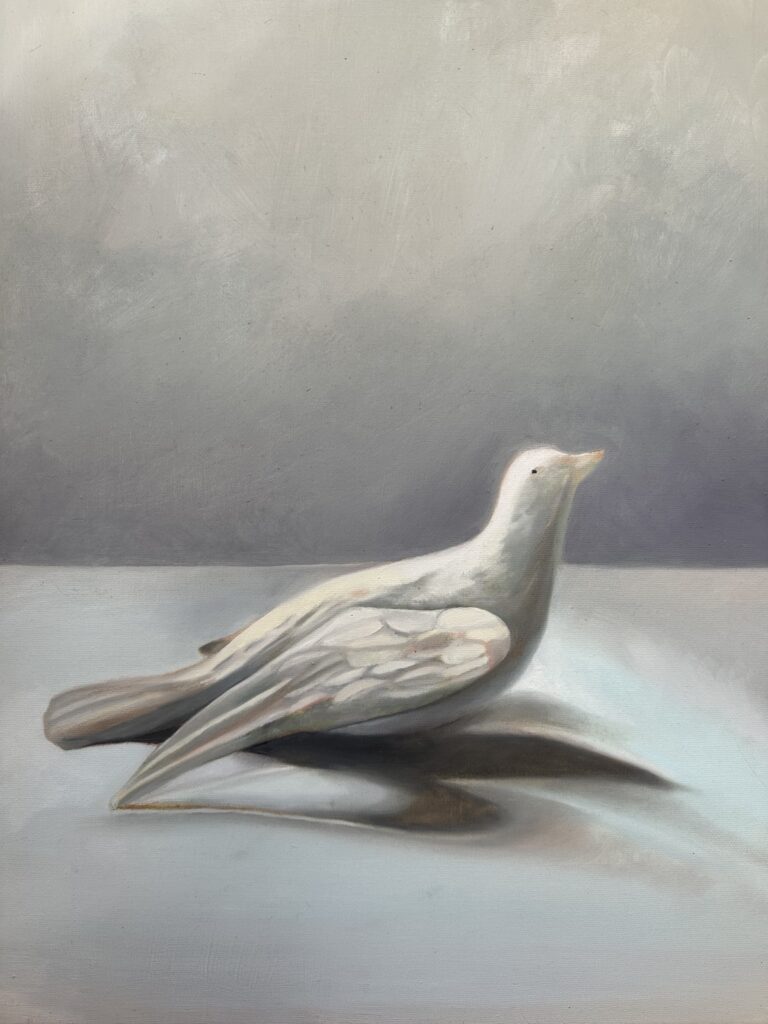
Moments like this are why Minnie Park Art Project exists to highlight overlooked artists and connect them with people ready to truly see them. My artists trust me to find the right audience, and my audience trusts me to bring forward new voice’s worth discovering. That trust, and the connections it sparks, is where the magic happens.
Q4. If art is often described as a mirror to society, do you see your exhibitions as mirrors or as windows into worlds people don’t yet know they need to see?
I see my exhibitions more as windows into worlds people don’t yet know they need to see. Each show begins with a statement or a question — a provocation that guides the lens. The artists bring their own visions of how they see the world, and my role is to weave those perspectives together into a story that even the artists themselves might not have realized they were collectively telling.
In that way, an exhibition isn’t just reflection, it’s revelation. It opens onto something unfamiliar yet resonant a view into the human condition that feels at once unexpected and deeply recognizable.
Q5. Many galleries adopt the “white cube.” You’ve embraced character and intimacy. What do you think is lost in a neutral space, and what is gained when art interacts with its environment?
For me, art is inseparable from life. In a neutral white cube, something essential is lost the energy of context, the intimacy of environment. Those spaces can feel distant, even intimidating, as if you need the right language or education to belong there. I want people to feel at ease, to feel safe enough to be curious. Because when you bring your own life into dialogue with a work of art, it begins to mean something more it becomes a shared, living experience. That’s why I’ve shaped Minnie Park Art Project as a space filled with warmth, interaction, and even laughter.
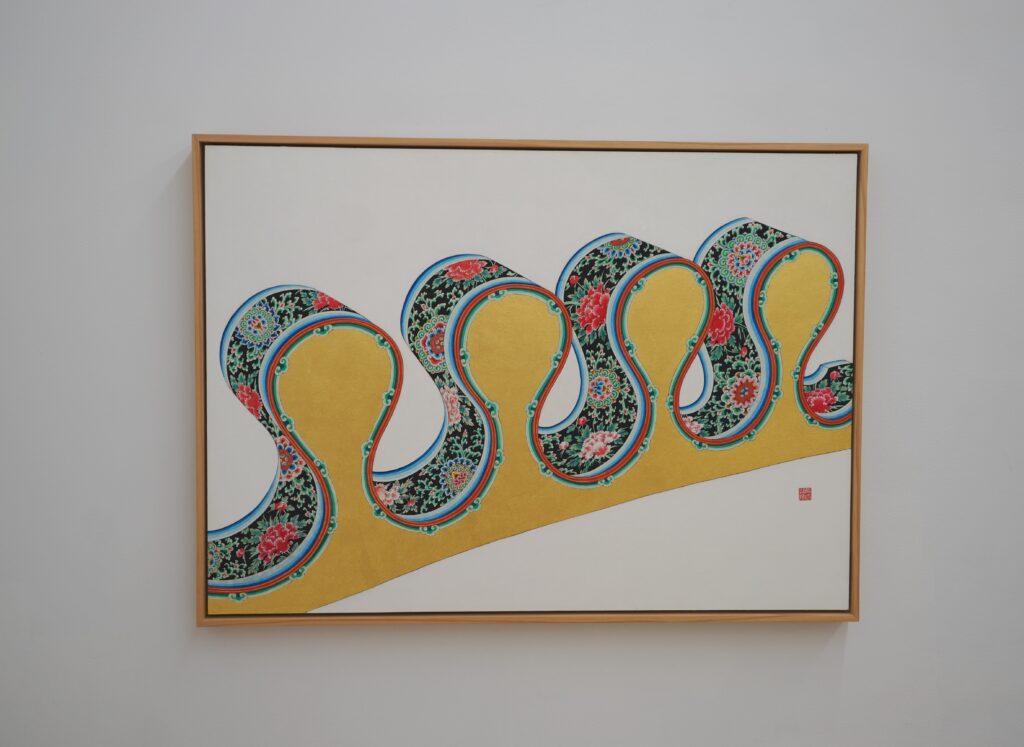
The truth is, the world is changing, and so are art audiences. People today crave immersion. They don’t just want to look at art; they want to feel it, to enjoy it in the same way they seek personal, memorable experiences in life. In an intimate, character-filled space, art isn’t separated from us it’s part of us.
Q6. If you could leave one message for emerging artists and curators who feel unseen, what advice would you want them to carry forward in their journeys?
The most important thing in the world of emerging is to start. Start that first project. Do not hesitate. Your first project likely won’t be beautiful or recognized right away but make it selfishly specific to you as an individual and don’t be afraid to put your work out there.
We often get in our own way and stay in our own way if we put off that first starting step. It’s the only way to start the trajectory of your growth and ensure you’re moving, regardless of the pace. Be unapologetically yourself and start something already. Keep in mind that you can’t plan for everything and things will take their course in unpredictable ways, but once you start, you really will find your way as you go.
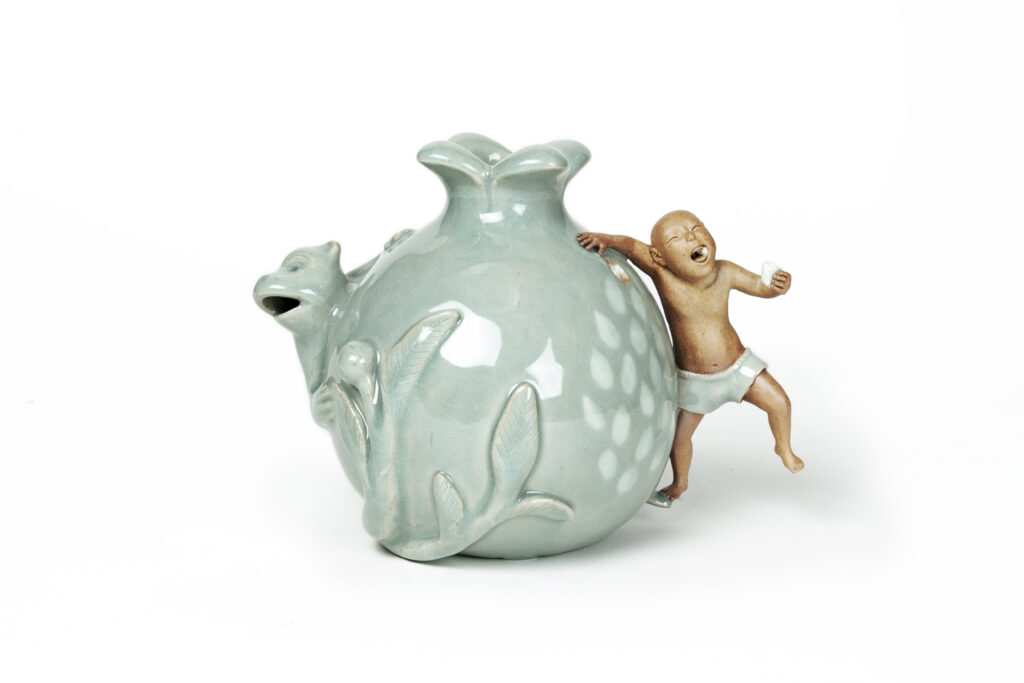
As our conversation came to a close, one line lingered: “The most important thing is to start. You’ll find your way as you go.”
It’s a message not just for artists, but for anyone standing at the edge of a dream, a reminder that beginnings are rarely grand, but always sacred.
Because in starting, we don’t just create art.
We create possibility.
We create connection.
We create home.
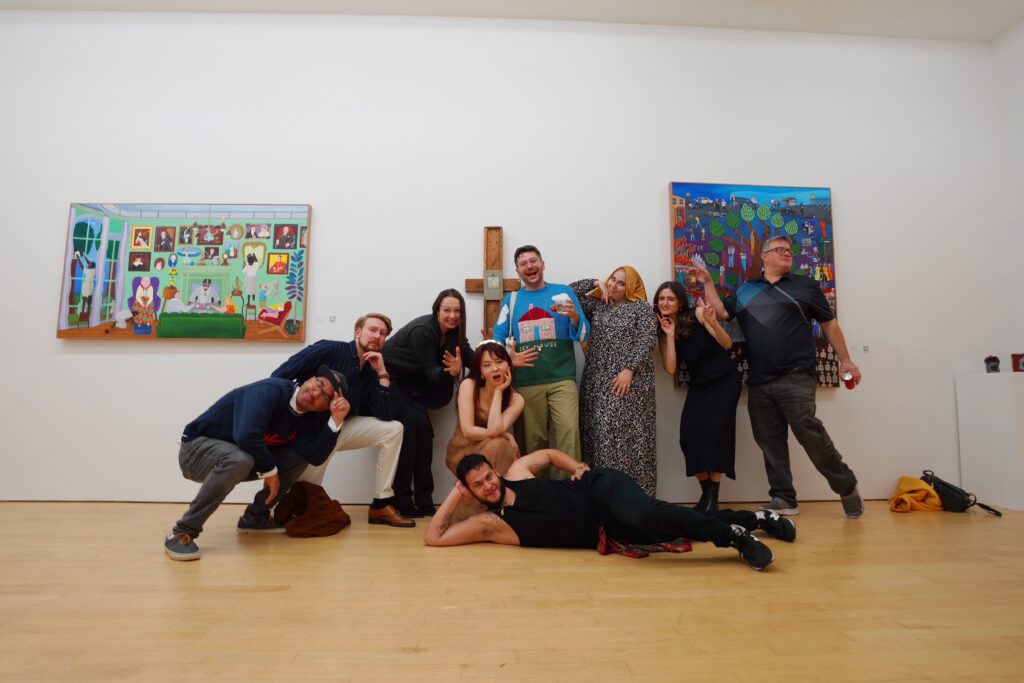
And that is what Minnie Park has built a home for stories that might have gone unseen, for artists who dare to begin, and for audiences ready to see the world with new eyes. Through her work, she proves that art doesn’t just exist within walls or frames; it lives in the spaces between people, in the quiet courage to share what feels most human.
Keep up with Minnie’s mission to make art accessible, human, and heartfelt follow the Minnie Park Art Project to learn how you can take part.