
This Curator Is Building an Art World That Finally Makes Sense I Jenia Yanes
👁 174 Views
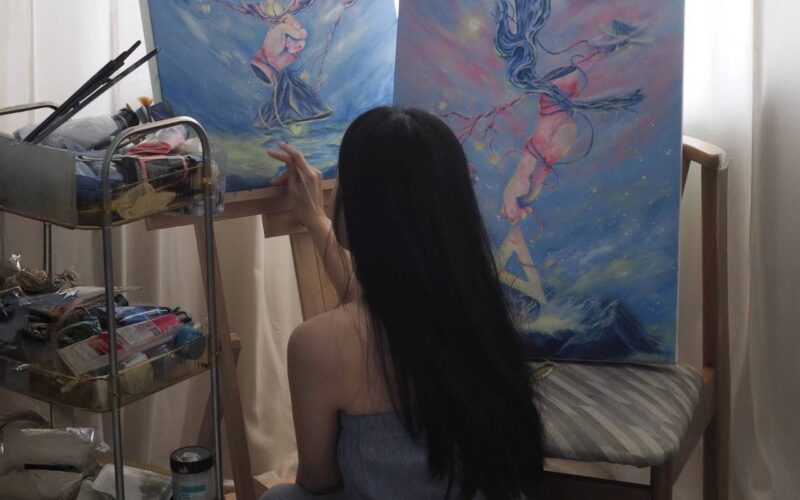
Across the changing landscapes of displacement, transformation, and creative yearning, some stories carry a quiet sense that they were meant to be. Jenia Yanes is one of them a life shaped by movement, resilience, and the search for a place where creativity and identity can finally align. Long before Berlin became her home, art was already her refuge and her rebellion. Growing up in Saint Petersburg, she spent her days wandering abandoned palaces and rooftops, building an inner world that didn’t follow the rules around her. For this week’s Best of the Art World series, we’re honoured to share Jenia’s journey. While others chased trends, she chased meaning painting in attics, reading about lost empires, and imagining eras that felt more familiar than her own.
These early experiences showed her that the art world often keeps its gates tightly closed, shaped by hierarchy, privilege, and tradition systems she refused to accept. At nineteen, with only a backpack and a sense of purpose, she moved to Berlin. That leap became a turning point. In grassroots communities and diasporic networks, she found the kind of cultural space she had always imagined: open, fluid, and driven by ideas rather than institutions.
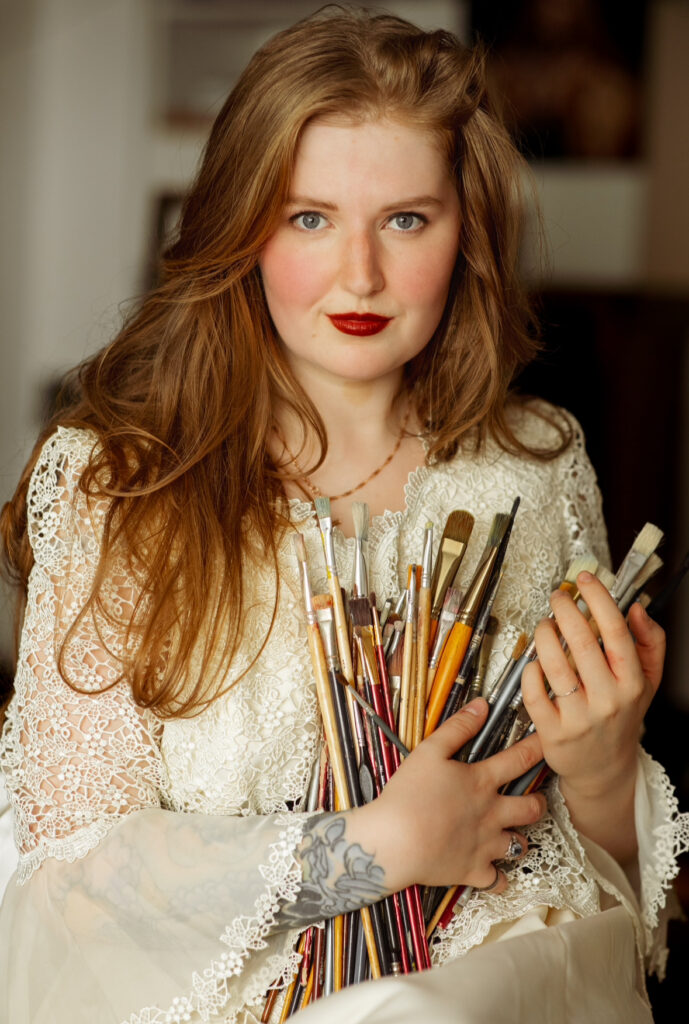
Today, as the founder of Artyanes and co-creator of OWN Collective, Jenia works at the intersection of migration, memory, empire, and reinvention. Her exhibitions whether blending visual art with live opera for Cultural Fusion or transforming public spaces for Not an Extra are not just shows; they are experiences meant to shift perception and spark transformation. For her, curating is an act of care and courage: guiding inner journeys, amplifying overlooked voices, and challenging the idea that artists stand at the margins of their own industry.
Jenia works where rebellion meets responsibility. She offers artists not just visibility, but tools, clarity, and agency. Her mission is to reshape the system from within—to create a world where authenticity is valued, leadership grows from intuition, and creativity becomes a shared, democratic force.
Let’s step into this conversation with her and explore the ideas, memories, and convictions that shape her work today.
Can you tell us about your early journey with art and how those beginnings eventually shaped your path into curatorial practice, especially after moving to Berlin?
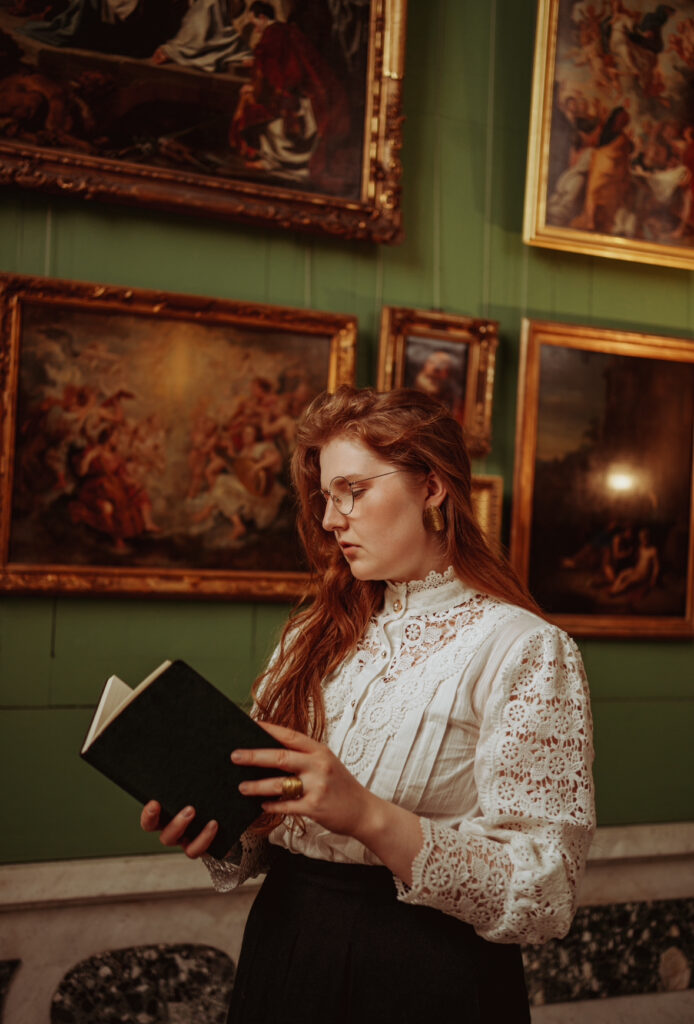
Art has been a lost home for me since childhood—a place I longed for and suffered for, yet the ground seemed to fall away just as I almost reached it. While my peers were playing Dota and listening to Russian rap in malls, I was painting in attics and on rooftops, wandering abandoned palaces of Saint Petersburg after school. I was obsessed with painting, literature, music, politics, and the mysteries of past eras. This wasn’t exactly the vibe of Russia in the 2000s—I was considered strange, “not of this world,” which I didn’t mind. I always knew I would leave, that my time and place would come later, far from home. I didn’t care about conditions or sacrifices; I sought a spiritual mission, a life where my soul would resonate and sing. I was ready to play by the system’s rules to achieve that life. Despite this naive determination, I quickly realized the cultural gates were tightly guarded: money, connections, or outright genius. At my art academy entrance exams, other applicants whispered: “How much did your parents pay in bribes?” I stayed silent. I did have connections—my mom was friends with the dean’s wife.
But even that wasn’t enough: the dean’s wife was on vacation and forgot to include me in the special recommendation list. I scored 35 points; 40 was passing. I learned firsthand how guarded the gates of the art world were. Not yet knowing the difference between Russia’s and Berlin’s art scenes, I became committed to transparent, grassroots systems that welcome ideas and voices rather than filter them through hostile institutions. At 19, with a single backpack and no return ticket, I moved to Berlin. That leap became the catalyst for my curatorial practice: I explore post-imperial, diasporic, and cross-cultural narratives while creating spaces for dialogue, participation, and reflection—a form of resistance to the old hierarchies I had encountered.
You also mentor artists in monetisation and visibility. In your experience, how can artists preserve authenticity while navigating the pressures of markets, algorithms, and audience expectations?
Honestly, it’s simple. It all starts with a mindset shift. Don’t think of selling and self-expression as opposing forces. They’re not enemies. Try seeing them as two vectors: one from the inside out, and the other from the outside in. The inside vector is what genuinely moves you—the impulses that arise from your core. The outside vector represents the world’s interests and needs. But remember, you are part of that world. Even if you live in a cave at the edge of the earth, there are people who will resonate with your meanings and emotions. The key isn’t choosing between yourself and others—it’s finding the intersection, where your inner truth meets the reality of the world. Always start from within. Non-authentic art, by definition, is doomed. What is born from truth—your truth—will always find its path. That, to me, is real success as an artist.
When you curate an exhibition, do you think of it as telling a story, starting a conversation, or creating an experience? What do you hope visitors carry with them?
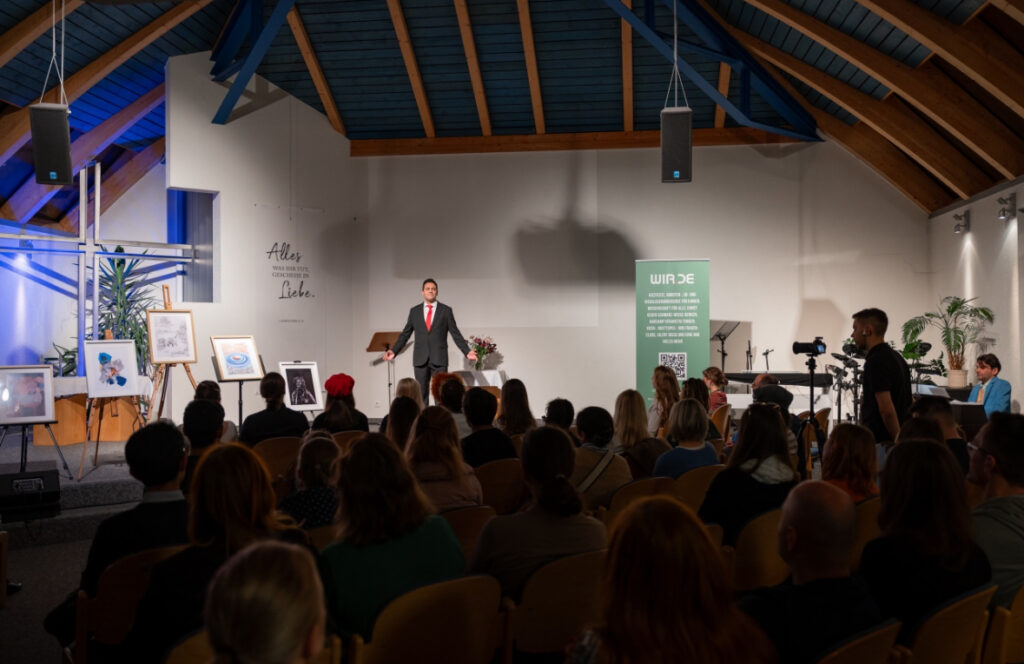
The goal is always transformation. Visitors should leave even slightly changed. This is the enormous responsibility of those working with art: art shifts perception, stretches boundaries, expands the Overton window. Art is always a little manipulation—conscious or unconscious programming of thought. Our task is to design the visitor’s internal journey responsibly: which thoughts, feelings, and images they will live through when immersed in the project. Everything else themes, visual language, goals aligns around that journey. Of course, I bring my personal agenda and worldview to every project. Attentive viewers notice exactly which ones.
What are the criteria you use when deciding which artists to work with under Artyanes or in OWN Collective? What qualities do you look for in their work, in their demeanour, in how they engage with ideas or social issues?
The most important starting point is when an artist’s mission and personal reasons for creating resonate with my mission as a curator, or with the specific project we’re working on. Beyond that, the artist’s personal narrative matters—how relevant it is, how it resonates with the values of our potential audience, and how it can be explored deeply and artistically within the project. A basic but critical criterion is simple human courtesy and responsibility. You wouldn’t believe how many artists are filtered out at the portfolio stage or email exchange simply because they can’t uphold basic agreements or come across as unreliable and unprofessional. If working with an artist as a person is pleasant, that’s already a huge plus—sometimes more important than their “genius.” Finally, I especially value initiative, leadership, and proactivity. These always outperform reactivity and passive waiting.
If you could redesign the art world without its usual hierarchies and pressures, what would it look like? How would artists, curators, and audiences connect differently?
I don’t even need to invent an answer—we’re already at the epicenter of these sweeping changes. Decentralization, digitization, democratization… dozens of other “-izations.” They all make the art market more genuine, human, and transparent.
All curators must manage logistical, financial, and institutional constraints. Can you tell us about a specific project where constraints (budget, space, time) forced you to make difficult curatorial compromises and what you learned?
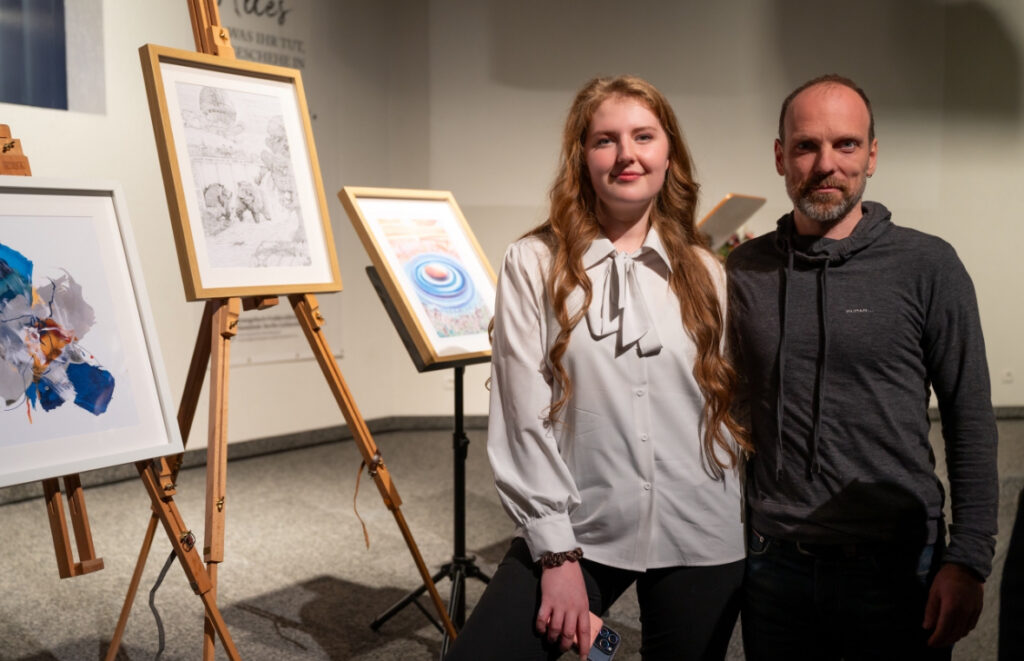
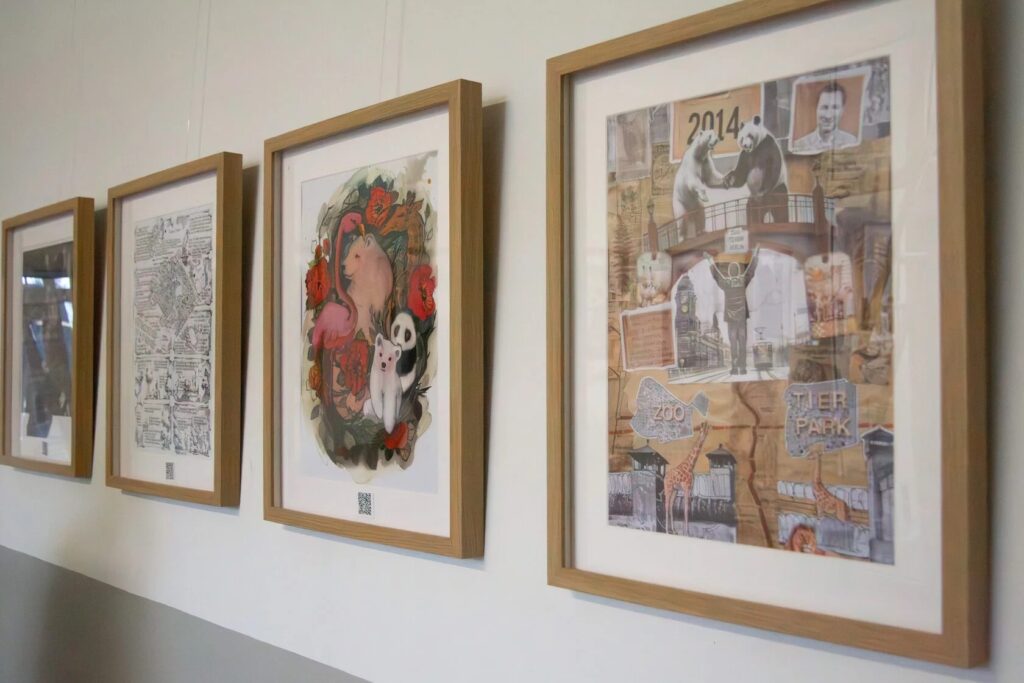
Oh, constraints exist in every project—some more than others. When evaluating a project, I always start with reality: resources, circumstances, time. The question is: did we maximize what was available? The most uncompromising constraint is time. Logistics can be adjusted, resources redistributed—most situations have a workaround if there’s enough time. When time is scarce, the only rescue is: a well-organized team, mutual support, and ingenuity. you want a concrete example, last year, during a major city festival project, at the very last minute we couldn’t get the display stands to the venue as originally planned. The location was available for just one evening. In the end, all the artists—even those not officially in the exhibition, just friends—brought their own easels that day, covered in paint and slightly warped from use. We ended up with over 20 of them. Thanks to this, the exhibition went ahead, and it turned out even more authentic and characterful than the original plan with the uniform stands.
What blind spots do you think the art world perpetuates whether in how artists are supported, whose voices get amplified, or how audiences are engaged and how do you consciously work against those patterns?
The biggest blind spot is artists’ understanding of their own value and influence. It’s rare to find a field where the creators of the main product—the source of meaning and value—are so disconnected from the processes shaping the industry. It’s time to “equip” every artist: give them tools, knowledge, explain their rights and responsibilities, and help them see the true value and uniqueness of their work. The reins are literally in their hands.
How do you handle the tension between what the art market rewards and what you, as a curator and artist, believe is culturally or spiritually vital?
I don’t balance them. First, I’m a rebel—a revolutionary. Second, I practice what I preach. I follow the same principles I recommend to artists. Without inner authenticity, fire, and genuine interest, I simply don’t work. I’m physically uninterested. I go only where there’s inner impulse, spiritual meaning, and a market response. But the vector always comes from within—from my own “why.”

When you think about your legacy, what do you want your body of work both as an artist and curator to say about the cultural moment you lived in and the futures you wanted to imagine?
Our actions will be judged by future generations, through the lens of their own context. I leave that to them. What I want, above all, is for them to look not only at the results, but at the assumptions and context—of my work, and of our entire era. We live in a time of remarkable change. Perhaps our descendants will understand our artistic projects more deeply than we do today. I’d love to discuss this with them.
What advice would you share with emerging artists and curators who feel caught between vision, survival, and influence. What truths or practices can help them stay grounded while still growing.
The most important advice: develop two key skills. First, distinguish which actions truly lead to results, and which create only the illusion of busyness. Second, cultivate consistency without immediate outcomes. These two skills almost guarantee future success. Few people—less than one percent—possess them. For each person, the specific actions will differ, but it’s from these deliberate, repeated, targeted efforts that life unfolds in the direction we choose to grow.
Ending our conversation with Jenia, one thing stays with us: her belief that art is inseparable from the world that makes it. In her universe, art is not an ornament of culture it is its undercurrent, its compass, its unfiltered truth. Her work reminds us that creative power does not belong to institutions but to the individuals brave enough to name their own “why.” Through her exhibitions and mentorship, she challenges the art world’s deepest blind spot: its habit of underestimating the very people who generate its value. For Jenia, artists are not peripheral they are sovereign. And a curator’s role is not to control, but to accompany, empower, and amplify.
What she builds, project by project, is a more transparent and human art ecosystem—one grounded in community, initiative, and spiritual clarity. In her hands, constraints become catalysts, mistakes become revelations, and authenticity becomes the only true measure of success. Her vision honours the courage of migration, the labour of reinvention, and the unspoken stories carried across borders and generations.
Ultimately, Jenia invites us to imagine an art world where hierarchies dissolve, where collaboration replaces competition, and where meaning is created collectively. A world in which artists reclaim their influence, audiences become participants, and creativity becomes a form of agency rather than aspiration.
Follow Jenia Yanes to witness a practice shaped by revolt and tenderness one that continues to redefine what it means to create, to curate, and to belong.