
Five Artists on the Joy and the Struggle of Making Art
At Arts to Hearts Project, we have learned that when you ask an artist the right question you do not always get the answer you expected. You get something better. Something unguarded. Something that tells you more about the work and the person making it than any finished piece ever could.
We have been asking the artists of 100 Emerging Artists of 2026 two things. What part of your creative process do you love most? And what part do you find hardest? The answers keep coming back in a way that makes us want to share every single one. Honest, specific, and more vulnerable than we anticipated from artists still in the middle of becoming.
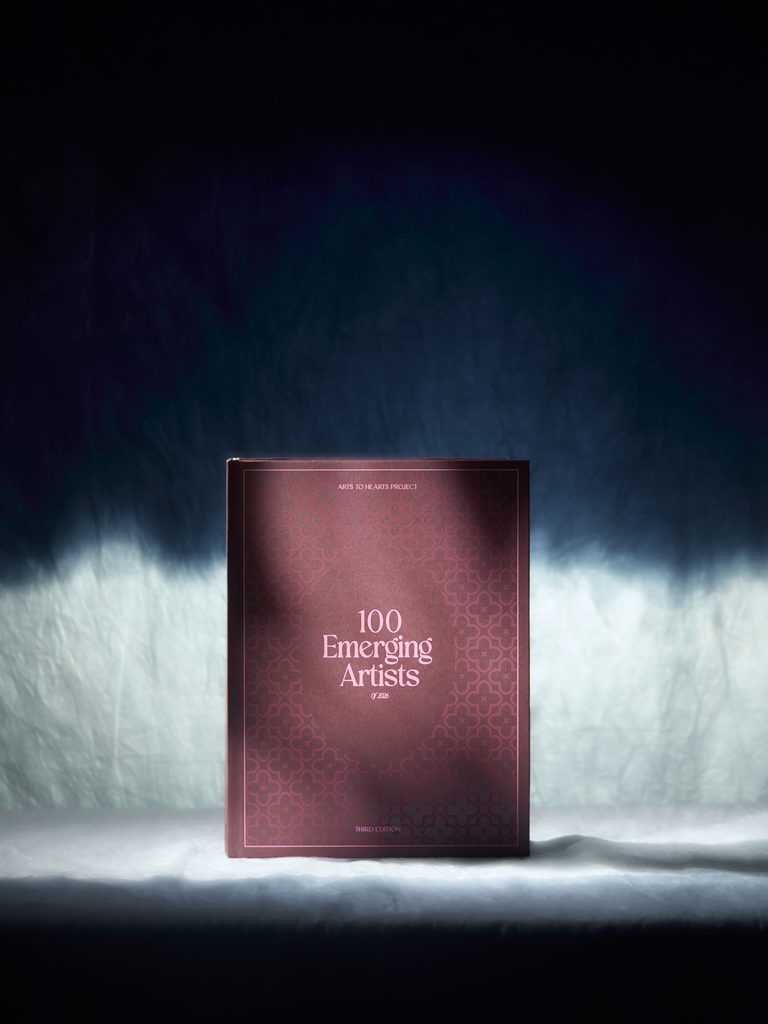
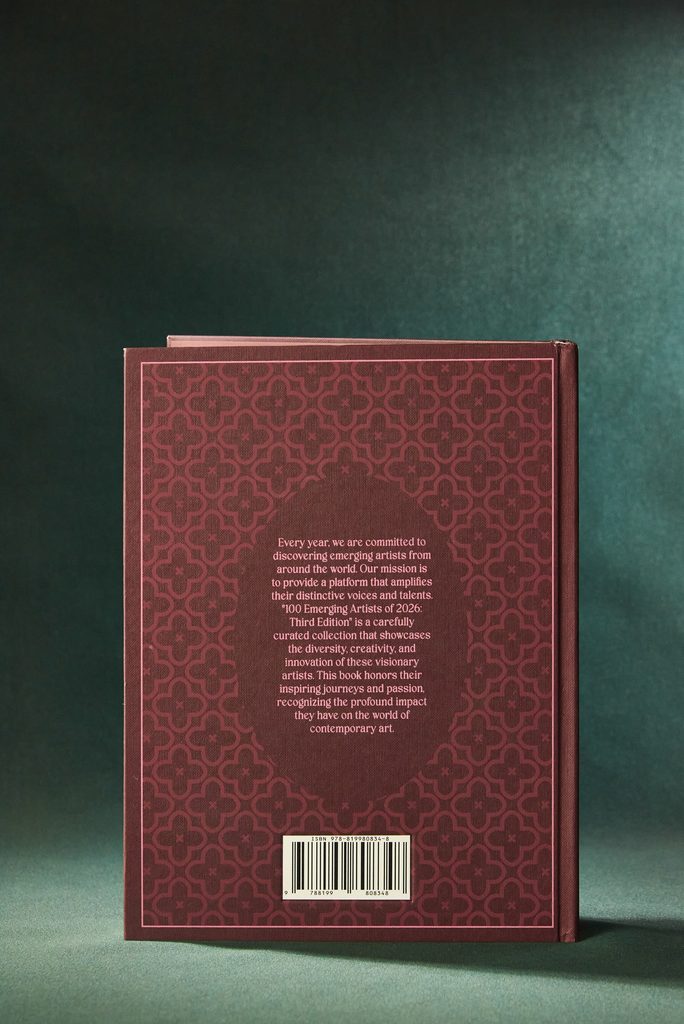
100 Emerging Artists of 2026 is a premium hardcover coffee table book bringing together 100 of the most promising artists from around the world. Bold work. Original voices. Artists whose names you will want to know before the rest of the world does.
We have shared some of those answers already. More came in that deserved the same space. So here we are again. Because the creative process of an artist who is still figuring it out is one of the most interesting things you can read. And these artists are still figuring it out in the best possible way.
The painting that flows and the painting that resists. Both are part of the process
Every artist has experienced both versions of a creative day. The one where everything clicks. Where the colours land right and the decisions come easily and time disappears because you are so completely inside the work that nothing else exists. And the other kind. The one where you return to something you left and cannot find your way back into it. Where every choice feels wrong and the instincts that guided you before have gone quiet.
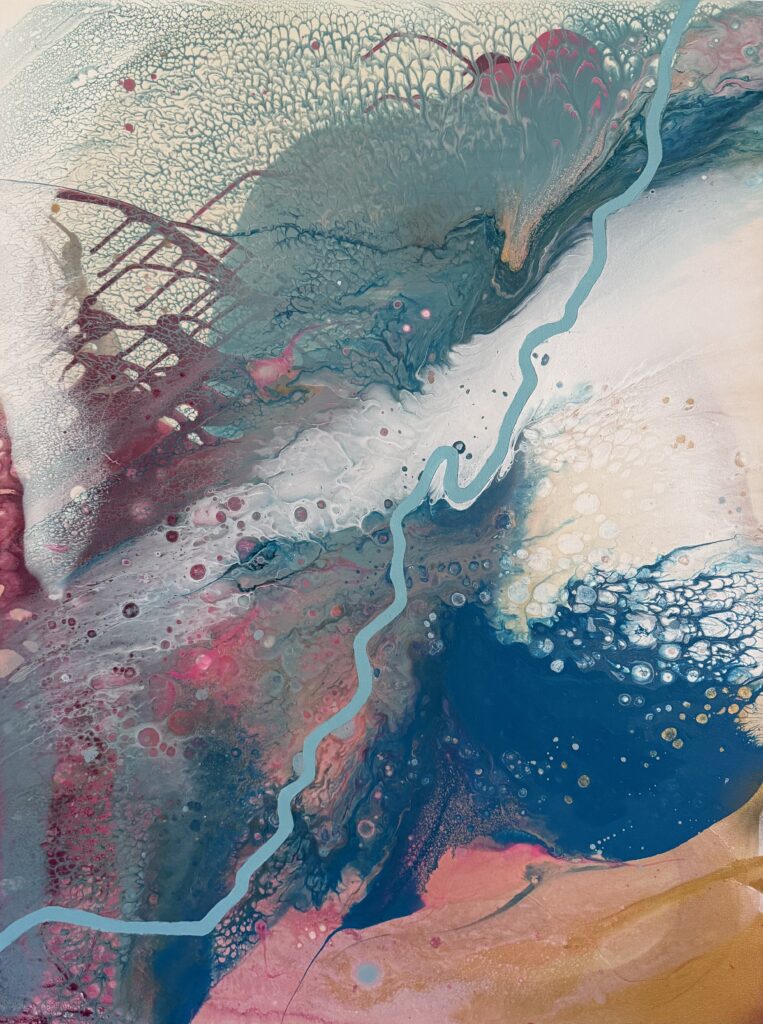
Alyona Siergieieva @designfull_art describes both honestly:
“The part of the process I love most is when I suddenly feel completely connected to the painting. It almost feels like magic something shifts, and everything becomes clear and effortless. Time disappears, doubt disappears, and the colors, shapes, and emotions fall naturally into place. Those moments remind me why I create. The hardest part is when that connection disappears. After stepping away from a painting for too long, I sometimes can’t find the feeling again. I start questioning the colors, forms, and direction, and it becomes difficult to trust my instincts. But I think that tension between clarity and uncertainty is also a very human part of the creative process.”
Alyona Siergieieva
That tension between clarity and uncertainty is a very human part of the creative process. We think that is one of the most honest things an artist can say. Because it does not try to solve the problem or package it neatly. It just names it for what it is. Part of the work. Part of being the kind of person who makes things. And somehow that makes it easier to sit with.
The structure, the palette, the composition. All of it before anything even exists
The blank canvas is not always terrifying because of what it could become. Sometimes it is terrifying because of everything it is asking you to decide before you have made a single mark. The composition. The structure. The palette. The direction. All of it sitting there waiting to be determined while the painting itself has no opinion yet because it does not exist yet. That is a particular kind of pressure that has nothing to do with skill and everything to do with the weight of infinite possibility.
Velly @vellydraw knows that weight well:
“I enjoy the moment when I lose control a little, when the painting starts guiding me instead of the other way around. That’s when the process becomes fluid and absorbing. What I struggle with is the opposite: the very beginning, where everything depends on decisions. Choosing the composition, the structure, the palette it feels like too much responsibility, and I can get stuck trying to make it ‘perfect’ before anything even exists.”
Velly
Trying to make it perfect before anything even exists. That line is so specific and so recognisable that it almost hurts. Because the beginning is where perfectionism has the most power. Where there is nothing yet to push back against it. And the only way through is to make the first mark anyway and let the painting start having opinions of its own. Which is exactly the moment Velly loves most. When the painting takes over. When the decisions stop being hers alone. When the whole thing finally becomes fluid and alive. The beginning is just the price of getting there.
Not every creative process starts at a desk. Some start with a door pushed open in a forgotten building.
We talk about creative process as if it always begins in a studio. With materials laid out and intention set and the work already waiting to be made. But some practices begin somewhere else entirely. In the searching. In the following of a rumour down a road that might lead nowhere. In the patience required to keep looking for something that has no address and no guarantee of being found. That kind of practice asks more of an artist before they ever make a single image. And the ones who sustain it are the ones who have learned to love the search as much as the discovery.
Romain Thiery @romainthiery describes his process like this:
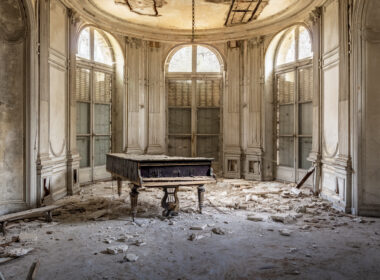
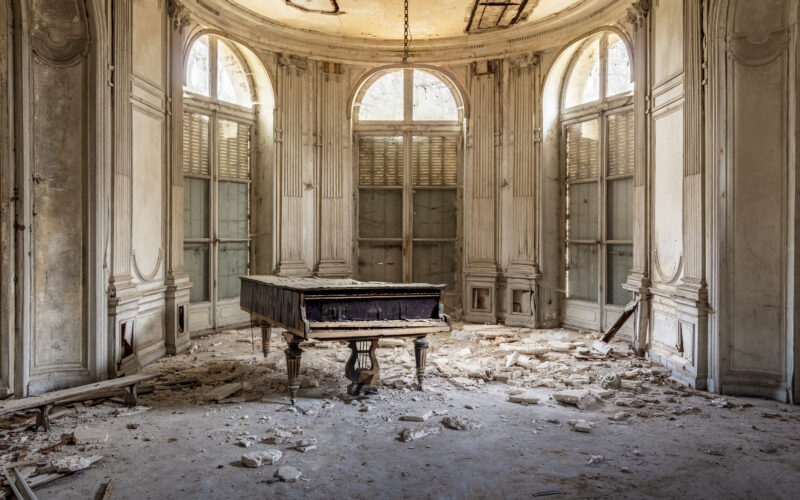
“The part I love most is traveling to unknown places, pushing open the door of a forgotten building, and suddenly finding a piano standing there in the middle of the ruins. That moment never loses its power. There is something almost unreal about it: nature reclaiming the walls, light filtering through broken windows, and in the middle of all that collapse, a piano. Still imposing. It feels like a discovery every single time. What I struggle with most is what comes before: the research. Finding these places requires patience, dead ends, and a great deal of uncertainty. No map leads you to an abandoned piano. You follow rumors, silences, and instinct and more often than not, the trail goes cold.”
Romain Thiery
No map leads you to an abandoned piano. That line says everything about what kind of practice this is. Not one built on certainty or planning or a clear path from idea to image. One built on instinct and patience and the willingness to follow a rumour into the dark not knowing what will be there when you arrive. And then one day a door opens. And there it is. Still imposing in the middle of all that collapse. A discovery that never loses its power. Because it was never guaranteed. And that is exactly why it matters.
The vision before the brush and the click when everything lands. Some artists live for both.
There are two moments in the creative process that are unlike anything else. The first is before anything has been made. When the idea arrives fully formed in the mind and the anticipation of what it could become is so complete that the making almost feels secondary. And the second is when the work finally becomes what you saw in that first moment. When the elements find each other and the image clicks into place and everything that felt uncertain suddenly makes sense as a whole. Everything between those two moments is the work. And it is worth it every time.
Sofia Cristina Jimenez @el_espacio_permanente describes it this way:
“Two moments. The first is before I even touch a brush: just seeing the idea, picturing the scene. That alone already excites me. Pure anticipation. The second is when the painting starts working, when the elements click and the image begins to make sense as a whole. Those two moments carry everything in between. What I struggle with most is light. The reflections on a helium balloon, the way light hits a landscape and creates atmosphere knowing exactly where it falls is what builds volume and depth. I have to rework it often. It’s the most demanding part technically, and also the part that makes or breaks the painting.”
Sofia Cristina Jimenez
The part that makes or breaks the painting. That is how Sofia describes light. Not a detail. Not a finishing touch. The thing everything else depends on. The reflections, the atmosphere, the volume, the depth. All of it built from understanding exactly where the light falls and reworking it until it is right. It is the most demanding part of her process. And also the reason the paintings work as well as they do.
When the work starts telling you what it needs. That is the best moment in painting.
Every painting begins with a plan. An intention. A sense of where it is going and what it is trying to say. And then at some point the painting starts having opinions of its own. Small shifts. Quiet cues. A direction that was not in the original idea but feels more right than anything that was. And the artists who recognise that moment and follow it rather than resist it are the ones whose work ends up somewhere more interesting than where they started.
Lesa Shaw @lesashawart describes that conversation this way:
“My favorite part of the process is the moment when the painting begins to reveal itself. I start with intention, but the work always shifts into something more intuitive. I follow the small changes — quiet cues that guide the image forward, letting the piece tell me what it needs. That unfolding feels like a conversation between me and the work, where instinct becomes more important than the original plan. The hardest part is knowing when to stop. I want to honor the clarity of the moment when the painting feels complete without overworking it. Trusting that instinct is both challenging and essential. It requires slowing down, listening closely, and recognizing when the piece has reached its own sense of balance.”
Lesa Shaw
Recognising when the piece has reached its own sense of balance. That is what Lesa is always working toward. Not a predetermined endpoint but a moment of completion that the painting itself announces. And the only way to hear it is to slow down. To listen closely. To trust that the instinct telling you it is done knows more than the part of you that wants to keep going. That kind of trust is not easy. But it is what separates a painting that is finished from one that is only stopped.
Reading through all of these we kept noticing the same thing. The joy and the struggle are never far apart. For every artist who described the moment a painting revealed itself, or the click when everything finally made sense, or the discovery that made all the searching worth it, there was also an honest admission of what it costs to get there. The blank canvas with too many decisions. The light that has to be reworked again and again. The connection that disappears when you step away too long. The research that leads nowhere more often than not.
And not one of these artists seemed surprised by any of it. They have just learned to work with both. The moments that feel like magic and the moments that feel like everything is falling apart. The instinct that arrives and the silence when it does not. The love of making and the very real difficulty of the making itself.
That is what a real creative practice looks like from the inside. And that is what 100 Emerging Artists of 2026 captures across every page. Not just the work. The people behind it. The book is available now at the link below.
And before you go. The Artist of the Year Award 2026 is closing very soon. If you have been thinking about submitting, the time for thinking is over. This is one of the most recognised opportunities for artists in the world right now. A chance to be seen, celebrated, and remembered for the work you have been putting everything into. The deadline is almost here. Do not be the artist who almost applied.