
How Nancy Boisvert Uses Gold Leaf and Pattern to Bring New Life to Animal Portraits
At Arts to Hearts Project, we built Issue 13 of our magazine around a single tender question: what are the things we hold onto? Every artist answered differently, some through memory, some through place, some through the people they love.
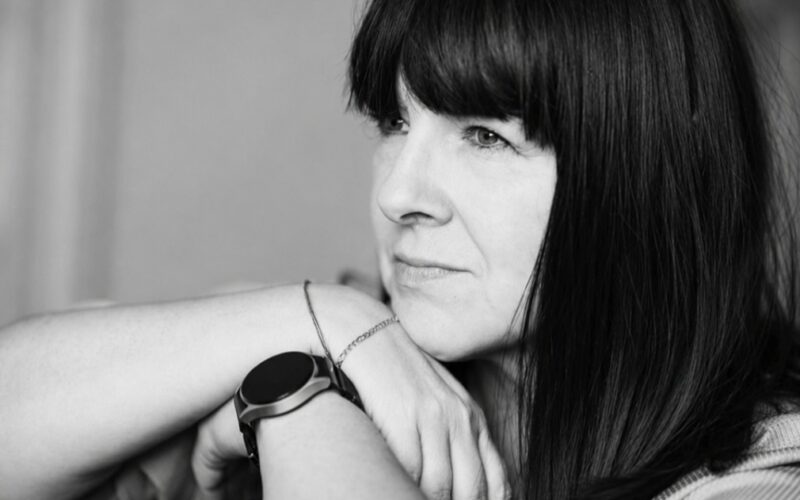
For Nancy Boisvert, the answer lives in connection, in the quiet, wordless bonds between us and the animals, and each other, that we hold close without ever needing to explain them.
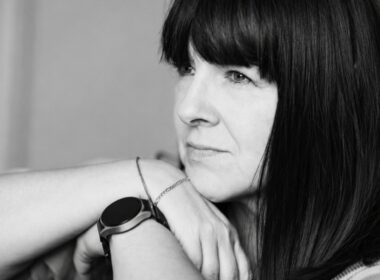
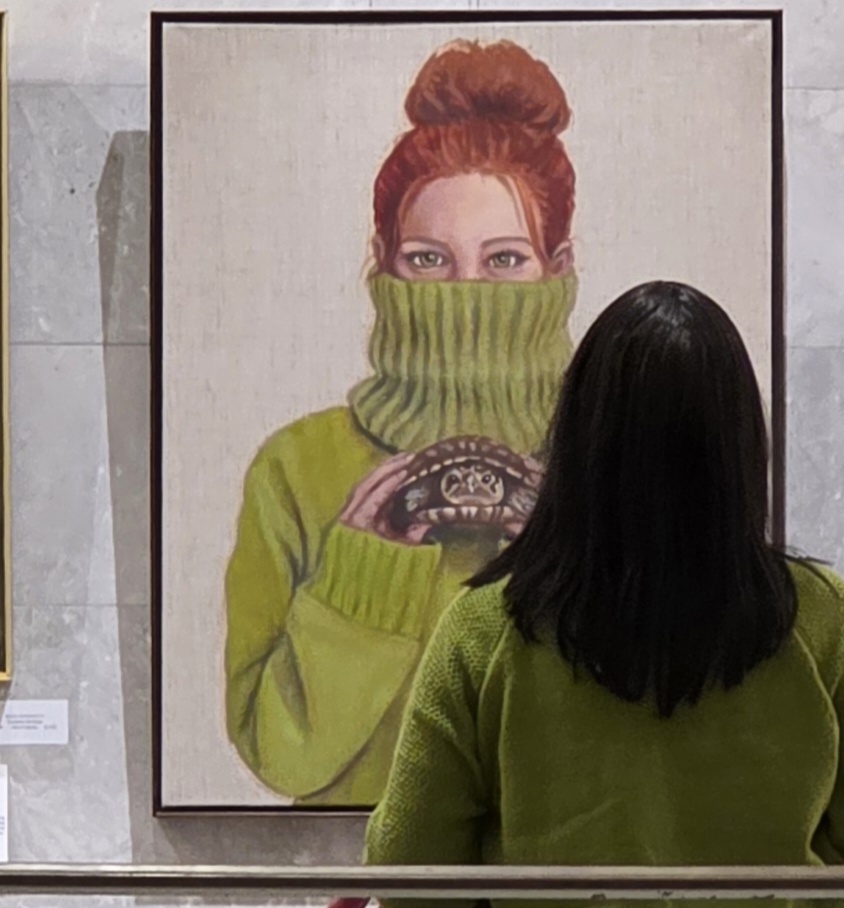
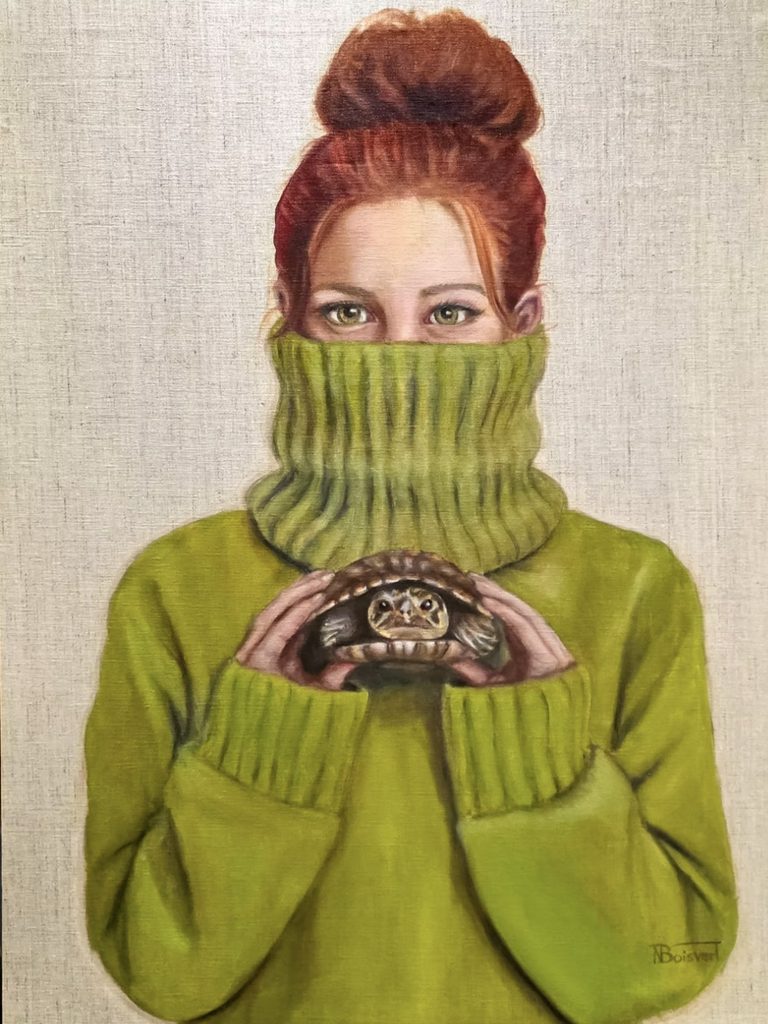
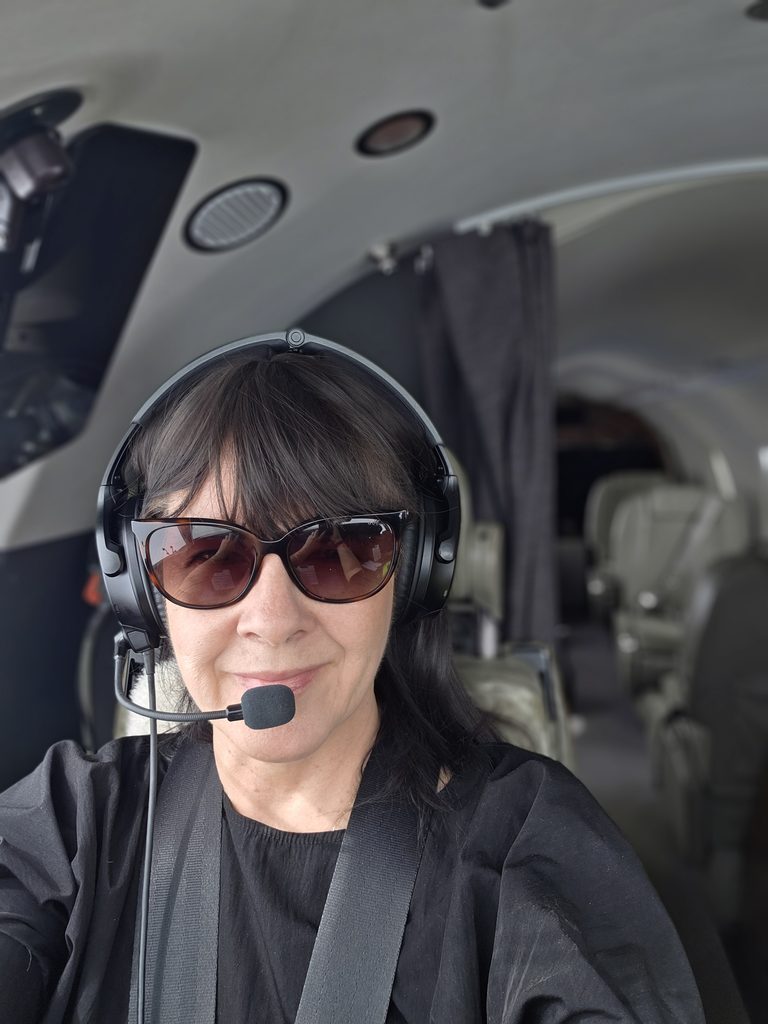
Nancy is a Canadian painter whose work centres on those quiet moments where a person and an animal simply share the same space. Her paintings are not loud or dramatic. They hold a stillness, a sense that something is passing between the two figures, though she never quite spells out what.
The animal might be a companion, a reflection of the person, or something that gently brings out a side of them you would not otherwise see. What she is really after is presence, that charged, unspoken connection we all recognise but rarely put into words.
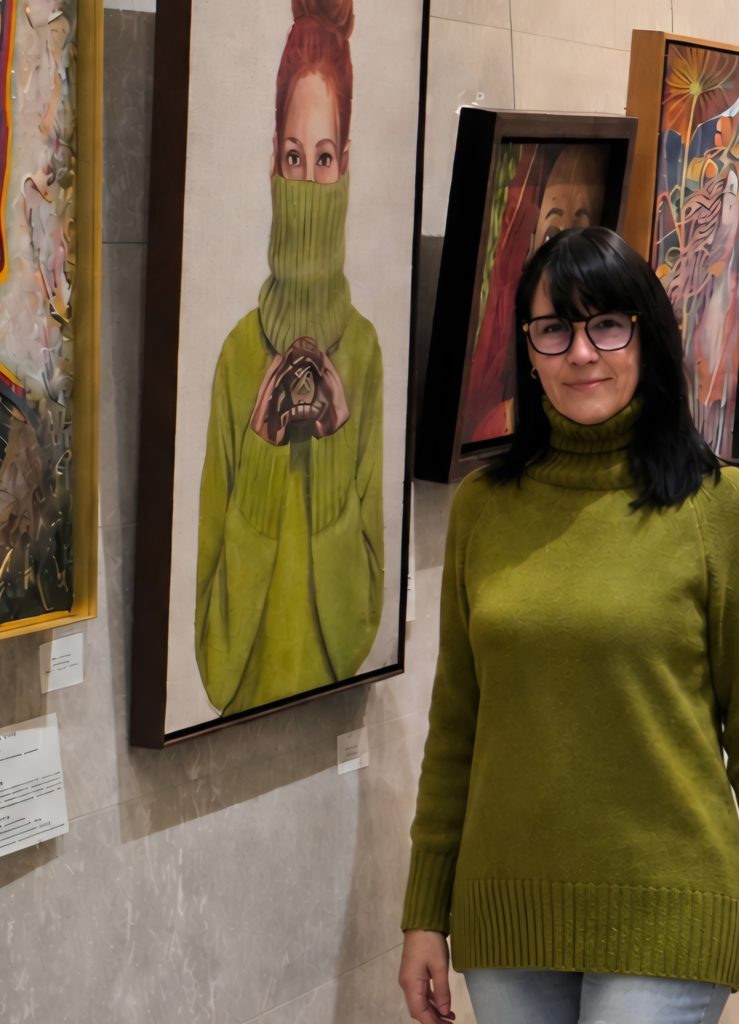
She works in oil on linen and canvas, and the way she builds a painting is slow and luminous. She paints in thin, glazed layers, gradually layering colour so that light seems to come from within the work rather than sitting on its surface.
That approach is perfect for the kind of quiet realism she loves, where the smallest shift in skin, fur, fabric, or light can change everything. More recently she has begun leaving parts of the raw linen exposed, enjoying the contrast between the richness of the oil and the natural warmth of the bare cloth.
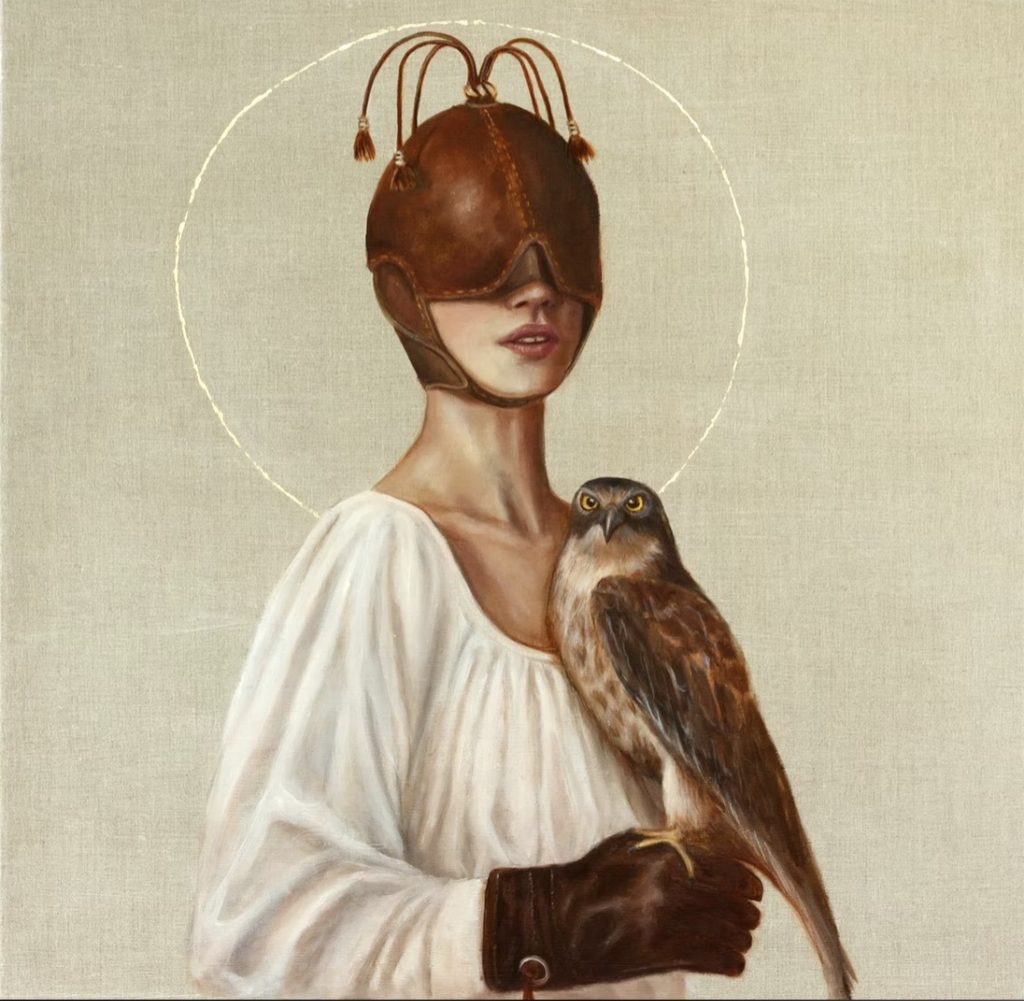
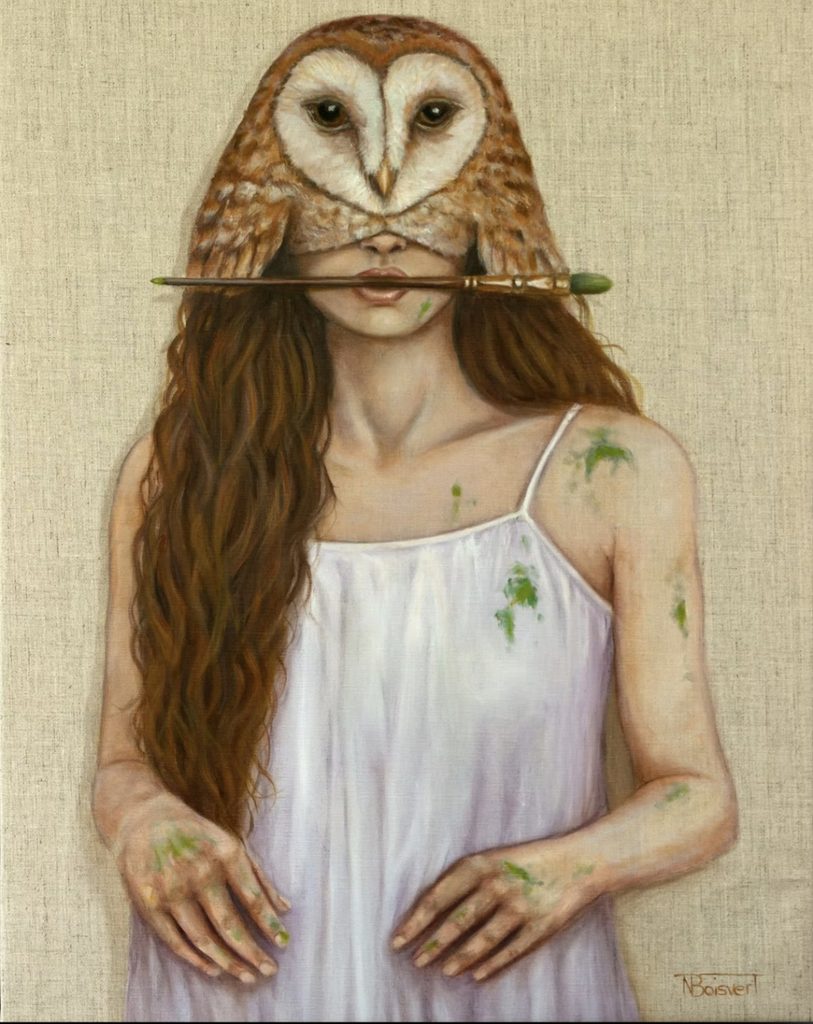
Every so often, her realism opens into something unexpected. A patterned background, a shimmer of gold or silver leaf, a decorative touch that lifts the painting out of pure representation. She never adds these things simply to decorate; each one has to serve the idea or the composition.
Her process is deeply hands-on and instinctive. She is forever moving between the canvas and a few steps back, working close to refine a tiny edge or transition, then pulling away to see whether the whole thing holds together.
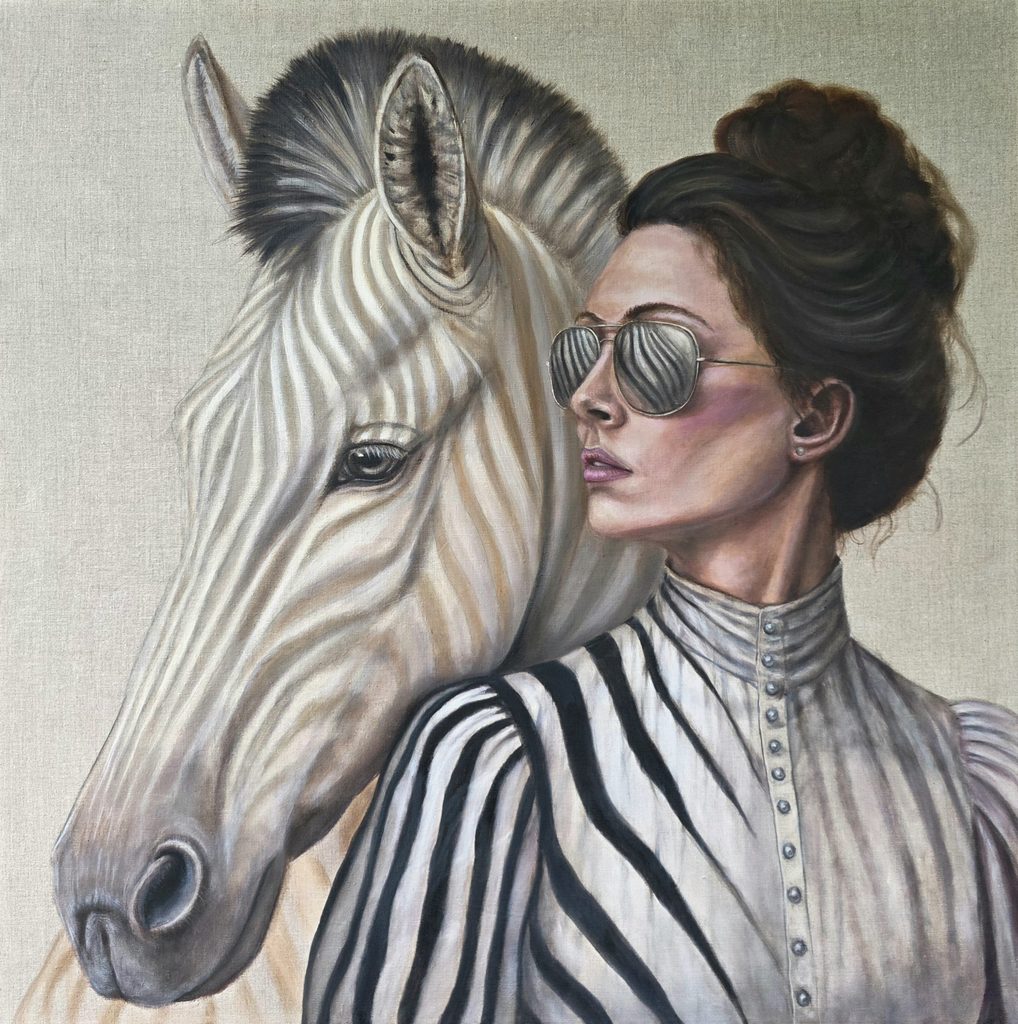
She often uses her fingers to soften and blend, letting go of some of the control a brush would give her. That constant back-and-forth keeps her from getting lost in detail, and lets her respond to the painting as it grows rather than forcing it to follow a rigid plan.
Remarkably, Nancy is entirely self-taught. She came to painting almost by accident around twenty-five years ago, and without the map that art school provides, she had to learn everything as she went, and to trust her own eye along the way.
That independence is exactly what has let her work evolve so naturally into a voice that is unmistakably hers. Today her paintings are held in private collections across Canada, the United States, and Europe, quietly connecting with people whose lives look nothing like her own.
Now let’s hear from Nancy about the quiet connection at the heart of her work, why she lets realism give way to gold and pattern, what her hands know that a brush doesn’t, and why being self-taught became her greatest strength.
Q1. Could you tell us a little about the early experiences that shaped your relationship with art and painting?
I was always interested in drawing and creating as a child, although I never really thought of art as something I would pursue seriously.
Painting actually came into my life almost by accident. About 25 years ago, I wanted to take a pottery class, and as part of the program I had to sign up for some painting workshops.
I started going to the painting sessions in the evenings, and something just clicked. I never actually ended up taking the pottery class, which is funny because I only tried pottery for the first time about a year ago, however those few painting workshops stayed with me. They really sparked something and became the beginning of a much longer relationship with painting.
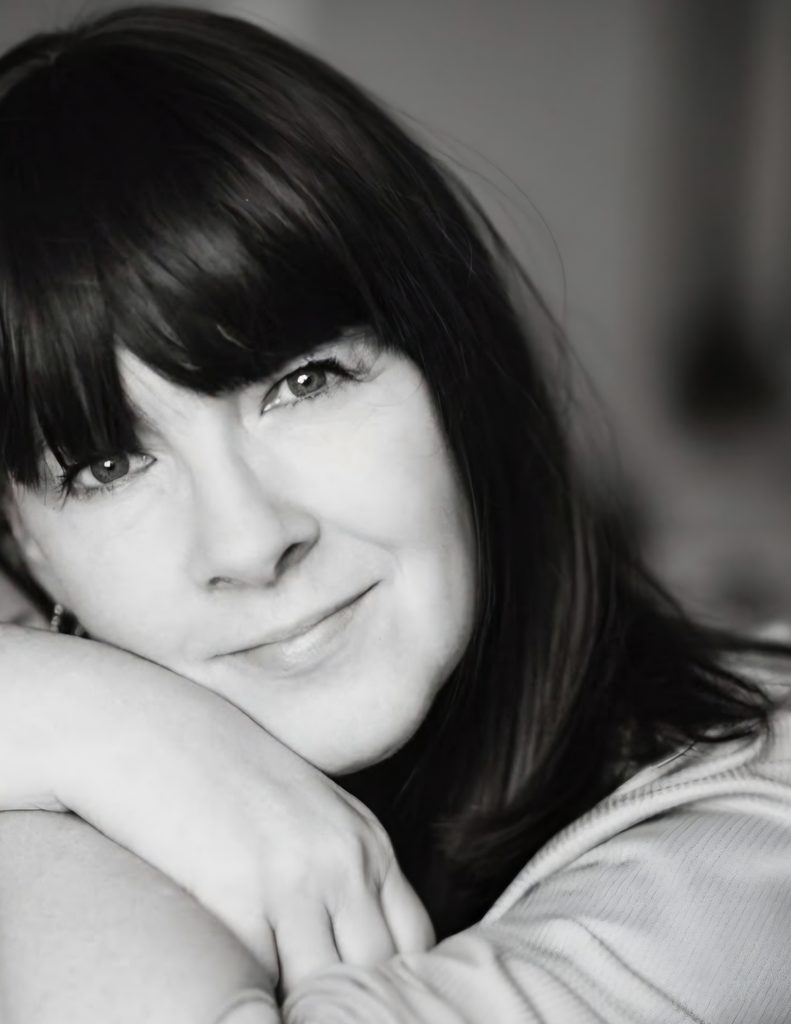
Q2. Your work has shifted from wildlife realism towards contemporary figurative painting. What inspired this change?
The shift happened quite naturally. For a long time, I focused mostly on wildlife and really enjoyed the challenge of capturing an animal accurately; the texture, the expression, the character. After a while, I felt I wanted the work to say a little more than simply, “this is a beautiful animal.” I became increasingly interested in introducing the human figure and exploring what could happen between the two.
That opened up a completely different kind of storytelling for me. The animal could become a companion, a reflection, or sometimes almost an extension of the person. From there, I also started simplifying my backgrounds and leaving more breathing room around the subjects. I think that was when the work began to feel much more personal and much more like my own visual language.
Q3. You primarily work in oil on linen and canvas. What makes oil the right medium for your paintings?
Oil really suits the way I build a painting. I tend to work in thin layers and use a lot of glazing, so oil gives me the transparency and depth I’m looking for.
I like being able to gradually build colour, refine subtle transitions, and create luminosity without making the surface feel heavy. It also works especially well for the kind of realism I’m interested in, where small shifts in skin tone, fur, fabric, or light can make a big difference. More recently, I’ve also enjoyed working on linen and allowing parts of the surface to remain exposed. I like the contrast between the richness of the oil and the natural texture and warmth of the linen.
Q4. Your paintings combine detailed realism with pattern and gold leaf. How do you decide when to move beyond realism?
I think it’s mostly intuitive. I usually begin with a fairly realistic image, but at some point I’ll feel that the painting needs something that takes it beyond simply representing what I see. That’s often where pattern, gold leaf, or another unexpected element comes in. I don’t add those things just for decoration. They need to contribute to the composition or to the idea behind the painting.
Sometimes gold leaf creates a focal point or a sense of contrast, while pattern can help connect the figure and the animal or introduce another layer to the story. I like that small departure from realism because it creates a bit of tension and makes the viewer look again.
Q5. Your process involves working with your fingers and frequently stepping back from the canvas. How does this physical approach shape your work?
It’s very important to me.
I tend to work quite physically and instinctively, and I’m constantly moving between being very close to the painting and stepping back to see it as a whole.
Up close, I’m focused on small transitions, edges, and details, but stepping back tells me whether everything is actually working together. I also use my fingers quite a bit, especially when I want to soften or blend an area in a way that feels less controlled than using a brush.
That back-and-forth keeps me from getting too caught up in the details. It helps me respond to the painting as it develops rather than feeling like I have to follow a rigid plan from beginning to end.
Q6. Animals have remained central to your work for many years. What continues to draw you to them?
I think animals bring a kind of honesty to a painting. They don’t need to explain themselves, and yet their presence can completely change the mood or meaning of an image. I’m drawn to that. Over time, I’ve become less interested in painting animals simply as subjects on their own and more interested in what happens when they share the space with a person.
That relationship can suggest companionship, tension, recognition, or even a kind of mirroring between the two. I like that it leaves room for the viewer to interpret what is happening rather than spelling everything out. Animals have become a way for me to create that sense of connection and ambiguity in the work.
Q7. In Gustav Chimp, you combine a realistic animal portrait with a patterned, Klimt-inspired setting. What inspired this contrast?
With “Gustav Chimp”, I wanted the chimp to feel very real and present, but I didn’t want the painting to sit entirely within traditional wildlife realism. The patterned background gave me a way to push it somewhere more decorative and unexpected. The Klimt influence came quite naturally because I’ve always been drawn to the way he used pattern and ornament without losing the presence of the figure.
I liked the contrast of giving the chimp that very detailed, almost serious portrait treatment and then surrounding him with something much more elaborate, reminiscent of Klimt’s “The Tree of Life”. There’s a slight playfulness to it, which is also where the title “Gustav Chimp” came from.
Q8. Puffin Dream has a playful quality. How do you introduce humour and unexpected details into your realistic paintings?
What’s great about Puffins is that they already have this slightly funny, almost clown-like quality to them, so I think the playfulness was really there from the beginning. I didn’t invent the idea of the bird holding all those fish, that’s actually what they do.
What I did play with was the way I painted it. I added silver metal leaf to some of the fish to catch that shiny, reflective quality of their scales. I liked that little extra element because it still felt true to the subject, but made the painting a bit more unexpected.
Q9. Your paintings explore vulnerability, identity, protection, and presence. Which of these themes has become most important to you?
I think presence has probably become the most important to me. I’m very interested in those quiet moments where a person and an animal are simply sharing the same space, however there’s still something happening between them. It doesn’t necessarily have to be dramatic or tell a very specific story. I like when the relationship is a little ambiguous and the viewer has to decide what they’re seeing in it.
Sometimes the animal feels like a companion, sometimes almost like a reflection of the person, and sometimes it brings out something about the figure that might not be obvious otherwise. Over time, I think I’ve become more interested in creating that kind of quiet connection than in explaining exactly what the painting means.
Q10. As a self-taught artist, what has been the biggest challenge in finding your place in the contemporary art world?
I think the biggest challenge has been figuring out where I fit, because I didn’t come through art school or have that built-in network or understanding of how the contemporary art world works. A lot of it I’ve had to learn as I go, not just the painting, but also exhibitions, applications, galleries, and how to talk about my work. At the same time, being self-taught has probably helped me trust my own instincts. I haven’t felt tied to a particular school of thought or way of working, so my work has evolved quite naturally.
I think the challenge has really been learning how to navigate the art world without losing that independence.
Q11. Your paintings are held in collections across Canada, the United States, and Europe. How has this international reach shaped your understanding of artistic connection?
Yes, I think it has. There’s something very meaningful about knowing that a painting can connect with someone who lives in a completely different place and has a very different life from mine. Once a painting leaves the studio, it really starts to have its own relationship with the person who chose it.
I think that’s made me more aware that the work doesn’t have to communicate one specific message. Different people can respond to the same painting for very different reasons, and I actually like that. It reminds me that the connection with the viewer is often quite personal, and not something I can completely control.
Q12. After more than twenty years of painting, what still excites you about starting a new canvas?
I think it’s the possibility of creating something I haven’t made before. Even after all these years, I still get excited when I have an idea that I can really see in my head and I want to find out whether I can make it work on canvas. There’s always a bit of problem-solving involved too.
A painting rarely develops exactly the way I imagine it at the beginning, and I actually enjoy that. Something can change along the way, a colour, a gesture, the relationship between the figures and suddenly the painting becomes more interesting than the original idea. I think that sense of discovery is what keeps it exciting for me.
Q13. Your work brings together animals and symbolic imagery. What do you hope viewers from different backgrounds take away from your paintings?
I hope people can find their own story in the work. I don’t necessarily want everyone to see the same thing or interpret a painting the way I do. The animals and figures may suggest a certain mood or relationship, but I like leaving enough open space for the viewer to bring their own experiences to it.
Sometimes someone will tell me what a painting means to them, and it can be completely different from what I had in mind when I made it. I actually really enjoy that.
For me, if a painting can create that kind of personal connection, then it has done something meaningful.
Q14. Where do you think technically skilled figurative painting fits within today’s contemporary art world?
I think there’s definitely still a place for technically skilled figurative painting in contemporary art. For me, it’s never really been about choosing between technique and concept. I think both can exist in the same work. Someone might first be drawn to a painting because of the realism, but then hopefully there’s something else that keeps them looking, the relationship between the figures, the symbolism, or just a feeling they can’t quite explain.
I also think figurative work gives people something familiar to connect to right away. From there, you can still introduce ideas that are more contemporary, personal, or unexpected. I don’t think realism has to be traditional in the way it communicates.
Q15. Was there a particular moment when you felt you were truly finding your voice as an artist?
I don’t know that there was one single moment. I think it happened gradually, but I really started to feel it when my work began moving away from straightforward wildlife painting and I started bringing people and animals together in a more contemporary way. That was when the ideas started to feel much more personal to me.
I wasn’t just thinking about whether I could paint something well anymore, I was thinking about what I wanted the painting to say and how I wanted it to feel. When I started looking at a group of my paintings and could see that they belonged together and that there was a recognizable voice running through them, I think that was probably the point where I felt I was really finding my place as an artist.
Q16. What advice would you give self-taught artists who are still learning to trust their creative instincts?
I would say don’t spend too much time worrying about whether you’re doing things the “right” way. When you’re self-taught, it’s easy to feel like you’re missing something because you didn’t have formal training, but I think you also learn to rely on your own eye and figure things out in your own way. The more you work, the more you start to recognize what feels like you and what doesn’t.
I think confidence comes from doing the work over and over again, experimenting, making mistakes, and paying attention to what you keep coming back to. You don’t have to have everything figured out before you trust yourself.
By the time our conversation with Nancy wrapped up, we were thinking about a divide the art world has clung to for far too long, the belief that work is either beautiful or important, either technically skilled or truly serious, never both.
Nancy’s work quietly dissolves that divide. For years, the art world has tended to prize the purely conceptual, sometimes treating figurative skill and beauty as somehow less serious. But Nancy shows how false that choice really is. Her paintings draw you in first with their realism and luminosity, and then hold you with something harder to name, the quiet tension between a person and an animal, the feeling that something unspoken is passing between them.
Skill, for her, is never the whole point; it is the door through which deeper ideas and emotions can enter. And there is something to be said for work that gives people something familiar to hold onto, something they can connect to immediately, before it ever asks them to think.
We love, too, how little she insists on. Nancy does not want everyone to see the same thing in her work. She leaves space, deliberately, so each person can bring their own story, their own memories, their own reading of what is happening between the figures.
She has watched her paintings travel to people all over the world and connect with lives nothing like her own, and she has made peace with the fact that a painting’s meaning is never fully hers to control. In an art world that often over-explains itself, that kind of openness feels generous, and quietly confident.
For art lovers and collectors, Nancy’s work brings warmth, stillness, and quiet depth into a space. Luminous, beautifully crafted paintings, touched with pattern and gold, that reward a slow and lingering look. There is always something unspoken in them, a connection, a mood, a question, that keeps drawing you back. To live with one of her pieces is to keep a quiet moment of companionship and presence on your wall, and the space to find your own meaning in it, again and again.
Follow Nancy Boisvert through the links below and see her work for yourself.
Still sitting on your submission? Now is the time. Artist of the Year 2026 is open, and the window is closing.
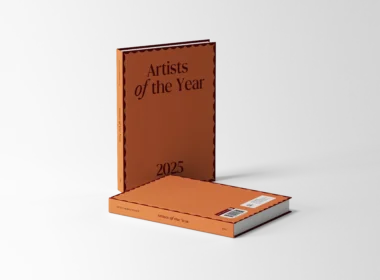
Get your work in front of our jury and Guest Curator Jennifer Rizzo for the chance to be named Artist of the Year, with a $500 cash prize, a trophy, and a dedicated four-page feature. Beyond the title, 100 artists will be published together in a beautifully made hardcover collectible book, a lasting home for their work.
Any medium, any subject, any stage of your career, from anywhere in the world. What matters is the work, and the thinking behind it.
The only artists who never make it in are the ones who don’t submit. Don’t let that be you. Enter now.