
5 Art And Fashion Collaborations That Became Pop Culture Moments
Fashion has always borrowed from art. A color palette from a painting, a shape from a sculpture, a photograph reworked into a print, an artist’s signature splashed across a handbag. But every once in a while, something more exciting happens: an artist and a fashion designer meet in the middle and create something neither could have made alone.
Some of these collaborations were wonderfully strange. Others were so commercially successful that they changed the way luxury brands thought about art forever. And then there are the ones that became part of pop culture almost overnight, turning paintings, prints and artworks into things people could actually wear.
Think of Salvador Dalí’s surreal lobster appearing on a couture dress, Piet Mondrian’s geometric paintings becoming one of the most recognisable dresses of the 1960s, or Takashi Murakami turning the Louis Vuitton monogram into a rainbow-coloured Y2K obsession. These were not simply decorative moments. They helped blur the line between the gallery and the runway.
Here are five collaborations that show just how powerful that relationship between art and fashion can be.
1. Salvador Dalí And Elsa Schiaparelli
Long before celebrity designers and luxury brands were announcing artist collaborations on Instagram, Elsa Schiaparelli and Salvador Dalí were already making fashion wonderfully weird.
The pair began working together in the 1930s, at a time when Surrealism was challenging almost every convention it could find. Schiaparelli was one of the few designers bold enough to bring that same spirit directly into couture.
Their most famous creation arrived in 1937: the Lobster Dress.
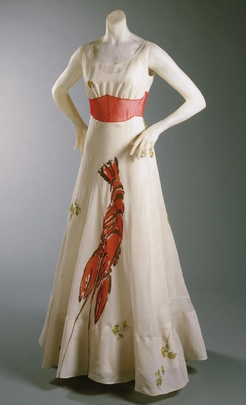
The ivory silk evening dress featured a large red lobster painted across the skirt. It was playful, slightly absurd and deliberately provocative, especially because of where the lobster was positioned on the body. Dalí had already been fascinated by the lobster as an object, famously incorporating one into his 1936 Lobster Telephone. Schiaparelli transformed that surrealist fascination into something wearable.
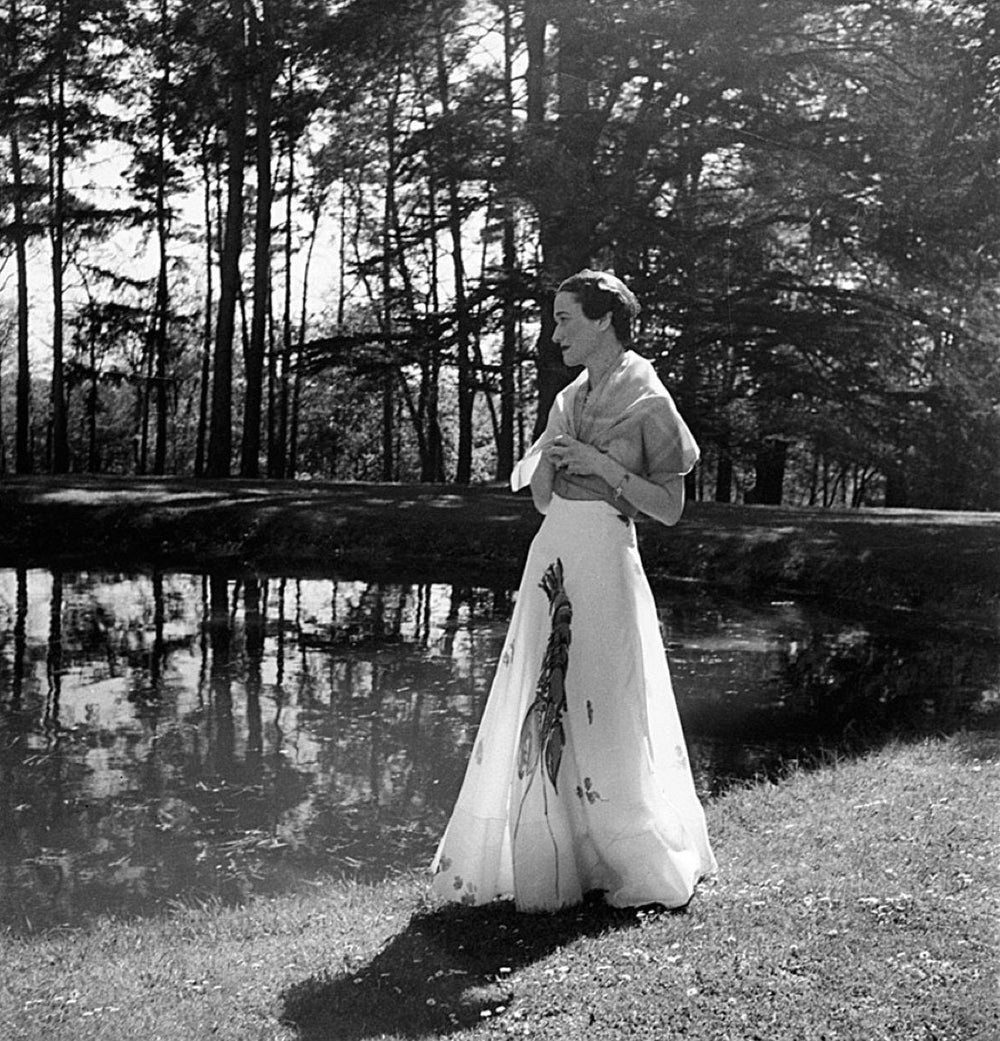
The Duchess of Windsor (1937)
Cecil Beaton
Courtesy of the Cecil Beaton Studio Archive at Sotheby’s
And the dress was not simply an artistic experiment hidden away in Schiaparelli’s studio. It was worn by Wallis Simpson, the American socialite whose relationship with King Edward VIII had already made her one of the most watched women in the world. The dress therefore arrived with its own built-in cultural drama.
But the lobster was only the beginning. Dalí and Schiaparelli also created the famous Shoe Hat, based on a photograph of Dalí wearing a shoe on his head, as well as other surreal designs including the Tears Dress. What makes their partnership so fascinating is that neither artist was trying to make the other discipline look respectable. They were having fun with it. They embraced humour, shock, sexuality and the slightly ridiculous.
That attitude still feels remarkably modern. Their work also established a blueprint for future art-fashion collaborations: give an artist room to disrupt the rules of fashion, and let the designer turn that disruption into something people desperately want to wear.
2. Piet Mondrian And Yves Saint Laurent
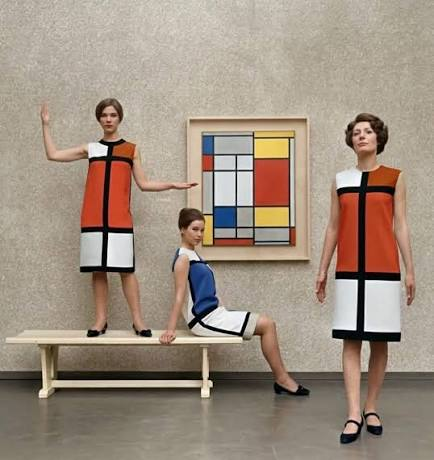
Some fashion moments become iconic because they are extravagant. This one became iconic because it was almost unbelievably simple.
In 1965, Yves Saint Laurent presented his Autumn/Winter collection featuring dresses inspired by the paintings of Piet Mondrian. Mondrian himself had died more than two decades earlier, so this was not a conventional collaboration. Instead, Saint Laurent translated the Dutch artist’s visual language directly into fashion.
The result was deceptively straightforward: clean shift dresses divided by strong black lines and blocks of white, red, blue and yellow. Anyone familiar with Mondrian’s paintings could immediately recognise the connection.
But turning a painting into clothing is much harder than simply copying it. Saint Laurent had to make those geometric blocks work on a moving human body. The dresses were constructed from carefully matched pieces of fabric, with the seams deliberately integrated into the design so that the compositions looked almost like Mondrian paintings floating around the wearer.
They became a sensation. The dresses were celebrated as an elegant meeting between modern art and modern fashion, while their popularity was so immediate that cheaper imitations soon appeared.
What makes the Mondrian dresses especially important is what they represented in the 1960s. Saint Laurent was helping move fashion away from the idea that clothing existed purely to flatter the body. A dress could also carry an artistic idea.
It could reference modernism. It could make someone look like they had walked straight out of a gallery. And most importantly, it showed that an artwork did not have to remain on a museum wall to influence popular culture. The Mondrian dress has remained one of Saint Laurent’s defining designs and one of the clearest examples of how a painting can become fashion without losing its visual identity.
3. Andy Warhol And Gianni Versace
If Schiaparelli and Dalí made art and fashion strange, Andy Warhol and Gianni Versace made the relationship unmistakably pop. Versace had a natural connection to Warhol’s world. The Italian designer was fascinated by celebrity, media, glamour and the visual culture surrounding famous people. Warhol had spent his career turning those very things into art.
So when Versace brought Warhol’s imagery into his Spring/Summer 1991 collection, the pairing made perfect sense.
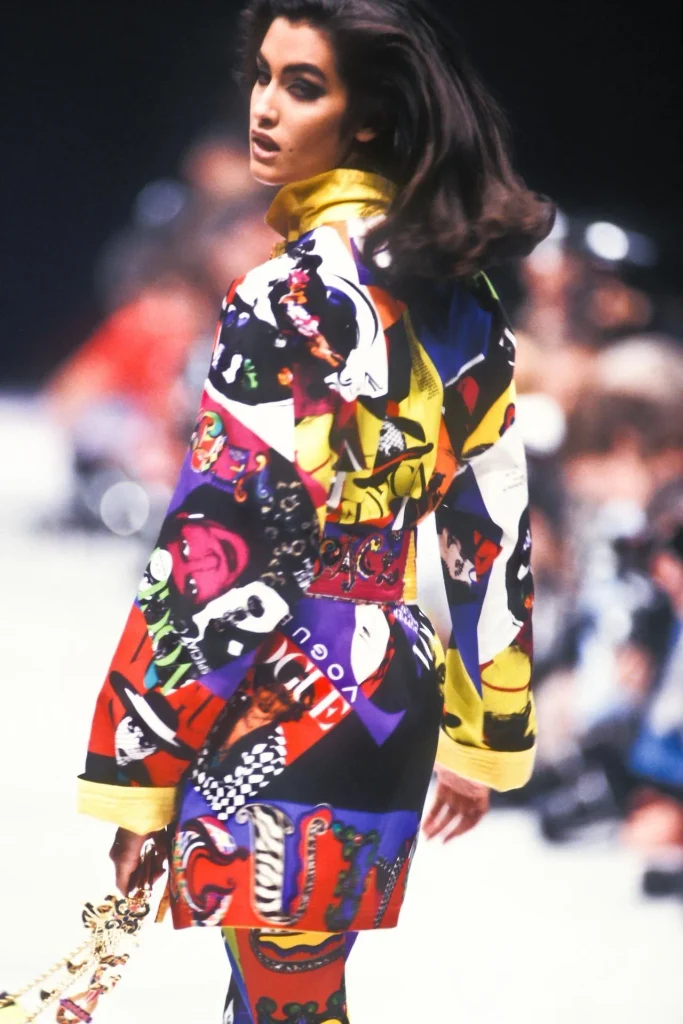
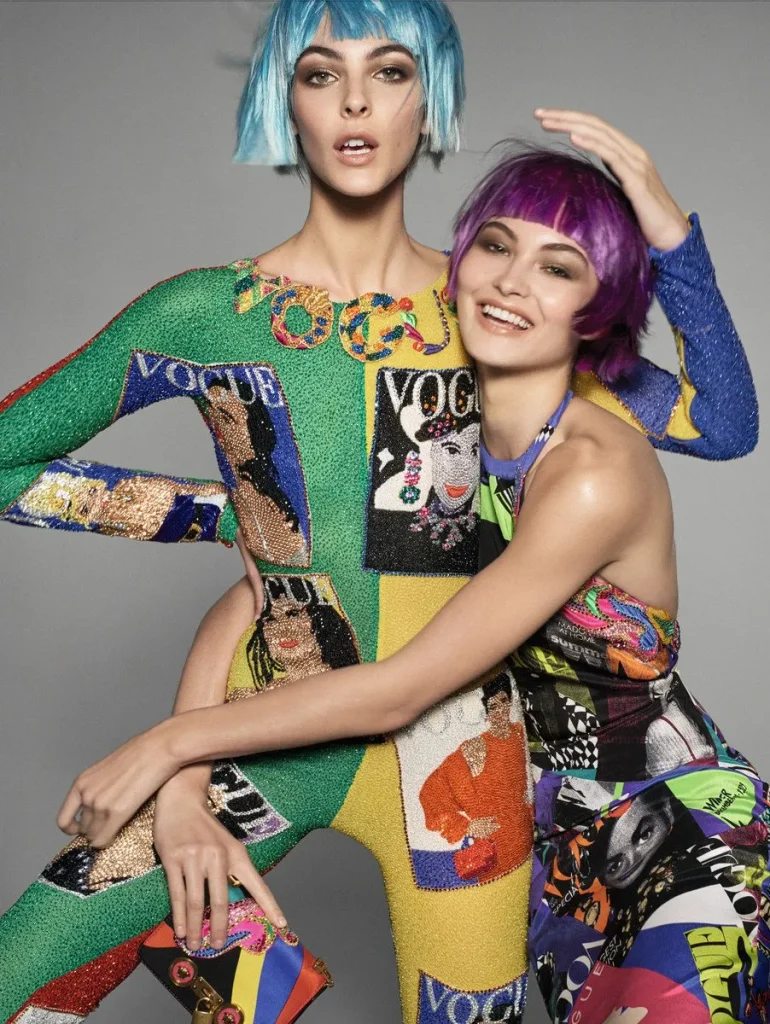
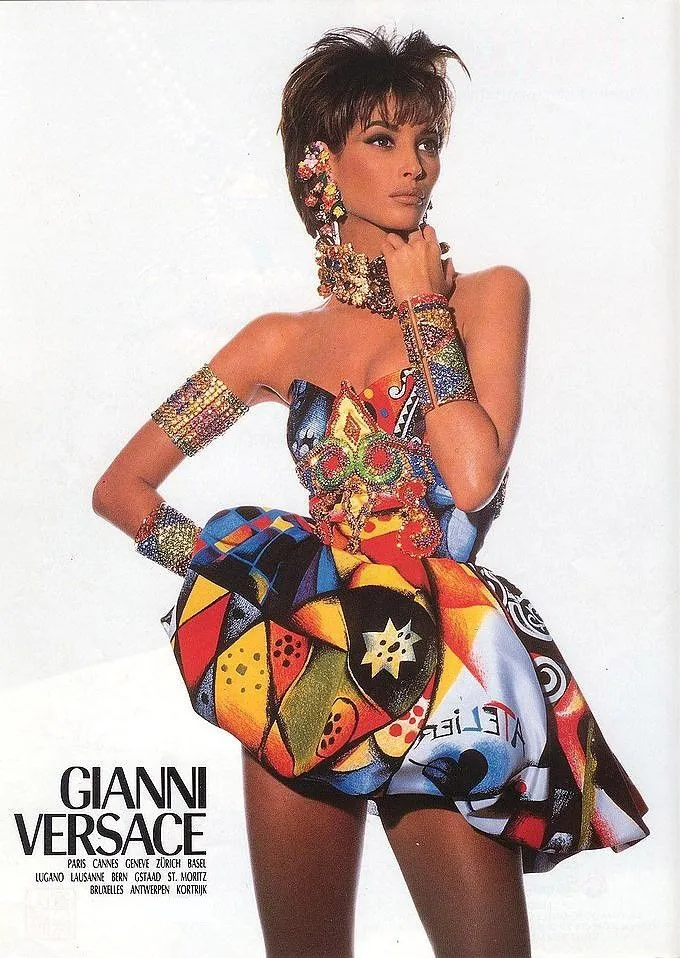
The collection featured Warhol’s instantly recognisable images of Marilyn Monroe and James Dean, translated onto glamorous Versace dresses. The designs combined Pop Art imagery with rhinestones, colour and the kind of unapologetic sensuality that had become synonymous with the Versace aesthetic. Christy Turlington, Naomi Campbell and Linda Evangelista were among the models who wore the collection on the runway.
It was a brilliant collision. Warhol had taken celebrities and turned them into icons through repetition. Versace took those icons and put them back into the celebrity machine, this time as fashion. Suddenly Marilyn Monroe was not just a face on a canvas. She was a glittering fashion image moving down a runway.
The collaboration also demonstrated something that would become increasingly important in fashion: fashion could communicate through images just as powerfully as art could. Versace’s fascination with Warhol was not superficial. Versace saw Warhol as something of a creative soulmate, particularly because of his ability to connect art, media, design and everyday life.
And the influence lasted. When Donatella Versace created a tribute to Gianni for the Spring/Summer 2018 collection, she returned to some of those Warhol-inspired images, showing just how deeply the visual language of that 1991 collection had become part of the house’s history.
It was Pop Art doing exactly what Pop Art does best: taking something everyone already knows and making you look at it differently.
4. Takashi Murakami And Marc Jacobs For Louis Vuitton
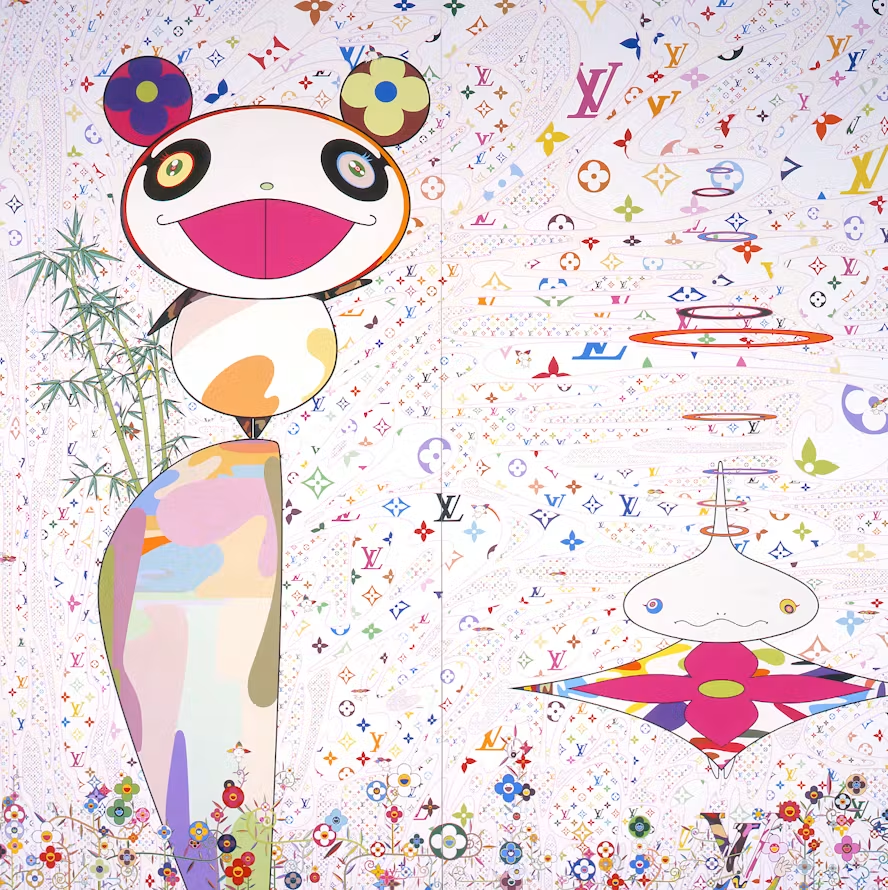
If there is one collaboration that practically invented the modern “artist x luxury brand” phenomenon, this is probably it. In the early 2000s, Louis Vuitton’s creative director Marc Jacobs wanted to do something unexpected with the house’s extremely recognisable monogram. Rather than simply protect the famous brown-and-gold pattern, he invited Japanese artist Takashi Murakami to reinvent it.
The result debuted for Spring/Summer 2003. And suddenly, Louis Vuitton was covered in colour. Murakami transformed the traditional LV monogram into Monogram Multicolore, using 33 bright colours against white or black backgrounds. Later came cherry blossoms, pandas, cartoon characters and other playful motifs.
The timing was perfect. Murakami’s colourful, playful visual language was already associated with his idea of Superflat, a style that deliberately blurred distinctions between high art, commercial imagery, anime and popular culture. Louis Vuitton was one of the ultimate symbols of luxury.
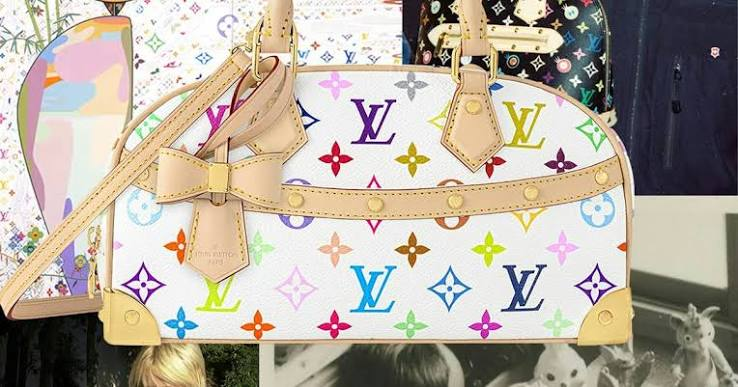
Put them together and you got something that felt both expensive and fun. The bags became a full-blown pop-culture phenomenon. Madonna, Jennifer Lopez, Jessica Simpson and countless other celebrities were photographed carrying them. Time named the Murakami bag the best fashion item of 2003 and reported that sales of the bag alone had generated more than $350 million for Louis Vuitton.
The collaboration eventually lasted for around twelve years, with the Multicolore designs becoming particularly popular. The partnership became one of the most influential examples of art and luxury fashion working together, paving the way for many of the artist collaborations that followed. And the story clearly did not end when the original collaboration did.
When Louis Vuitton began reissuing Murakami designs in 2025, searches for vintage pieces surged and resale prices rose sharply. The renewed obsession also revealed something important: these were no longer just old handbags. They had become symbols of a particular era of fashion and pop culture.
The Murakami bags proved that an artist could completely change the personality of a luxury house without erasing what made the house recognizable in the first place.
5. Damien Hirst And Alexander McQueen
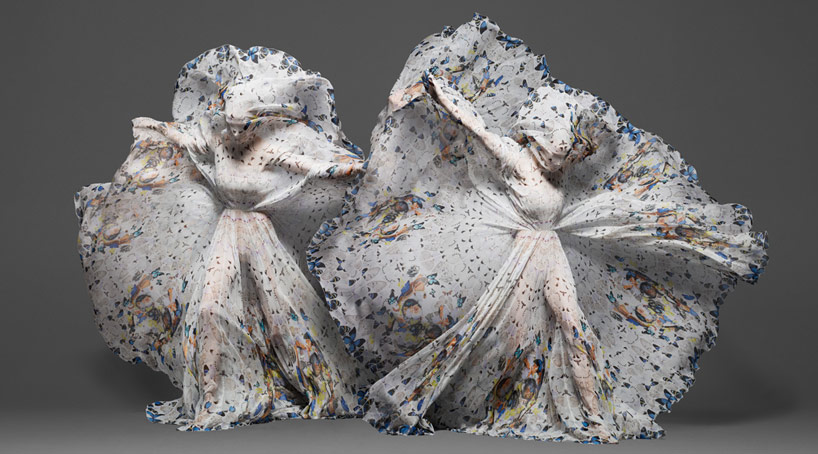
Some collaborations feel romantic. Some feel playful. Damien Hirst and Alexander McQueen went straight for the dark side. Their connection makes almost too much sense. Both artists were fascinated by mortality, nature, beauty and decay. McQueen had already made the skull one of the most recognisable symbols in fashion, while Hirst had spent much of his career exploring death, insects and the unsettling relationship between beauty and mortality.
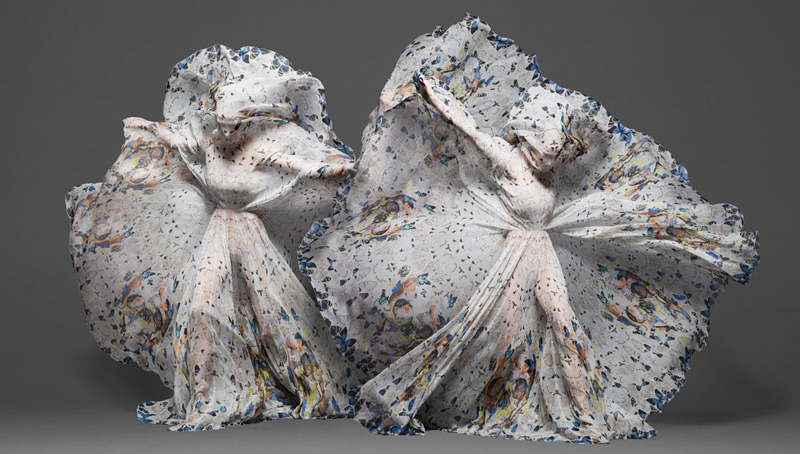
The collaboration arrived in 2013, when Alexander McQueen marked the tenth anniversary of its iconic skull scarf by working with Hirst on a special collection.
Instead of simply placing Hirst’s artwork onto existing McQueen scarves, the project brought their visual languages together. Thirty one-off scarf designs drew from Hirst’s Entomology series, using butterflies, insects and spiders arranged into kaleidoscopic geometric compositions that formed McQueen’s signature skull motif.
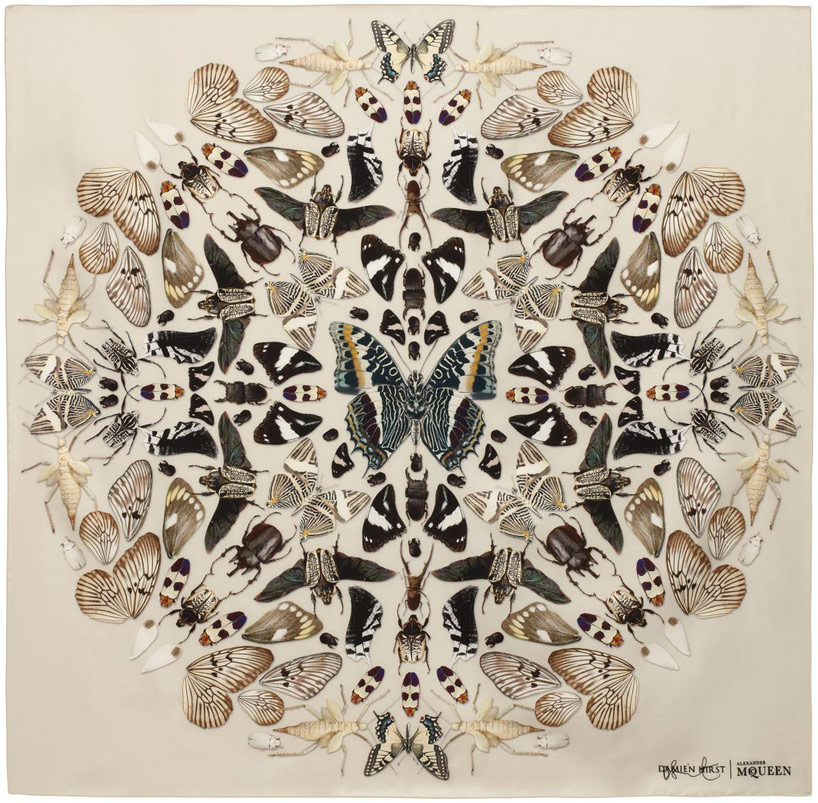
It was almost like watching two obsessions collide. Hirst’s insects became McQueen’s skull. Something delicate became something macabre. Something associated with nature became a symbol of death.
And because the skull scarf was already such an important part of the McQueen story, the collaboration felt less like a random celebrity partnership and more like a conversation between two artists who had been exploring similar ideas from different directions.
The scarves were limited and highly collectible, giving the project the exclusivity expected from luxury fashion while preserving Hirst’s fascination with repetition and transformation. It also showed why artist collaborations can work particularly well in fashion. A great collaboration does not simply put an artist’s signature on an existing product. It finds the place where both creative languages overlap.
McQueen had the skull. Hirst had the butterfly, the insect and the fascination with mortality. Together, they created something that looked unmistakably like both of them.
When Art Leaves The Gallery
The best artist-fashion collaborations are not really about putting famous artwork on expensive clothes. They are about what happens when two creative worlds start borrowing from each other.
Dalí gave Schiaparelli permission to be outrageous. Mondrian’s geometry helped Yves Saint Laurent turn a dress into a moving composition. Warhol’s celebrity imagery found another life through Versace. Murakami helped Louis Vuitton speak to an entirely new generation. And Hirst’s insects found their way into McQueen’s beautifully dark universe.
That is probably why these collaborations stay in our collective memory long after the collections disappear from stores. A painting can hang on a wall for decades. A fashion piece can be photographed, worn, danced in, carried down a red carpet or spotted in an old music video. Once art enters fashion, it enters everyday life. Art does not always have to stay in a gallery. Sometimes it looks even better walking down the street.