
Luna Hao’s Cameraless Prints Let Flowers Leave Their Own Trace
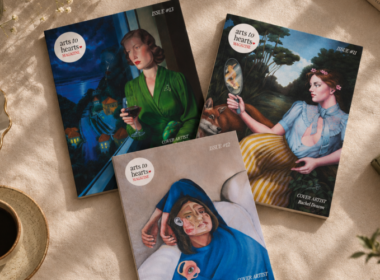
At Arts to Hearts Project, Issue 13 of our magazine, themed “The Things We Hold Onto,” drew in an amazing range of submissions, each artist reading the theme in their own way, some through a memory, some through a person, some through a place they carry inside them. One of the artists we chose was Luna Hao, and few responses fit the theme as perfectly as hers. Her whole practice is an attempt to hold onto the things that were never meant to last.
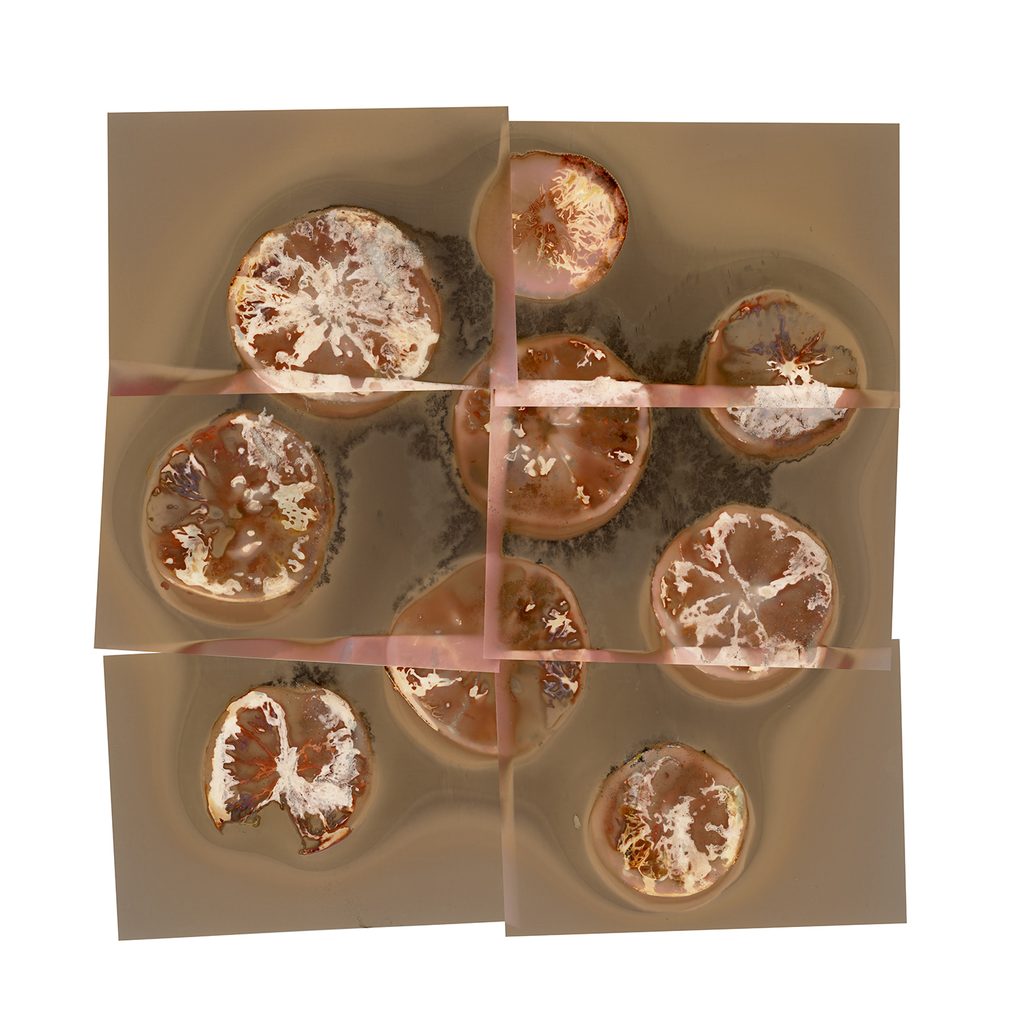
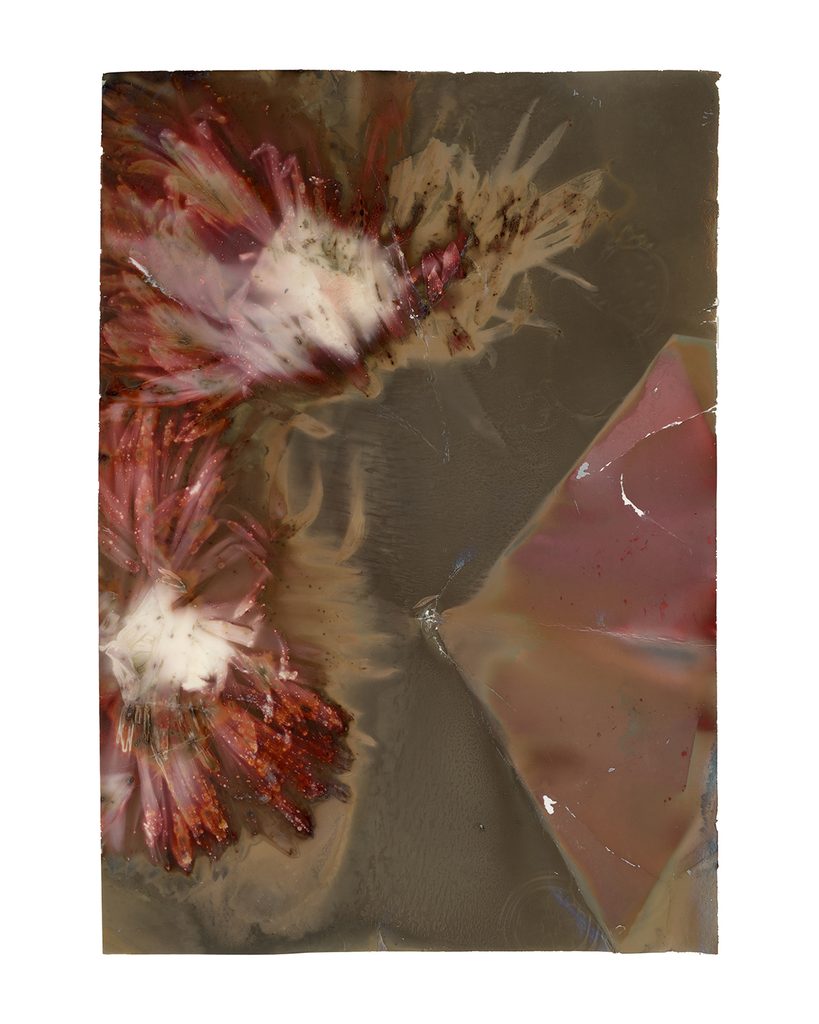
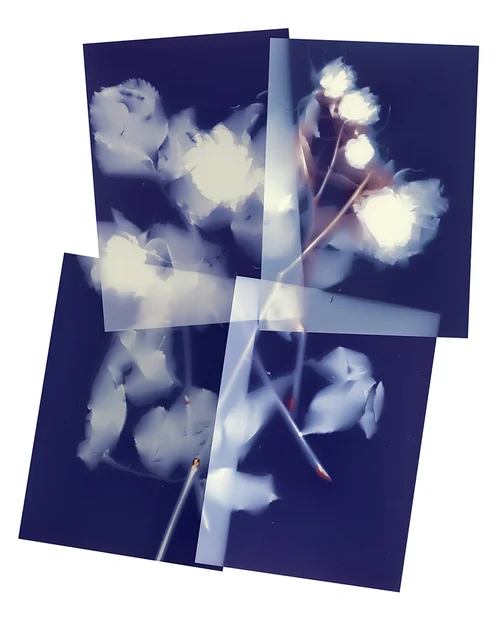
Luna is a photographic artist, originally trained in commercial photography, who found her real voice in something far slower and stranger. Her main practice is lumen printing, a cameraless process where she lays flowers directly onto photographic paper and lets the sun do the rest.
She uses only natural sunlight, never artificial light, which means the weather, the season, and the time of day all leave their mark on the final image. The result is soft, ghostly, and unlike anything a camera could make, a flower turned into light and shadow, preserved in another form.
-Hao-copy-Luna-Hao.jpg)
But here is the part that makes her work so quietly moving. Luna does not fix her prints, which means they never truly stop changing. Over time, they keep fading, exactly like the flowers they came from. She is honest that she does not find disappearance beautiful, in fact she finds it frightening.
What draws her is the attempt to delay it, to hold onto something a little longer even while knowing she cannot keep it forever. Her work lives in that tender contradiction, the very human urge to preserve what we love, even when preservation is only ever temporary.
Time itself is almost a material in her hands. Rather than freezing a single instant, the way a photograph usually does, Luna is interested in capturing a stretch of time. She has made overnight exposures of herself sleeping, and lumen prints exposed for hours or even days, long enough for the flowers to physically change on the paper. A single image, for her, can hold not just a moment but a whole passage of time, and there is something beautiful in how that gently turns the usual idea of photography on its head.
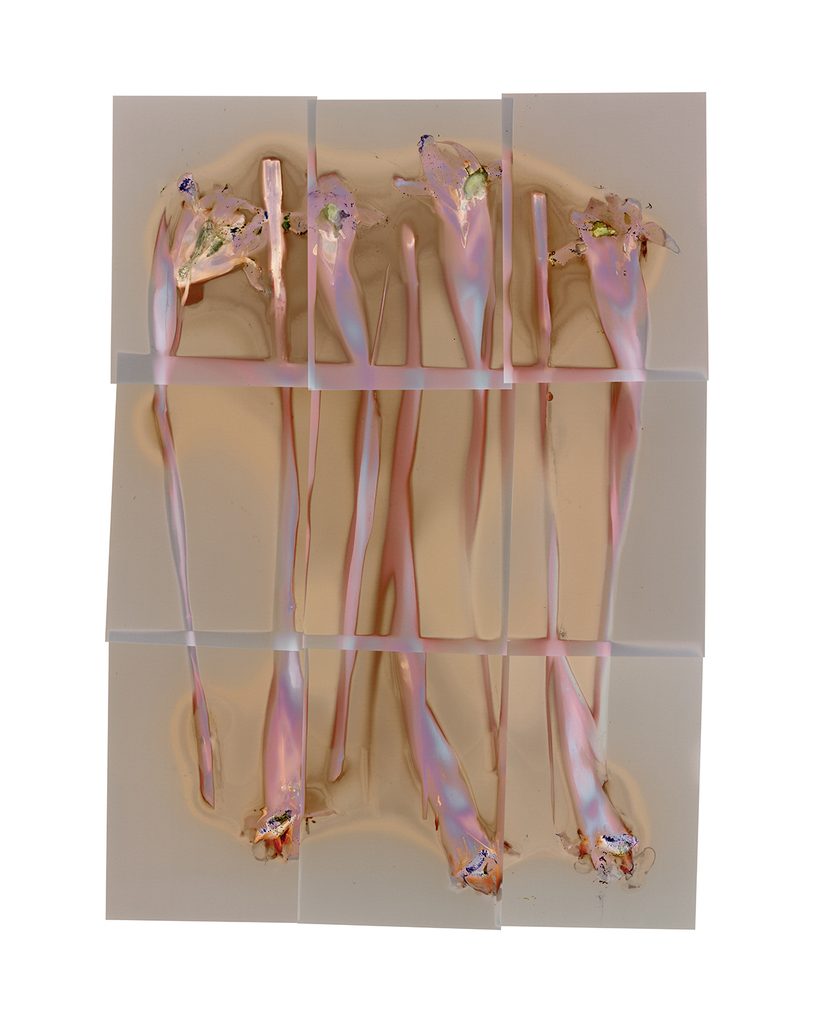
It is no accident that flowers became her material. We give them at birthdays, weddings, and farewells, so they are already tied to the moments we most want to remember, and like memories, they are made to fade. This connection between images, memory, and feeling runs through her most personal work, including a project born from a time when she felt deeply misunderstood and isolated while living with an illness whose symptoms are hard for others to see.
Photography became the language she reached for when words had failed her, a way to make something invisible visible, and to open an honest conversation about mental health that she believes needs to keep being had.
In an age when images can be made and perfected in seconds, Luna is drawn to the opposite, to slowness, patience, imperfection, and the visible trace of the human hand. She is not against technology; she simply values the kind of attention a slow process demands, the waiting, the accepting of mistakes, the time spent in the making. She is also drawn to ordinary, well-used objects, the kind that carry the quiet traces of the people who lived with them, and she often lets them stand in for herself.
Now let’s hear from Luna about trying to hold onto what fades, why she lets her prints keep changing, how time became a material in her work, and what an image can say when words fall short.
Q1. Could you share how your relationship with photography began and what kept you curious about it?
Photography was never part of a carefully planned path for me. I grew up watching my father develop film at home and explain cameras to me, so photography always felt familiar and interesting, but I never imagined I would study it seriously. I actually started learning photography almost by accident. I was preparing to apply to design programs, and one of my teachers suggested that I also study photography as an alternative.
I did, and eventually I was accepted into a photography program. Even after college, I considered changing fields, but somehow I stayed. Looking back, my relationship with photography feels less like one big decision and more like something I kept returning to. It has simply continued to give me new reasons to stay curious.
Q2. You began in commercial photography before moving towards photographic art. What made you want to explore a different side of the medium?
I struggled quite a lot with commercial photography. I started working during my junior year of college, and although I learned a lot from the experience, I often felt more like a copy machine than a photographer. There was very little room for personal decision-making, and I gradually realized that what frustrated me was not photography itself, but the very narrow way I had been using it. That made me curious about what else photography could be.
When I later came to SCAD, I was genuinely surprised by how much I enjoyed the freedom to experiment and develop work from my own experiences. I also met some incredibly supportive older students, which made that transition feel much more natural.
Q3. You once considered studying history. Do you think that interest still shapes how you think about memory and time?
I had never really thought about that connection until I was asked this question. What I loved about history was probably not any particular period or subject, but the process of spending a long time with one thing—revisiting it, finding new details, and slowly building a more complicated understanding of it. Looking back, I think that habit has stayed with me.
I tend to work on projects for a long time and return to the same subjects repeatedly. My understanding of memory and time also developed gradually through that process. So history may not appear directly in my work, but the way I learned to look at things through a historical lens probably still influences the way I make art.
Q4. Lumen printing has become an important part of your practice. What first attracted you to this unusual and unpredictable process?
I was first introduced to lumen printing during the last year of my MFA, when a friend of mine was experimenting with the process. I joined a short workshop with them—probably only about thirty minutes long—and my first reaction was honestly just, “Wow, this is surprisingly simple.” I was intrigued, but I did not start using it right away. What really drew me in happened a little later, during my thesis exhibition.
Many of my friends brought me flowers, and I felt unexpectedly emotional about them. I really wanted to keep them, and I found myself thinking, why do flowers have to die so quickly? That same friend casually said, “Why not turn them into lumen prints?” and that was how it began. What first attracted me, then, was not only the process itself, but the possibility that it offered—a way to let the flowers remain, even if only in another form.
Q5. Your prints involves a level of unpredictability. How has that changed the way you approach making?
I actually really enjoy the unpredictability of lumen printing. I have never seen it as something I need to overcome, because to me, that uncertainty is simply part of the process.
Choosing this medium also means accepting that I will never have complete control over the final image. At the same time, I am not working entirely by chance. Through many failed prints, repetition, and observation, I have gradually learned which parts of the process I can control and which I have to leave open.
I also choose to use sunlight for all of my lumen prints. If I wanted more consistency, I could use artificial UV light, but I like allowing weather, season, time of day, and changing sunlight to enter the process. So in a way, I am not trying to reduce uncertainty—I am actually choosing to give it more space in the work.
Q6. You often describe time almost as a material. When did you begin thinking about it this way?
I have always been more interested in using photography to represent a duration of time rather than a single instant. I think I started thinking about time in this way quite early. Even when I was studying commercial photography, I was very interested in multiple exposures because I liked the idea of compressing several different moments into a single image.
Later, a friend introduced me to pinhole photography, and I began making overnight exposures of myself sleeping. I would open the shutter before going to bed and leave it open until morning, so an entire night of movement and change would be compressed into one photograph. That interest eventually carried into my lumen prints. At first I exposed them for a few hours, then a few days, and sometimes long enough for the organic material to start physically changing on the paper (which I would not necessarily recommend).
Looking back, I think I have always been fascinated by the idea that a photograph can contain not only a moment, but a stretch of time.
In some ways, that feels almost contrary to the conventional idea of what photography is supposed to do.
Q7. Moon Phase: The Moments Between Wax and Wane turns personal experience into a visual diary. Why did photography feel right for this story?
I think photography first felt right simply because it was the language I knew best. When I began developing Moon Phase, I was going through a period when I felt deeply misunderstood and isolated. I wanted to find a way to communicate an illness whose symptoms are often difficult to see, and making images was the most instinctive place for me to start. As the work evolved, I became increasingly interested in translating an internal experience into something tangible.
That opened the door to questions that extended beyond my own story: how mental illness is perceived by society, how people living with it understand themselves, and how family and friends respond to something they may not fully recognize.
During the process, I also discovered that the camera could give me a certain distance from my own life, almost like viewing it from the outside. But what mattered most to me was the exchange the work encouraged. I believe these subjects need to remain part of an ongoing conversation, because greater awareness often begins with being willing to speak about them openly.

Q8. Your lumen prints capture flowers as they begin to change and fade. What draws you to that process?
I do not really think of the process of disappearing as beautiful. In fact, I find it quite frightening. I know that nothing can be preserved forever, and I do not fix my lumen prints, so even the image itself will eventually continue to change and fade. What interests me is the attempt to delay that disappearance. I transfer the flower onto photographic paper, change its form, and change its material state, almost as if I am trying to hold on to something I already know I cannot keep. In that sense, the process is intentionally a little futile.
I am very attached to the idea of preserving things I care about, even when I know preservation is only temporary.
The work comes from that contradiction rather than from finding beauty in disappearance itself.
Q9. You often find meaning in ordinary objects. What makes you see familiar things differently through your work?
i think my relationship with ordinary objects began in a very personal way. During periods of depression, I would sometimes find myself staring at one thing for a very long time and noticing details that I might otherwise have ignored.
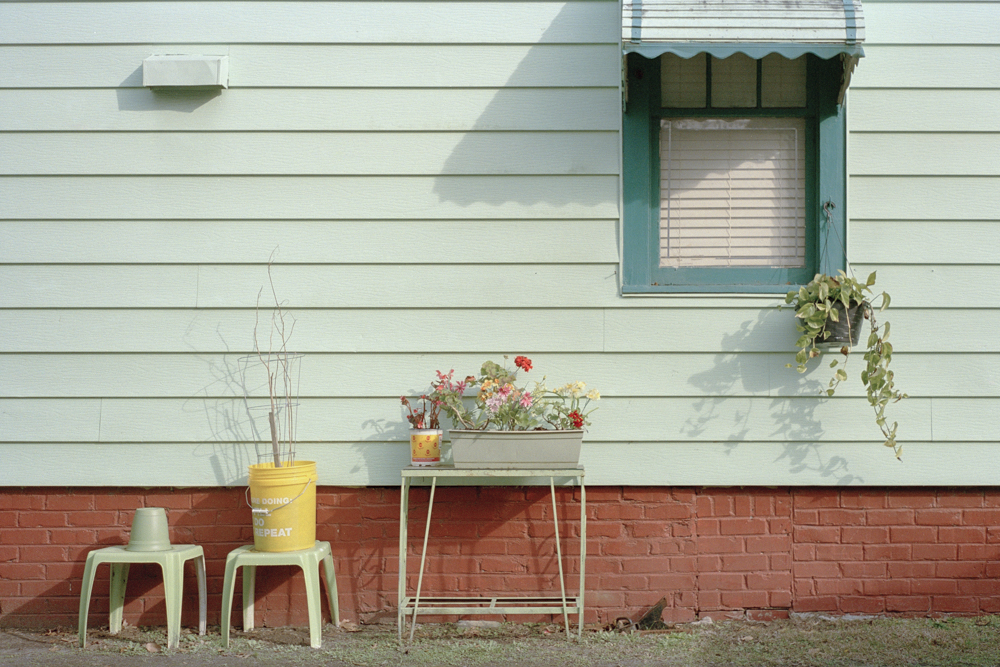
At the same time, I have never been very comfortable with straightforward self-portraiture, even when I am working on deeply personal projects. Because of that, I often use objects from my everyday life as stand-ins for myself. I am especially interested in used objects because they carry traces of the people who live with them—the way something is worn, placed, damaged, or repeatedly handled.
Once an ordinary object is isolated within an artwork, those traces become easier to notice.
The viewer may begin to imagine the life around it rather than seeing it as just an object.
Q10. Flowers have become closely connected to memory in your practice. What makes them such a natural metaphor for you?
Flowers feel naturally connected to memory for me because we already associate them with important moments. We give flowers for birthdays, graduations, anniversaries, celebrations, and other occasions we want to remember, so they often become attached to a specific event almost automatically. I also became interested in the fact that flowers seem to exist with disappearance built into them.
The plant may continue living, but the flower itself will always fade. In that sense, flowers and memories feel similar to me. When we talk about a memory, we are usually referring to a particular moment that has already passed and cannot be recovered in exactly the same form. That similarity is probably why flowers became such a natural material for me when thinking about memory and time.
Q11. Your lumen prints can fade over time. What do you find meaningful about photography being so temporary?
I have never really believed that photography can preserve an image forever. I think photographers are always trying to extend the life of an image, but every material has its limits.
I learned that quite early—when I was about six, I once pulled my father’s film out because I wanted to see the pictures and accidentally exposed all of it. So perhaps I have always been unusually aware of how fragile photographs can be. That contradiction in lumen printing reflects some of my own anxiety about preservation.
Film can be damaged, paper can fade, and even hard drives eventually fail. Nothing is truly permanent. I could fix my lumen prints and make them more stable, but I choose not to. Part of that is simply because I find the fixed results less visually interesting, but I also like allowing the image to remain vulnerable to change. For me, photography is not really about defeating time. It is more about trying to hold on to something a little longer, while knowing that it will still change or disappear eventually.
Q12. What can an image hold for you that language sometimes cannot?
When I began Moon Phase, I felt that I had already tried very hard to explain what I was experiencing, but somehow I still could not make myself understood. It reached a point where I thought, maybe I simply need to try a different language. Over time, I also became less interested in explaining everything directly. I found that words can create their own misunderstandings:
I may think I have expressed something clearly, while the person listening receives something completely different. An image does not necessarily solve that problem, but it allows me to leave more space for uncertainty, contradiction, and interpretation. I think that is what an image can hold for me that language sometimes cannot—not a more accurate explanation, but a form of expression that does not have to explain itself completely.
Q13. Do you think slower, hands-on photographic processes are becoming more valued today?
I think there is a growing appreciation for slower, more hands-on photographic processes, and part of that may come from a desire to slow down in a world that rarely gives us the opportunity to do so. I also think this becomes even more noticeable in the age of AI.
When images can be produced and refined so quickly, and everything can become very polished and seamless, people may begin to value the opposite qualities more—the visible trace of the hand, imperfection, materiality, and the fact that something cannot be reproduced exactly the same way twice.
For me, that does not mean rejecting digital tools or new technology. I am more interested in the different kind of attention that slower processes require. They ask you to wait, to accept mistakes, and to spend more time with the making itself.
Q14. You balance professional photography and visual design with your personal practice. How do you keep these sides of your work distinct?
I actually keep those two sides of my creative life fairly separate.
My professional work is usually driven by a specific purpose, audience, or practical need, while my personal practice is the space where I allow myself to work much more intuitively.
Of course, they both rely on the same visual skills, but I do not really think of them as constantly feeding into each other. Keeping some distance between them helps me protect the freedom of my personal work.
Q15. How do you decide which opportunities are right for your practice?
I have never been very good at making long-term plans for my artistic practice.
Even in school, I always struggled with questions like “Where do you see yourself in five years?” because real life has never felt predictable enough for me to answer them honestly.
So I tend to make decisions much more in the present. I ask whether an opportunity feels meaningful to me now, whether I am genuinely interested in the people or context involved, and whether I can participate without forcing my work into something it is not. I don’t view my practice as following a fixed route. Sometimes simply continuing to make work through whatever life brings feels like enough direction.
Q16. What has been the most meaningful milestone in your career so far, and why does it stand out to you?
My thesis exhibition is probably the most meaningful milestone for me so far. Not simply because it marked the end of graduate school, but because it was the first time I felt that years of experimenting, questioning, and making had come together into something complete enough to stand on its own. Seeing the work installed in a physical space and then watching people spend time with it, ask questions, and have conversations around it made the project feel very different from when it existed only in my studio. It was one of the first moments when I felt that the work had developed a life beyond me. That is probably why it still stands out to me more than any award or résumé line.
Q17. What do you think emerging photographers need most today to move from simply making work to building a lasting artistic practice?
I am not sure I am in a position to tell emerging photographers what they “need,” because I still feel like I am figuring that out myself.
If I had to choose one thing, it’s the ability to keep making work without needing immediate proof that it is leading somewhere.
A lasting practice probably takes more patience than certainty. You may repeat the same questions for years, change directions, fail, lose interest, come back, and only later realize that those seemingly disconnected experiences were part of the same path. For me, the important thing is not to define yourself too quickly. Keep making and give yourself enough time to discover what you actually care about.
As our time with Luna wrapped up, we kept coming back to the flowers, and to everything they quietly stand for: beauty, memory, and the fact that both eventually fade.
It is one of the most human things there is. We hold onto photographs, keepsakes, flowers pressed in books, moments we wish would last. Luna’s work sits right inside that feeling. She takes something as fragile as a flower and, slowly and by hand, tries to preserve it, knowing all the while that her prints will keep fading, that nothing she makes will truly stay.
There is something honest, and even comforting, in that. She is not pretending we can defeat time. She is simply choosing to hold on a little longer, and to make something quietly beautiful out of the trying. Her work reminds us that impermanence is not the opposite of love. It is part of it, and the things we cannot keep are often the ones we treasure most.
There is something worth noticing about where the art world is heading, too. More and more, images can be generated and perfected in seconds, endless, flawless, and frictionless. Luna’s work moves in the opposite direction entirely.
She works slowly and by hand, laying flowers onto paper and letting sunlight, patience, and the occasional happy accident shape the final image, then leaving each print unfixed so it goes on quietly changing over time. It would be easy to call that old-fashioned. We think it is exactly what a fast, automated world is starting to crave, the visible trace of a human hand, the beauty of imperfection, and the quiet value of something that could never be made the same way twice.
For art lovers and collectors, that makes her work genuinely rare. These are one-of-a-kind prints that can never be reproduced exactly, and that keep softly shifting for as long as you have them, no two days quite the same. To live with one of her pieces is to hold a little of that tenderness in your home, a gentle, daily reminder to notice the fleeting things while they are here, and to love them anyway.
Follow Luna Hao through the links below and see her work for yourself.
Some work you look at. Some work you want to run your hand across. Our 101 Art Book: Texture Edition is now open for submissions, and we’re after the second kind, art where the surface itself carries the feeling, in every ridge, layer, and mark of the hand. If the way your work feels is as important as the way it looks, we want to see it. Medium, location, and career stage make no difference. All that matters is a surface worth touching. Every artist we feature once took that first step and submitted. Now it’s your turn.