
Artists on Doubt
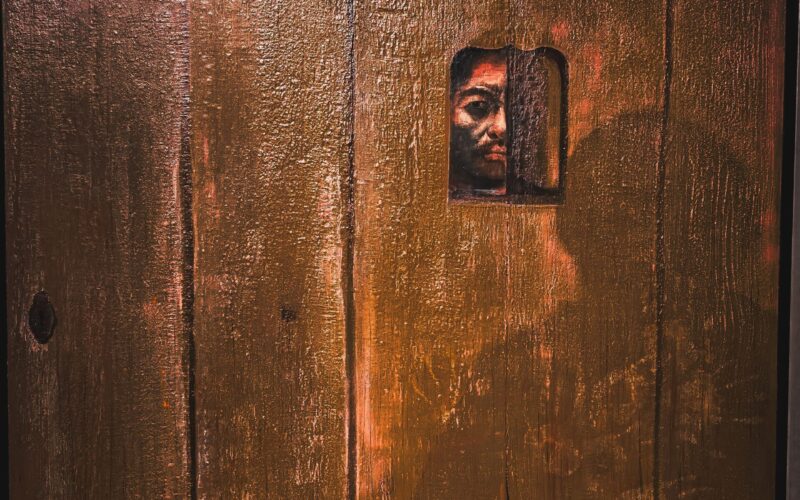
Doubt can be a strange companion for an artist. It does not always arrive loudly. Sometimes, it is just a small thought that appears while you are standing in front of your work: Is this actually good? What if I am not ready? What if people do not understand it? What if I have already done my best?
And sometimes, the questions become bigger. Artists can spend hours, days, or even years wondering whether their work is strong enough, whether their ideas are worth pursuing, or whether they belong in the creative world at all. A new painting can feel exciting one day and completely wrong the next. A finished series can suddenly look ordinary after scrolling through someone else’s work online. An open call can sit unanswered because the artist keeps wondering whether their work is “good enough” to submit.
The difficult part is that doubt does not always disappear when an artist becomes more experienced. You can have years of practice behind you and still question a new idea. You can have exhibitions, collectors, publications, and recognition and still stand in front of a blank canvas wondering where to begin. Confidence and uncertainty can exist in the same studio, sometimes on the same day.
Perhaps that is because doubt is not always proof that an artist is doing something wrong. It can also be a natural part of making something personal and uncertain. When you create, you are making decisions without knowing exactly where they will lead. You have to trust your instincts before you know whether those instincts will take you somewhere meaningful.
Artists have spoken about this feeling in many different ways. Some accept it. Some work through it. Some turn it into fuel. Others learn to care less about outside opinions and more about following their own curiosity. Their experiences remind us that being an artist does not mean becoming fearless. Sometimes, it simply means learning how to keep creating while the questions are still there.
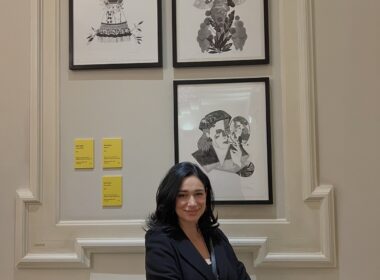
1. Andrea Farina
For artist Andrea Farina, self-doubt is not something that necessarily disappears with time. Instead, it can become something an artist learns to live with.
“I don’t expect to ever hit a point where I don’t doubt myself at all.”
There is something reassuring about Farina’s perspective because it takes away the expectation that confidence has to be permanent. Artists often imagine that there will eventually be a point when they feel completely secure in their abilities. A certain number of years of practice, exhibitions, or accomplishments might seem like they should be enough to silence every question.
But creative work rarely works that way. Every new project asks an artist to begin again. Even when you know how to paint, draw, photograph, sculpt, or write, you do not necessarily know how the next piece will turn out. Each new idea brings its own uncertainty.
Farina’s words make room for that uncertainty. Perhaps being confident does not mean never doubting yourself. Perhaps it means knowing that doubt can appear without letting it decide whether you continue.
2. Carlos Delgado
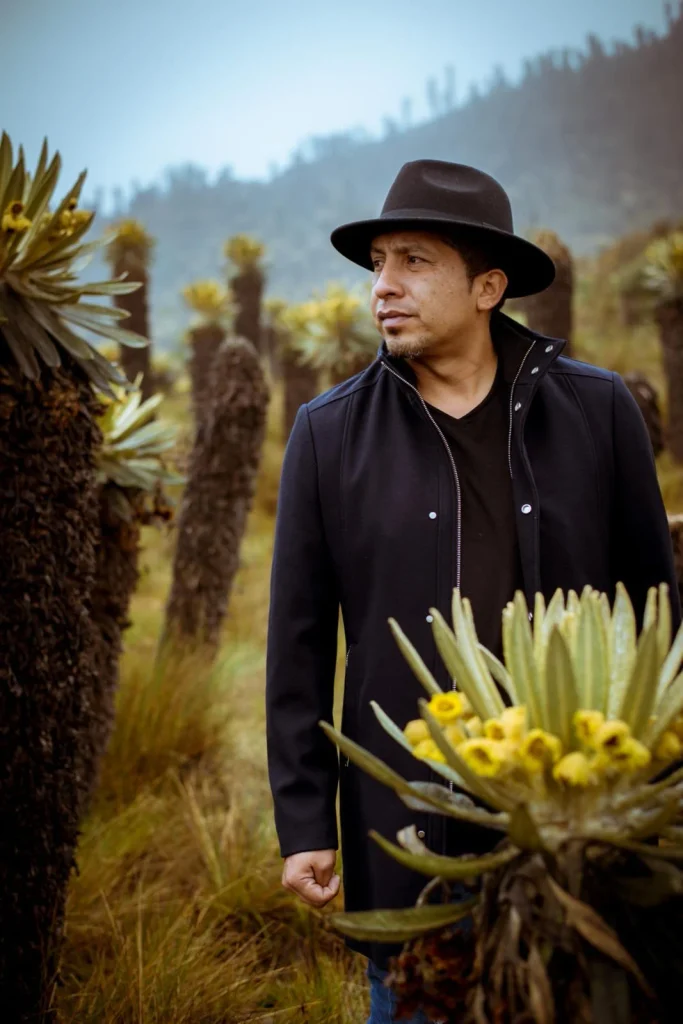
Colombian artist Carlos Delgado takes a more active approach to self-doubt. When uncertainty appears, he returns to the one thing that can move him forward: making the work.
“I find the best way to deal with self-doubt as an artist is to keep creating.”
It sounds simple, but continuing to create when you are questioning yourself can be surprisingly difficult. Doubt often encourages artists to stop. We might spend too much time researching instead of beginning, editing instead of finishing, or comparing instead of experimenting. The longer we stay inside those thoughts, the larger they can become.
For Delgado, the act of creating interrupts that cycle. A canvas gives you something to respond to. A sketch gives you somewhere to begin. A failed experiment can lead to another idea. Even work that does not turn out the way you imagined can teach you something about what you want to do next. Sometimes, the only way to find your way out of doubt is to make another mark.
3. Fintan Magee
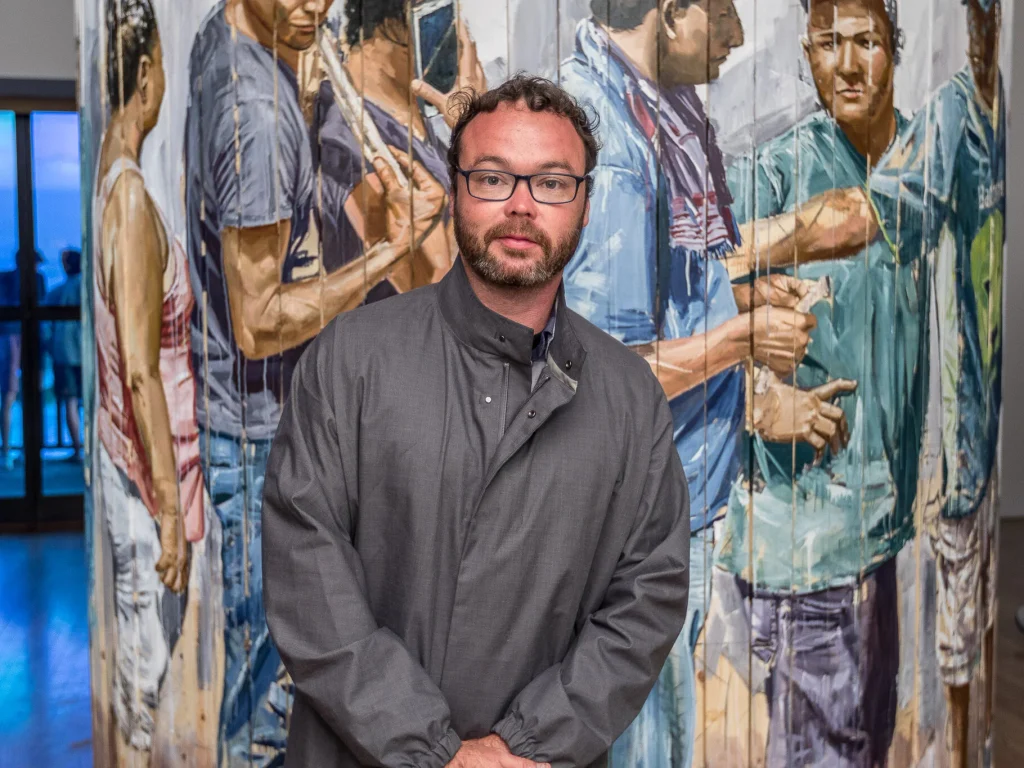
Australian street artist Fintan Magee offers a slightly different perspective on uncertainty. He does not believe every form of self-criticism is necessarily harmful.
“It’s healthy to be self-critical sometimes.”
Artists need a certain amount of reflection. Looking closely at your own work can help you understand what is working, what feels unfinished, and what you might want to explore differently next time.
The problem begins when criticism stops being useful and starts becoming a reason not to create. Magee’s approach is a reminder that artists do not have to choose between confidence and self-questioning. There can be space for both. You can look honestly at your work while still believing that you have the right to keep making it. Instead of asking, Am I good enough? Perhaps the more useful question is, What can I learn from this? That small shift can turn doubt from a dead end into part of the creative process.
4. Barbara Ségal
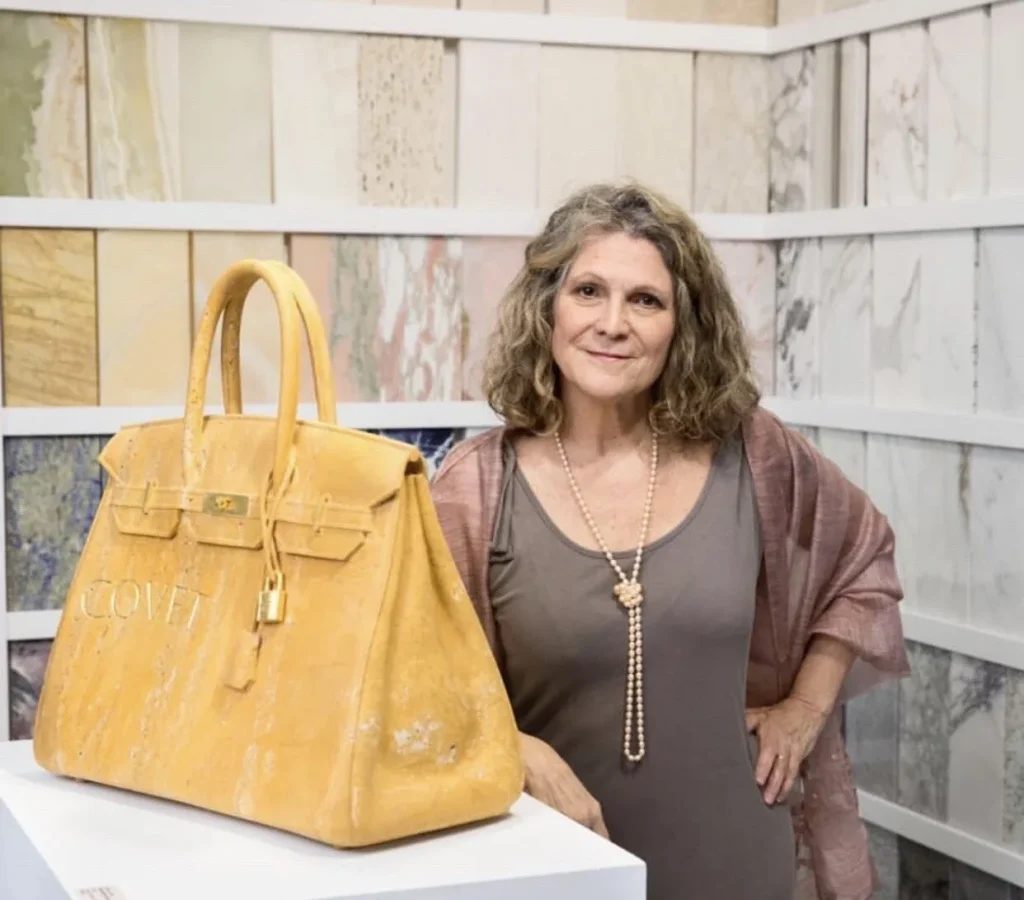
Sculptor Barbara Ségal describes self-doubt as something that can remain in the background even as an artist continues to grow.
“Self-doubt is constantly lurking in the background.”
The word “lurking” feels particularly familiar to anyone who has spent time making art. Doubt can disappear for a while and then return unexpectedly. A new commission, a different medium, an important exhibition, or simply a difficult day in the studio can bring it back.
But perhaps the presence of doubt does not mean that an artist has gone backwards. Growth is not always a straight line. There are confident periods and uncertain ones. There are works that come together quickly and others that seem impossible for weeks. There are moments when an artist feels deeply connected to their practice and others when they wonder what they are doing.
Ségal’s words allow us to acknowledge that reality without treating it as failure. You can doubt yourself and still grow. You can feel uncertain and still make meaningful work.
5. Georgia O’Keeffe
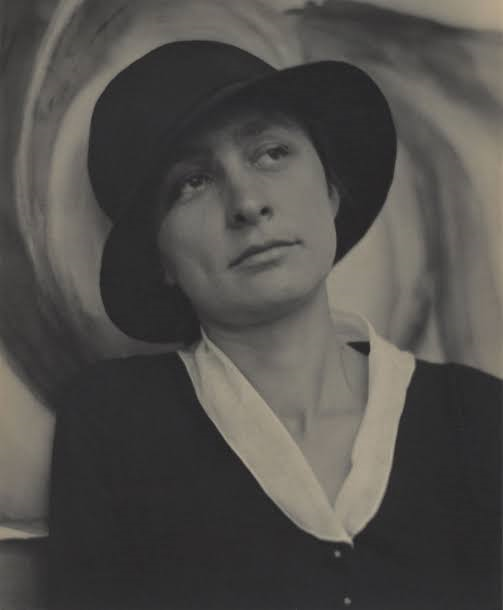
Georgia O’Keeffe’s approach brings another layer to the conversation: the influence of other people’s opinions.
“I have already settled it for myself so flattery and criticism go down the same drain and I am quite free.”
For an artist, outside reactions can be difficult to separate from the work itself. Praise can make us feel certain that we are moving in the right direction, while criticism can make us question everything. Sometimes, even positive attention can create pressure because the artist begins wondering whether the next piece will live up to the previous one.
O’Keeffe’s words suggest another kind of freedom: deciding that neither praise nor criticism should completely control the work.
That does not mean ignoring every response. Artists can learn from conversations, feedback, and different perspectives. But there is also something powerful about knowing why you are making something before anyone else tells you whether they think it was worth making.
For artists struggling with doubt, returning to that inner reason can be grounding. The work does not always have to be explained by everyone else before it can matter to you.
6. Magda Górska
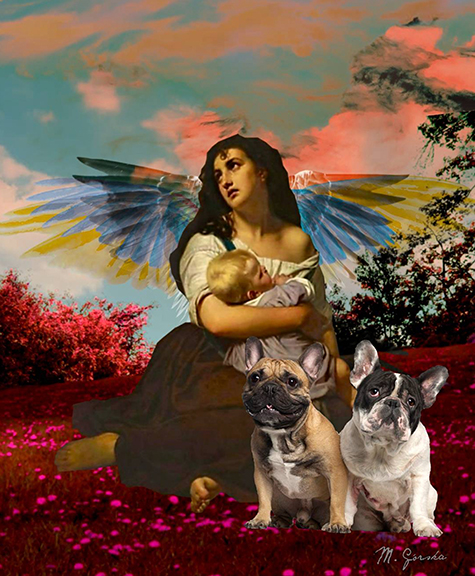
Comparison is one of the easiest ways for doubt to enter an artist’s mind. Collage artist and illustrator Magda Górska offers a simple way of looking at progress:
“We just have to be better than we were yesterday.”
It is easy to forget this when social media places thousands of finished artworks in front of us every day. We see another artist’s beautifully photographed studio, a successful exhibition, a new publication, or a series that seems effortlessly accomplished. We see the finished image, but rarely the years of practice, uncertainty, rejected ideas, unfinished pieces, and difficult days behind it.
Górska’s words bring the focus back to the artist’s own path. Instead of asking whether your work is as good as someone else’s, you can ask whether you understand something today that you did not understand yesterday. Did you experiment with a new technique? Did you finish something you had been avoiding? Did you discover a new way of seeing your subject?
Progress does not always look dramatic. Sometimes it is simply noticing that your own work has changed.
7. Dan ‘Nuge’ Nguyen
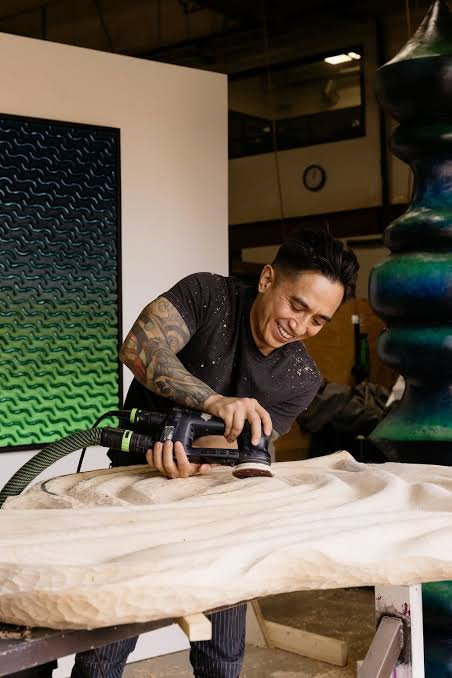
Artist Dan ‘Nuge’ Nguyen speaks openly about the persistence of self-doubt.
“My self-doubt is always nagging at me.”
Rather than pretending that the voice disappears, Nguyen acknowledges that it remains part of his creative experience. There can be something freeing about that honesty. Artists are often encouraged to present confidence. We celebrate the finished painting, the exhibition photograph, the studio portrait, and the polished portfolio. But the private experience of making the work can be much messier. Artists question decisions, change their minds, scrap ideas, start again, and wonder whether anyone will connect with what they are making.
Nguyen’s perspective suggests that doubt does not have to be defeated before the work can continue. Sometimes it can simply become background noise. You hear it, but you keep working.
8. Alexis Cortez
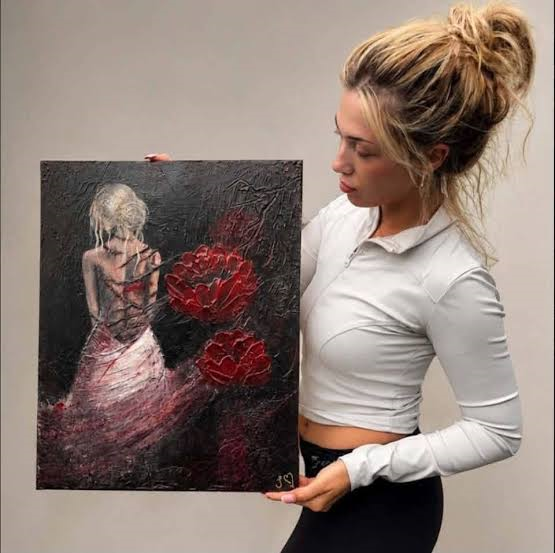
For painter Alexis Cortez, self-doubt can appear at the very beginning of the creative process.
“As an artist, I experience self-doubt almost every time I pick up a paintbrush.”
That feeling is particularly familiar when starting something new. A blank canvas carries endless possibilities, but it also carries the possibility of getting things wrong. The first mark can feel strangely important.
What if the composition does not work? What if the colors are wrong? What if the finished piece looks nothing like the image you had in your head? Cortez’s response is to try anyway. There is a quiet courage in that choice. You do not need to know exactly how something will turn out before you begin it. You can make the first attempt, dislike it, change it, paint over it, or discover something completely unexpected.
A work does not have to be perfect in its first version. Sometimes you only discover what the artwork wants to become by giving yourself permission to begin.
9. Tracey Emin
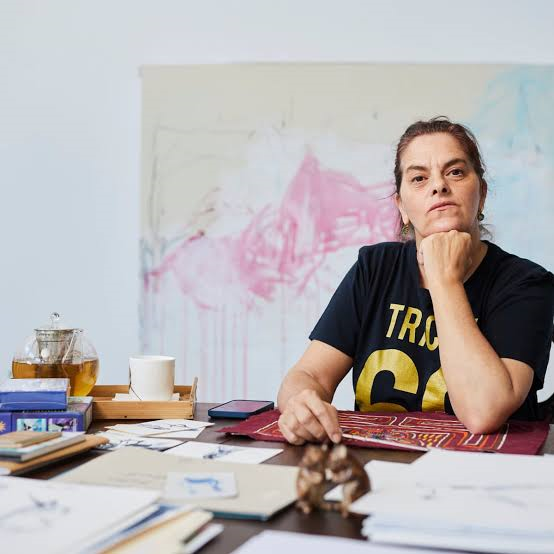
Tracey Emin has spoken about doubt as an inseparable part of the artistic experience.
“Doubt is part of it.”
The simplicity of those words is what makes them so striking. Doubt does not always come from believing that a work is bad. Sometimes artists doubt the purpose of what they are making. They question whether a particular idea needs to exist, whether they have expressed something honestly, or whether they have managed to communicate what they intended.
Those questions can be uncomfortable, but they can also be part of understanding your own work. An artist may not immediately know what a piece means. Sometimes meaning becomes clearer after the work has been made. Sometimes the uncertainty itself becomes part of the work.
Rather than treating every question as evidence that something has gone wrong, perhaps artists can allow themselves to remain curious about it. Not every question needs an immediate answer.
10. Vincent van Gogh
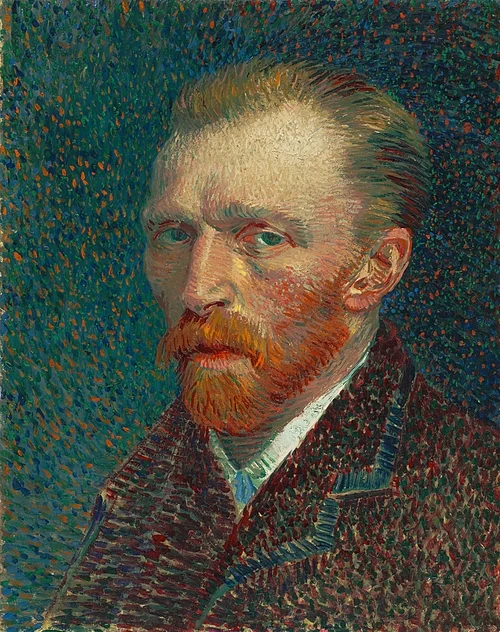
Vincent van Gogh’s words to his brother Theo remain one of the most powerful reminders that doubt and creation can exist side by side.
“If something in you yourself says ‘you aren’t a painter’ — IT’S THEN THAT YOU SHOULD PAINT.”
Written in 1883, the words capture something that still feels remarkably familiar today. Every artist has an internal voice that can tell them they are not ready. Not talented enough. Not original enough. Not experienced enough. Van Gogh’s response was almost rebellious: when that voice tells you not to paint, paint.
There is an important distinction here. The goal is not to pretend that doubt does not exist. It is to refuse to let that doubt make the decision for you. You can be uncertain and still pick up the brush. You can be nervous and still submit the work. You can wonder whether an idea will succeed and still give it a chance. Sometimes, creating is itself an answer.
Let The Doubt Stay There
Maybe doubt is not something artists need to defeat once and for all. Maybe it is simply one of the things that comes with caring deeply about what you make. If you did not care about the work, perhaps you would never question it. You would never wonder whether the painting could be better, whether the idea could go further, or whether you had expressed what you really wanted to say.
Doubt can become painful when it convinces you to stop before you have given yourself a chance. But there is another way to meet it. You can listen without obeying it.
You can take criticism without allowing it to define you. You can admire another artist without deciding that their success makes yours smaller. You can make something imperfect and still be proud that you made it. You can start over. You can change direction. You can leave a painting unfinished for a while and return to it when you are ready.
Most importantly, you can keep creating. The artists who spoke about doubt did not all find the same answer. Some accepted it. Some worked through it. Some learned to care less about outside opinions. Some used it as fuel. But underneath all these different approaches is the same quiet truth: doubt does not have to mean stop.
The next time it appears in your studio, perhaps you do not need to argue with it. Just make the next mark. Sometimes, that is enough.