
The Art World’s Biggest Forgery Scandals

A masterpiece hangs quietly on a museum wall.
For decades, visitors admire it. Scholars study it. Collectors dream of owning something like it. Its signature belongs to one of history’s greatest artists, its provenance appears convincing, and its place in art history seems beyond question.
Then, a single discovery changes everything. A laboratory analysis detects a pigment that didn’t exist when the painting was supposedly created. An old photograph exposes a fabricated ownership history.
Or a forgotten letter, hidden away in an archive for decades, reveals that the masterpiece everyone believed in was never painted by the artist whose name appears beside it.
Few stories in the art world are as captivating as the Art World’s Biggest Forgery Scandals. They combine the suspense of a detective novel with the stakes of history itself, reminding us that even the world’s leading experts, celebrated museums, and experienced collectors can sometimes be persuaded by a remarkably convincing story. They combine the suspense of a detective novel with the stakes of history itself, reminding us that even the world’s leading experts, celebrated museums, and experienced collectors can sometimes be persuaded by a remarkably convincing story.
Yet these stories are about far more than deception.
They reveal how artistic reputations are built, why provenance can be just as valuable as paint, how scientific breakthroughs continue to reshape our understanding of the past, and why some of history’s greatest mysteries remain unresolved. They remind us that art history is not a finished book but a living discipline, one that continues to evolve with every conservation project, archival discovery, and new piece of evidence.
The stories you’ll read here are drawn from documented cases that have shaped the art world, from celebrated forgery trials and museum investigations to conservation breakthroughs and long-standing scholarly debates. Some have been conclusively resolved through historical research, scientific analysis, and legal proceedings. Others continue to invite thoughtful discussion among experts. Where evidence remains open to interpretation, we’ve reflected that nuance rather than presenting debate as certainty.
What follows isn’t simply a collection of famous art forgeries. It’s a journey through the paintings that fooled the world’s foremost experts, the masterpieces that spent decades dismissed before being recognized, and the extraordinary discoveries that forever changed the way we think about authenticity.
Because sometimes the greatest mystery isn’t whether a painting is beautiful.
It’s whether the story we’ve been telling about it is true.
1. Han van Meegeren: How One Painter Convinced the World He Had Found New Vermeers
In 1937, the art world celebrated what many believed was the discovery of the century.
A previously unknown painting, The Supper at Emmaus, had emerged in the Netherlands. Softly illuminated figures gathered around Christ at a simple table, the quiet play of light recalling the unmistakable atmosphere of Johannes Vermeer. At a time when only a small number of Vermeer’s paintings were known, the possibility of finding another was extraordinary. Here, many believed, was the missing piece of the artist’s story.
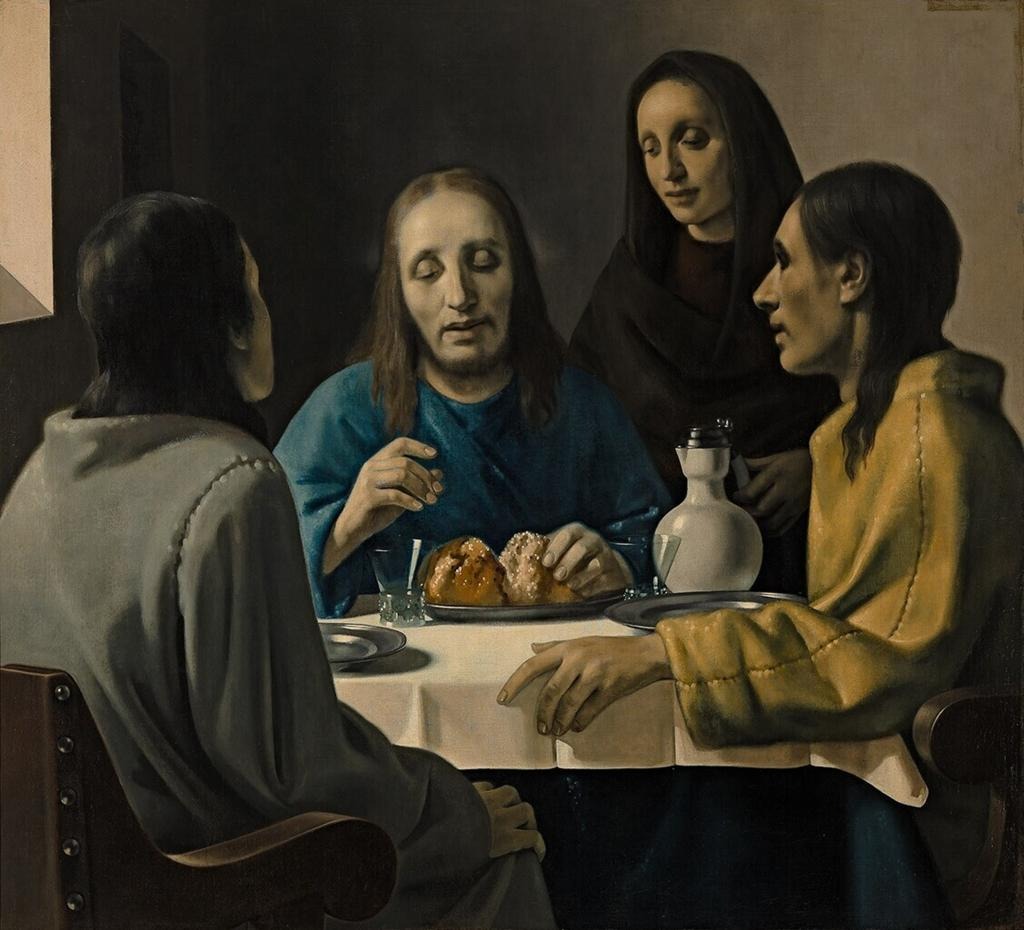
Few people were more convinced than the distinguished Dutch art historian Abraham Bredius. After examining the work, he praised it as a masterpiece and declared it an authentic Vermeer. His endorsement carried enormous weight. Soon, The Supper at Emmaus was acquired by the Museum Boijmans Van Beuningen, where it was celebrated as one of the museum’s greatest treasures. Newspapers hailed the discovery, scholars embraced it, and visitors admired what they believed was a long-lost work by one of the Dutch Golden Age’s greatest painters.
Everything about the painting seemed to make sense.
It looked like a Vermeer.
It fit existing theories about Vermeer’s artistic development.
And perhaps most importantly, it arrived at a moment when historians hoped there were still masterpieces waiting to be found.
That hope proved to be its greatest disguise.
The artist behind the painting wasn’t Vermeer at all. It was Han van Meegeren, a Dutch painter who had spent years studying the techniques of the Old Masters with remarkable precision. Frustrated by the lack of recognition for his own work, Van Meegeren embarked on an audacious experiment. Instead of copying a famous Vermeer, he created a painting that had never existed—one convincing enough to fill what scholars believed was a missing chapter in the master’s career.
It was a brilliant strategy.
A copied painting invites comparison.
A newly “discovered” painting invites excitement.
Van Meegeren immersed himself in Vermeer’s use of light, composition, and colour, but he also studied something less visible: the expectations of experts. He knew that Bredius had written about the possibility that Vermeer may have painted more religious subjects early in his career. Rather than recreating a domestic interior like The Milkmaid or Girl with a Pearl Earring, Van Meegeren painted a solemn biblical scene that seemed to confirm a theory scholars already wanted to believe.
Making the painting look old required almost as much ingenuity as painting it.
Van Meegeren obtained old canvases and period frames, experimented with pigments, and mixed modern synthetic resin into his oil paints to create a harder surface. After completing the work, he carefully baked the canvas to accelerate the curing process, then introduced fine cracks that resembled the natural craquelure seen on centuries-old paintings. While these methods would later be identified through scientific analysis, they were remarkably convincing in the 1930s, when technical examination was far less advanced than it is today.
For years, The Supper at Emmaus remained one of the art world’s proudest discoveries.
Then history intervened.
During the final years of the Second World War, another supposed Vermeer surfaced, Christ with the Adulteress. The painting had been acquired by Hermann Göring, who believed he was purchasing one of the Netherlands’ greatest cultural treasures. After the war, Dutch authorities traced the sale back to Van Meegeren. They suspected him of something far more serious than forgery: selling a national masterpiece to one of the highest-ranking Nazi officials.
Facing accusations of collaboration, Van Meegeren made an extraordinary confession.
The Vermeers were not Vermeers.
They were his own paintings.
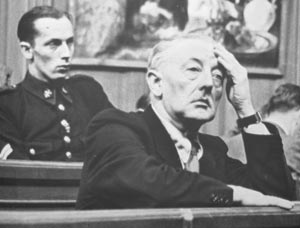
Investigators struggled to believe him. The claim seemed almost impossible. To prove it, Van Meegeren recreated his process under official supervision, painting another work in Vermeer’s style while experts watched. Subsequent examinations of the materials supported his confession, and the case that had begun as a wartime investigation became one of the most famous forgery trials in history. In 1947, he was convicted of forgery and fraud.
Nearly ninety years after The Supper at Emmaus first captivated the art world, it remains one of history’s most remarkable deceptions, not because it perfectly imitated Vermeer, but because it revealed something far more unsettling.
The painting succeeded because it confirmed a story experts were already hoping to tell.
And perhaps that is the enduring lesson of Han van Meegeren’s greatest forgery: the most convincing fake is rarely the one that looks the most authentic. It is the one that arrives at exactly the moment the world is ready to believe it.
Perfect. Before writing Section 2, I asked myself the same editorial questions.
2. Wolfgang Beltracchi: The Forger Who Didn’t Copy Paintings – He Invented Their History

If Han van Meegeren proved that experts could be fooled by a convincing painting, Wolfgang Beltracchi proved something even more unsettling.
A convincing painting was only half the deception.
The rest was the story.
For decades, Beltracchi quietly introduced “newly discovered” works into the international art market under the names of some of the twentieth century’s most celebrated artists, including Max Ernst, Heinrich Campendonk, André Derain, and Fernand Léger. Unlike many forgers before him, he rarely copied existing paintings. Instead, he imagined works that seemed as though they had simply vanished from history before unexpectedly resurfacing decades later.
It was an approach that made his forgeries extraordinarily difficult to detect.
Born in Germany in 1951, Beltracchi had an undeniable gift for painting. His father, who restored church murals, introduced him to traditional techniques from an early age, giving him a deep understanding of composition, colour, and materials. But his greatest talent wasn’t imitation.
It was an observation.
Before beginning painting, Beltracchi immersed himself in an artist’s world. He studied exhibition catalogues, letters, photographs, and catalogue raisonnés, looking not for famous masterpieces but for the gaps between them. If an artist’s biography suggested a period during which undocumented works might plausibly exist, Beltracchi imagined what one of those missing paintings could have looked like.
The result wasn’t a copy.
It was a believable possibility.
Yet even the most convincing painting needed something else to survive scrutiny.
It needed a past.
Together with his wife, Helene, and several associates, Beltracchi built one of the most elaborate fictional provenances in modern art history. Many of the paintings were presented as part of a supposedly forgotten collection assembled before the Second World War by Helene’s grandfather, Werner Jägers. It was a story that felt entirely plausible. Across Europe, genuine collections had been scattered, hidden, or lost during the war, leaving countless gaps in ownership records. The idea that remarkable paintings could emerge from one such forgotten collection seemed almost romantic.
To strengthen the illusion, the couple didn’t rely on paperwork alone.
They attached old gallery labels to the backs of canvases, sourced period frames, and even staged vintage-looking photographs showing Helene dressed as her grandmother posing beside several of the paintings. Those photographs became powerful pieces of evidence, persuading collectors and specialists that the works had existed for generations.
One painting, however, would expose everything.
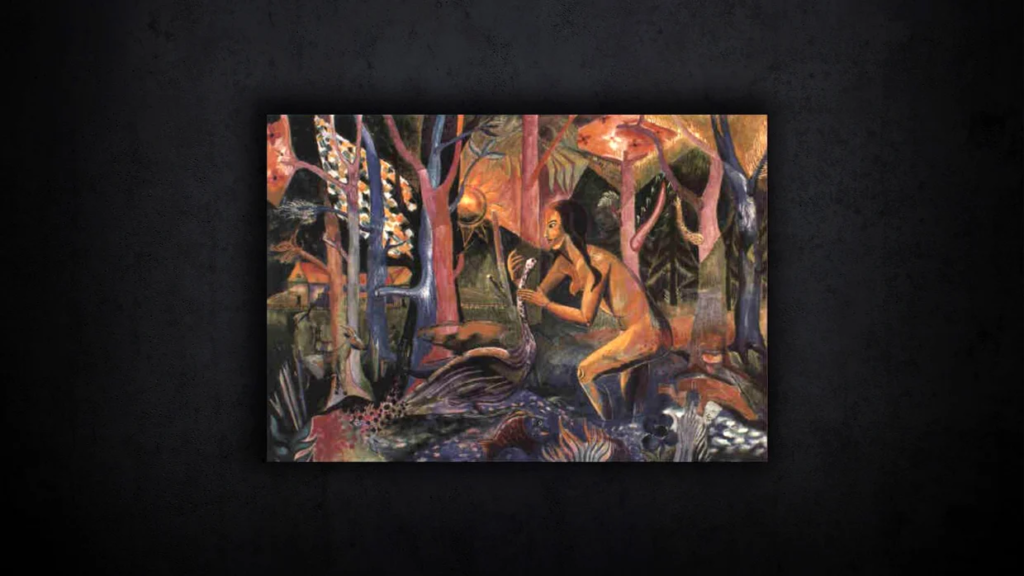
Red Picture with Horses, attributed to Heinrich Campendonk, appeared to be an exciting rediscovery from the artist’s early career. Rich with bold colours and expressive forms, it reflected Campendonk’s visual language so convincingly that respected experts accepted it as authentic. Backed by its carefully constructed provenance, the painting entered the market and sold for millions of euros, becoming one of the most celebrated “discoveries” of its time.
The deception might have continued for years if not for a routine scientific examination.
Before a subsequent sale, conservators analysed the painting’s pigments. Among them, they identified a modern variety of titanium white that was not commercially available when the work was supposedly painted in 1914. The brushwork was persuasive. The composition was convincing. Even the provenance appeared coherent.
The chemistry told a different story.
That single discovery prompted investigators to revisit other works connected to the same collection. As researchers examined provenance records, compared archival documents, and analysed additional paintings, the carefully woven narrative began to unravel. What had seemed like an extraordinary sequence of rediscoveries was revealed to be one of the largest forgery operations the modern art market had ever encountered.
In 2011, Wolfgang and Helene Beltracchi were convicted in Germany of forgery and fraud. The case sent shockwaves through the international art world, not simply because of the money involved, but because it demonstrated how easily confidence could be manufactured when a compelling story accompanied a convincing painting.
Beltracchi’s greatest creation was never Red Picture with Horses.
It was the fictional history that made people believe the painting had always existed.
His story reminds us that authenticity is rarely established by brushstrokes alone. Every artwork carries two histories: the one painted onto the canvas and the one written through documents, ownership records, exhibition labels, and memory.
When those histories appear to agree, belief often follows.
And Beltracchi understood better than almost anyone that, in the art world, belief can sometimes be the most valuable medium of all.
3. The Knoedler Gallery: When One of America’s Most Trusted Galleries Sold Millions in Fake Masterpieces
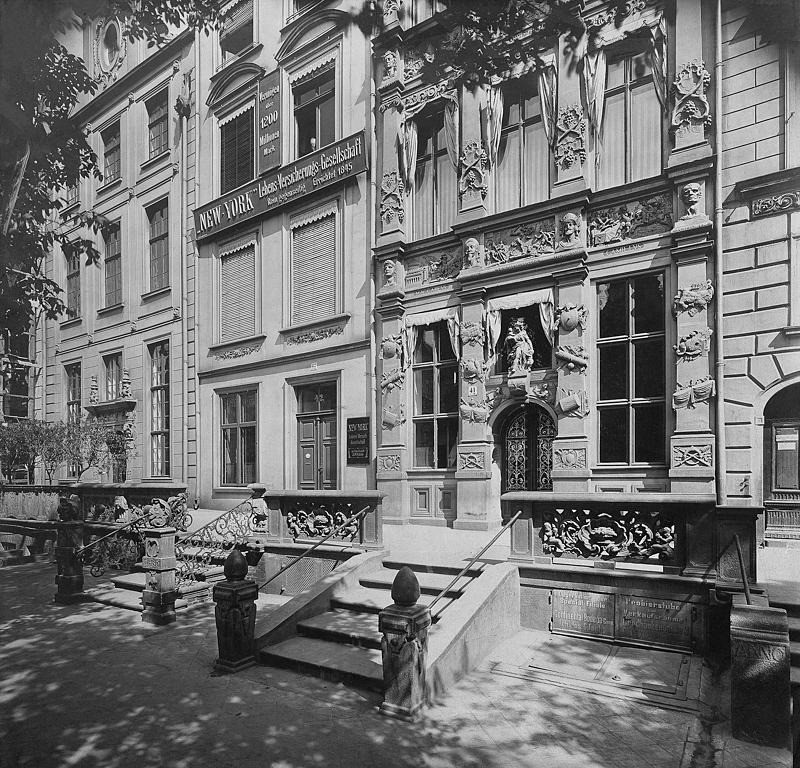
For more than a century and a half, walking into Knoedler & Company meant stepping into one of the most respected names in the American art world.
Founded in 1846, the gallery had built its reputation by selling works from some of history’s greatest artists and advising generations of influential collectors. Museums, philanthropists, and seasoned buyers trusted its expertise. A painting that passed through Knoedler carried more than a price tag, it carried the weight of the gallery’s reputation.
That reputation would eventually become its greatest weakness.
In the mid-1990s, a series of extraordinary paintings began arriving at the gallery through art dealer Glafira Rosales. According to Rosales, the works came from a secret private collection assembled decades earlier by a mysterious collector who had purchased directly from artists before they became famous. The owner supposedly wished to remain anonymous, and because the collection had never been exhibited publicly, the paintings had escaped the attention of scholars for generations.
It sounded almost too remarkable to be true.
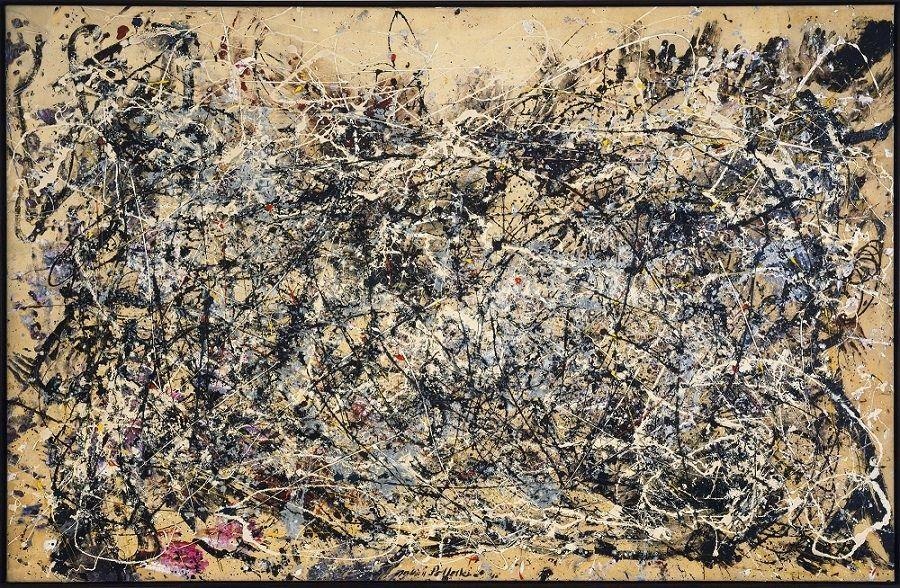
Unknown masterpieces by some of the most celebrated figures of Abstract Expressionism, including Mark Rothko, Jackson Pollock, Robert Motherwell, Willem de Kooning, and Franz Kline, were suddenly appearing one after another.
Yet many people believed the story.
After all, art history is filled with remarkable rediscoveries. Lost collections have resurfaced before, and forgotten masterpieces have emerged from private homes, attics, and family estates. The possibility wasn’t impossible.
It was simply extraordinary.
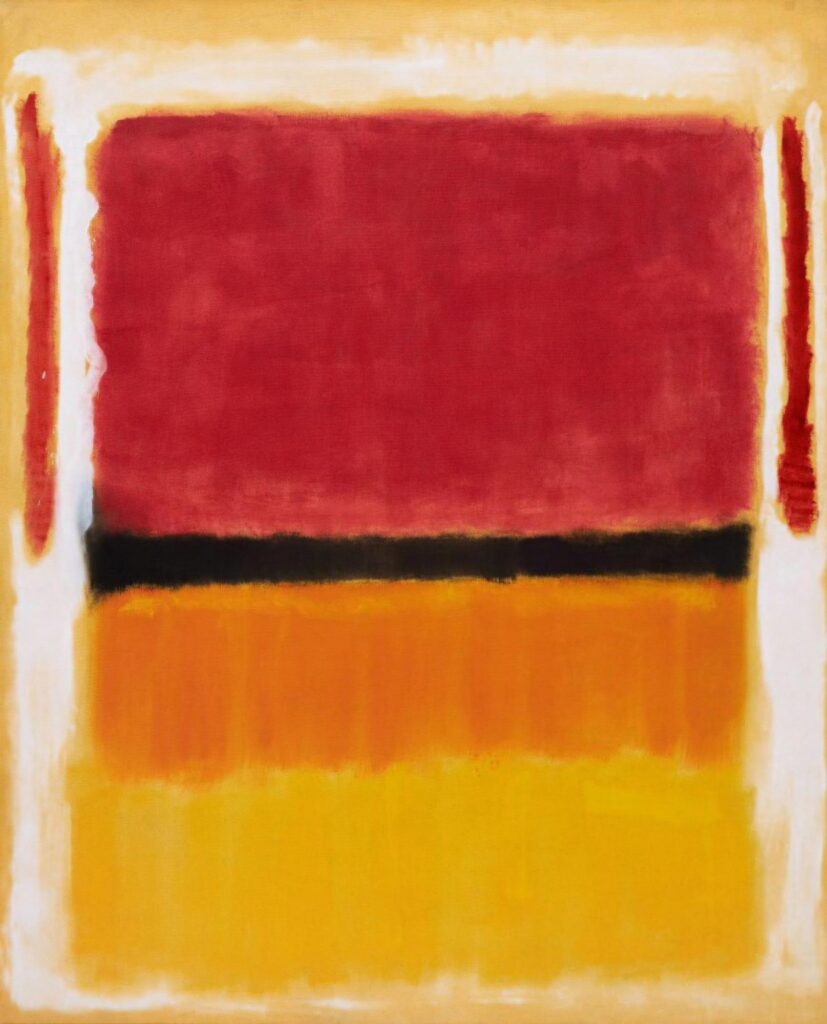
Among the most significant works sold was a painting attributed to Mark Rothko, whose luminous fields of colour had made him one of the defining artists of post-war America. The canvas possessed the visual qualities collectors expected from Rothko’s work, subtle transitions of colour, atmospheric depth, and emotional intensity. Supported by what appeared to be a plausible ownership history, it was purchased for millions of dollars.
Other paintings attributed to Pollock and Motherwell followed similar paths into prestigious private collections.
For years, the market accepted them.
Collectors proudly displayed them.
Experts debated them.
The gallery stood behind them.
The deception survived because no single element appeared suspicious on its own. The paintings looked convincing. The provenance seemed plausible. The gallery was highly respected. Each piece of the puzzle appeared to reinforce the next, creating an almost unbreakable chain of confidence.
But confidence is not evidence.
As questions about several paintings began to emerge, conservators and scientists subjected them to increasingly detailed technical examinations. Analyses of pigments, binding media, and other materials revealed substances that should never have appeared in works supposedly painted during the 1940s and 1950s. Some pigments and synthetic materials had not yet been commercially available when the artists were said to have created them.
The paintings weren’t revealing the truth.
Their chemistry was.
The investigation eventually led authorities to Pei-Shen Qian, a little-known artist living in Queens, New York. According to court records and subsequent investigations, Qian had painted many of the works in the styles of famous Abstract Expressionists, while fabricated provenance helped transform them into seemingly priceless discoveries before they reached Knoedler.
The revelations sent shockwaves through the art market.
Collectors filed lawsuits seeking to recover millions of dollars. Glafira Rosales later pleaded guilty to fraud-related charges in federal court. Although many legal questions surrounding other individuals involved remained complex, the damage to Knoedler’s reputation proved irreversible.
In 2011, after 165 years in business, the gallery closed its doors.
It wasn’t simply the end of one institution.
It marked the collapse of an assumption that had quietly shaped the art market for generations: that prestige alone could guarantee authenticity.
Today, the Knoedler scandal is studied by museums, auction houses, and collectors around the world because it demonstrated that even the most respected institutions can be deceived when compelling stories, incomplete provenance, and market enthusiasm align. It also reinforced a lesson that continues to shape authentication today, every claim, no matter who presents it, must be supported by evidence.
Because sometimes, the most convincing forgery isn’t hanging on the gallery wall.
It’s the confidence that tells everyone to stop looking closer.
4. Salvador Dalí: How One Artist Unintentionally Created a Counterfeiter’s Dream
Unlike the stories of Han van Meegeren or Wolfgang Beltracchi, this mystery doesn’t begin with a forged masterpiece.
It begins with a genuine signature.
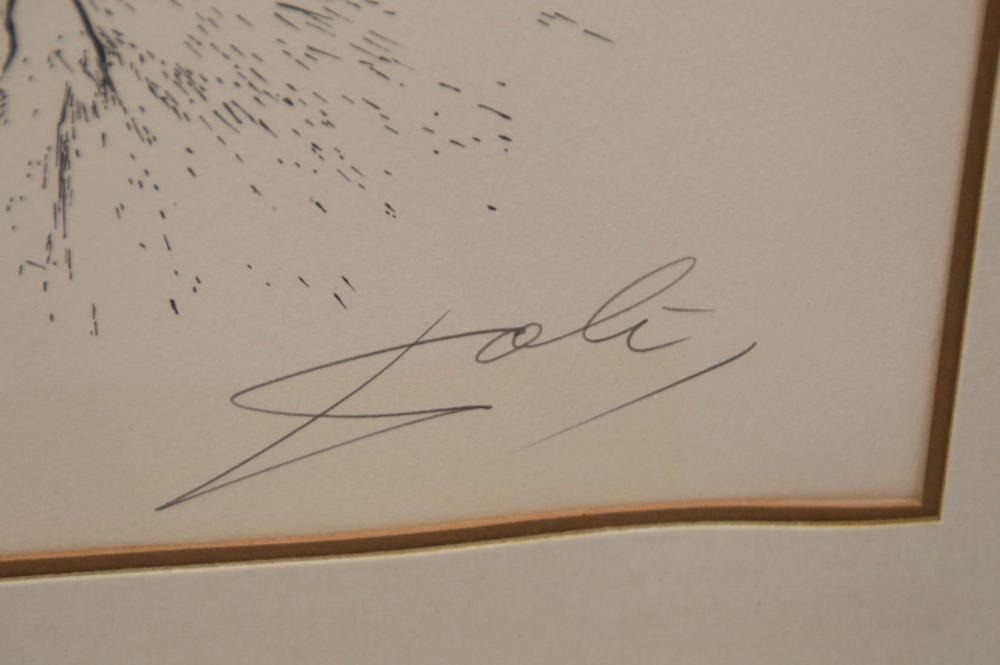
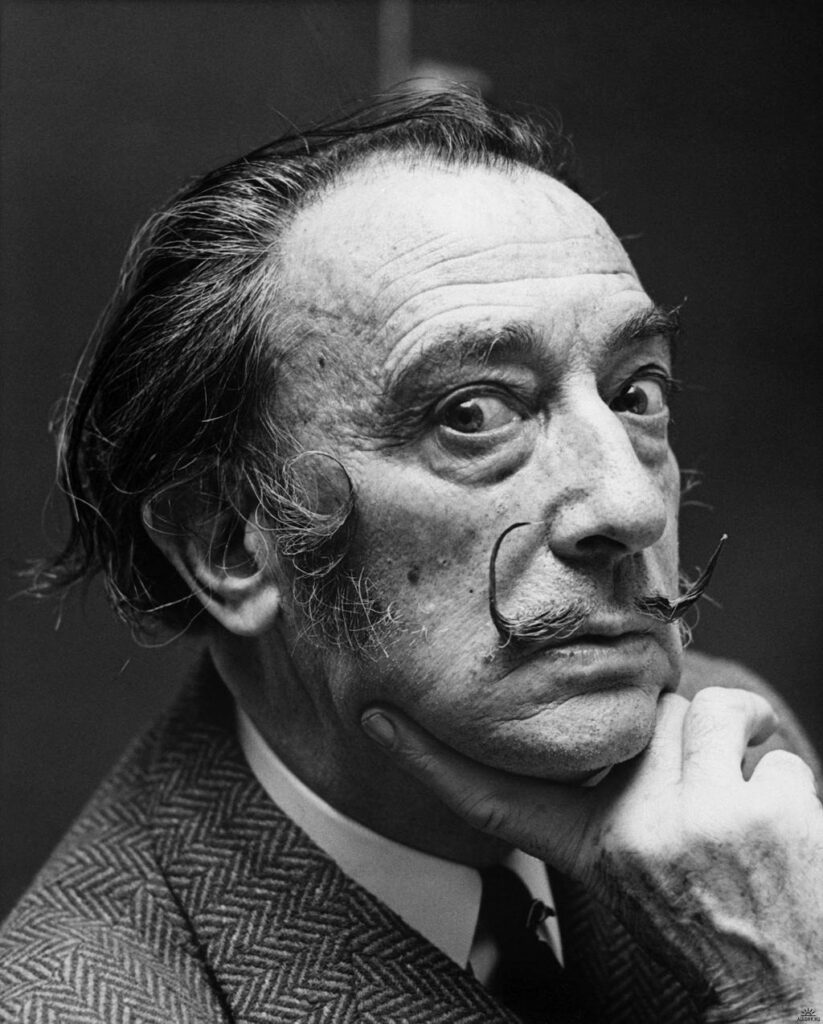
By the middle of the twentieth century, Salvador Dalí had become one of the world’s most recognizable artists. His melting clocks, dreamlike landscapes, and theatrical public persona transformed him into a cultural icon whose work was sought after by collectors far beyond the walls of museums. As demand for his art grew, so did interest in something more affordable than an original painting, signed prints and limited editions.
That booming market would eventually become one of the most controversial chapters in Dalí’s legacy.
Unlike an original oil painting, which is usually unique and carefully documented, prints exist in multiple impressions. Their value depends not only on the image itself but also on edition size, publishing records, documentation, and, perhaps most importantly, the artist’s signature. A signed print can be worth significantly more than an unsigned one, making the autograph almost as valuable as the artwork.
During the 1960s and 1970s, multiple publishers worked with Dalí on graphic editions. Numerous documented accounts, including testimony from dealers, publishers, and later investigations, describe Dalí signing blank sheets of paper that were intended to be used for future print editions. While historians continue to debate the scale of the practice and the circumstances surrounding it, there is broad agreement that it contributed to later confusion in the marketplace.
Those blank signatures created an opportunity.
Once a genuine autograph existed on an otherwise empty sheet, dishonest publishers or counterfeiters could later print an image above it and market the finished work as an authentic signed Dalí edition. To an unsuspecting buyer, the signature was genuine. The problem lay in everything surrounding it, when the print had been produced, who had authorised it, and whether it truly belonged to a legitimate edition.
The result was decades of uncertainty.
Unlike Dalí’s major paintings, which are generally well documented in museum collections and catalogue raisonnés, thousands of graphic works entered the international market through different publishers, dealers, and distributors. Many are entirely authentic. Others have disputed publishing histories. Some are outright counterfeit. Distinguishing between them often requires extensive provenance research and expert examination.
Ironically, Dalí’s best-known painting has never been part of that confusion.
The Persistence of Memory, with its iconic melting clocks, remains securely housed in the Museum of Modern Art and has an unbroken ownership history. There is little debate about the authenticity of the original canvas. Yet its fame has inspired countless posters, reproductions, decorative prints, and unauthorized copies, reminding us how easily an iconic image can be separated from its original context.
Another body of work frequently discussed by authentication specialists is Dalí’s illustrated edition of The Divine Comedy. Originally commissioned as a series of watercolours and later translated into authorised prints, the project became enormously successful. Its popularity also led to numerous later reproductions and disputed editions, making it one of the most closely examined print series associated with the artist.
Today, reputable auction houses and galleries rarely evaluate a Dalí print by its signature alone. Specialists examine edition records, publisher documentation, paper type, printing techniques, provenance, and catalogue references before offering an opinion on authenticity. In many cases, the history surrounding the print proves just as important as the artwork itself.
Dalí’s story reminds us that forgery doesn’t always begin with a criminal standing before an easel.
Sometimes it begins when commercial success outpaces careful documentation.
His legacy isn’t one of deception but of complexity, a reminder that authenticity is rarely determined by a single mark in the corner of a page.
Because in the world of prints, the most important question isn’t “Did Dalí sign this?”
It’s “What exactly did he sign?”
5. Banksy: When Authenticity Became Part of the Artwork
For centuries, artists protected their reputations by signing their work.
Banksy chose a different path.
He never revealed his identity.
That decision transformed him into one of the world’s most recognizable artists, and created one of contemporary art’s most unusual authentication challenges.
If no one officially knows who the artist is, how can anyone prove an artwork is genuine?
Unlike a painting hanging safely in a studio, Banksy’s works often appear overnight on public walls, bridges, buildings, and city streets. They are exposed to weather, vandalism, redevelopment, and, increasingly, attempts to remove and sell them. Many disappear within days. Others are carefully preserved behind protective glass. Some survive only through photographs taken before the wall was painted over or demolished.
In other words, the artwork’s story begins long before it ever reaches a gallery.
One image, more than any other, came to define Banksy’s career.
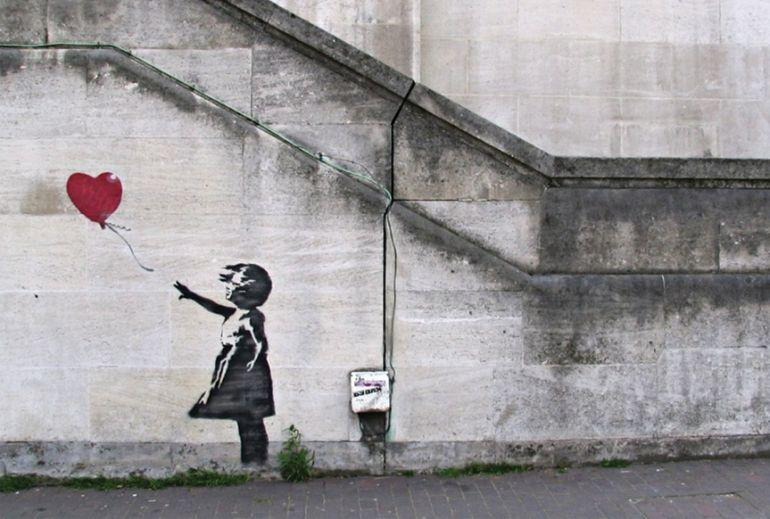
Girl with Balloon first appeared as a stencil mural in London in 2002. Showing a young girl reaching toward a heart-shaped balloon drifting just beyond her grasp, the work quickly became one of the most recognizable images in contemporary art. It has been interpreted as a symbol of hope, loss, love, and resilience, though Banksy himself has rarely explained its meaning.
Its popularity also made it one of the most frequently reproduced images in modern art.
Posters, prints, murals, merchandise, and countless unofficial copies appeared around the world. Many openly acknowledged they were reproductions. Others blurred the line between homage and imitation. As demand for Banksy’s work exploded, so too did the need for a reliable way to distinguish authentic works from unauthorised copies.
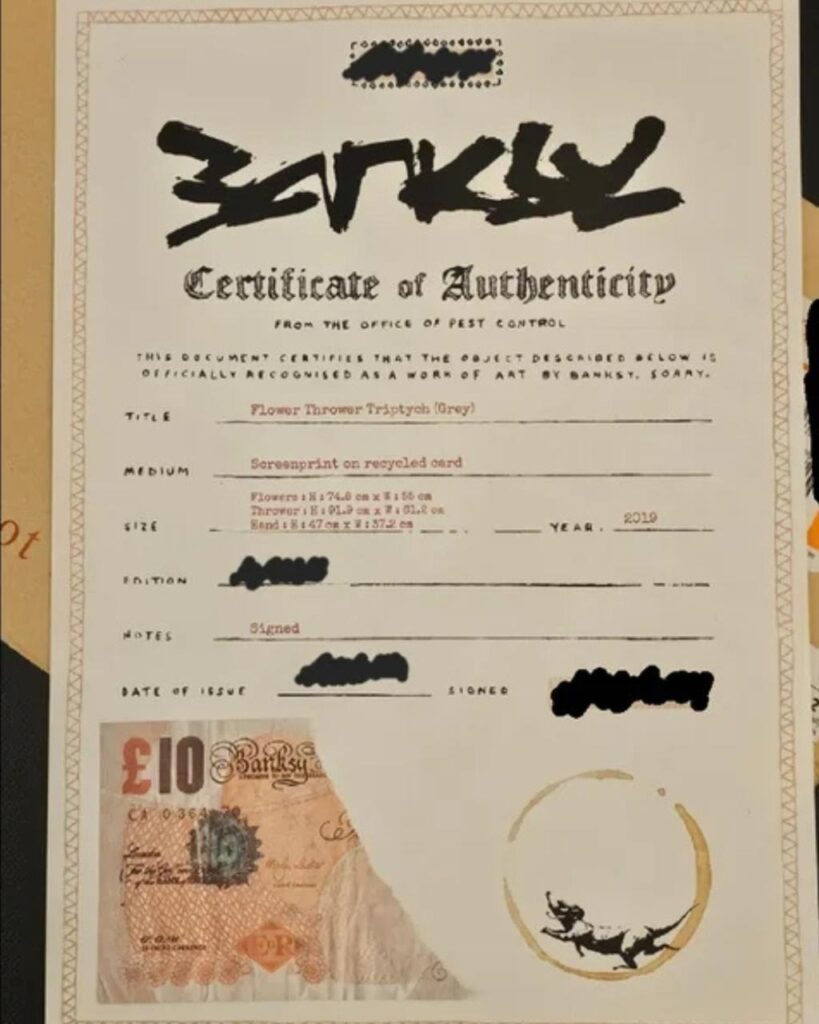
That need led to the creation of the Pest Control Office in 2009.
Pest Control serves as the official authentication body for Banksy’s works, issuing certificates for eligible artworks and providing the documentation relied upon by collectors, galleries, museums, and auction houses. For portable works attributed to Banksy, authentication through Pest Control has become the accepted standard within the art market. Without that documentation, even a convincing work may struggle to gain acceptance or achieve its expected value.
Then, in 2018, Banksy reminded the art world that authenticity isn’t always the end of a story.
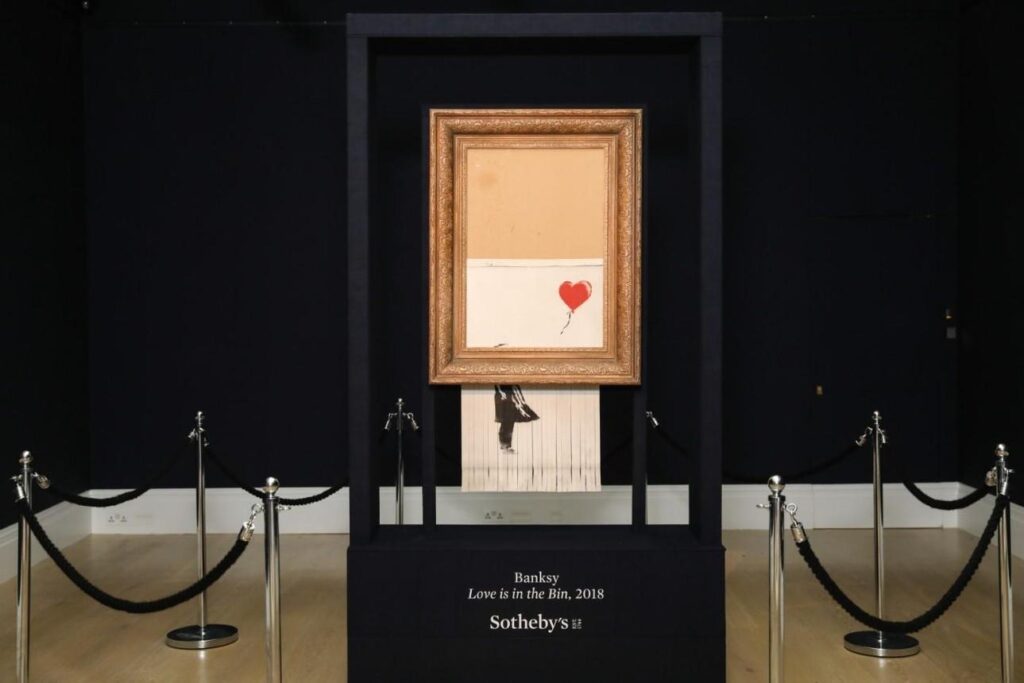
At an evening sale held by Sotheby’s, a framed version of Girl with Balloon sold for more than £1 million. Moments after the auctioneer’s hammer fell, a hidden shredder concealed within the frame activated, partially slicing the canvas into thin strips before a stunned audience.
The event instantly became one of the most extraordinary moments in auction history.
Rather than destroying the artwork, the act transformed it.
Banksy confirmed that the partially shredded piece would become a new work titled Love is in the Bin. What had begun as a dramatic intervention became part of the artwork’s provenance, an event inseparable from the object itself.
When Love is in the Bin returned to auction in 2021, it sold for more than £18 million, illustrating a remarkable truth about contemporary art: sometimes an artwork’s history can become just as significant as its physical form.
Banksy’s career has challenged long-held assumptions about ownership, authorship, and authenticity. His murals exist in public spaces yet are often treated as valuable cultural objects. His identity remains unknown, yet his works require one of the art world’s most rigorous authentication processes. His most famous artwork became even more valuable after being partially destroyed in front of an audience.
Few artists have demonstrated so clearly that authenticity is no longer determined solely by a signature in the corner of a canvas.
It is shaped by documentation, provenance, public history, and trust.
Banksy’s greatest achievement may not be that he remained anonymous.
It is that he transformed authenticity itself into part of the artwork’s story.
6. When a Masterpiece Was Mistaken for a Forgery

By now, you might think every authentication story ends the same way.
A painting is celebrated. Experts admire it. Science intervenes. The masterpiece turns out to be fake. But sometimes, the greatest mistake isn’t believing a forgery. It’s failing to recognize the real thing.
In 1888, during one of the most productive periods of his life, Vincent van Gogh painted a rugged Provençal landscape near the ancient abbey of Montmajour in southern France. The work captured scrub-covered hills, twisted vegetation, and the warm evening light that fascinated the artist during his time in Arles.
He called it Sunset at Montmajour.
Unlike many of Van Gogh’s best-known paintings, however, this one quietly disappeared into private ownership. In the early twentieth century, it was acquired by a Norwegian collector, but when questions about its authorship emerged decades later, specialists could not confidently attribute it to Van Gogh. The painting’s style appeared unusual, and earlier examinations found insufficient evidence to authenticate it.
For years, it lived in uncertainty.
It wasn’t displayed as a masterpiece.
It wasn’t celebrated in exhibitions.
Instead, it became a painting surrounded by doubt.
Had the story ended there, Sunset at Montmajour might have remained one more forgotten landscape in a private collection.
Instead, advances in research gave it a second chance.
Beginning in the early twenty-first century, specialists at the Van Gogh Museum reopened the investigation. Rather than relying on style alone, they assembled evidence from multiple disciplines. Conservators analysed the pigments and canvas, historians compared the landscape with Van Gogh’s letters from Arles, and researchers examined the materials against other authenticated works from the same period.
Piece by piece, the evidence began to align. The pigments matched those Van Gogh was known to use. The canvas corresponded with materials from his Arles period.
Most compelling of all, the landscape itself closely matched descriptions found in letters Van Gogh wrote to his brother, Theo, in July 1888, where he described painting the countryside around Montmajour.
In 2013, after years of collaborative research, the Van Gogh Museum officially authenticated Sunset at Montmajour as a genuine work by Vincent van Gogh.
More than 120 years after it had been painted, the masterpiece finally reclaimed its place in the artist’s catalogue.
Not every mystery reaches such a clear conclusion.
One of the most debated examples in art history remains La Bella Principessa.
The delicate portrait, executed in coloured chalk, ink, and vellum, was sold at auction in 1998 as the work of a nineteenth-century German artist. Years later, some scholars, including the late Leonardo specialist Martin Kemp, argued that the drawing could instead be the work of Leonardo da Vinci. They pointed to details such as the left-handed hatching, the materials used, and stylistic similarities with Leonardo’s known works.
Other specialists remain unconvinced.
Unlike Sunset at Montmajour, whose attribution is now broadly accepted, La Bella Principessa continues to divide opinion within the scholarly community. Rather than representing a solved mystery, it reminds us that art history sometimes lives in shades of probability rather than certainty.
These stories reveal a truth that is easy to overlook amid tales of spectacular forgery.
Authentication is not simply a search for deception. It is also a search for understanding.
Every painting must be judged on the strength of the evidence available at the time, and as new technologies, archival discoveries, and conservation techniques emerge, yesterday’s conclusions may need to be revisited.
Forgeries remind us that appearances can deceive. But rediscoveries remind us of something equally important:
Sometimes, history has overlooked a masterpiece simply because no one yet knew how to recognize it.
And that may be the most hopeful mystery in the art world, that somewhere, waiting quietly in a private collection, museum storage room, or forgotten estate, another genuine masterpiece is still waiting to be seen for what it truly is.
7. Could Museums Still Be Displaying Undiscovered Forgeries?

Walk through almost any major museum, and it’s easy to assume every label tells a final, unquestionable truth.
“Rembrandt.”
“Titian.”
“Peter Paul Rubens.”
The names feel definitive, as though every mystery has already been solved. In reality, museums rarely think that way.
Most curators would tell you that attribution is not a permanent verdict but the best conclusion supported by the available evidence. As conservation techniques improve, archives are rediscovered, and scholarship evolves, paintings are routinely re-examined. Sometimes those investigations reinforce what experts already believed. Occasionally, they rewrite history.
That doesn’t necessarily mean a museum has been displaying a forgery.
More often, it means that our understanding of an artwork has become more precise.
One of the clearest examples can be found in the work of the Rembrandt Research Project. Established in 1968, the project brought together leading specialists to study paintings attributed to Rembrandt using historical research, technical examination, and conservation science. Over several decades, the team reassessed dozens of works. Some paintings long believed to be by Rembrandt were reattributed to members of his workshop, while others were later reconsidered as evidence evolved.
For visitors, a change from “Rembrandt” to “Workshop of Rembrandt” may seem minor.
For art historians, it represents years of painstaking research.
It also reflects the reality of seventeenth-century studios. Masters such as Rembrandt, Peter Paul Rubens, and Titian often worked alongside assistants and apprentices. Students prepared canvases, painted backgrounds, or completed sections under the master’s supervision. As a result, authorship is not always a simple question with a simple answer. Some paintings are entirely by the master. Others are collaborative works. Some were produced in the studio after the master’s design, while a few were created later by followers inspired by the artist’s style.
That complexity explains why museum labels often include phrases such as “Attributed to,” “Workshop of,” “Circle of,” or “Follower of.”
These are not signs of uncertainty or weakness.
They are signs of intellectual honesty.
Museums have increasingly embraced transparency, publishing conservation reports, technical images, and updated catalogue entries whenever new evidence emerges. Institutions such as the National Gallery and the Metropolitan Museum of Art regularly share research showing how infrared imaging, X-radiography, pigment analysis, and archival discoveries continue to refine our understanding of works in their collections.
Sometimes, a painting once celebrated as an autograph masterpiece is reclassified as a workshop production.
Occasionally, the opposite happens, with new evidence strengthening an attribution that had long been questioned. Both outcomes are part of the same scholarly process. That is why museums rarely speak in absolutes.
Their responsibility is not to defend an attribution forever, but to revise it when stronger evidence appears. In many ways, changing a label is not admitting failure, it is demonstrating that research is still alive.
So, could museums still be displaying an undiscovered forgery?
The truthful answer is that no museum can completely rule out the possibility. Collections contain millions of objects, many acquired long before today’s scientific methods existed. There will always be paintings that invite new questions, fresh investigations, and occasional surprises.
Yet that uncertainty should inspire confidence rather than doubt. It shows that museums are willing to challenge their own conclusions instead of protecting them.
Perhaps that is the most reassuring lesson of all. The world’s greatest museums are not built on certainty. They are built on curiosity, the same curiosity that continues to uncover the truth, one painting at a time.
8. The Next Great Forgery May Never Touch a Canvas
Every forgery in this article has one thing in common.
It began with a physical object. A canvas. A panel. A sheet of paper. A signature.
For centuries, the challenge of authentication has revolved around tangible evidence, brushstrokes, pigments, wood panels, varnish, provenance, and the countless clues hidden within an artwork’s material history.
But the next great authentication challenge may arrive without any of those things.
As digital art has become an established part of the contemporary art world, questions about authorship and authenticity have evolved alongside it. Artists now create works entirely on computers, use algorithms as creative tools, or collaborate with artificial intelligence to generate new forms of visual expression. These practices are increasingly represented in galleries, museums, and major exhibitions, expanding, not replacing, the traditional definition of what art can be.
At the same time, they introduce new questions.
If a digital file can be copied perfectly without losing quality, what makes one version the original? If an artist uses artificial intelligence as part of the creative process, where does authorship begin and end?
And if someone deliberately presents an AI-generated image as the lost work of a historical artist, what evidence will future experts rely on to uncover the deception?
Unlike Han van Meegeren, tomorrow’s forgers may never need to mix pigments or artificially age a canvas. Instead, they may manipulate metadata, fabricate digital ownership records, or create convincing false histories around digital artworks. The medium may change, but the underlying strategy remains strikingly familiar: build a believable story, and people are more likely to accept the object that accompanies it.
The art world is already preparing for that future.
Museums, archives, artists, and auction houses are developing new ways to document digital works, preserve creation records, and establish clear chains of ownership. Secure certificates, detailed acquisition documentation, and evolving digital preservation practices are becoming increasingly important as collections expand beyond traditional media. No single system offers a perfect solution, but together they reflect a lesson history has taught repeatedly, authenticity depends on evidence, not assumption.
Looking back across the stories in this article, it becomes clear that the tools of forgery have always evolved.
Han van Meegeren understood the expectations of art historians. Wolfgang Beltracchi understood the power of provenance. The Knoedler Gallery scandal exposed the risks of unquestioned institutional trust. Banksy showed that documentation could become as important as the artwork itself. The future will present different challenges, but perhaps not different questions. Every generation inherits new technologies. Every generation also inherits the responsibility to ask the same simple question before accepting an extraordinary discovery:
How do we know it’s real?
That question has shaped the art world for centuries.
It will continue to shape it long after the paint has dried, and even when there is no paint at all.
Conclusion: The Real Mystery Was Never the Painting
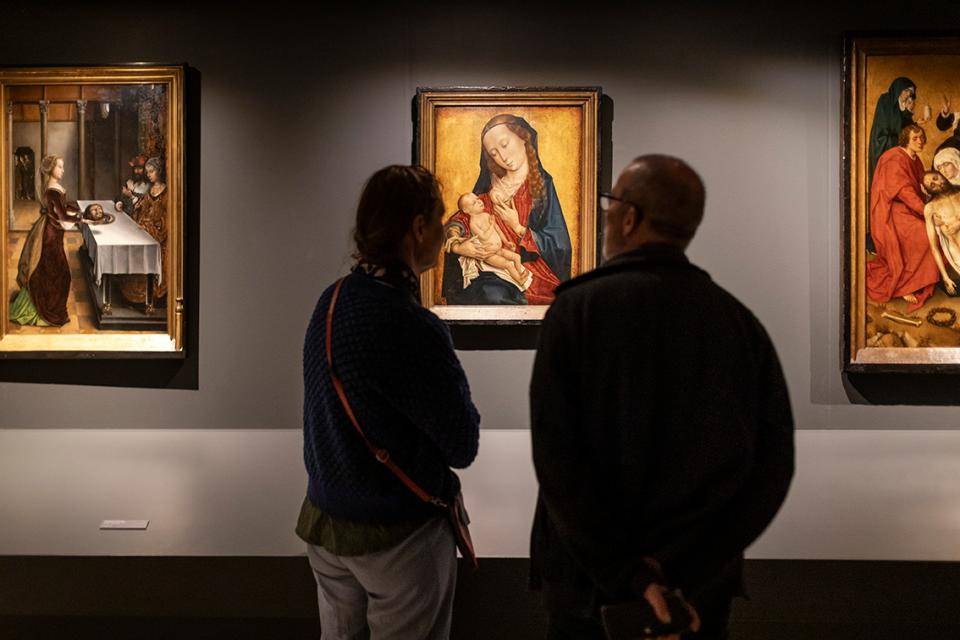
By the end of these stories, it becomes clear that history’s greatest art forgeries were never simply acts of imitation.
They were acts of persuasion.
Han van Meegeren convinced scholars they had found a missing Vermeer because the discovery fit a story they already believed. Wolfgang Beltracchi showed that a carefully constructed provenance could be just as convincing as the painting itself. The Knoedler Gallery scandal reminded us that even the most respected institutions are not immune to misplaced trust. Salvador Dalí’s complicated print legacy demonstrated how commercial success can blur the line between authenticity and uncertainty, while Banksy’s work revealed that, in contemporary art, documentation can become as important as the object itself.
Each story unfolded differently, yet they all arrived at the same place.
Authenticity has never depended on a signature alone.
It lives in the evidence surrounding an artwork, in its materials, its history, its documentation, and the countless people who dedicate their lives to studying and preserving it. That is why museums continue to re-examine paintings, conservators keep uncovering hidden layers beneath the surface, and art historians remain willing to question conclusions that once seemed certain. In the art world, certainty is never taken for granted; it is earned through careful research and, sometimes, reconsidered when new evidence comes to light.
Perhaps that is what makes these mysteries so compelling.
Every forgery forces us to look more carefully.
Every rediscovered masterpiece reminds us to remain open to surprise.
Together, they reveal that art history is not a finished story written once and for all. It is an ongoing conversation, one that continues to evolve with every conservation project, archival discovery, and scientific breakthrough.
The next time you find yourself standing in front of a celebrated painting, take a moment before reading the label.
Look at the brushstrokes.
Notice the light.
Consider the journey that brought the artwork to that wall.
Because behind every masterpiece, whether it was questioned, forgotten, rediscovered, or fiercely defended, lies a remarkable story of people searching for the truth.
And perhaps that is the greatest mystery of all.
Not whether a painting is real.
But why, centuries later, we are still so captivated by the search for authenticity.
Which mystery caught your attention the most?
If you enjoy uncovering the mysteries hidden in famous artworks, you might also like our feature on The Most Haunting Stares Ever Captured in Art, where we explore paintings whose unforgettable gazes continue to intrigue viewers centuries later.