
This Artist Uses Collage to Rebuild a Home That No Longer Exists │Catarina Diaz
At Arts to Hearts Project, our 100 Emerging Artists of 2026 is a hundred artists from every corner of the world, each bringing their own roots and story into their work. Getting to know them all, and seeing how many different places a piece of art can come from, is one of the best parts of what we do.
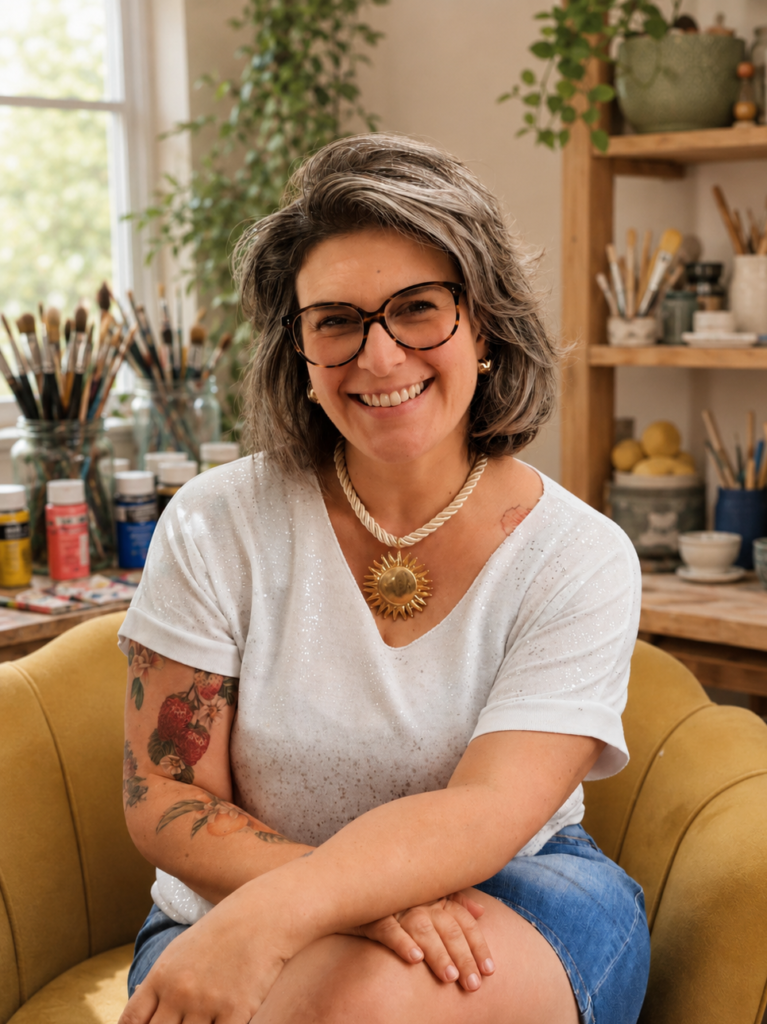
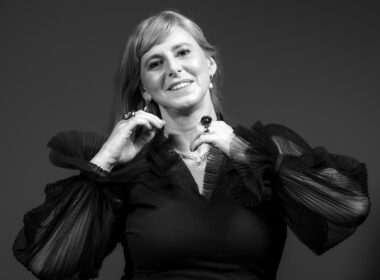
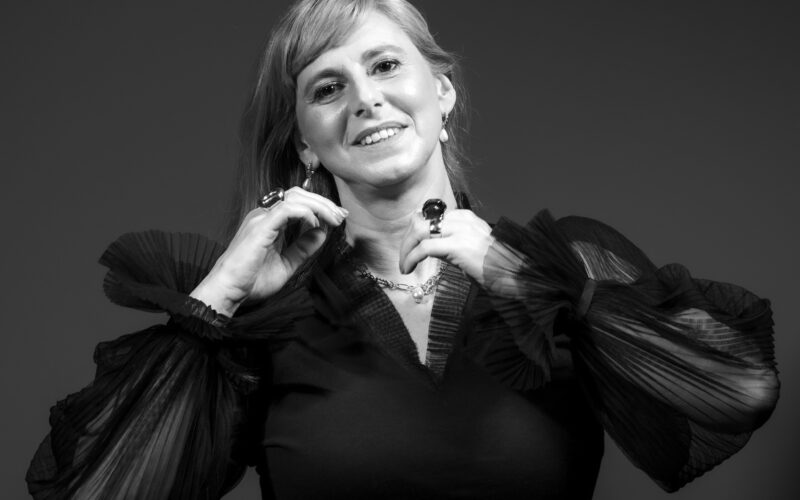
Among the many artists selected for this edition is Catarina Diaz, who carries several worlds inside her at once and weaves them together into something rich, layered, and whole. And that is where the magic of her work begins.
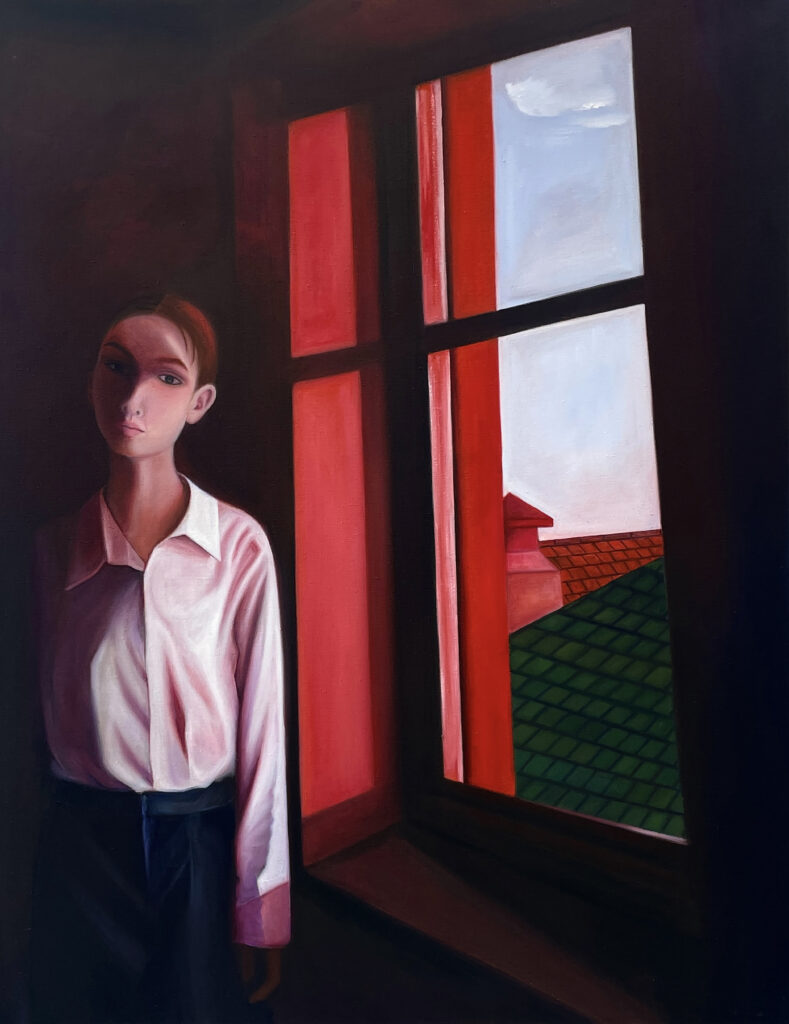
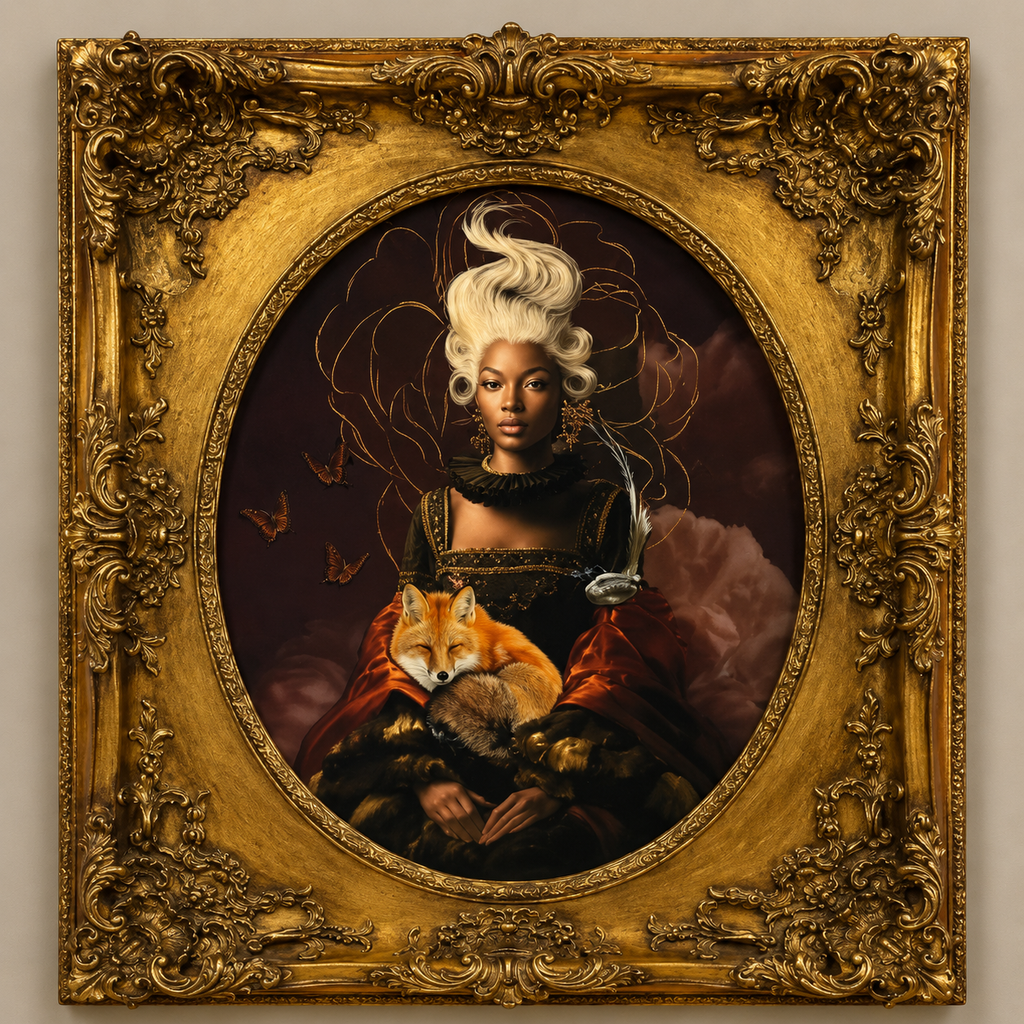
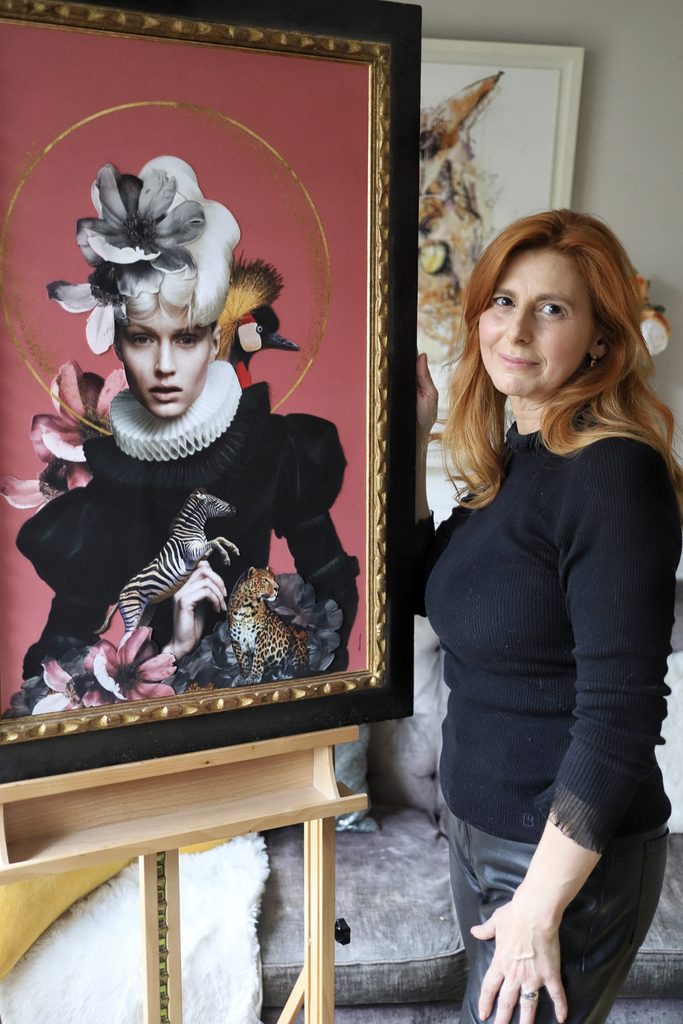
Catarina is a London-based, award-winning collage and mixed media artist. Her compositions are flamboyant and opulent, full of elegant, ornate detail, bringing together figures with fragments of nature, memory, and dream. There is a real richness to her work, an old-world, almost rococo elegance, woven together with her African-Portuguese heritage. It is beautiful right away, but there is always something deeper waiting underneath.
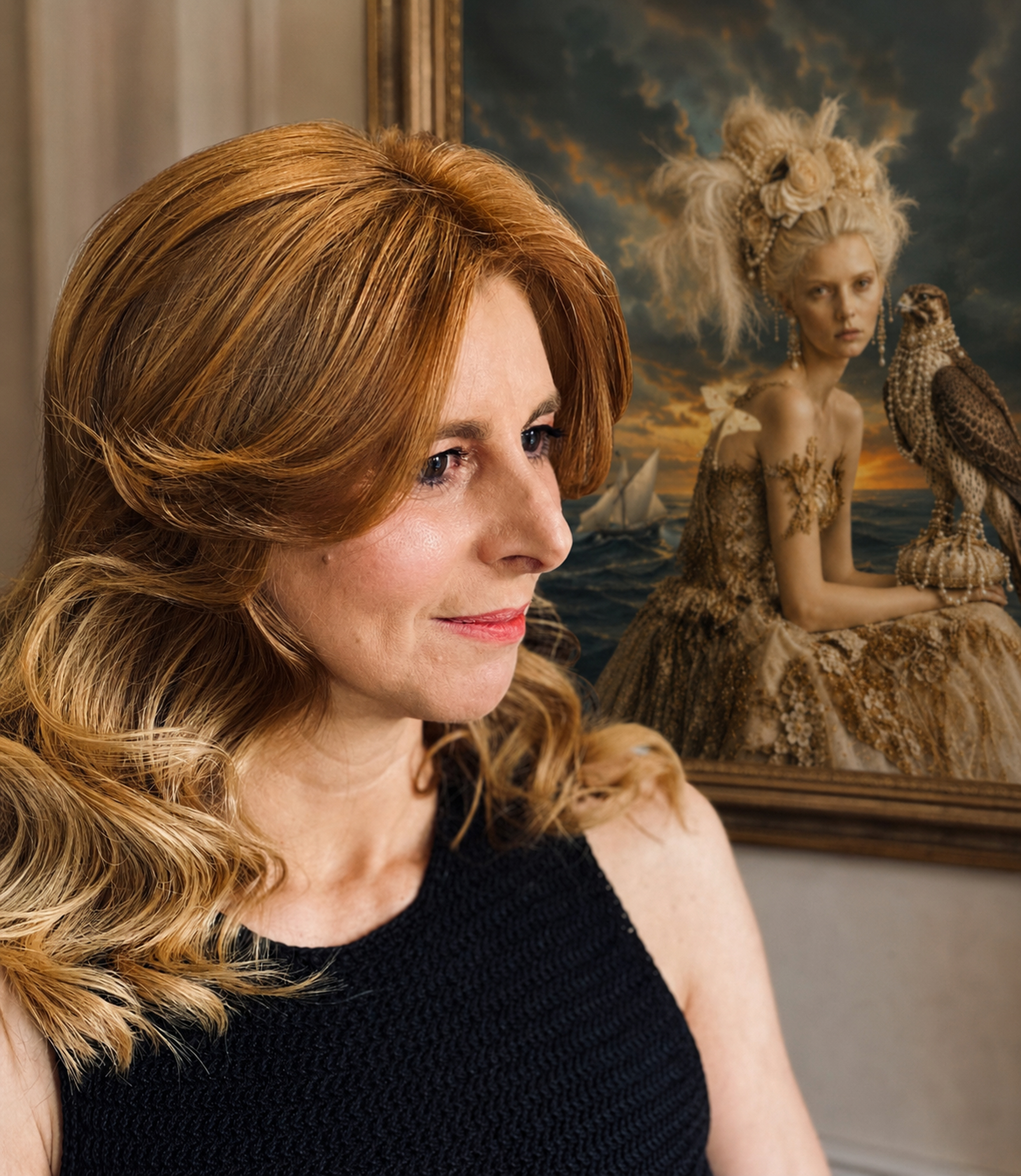
She works by hand, in analogue collage, oil, and mixed media, with real paper and paint rather than a screen. She builds her images in deep light and shadow, using dramatic contrast to pull you into the emotional heart of a piece.
Fragment by fragment, she layers and joins pieces that each carry their own history, until separate things begin to feel like one whole image. Every surface holds the visible evidence of her hands, and she embraces imperfection rather than trying to hide it.
Her work is about revisiting the past through who she is now, both as a source of inspiration and as a kind of release. She is drawn to imperfection, duality, and transcendence, to the way beauty and difficulty can live inside the same image.
Her collages mirror the way memory actually works, in fragments rather than one clean story, and she gathers those fragments into something whole without ever pretending the pieces were never separate. Wholeness, for her, is not about being untouched. It is about making a new shape out of everything she has carried.
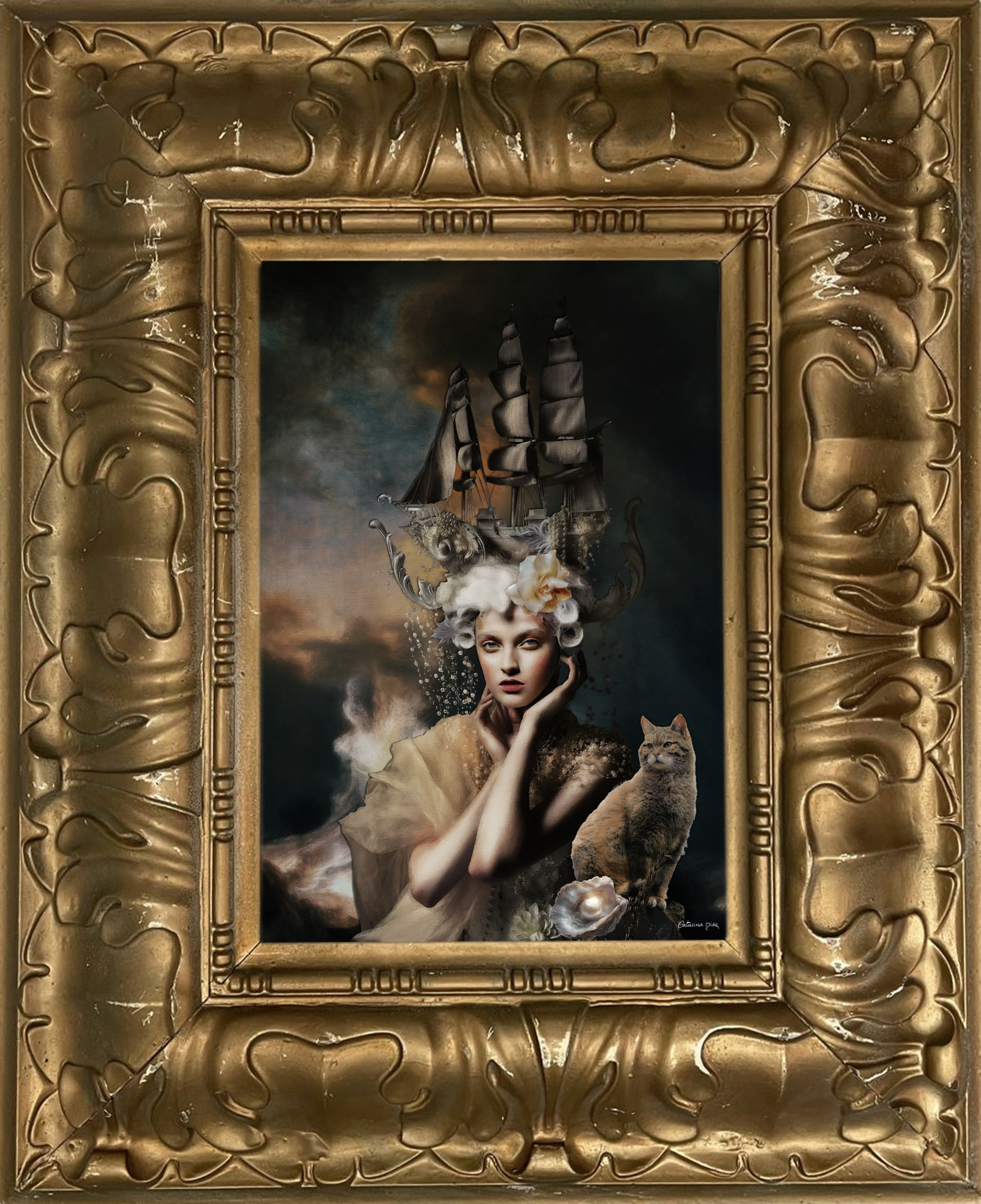
There is almost always a woman at the centre of her work, but never a perfect, decorative one. Her figures carry experience, memory, and quiet authority. So much of what she makes is about reclaiming feminine identity, about women who are calm not because they are passive, but because they have stopped asking permission to be exactly who they are. In her hands, softness and strength are not opposites. They belong together.
Nature runs all through her work as its own language and as a source of healing, and her images hold both its beauty and its cycles of loss and renewal. Alongside her art, she has spent years working in education and international relations, which has only deepened her feeling for human stories.
She built her practice her own way, and still her work has travelled far, shown in major galleries across Europe and beyond, guided by a respected mentor, and recognised with some of the highest honours an artist can receive.
Now let’s hear from Catarina about turning memory into art, why she leaves the seams showing, what beauty can really do, and how the scattered pieces of a life can become something whole.
Q1. Your childhood was shaped by Angola, Portugal, and later London. How have these places influenced the artist you have become?
My family lived in Angola for four generations before the war of independence forced our relocation to Portugal. That rupture, the loss of a home that no longer existed to return to, sits beneath everything I make. Portugal gave me my mother’s example. She was a painter and my first artistic mentor, and she taught me that art could hold memory and belonging together when everything else had been displaced.
London gave me distance and, with it, the freedom to look back and begin reconstructing what had been interrupted. My artistic voice comes from that triangulation: Angola as loss, Portugal as inheritance, and London as the place where I finally found the courage to rebuild it through paint and paper.
Q2. Your work combines collage with oil, acrylic, and mixed media. How do you decide what each material should contribute to a piece?
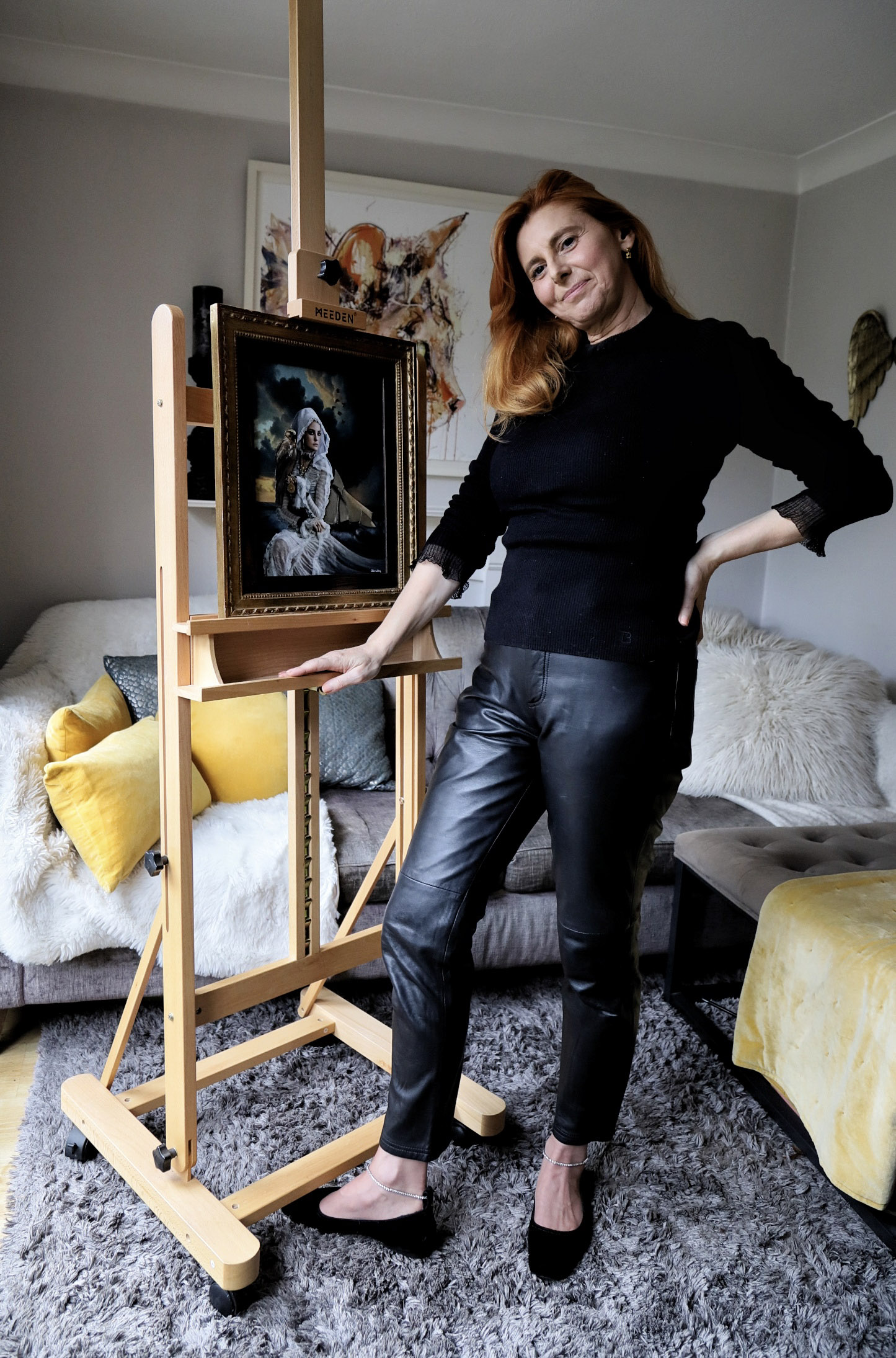
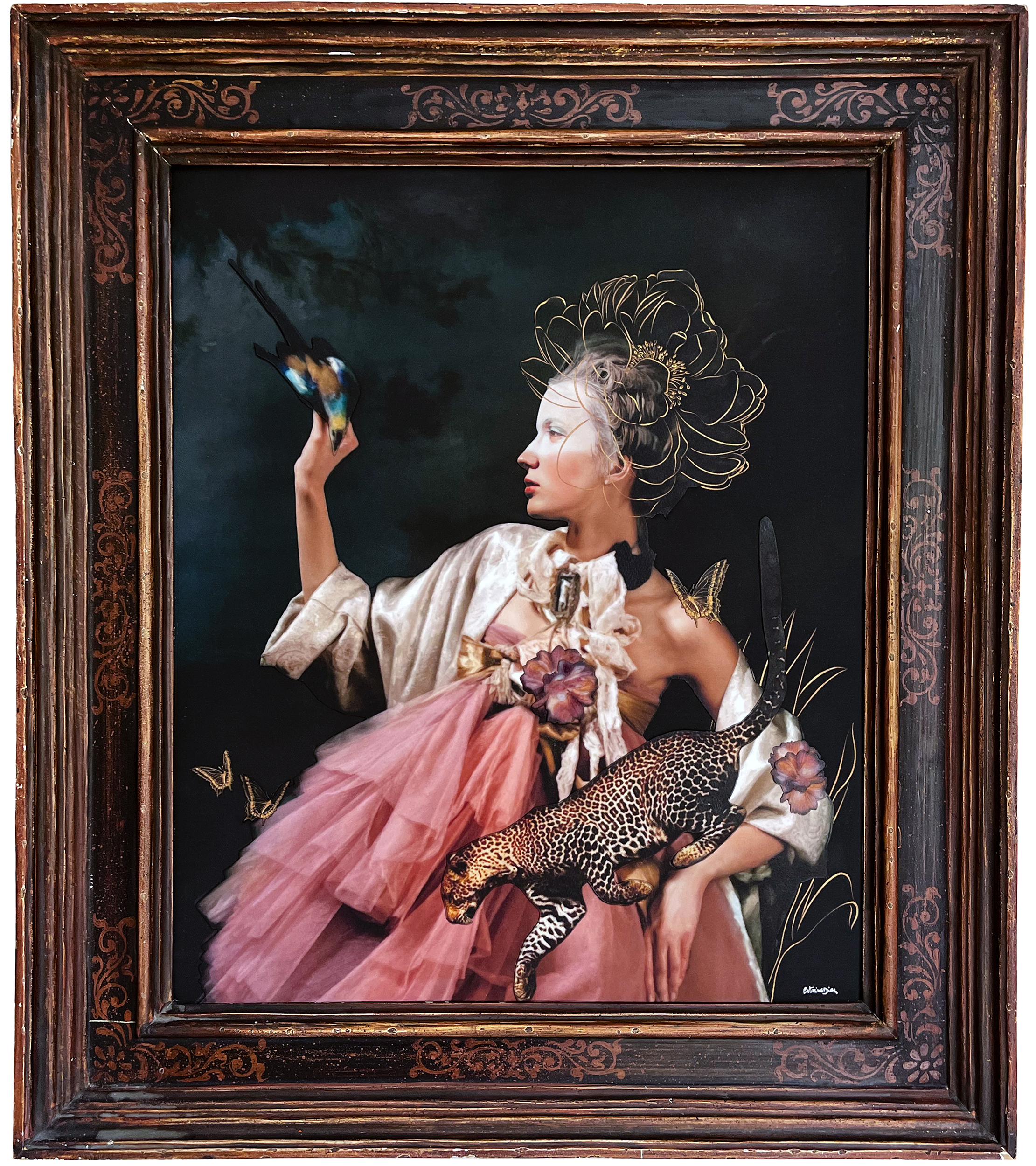
I usually begin with painted grounds in oil, deep, atmospheric foundations that establish the emotional register of the piece before anything else happens. Collage comes next: I’m drawn to how images from disparate sources, each carrying its own history, texture and visual memory, can be reassembled into an entirely new emotional atmosphere. There’s something almost alchemical about it, fragments that belong to different worlds beginning to speak to one another. As the work develops, the pace slows and becomes more reflective.
I refine transitions, adjust tones and work to integrate the painted and collaged elements until the surface feels unified rather than assembled.
So paint tends to set the emotional temperature and hold the piece together, while collage carries the fragments of memory and history that the painting then has to reconcile.
Q3. Your compositions often combine historical elegance with surreal symbolism. How do you balance beauty with deeper meaning?
Beauty is often the point of entry into my work, but it is never the final destination.
I am drawn to historical elegance, ornament and carefully composed figures, yet beneath that beauty there may be displacement, vulnerability, grief or rupture. The right balance occurs when the work initially attracts the viewer but gradually reveals something less comfortable or more mysterious. I do not want symbolism to become too literal or beauty to become merely decorative.
A piece feels complete when it retains a question: when it can be experienced emotionally without being fully explained. I want the viewer to feel that something has happened within the image, even if they cannot immediately name it.
Q4. Collage brings separate fragments together, yet your work feels complete and unified. What does this process allow you to express?
Collage reflects the way memory and identity actually function. We are not formed from one continuous story but from fragments: places, relationships, losses, inherited histories and moments we may only partially remember. I was drawn to collage because it allows separate realities to coexist.
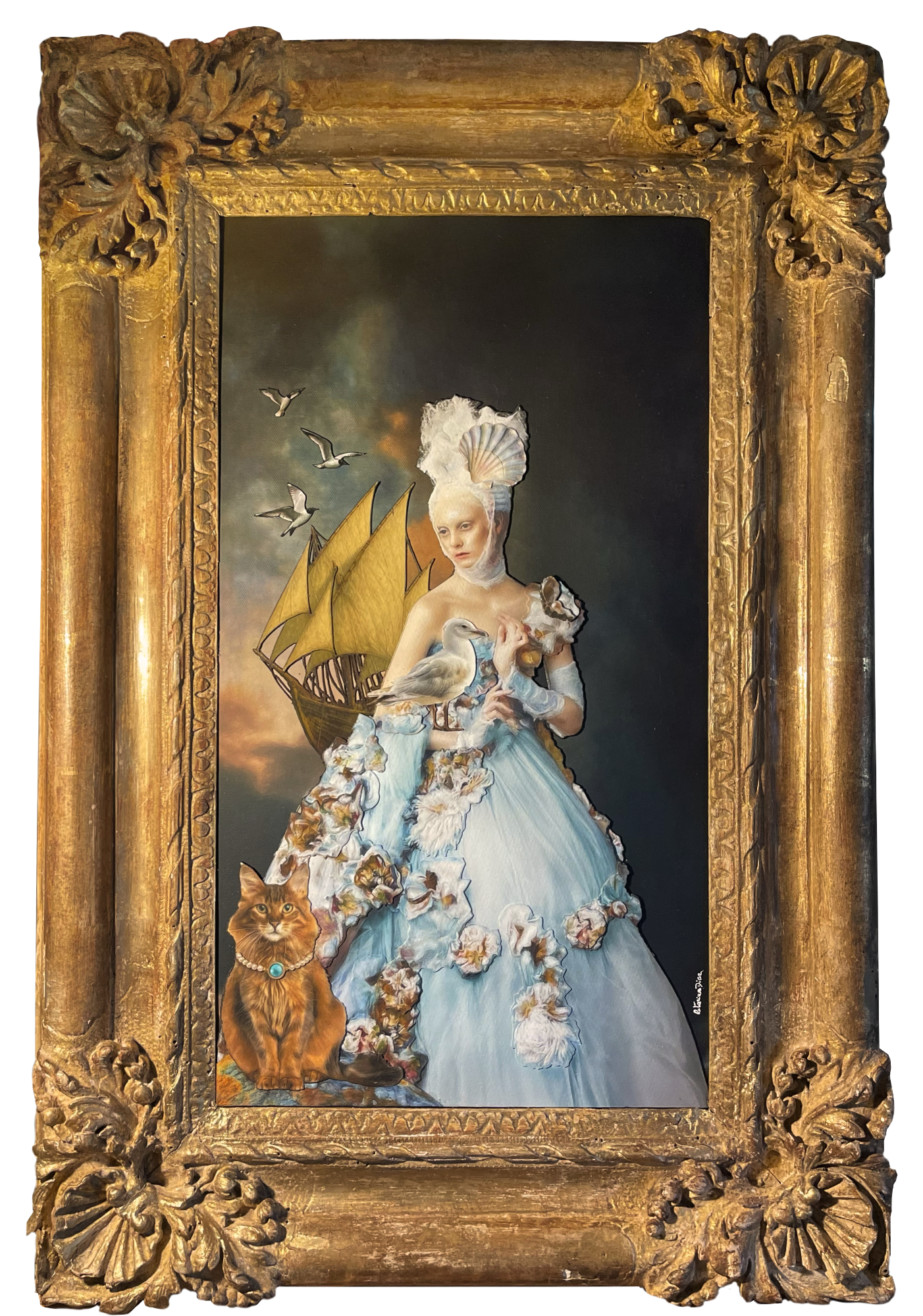
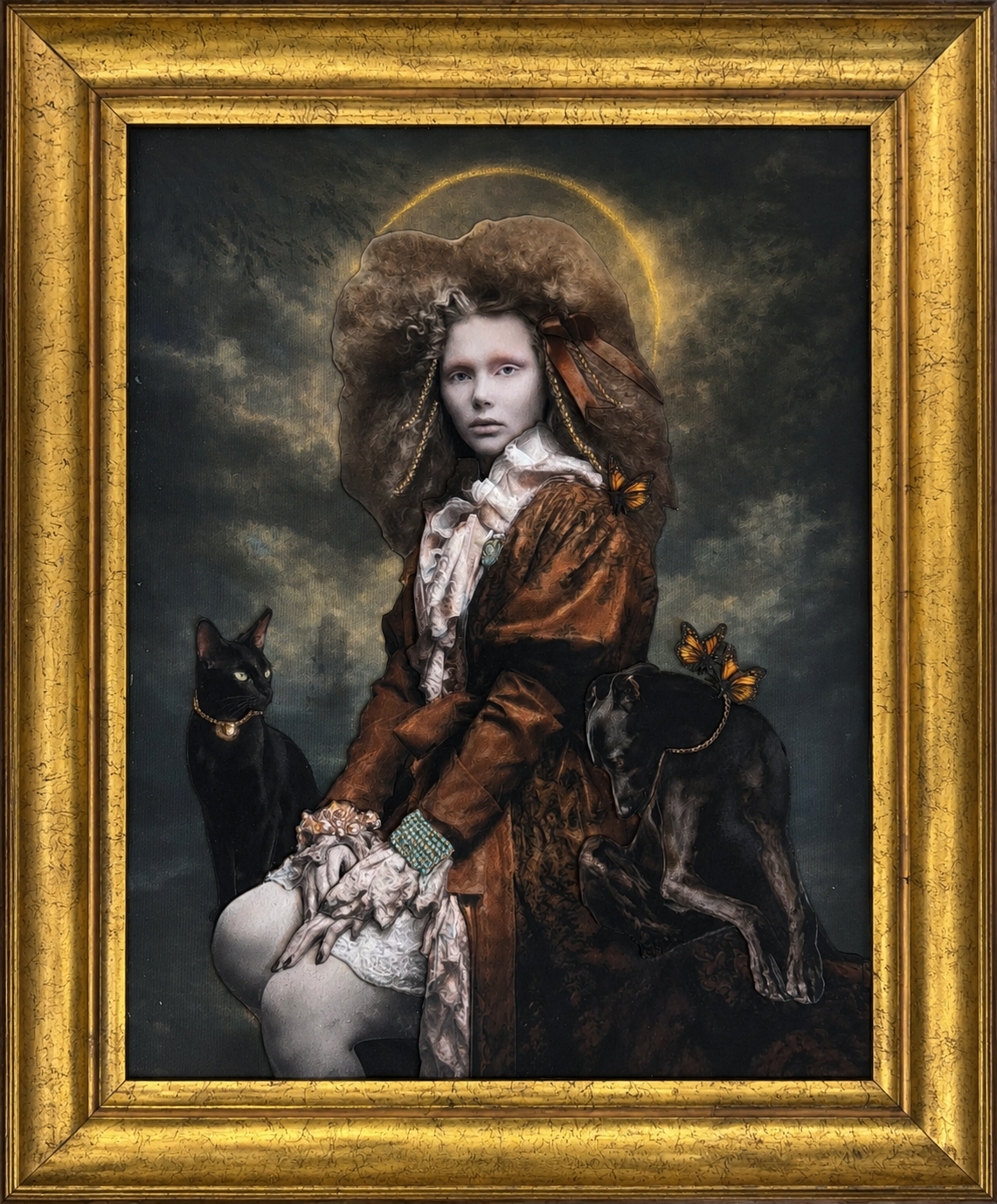
A face from one period can inhabit a landscape from another, while flowers, birds and symbolic objects introduce further emotional layers. Through cutting, repositioning and joining, I can transform fragmentation into a new visual narrative. The seams and ruptures remain important. I do not try to erase them completely because they are evidence of transformation.
Wholeness, for me, does not mean being untouched; it means finding a new form through everything we have carried.
Q5. Feminine figures appear throughout your work without feeling idealised. What aspects of womanhood do you explore through them?
My feminine figures are not passive ideals of beauty. They carry experience, contradiction, memory and authority. I am interested in the many ways women are expected to remain composed while navigating grief, ageing, displacement, motherhood, reinvention and the pressure to conform. Although the figures may appear serene, their stillness is not submission.
It often represents self-possession—the moment when a woman no longer needs permission to inhabit her own identity. I want to open conversations about femininity as something complex and self-defined. Softness can coexist with strength, vulnerability with power, and visible imperfection with beauty. These qualities are not opposites; together, they form a more truthful image of womanhood.
Q6. Your work Between Two Worlds reflects identity, memory, and transition. What does living between worlds mean to you?
“Between Two Worlds” emerged from the experience of belonging to several places while never feeling completely contained by any single one. I was born in Angola, grew up in Portugal and built my adult and artistic life in London. These places are not separate chapters; they overlap within me. The work is concerned with that threshold between what we inherit and what we create for ourselves.
Living between worlds can bring a sense of displacement, but it also offers a wider way of seeing. It allows different histories, cultures and emotional landscapes to coexist. For me, the space between worlds is not an emptiness. It is a fertile and transformative place where identity can remain fluid rather than fixed.
Q7. In I See, birds, flowers, and the female figure create a quiet dialogue. How does nature help you communicate ideas beyond words?
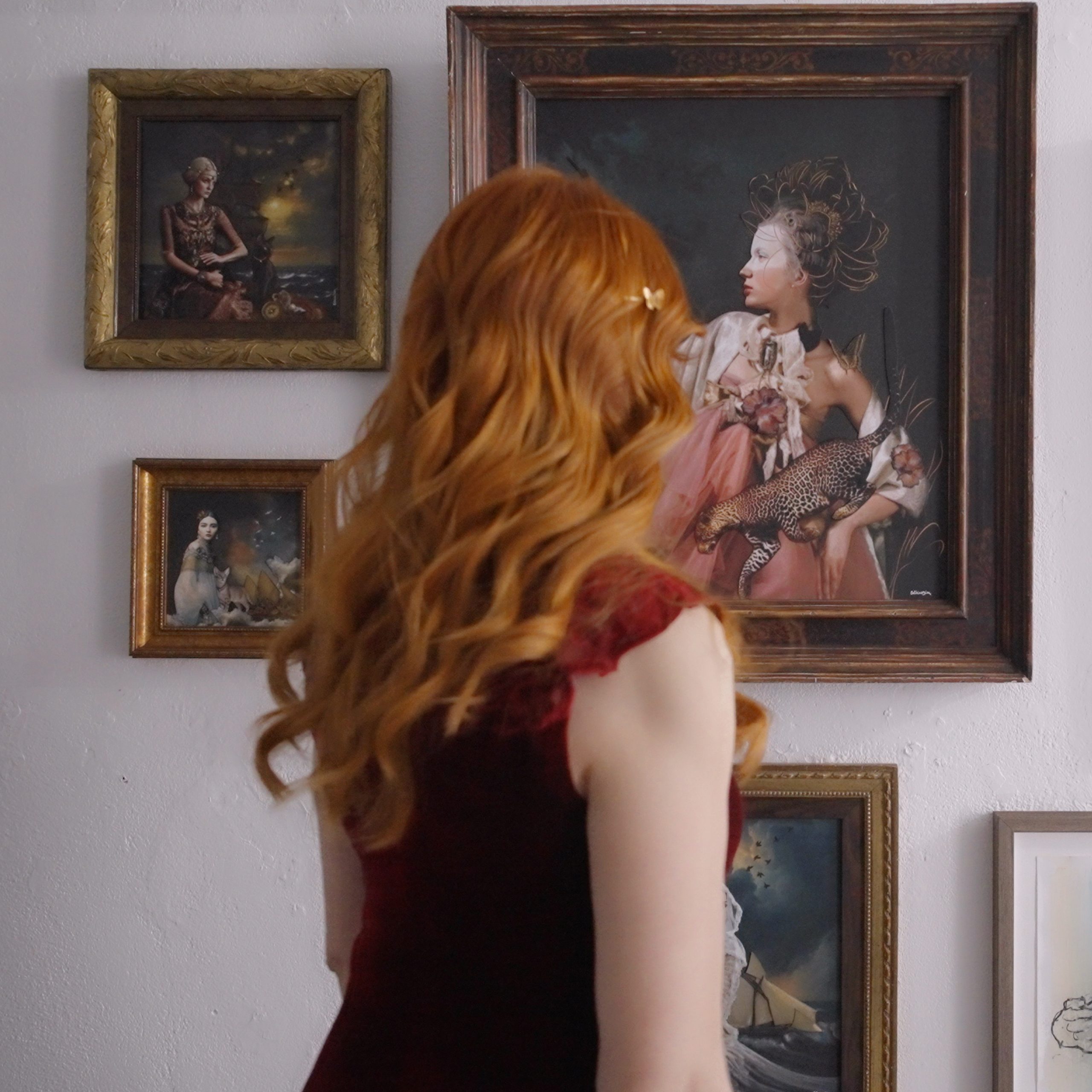
Nature has always been a language within my work rather than a decorative backdrop. Birds can suggest freedom, guardianship or a view beyond immediate circumstances. Flowers hold beauty and fragility but also cycles of growth, decay and renewal.
Butterflies speak of transformation, while landscapes can carry memories of places that are real, inherited or imagined. In “I See”, these elements communicate with the feminine figure without requiring a literal narrative. They allow the image to remain open and intuitive. Nature expresses emotional states that can be difficult to articulate directly. It reminds us that transformation is rarely clean or immediate.
Growth often happens through rupture, and renewal does not require us to erase what came before.
Q8. Your work brings together strength and softness, memory and reinvention, realism and fantasy. What draws you to these contrasts?
Fantasy. Why do you think we’re so drawn to these contrasts? Contrasts feel truthful because human experience is rarely one thing at a time. We can be grieving and hopeful, fragile and resilient, rooted in memory while still becoming someone new. I am especially interested in the tension between strength and softness.
We are often taught to see them as opposites, but softness can require enormous courage, while strength does not have to mean hardness.
The relationship between realism and imagined worlds allows me to make inner experiences visible.
A recognisable face or landscape gives the viewer something familiar, while surreal elements open another psychological space. We are drawn to these contrasts because we recognise ourselves within them. They reflect the complexity we carry but cannot always explain.
Q9. Childhood memories, African landscapes, and family stories continue to appear in your work. How has memory developed into a creative language?
Memory initially appeared in my work as subject matter, but over time it became part of the structure of how I create. Memory is selective, fragmented and constantly reshaped by the present, and my use of collage mirrors that process. Some memories are my own, while others have been inherited through family stories, photographs and the art made by previous generations. My mother was a painter and my first artistic mentor.
She carried memories of Angola through her own work, and that relationship between art, place and remembrance profoundly shaped me. I no longer try to reconstruct the past literally. Instead, I allow fragments of memory to create new landscapes—places that may never have existed physically but feel emotionally true.
Q10. Your work acknowledges pain without losing sight of hope. How do you create space for both darkness and healing?
I do not see healing as a neat progression or a return to who we were before something happened. Loss changes us, and I want the work to acknowledge that rather than offering an easy resolution. Darkness may appear through absence, fragmentation, obscured faces or landscapes that feel suspended between states. Hope enters more quietly, through light, colour, growth or the presence of a bird, flower or opening in the composition.
My recent work has been deeply affected by the loss of my mother. Creating has become a way of remaining in dialogue with memory while gradually finding a path forward. I make room for hope, but I do not force it. It must emerge truthfully from within the work.
Q11. In an age where digital images dominate our lives, what continues to draw you to the physical, hands-on process of analogue collage?
I need the physical relationship with materials: the resistance of paper, the marks left by cutting, the movement of fragments across a surface and the unpredictability of glue and paint. These actions give the work a human rhythm that cannot be completely controlled. Analogue collage also slows down the act of looking. Each fragment has already lived another life before entering the composition. Its age, texture and imperfections become part of the work’s meaning.
In a culture of endlessly reproducible images, the handmade object retains intimacy and presence. I value the visible evidence of touch and decision-making. Imperfection is not something I try to remove; it is where the work’s individuality and emotional truth often reside.
Q12. Do you think beauty can still be a powerful critical language in contemporary art?
Absolutely. Beauty is sometimes treated with suspicion, particularly when it is associated with femininity, ornament or decoration. I find that resistance interesting. Beauty can carry history, seduction, power and contradiction. In my work, beauty invites the viewer closer. Once there, they may encounter questions of displacement, loss, ageing, identity or vulnerability.
The beautiful surface does not cancel those subjects; it can make their presence even more affecting. Beauty does not need to be passive or superficial. It can challenge what is considered worthy of serious attention, particularly within traditions associated with women.
Used consciously, beauty becomes a critical language precisely because it can attract, unsettle and transform the viewer’s perception simultaneously.
Q13. Your figures often appear calm and self-assured, even within surreal surroundings. What does femininity represent to you?
Femininity represents complexity, intuition and the freedom to define oneself beyond imposed expectations. My figures may appear calm, but their calmness has often been earned through experience. It is the stillness of someone who has survived change and no longer needs to prove her strength through noise.
I am interested in women at different stages of life, particularly those whose stories, ageing and inner worlds are often made invisible. Through them, I explore beauty alongside imperfection, vulnerability alongside authority, and softness alongside resilience. Femininity in my work is not a fixed appearance or role. It is a space of transformation, a way of carrying memory, loss, desire and reinvention while remaining fully present
Q14. Has your understanding of success shifted from recognition towards creating work that feels authentically yours?
Recognition matters because it allows the work to travel, reach new audiences and create opportunities. However, it cannot be the sole measure of success. I began my professional artistic journey later in life, following a previous career, and built my practice independently. That experience taught me that authenticity and persistence are essential.
Success now means creating work that feels unmistakably mine, continuing to take creative risks and developing ideas before I know whether others will understand them. It also means having the freedom to evolve rather than repeating what has previously been well received.
The most meaningful recognition occurs when the external response confirms something I already know internally, that the work is honest, authentic and necessary.
Q15. Recognition has come through exhibitions, awards, and international opportunities, but what moments have felt most meaningful on a personal level?
Some of the most meaningful moments have been quieter than the public milestones. Hearing that someone has recognised part of their own experience within my work can be profoundly moving. It reminds me that something deeply personal can become a point of connection. Being mentored by Royal Academician
David Mach was important because his confidence encouraged me to take my own artistic voice seriously. Being recognised for artistic merit by the President of Portugal was also deeply meaningful because of my relationship with Portuguese culture and history. Most personally, continuing the artistic legacy of my mother carries a significance beyond any exhibition or award. She was a painter, my first artistic mentor and a central influence on my life. Every new body of work continues that dialogue between us.
Q16. Is there a question you’ve been exploring through your work that still doesn’t have a clear answer?
I continue to ask how we carry the places, people and histories we have lost without becoming trapped within them. My work explores whether fragmentation can become a form of wholeness rather than something that must always be repaired or concealed. Can we accept the visible seams of experience and still recognise beauty?
Can identity remain fluid while retaining a sense of belonging? I do not expect to arrive at a definitive answer. The question changes as I change. Perhaps that is why I continue to work with collage. Every composition becomes a temporary response, assembling fragments into a new possibility while allowing uncertainty to remain.
Q17. What has your own journey taught you about trusting a path that feels deeply personal?
Beginning my professional practice later in life taught me that there is no single correct timeline for becoming an artist. I am largely self taught and developed my visual language through sustained experimentation rather than by trying to fit into a particular category. There have been moments when my use of beauty, ornament, feminine imagery and analogue processes has existed outside dominant trends. Yet these are precisely the elements that make the work personal and recognisable.
Trust develops through making, not through waiting for certainty or approval. Each piece teaches me what belongs and what does not. A personal path may take longer to establish, but it creates a deeper foundation. Trends change, while an honest visual language can continue evolving without losing its centre.
As our conversation with Catarina came to an end, we kept thinking about what it really means to be whole, and how we tend to assume it means being unbroken.
But hardly anyone is unbroken. We are all put together from the places we have lived, the people we have loved and lost, and the parts of our story that never quite line up. Catarina takes that simple truth and makes something beautiful out of it. She gathers fragments, each with its own past, and slowly builds them into one image, without ever hiding the seams where they meet.
Those seams are the whole point. They are proof of everything she has been through and carried and turned into something new. Her work quietly says that being whole was never about staying untouched. It is about making a new shape out of all of it. And for anyone carrying a loss, or living between places, or trying to gather up the scattered pieces of their own life, that is a genuinely hopeful thing to see.
There is a lot here for other artists, too. Catarina came to art later in life, after a completely different career, and built everything on her own terms. That taught her there is no single right time to become an artist, and no need to force yourself into whatever happens to be popular.
The very things that once felt out of step with the trends, her love of beauty, of detail, of working by hand, are exactly what make her work so clearly hers. Trust comes from making the work, she says, not from waiting around for approval. A personal path might take longer, but it gives you something much steadier to stand on.
For anyone who loves art, or collects it, Catarina’s work brings a rare kind of richness into a room. Elegant, layered pieces that draw you in with their beauty and then slowly show you something deeper the longer you sit with them. There is history in every fragment, feeling in every layer, and a quiet strength in every figure. To live with one of her works is to keep a small, beautiful reminder on your wall, that the pieces of a life, however scattered, can always be gathered into something whole.
Follow Catarina Diaz through the links below and see her work for yourself.
The deadline is almost here. Submissions for our Big Book of Mixed Media Artists 2026 are closing soon, and we are looking for artists who treat their materials as partners, not just tools, layering and combining until the surface itself becomes part of the story.
If you pour, collage, stitch, scratch, combine, or push materials in ways nobody else would think to, and if your work says something only mixed media can, we want to see what you are doing. The materials do not matter. Geography does not matter. Career stage does not matter. What matters is that something real is happening between the layers.
The window is closing fast. Every artist featured in our publications was once someone who took a breath and submitted before the deadline passed. This could be your edition, but only if you do not wait.