
Robyn Palescandolo’s Art Captures the Elegance Hidden in Fading Flowers
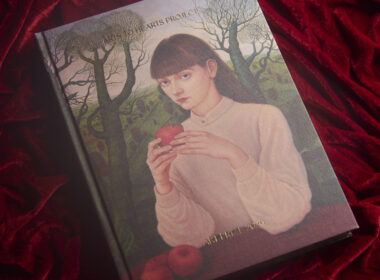
At Arts to Hearts Project, our Women Artists on the Rise Edition 4 gathers a hundred artists from every corner of the world, each with their own story and their own way of seeing. Some chase bold ideas, some chase colour, some chase the perfect image. What they share is the courage to keep making the work that matters most to them.
And every so often, one of them quietly reaches for the opposite of perfect. Robyn Palescandolo paints flowers that are imperfect, changing, softly fading, and gently shows you that this is where the real beauty lives.
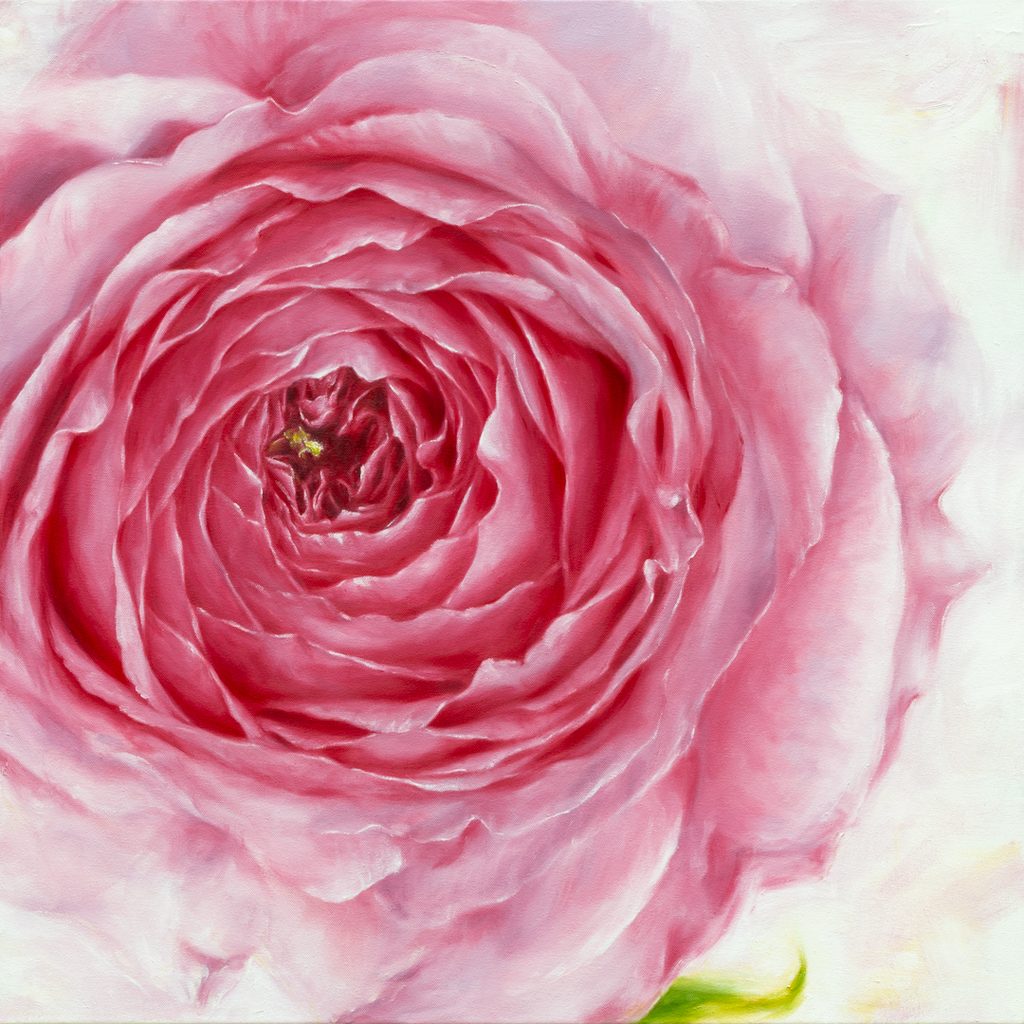
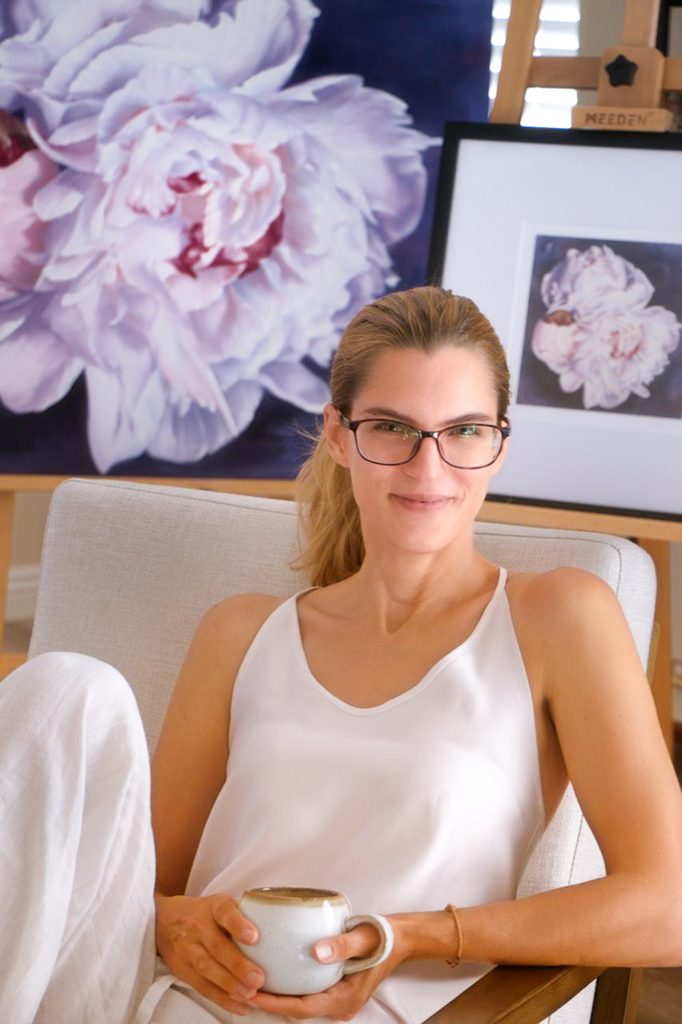
Robyn is a California-based painter who works in oil, mostly painting botanicals, roses, peonies, and other simple things from nature. But she would be the first to tell you her paintings are not really about the flowers.
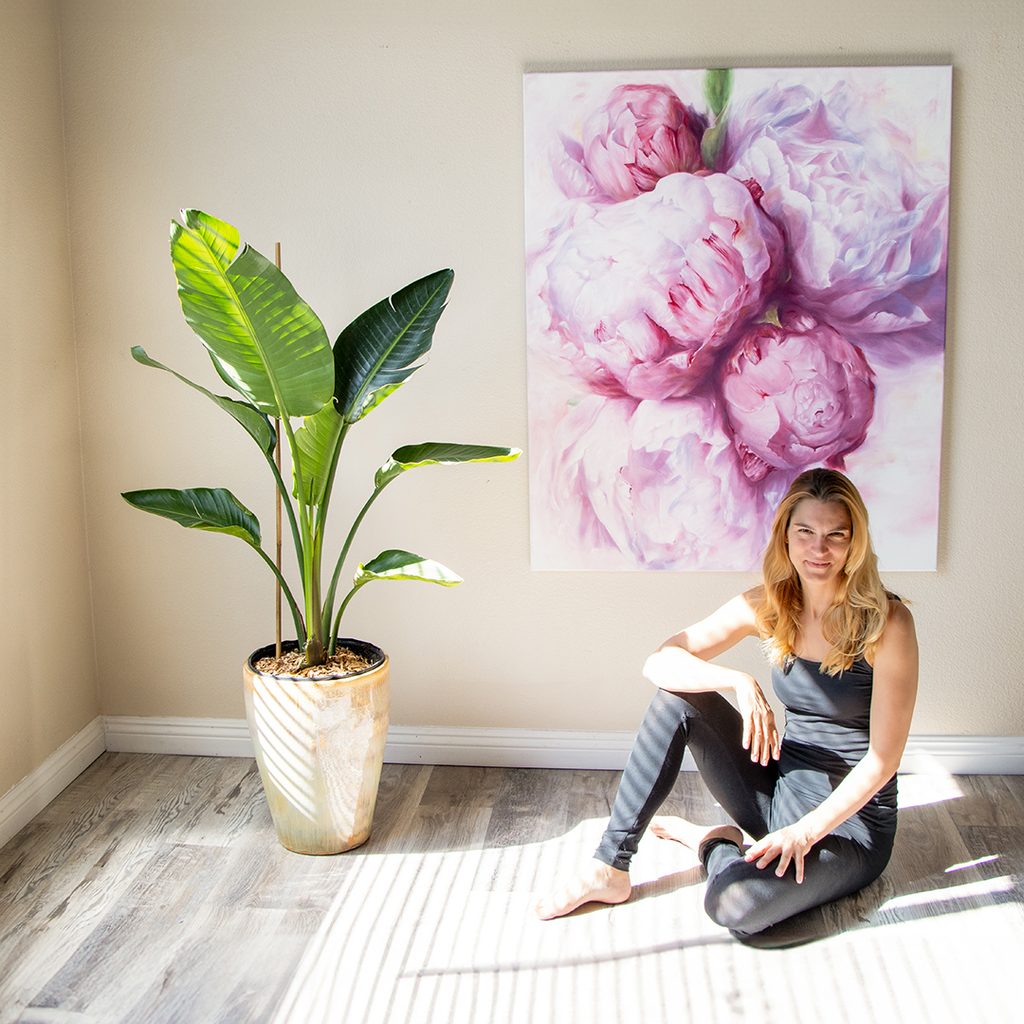
The flower is just the form. What she is actually painting is light, colour, and emotion. In a way, she treats each bloom the way a portrait painter treats a face, coming back to the same kind of subject again and again to find something new in it each time.
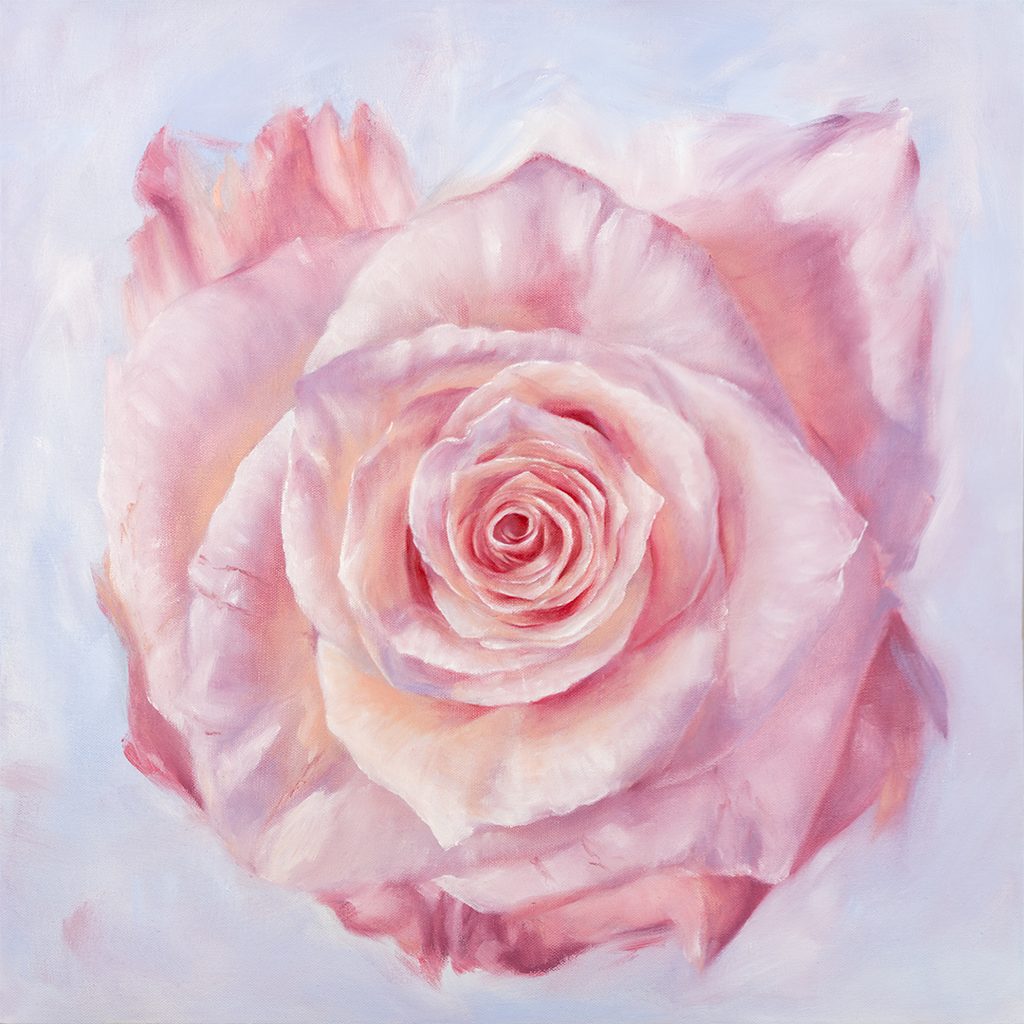
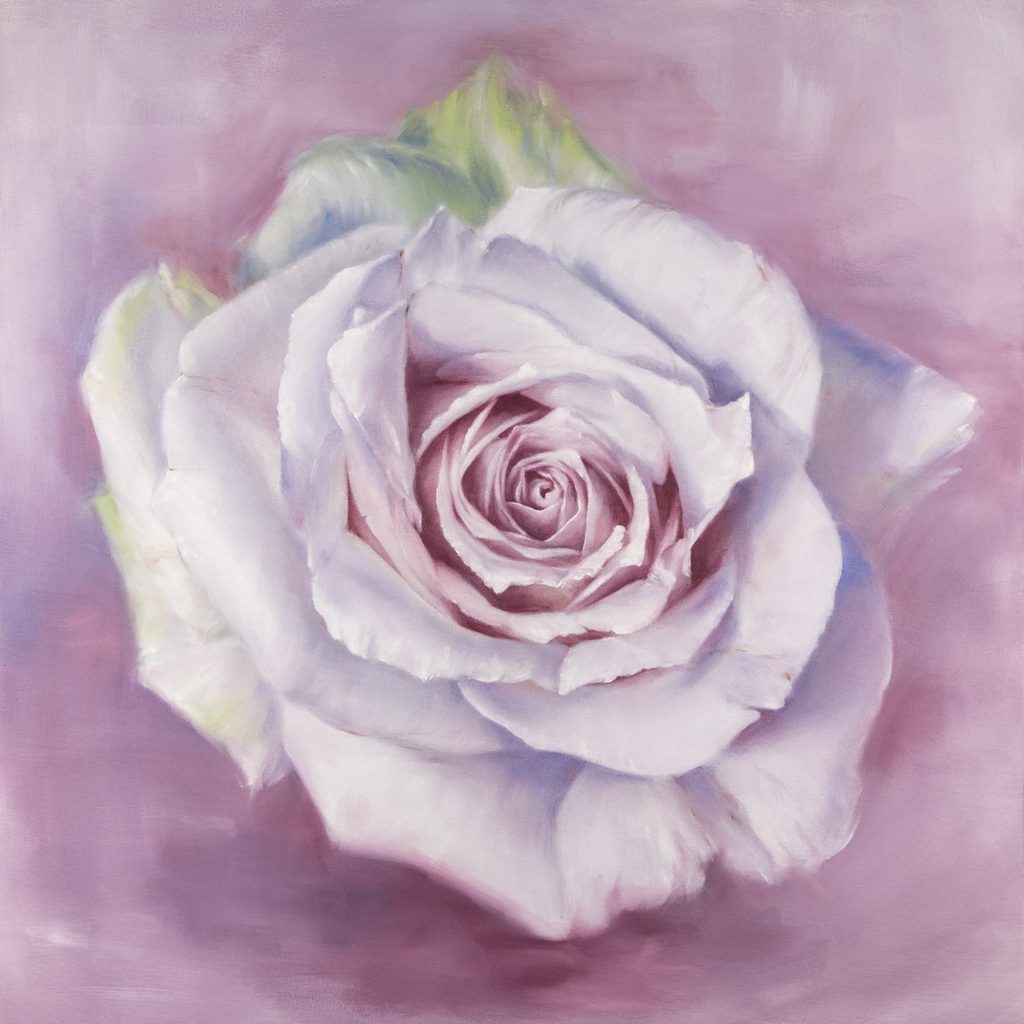
What draws her in are the imperfect ones. The unusual fold of a petal, a small discolouration, a flower just beginning to wilt. She is not trying to capture a flawless, perfect moment. She is after presence, truly being with the subject as it is, whether it is fresh and glowing or quietly falling apart. To her, those changes are not flaws. They are what make a flower feel alive, and a gentle reminder that change is nothing to be afraid of.
Robyn trained classically, studying the old masters until the techniques became second nature, and then, slowly, she learned to loosen her grip on them. Her paintings now live in a lovely tension between careful, realist detail and free, loose brushwork.
She will paint a petal exactly, and then let the edges and the background dissolve into rough, wild, almost childlike strokes. She often says her favourite parts of a painting are the messiest ones, the places where a single brushstroke becomes a whole petal, where control gives way to trust.
That trust came with a slower way of living. Robyn once ran a painting retreat in a tiny fourteenth-century village in rural Italy, built around slow living and creative restoration, and though letting that dream go was hard, the slowness stayed with her.
Her life today is quieter and more intentional, and her work has changed right along with it. She notices smaller things now, subtle shifts in light, moments that once would have passed her by. Her paintings have become, in her own words, a record not just of what she has painted, but of how she has learned to see.
Her work has been recognised internationally, with awards, juried selections, and a busy calendar of exhibitions, and she also teaches classical painting to others. Painting, for her, is a kind of meditation, closely tied to her own healing and her journey back to herself. She is less interested in perfection than ever, and more interested, simply, in paying attention.
Now let’s hear from Robyn about learning the rules in order to break them, why she paints flowers as they fade, how a slower life changed her art, and what it means to leave a painting beautifully unresolved.
Robyn Palescandolo’s Art Finds Grace in Change and Imperfection
Q1. Robyn, we’d love to start by getting to know you a little better. How did your journey with art begin?
Thanks so much for having me! I’m delighted to have the opportunity to speak with you and share my story. Art has always felt less like something I chose and more like something I returned to, over and over again. I was the kid who was constantly drawing, filling little sketchbooks and getting completely absorbed in whatever was in front of me. I still remember visiting museums with my mother and standing in front of my first Monet, captivated.
There was something about seeing a masterpiece on a canvas, surrounded by the smell of old paintings, that stayed with me. Like a lot of artists, my path was anything but linear. I studied Art History because it felt practical while still keeping me close to art, then spent years working in design and communications. I painted whenever I could, sometimes consistently, sometimes… less often. One of my most memorable chapters was moving to a tiny fourteenth-century village in rural Italy, where I established and ran La Locanda del Tempo, a painting retreat centered around slow living and creative restoration. It was a beautiful experience, everything I had hoped it would be.
Connecting with other artists and guests from around the world, adapting to a slower pace of life, picnics at sunset with my kids… It’s something I’ll always be grateful for. Letting that dream go was incredibly difficult. Returning home to the United States meant starting over in many ways, but it also became an opportunity to return to myself.
Over the past few years I’ve completed my master’s degree in art history & visual Culture, focused on healing, and committed fully to building a life around the work that feels most authentic to me. Today, my paintings are quieter than they once were, and full of light. I’m less interested in perfection and more interested in presence. I trust the paint more. I leave more unresolved. Looking back, I realize the work has always mirrored where I was in life. Right now, it feels grounded in gratitude, curiosity, and the simple act of paying attention.
Q2. Your training combines classical painting techniques with years of independent study. How did you find your own approach within those traditions?
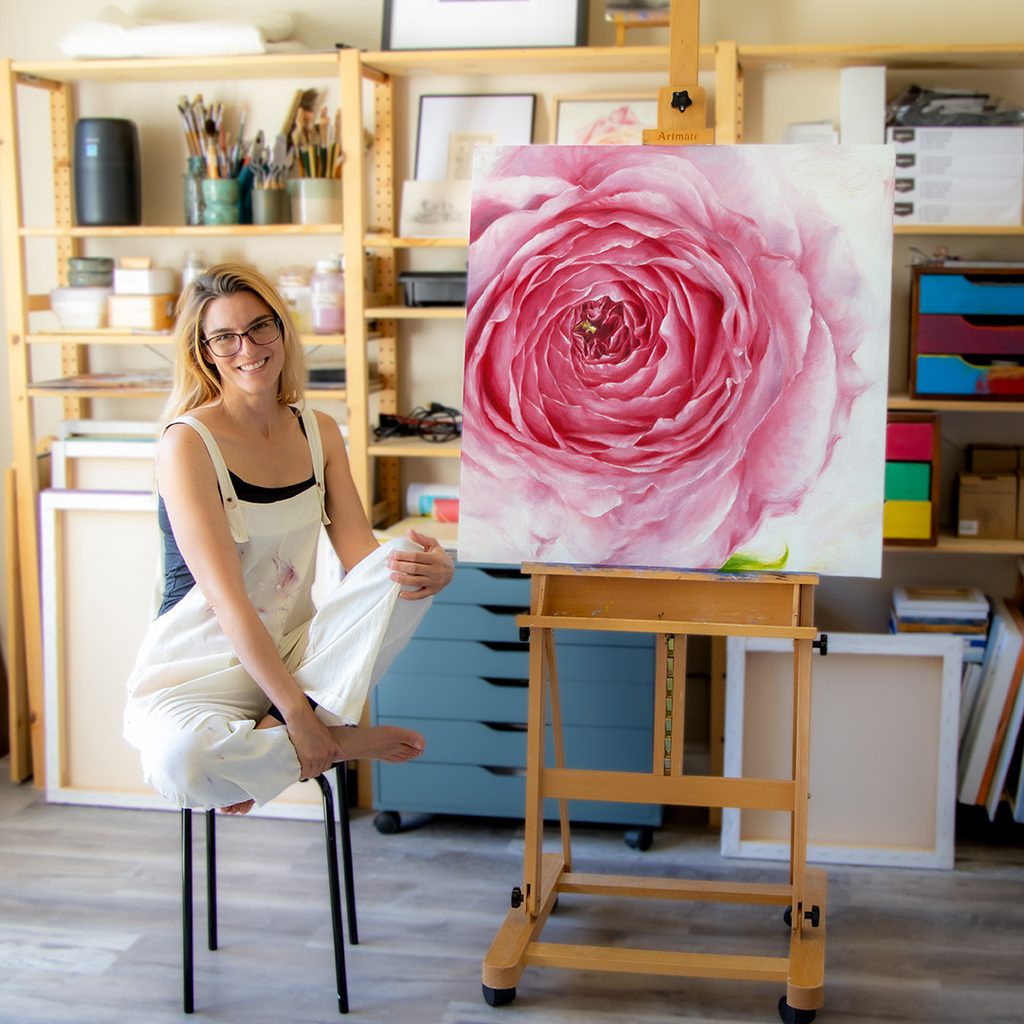
In the beginning, I was deeply focused on learning and honing my craft. I immersed myself in classical painting techniques, studying the old masters and trying to understand their processes.
Developing a strong technical foundation was important to me because I wanted the skills to express whatever I envisioned.
I still honor that, but over time, something shifted. The techniques became second nature, and that let me loosen my grip on them. I stopped trying to control and began trusting more, allowing the paint to lead.
Q3. Botanicals are a major part of your practice. What keeps this subject interesting after returning to it again and again?
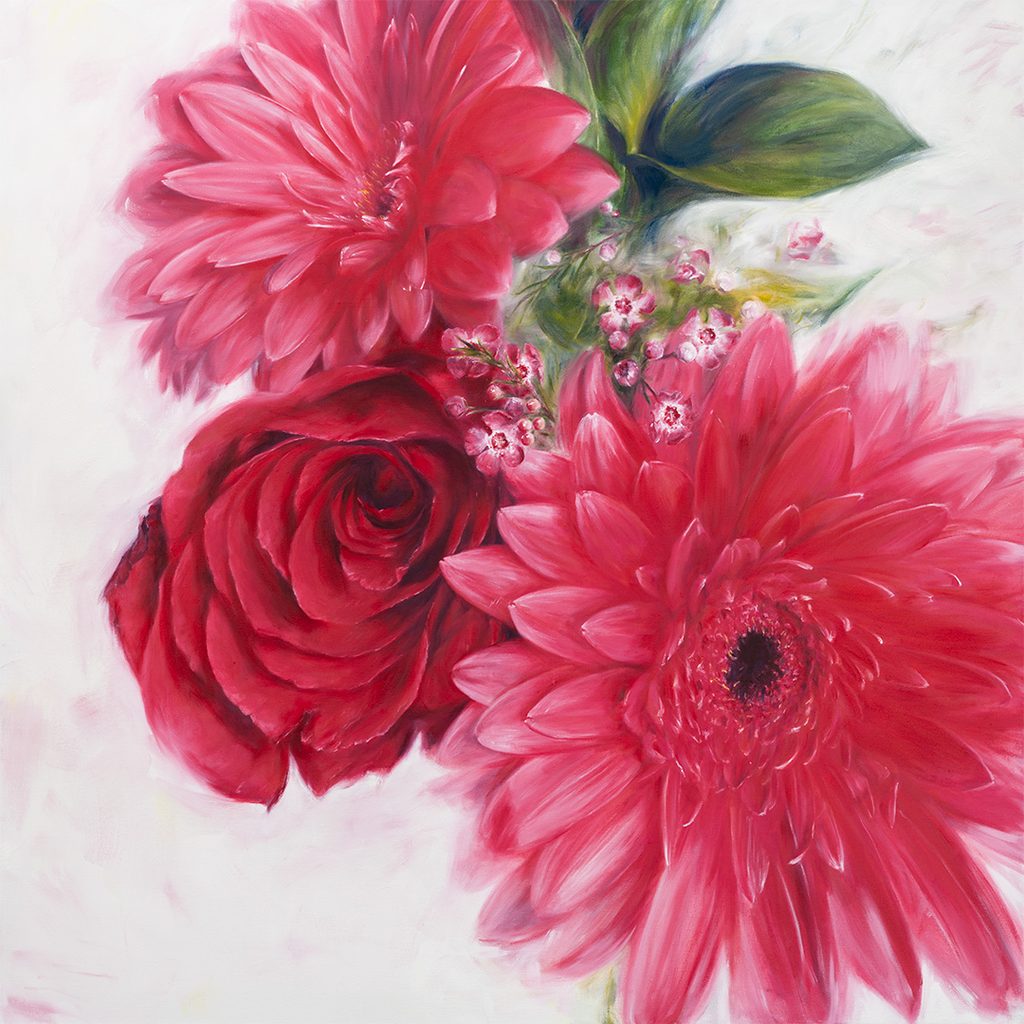
I love flowers! They offer endless variation. Each one is different, yet somehow the same. I especially love when I find a distinguishing feature, a unique way that the petals fold together, an interesting discoloration. I see it as a way to explore my emotional context through the form of the same object.
It’s almost as if I were a portrait artist, rendering similar human features over and over again… But I don’t see these as portraits of flowers. The flower is the form; the light, color, and emotion are the subjects.
Q4. You often choose imperfect flowers rather than nature at its most flawless. What do those imperfections bring to a painting?
Without a doubt, those are the most interesting features to me. They are the parts that distinguish. They show that beauty does not equate to perfection.
Rather, imperfection makes things all the more authentic and beautiful.
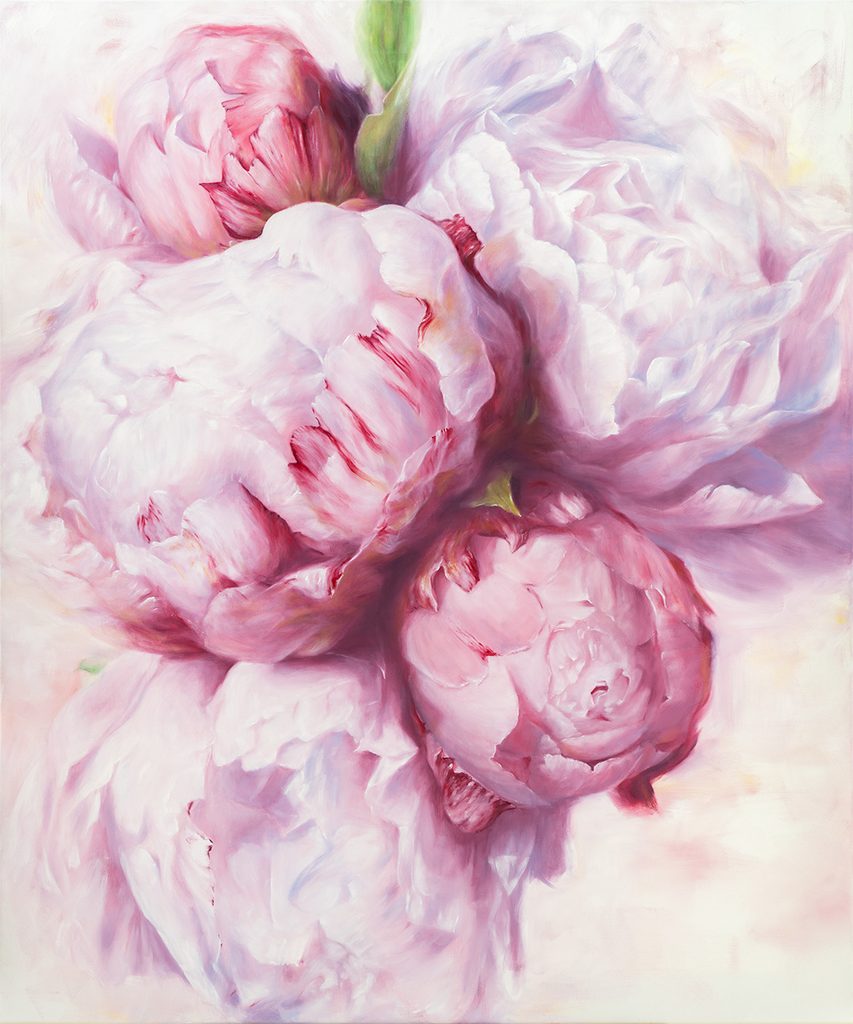
Q5. In Bouquet of Peonies, the flowers emerge from a looser surrounding space. What does this shift between clarity and suggestion allow you to express?
In previous works, I was sort of taking flowers out of their context. This is one of the earliest pieces where I tried to include it. The peonies are part of a world, a place that is greater than just themselves. At the same time, I didn’t want the context to define them or compete with them. Rather, the background and foreground sort of dissolve into each other.
They are one, and they are distinct. I’m becoming more and more interested in using the edges and background of a piece as an undefined emotional space where I can play with rough forms and visible wild brushwork.
There are parts where you can make out the shape of a flower or leaf or burst of sunlight, but they’re more innocent, almost as if a child painted them. They’re free from the refinement of years of practice layered on top of them.
Q6. Some flowers you paint are beginning to wilt or change. What interests you about painting them at that stage?
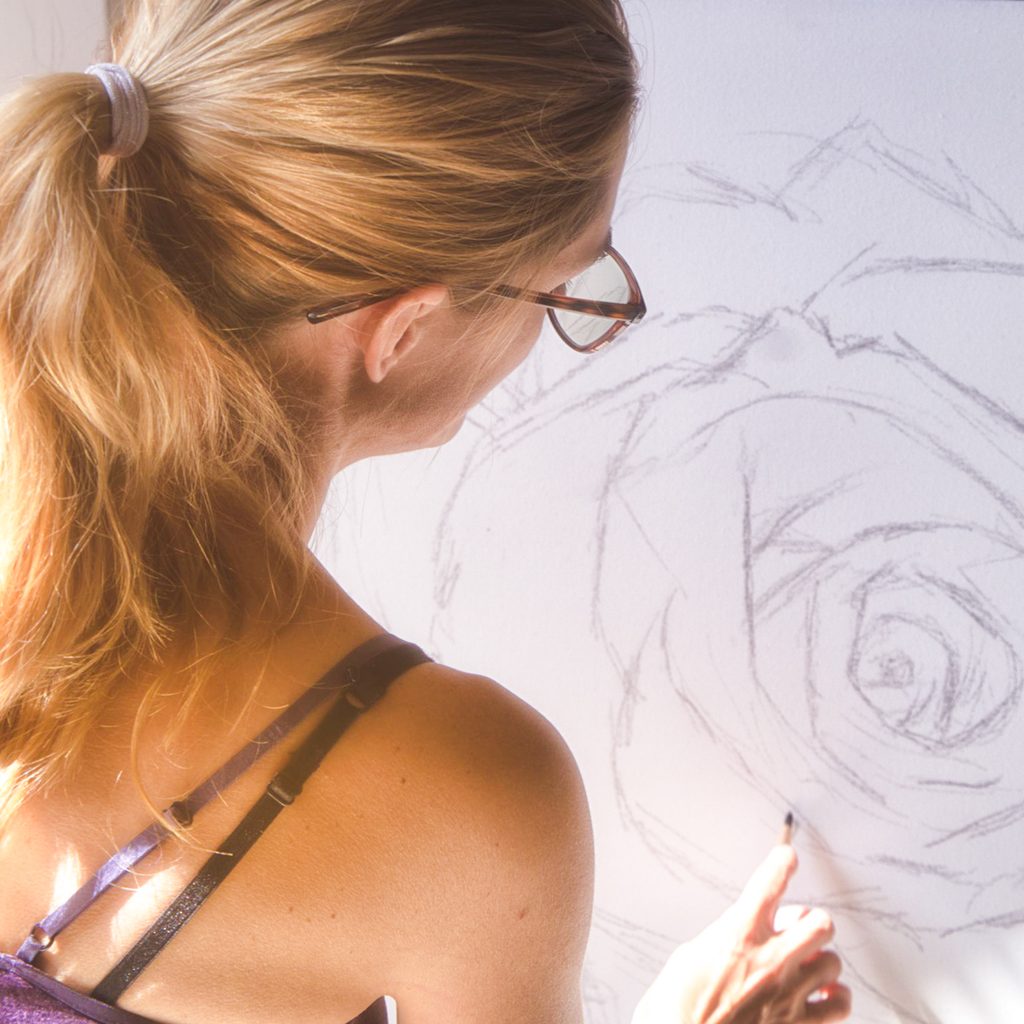
I’m not interested in capturing an ideal, perfect moment. I want to experience an act of presence.
Between myself and the canvas. Between my eye and the subject. Sometimes that happens when everything is fresh and glowing. Other times I enjoy watching the petals as they fall. Neither is better than the other. They just are. They remind me that change isn’t something to resist. It’s part of what makes a subject feel alive
Q7. Your work combines precise realist observation with freer brushwork. Was finding the balance difficult?
Yes, it still is! It’s a constant dance between wanting to define further and resisting, leaving things as they are. It has become easier each time I succeed to find that my favorite, most moving areas of an artwork are the messiest bits. The parts where a petal is defined by a single brushstroke. The areas where background and foreground intersect.
Q8. Realism has a long history in painting. What keeps observational painting relevant for you today?
As an art historian, I am drawn to honoring tradition. We are a part of the continuum. I don’t see a need to resist that. I love visiting museums and observing different approaches. I love learning about artists’ stories and historical contexts. I do put a lot of emphasis, though, on staying true to my own path. I am not trying to imitate anyone else’s work. I am trying to use my own authentic voice.
For me, observation is a form of meditation. It’s deeply personal. It’s relevant to me in my own life and healing, and is an important part of my own journey as an artist.
Q9. You have said that your life and work have moved toward a slower rhythm. Does an artist’s way of living eventually become visible in their work?
I can only speak from my own experience, but for me the answer is absolutely yes. I can see how different my art has appeared at different parts of my life, in different locations, and I feel like it deeply resonates with my experience of that time.
As my life has become slower and more intentional, and my paintings have changed alongside it. I notice quieter things now, subtle shifts in light, moments that might once have passed me by. I think my work reflects that way of living, deeply. In many ways, it has become a record not just of what I’ve painted, but of how I’ve learned to see.
Q10. You are both an artist and a teacher of classical painting. Has teaching made you reconsider your own painting habits?
Absolutely. Teaching forced me to become much more conscious of what I was doing instinctively. I think when I was beginning to teach, I was sort of teaching lessons in my head as I worked, wondering how I would explain a certain action or decision to students.
How I often break the rules, combine steps, or do things out of order. I often stress to students that the purpose of learning the rules is to be able to effectively break them later… to build up enough technical ability and confidence in your work in order to be able to take bigger risks.
Ironically, I no longer paint the way I teach. The structured process I developed gave me a strong foundation, but over time my own practice has become more intuitive and responsive. Letting go of that structure wasn’t easy, but remaining open to change feels more important to me than staying loyal to a method. I think that’s true growth, both as a painter and as a teacher… and as a person.
Q11. As your work has received recognition through exhibitions, awards, and international selections, how has your definition of success evolved?
I don’t think my definition of success has changed very much. Recognition through exhibitions, awards, and publications is deeply meaningful, and I’m genuinely grateful for those opportunities. At the same time, they aren’t what brings me back to the studio each day. For me, success is found in the work itself. I paint for myself.
I paint because I can’t live without painting. Success as an artist, for me, is more in the continual growth that happens in the studio.
In the slow and steady improvements and adjustments that I hadn’t even myself expected.
Q12. What advice would you give emerging artists learning when to refine a painting and when to leave it unresolved?
I’d encourage them to experiment, take risks, and resist putting too much pressure on themselves to achieve a particular outcome. Technical skill is important, but so is learning to trust your instincts. Leave room for surprise. The most memorable paintings often emerge when you’re willing to let go of certainty and allow the unexpected to happen.
As our conversation with Robyn drew to a close, we found ourselves thinking about presence, about what it means to truly be with something, exactly as it is.
So much of life is spent wishing things were a little different, a little better, a little more perfect. Robyn’s work gently lets that go. She paints the imperfect flower, the fading bloom, the petal that has started to fall, and somehow those are the ones that move you most.
Her paintings quietly insist that beauty and perfection are not the same thing, and that the imperfect, changing, unfinished parts of life are often the most alive. There is something freeing in that. And it comes, we think, from the slower way she has learned to live, noticing small things, loosening her grip on control, and simply being present with whatever is in front of her.
And there’s something in her story for every artist. Robyn learned classical technique thoroughly, and she’ll tell you it was all in service of one thing: the confidence to eventually let it go. Master your craft, she says, then trust yourself enough to take real risks. Leave room for the unplanned, and don’t force a painting toward perfection. The pieces that stay with us, she believes, are the ones where you surrender a little control and let surprise do the rest.
For art lovers and collectors, her paintings bring a rare stillness into a room. Quiet, luminous work that rewards a slow, close look, where precise detail melts into loose, living brushwork. To live with one of her pieces is to keep a small, steady reminder on your wall, to slow down, pay attention, and let things simply be as they are.
Follow Robyn Palescandolo through the links below and see her work for yourself.
Our Big Book of Mixed Media Artists 2026 is now open for submissions. And we are looking for artists who treat their materials as partners, not just tools, layering and combining until the surface itself becomes part of the story.
If you pour, collage, stitch, scratch, combine, or push materials in ways nobody else would think to, and if your work says something only mixed media can, we want to see what you are doing. The materials do not matter. Geography does not matter. Career stage does not matter. What matters is that something real is happening between the layers.
Every artist featured in our publications was once someone who took a breath and submitted. This could be your edition.