

Elsa Schiaparelli, the Designer Who Put Surrealism on a Dress
A lobster spread across an evening gown. A shoe balanced where a hat should sit. A dress that looks torn to shreds.
None of it sounds like fashion, it sounds like something pulled off a Surrealist canvas. In the hands of Elsa Schiaparelli, it became clothing people actually wore.
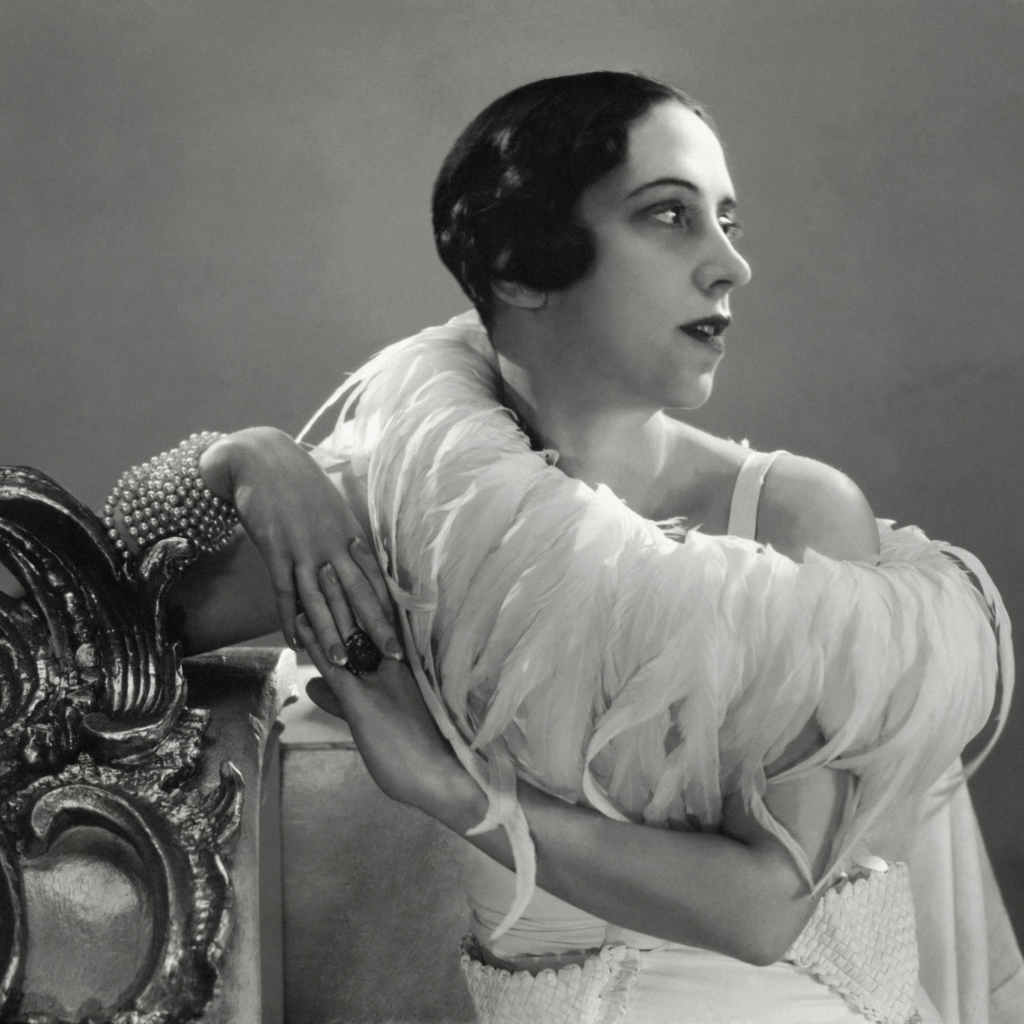
Through the 1930s, the Italian-born couturier translated Surrealism’s strange, playful logic into garments, working with artists, playing tricks on the eye, borrowing objects that had no business being on a body. The V&A describes her as a designer who challenged conventional ideas of dress, using humor, surprise, and Surrealist imagery to make people look again.
But the famous collaborations are only half the story. Long before Salvador Dalí entered the picture, Schiaparelli was already obsessed with the idea that clothing could fool the eye. That’s where this really begins, with a sweater that wasn’t quite what it seemed.
The Bow That Wasn’t There
Before the lobster, there was a bow.
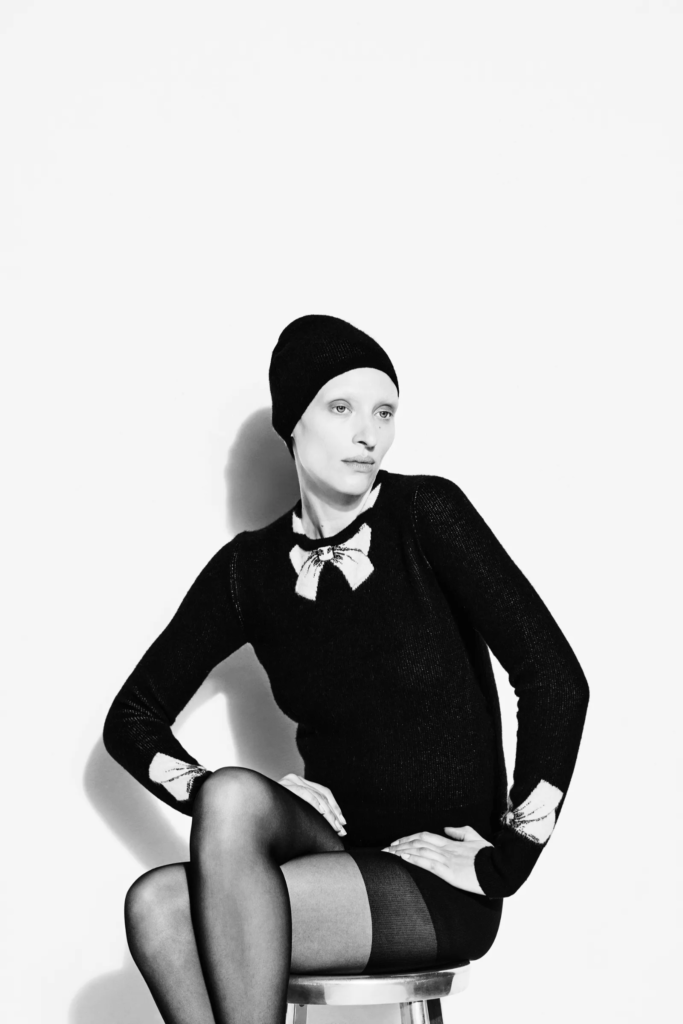
In 1927, Schiaparelli released a black knitted sweater with what looked like a white bow tied at the neck. It wasn’t tied at all, the bow was knitted directly into the sweater using a two-tone technique clever enough to make a flat pattern read as three-dimensional. It became an instant hit and one of her most copied early designs, according to the V&A.
It’s a small trick, but an effective one: your eye completes the illusion before your brain catches up. The technique has a name, trompe-l’œil, “deceive the eye”, a visual tradition with deep roots in painting, which Schiaparelli smuggled into something as ordinary as a sweater.
Suddenly, clothing could lie a little. It could show you something that wasn’t really there. That small illusion turned out to be a clue to everything she’d do next.
Enter the Lobster
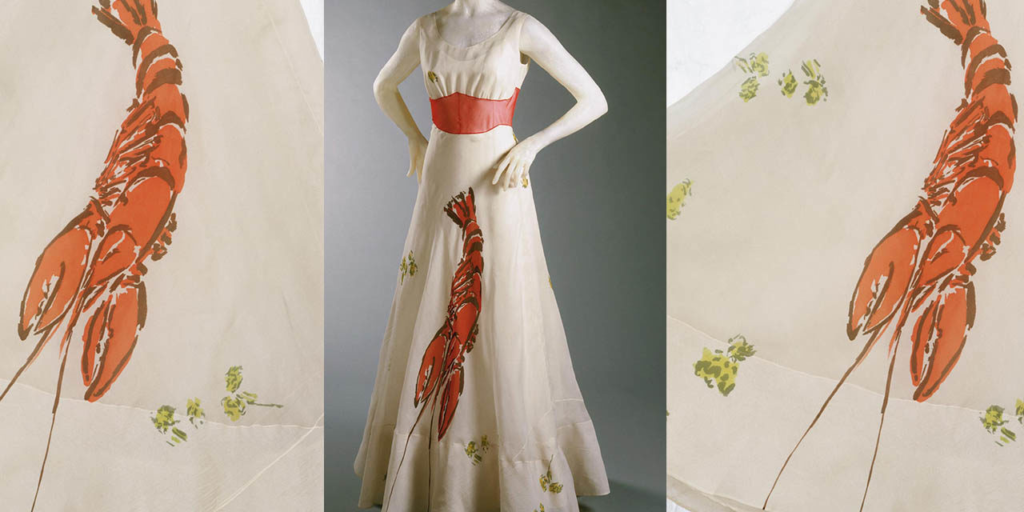
That fascination with illusion soon found a natural partner in the Parisian avant-garde, particularly in Salvador Dalí. Together, they turned Surrealism’s strange logic into something wearable: instead of leaving an unexpected image on canvas, they could put it directly on the body.
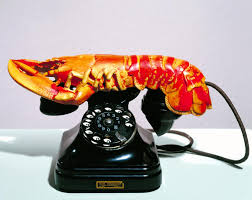
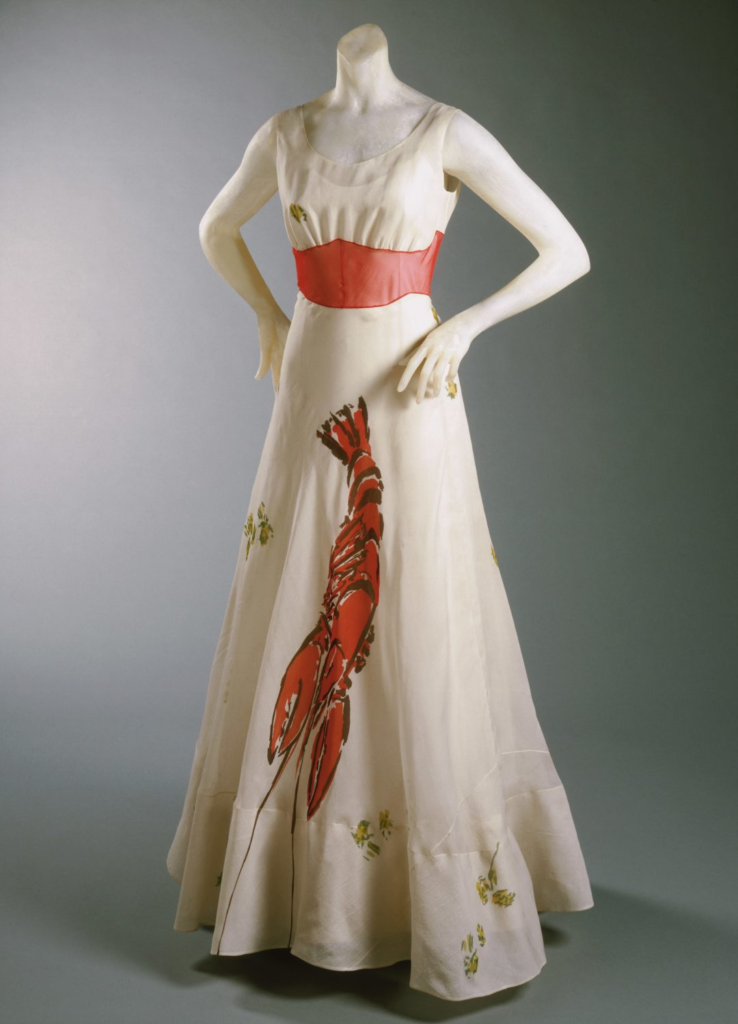
In 1937, that meant a lobster. The Lobster Dress was an elegant evening gown in pale silk organza, interrupted by a large red lobster splashed across the skirt, a design that grew out of Schiaparelli’s collaboration with Dalí, per the Philadelphia Museum of Art.
The mismatch was the whole point. A lobster belongs somewhere else. An evening gown belongs somewhere else. Put them together and something familiar turns strange again. The dress became even more famous when Wallis Simpson wore it for a Cecil Beaton photograph, an impeccably dressed woman, an enormous red lobster across her gown, and the two facts refusing to make sense together.
Schiaparelli had discovered something useful: fashion didn’t need to make sense. It just needed to make you look twice.
A Shoe Where a Hat Should Be
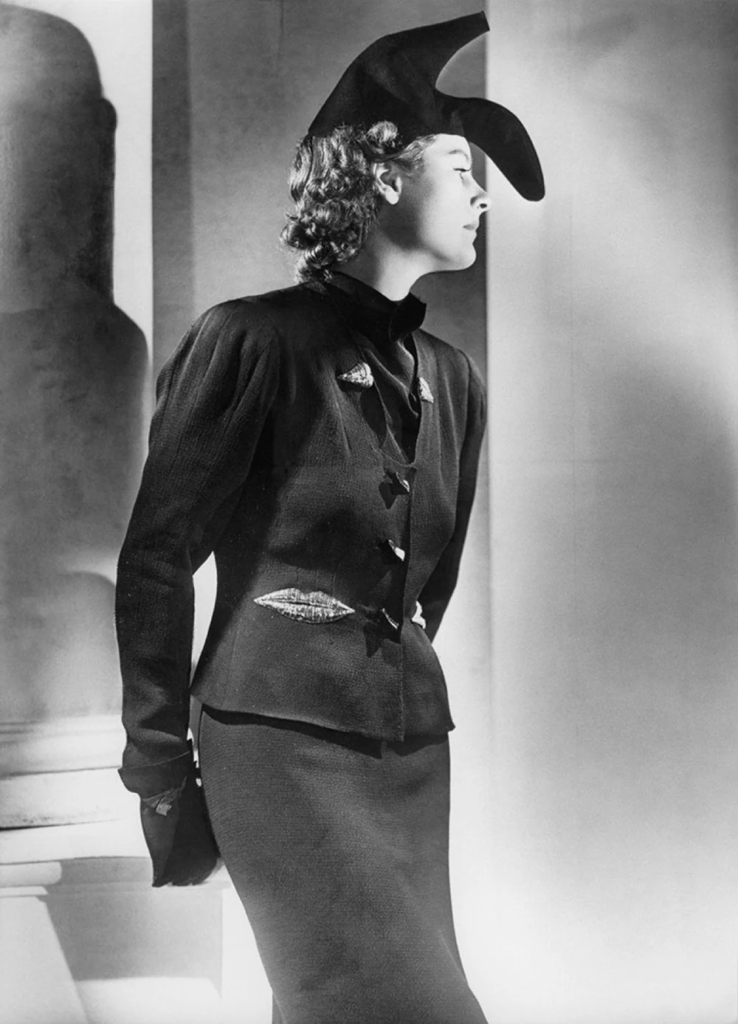
If the lobster showed what happens when an odd image lands on an elegant dress, the Shoe Hat pushed the idea further, because for Schiaparelli and Dalí, a shoe didn’t have to stay on a foot.
Made for the Winter 1937–38 collection, the hat takes the exact shape of a high-heeled shoe and sets it on the head. The idea traces back to a photograph Dalí’s wife, Gala, took of him wearing a shoe on his head; Dalí developed that image into the design, according to the Met.
The joke is obvious, but the logic underneath it is pure Surrealism: take something ordinary and move it somewhere it doesn’t belong. The shoe itself hasn’t changed, only its context has. On a foot, it’s practical. On a head, it’s absurd. Somehow, in Schiaparelli’s hands, that absurdity became fashion, and it’s still one of her most immediate pieces. You don’t need to know anything about 1930s Paris to get the joke; you just see it.
When the Dress Looked Wounded
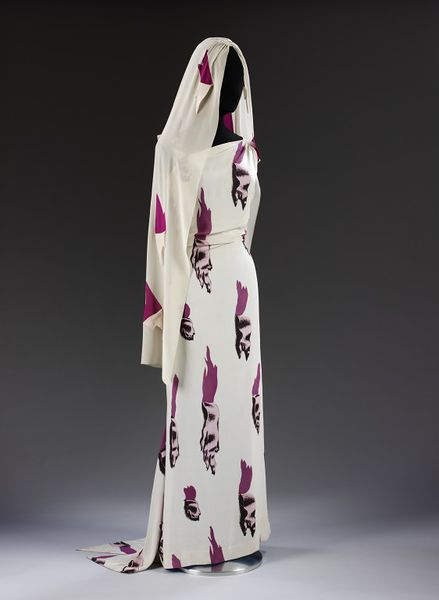
Then the humor turned darker.
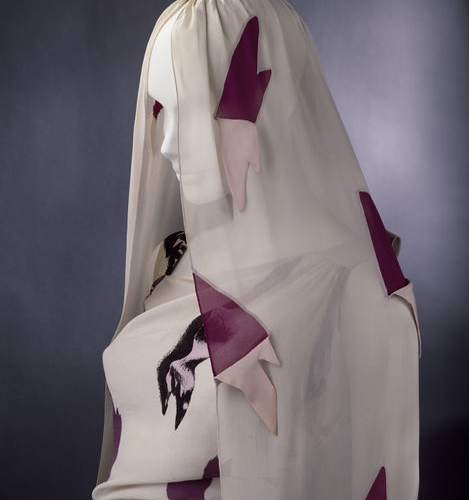
In 1938, Schiaparelli and Dalí made the Tears Dress for her Circus collection. At first glance, the pale gown looks ripped apart, jagged tears running across the fabric as if the garment had been torn. It’s an illusion: the tears are printed onto the dress, while the accompanying veil uses real cuts and layered fabric to push the effect into three dimensions, per the V&A.
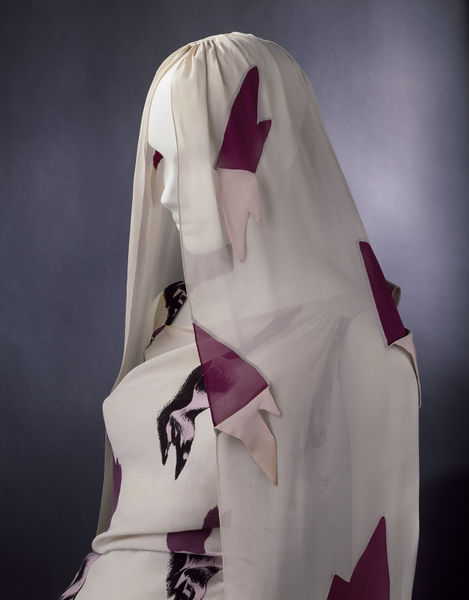
The result is unsettling in a way the lobster never was. With that dress, the odd image made you smile. Here, you have to look twice just to work out what you’re seeing, is the fabric actually torn? Is that skin underneath? Schiaparelli was taking trompe-l’œil somewhere more sophisticated: no longer making a garment imitate another object, but making the garment itself question what’s real.
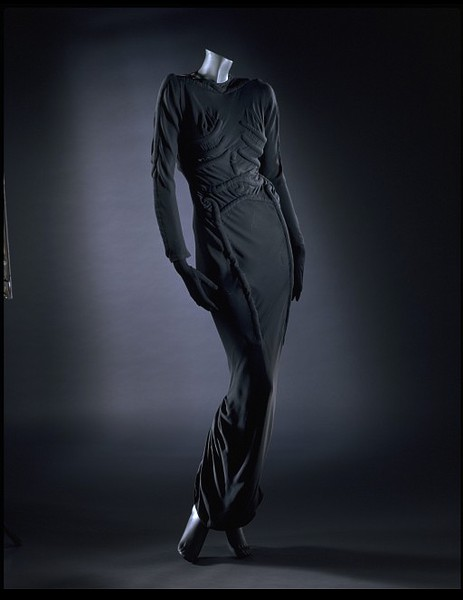
The same year, the Skeleton Dress pushed the idea even further. The elegant black evening gown, also made with Dalí, is overlaid with raised skeletal forms, padding and quilting giving the ribs and spine an almost sculptural presence directly on the body, per the V&A. Clothing normally hides the body’s structure. Schiaparelli brought it to the surface instead.
By this point, Surrealism wasn’t just influencing her clothes. It had become her way of thinking about what clothes could even do.
More Than a Strange Dress
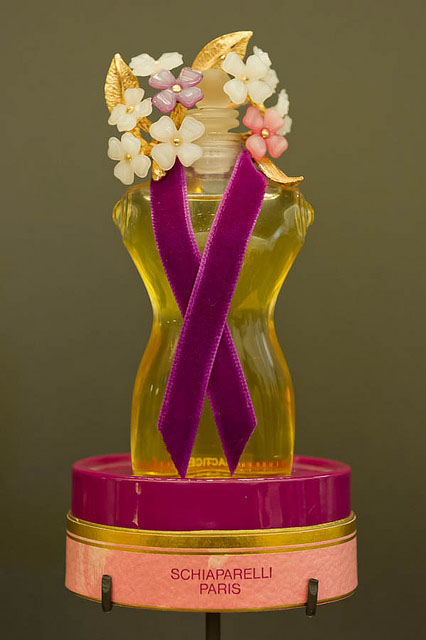
Schiaparelli’s imagination didn’t depend entirely on Dalí. In 1937, she launched Shocking, a perfume whose bottle and packaging were designed by the artist Leonor Fini, and lent its name to the vivid pink that became one of her signatures, Shocking Pink, according to the house’s own account.
It was another refusal to stay quiet. The color was loud, the name was loud, and even the bottle, shaped like a dressmaker’s mannequin, belonged to the same world where fashion and art kept crossing paths.
That’s what makes Schiaparelli more than “the designer who worked with Dalí.” Her real contribution was a way of thinking: a sweater could become an illusion, a lobster could become part of an evening gown, a shoe could become a hat, a dress could look wounded, a body could look like a skeleton, even a color could become a signature. In her hands, fashion simply didn’t have to behave.
Read More : The strange beauty of cats in Art
The Idea Never Really Left
The house is still doing something recognizably similar, nearly a century later.
Daniel Roseberry, Schiaparelli’s current creative director, has openly traced his own approach back to Schiaparelli herself, corsets molded like anatomy, gowns that toy with what’s supposed to be underneath the fabric rather than on top of it. The Skeleton Dress, specifically, was recently singled out in one fashion review as the one piece in the archive that can still make people flinch on sight.
That continuity shows up on red carpets, too. Roseberry’s Schiaparelli has dressed Lady Gaga, Beyoncé, Cardi B, and Kim Kardashian in headline-making looks over the past few years, all built on the same basic move: take the body, or something that doesn’t belong on it, and put it exactly where it shouldn’t be. At the most recent Met Gala, two of the night’s most talked-about looks, worn by Kylie Jenner and Lauren Sánchez Bezos, were also Schiaparelli.
The lobster and the bones weren’t a one-off stunt from the 1930s. They were the start of a habit the house never dropped.
The Dress Was Never Just a Dress
Maybe that’s why her clothes still feel alive. The Paris that produced the Lobster Dress and the Skeleton Dress is long gone, but the questions behind them haven’t dated at all. What if clothing could make you laugh? What if it could unsettle you, confuse you, or just make you stop and look again?
Schiaparelli treated fashion as something that could carry an idea the way a painting does. She pulled artists into her process, turned illusions into garments, and made the body itself part of the image.
She didn’t just put Surrealism on a dress.
She made the dress a place where Surrealism could happen.
If you could wear one Schiaparelli creation, which one would you choose?
Editor’s Note
Elsa Schiaparelli never believed art had to stay on a canvas. She took an idea, gave it a body, and turned something as ordinary as a dress into a place for imagination to happen.
That spirit still belongs to artists today.
At Arts to Hearts Project, we believe in creating spaces where artists can bring their ideas into the world, whether through books, exhibitions, features, or new creative opportunities. If you have been wondering where your own work could take you next, explore our current open calls and see where your work might belong.
Explore the latest Arts to Hearts Project open calls → Apply to Arts to Hearts Project Open Calls