



Banned, Attacked, Mocked: 8 Art Controversies That Became Masterpieces
What makes a work of art truly controversial? Is it nudity, religion, politics, or simply an idea so radical that the world isn’t ready for it?
History shows that some of the most celebrated masterpieces were once dismissed as offensive, blasphemous, or downright absurd. Paintings were removed from churches, exhibitions were canceled, artists were ridiculed, and even museums found themselves at the center of public outrage. Yet many of these very works would go on to redefine art history, proving that today’s scandal can become tomorrow’s masterpiece.
From a Virgin Mary deemed too human to a porcelain urinal that forever changed the definition of art, these aren’t just stories about shocking artworks, they’re stories about the moments when artists challenged society’s deepest beliefs and paid the price for it.
In this list, we’re revisiting eight of the most fascinating art controversies of the last four centuries. Some sparked protests, others ignited political debates, and a few continue to divide audiences even today. Whether you see them as vile, visionary, or something in between, one thing is certain: they changed the course of art history forever.
1. Caravaggio’s Death of the Virgin (1605–1606)
The Painting the Church Refused to Accept
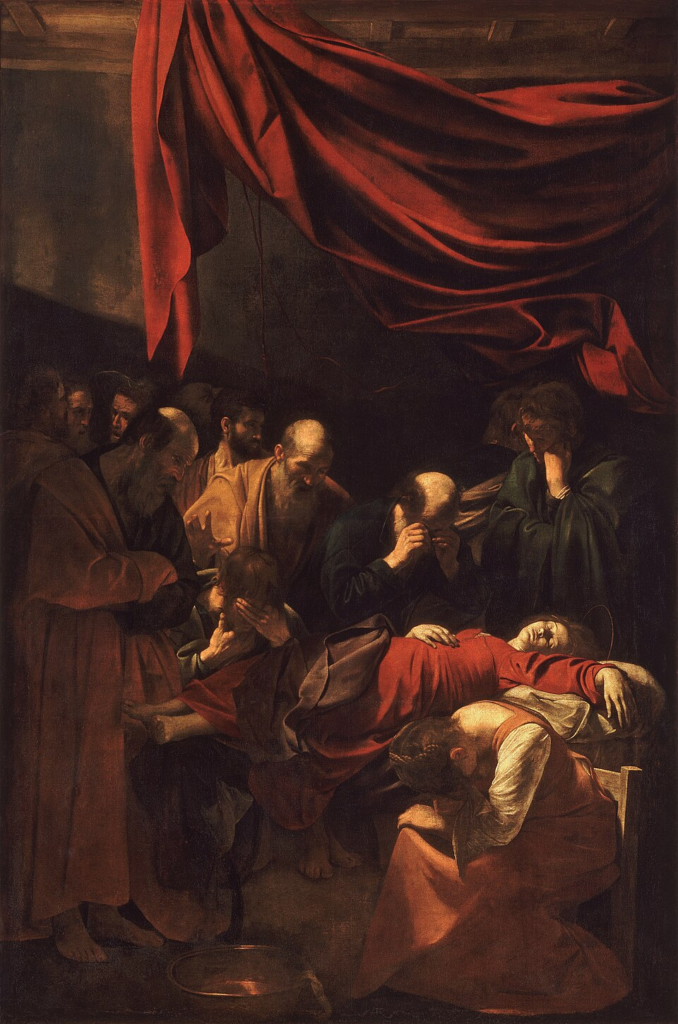
Few paintings have scandalized the Church quite like Death of the Virgin. Today, it’s celebrated as one of Caravaggio’s greatest masterpieces. But when it was unveiled in Rome in the early 1600s, the very people who commissioned it wanted nothing to do with it.
Caravaggio had been hired to paint the Virgin Mary’s final moments for a chapel in the Church of Santa Maria della Scala. Instead of portraying her as an idealized, heavenly figure bathed in divine light, he painted something that felt startlingly ordinary. Mary appears lifeless, her body heavy with death, her bare feet exposed, and her face marked by the unmistakable stillness of mortality. Around her, the grieving apostles are overcome with raw emotion rather than quiet reverence.
For church officials, this wasn’t simply an unconventional artistic choice, it was deeply unsettling. Religious paintings of the time were expected to inspire devotion through perfection and beauty. Caravaggio stripped away that idealization, presenting the Virgin as a real woman whose body had experienced death like any other human being. Rumors even spread that he had used the body of a drowned woman as his model, further fueling public outrage, though historians have never confirmed the story.
The church ultimately rejected the painting, considering it inappropriate for a sacred space. Yet what was once dismissed as disrespectful would later become one of the defining works of Baroque art. Caravaggio’s uncompromising realism transformed religious painting, influencing generations of artists who began to embrace emotion, humanity, and dramatic naturalism over flawless perfection.
More than four centuries later, Death of the Virgin reminds us that controversy often begins when an artist chooses honesty over convention. What once seemed offensive can eventually redefine the way the world sees art itself.
2. Édouard Manet’s Olympia (1863)
The Nude That Refused to Look Away
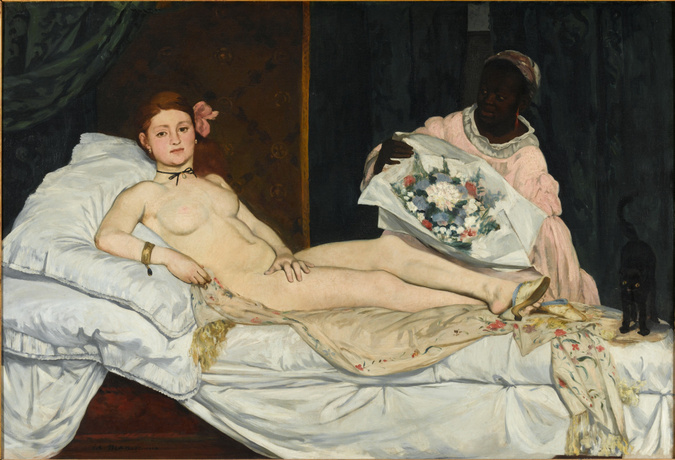
When Olympia was unveiled at the Paris Salon in 1865, visitors didn’t simply dislike it, they laughed, jeered, and crowded around it in disbelief. Museum guards reportedly had to keep people from damaging the painting. For many, it wasn’t just scandalous. It was insulting.
At first glance, Olympia seems to follow a familiar tradition. European art had celebrated reclining nude women for centuries, with artists like Titian and Ingres presenting idealized figures draped in mythology or romance. But Manet stripped away those comforting illusions. His subject wasn’t a goddess or a mythical beauty. She was widely understood to be a contemporary Parisian courtesan, lying confidently on her bed as a servant presents her with flowers, likely a gift from a client.
What unsettled viewers wasn’t her nudity alone. It was the way she looked back. Olympia meets the viewer’s gaze directly, without embarrassment, seduction, or apology. She isn’t inviting admiration; she’s acknowledging your presence with complete self-possession. Combined with Manet’s visible brushstrokes, stark lighting, and refusal to soften her features, the painting challenged everything audiences expected from academic art.
Critics called the work vulgar, unfinished, and morally corrupt. Some mocked Olympia’s pale skin and angular body, while others condemned Manet for abandoning the polished ideals that had long defined fine art. Yet beneath the outrage lay a deeper discomfort: the painting forced viewers to confront the realities of modern life rather than escape into historical or mythological fantasy.
Today, Olympia is recognized as one of the defining masterpieces of modern art. By replacing idealized beauty with unflinching realism and giving his subject undeniable agency, Manet didn’t simply paint a nude, he challenged centuries of artistic convention. The very qualities that once made the painting unacceptable are now celebrated as the reasons it changed art history forever.
3. Gustave Courbet’s The Origin of the World (1866)
The Painting Hidden Behind Closed Doors for Decades
Some paintings spark debate the moment they’re unveiled. The Origin of the World was considered so provocative that most people weren’t even allowed to see it. For decades, it remained hidden in private collections, concealed behind doors and curtains, its existence whispered about more than openly discussed.
Painted by French Realist Gustave Courbet in 1866, the work offers an unapologetically close view of a reclining woman’s torso. There is no face to identify her, no symbolic narrative, no mythological disguise to soften the subject. Instead, Courbet presents the female body with striking realism, removing every artistic convention that had long made nudity acceptable in Western painting.
That realism was exactly what made the work so controversial. Throughout art history, nude figures were often justified through stories of goddesses, biblical characters, or allegorical themes. Courbet rejected those traditions entirely. His painting offered no explanation beyond the body itself, confronting viewers with a subject that society preferred to keep hidden. It blurred the line between fine art and explicit imagery, raising uncomfortable questions about where one ended and the other began.
Because of its explicit nature, The Origin of the World was never intended for public exhibition. It passed quietly between private collectors for more than a century, remaining largely out of public view before eventually finding a permanent home at the Musée d’Orsay in Paris. Even today, the painting continues to spark conversations about censorship, representation, and the way societies respond to depictions of sexuality.
More than 150 years later, Courbet’s work still asks a question that has never been fully answered: if art is meant to reflect reality, why do certain realities continue to make us uncomfortable? That enduring tension is precisely what has kept The Origin of the World at the center of debates about artistic freedom for generations.
4. Pablo Picasso’s Les Demoiselles d’Avignon (1907)
The Masterpiece That Even Picasso’s Closest Friends Couldn’t Understand
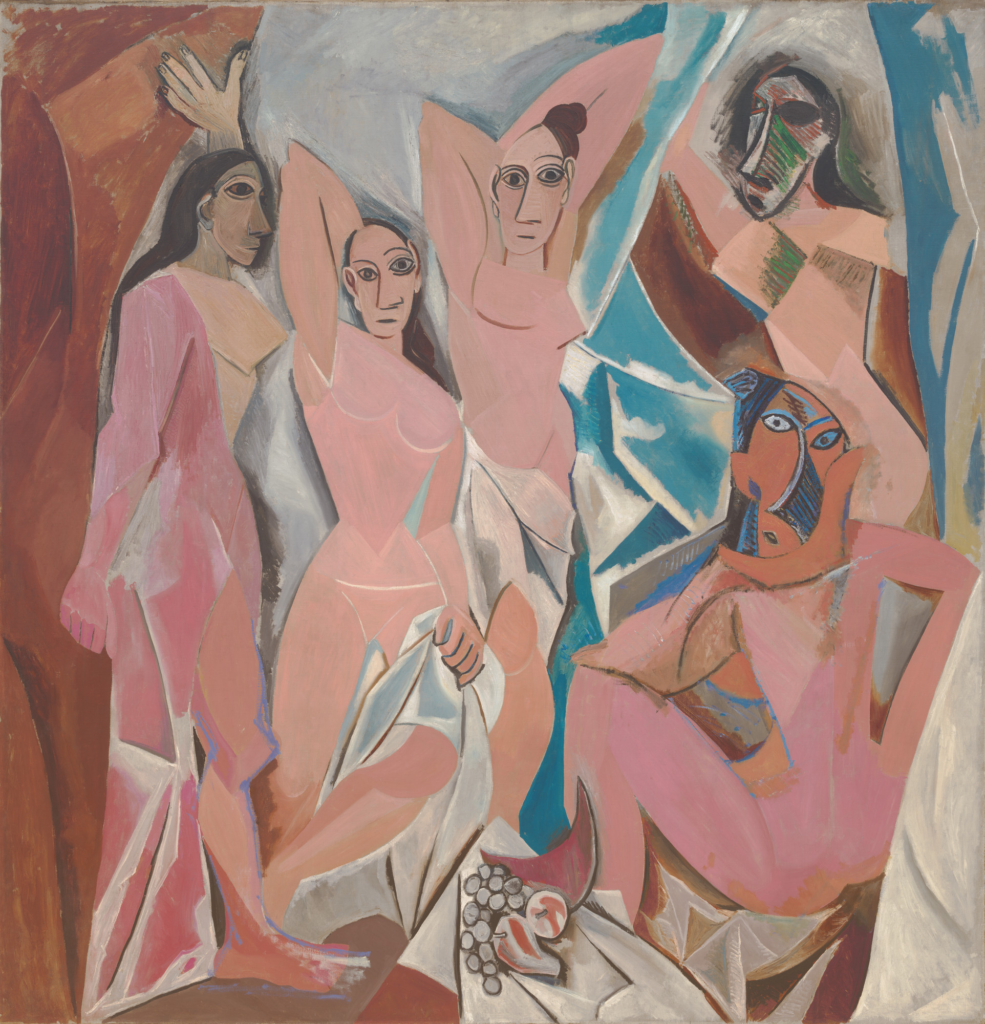
Today, Les Demoiselles d’Avignon is hailed as one of the most influential paintings of the twentieth century. But when Pablo Picasso first revealed it to fellow artists in 1907, the reaction was anything but admiration. Some were bewildered, others were disturbed, and a few believed Picasso had abandoned painting altogether.
The monumental canvas depicts five women in a brothel, yet almost everything about them defied artistic convention. Their bodies are fragmented into sharp, angular planes, while two of the figures wear faces inspired by African masks rather than natural human features. Traditional ideas of beauty, perspective, and proportion disappear entirely, replaced by a style that felt chaotic and unsettling to audiences accustomed to realism.
Even Picasso’s contemporaries struggled to accept what they were seeing. Artist Henri Matisse reportedly viewed the painting as a dangerous step in the wrong direction, while others dismissed it as little more than an artistic experiment gone too far. Rather than exhibiting it immediately, Picasso kept the work in his studio for years, where only a small circle of artists and collectors could see it. The painting’s radical approach simply seemed too shocking for the public.
Yet what initially looked like artistic failure would soon become the foundation of Cubism, a movement that transformed modern art. By breaking apart form and showing multiple perspectives within a single image, Picasso challenged centuries of artistic tradition and opened entirely new possibilities for how reality could be represented on canvas.
More than a century later, Les Demoiselles d’Avignon remains a reminder that revolutionary ideas rarely arrive to universal applause. The painting that once confused nearly everyone who saw it is now considered one of the defining turning points in the history of modern art, proof that today’s most controversial works often become tomorrow’s greatest masterpieces.
5. Marcel Duchamp’s Fountain (1917)
The Urinal That Changed the Meaning of Art Forever
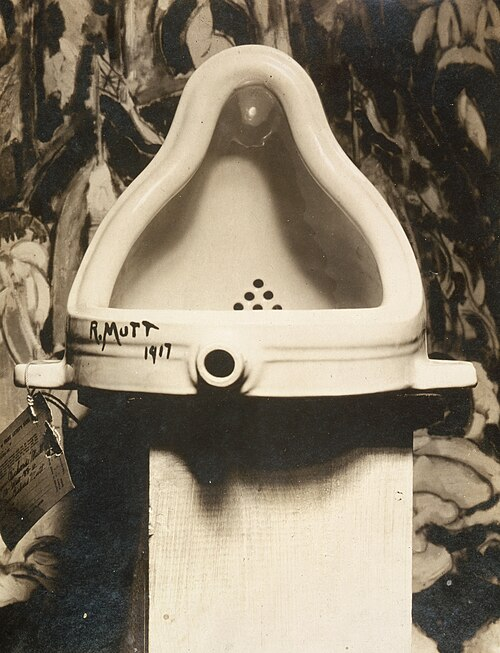
In 1917, one ordinary porcelain urinal sparked a debate that still hasn’t ended. It wasn’t beautifully carved, painstakingly painted, or even handmade. Yet more than a century later, Fountain remains one of the most influential, and controversial, works in the history of modern art.
French artist Marcel Duchamp purchased a standard industrial urinal, turned it on its side, signed it “R. Mutt,” and submitted it to the Society of Independent Artists exhibition in New York. The exhibition famously claimed it would accept every work entered by artists who paid the membership fee. But when organizers discovered Duchamp’s submission, they quietly removed it from the show, arguing that it simply wasn’t art.
That rejection was exactly what Duchamp wanted to expose. He believed that art wasn’t defined solely by craftsmanship or technical skill, but by an artist’s choice and the ideas behind an object. By taking something ordinary and placing it in a gallery, he challenged the long-held belief that art had to be beautiful, original, or even created by the artist’s own hands.
The controversy surrounding Fountain spread far beyond the exhibition itself. Critics dismissed it as a joke, an insult to artists, or evidence that modern art had lost its way. Others saw it as a revolutionary statement that forced the art world to question its own rules. Although the original urinal was eventually lost, replicas now occupy some of the world’s most prestigious museums, and the work continues to be studied as a defining moment in conceptual art.
More than a century later, Fountain still divides opinion. Some see nothing more than a bathroom fixture placed on a pedestal, while others consider it one of the greatest artistic breakthroughs of the twentieth century. Few artworks have done more to reshape a simple question that remains surprisingly difficult to answer: What makes something a work of art?
6. Andres Serrano’s Piss Christ (1987)
The Photograph That Sparked a National Culture War
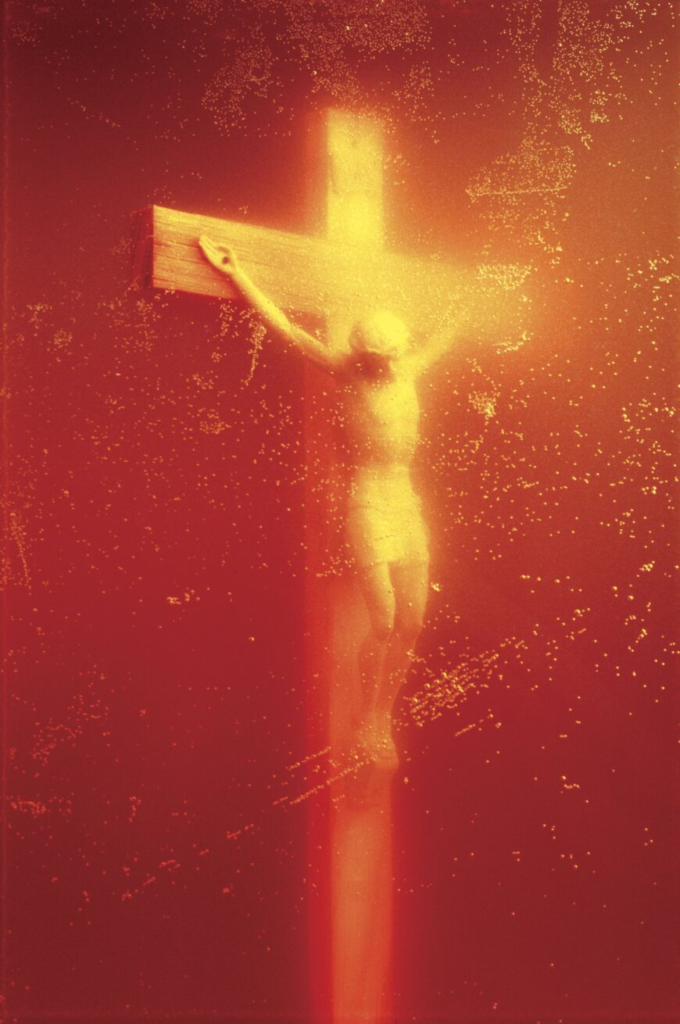
Few artworks have ignited as much public anger as Piss Christ. Long before outrage spread across social media, this single photograph dominated newspaper headlines, fueled political debates, and became one of the most controversial works of contemporary art.
Created by American photographer Andres Serrano in 1987, Piss Christ depicts a small plastic crucifix submerged in a container of the artist’s urine. At first glance, the image appears almost luminous, glowing with rich amber and golden tones. It isn’t until viewers learn how it was made that admiration often turns into shock.
For many Christians, the work was seen as an act of deliberate blasphemy and disrespect toward one of Christianity’s holiest symbols. The controversy intensified when it became public that Serrano had previously received funding from the National Endowment for the Arts (NEA). What began as criticism of a single photograph quickly evolved into a nationwide debate over artistic freedom, government funding, and whether public money should support art that some found deeply offensive.
The backlash was swift and intense. Politicians publicly condemned the work, religious groups organized protests, and the NEA faced significant political pressure that ultimately affected its funding. Over the years, Piss Christ has also been vandalized multiple times while on display, demonstrating how strongly it continues to divide audiences decades after its creation.
Despite the outrage, Serrano has consistently argued that the photograph was not intended to mock Christianity but to explore the commercialization of religious symbols and the complex relationship between faith, culture, and contemporary society. Whether viewers accept that explanation or not, Piss Christ remains a powerful reminder that context can completely transform how a work of art is perceived.
Nearly forty years later, the photograph continues to provoke the same uncomfortable question it did in 1987: Should art be free to challenge deeply held beliefs, even when doing so offends millions of people?
7. Robert Mapplethorpe’s The Perfect Moment (1989)
The Exhibition That Turned Art into a Political Battlefield
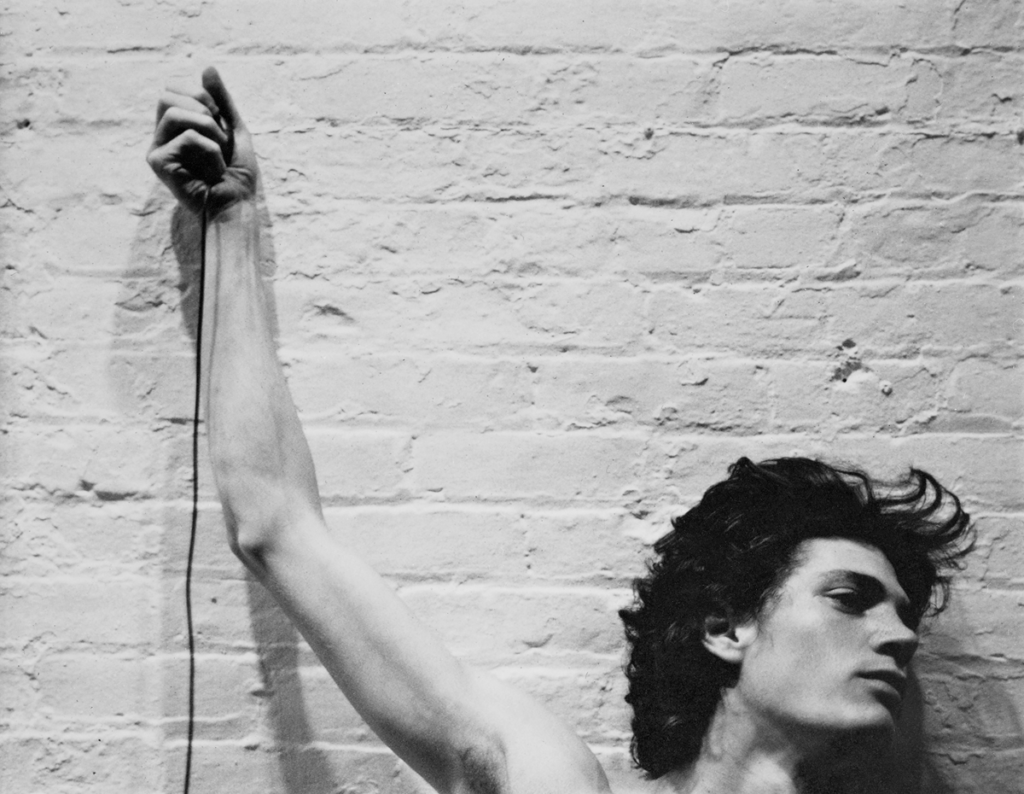
Most controversial artworks revolve around a single painting or photograph. Robert Mapplethorpe’s The Perfect Moment was different. It was an entire exhibition that became the center of a national argument over censorship, public funding, and who gets to decide what belongs inside a museum.
By the late 1980s, Mapplethorpe had earned a reputation for creating striking black-and-white photographs that explored beauty, identity, sexuality, and the human body. The Perfect Moment brought together many of these works, including portraits, floral still lifes, and photographs featuring explicit BDSM imagery. While supporters praised the exhibition for its honesty and artistic excellence, critics argued that some of its content was too explicit to be publicly displayed.
The controversy escalated when the Corcoran Gallery of Art in Washington, D.C., canceled the exhibition amid growing political pressure. Because the exhibition had ties to institutions that received funding from the National Endowment for the Arts (NEA), the debate quickly moved beyond the walls of the museum. Politicians questioned whether taxpayers should help fund art they considered obscene, while artists, curators, and free speech advocates warned that political interference threatened artistic independence.
Ironically, the cancellation only amplified public interest. Protesters gathered outside the museum, and images from the exhibition were projected onto the museum’s exterior in a powerful demonstration against censorship. Rather than disappearing from public conversation, The Perfect Moment became one of the defining flashpoints in the ongoing struggle between artistic freedom and public accountability.
Today, the exhibition is remembered not simply for its photographs but for the larger questions it raised. Who decides what qualifies as acceptable art? Should museums change their exhibitions in response to political pressure? More than three decades later, those debates remain as relevant as ever, proving that some of art’s greatest controversies are never really about the artwork alone.
8. Damien Hirst’s The Physical Impossibility of Death in the Mind of Someone Living (1991)
The Dead Shark That Left the Art World Divided
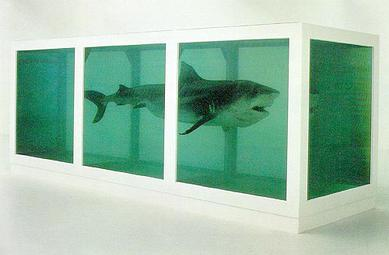
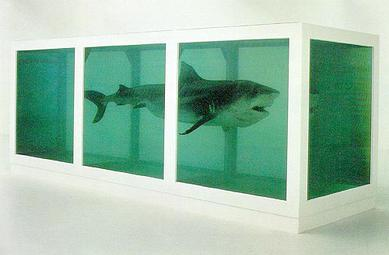
Can a dead shark become one of the world’s most famous works of art? When Damien Hirst unveiled The Physical Impossibility of Death in the Mind of Someone Living in 1991, that question became impossible to ignore, and people have been arguing about it ever since.
Commissioned by collector Charles Saatchi, the installation features a 14-foot tiger shark suspended in a glass tank filled with formaldehyde. Encountering the work in person is unsettling. The shark appears frozen in motion, its jaws slightly open as though it could come back to life at any moment. Rather than depicting death through paint or sculpture, Hirst confronted viewers with death itself.
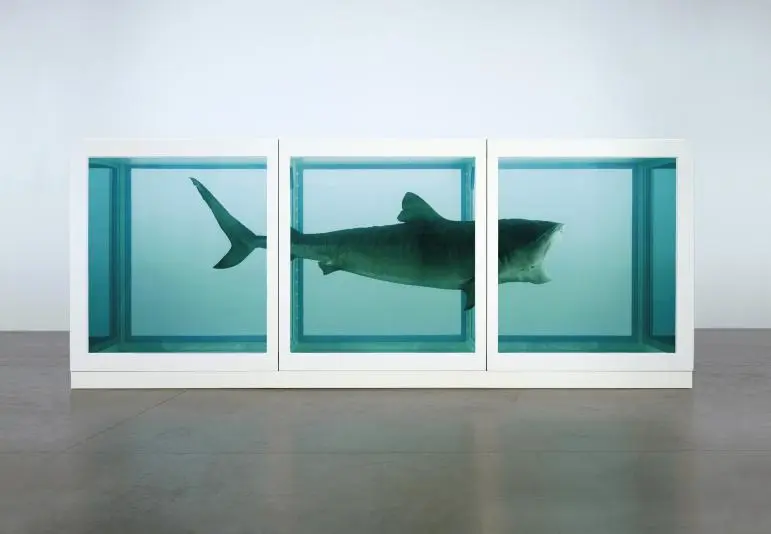
The installation quickly became one of the defining works of the Young British Artists (YBAs), a group known for pushing the boundaries of contemporary art with unconventional materials and provocative ideas. While supporters praised the work as a powerful meditation on mortality, fear, and the fragility of life, critics dismissed it as little more than an expensive spectacle. To many, it raised an uncomfortable question: was the artwork the shark, the idea behind it, or simply the hype surrounding it?
The debate only intensified as the piece gained fame. When the original shark began to deteriorate over time, it was eventually replaced with another specimen, prompting fresh discussions about authenticity and whether a conceptual artwork remains the same when one of its most essential elements changes.
More than thirty years later, Hirst’s shark continues to symbolize the divide between traditional and contemporary art. Some see it as a profound reflection on the inevitability of death, while others still view it as an overhyped display masquerading as artistic genius. Regardless of where one stands, its lasting influence proves that the most controversial artworks are often the ones that refuse to offer easy answers.
Conclusion: When Does Controversy Become History?
Looking across four centuries of art, one pattern becomes impossible to ignore: many of the works we now celebrate as masterpieces were once dismissed as offensive, dangerous, or completely absurd. Caravaggio’s realism was rejected by the Church. Manet’s Olympia was mocked by critics. Duchamp’s Fountain was refused entry into an exhibition. Damien Hirst’s shark was ridiculed as spectacle rather than art. Yet each of these works permanently altered the course of art history.
Of course, not every controversial artwork becomes a masterpiece, and controversy alone doesn’t guarantee artistic value. But these eight works reveal something fascinating about the relationship between art and society. The strongest reactions often emerge when artists challenge accepted beliefs, about religion, beauty, morality, politics, or even the very definition of art itself. What one generation condemns, another may come to admire.
Perhaps that’s why these debates have never truly ended. Museums, artists, critics, and audiences continue to wrestle with the same questions centuries later: Should art comfort us or confront us? Can something be offensive and important at the same time? And who ultimately decides where the line should be drawn?
The answers remain as divided today as they were when these works first appeared. Maybe that’s the point. The most unforgettable art doesn’t simply hang on a gallery wall, it lingers in our minds, challenging us long after we’ve looked away.
Is controversy a sign of great art – or just good publicity?
If this journey through art’s biggest scandals left you questioning what a painting can really say, you might also enjoy our look at the masterpieces that seem to be staring right back at you: Paintings That Look Like They’re Judging You.