

How Mariya Myronova used her darkest chapter to create symbolic paintings

At Arts to Hearts Project, Art and Woman was built for stories like this one. Stories where life did not hand a woman a clean creative path but gave her something harder and more real instead. And the art that came out of that harder path carries a weight that no amount of formal training could have produced.
Mariya Myronova is one of our selected artists for Art and Woman Edition 3. She is a Ukrainian artist based in the UK. She came to painting through a route that had nothing to do with galleries or art school ambitions.
She came through graphic design and linguistics and teaching art on weekends while raising three children and working freelance projects in between.
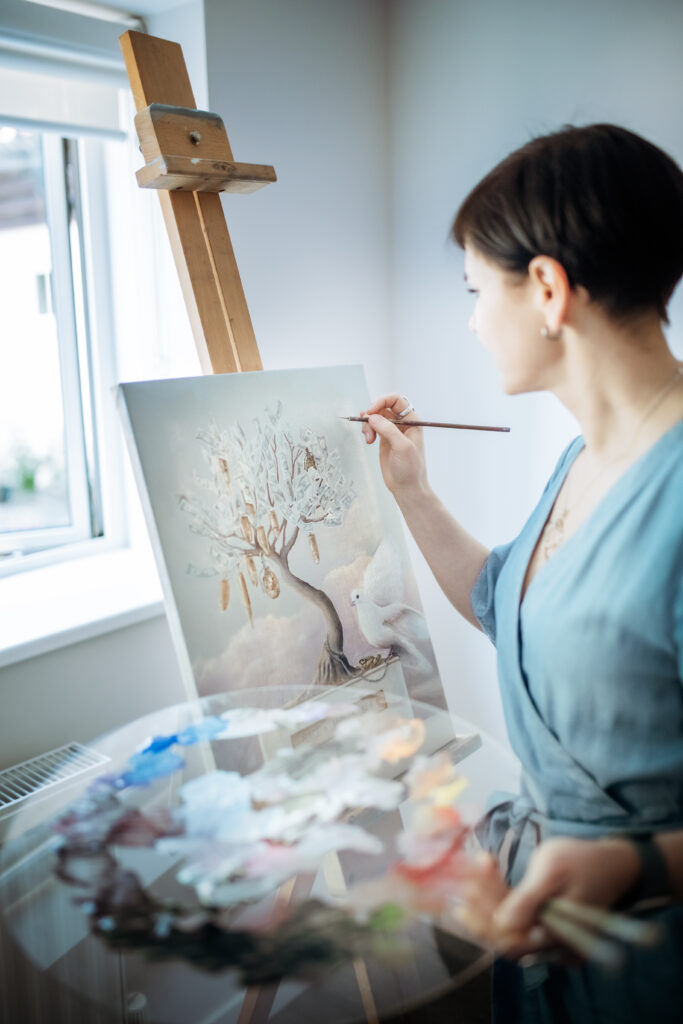
For years there was no time for her own art. None. The creative energy went into other people’s projects and other people’s needs and her own paintings did not exist yet because her life did not have room for them.
And then life broke open in a way that left her no choice. Loss after loss after loss, personal and professional and national, all arriving in a sequence that most people would struggle to survive let alone make art from.
What happened and how painting became the thing that carried her through it is something she talks about during the interview with an honesty that genuinely took us aback. We are not going to summarise it here because it deserves to be read in her own words.
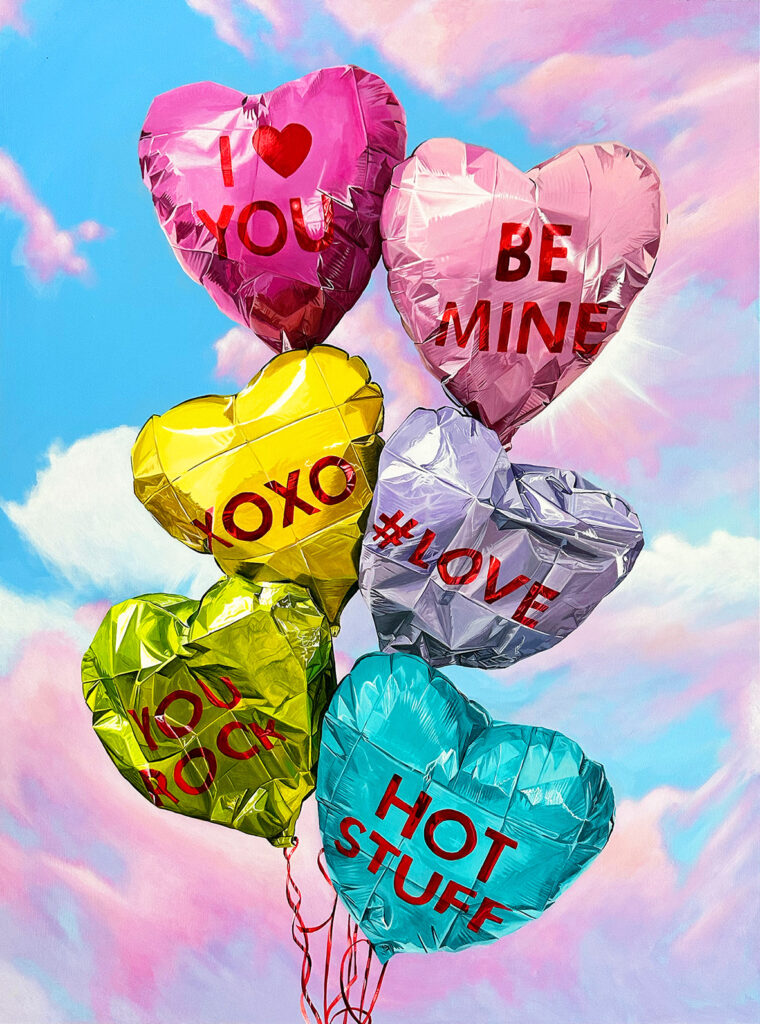
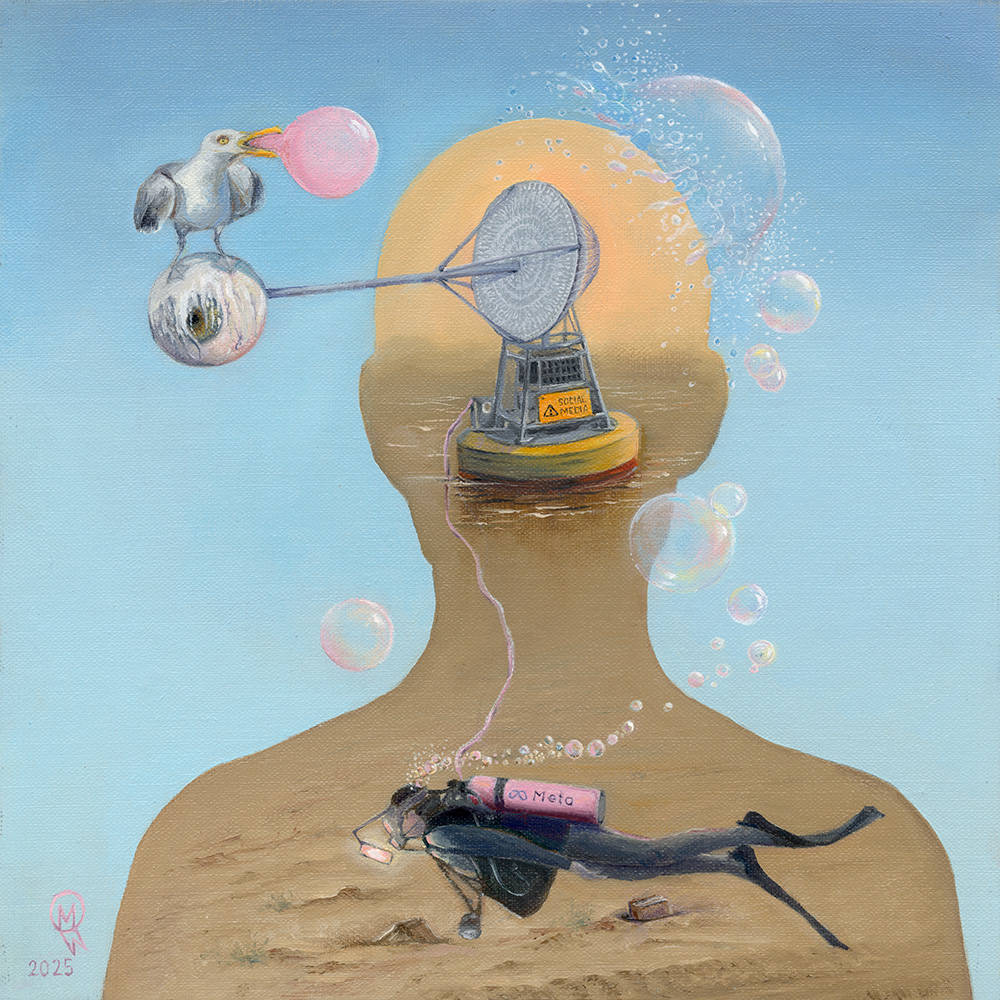
What emerged from that period is a body of work she calls Social Surrealism. Paintings that look beautiful on the surface and then pull you in deeper and deeper until you realise you are looking at something that is asking very uncomfortable questions about how we live and why we behave the way we do.
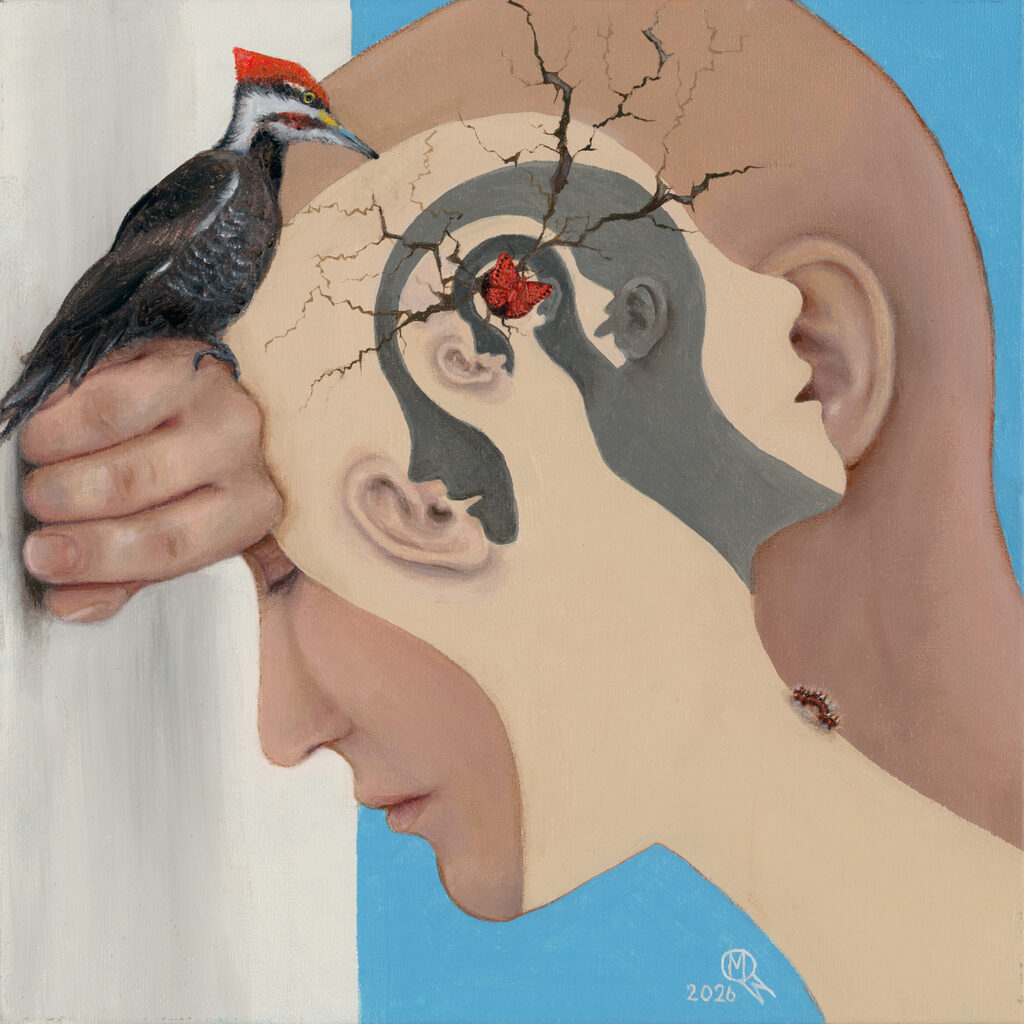
There is humour in the work but it is the kind of humour that appears in the darkest moments, not because anything is funny but because laughing is sometimes the only way to keep going.
She works in oil because the complexity of what she is trying to say needs a medium that can hold layers and depth and tension and contradiction all at the same time. But she also makes watercolours that come from a completely different part of her. Why she needs both and what each one gives her is a small detail in the conversation that tells you a lot about who she is.
Her paintings use symbolism and metaphor rather than direct representation and her reason for that choice is one of the most interesting things she said during our conversation. It connects to how she thinks about the viewer’s role in completing the meaning of a painting and why the same work can say something different to you every time you look at it depending on what has happened in your life since the last time.
Let’s get to know Mariya through our conversation with her about how loss became the doorway back to painting, why metaphor reveals more than direct truth, what Social Surrealism actually means, and why she believes the biggest element in any painting should always be the idea.
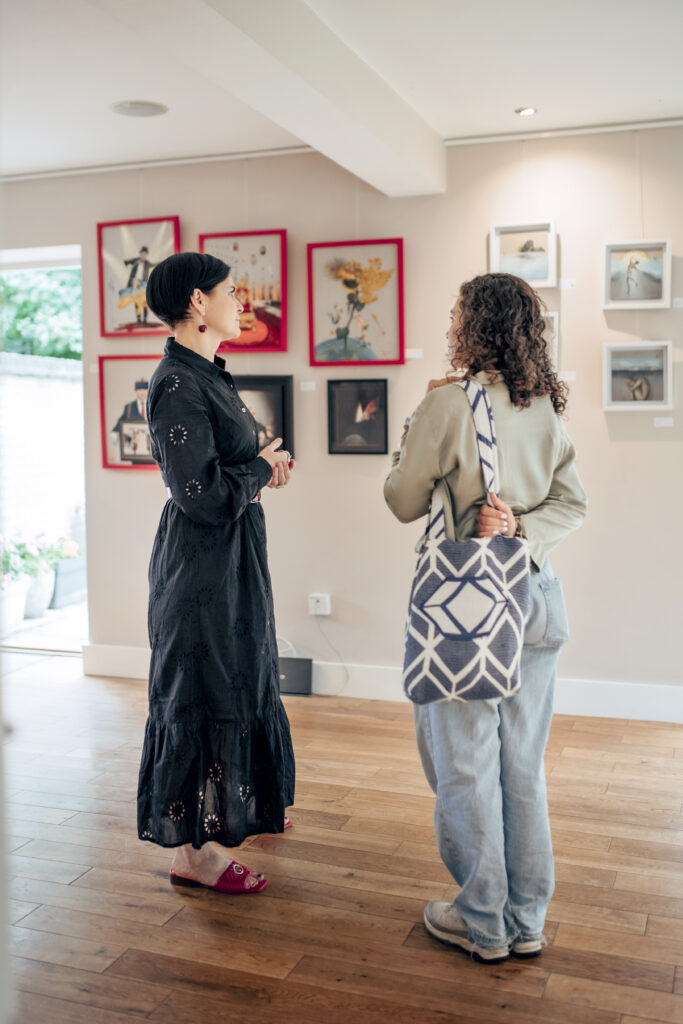
Q1. Mariya, can you share a bit about your journey &how you found your way back to painting after linguistics and graphic design?
Back in 2005–2020, I was working as a graphic designer during the day, teaching art on weekends and evenings, and taking on freelance design projects in between family life and the chores of raising three children. There was no time for my own art. Art came back as a necessity — like a safe boat — after my grandmother’s death, then my father’s death, a very unfair redundancy at work in 2020, and later the war in Ukraine. All of this left a mark on my world and uncovered deep pain.
Processing depression while hiding it behind a smile was challenging, especially when all you feel is that you don’t belong in this world. I painted all the stages I went through, and each painting became a step forward, helping me to understand human behaviour. At that point, I was choosing symbolic elements more subconsciously than intentionally; they were describing my actual feelings rather than being planned in advance.
That is how my Social Surrealism Depression series came to life, followed by Russian Games, Peace, Social Media, and so on. Life keeps surprising me. What is interesting is that my paintings have a much longer and more continuous effect on me than I expected. Every time I look at them, they open up to me in a new way. They give me strength, each one keeping a kind of dialogue with me.
Q2. Your paintings explore human behavior and modern life, what questions keep drawing you back to these themes?
I question the things that stop us from being happy. I question why we follow patterns, repeat behaviours, and continue habits we already know are harmful.
Q3. Do your paintings usually begin with an emotion, an observation, or a question?
It usually starts with a feeling that responds to a long-lasting thought. For example, I am currently working on a piece called Refugee. Over the last four years, I have met hundreds of wonderful people who ended up in foreign countries, far away from their homes. I have seen many tears, broken lives, anger, confusion, and the quiet strength people need just to continue.
These experiences stay with me. They slowly become images, symbols, and questions. I don’t usually start with a clear final picture; I start with an emotional pressure, something that keeps returning until it demands to be painted.
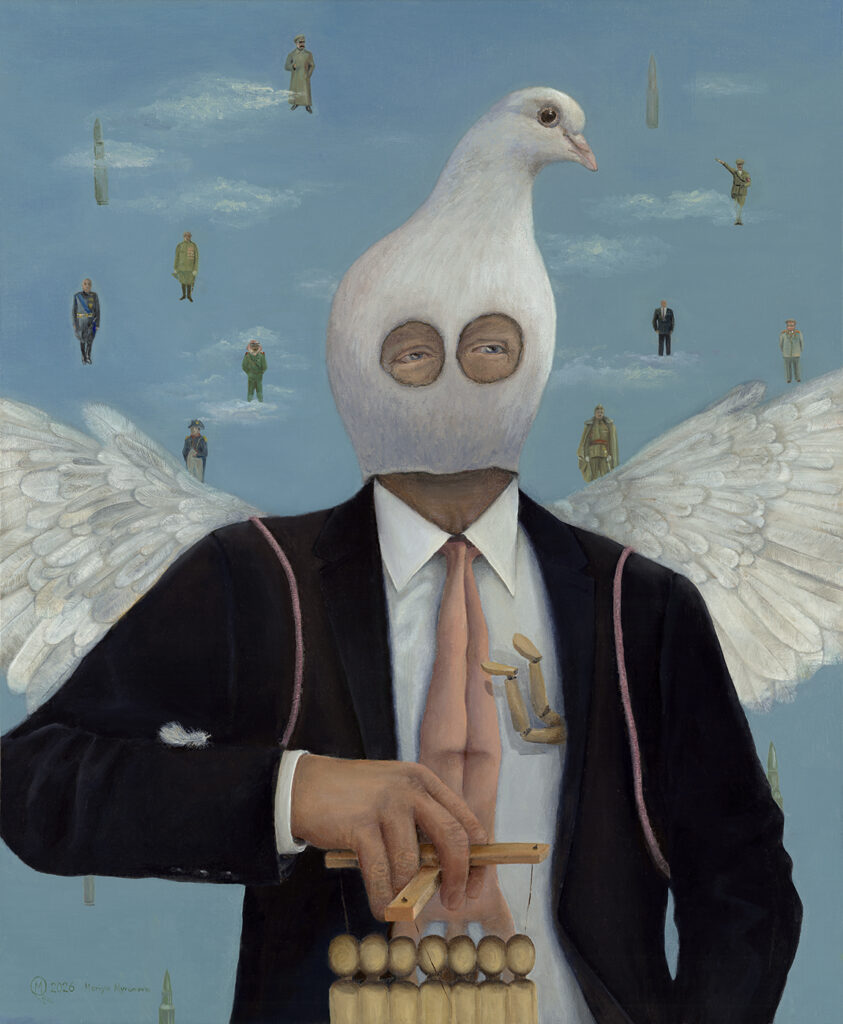
Q4. Your work often relies on symbolism, what makes metaphor more powerful than direct representation for you?
Metaphors are much more powerful than direct words or literal visual representation because they carry many layers of depth. Each person brings their own “package” of experiences, and this creates a personal filter through which they look at my paintings. That is why the same painting can speak differently each time you look at it.
Life happens in between. You change, you experience more, and those experiences enrich your perception. The painting stays the same, but your understanding of it keeps evolving.
Q5. Oil painting remains central to your practice, what keeps drawing you to the medium?
It is definitely oil. The complexity of life fits this medium perfectly. Oil allows me to build layers, depth, tension, and contradiction everything I need to explore the human mind and society. On the other hand, I also create very lively and playful watercolours for the little girl inside me, especially when I need to refill my sense of magic.
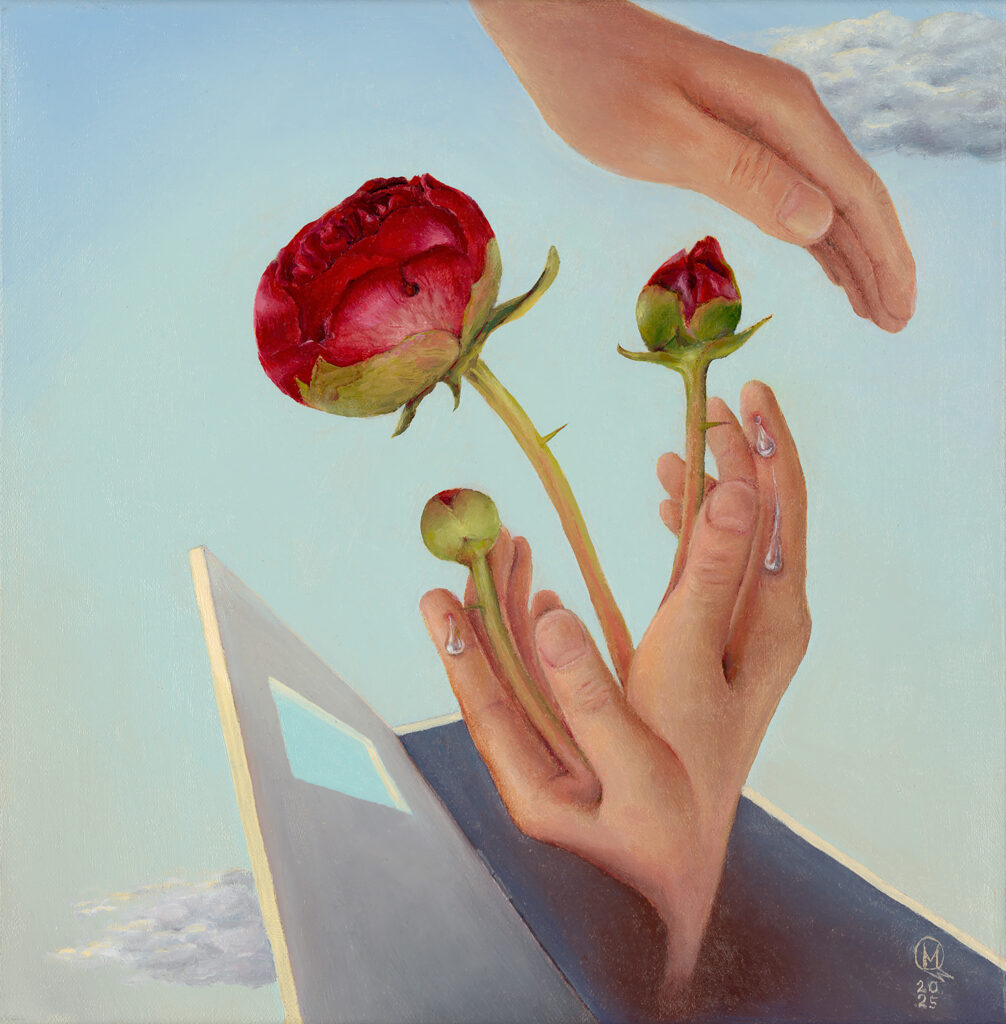
Q6. Your work blends humor, irony, and psychological tension, what draws you to that balance?
It is like real life: humour can appear in the darkest moments, not because the situation is funny, but because it helps us survive it.
Q7. Even when exploring difficult themes, your paintings remain visually inviting. How important is beauty in your work?
It works like the sweet scent of a flower attracting a bee: beauty draws people in first, and only then do they discover the deeper meaning behind it.
Q8. Your work explores patterns in human behaviour, do you think we’re becoming more self-aware, or simply more distracted?
We are constantly absorbing other people’s patterns because they are everywhere — in social media, trends, opinions, and the overwhelming flow of information around us. Without noticing, we begin to copy what we see, think what we are told to think, and measure ourselves against lives that may not even be real.
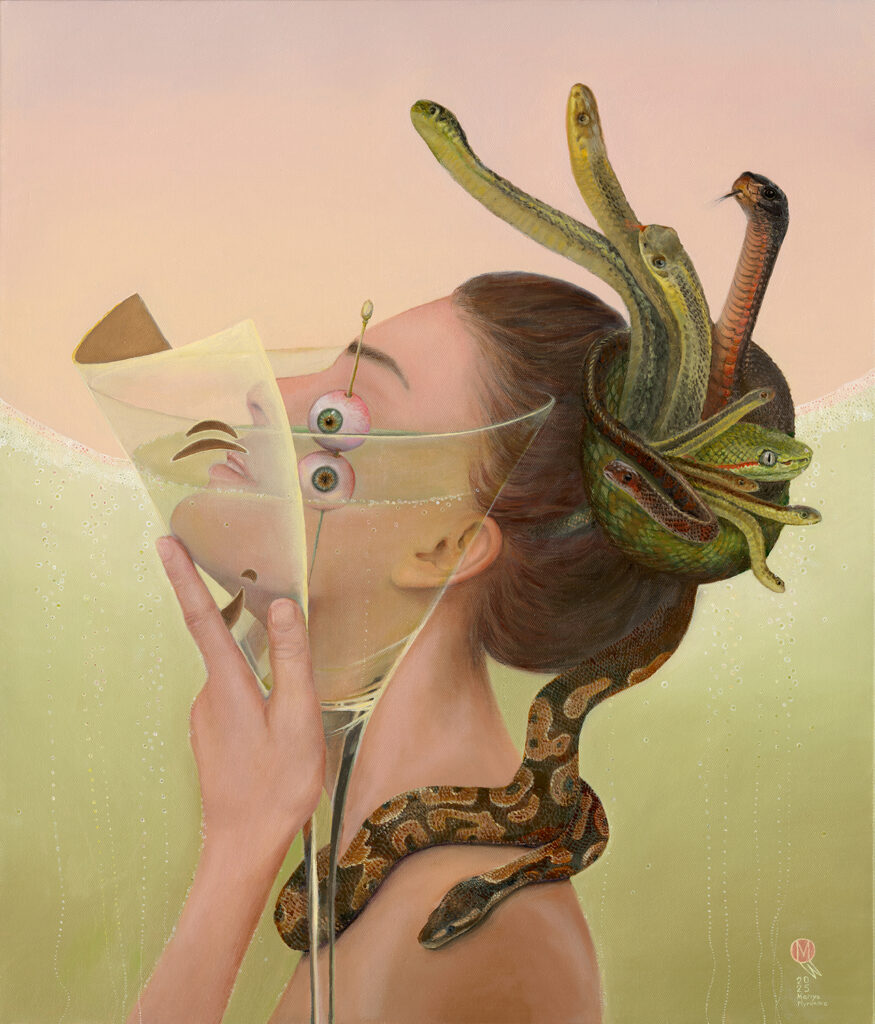
Q9. As your career has grown, did you ever feel pressure to make your work more commercially accessible?
Yes, I have been asked to paint very large-scale canvases. But for me, scale alone is not enough. The biggest element must always be the idea. Size can impress, but meaning is what stays.
Q10. Has your definition of success changed as your career has grown?
For me, success is still the same: when a painting resonates with people. When someone stands in front of it and feels something personal, when they share their own story with me, when the work begins a dialogue — that is success.
Q11. What advice would you give artists trying to create thoughtful work in a culture that rewards speed
Paint from your own experience, your own point of view.
As our conversation with Mariya came to a close, we kept thinking about necessity. About how the most powerful art almost never comes from having the perfect conditions to make it. It comes from not being able to survive without making it.
Mariya did not return to painting because she had free time or because someone encouraged her or because the market was right. She returned because everything else was falling apart and painting was the only thing that helped her make sense of what was happening.
That is a completely different starting point from most artists and it produces completely different work. Work that is not trying to impress anyone. Work that is trying to understand something. Work that was made because the alternative was staying lost.
And we think that distinction matters for every artist reading this. Between making art because you want to and making art because you have to. Both are valid. But the work that comes from have to carries something inside it that audiences feel immediately even when they cannot name what it is. A seriousness. A necessity. A sense that this painting exists because someone’s survival depended on making it. Mariya’s paintings carry that.
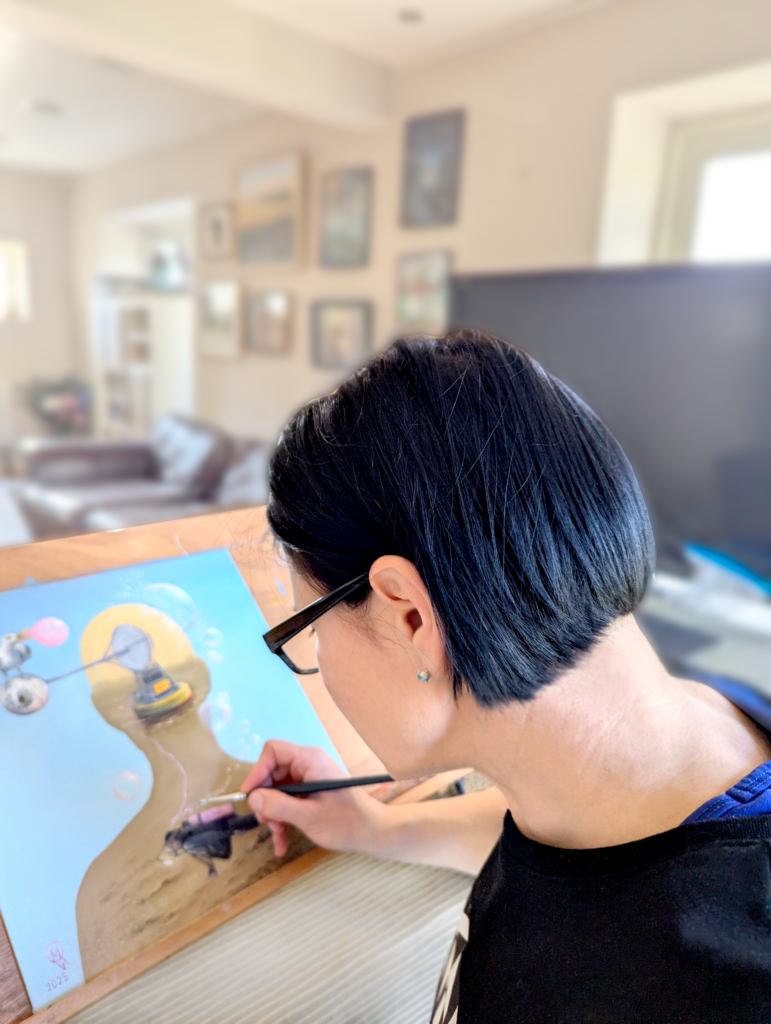
The other thing we took from this conversation is about layers. Not just in her oil paintings, which are literally built through layers of paint, but in how meaning works in her practice. She makes paintings that look one way on first glance and then reveal something else entirely when you stay with them.
And then something else again the next time you look because you have changed since the last time and the painting meets your new self with new meaning. That is an extraordinary quality for a piece of art to have. Most work gives you everything on the first look and then there is nothing left. Mariya’s work keeps opening up the longer you live with it.
For anyone considering Mariya’s work for their home or collection, her paintings are the kind that change over time. Not physically but in what they show you. The symbolism and the layered meaning and the social commentary woven into surfaces that are genuinely beautiful to look at, all of that gives the work a depth that does not run out. You will see something new in them in six months that you cannot see today. And that is the kind of art that earns its place in your life rather than just your living room.
Follow Mariya Myronova through the links below and see her work for yourself.