

This artist uses graphite & coloured pencil to turn portrait drawings into fine art │ Michael Alemayehu

At Arts to Hearts Project, our Artist of the Year Book was built for artists whose work stops you before you even know why. Artists where you are looking at something and your brain needs a second to catch up because what you are seeing does not make sense at first.
You think it is a photograph and then you realise it is not and then you lean in closer and you still cannot fully believe what someone did with a pencil on a piece of paper.
Michael Alemayehu does that to people. He is one of our selected artists in this first edition and his work genuinely made us question what we thought we knew about drawing.
Before you get to his interview, let us tell you a little about Michael.
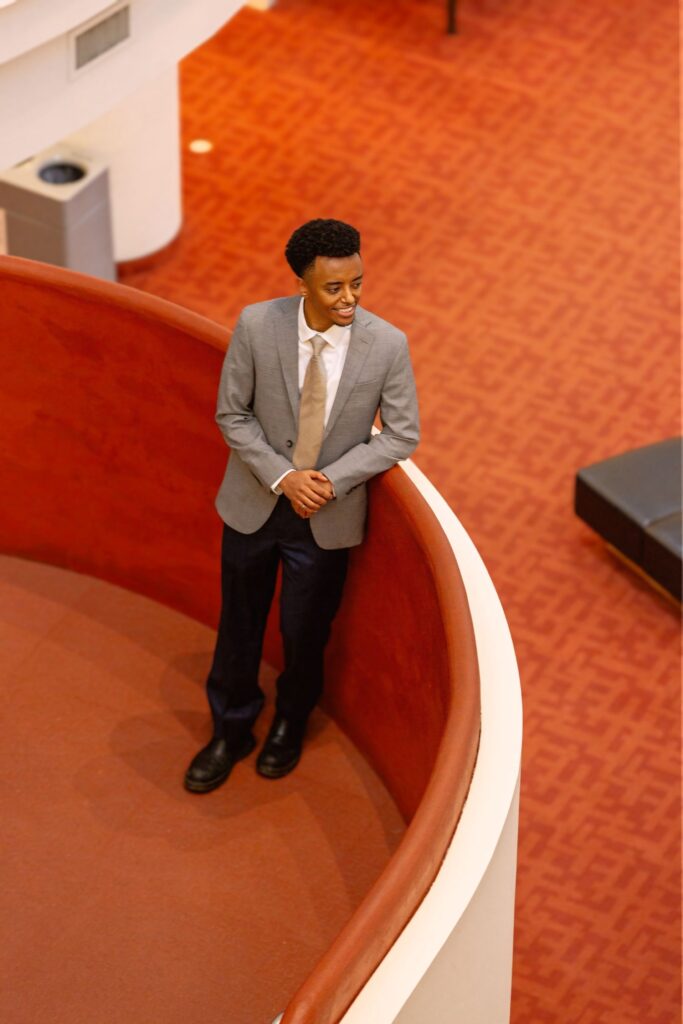
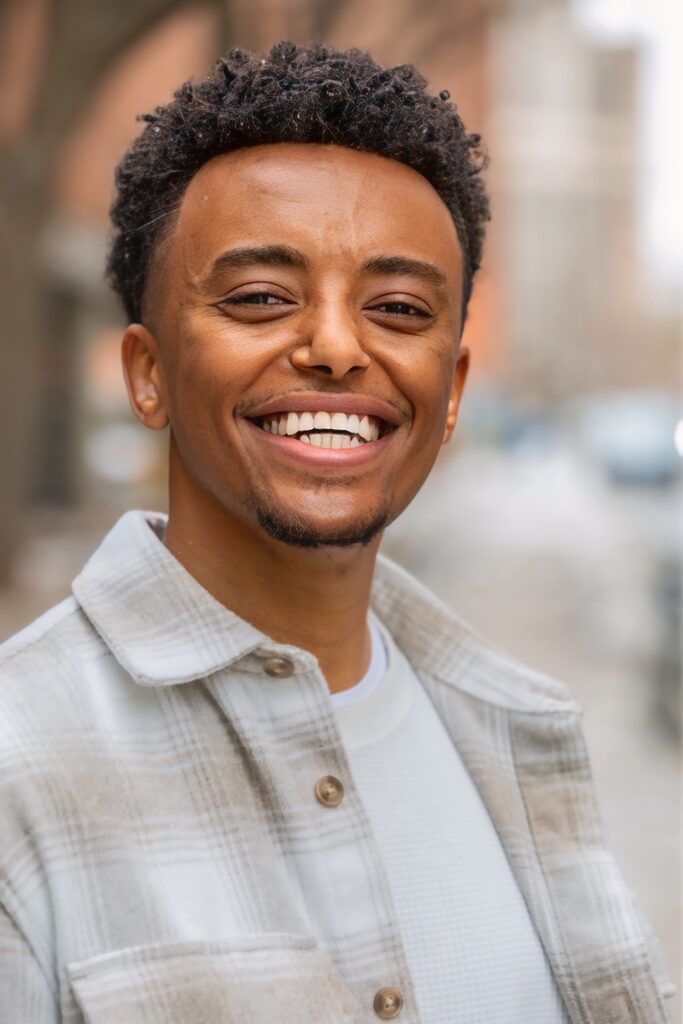
Michael Alemayehu is an Ethiopian self-taught artist who never went to art school, never had formal training, and never had a mentor standing beside him guiding the process. What he had was a pencil, paper, curiosity, and the determination to keep drawing until the work began to speak for itself.
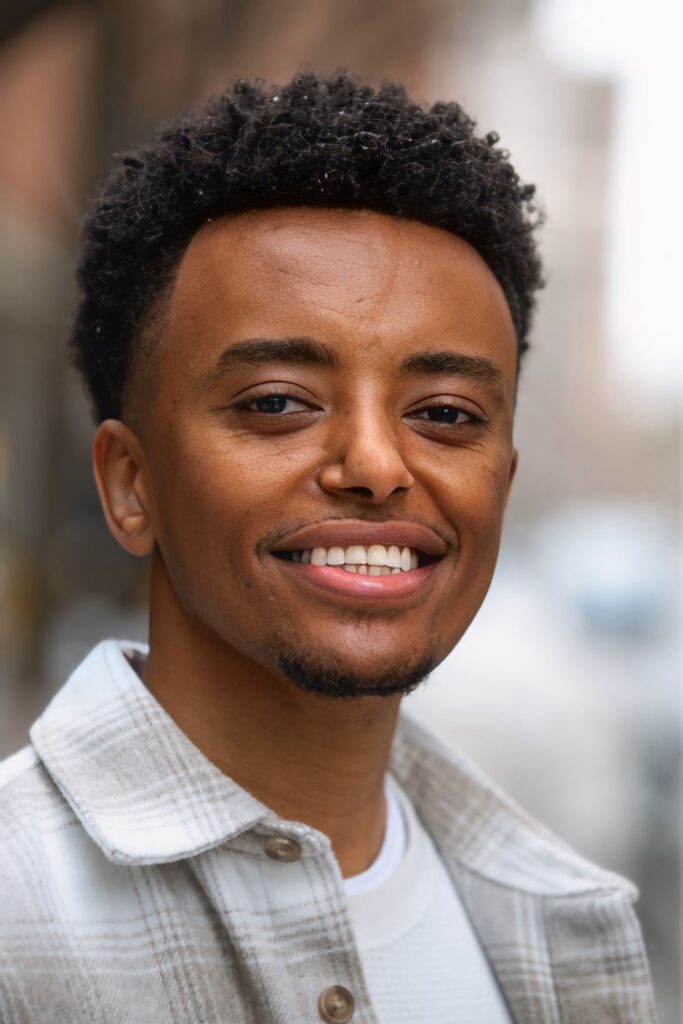
And over years of repetition and intentional practice and asking himself the same question again and again, why does this not look real yet, he taught himself to draw at a level of realism that makes people argue about whether they are looking at a drawing or a photograph.
But here is the thing about Michael that goes beyond the technical ability. He carries a sense of responsibility in his work that you can feel. He wants to show Africa the way he knows it. Not through the lens the rest of the world usually uses.
Not the incomplete narrative that gets repeated. He wants to show strength and elegance and dignity and joy. And every portrait he draws is doing that quietly and powerfully without needing a single word of explanation.
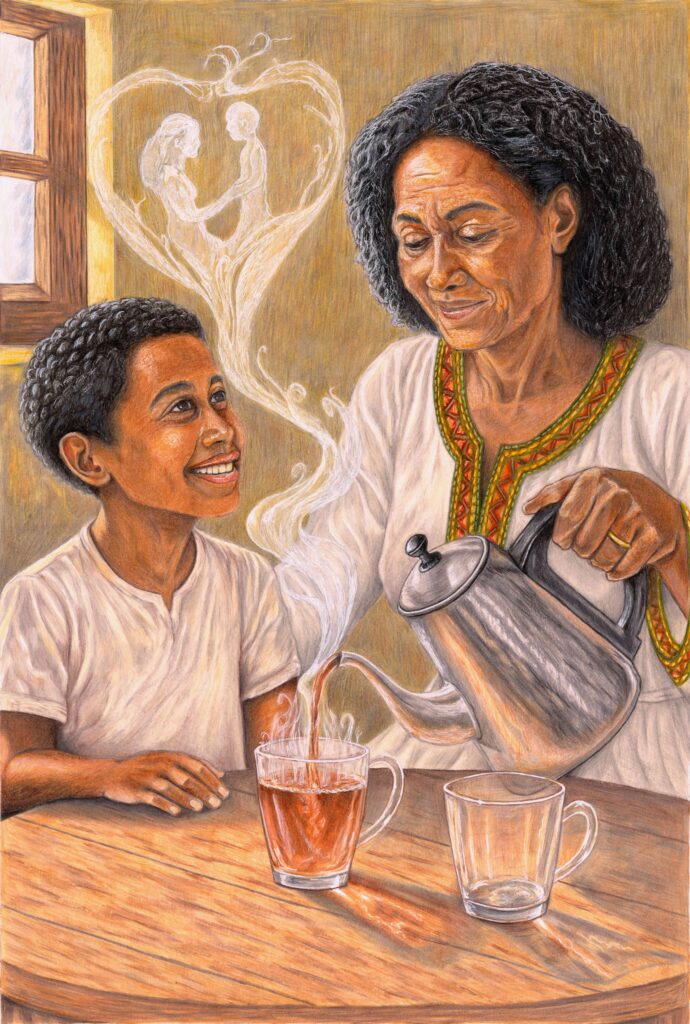
He works exclusively in graphite and coloured pencils. No paint. No digital tools. Nothing between him and the paper except the pencil. And he talked about why he stays with that medium in a way that really got to us.
There is a honesty and a patience in pencil work that he clearly loves. Every mark matters. Every layer is built slowly. There is no shortcut and no hiding. That discipline shows in every piece he makes.
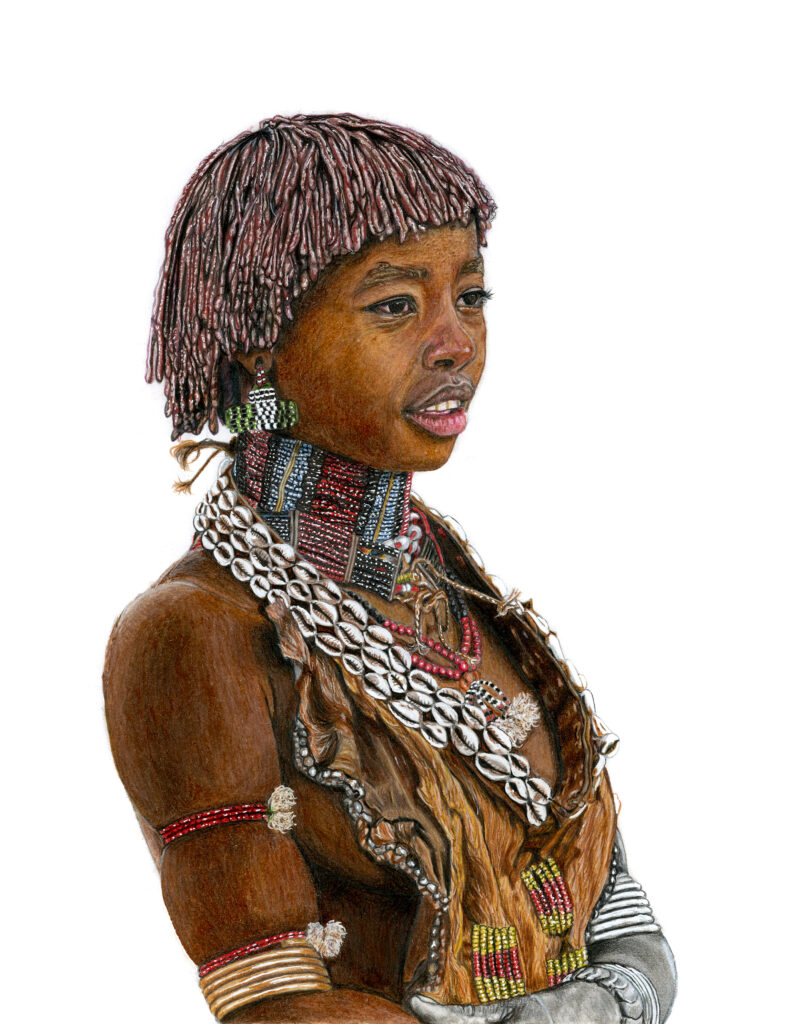
His subjects range from portraits to wildlife to cultural figures like Ethiopian farmers and Hamer tribe women in traditional adornments. And the way he approaches each subject, the care he takes not just with getting the likeness right but with getting the feeling right, the respect and the intention behind every drawing, that is something you are going to want to hear him talk about because it tells you exactly who he is as a person and not just as an artist.
He has received messages from people in the Ethiopian and African diaspora that clearly mean more to him than any award or exhibition. What those messages say and why they stay with him is something he shares in the interview and honestly it is one of those moments where you understand that this work is doing something far beyond looking impressive on a wall.
Let’s get to know Michael through our conversation about teaching himself to draw in Ethiopia, representing Africa through his art, and the moments that remind him why his work matters
Q1. Michael, can you take us back to your beginnings in Ethiopia what do you remember drawing as a child?
I was always drawing people. Faces, expressions, small moments I’d notice around me. I don’t think people saw it as something “special” right away. It was more like, “oh, he likes to draw.” But I remember moments when someone would pause and really look at what I did — that hesitation, that second look — and I could tell it meant something. That’s probably when I started taking it more seriously, even as a kid.
Q2. You’re entirely self-taught, how did you develop such a strong sense of realism without formal training?
It was a mix of everything — but mostly obsession, if I’m being honest. I didn’t have formal training, so I relied on repetition. I’d draw, mess it up, try again, compare, adjust. I studied other artists, but more than that, I studied real life — light, skin texture, shadows, proportions. A lot of it was trial and error, but intentional error. Every drawing was me asking, “why doesn’t this look real yet?” and slowly answering that question over years.
Q3. You’ve spoken about feeling a responsibility to highlight the beauty of Africa through your work where does that sense of responsibility come from?
That comes from both personal and cultural places. Growing up, and even now, I feel like a lot of the visual narratives around Africa are incomplete. There’s so much beauty, depth, and identity that doesn’t always get shown. So for me, it’s not just drawing — it’s representation. It’s saying, this is also Africa. Strength, elegance, dignity, joy. It’s something I carry with me in every piece.
Q4. You work exclusively in graphite and coloured pencils, no paint, no digital tools. What is it about pencil on paper specifically that feels like home to you?
Coloured Pencil feels honest to me. There’s no hiding behind it. With graphite and coloured pencils, every mark matters. Every layer is built slowly, deliberately. I like that it forces patience and discipline. Also, it connects back to how I started — just pencil and paper. Even now, after everything, it still feels like home.
Q5. Your realism is incredibly detailed when did you first realize you could achieve that level of precision in your work?
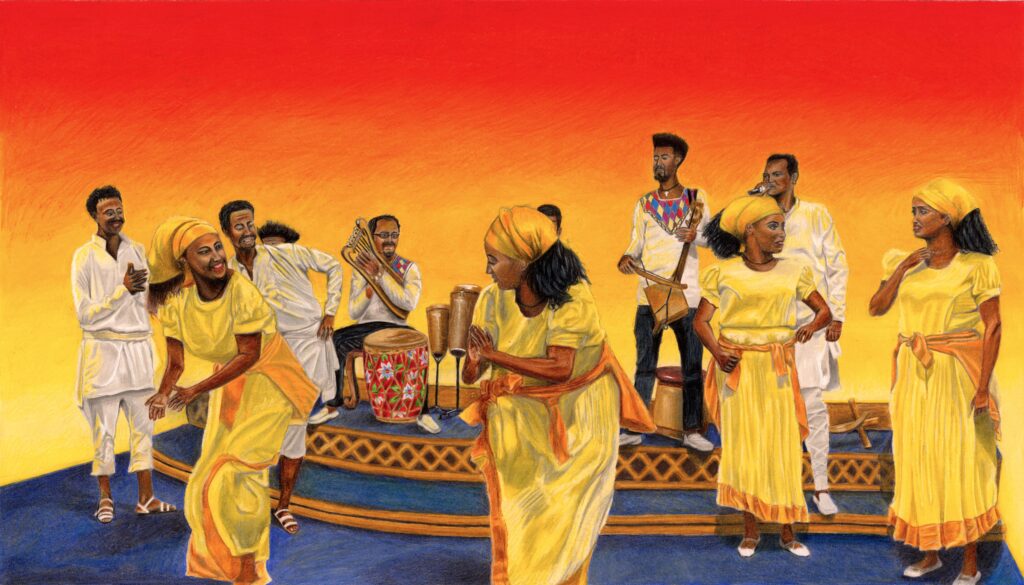
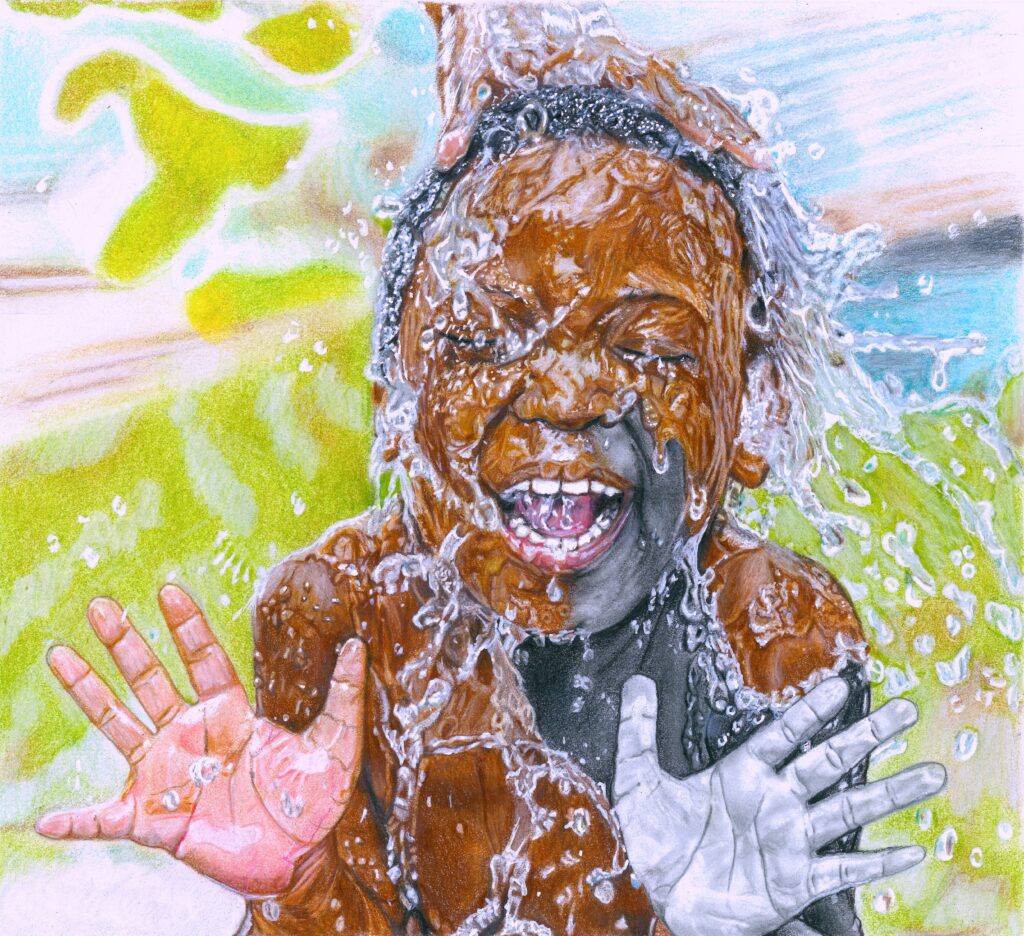
There wasn’t one big moment, it was gradual. But I do remember finishing certain pieces like Father Time and Joy and thinking, “okay… this is different.” I’d step back and it didn’t feel like a drawing anymore — it felt like a presence. That shift, when it stops looking like pencil and starts feeling real, that’s when I knew I was getting somewhere.
Q6. Can you walk us through how a piece like Father Time or Joy comes together, from the first pencil marks to the finished work?
It starts with a vision — usually tied to emotion more than just an image. I’ll sketch a clean outline first, very intentional about the figure and emotion I want to portray. Then I decide what stays graphite and what becomes colour, depending on the mood I want. From there, it’s layers… and more layers. Pieces like Joy can take dozens of hours. It’s slow. I’m constantly adjusting values, building depth, refining details. It’s almost meditative. By the end, it’s less about finishing and more about feeling when it’s complete.
Q7. You create both portraits and wildlife drawings, does your emotional approach change between capturing humans and animals?
The approach is similar technically, but different emotionally. With human portraits, I’m focused on identity — expression, story, presence. There’s a psychological layer to it. With wildlife, it’s more about energy and essence. Capturing movement, texture, the rawness of the animal. So the technique overlaps, but the intention shifts.
Q8. Hands of the Soil feels deeply personal, was it inspired by a specific person or a larger idea of resilience?
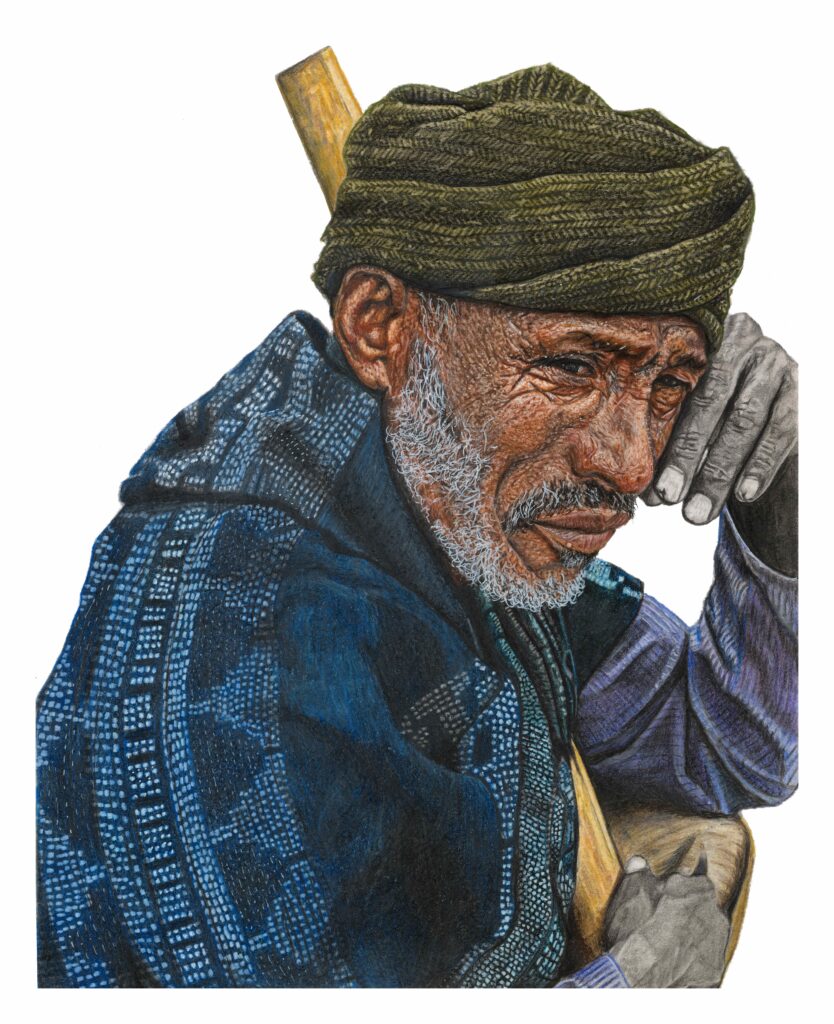
The reference is from one specific person but the goal is more of a representation. It comes from what Ethiopian farmers symbolize to me: resilience, connection to the land, quiet strength. I wanted the piece to communicate the struggles that Ethiopian Farmers went through during the heavy drought and the resilience they showed. So it’s personal, even if it’s not tied to one individual.
Q9. With Custodian of Heritage, did you feel a responsibility to honor the community you were portraying?
Yeah, I feel that weight every time. When you’re drawing someone tied to deep cultural identity, it’s not just about getting the proportions right — it’s about respect. Accuracy matters, but so does intention. I take time to understand what I’m representing, because I don’t want it to just look right — I want it to feel right.
Q10. Has there been a reaction from someone in the Ethiopian or African diaspora a message, a comment, a purchase that reminded you why you do this?
There have been moments where someone from the diaspora connects with a piece and you can tell it’s more than just appreciation — it’s recognition. Messages like, “this reminds me of home” or “I see my mother in this” — those stay with me. That’s when it clicks that the work is doing what I hoped it would.
Q11. As a self-taught artist, what would you say to young artists who feel held back because they lack formal training or credentials?
I’d tell them — you don’t need permission to start. I didn’t have credentials, I didn’t have a roadmap. What I had was consistency. If you keep showing up and actually paying attention to your mistakes, you’ll improve. Also, don’t rush the process. Skill takes time, but it’s built. And being self-taught isn’t a disadvantage — it just means your path is your own.
As our conversation with Michael came to a close, we sat with something that has stayed with us since. The idea that you do not need permission to start.
Michael did not have art school. Did not have formal training. Did not have anyone telling him he was talented enough to pursue this seriously. He had a pencil and paper and an obsessive need to figure out why his drawings did not look real yet.
And he kept going. For years. Drawing and messing up and trying again and studying light and skin and shadow until one day he stepped back from a piece and it did not look like a drawing anymore. It looked like a person standing in front of him.
That did not happen because someone opened a door for him. It happened because he kept showing up. And we think about how many people right now are waiting for that door. Waiting for the degree or the mentorship or the opportunity or the validation that tells them okay now you can begin.
Michael never got any of that. He just began. And then he kept beginning, every single day, for years, until the skill caught up with the vision. That is not a shortcut. That is the longest road there is. And he walked it alone. The other thing we keep carrying from this conversation is about representation. About what it means to draw your own people with the dignity and beauty and strength that the rest of the world does not always show them with.
Michael is not making political art. He is not protesting anything. He is just drawing Ethiopian farmers and Hamer tribe women and African faces with so much care and precision and love that the drawings become acts of respect. He is saying this is also Africa. And when someone from the diaspora writes to him and says I see my mother in this, that is the whole point of everything he does landing exactly where it was meant to land.
We need more of that in the art world. More artists drawing their own communities with that level of intention and skill and pride. More work that exists because someone felt a responsibility to show something true and then actually had the ability to do it at the highest level.
For anyone looking to collect Michael’s work, his drawings are the kind of pieces that stop a room. Not because they are trying to be dramatic but because the level of craft is so extraordinary that people physically cannot walk past them without pausing. They lean in. They argue about whether it is a photograph.
And then when they realise it is pencil on paper something shifts in how they see it and they cannot look away. That combination of technical mastery and deep cultural intention makes his work genuinely rare. These are pieces that hold their value because they hold their truth. And truth like that does not expire.
Follow Michael Alemayehu through the links below and see what a pencil can do when the person holding it refuses to stop until it is right.