

How stippling thousands of tiny dots gave Mike Gamble’s woodcuts their signature cosmic glow
At Arts to Hearts Project, some of the most powerful work we encounter is made by artists who feel slightly outside of the world they are documenting who observe more than they participate, and translate what they see into something the rest of us can finally feel.
Our Best of the Art World editorial was built to find exactly those artists. And today we are genuinely excited to introduce you to one who has been quietly, patiently, and obsessively doing that for years.
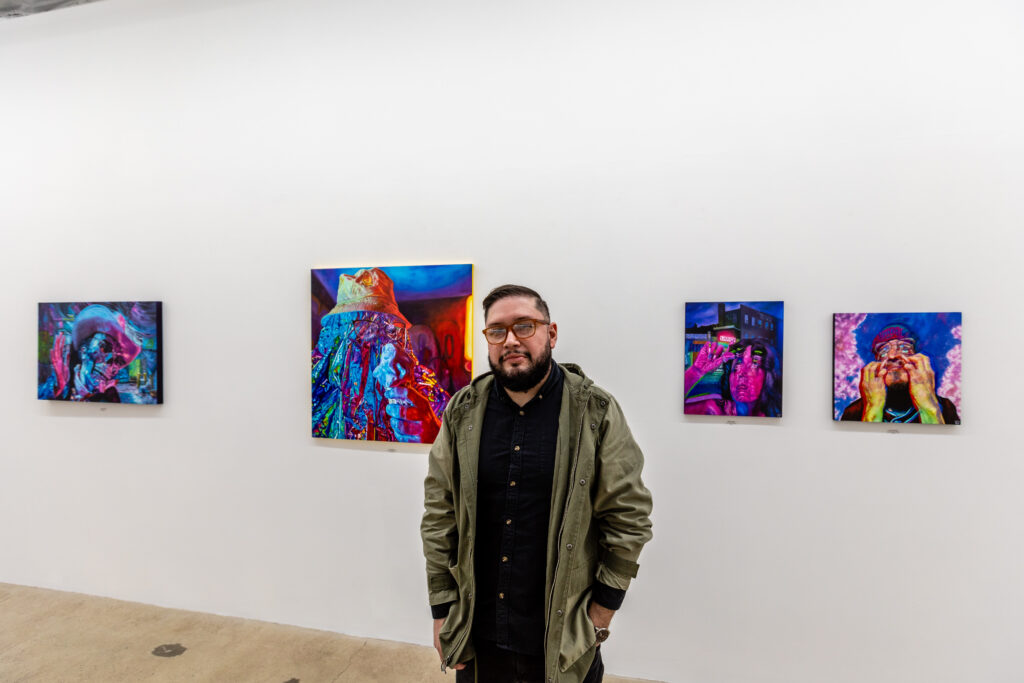
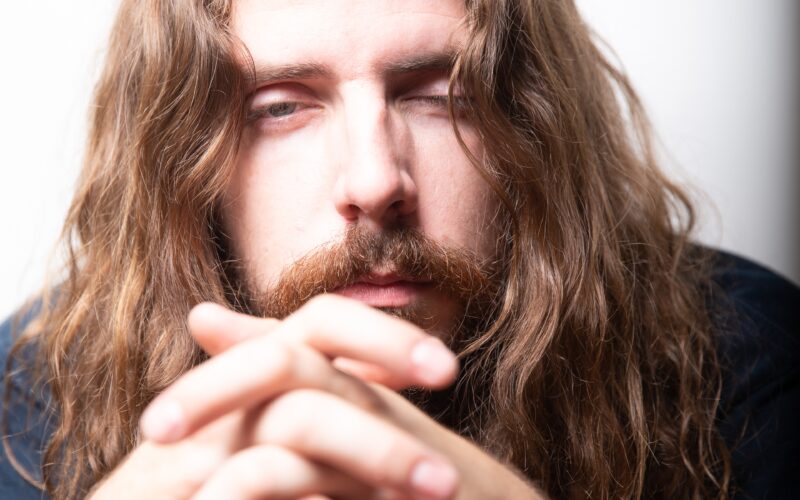
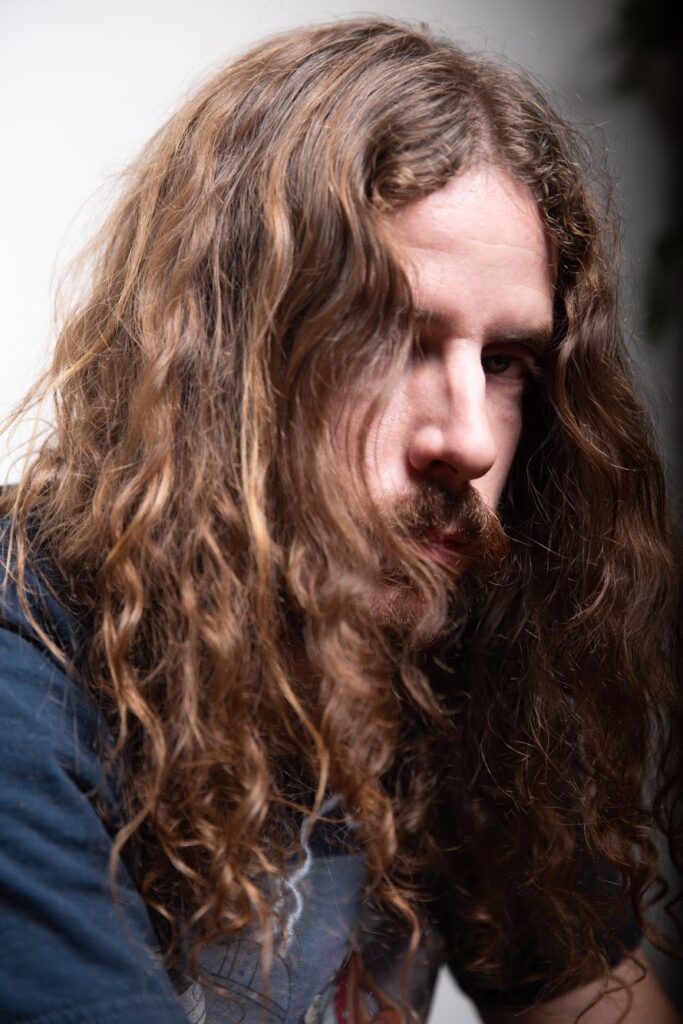
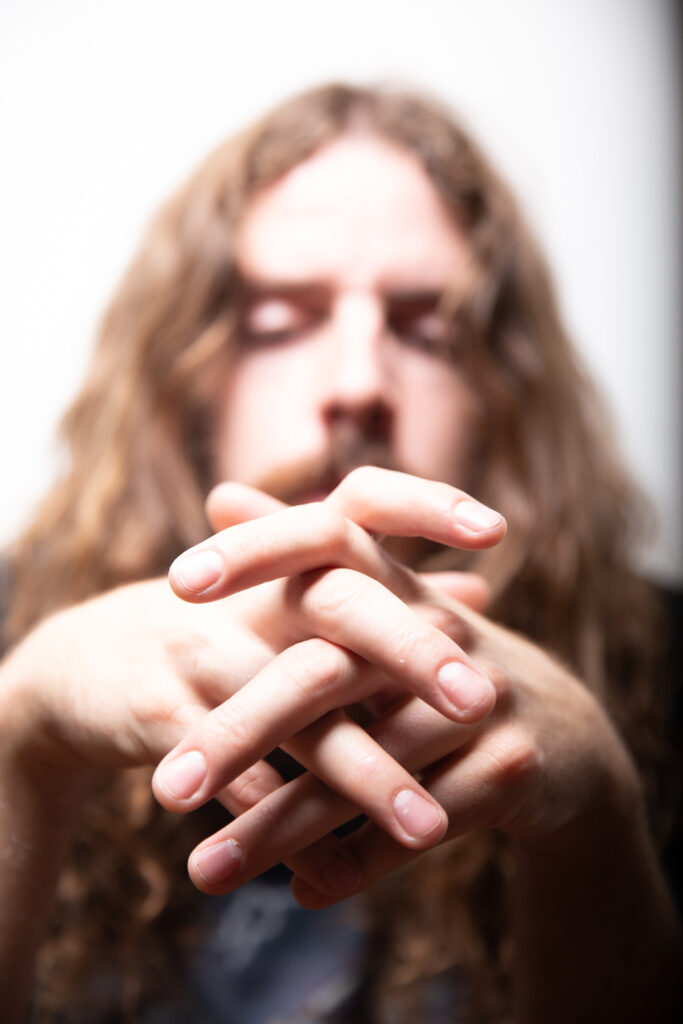
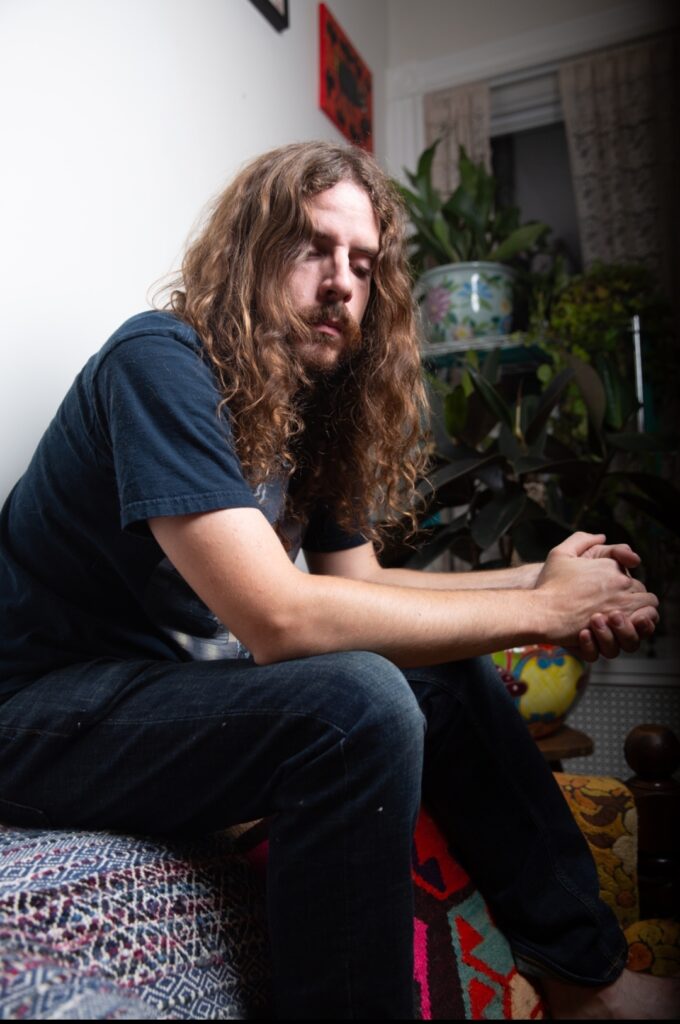
Mike Gamble is a Philadelphia based printmaker and painter behind Left-Handed Press, and the first thing you need to know about his work is that it is unlike anything else you have seen.
He creates reduction woodcuts one of the most unforgiving printmaking techniques in existence, a process with no undo button, no going back, no fixing mistakes once the ink has hit the paper and he builds them layer by layer, sometimes twelve layers deep, stippling thousands of tiny dots by hand into wood to create gradients and details that should not be possible in this medium.
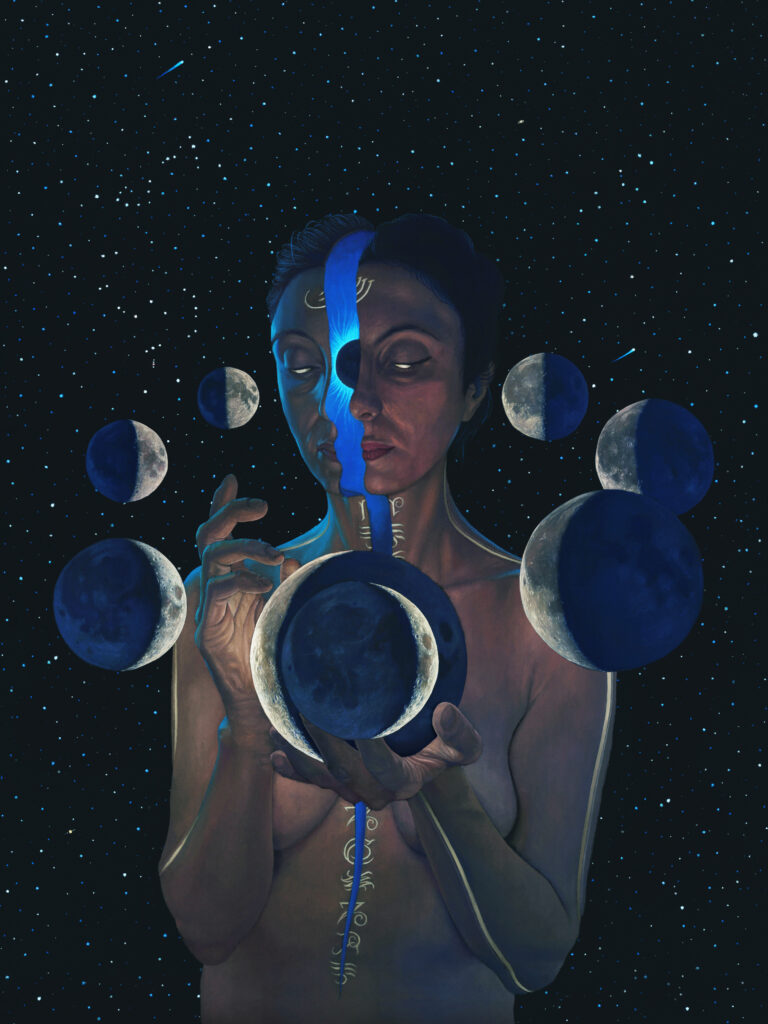
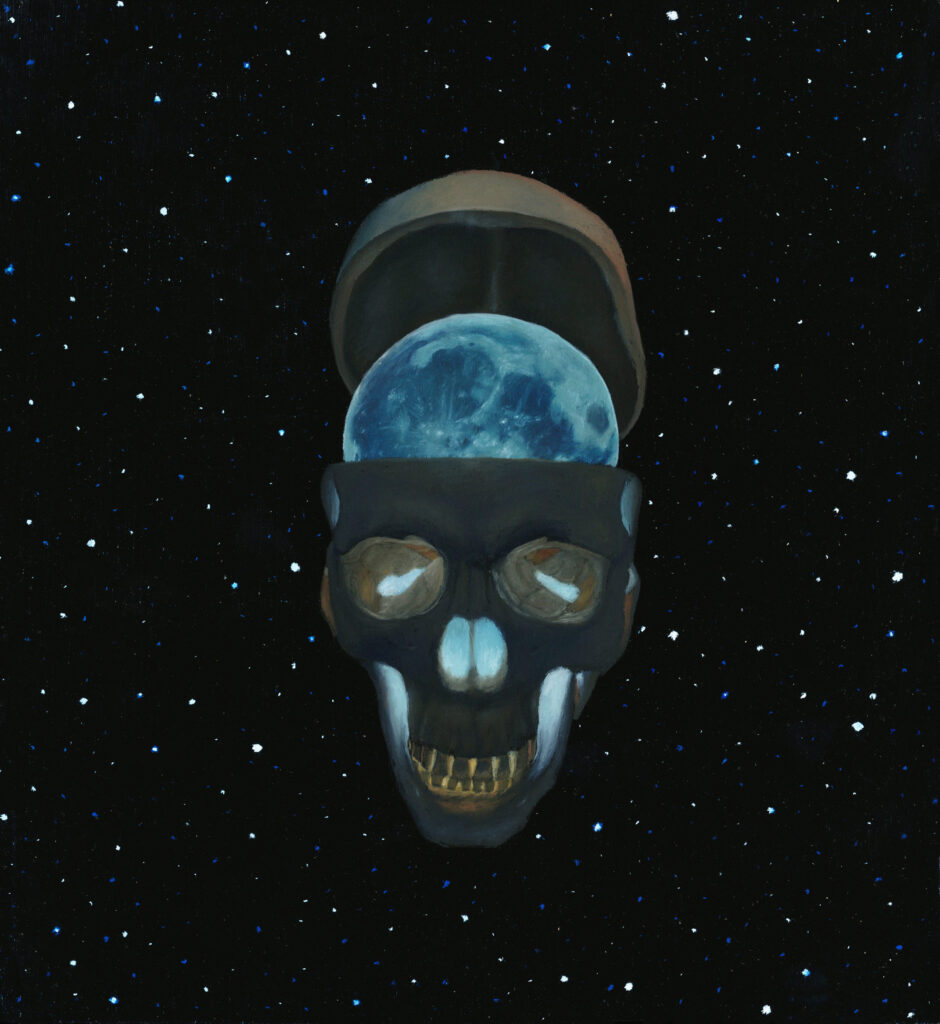
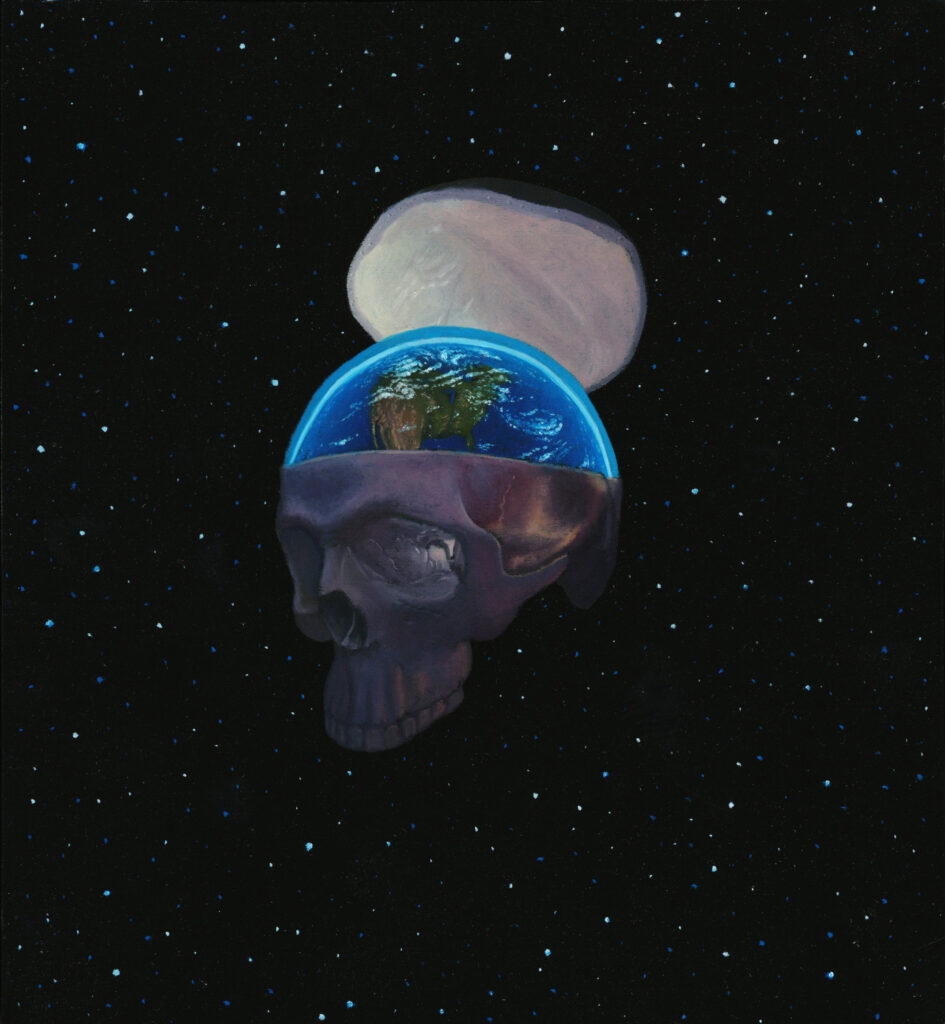
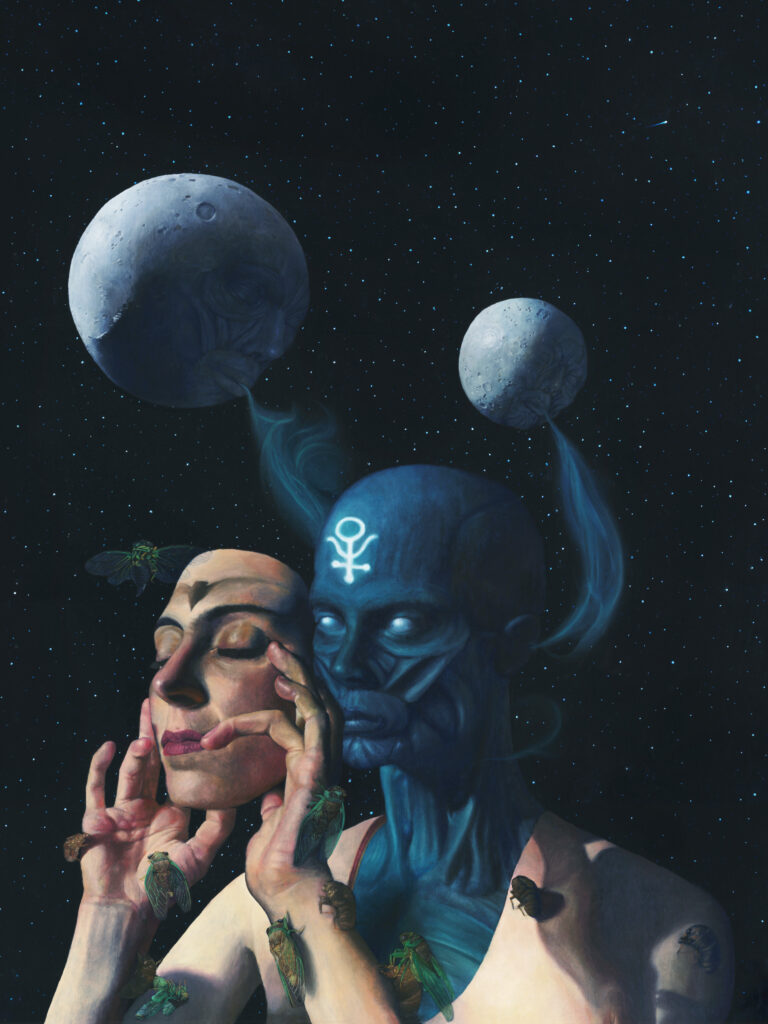
The results are breathtaking. Cosmic, anatomical, deeply human figures floating in galaxies and voids, stripped of the surface details that usually divide us no race, no gender, no identity markers until what remains is the skeleton, the stardust, the absolute biological and universal truth of what we all are underneath everything else.
Mike grew up infatuated with art from the very beginning a child who walked into the Philadelphia Museum of Art and stood in front of Van Gogh and Rembrandt and felt something shift permanently.
He has been building toward what he makes now ever since. Through years of printmaking, through experimentation and failure and happy accidents, through the slow and deliberate process of getting to know himself through his work he has arrived at a practice that is as technically extraordinary as it is philosophically grounded.
His work comes from a specific and deeply felt place from the feeling of watching the world unfold around him and not always being able to relate to what he sees. Of feeling, as he puts it, like an alien observing from outside.
And rather than turning that feeling into despair, he has turned it into some of the most quietly powerful work we have encountered — images that strip away everything superficial and remind you, whether you are ready for it or not, that we are all made of the same universe.
Let’s get to know Mike through our conversation with him, where he talks about cosmic skeletons, reduction woodcuts, and what it really means to make work that is trying to unify rather than divide.
Q1. Mike, let’s begin with you! Can you take us back to the beginning and share how printmaking first became such an important part of your life?
As long back as I can remember ive been infatuated with art and creating. From the first time I went to the Philadelphia museum of art and saw all of the greats like Van Gogh to Rembrandt.
Q2. Your paintings feel immersive, almost like entering another state of mind where do those inner worlds usually begin for you?
For me my recent work comes from how I view and interact with the world. I feel like an alien at times just observing the world and not really relating or resonating with some of the things that go on in our current world. I feel like im just watching horrors unfold on a daily basis and it has translated into my work by having this point of view from outside the earth, floating in the cosmos as an observer without the ability to change it but merely document it.
Q3. For people unfamiliar with reduction printing, can you explain what makes it different from other printmaking techniques?
The reduction Woodcut is essentially a very complicated stamp. Its one of the only printmaking processes where there’s no turning back. You carve the block, print. Carve more and print again. You repeat this process again and again until the block is nearly gone for the final last layer to lock everything together typically in a dark color. I just resonated with the intuition and unpredictability of the process and just being along for the ride.
Q4. You document each layer of your process beautifully, do you usually know where a painting is heading, or is there always uncertainty?
I have a general idea but im essentially just reacting to the previous layer every time. I’ll have a plan but once the ink goes down I just tweak the color and go with it for the whole edition. I then react with that state of the print when moving forward with the carving and color choice. Its a great process of give and take and moving with intuition that I find fascinating.
Q5. Stripping away identity and individualism seems central to your work, what draws you to exploring those more universal parts of human experience?
Living in the United States there is a constant barrage of superficial things that are used to divide and “other” one another. I feel it’s beneficial to strip away these layers literally and metaphorically to allow the work to be relative to every single person who sees the work.
My goal is to give a different view or allow someone to see the work and may be shift their perspective whether consciously or subconsciously.
Q6. Many of your pieces combine anatomy with cosmic imagery what connects the human body to the universe in your work?
I try to capture the fact that we are made of the universe. We are the consciousness of the universe that developed over millenia to be able to observe itself. All of the building blocks of the universe are what make up each and every one of us. Its a universal connection I try to convey and to literally illustrate the things we all have in common and unify one another.
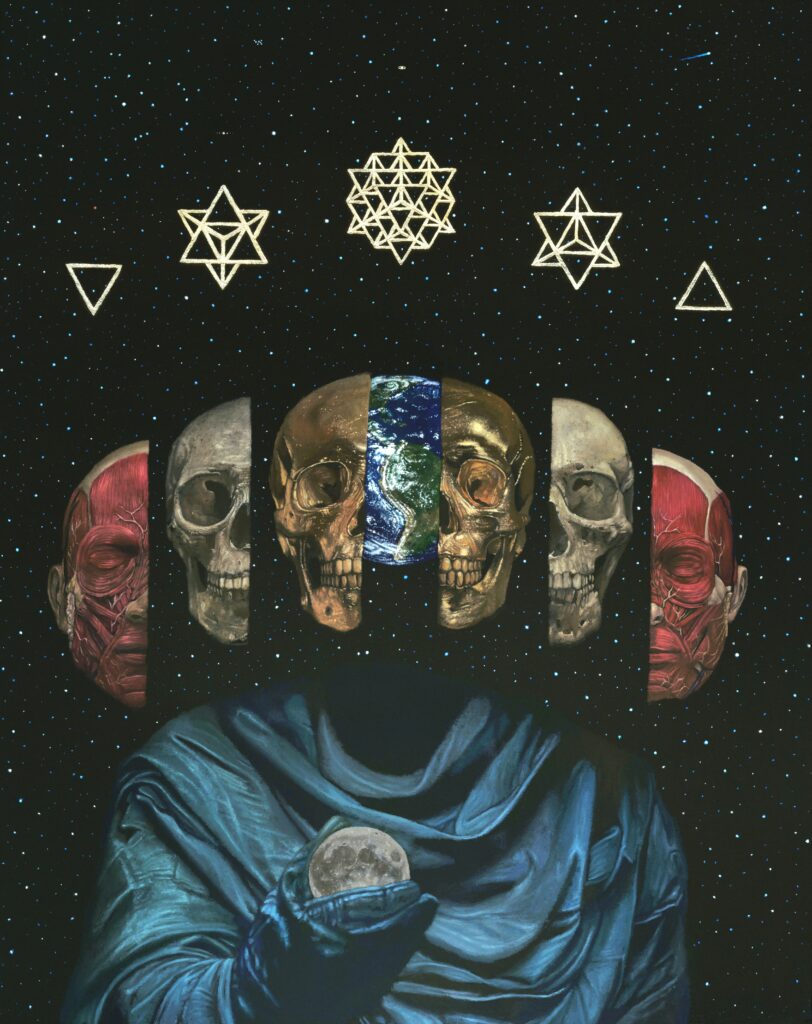
Q7. Your process combines traditional printmaking with digital tools like CNC, how do those technologies work together in your practice?
For years I carved the woodcuts purely by hand. Then I got a router and would do the lions share with that tool as opposed to hand chisels. Now we finally have the cnc and a laser cutter to make the silhouettes and streamline the process.
Its merely a tool to get me to the state of being able to carve. Its also opened up the ability to carve multiple block prints that lock into one another. Its a fantastic blend of current advancements in technology and one of the oldest printing techniques humans have created.
Q8.Tiny dots, repeated thousands of times what does that rhythm feel like for you while you work?
I personally love it. Its very slow. It forces me to be engaged and intentional with my marks. It also allows me to not ever make a “bad cut” in the way traditional carving can create. Its actually just through necessity since I never wanted to do cross hatching or the much more traditional techniques. It was a means for me to attain a level of gradient and detail I could never accomplish with traditional carving alone.
Q9. How do you decide when an image should exist in full color versus black-and-white?
I started working in black and white exclusively and it was once I made the reduction woodcuts that every print essentially became full color. The monochromatic pieces i create currently are a bonus I get once im at the last layer and its essentially the key block that’s typically black or a near black color so they still work as a black and white print.
Q10. How important are experimentation and failed attempts in shaping your final work?
Failure is inevitable and necessary. Its daunting. It can be crushing. But its a necessary force that will lead you to the techniques and skills you are must comfortable with. I think doing printmaking for years first really helped me embrace the chaos and happy accidents that are inevitable in printmaking.
Q11. Even with surreal imagery, your work feels emotionally grounded how do you maintain that connection?
I feel like all of my work comes from my lived experiences and day to day thoughts and feelings. Whether surreal or fantastic, there’s always a human or emotional element that drove the initial inspiration. I think it translates through the work naturally as a result.
Q12. Looking back, what feels most different about the way you approach storytelling today?
I think i was more “lost” in terms of content or a overall theme or style. Now looking back i was essentially doing the same thing by having a silhouette or object floating in the middle of the blank printmaking page.
I have now just moved to the void of space. I think its just more slowly getting to know myself though my work and what I want to potentially convey. It helps to have a body of work to keep building from and pulling themes and visual elements as I go.
Q13. Has social media helped artists stay creative, or made it harder to stay connected to their own voice?
Personally Instagram has completely been the catalyst for every single opportunity I have made in my career. Whether connecting with my professor from college whos now my colleague and studio partner.
To getting into the tool poster world. Its all been at the luck and whims of social media. Its a duality I constantly struggle with because I think it does have a ton of negative effects on our minds. But at the same time its incredible how it connects us all with the rest of the world.
Q14. What does it feel like seeing the final image appear after a 12-layer reduction print?
Hopefully its pure gratification. But sometimes it can be crushing but that is very rare. Its always an opportunity to learn good or bad. But when its good there’s really nothing like it.
Q15. When someone sees one of your prints those stippled galaxies and skulls revealing universal human experience what do you hope they feel?
I hope it may be gets them to a place of self reflection and subconsciously leads people to see the similarities we all share whether they know it or not.
Q16. As your recognition has grown, has your definition of success changed from when you first started creating art?
All I ever wanted was to be able to sustain myself by making art. Once I achieved that its all been icing on the cake since. Im constantly reflecting and reveling in the privilege of making art for a living. There are always moments of doubt and lulls in projects but as long as I keep creating and putting art out into the world opportunities will come.
I never would have thought id have the opportunity to work for my favorite bands. So in terms of personal success I’ve reached the top of the mountain multiple times over. Im just riding it to wherever it may go at this point.
Q17. What advice would you give to emerging artists trying to build a career without losing the emotional honesty behind their work?
The advice i always give everyone is to make. Nothing is more important. The content will follow. The content and skills will follow. But nothing is more important than the act of creating and putting it out into the world for people to engage with. That will inevitably lead to the opportunities and connections to propel you through your career.
As our conversation with Mike came to a close, we kept thinking about the amount of trust his process requires.
Most artists spend their careers trying to avoid mistakes. Mike chose one of the few mediums where mistakes become permanent almost immediately. In reduction woodcut printing, there is no undo button, no reversing direction once the block is carved away. Every layer demands commitment. Every decision changes the next one forever.
And honestly, that pressure feels present in the work itself. The prints carry this strange tension between control and surrender. You can feel the precision behind the thousands of carved dots and layered colours, but you can also feel the unpredictability he talks about — the constant reacting, adjusting, trusting the process even when the final image still hasn’t fully revealed itself yet.
That relationship with uncertainty seems deeply connected to the emotional core of his work too. What interested us most was the way Mike uses surreal cosmic imagery not to escape humanity, but to strip it back to its most universal form.
We also found it fascinating that despite how technically extraordinary the work is, Mike never speaks about printmaking from a place of perfectionism or superiority. He talks about failure constantly.
About experimentation. About chaos. About learning through accidents and bad prints and unexpected outcomes. And maybe that openness is exactly what allowed him to push the medium somewhere visually new. The work feels obsessive, patient, philosophical, and deeply human all at once.
For collectors drawn toward contemporary printmaking and surreal figurative work, Mike’s pieces carry an unusual emotional and physical presence. The closer you stand to them, the more the layers, stippling, and cosmic detail begin revealing themselves slowly over time. And honestly, that slow discovery feels completely connected to the work itself. Nothing about these prints asks to be consumed quickly. They ask people to stop, look longer, and reconsider what connects all of us underneath the surface.
Mike Gamble is an artist who has found exactly what he needed and built something extraordinary from it. And we are very glad the world gets to see it.
To follow Mike’s journey and see more of his work, find him through the links below.