







How 10 Artists Captured the Feeling of Sunlight

Sunlight has long fascinated artists not simply because of how it transforms a scene, but because of how deeply it shapes emotion. A quiet room illuminated through a window can feel intimate or melancholic, while a golden sunset can turn an ordinary landscape into something cinematic. Across centuries, artists captured the feeling of sunlight beautifully have returned to these fleeting moments again and again, not just to paint what they saw, but to preserve sensations that disappear almost as quickly as they arrive.
From the soft interiors of the Dutch Golden Age to the glowing gardens of Impressionism and the atmospheric landscapes of Romantic painting, sunlight has remained one of art’s most powerful visual languages. Some artists use it to evoke warmth and stillness, while others use it to heighten solitude, memory, or awe. In many of these works, light becomes more than illumination; it becomes the emotional center of the painting itself.
What makes sunlight especially compelling in art is its impermanence. It shifts constantly, changing color, intensity, and atmosphere within moments. Painters like Claude Monet devoted the entire series to observing how daylight transformed the same subject throughout the day, while artists such as Edward Hopper used harsh sunlight to intensify emotional distance and silence. Others, including Joaquín Sorolla, painted sunlight with such vibrancy that viewers can almost feel its warmth against the skin.
Whether soft and meditative or dramatic and overwhelming, sunlight continues to shape some of art history’s most unforgettable images. Here are 10 artists who transformed light into atmosphere, emotion, and memory.
After Bathing, Valencia by Joaquín Sorolla – Painting Sunlight as a Living Presence
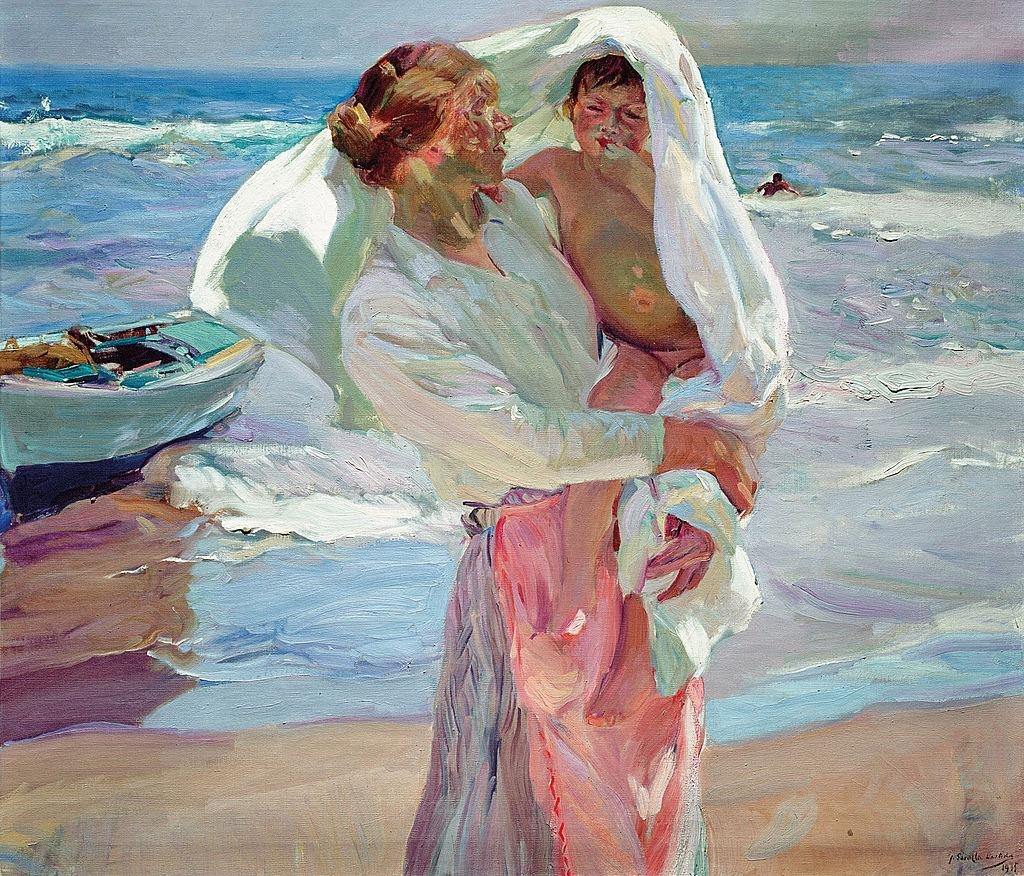
Few artists have painted sunlight with the sensual immediacy of Joaquín Sorolla. In his luminous beach scenes, sunlight is never treated as a passive backdrop. It moves across water, clings to white fabric, reflects against skin, and dissolves edges into shimmering color. Looking at Sorolla’s paintings often feels less like observing an image and more like stepping directly into heat, salt air, and movement.
Born in Valencia, Spain, Sorolla became deeply connected to Mediterranean light, which would eventually define much of his artistic language. Unlike many academic painters of his time who focused heavily on precise detail and controlled composition, Sorolla embraced spontaneity and atmosphere. His brushstrokes remain energetic and loose, allowing sunlight to flicker across the canvas in ways that feel immediate and alive. In After Bathing, Valencia, bright whites and ocean blues seem to pulse under the intensity of the afternoon sun.
What makes Sorolla particularly remarkable is his understanding of reflected light. Shadows in his paintings are rarely dull or dark; instead, they contain traces of violet, blue, and gold. Sunlight becomes immersive rather than directional. It wraps around figures instead of merely illuminating them. Children running along the shoreline, women adjusting translucent garments, and waves collapsing against sand all appear caught inside a constantly shifting atmosphere.
At a time when many European painters were exploring modernity through urban scenes and industrial life, Sorolla remained committed to the emotional and sensory experience of nature. His paintings celebrate sunlight not simply as a visual phenomenon, but as something deeply physical, something that can be felt against the skin. Even today, his work retains an extraordinary warmth, reminding viewers that light has the power to transform ordinary moments into something almost cinematic.
Lady Writing a Letter with Her Maid by Johannes Vermeer – Sunlight as Silence and Intimacy
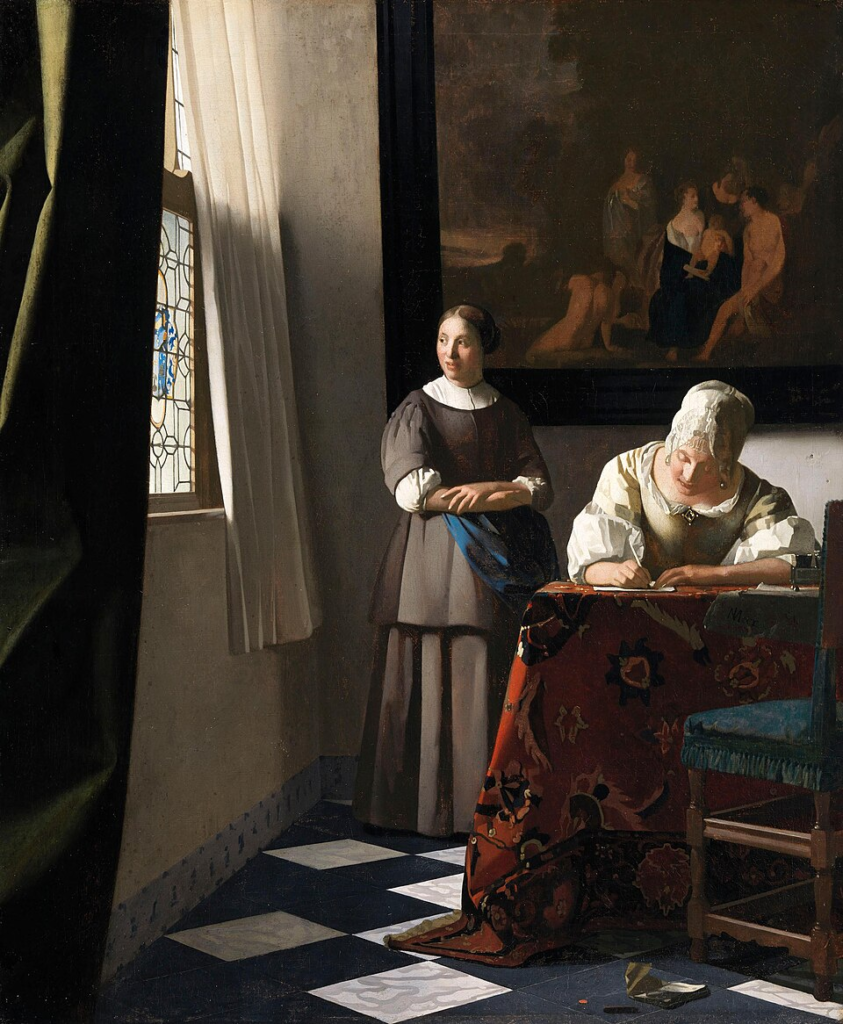
The sunlight in Johannes Vermeer’s paintings does not arrive dramatically. It enters quietly, through partially opened windows, across tiled floors, over maps, pearls, letters, and still hands. Yet within that restraint lies the extraordinary emotional power of his work. Vermeer understood that light could shape the psychological atmosphere just as profoundly as narrative itself.
In Lady Writing a Letter with Her Maid, sunlight filters delicately into the interior, illuminating the central figure while allowing the surrounding room to remain suspended in gentle shadow. Nothing overtly dramatic occurs within the scene. A woman writes, a maid waits, and silence seems to settle over every object in the room. But the light transforms the ordinary into something deeply contemplative. It slows the viewer down.
Unlike the theatrical chiaroscuro of Baroque painters such as Caravaggio, Vermeer’s light feels natural and intimate. He was less interested in spectacle and more interested in observation, how morning or afternoon light softens fabric, reflects off a wall, or quietly alters the mood of a room. His compositions often create the sensation that time itself has paused for a fleeting moment.
Part of what continues to fascinate viewers is Vermeer’s ability to make sunlight feel tangible without overwhelming the scene. The glow across satin garments or the pale illumination against a wall never feels forced. Instead, light becomes a subtle emotional language, suggesting introspection, longing, or solitude without explicitly describing it.
Centuries later, Vermeer’s interiors still feel startlingly modern because of this sensitivity to atmosphere. His paintings remind us that sunlight does not always need grandeur to leave an emotional impression. Sometimes, its quiet presence is enough to transform an ordinary room into something unforgettable.
Second Story Sunlight by Edward Hopper – When Sunlight Reveals Loneliness

For many artists, sunlight symbolizes warmth, vitality, or comfort. But in the work of Edward Hopper, light often carries an entirely different emotional weight. His paintings are filled with bright windows, harsh afternoon shadows, and sunlit architecture, yet beneath their stillness lies a profound sense of distance and isolation. Hopper understood that sunlight could expose emotional emptiness just as easily as beauty.
In Second Story Sunlight, two women sit on a porch bathed in intense afternoon light. At first glance, the scene appears peaceful, an ordinary moment of rest beneath a clear sky. But the longer one looks, the stranger the atmosphere becomes. The figures seem disconnected from one another, suspended in silence despite their physical closeness. The sunlight is almost too sharp, flattening surfaces and intensifying the emotional tension of the composition.
Hopper’s fascination with light was deeply cinematic. He often used strong geometric shadows and architectural framing to create scenes that feel paused between events, as though viewers have entered midway through an unfinished story. Unlike Impressionist painters who chased shifting atmospheric effects, Hopper used sunlight with precision and control. It becomes structural, defining emotional space as much as physical form.
There is also something distinctly American about Hopper’s sunlight. His paintings frequently depict empty streets, quiet porches, hotel rooms, diners, and urban interiors flooded with bright yet emotionally detached light. Rather than romanticizing modern life, Hopper reveals its solitude. Sunlight in his work becomes a witness to stillness and emotional separation.
Even today, Hopper’s paintings feel eerily contemporary because they capture a familiar contradiction: how brightness and loneliness can coexist in the same space. His work reminds us that sunlight is not always comforting. Sometimes, it simply makes silence more visible.
The Blue Room by Anna Ancher – The Quiet Poetry of Interior Light
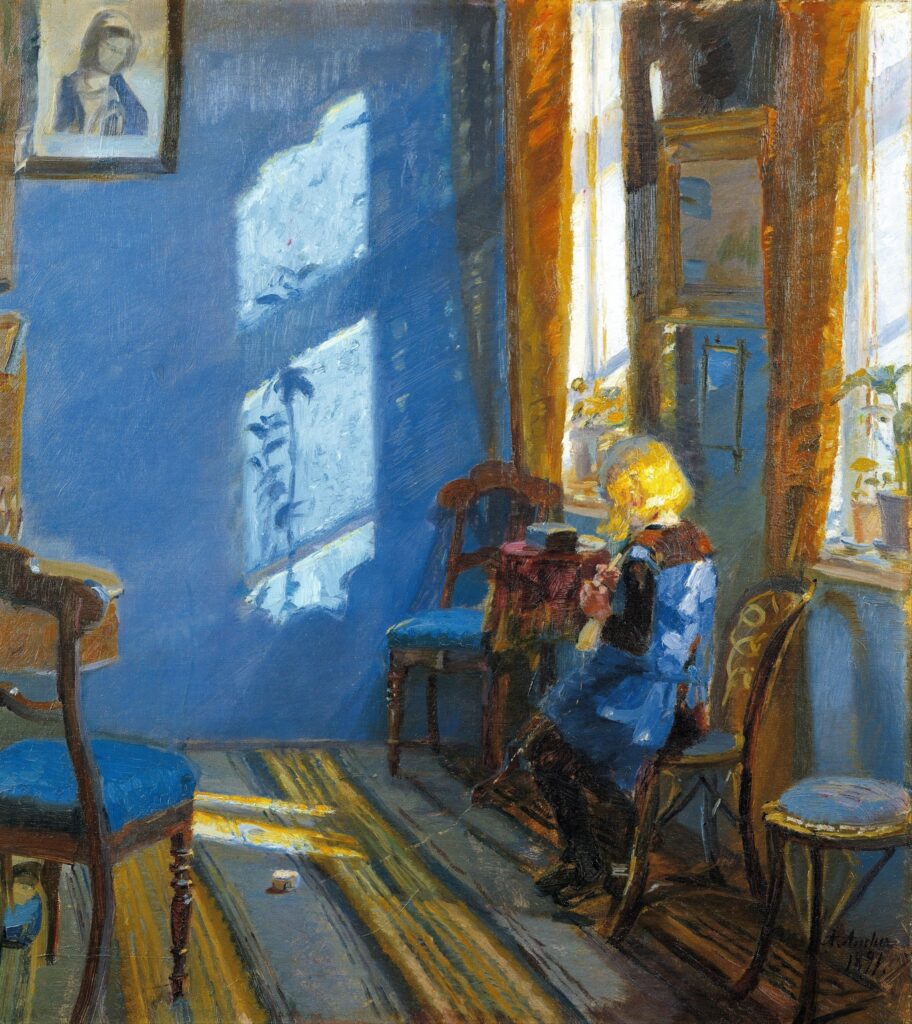
The paintings of Anna Ancher are often remarkably quiet. There are no dramatic gestures, crowded narratives, or theatrical compositions. Instead, her work focuses on ordinary domestic spaces transformed entirely by sunlight. In The Blue Room, light becomes more than illumination, it becomes the emotional center of the painting itself.
Ancher was part of the Skagen Painters, an influential group of Scandinavian artists who gathered in the northernmost region of Denmark during the late nineteenth century. While many artists within the movement explored coastal landscapes and outdoor scenes, Ancher developed a more intimate visual language centered around interiors, women’s daily lives, and the changing qualities of natural light inside the home.
In The Blue Room, sunlight spills across walls and furniture with extraordinary softness. The geometry of light creates subtle divisions within the composition, turning an otherwise simple room into something meditative and deeply atmospheric. Rather than filling the space with narrative detail, Ancher allows light and color to carry emotional meaning. The room feels inhabited even in stillness.
What makes Ancher’s paintings especially compelling is their restraint. She understood that sunlight could create emotional depth without requiring overt symbolism or dramatic storytelling. Her use of warm yellows against cool blues creates a delicate balance between comfort and quiet solitude. The light never overwhelms the room; instead, it slowly unfolds across surfaces, inviting viewers into a slower, more contemplative way of seeing.
Today, Ancher’s work feels strikingly modern because of its sensitivity to mood and atmosphere. In an era saturated with overstimulation and spectacle, her paintings remind us how transformative a simple beam of sunlight can be. Through her interiors, everyday spaces become places of reflection, calm, and emotional presence.
Roses by Peder Severin Krøyer – Capturing the Glow of Nordic Summer Evenings
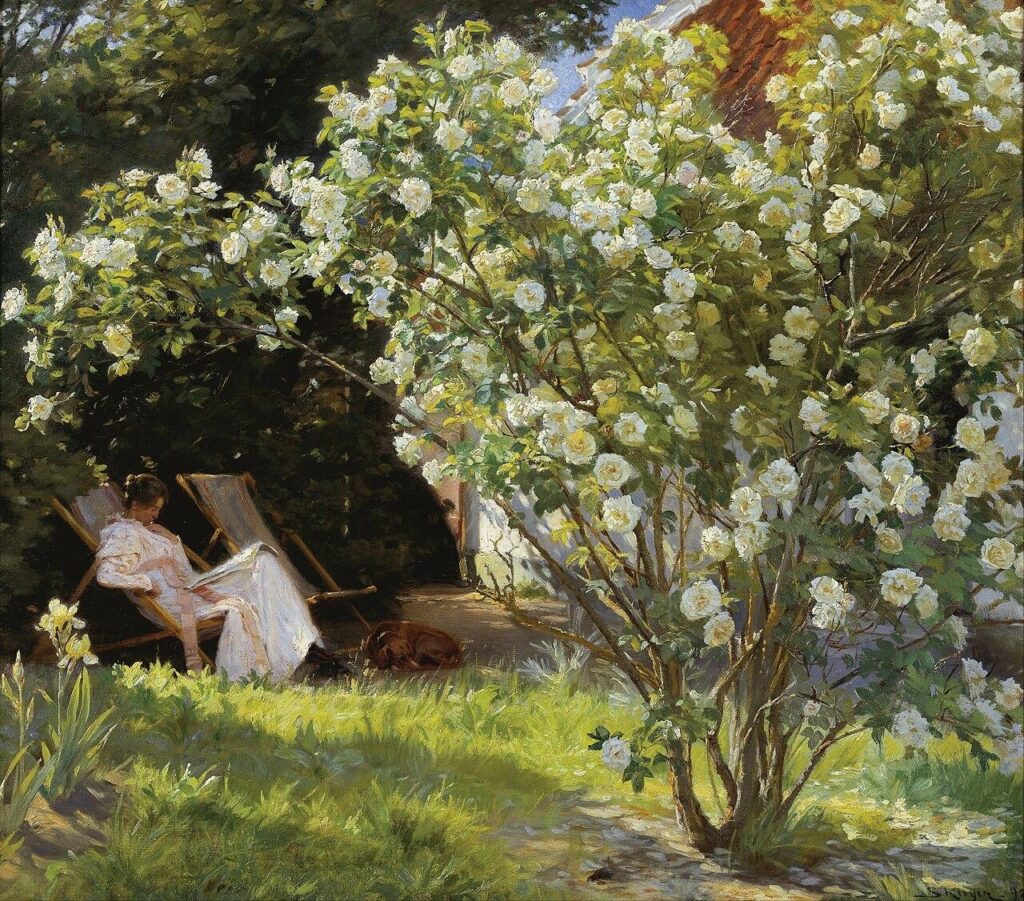
In the paintings of Peder Severin Krøyer, sunlight often feels suspended between reality and memory. His scenes are filled with soft coastal breezes, glowing gardens, twilight skies, and luminous summer evenings that appear almost dreamlike in atmosphere. Few artists captured the emotional warmth of seasonal light as delicately as Krøyer, whose paintings continue to evoke the fleeting beauty of Scandinavian summers.
A central figure among the Skagen Painters, Krøyer worked in the small fishing town of Skagen in northern Denmark, where the unique coastal environment produced unusually radiant natural light. This phenomenon became a defining influence on his work. In Roses, sunlight filters through the garden in soft layers, illuminating white dresses, greenery, and blooming flowers with an almost ethereal glow. The scene feels intimate yet expansive, grounded in observation while carrying the softness of recollection.
Unlike harsher midday sunlight often seen in Mediterranean painting, Krøyer’s light is gentler and atmospheric. His paintings frequently depict the quieter hours of the day, late afternoon, dusk, or early evening, when sunlight becomes diffused and emotionally charged. Shadows dissolve softly into surrounding colors, and figures appear absorbed into the landscape around them.
What makes Krøyer’s work particularly compelling is the way sunlight creates emotional connection. His gatherings of friends, artists, and family members rarely feel staged. Instead, they resemble fleeting moments preserved before they disappear entirely. Light becomes intertwined with companionship, leisure, and nostalgia.
Even today, Krøyer’s paintings possess a cinematic tenderness that feels timeless. They remind viewers that sunlight is not only something seen, but something remembered emotionally. Through his luminous summer scenes, Krøyer transformed ordinary gatherings into enduring meditations on warmth, atmosphere, and the fragile beauty of passing time.
The Sower by Vincent van Gogh – Turning Sunlight Into Emotion and Symbolism
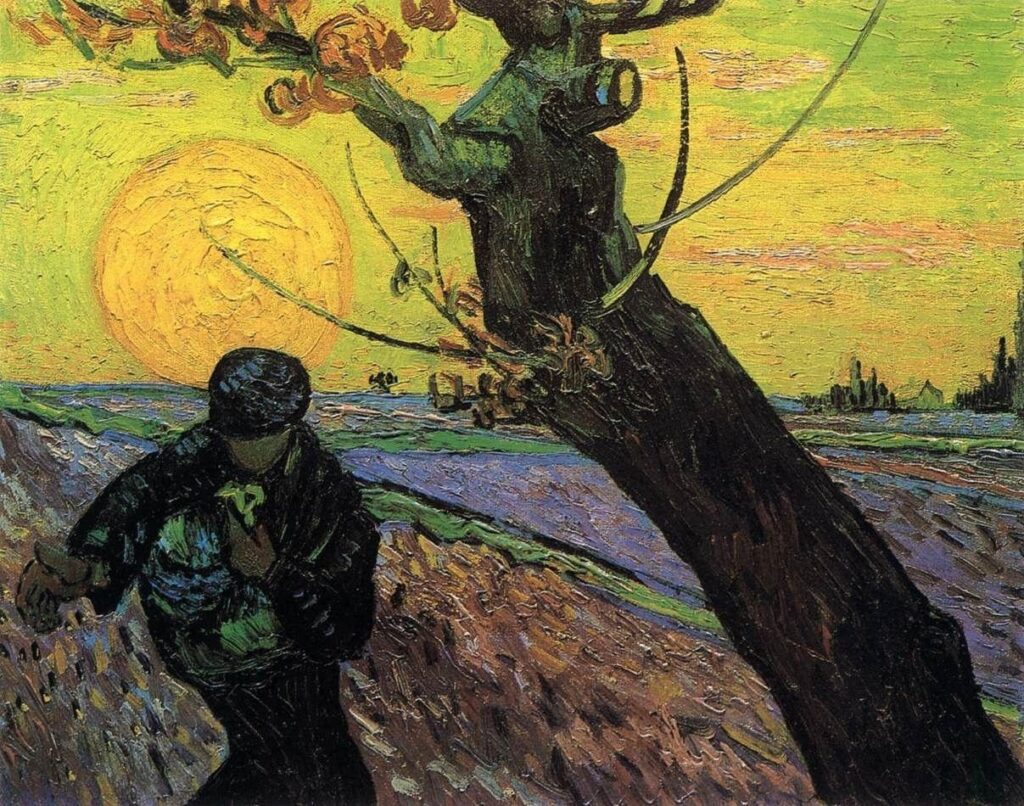
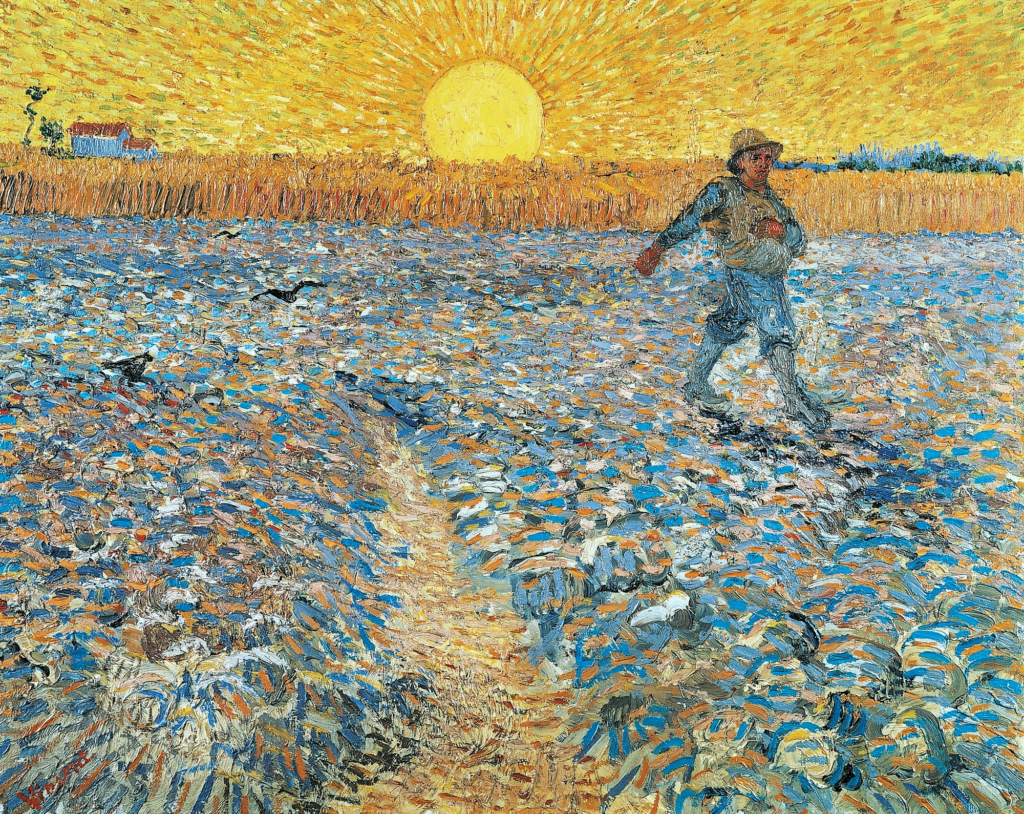
For Vincent van Gogh, sunlight was never merely observational. It carried emotional intensity, spiritual symbolism, and psychological force. While many artists sought to realistically capture changing daylight, Van Gogh transformed the sun into something almost alive, radiating energy across landscapes, fields, and skies with overwhelming emotional presence.
In The Sower, a solitary figure walks across a field beneath an enormous glowing sun. The landscape vibrates with saturated yellows, blues, and violets, while the setting sun dominates the composition with hypnotic intensity. Rather than behaving naturally within the scene, the sun feels symbolic, almost cosmic, transforming the act of sowing seeds into something timeless and deeply human.
Van Gogh painted several versions of The Sower, inspired in part by the work of French artist Jean-François Millet. But where Millet approached peasant life with realism and restraint, Van Gogh infused the subject with heightened emotional color and expressive movement. The exaggerated size of the sun and the pulsing energy of the brushwork create a sense that nature itself is emotionally charged.
What makes Van Gogh’s treatment of sunlight so distinctive is his refusal to separate observation from feeling. He painted landscapes not as they objectively appeared, but as they felt internally. Sunlight becomes a visual language for hope, exhaustion, faith, isolation, and spiritual longing all at once. Even his brightest paintings often carry an undercurrent of emotional turbulence.
Today, Van Gogh’s use of sunlight remains instantly recognizable because it transcends realism. His glowing skies and burning suns continue to feel intensely modern in their emotional honesty. Through works like The Sower, he reminds viewers that light in art can become more than atmosphere, it can become emotion itself.
The Weather Project by Olafur Eliasson – Recreating the Sun as an Immersive Experience
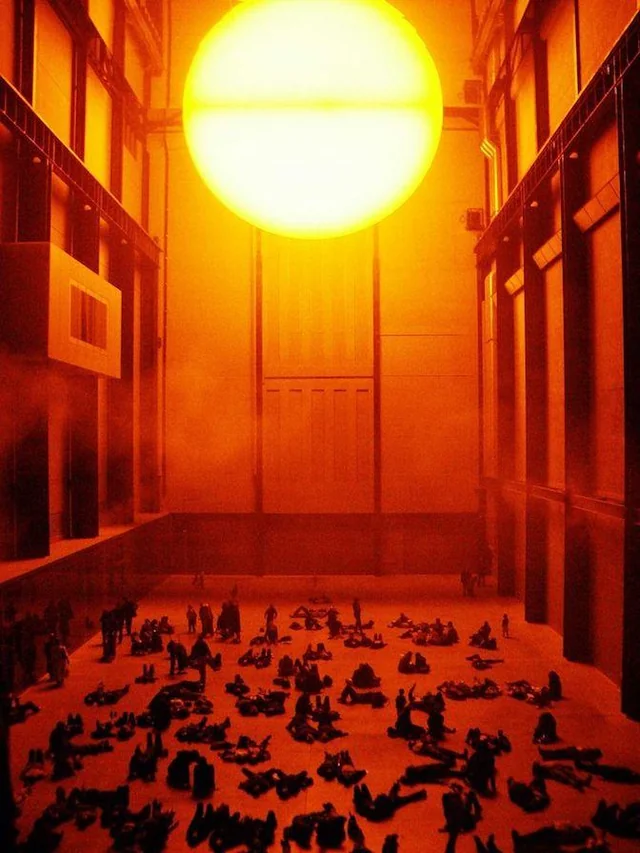

While many artists throughout history painted sunlight, Olafur Eliasson transformed it into something viewers could physically experience. His large-scale installation The Weather Project, unveiled at London’s Tate Modern in 2003, remains one of the most influential contemporary artworks centered around light and perception. Rather than depicting the sun, Eliasson recreated the sensation of being beneath one.
Inside the museum’s vast Turbine Hall, visitors encountered a gigantic glowing semicircle composed of hundreds of mono-frequency lamps reflected against a mirrored ceiling, creating the illusion of a massive artificial sun suspended in mist-filled air. The space was bathed in deep amber light, dissolving ordinary perception and turning the industrial interior into something strangely atmospheric and meditative.
What made The Weather Project particularly powerful was the way audiences responded to it emotionally and physically. Visitors gathered beneath the glowing light, lay across the floor, stared upward at their reflections, and interacted with strangers in unusual ways. The installation transformed sunlight from a visual subject into a collective human experience. Eliasson revealed how deeply light shapes mood, behavior, and our awareness of space itself.
Unlike traditional painters who attempted to capture fleeting sunlight on canvas, Eliasson works directly with light as material. Fog, reflection, color temperature, and architectural scale become his artistic tools. Yet despite its contemporary technology, The Weather Project carries something ancient and primal in its emotional impact. The artificial sun evokes awe in much the same way natural sunlight has inspired humans for centuries.
Eliasson’s work expands the conversation around sunlight in art beyond representation. He reminds viewers that light is not only something we observe, it is something we inhabit, respond to, and emotionally carry within us.
Springtime by Claude Monet – Painting the Fleeting Nature of Light
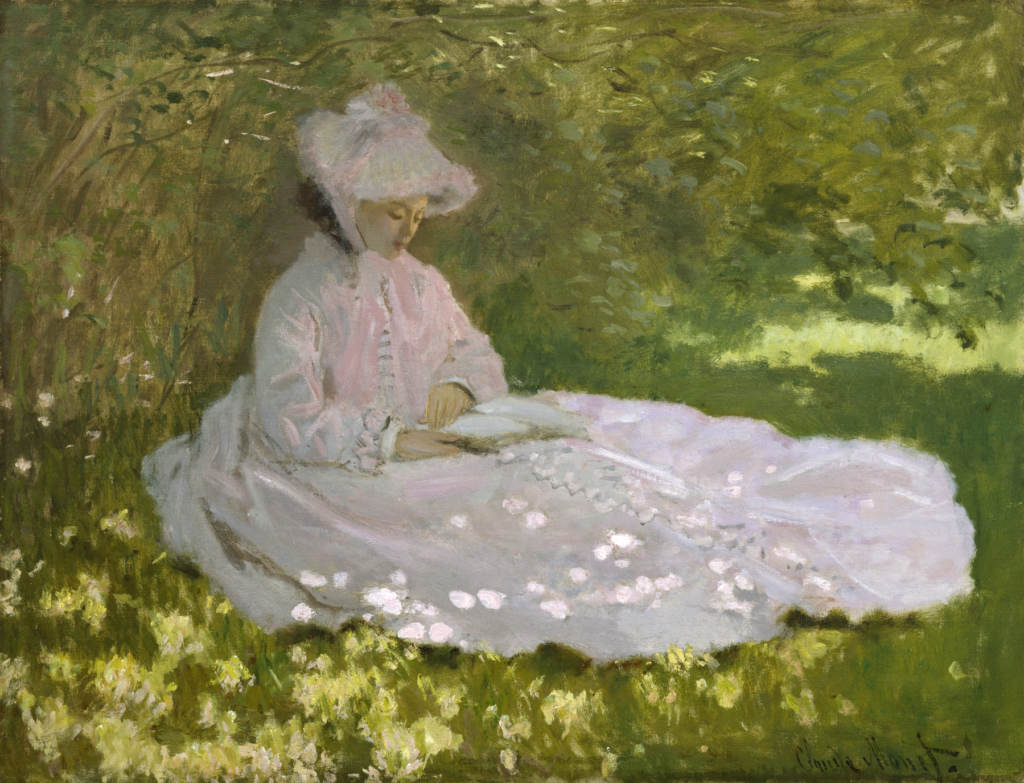
Few artists changed the way sunlight was painted as radically as Claude Monet. For the Impressionists, light was no longer simply a tool used to illuminate subjects, it became the subject itself. Monet devoted much of his career to observing how sunlight transformed landscapes, gardens, water, and everyday scenes from one passing moment to the next. His paintings attempt to capture something inherently unstable: the sensation of light constantly shifting before the eye can fully grasp it.
In Springtime, sunlight filters delicately through trees and soft foliage, bathing the entire composition in warmth and movement. Rather than sharply defining forms, Monet allows light and color to dissolve edges into the atmosphere. Figures blend gently into the surrounding landscape, creating the feeling that nature itself is vibrating with life. The painting does not merely depict a spring afternoon; it recreates the experience of sitting within it.
What distinguished Monet from many earlier painters was his willingness to abandon strict detail in pursuit of perception. He painted outdoors directly from observation, often returning to the same subjects repeatedly under different lighting conditions. Shadows became filled with color rather than blackness, and sunlight appeared fragmented into touches of pink, lavender, blue, and gold. His brushwork mirrors the fleeting instability of natural light itself.
There is a remarkable emotional softness in Monet’s sunlit paintings. Unlike dramatic historical scenes or symbolic allegories, his work celebrates ordinary moments transformed by atmosphere. Gardens, rivers, trees, and skies become immersive environments shaped entirely by changing daylight.
Even today, Monet’s paintings continue to feel alive because they resist stillness. His sunlight flickers, moves, and disappears before us, reminding viewers that beauty often exists in temporary moments that can never be fully preserved.
Fiercely the Red Sun Descending Burned His Way Along the Heavens by Thomas Moran – The Drama of Golden Hour Light
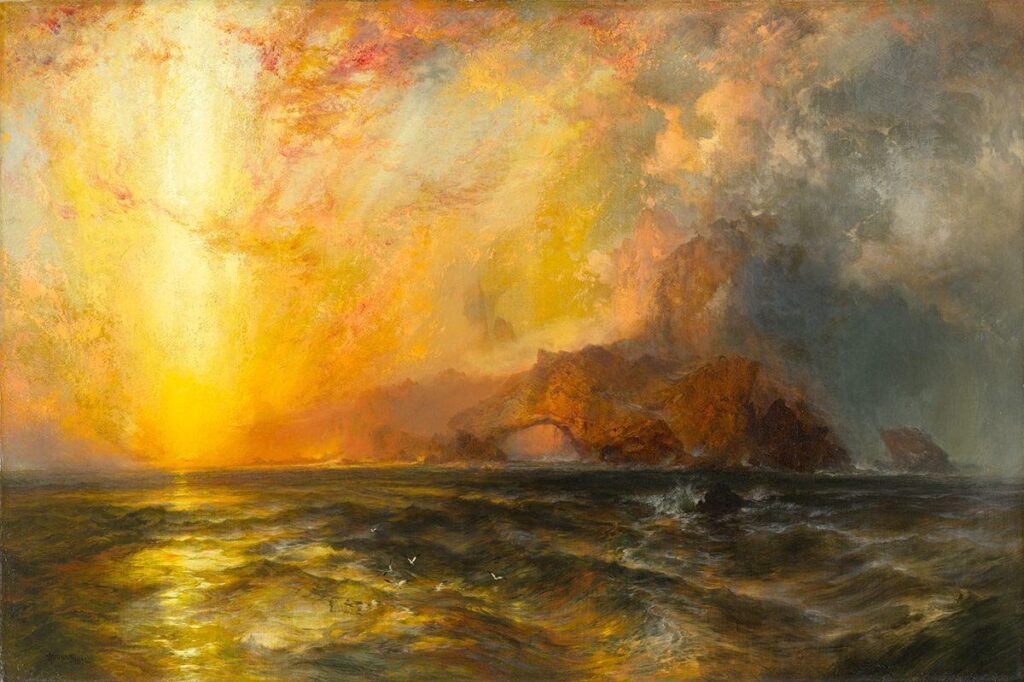
Few moments in nature feel as cinematic as the golden hour, the brief period before sunset when the world becomes saturated with amber, crimson, and gold. Long before photography romanticized this fleeting light, Thomas Moran transformed it into something monumental on canvas. In Fiercely the Red Sun Descending Burned His Way Along the Heavens, sunlight becomes overwhelming, theatrical, and almost apocalyptic in intensity.
Associated with the Hudson River School and the American Romantic landscape tradition, Moran became known for paintings that elevated nature into something sublime and emotionally charged. His landscapes were never simply topographical studies; they were immersive emotional experiences designed to inspire awe. In this particular work, the descending sun dominates the composition, flooding the sky with fiery reds, glowing oranges, and deep atmospheric shadows. The landscape beneath appears almost secondary to the spectacle unfolding above it.
What makes Moran’s treatment of sunlight so compelling is its scale and emotional force. Unlike the softer, intimate sunlight seen in Vermeer or Anna Ancher’s interiors, Moran’s light feels untamed and cosmic. The sunset stretches dramatically across the heavens, transforming the sky into an arena of movement and energy. There is a sense that nature itself is performing.
The painting also reflects the nineteenth-century fascination with the sublime, the idea that landscapes could evoke emotions too vast for language, including wonder, terror, and spiritual awe. Sunlight in Moran’s work is not calm or passive; it becomes an overwhelming natural force capable of reshaping the emotional atmosphere of the entire scene.
Even today, the painting retains a cinematic grandeur that feels strikingly modern. Moran reminds viewers that sunlight can do more than gently illuminate the world, it can completely consume it.
Carnation, Lily, Lily, Rose by John Singer Sargent – Capturing the Fragile Light Between Day and Night
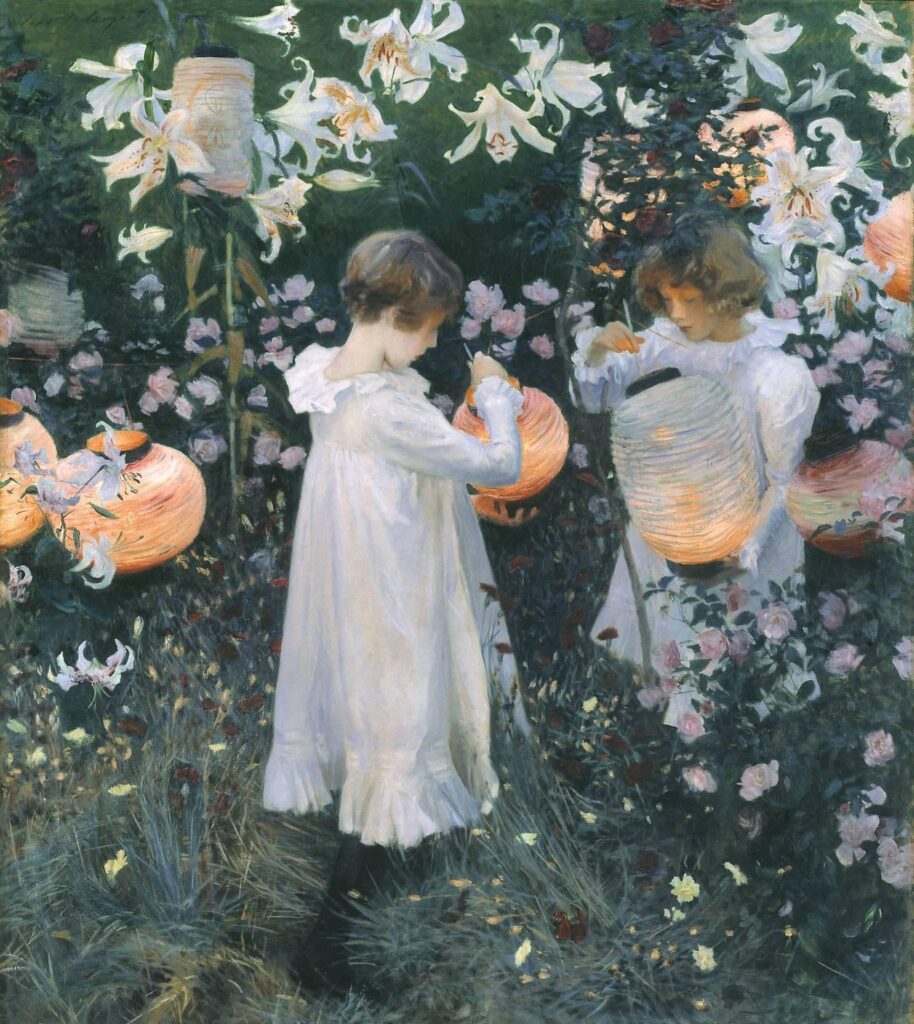
There are few paintings that capture the delicate transition between daylight and evening as beautifully as Carnation, Lily, Lily, Rose by John Singer Sargent. Painted between 1885 and 1886, the work is suspended within that brief moment just after sunset, when natural light has not entirely disappeared and lanterns begin softly illuminating the surrounding darkness. The result is a painting filled with atmosphere, stillness, and quiet enchantment.
The scene depicts two young girls lighting paper lanterns in a lush English garden surrounded by flowers and tall lilies. Rather than focusing on dramatic action or portraiture, Sargent becomes absorbed in the changing qualities of evening light itself. Warm lantern glow mingles with fading natural sunlight, creating a composition where illumination feels layered, fragile, and fleeting.
What makes the painting especially remarkable is the extraordinary patience behind its creation. Sargent reportedly painted outdoors for only a few minutes each evening during the exact twilight conditions he wanted to capture. This commitment allowed him to study how dusk alters color, shadow, and atmosphere with incredible sensitivity. The painting does not simply show light, it recreates the sensation of standing outdoors during the final moments of a summer evening.
Unlike the bold sunlight of Sorolla or the emotional intensity of Van Gogh’s blazing skies, Sargent’s light feels restrained and intimate. The atmosphere is softer, almost dreamlike, balanced delicately between reality and memory. Every glowing lantern appears temporary, as though the moment could vanish within seconds.
More than a century later, Carnation, Lily, Lily, Rose continues to resonate because it captures something universally familiar yet impossible to hold onto: the quiet beauty of light slowly disappearing at the end of the day.
Summer’s Day by Berthe Morisot – Painting Sunlight with Softness and Intimacy
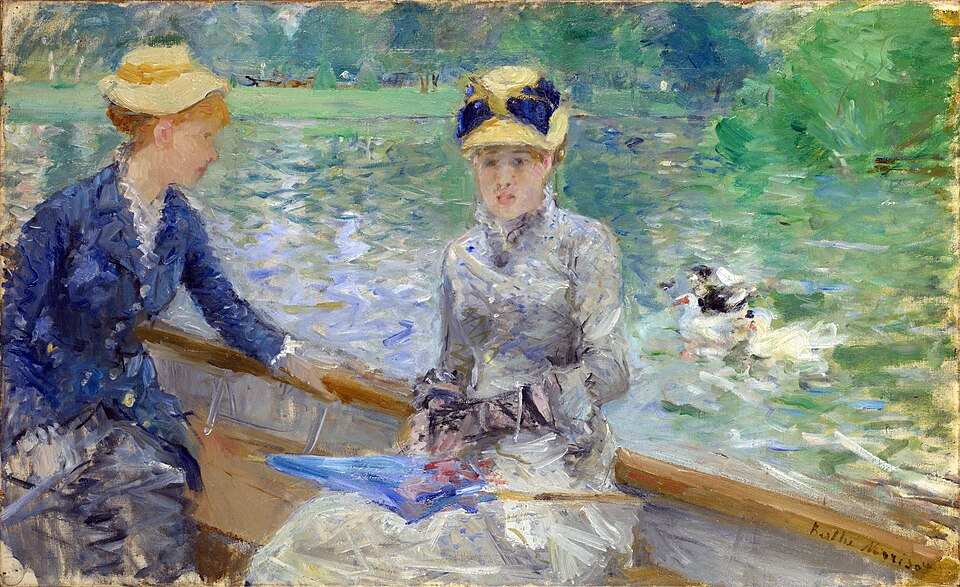
Among the Impressionists, Berthe Morisot developed one of the most delicate and emotionally nuanced approaches to light. While many of her contemporaries explored bustling streets, cafés, and grand urban scenes, Morisot often turned her attention toward quieter moments, women seated outdoors, children in gardens, drifting boats, and intimate domestic spaces softened by natural sunlight. Her paintings feel less concerned with spectacle and more interested in atmosphere, intimacy, and fleeting sensation.
In Summer’s Day, Morisot captures two women seated in a boat surrounded by shimmering water and soft daylight. The composition feels airy and fluid, with loose brushstrokes allowing sunlight to dissolve edges and merge figures into the surrounding environment. Rather than sharply defining forms, Morisot creates the sensation of a passing afternoon suspended briefly in paint.
What makes her treatment of sunlight particularly compelling is its softness. Unlike the blazing Mediterranean intensity of Sorolla or the dramatic skies of Thomas Moran, Morisot’s light feels gentle and intimate. It settles quietly across fabric, skin, and water without overwhelming the scene. Shadows remain light and translucent, preserving a sense of openness and movement throughout the composition.
As one of the few women associated with the core Impressionist circle, Morisot brought a distinct sensitivity to everyday life and observation. Her paintings frequently explore private, fleeting moments that might otherwise go unnoticed. Sunlight becomes part of that emotional subtlety, helping transform ordinary scenes into deeply atmospheric experiences.
Today, Morisot’s work continues to feel remarkably modern because of its looseness and emotional immediacy. Her paintings remind viewers that sunlight does not always announce itself dramatically. Sometimes, its beauty exists in quieter moments, a reflection across water, the softness of afternoon air, or the fleeting calm of a summer day.
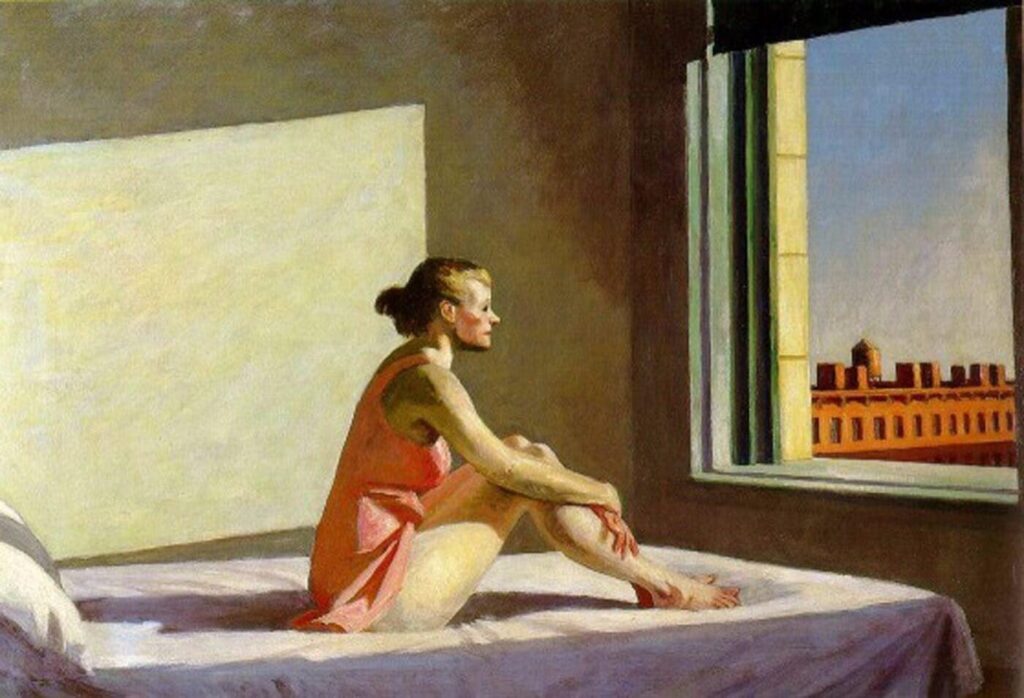
Across centuries, artists have continued chasing something impossible: the attempt to preserve sunlight before it disappears. Whether filtered softly through a quiet interior, scattered across water, or burning dramatically across the sky, light has remained one of art’s most powerful emotional tools. These artists did far more than document sunlight beautifully, they transformed it into atmosphere, memory, intimacy, and feeling.
What makes these works so enduring is that sunlight never behaves the same way twice. It changes with time, weather, season, and perspective, making it one of the most difficult elements to truly capture. Perhaps that is why artists return to it repeatedly. In paintings by Claude Monet, sunlight flickers and dissolves before the eye can fully settle. In Edward Hopper’s quiet architectural scenes, it sharpens emotional distance and silence. Meanwhile, artists like Joaquín Sorolla and John Singer Sargent turn fleeting light into something warm, immersive, and almost tangible.
Despite their different styles and periods, these artists share a fascination with the emotional power of light itself. Sunlight becomes more than illumination, it becomes a way of expressing longing, calmness, solitude, beauty, and the passing of time. Even contemporary viewers continue responding instinctively to these images because they recreate sensations that feel universally familiar.Perhaps that is the enduring magic of sunlight in art. It reminds us that some of the most beautiful experiences are also the most temporary: the final glow of evening, light falling across a room, or the warmth of a late afternoon that lasts only a moment before fading away. Which artist do you think captured sunlight most realistically?
If you enjoyed exploring how artists captured the feeling of sunlight, you may also like reading about how the art we surround ourselves with can quietly shape our emotions, mood, and everyday experiences. Explore: The Art You Hang Affects You